
Japanese Wood-Block Prints
Tourist Library 24
Japanese Wood-Block Prints
by S. Huzikake (translated by M. G. Mori)
Tourist Library 24
Board of Tourist Industry, Japanese Government Railways, 1938
TOURIST LIBRARY
Volumes already published
1. TEA CULT OF JAPAN By Y. Hukukita, A. B.
2. JAPANESE NOH PLAYS By Prof. T. Nogami
3. SAKURA (Japanese Cherry) By M. Miyosi, D. Sc.
4. JAPANESE GARDENS By Prof. M. Tatui
5. HIROSIGE AND JAPANESE LANDSCAPES By Prof. Yone Noguti
6. JAPANESE DRAMA By B. T. I.
7. JAPANESE ARCHITECTURE By Prof. H. Kisida, D. Sc.
8. WHAT IS SINTO? By Prof. G. Kato, D. Litt.
9. CASTLES IN JAPAN By Prof. S: Orui, D. Litt. and Prof. M. Toba
10. HOT SPRINGS IN JAPAN By Prof. K. Huzinami, M. D.
11. FLORAL ART OF JAPAN By Issotei Nisikawa
12. CHILDREN’S DAYS IN JAPAN By T. Iwado, M. A.
13. KIMONO (Japanese Dress) By Keniti Kawakatu
14. JAPANESE FOOD By Prof. Kaneko Tezuka
15. JAPANESE MUSIC By Katumi Sunaga
16. ZYUDO (ZYUZYUTU) By Prof. Zigoro Kano
17. FAMILY LIFE IN JAPAN By Syunkiti Akimoto
18. SCENERY OF JAPAN By T. Tamura, D. Sc.
19. JAPANESE EDUDATION By Prof. K. Yosida, D. Litt. and Prof. T. Kaigo
20. FLORAL CALENDAR OF JAPAN By T. Makino, D. Sc. and Genziro Oka
21. JAPANESE BUDDHISM By Prof. D. T. Suzuki, D. Litt.
22. ODORI (Japanese Dance) By Kasyo Matida
23. KABUKI DRAMA By Syutaro Miyake
24. JAPANESE WOOD-BLOCK PRINTS By Prof. S. Huzikake, D. Litt.
Volumes in preparation
JAPANESE FOLK-TOYS By Tekiho Nisizawa
JAPANESE HISTORY By Prof. T. Nakamura, D. Litt.
JAPANESE GAME OF “GO” By Hukumensi Mihori
JAPANESE CHARACTER By Nyozekan Hasegawa
JAPANESE DYEING AND WEAVING By Senzin Akasi
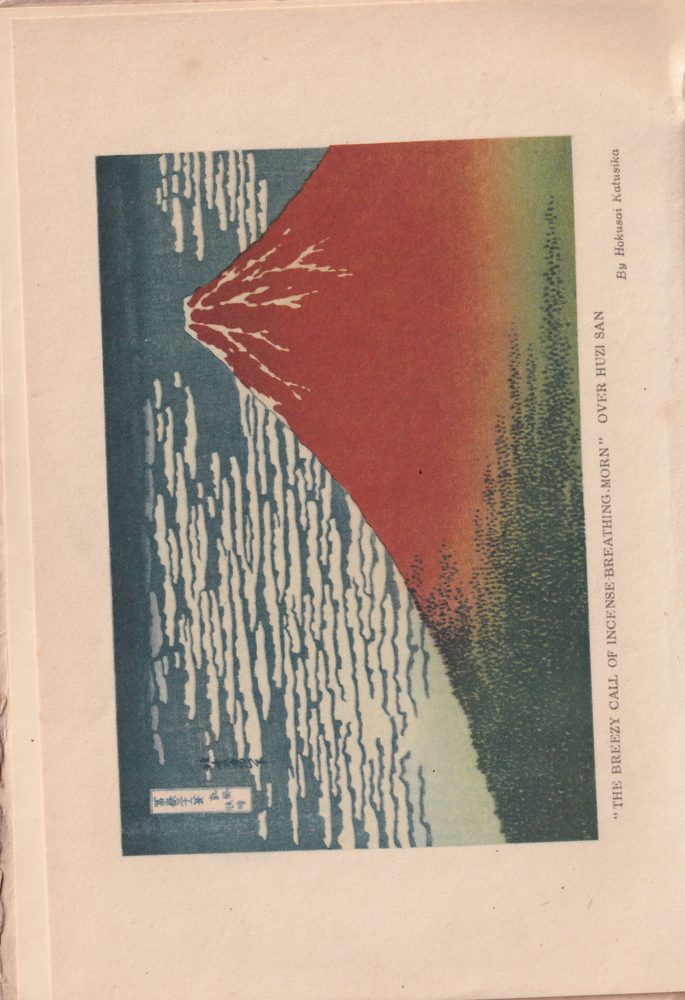
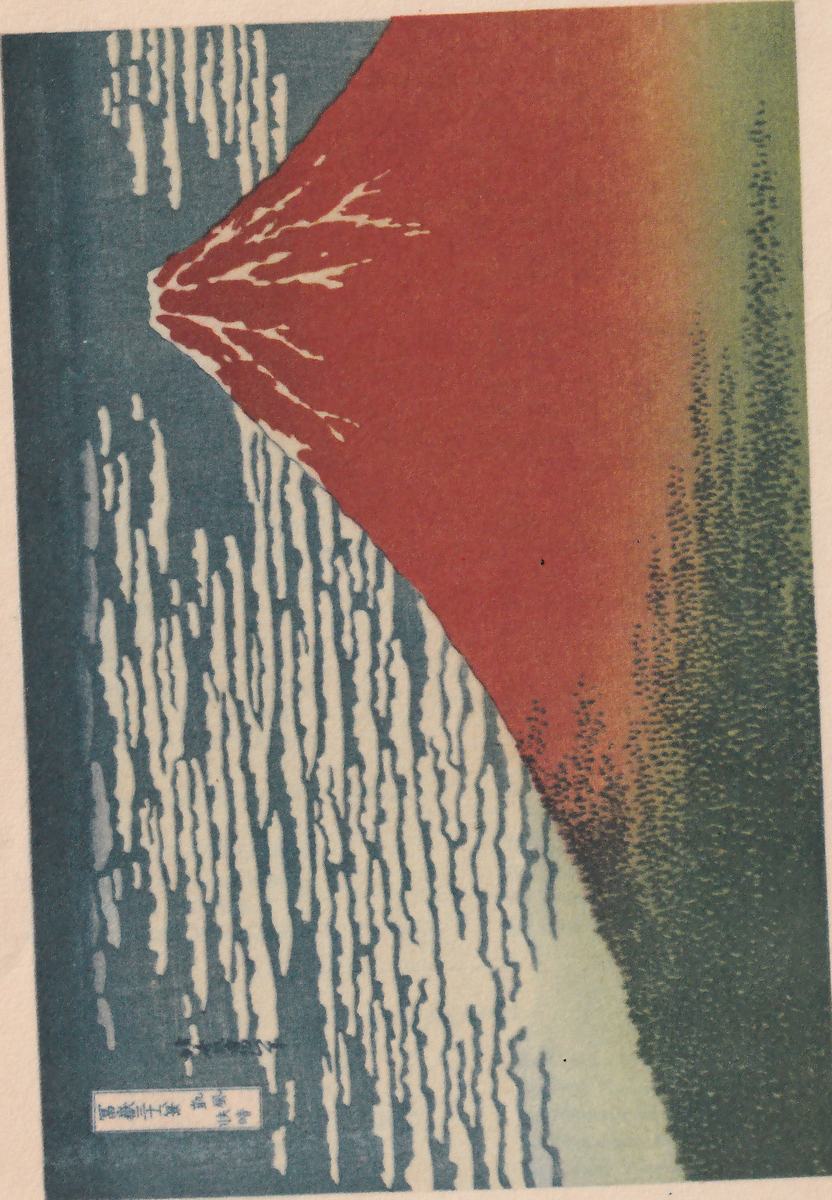
By Hokusai Katusika
JAPANESE
WOOD-BLOCK PRINTS
BY
S. HUZIKAKE
(Translated by M. G. Mori)
BOARD OF TOURIST INDUSTRY
JAPANESE GOVERNMENT RAILWAYS
COPYRIGHT 1938
EDITORIAL NOTE
It is a common desire among tourists to learn something of the culture of the countries they visit, as well as to see their beautiful scenery. To see is naturally easier than to learn, but flying visits merely for sightseeing furnish neither the time nor opportunity for more than a passing acquaintance with the culture of any foreign people. This is specially true of Japan and her people.
The Board of Tourist Industry recognizes both the obligation and the difficulty of providing foreign tourists with accurate information regarding the various phases of Japan’s culture. It is, therefore, endeavouring to meet this obligation, as far as possible, by publishing this series of brochures.
The present series will, when completed, consist of more than a hundred volumes, each dealing with a different subject, but all co-ordinated. By studying the entire series, the foreign student of Japan will gain an adequate knowledge of the unique culture that has evolved in this country through the ages.
For those who wish to follow up these studies with a closer investigation of more erudite works, we append bibliographies, which we can recommend as authoritative guides for study.
Board of Tourist Industry,
Japanese Government Railways.
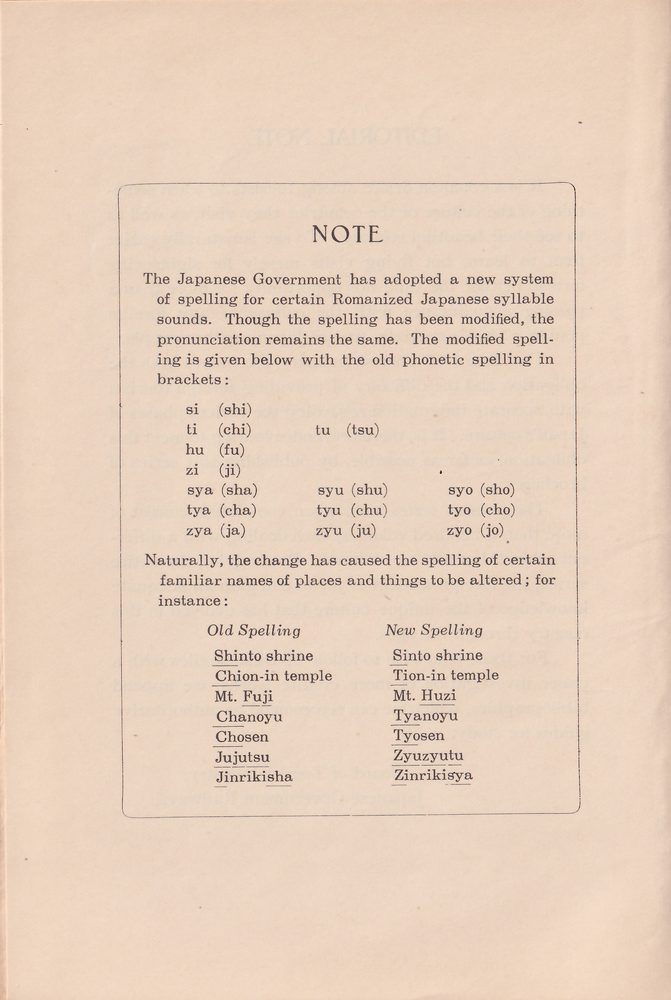
NOTE
The Japanese Government has adopted a new system of spelling for certain Romanized Japanese syllable sounds. Though the spelling has been modified, the pronunciation remains the same. The modified spelling is given below with the old phonetic spelling in brackets:
| si (shi) | ||
| ti (chi) | tu (tsu) | |
| hu (fu) | ||
| zi (ji) | ||
| sya (sha) | syu (shu) | syo (sho) |
| tya (cha) | tyu (chu) | tyo (cho) |
| zya (ja) | zyu (ju) | zyo (jo) |
Naturally, the change has caused the spelling of certain familiar names of places and things to be altered; for instance:
| Old Spelling | New Spelling |
|---|---|
| Shinto shrine | Sinto shrine |
| Chion-in temple | Tion-in temple |
| Mt. Fuji | Mt. Huzi |
| Chanoyu | Tyanoyu |
| Chosen | Tyosen |
| Jujutsu | Zyuzyutu |
| Jinrikisha | Zinrikisya |
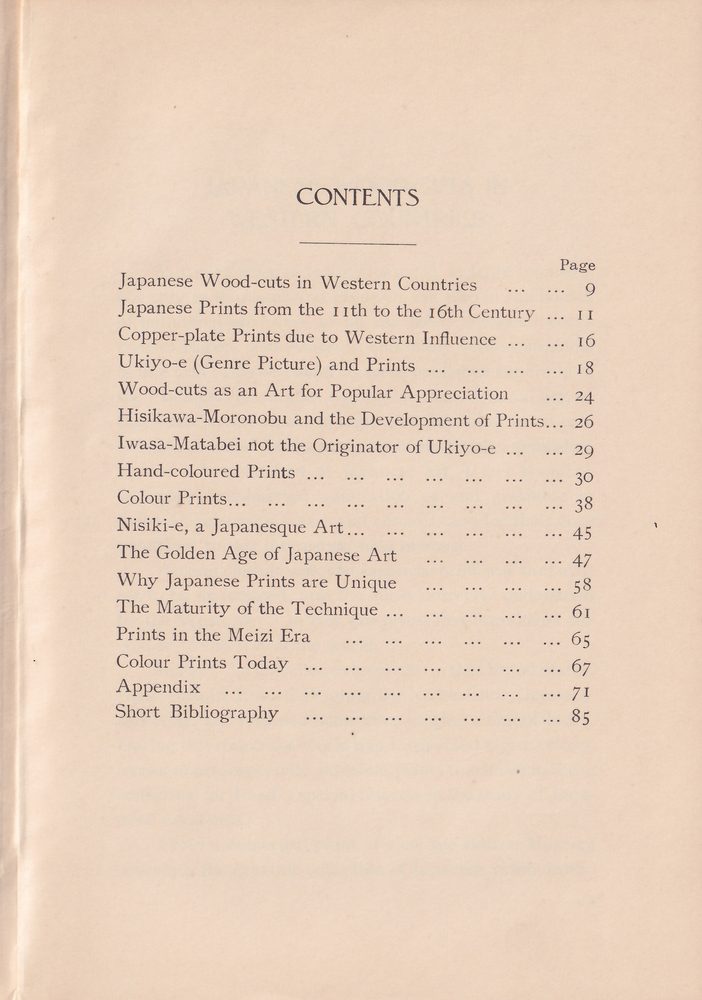
CONTENTS
Page
Japanese Wood-cuts in Western Countries ... ... 9
Japanese Prints from the 11th to the 16th Century ... 11
Copper-plate Prints due to Western Influence ... ... 16
Ukiyo-e (Genre Picture) and Prints ... ... ... ... 18
Wood-cuts as an Art for Popular Appreciation ... 24
Hisikawa-Moronobu and the Development of Prints... 26
Iwasa-Matabei not the Originator of Ukiyo-e ... ... 29
Hand-coloured Prints ... ... ... ... ... ... 30
Colour Prints... ... ... ... ... ... ... 38
Nisiki-e, a Japanesque Art... ... ... ... ... ... 45
The Golden Age of Japanese Art ... ... ... ... 47
Why Japanese Prints are Unique ... ... ... ... 58
The Maturity of the Technique ... ... ... ... ... 61
Prints in the Meizi Era ... ... ... ... ... 65
Colour Prints Today ... ... ... ... ... ... 67
Appendix ... ... ... ... ... ... ... 71
Short Bibliography ... ... ... ... ... ... ... 85