
THE MATURITY OF THE TECHNIQUE
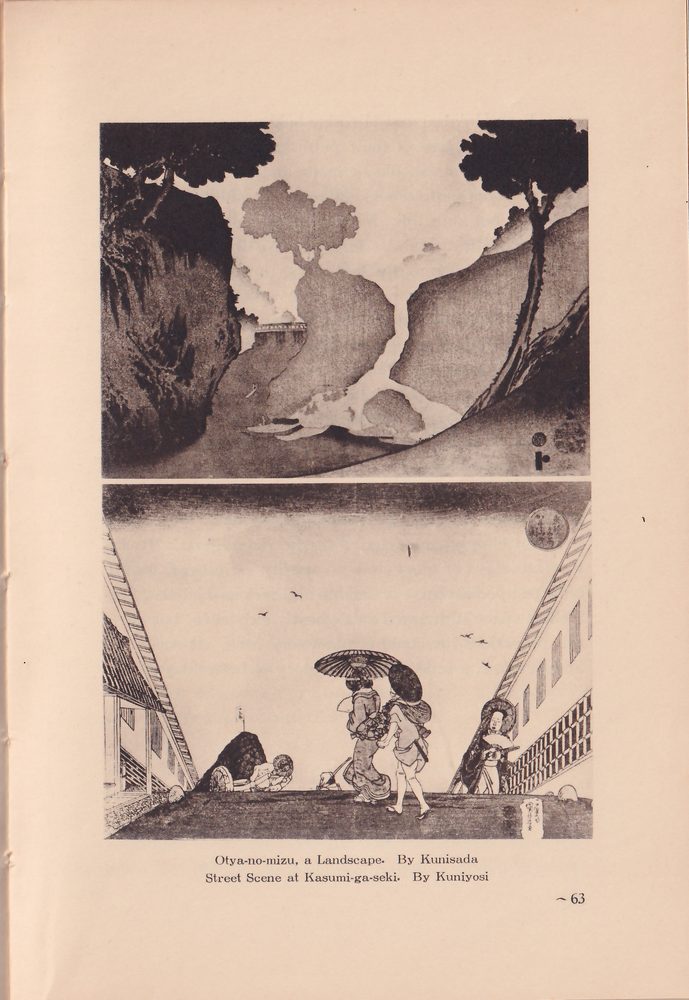
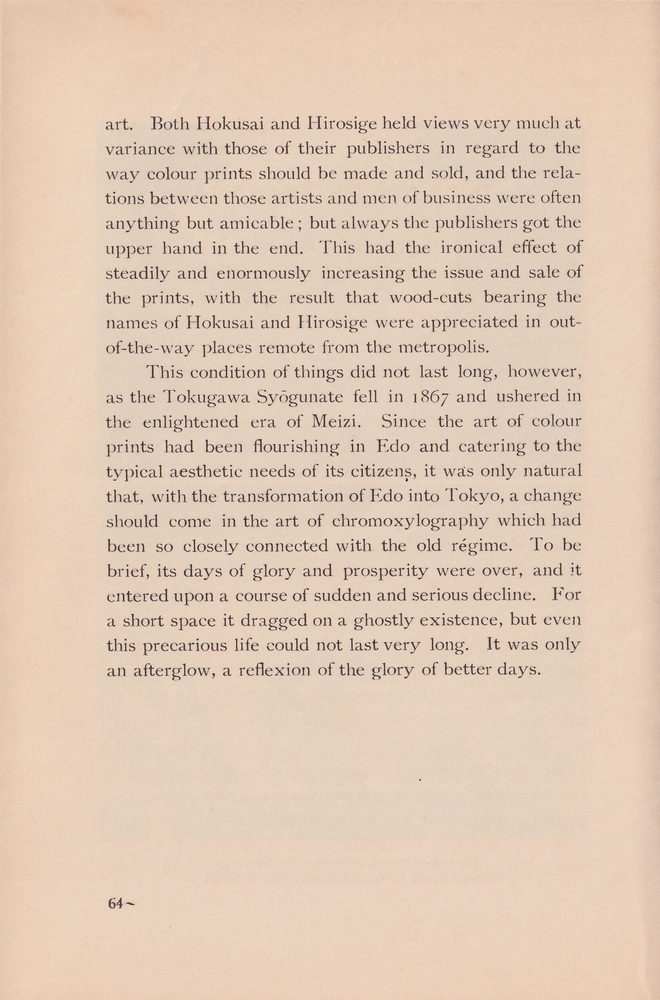
The early decades of the 19th century saw the full maturity of the latter-day culture of Edo. Great advances and high achievements had been made amongst all votaries of the graphic arts, and the art of picture printing was no exception to the general rule. Its technique had become more refined and subtle than in any previous age. The engraver had become capable of transferring on to his wooden block even the subtlest lines and curves of the original painting. The printer, too, had made himself master of the best method of producing an effect of highly complex hues by accumulating impressions of two or more rudimentary colours. If, therefore, the painter or the publisher could have given wise guidance and counsel to these well-trained and skilful artizans, prints of even better quality would certainly have been produced. Although there were a fairly large number of wood-cut painters in this period, it must be admitted that there were few giants among them. Indeed, there were no more than two such masters, namely Katusika-Hokusai (1760–1849) and Utagawa-Hirosige (1798–1858), who stood pre-eminently above their contemporaries. To make matters worse, publishers who should have given guidance to the artists had now come to think more of profit than of art, and preferred large-scale production to the making of things of beauty. This naturally (though none the less unfortunately) caused a deterioration of colour prints as works of
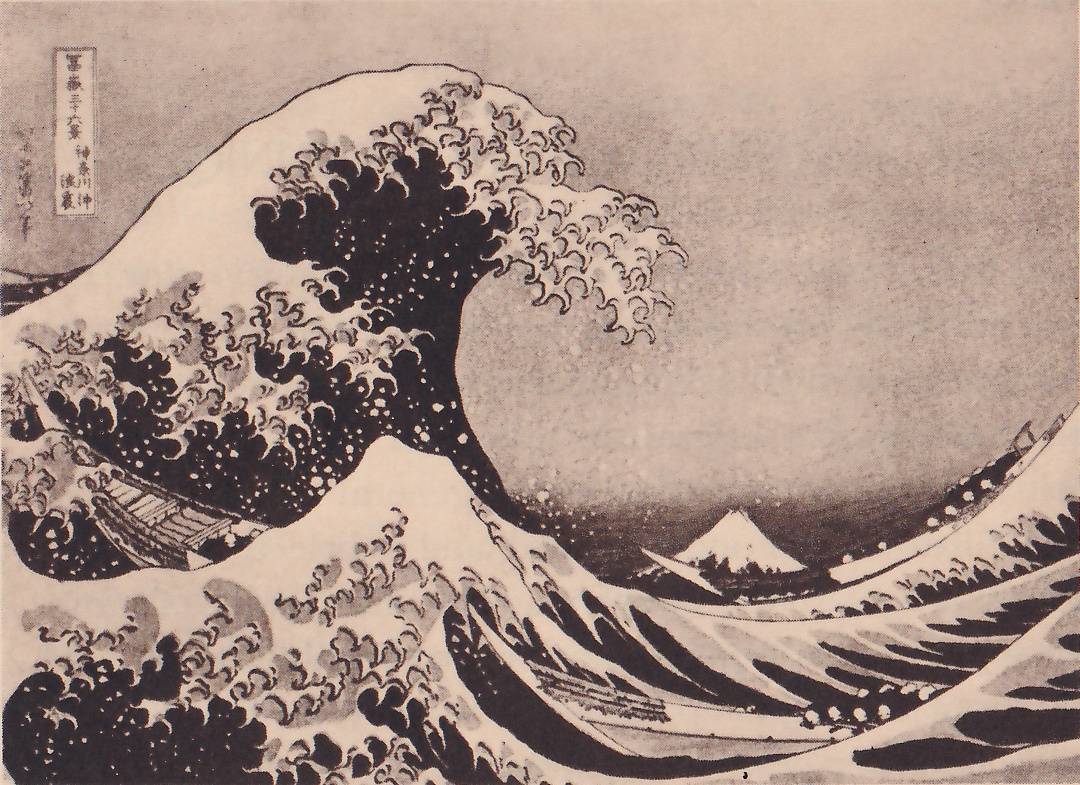
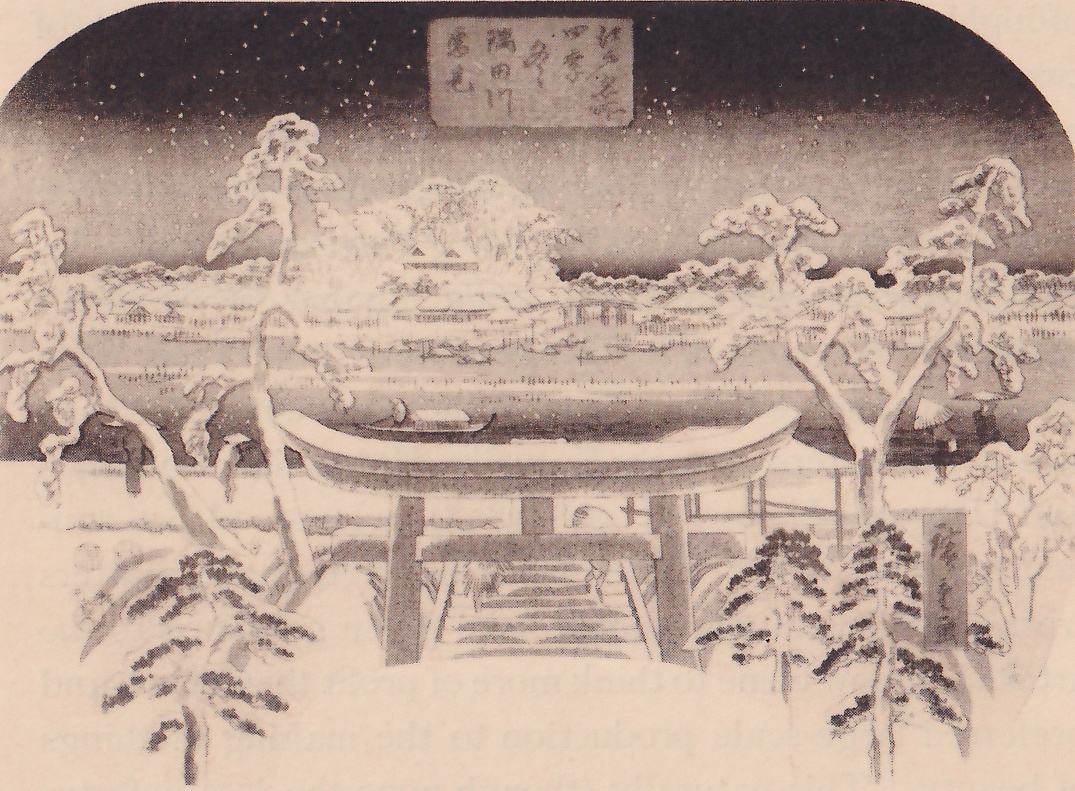
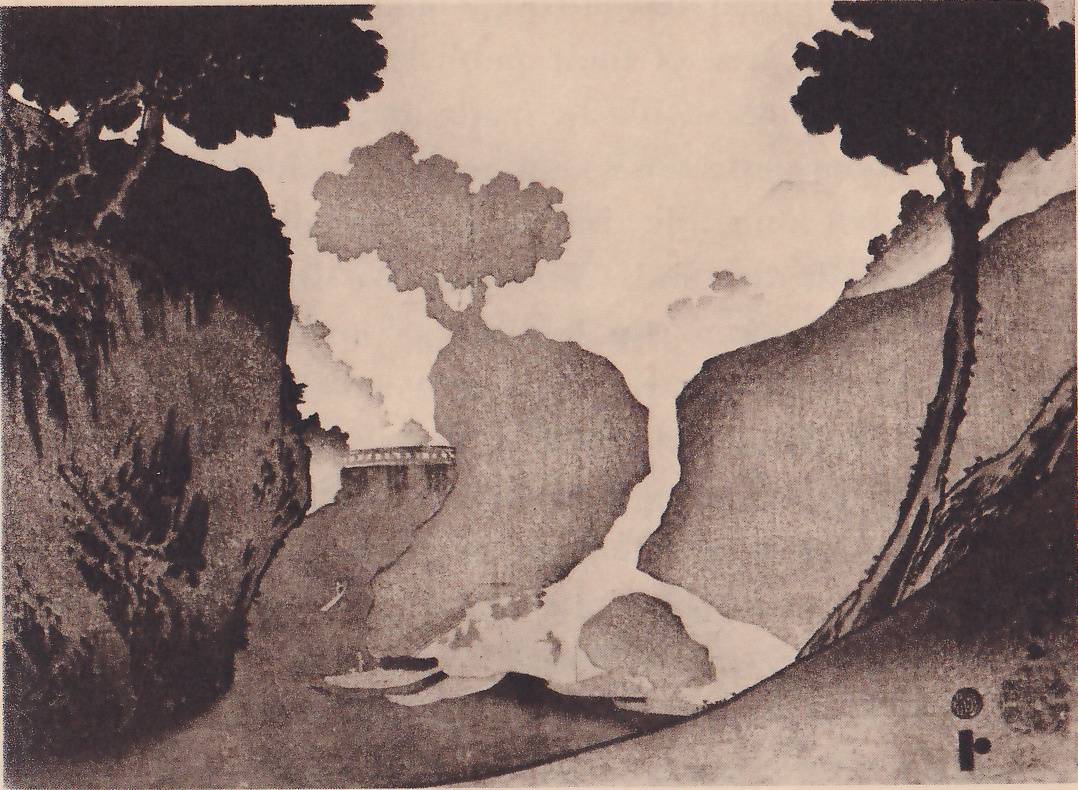
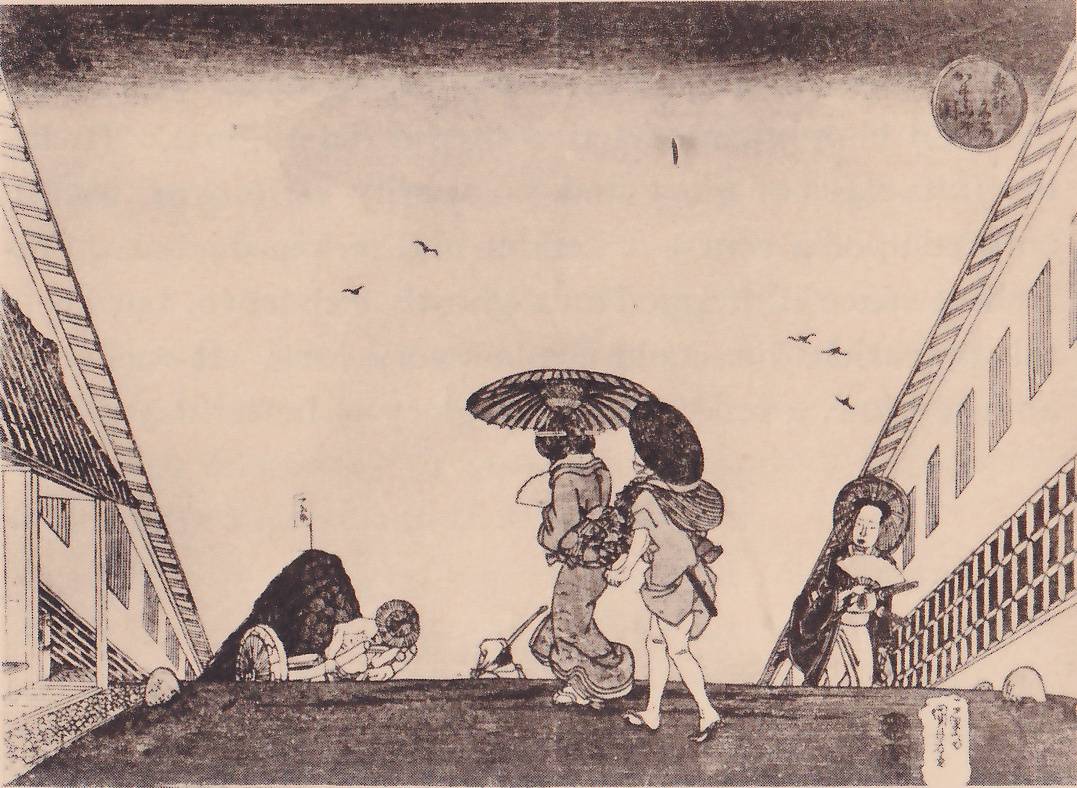
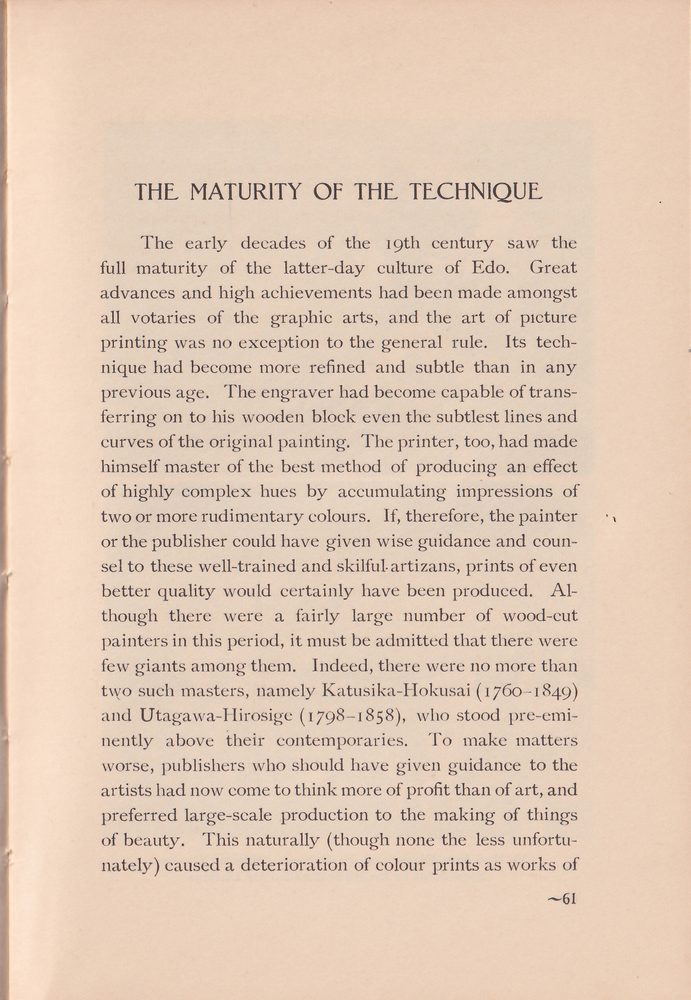
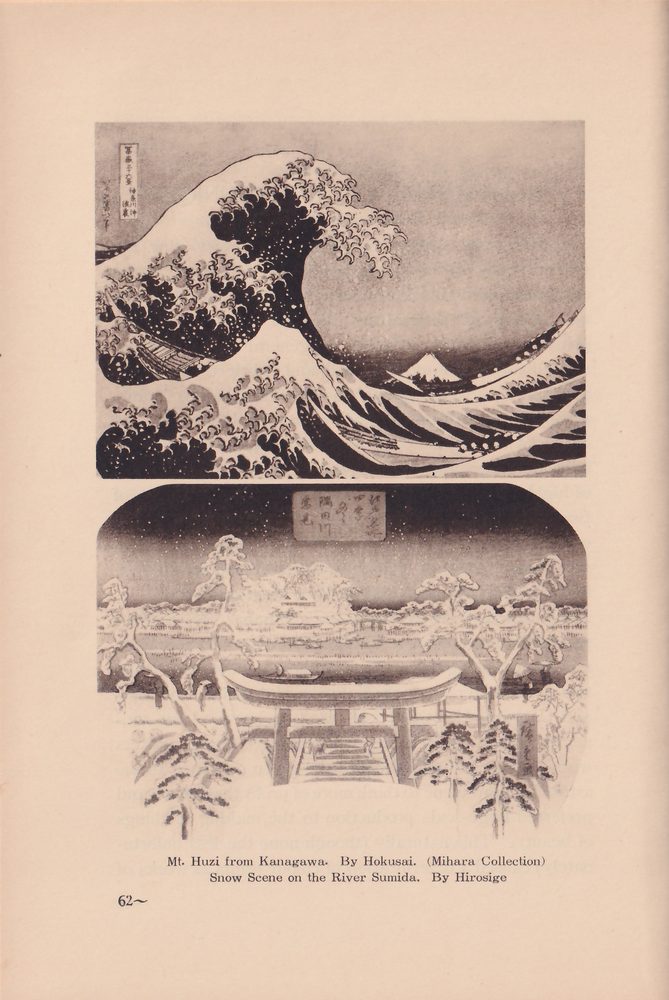
art. Both Hokusai and Hirosige held views very much at variance with those of their publishers in regard to the way colour prints should be made and sold, and the relations between those artists and men of business were often anything but amicable; but always the publishers got the upper hand in the end. This had the ironical effect of steadily and enormously increasing the issue and sale of the prints, with the result that wood-cuts bearing the names of Hokusai and Hirosige were appreciated in out-of-the-way places remote from the metropolis.
This condition of things did not last long, however, as the Tokugawa Syōgunate fell in 1867 and ushered in the enlightened era of Meizi. Since the art of colour prints had been flourishing in Edo and catering to the typical aesthetic needs of its citizens, it was only natural that, with the transformation of Edo into Tokyo, a change should come in the art of chromoxylography which had been so closely connected with the old régime. To be brief, its days of glory and prosperity were over, and it entered upon a course of sudden and serious decline. For a short space it dragged on a ghostly existence, but even this precarious life could not last very long. It was only an afterglow, a reflexion of the glory of better days.