
JAPANESE WOOD-CUTS IN WESTERN COUNTRIES
Japanese wood-cuts are treasured in large numbers, not only in museums and libraries, but also in the houses of individual art-lovers in all the more advanced countries of Europe and America, and many serious students of fine arts in those countries have published the fruits of their detailed researches concerning this Oriental art, so that valuable information regarding Japanese wood-cuts is found in many books and magazine articles published abroad. As a student of Japanese art, I feel bound to express whole-hearted admiration of and gratitude to those Occidental scholars and connoisseurs for their contributions to this interesting field of study.
Among our fine arts, the Japanese print was the earliest to be understood, and the most correctly understood by the Westerner. In fact, our prints first introduced our culture to the rest of the world.
In 1927–8, I travelled extensively in the United States, Great Britain, France, Belgium, the Netherlands, Germany and Italy, and returned home after making a tour of India. During this round-the-world trip I inspected a great many works of art, especially Japanese prints treasured in those countries, for I had a special interest in the study of Japanese wood-cuts.
From a numerical point of view the Boston Museum possesses the greatest collection of Japanese prints in the
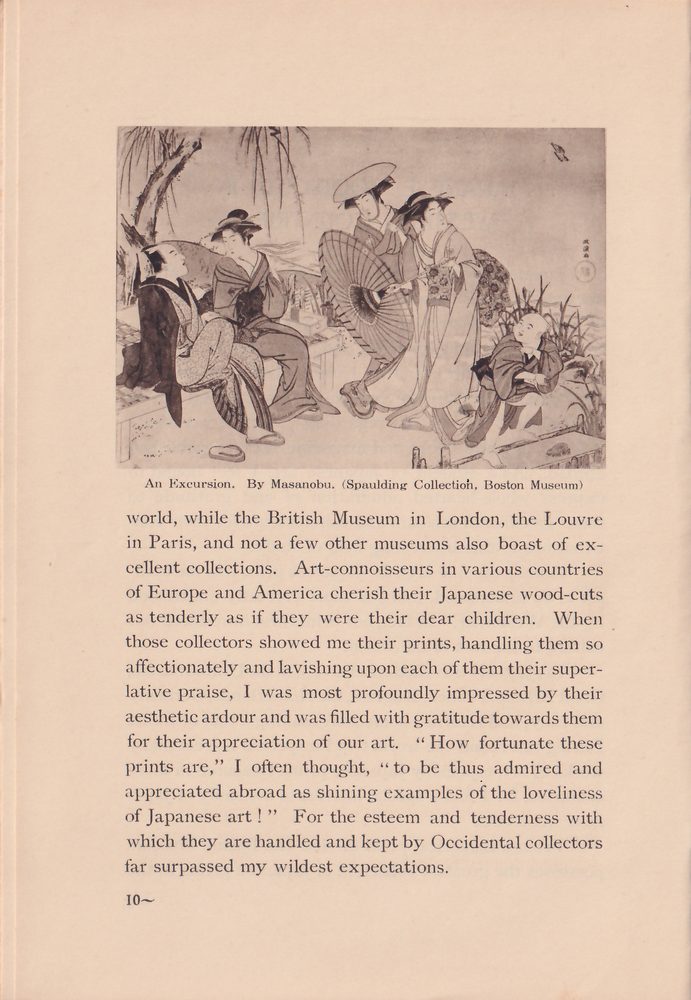
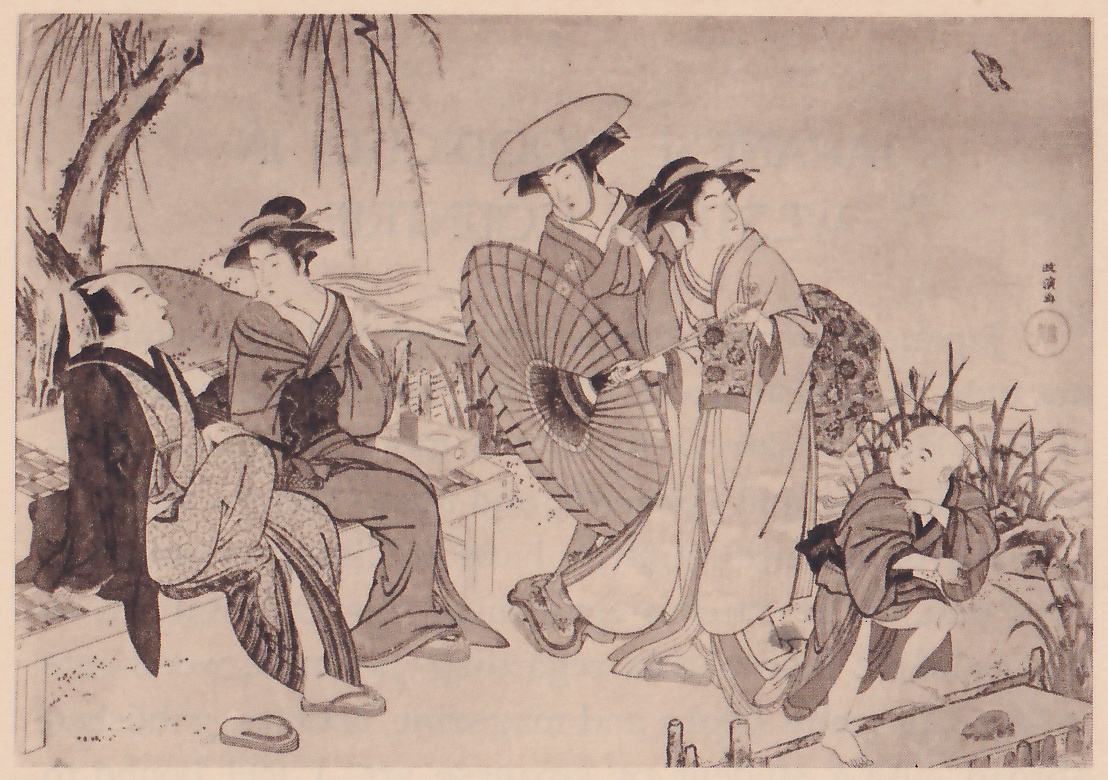
world, while the British Museum in London, the Louvre in Paris, and not a few other museums also boast of excellent collections. Art-connoisseurs in various countries of Europe and America cherish their Japanese wood-cuts as tenderly as if they were their dear children. When those collectors showed me their prints, handling them so affectionately and lavishing upon each of them their superlative praise, I was most profoundly impressed by their aesthetic ardour and was filled with gratitude towards them for their appreciation of our art. “How fortunate these prints are,” I often thought, “to be thus admired and appreciated abroad as shining examples of the loveliness of Japanese art!” For the esteem and tenderness with which they are handled and kept by Occidental collectors far surpassed my wildest expectations.