
JAPANESE PRINTS FROM THE 11TH TO THE 16TH CENTURY
Japanese wood-cuts, which are thus admired and appreciated by intellectuals abroad as superior works of art, are justly regarded as the consummation of the art of chromoxylography. There prevails a wide-spread impression that the Japanese art of picture printing originated in the beginning of the Edo period (1600–1867), because its modern development was closely connected with that of ukiyo-e (a type of genre picture), which began early in the Edo period. In point of fact, however, a study of old specimens that have survived to our own time shows that Japanese wood-cuts were produced as early as the 11th century. At first they represented Buddhist figures. Most of the wooden blocks used in those initial periods ranged from one to six inches in length. Each wooden block was used to produce a considerable number of the same sacred image printed on one sheet of paper, to be used in Buddhist services. Such prints were produced in great numbers during the Heian (794–1185) and Kamakura (1185–1333) periods, notably from the 11th to the 13th century. As a sample of these I suggest a print produced in 1162, representing the Indian deva (or celestial being) called Vaisramana.
As an example of genre pictures (as distinguished from Buddhist pictures) printed from wooden blocks, I may cite designs intended for inclusion in fan-shaped books in which
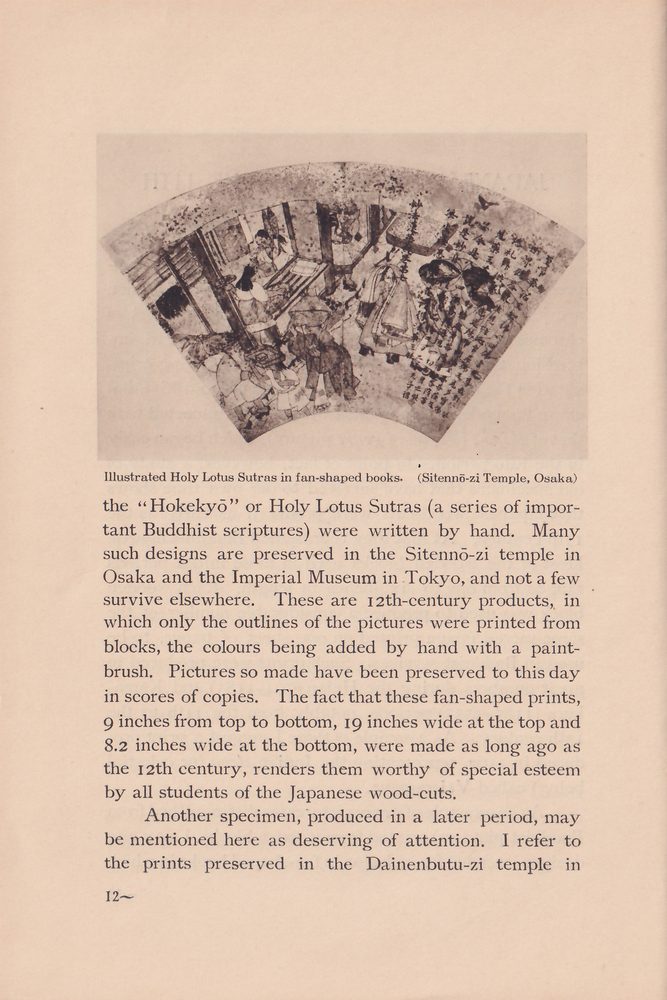
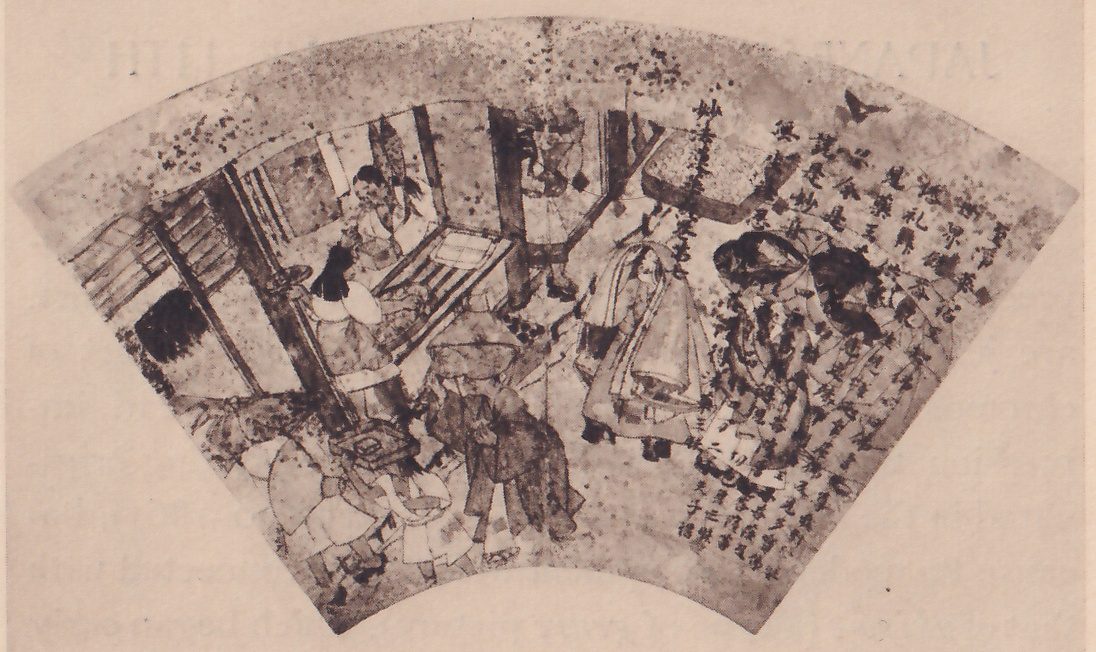
the “Hokekyō” or Holy Lotus Sutras (a series of important Buddhist scriptures) were written by hand. Many such designs are preserved in the Sitennō-zi temple in Osaka and the Imperial Museum in Tokyo, and not a few survive elsewhere. These are 12th-century products, in which only the outlines of the pictures were printed from blocks, the colours being added by hand with a paintbrush. Pictures so made have been preserved to this day in scores of copies. The fact that these fan-shaped prints, 9 inches from top to bottom, 19 inches wide at the top and 8.2 inches wide at the bottom, were made as long ago as the 12th century, renders them worthy of special esteem by all students of the Japanese wood-cuts.
Another specimen, produced in a later period, may be mentioned here as deserving of attention. I refer to the prints preserved in the Dainenbutu-zi temple in
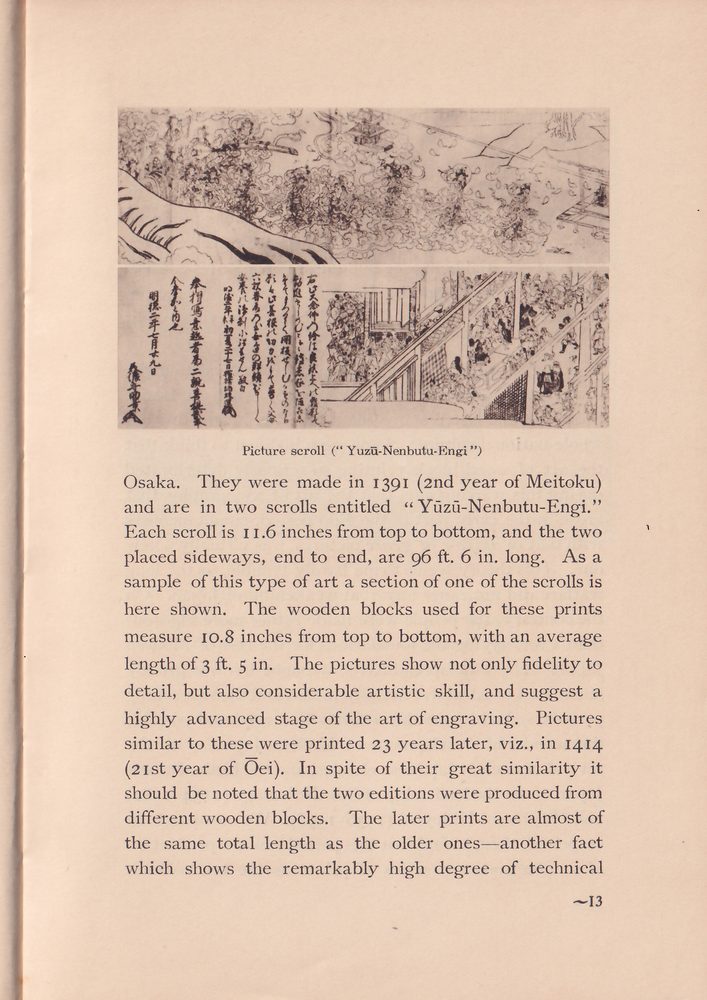
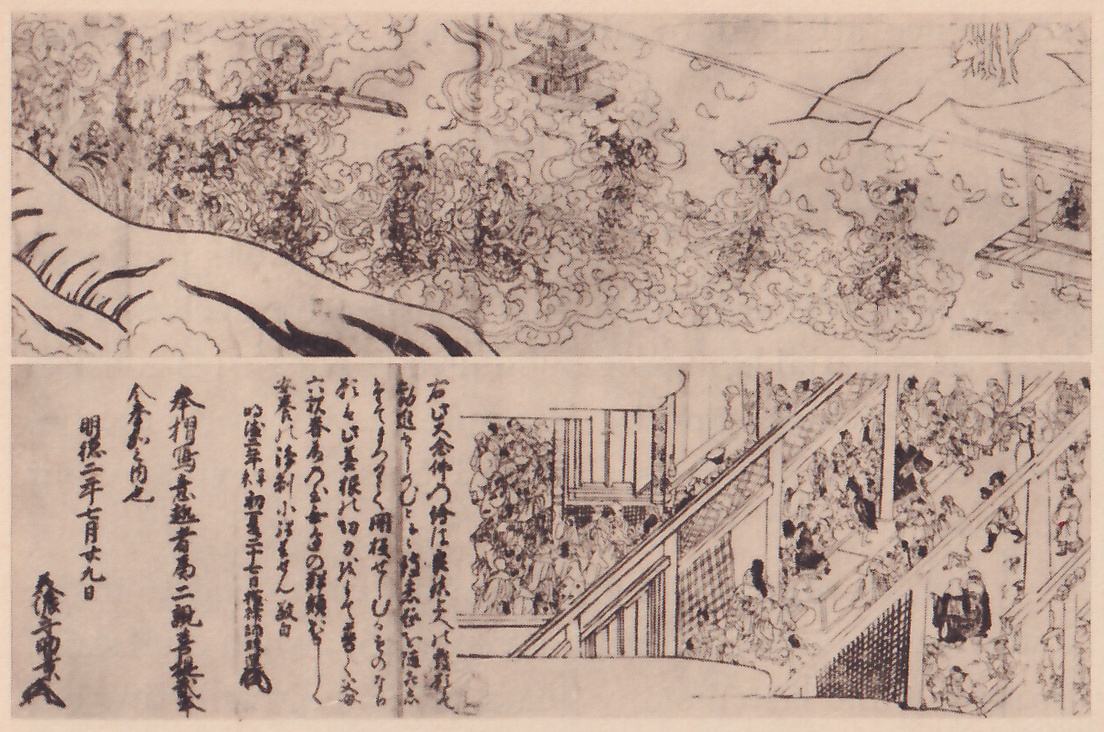
Osaka. They were made in 1391 (2nd year of Meitoku) and are in two scrolls entitled “Yūzū-Nenbutu-Engi.” Each scroll is 11.6 inches from top to bottom, and the two placed sideways, end to end, are 96 ft. 6 in. long. As a sample of this type of art a section of one of the scrolls is here shown. The wooden blocks used for these prints measure 10.8 inches from top to bottom, with an average length of 3 ft. 5 in. The pictures show not only fidelity to detail, but also considerable artistic skill, and suggest a highly advanced stage of the art of engraving. Pictures similar to these were printed 23 years later, viz., in 1414 (21st year of Ōei). In spite of their great similarity it should be noted that the two editions were produced from different wooden blocks. The later prints are almost of the same total length as the older ones—another fact which shows the remarkably high degree of technical
excellence attained by the Japanese art of wood-block printing.
In those days pictures of Buddhas and Buddhist angels, all of considerable size, were also printed. I give here as a specimen a series of prints with inscriptions produced in 1407 (14th year of Ōei), representing the twelve devas or great celestial beings of Buddhism. The series consists of twelve pictures, and bears ample testimony to the notable technical progress that had been achieved by our engravers.
Our art of pictorial printing thus continued to make noteworthy advances until the year 1467, when civil strife broke out and lasted many years, profoundly affecting our whole national culture. Some seem inclined to think that the art of wood-block printing so seriously deteriorated during this warring age, that the art of xylography that arose in the early part of the Edo period, simultaneously with that of ukiyo-e or genre pictures, was virtually a new one. This theory seems to me hardly tenable, as the long warfare did not cause any real weakening of Japan. On the contrary, the people were made rather more vigorous than ever, laying the foundations for the rise of Modern Japan. The wide-spread havoc wrought by war greatly stimulated constructive activity in that and the succeeding periods. And it was this activity that rendered possible the wonderful development of Modern Japan, with the revival of ancient Japanese classics, and the birth of a new Japan under the leadership of Oda-Nobunaga (1534–1582) and Toyotomi-Hideyosi (1536–1598). We need not be surprised, then, to find that this period saw the production of so noteworthy a series of prints as the ten volumes
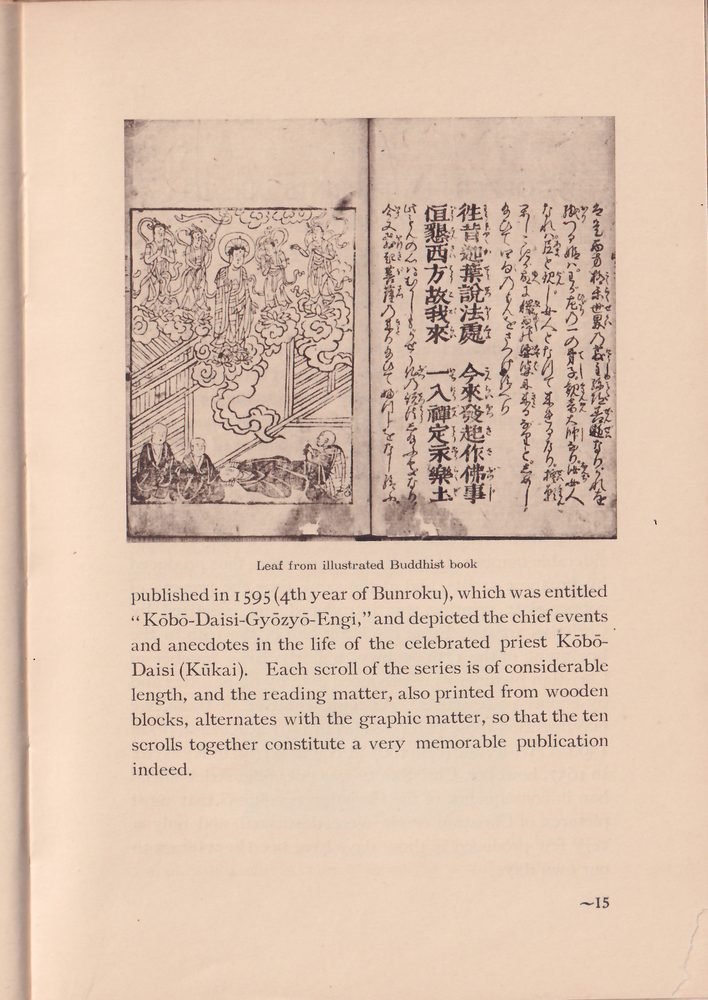
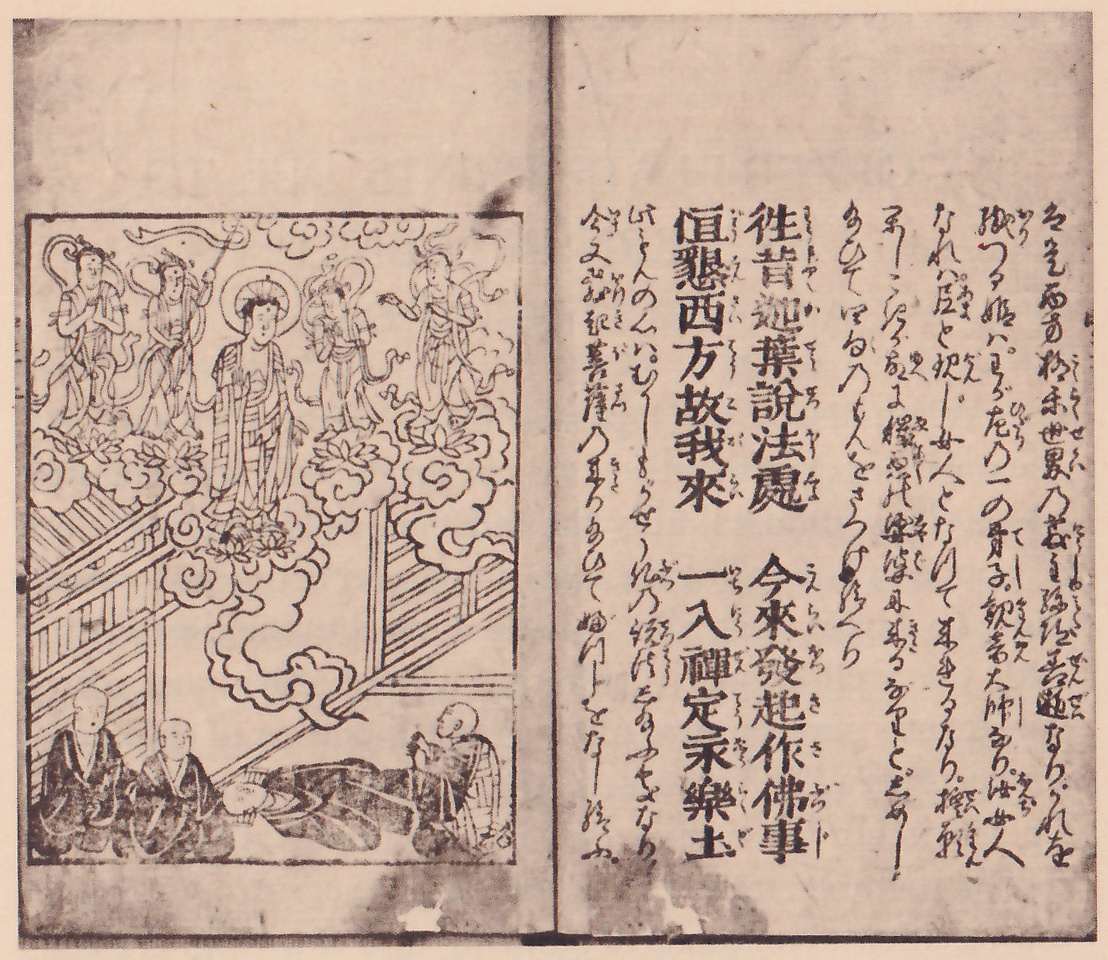
published in 1595 (4th year of Bunroku), which was entitled “Kōbō-Daisi-Gyōzyō-Engi,” and depicted the chief events and anecdotes in the life of the celebrated priest Kōbō-Daisi (Kūkai). Each scroll of the series is of considerable length, and the reading matter, also printed from wooden blocks, alternates with the graphic matter, so that the ten scrolls together constitute a very memorable publication indeed.