
HAND-COLOURED PRINTS
As has been pointed out in a previous chapter, modern Japanese artistic printing made remarkable strides under Hisikawa-Moronobu. Now, prints intended to be complete in themselves as separate pictures, as distinguished from those of picture-books and illustrations of books, were popularly called “one-piece pictures.” These were first printed as monochromes in black and white, then coloured by hand with a soft brush (hude). The practice of colouring printed pictures by hand had been in existence long before that time; there are such Japanese prints produced in the 12th century surviving today. Good examples of them are the pictures in the fan-shaped books in which the “Hokekyō” (Holy Lotus Sutras) were copied. (See p. 12) The printed pictures in the “Yūzū-Nen-butu-Engi,” published in the 14th century, were also coloured by hand. There is nothing particularly surprising in the fact that prints produced early in the 17th century (i. e. at the beginning of the Edo period) should be hand-coloured. It should be noted, however, that those who published those modern prints aimed at large-scale production, so much so that great economy of labour was made in hand-colouring them by simplifying the strokes and touches to achieve a maximum of effect with a minimum of effort.
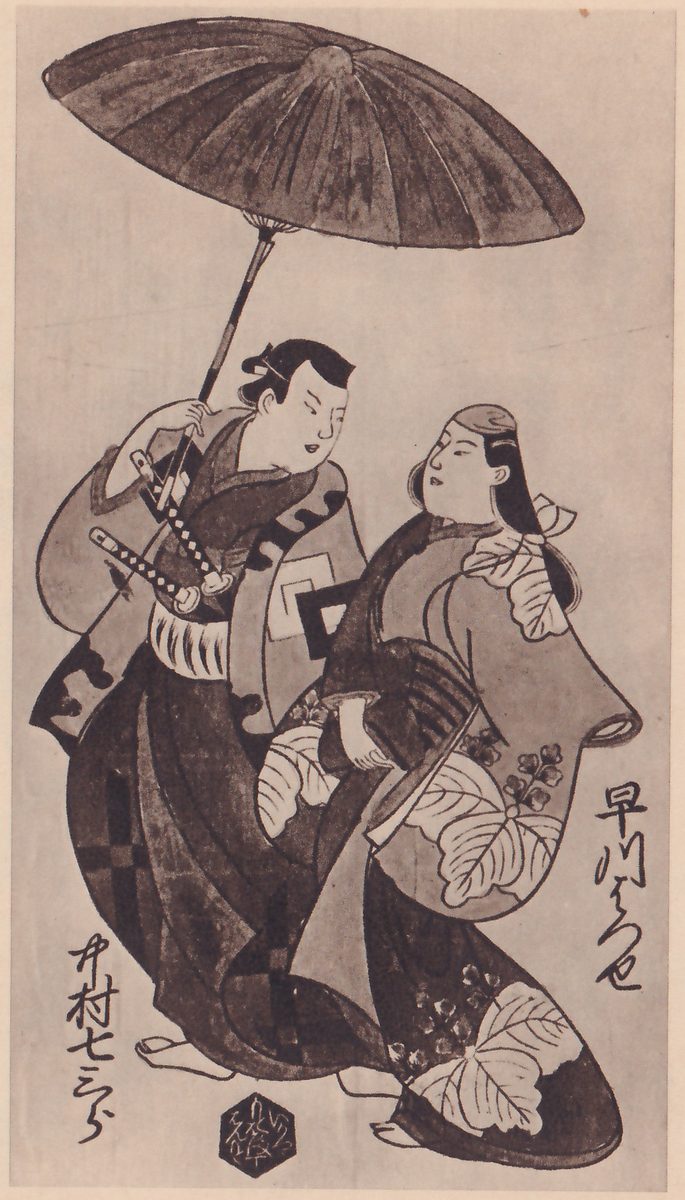
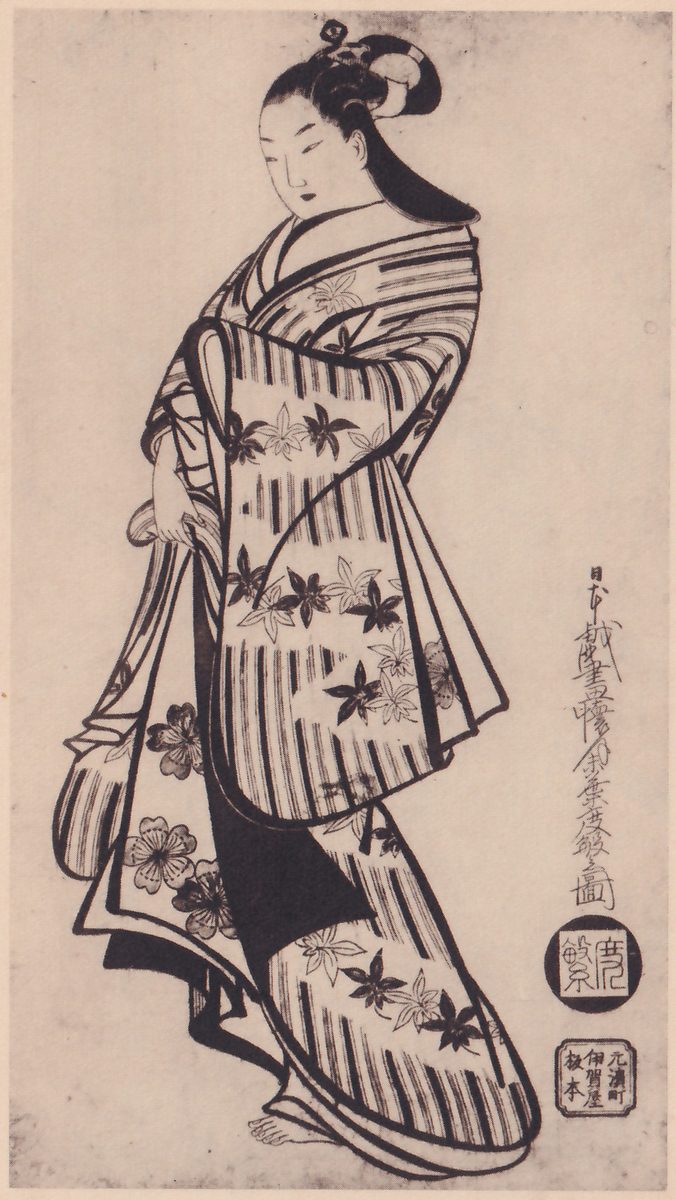
Tan-e or “vermilion prints.” Of all these artistic hand-coloured prints, those produced earliest have cinna-
bar or vermilion as their predominant colour, and so are called tan-e or “vermilion pictures.” Yellow and green were used in tan-e as subordinate colours. These colours did not in themselves exactly represent the colours of the dresses in fashion in those days; only one or two colours were boldly applied as if merely to symbolize the lines of demarkation between the exposed flesh and the clothes, or the pattern of the dress itself. Yet the method is very effective, and appealed strongly to the prevalent popular taste.
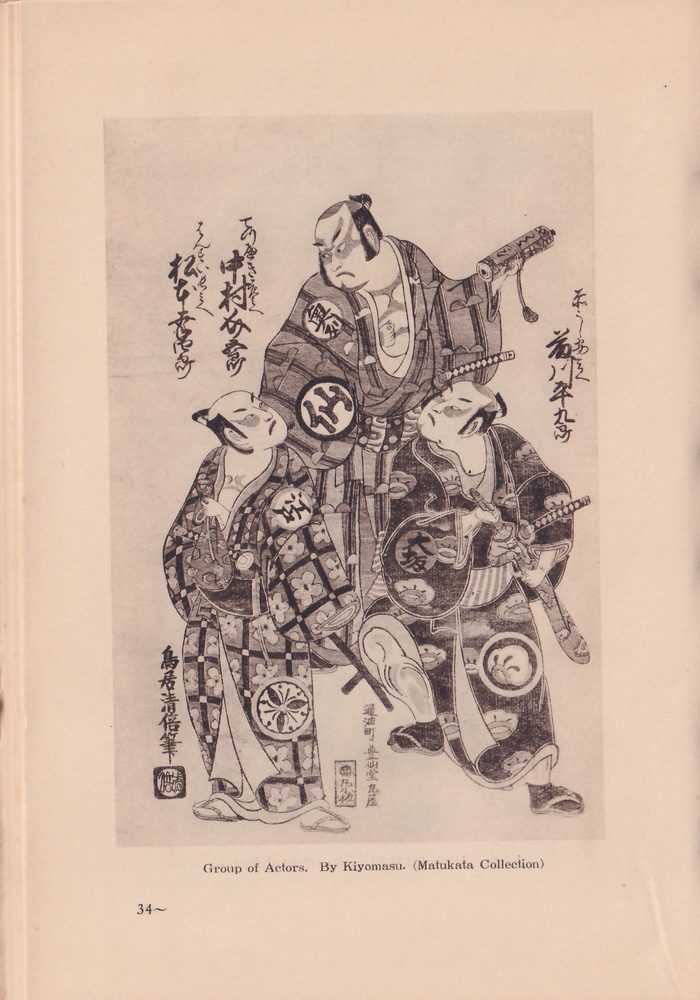
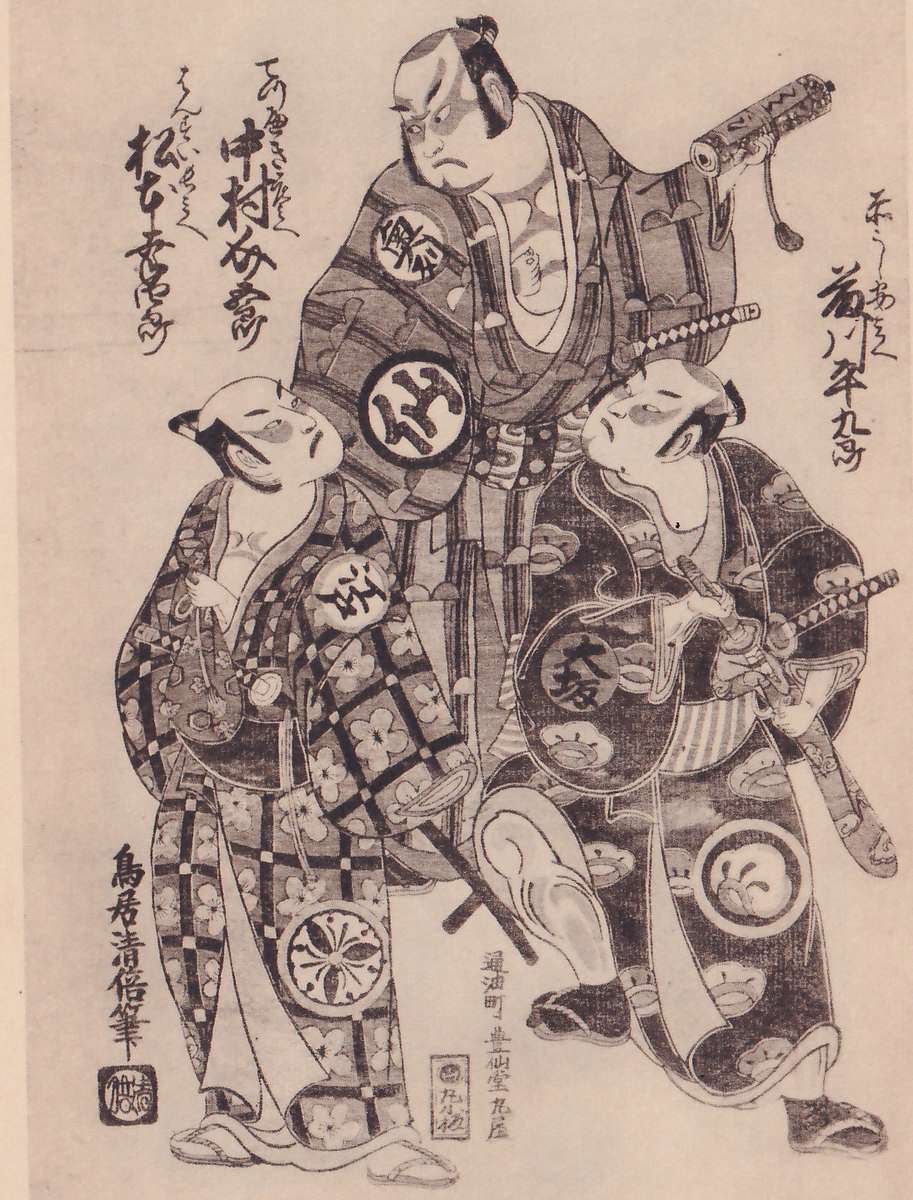
The more important tan-e painters were Hisikawa-Moronobu and his followers, Torii-Kiyonobu and Torii-Kiyomasu the disciples of Kaigetu-dō, and Nisimura-Sigenaga.
Beni-e, or “crimson pictures.” After tan-e, what were known as beni-e or “crimson pictures” came into popularity. In these hand-coloured prints the predominant colour was crimson, with yellow and green as subsidiary hues. In some instances powdered copper was applied to suggest gold or golden brightness. Pictures of this class were quite elaborately executed.
Urusi-e, or “lacquer-pictures.” When colouring the prints with a brush the artist would sometimes make pitch-black spots of lacquer-like intensity and lustre on human figures in the pictures, and then such pieces were called urusi-e. A part of a man’s kimono, for example, or a woman’s obi, or any other prominent portion of her apparel, would be selected for applying a lustrous black paint so as to lend piquancy to the entire picture. This black paint used in urusi-e contained a good deal of glue, which gave it its lustre when applied on paper.
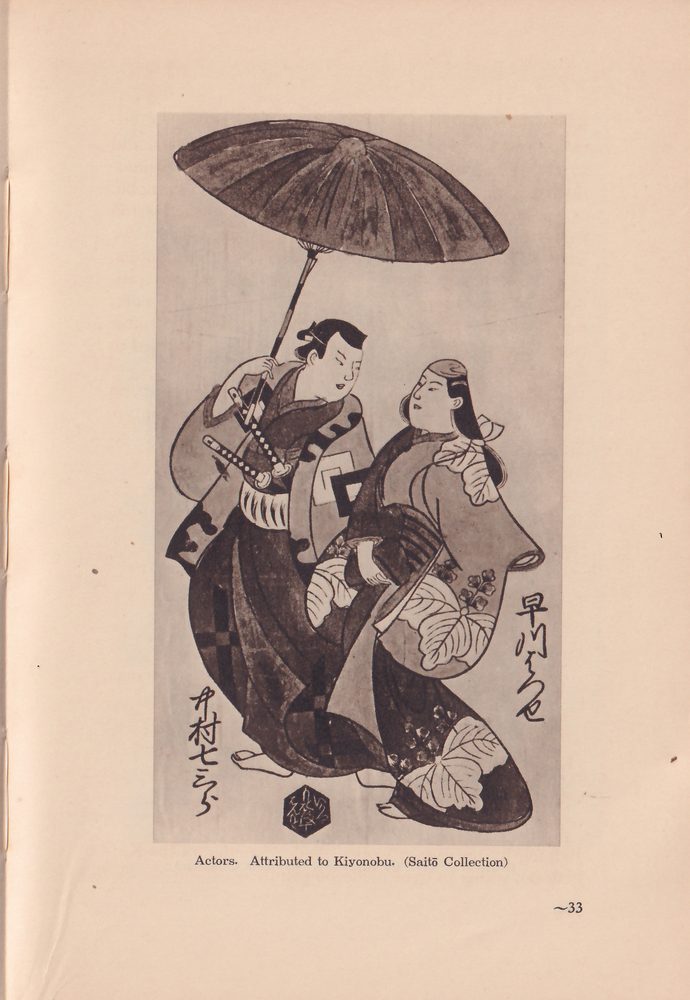
Among the workers in beni-e and urusi-e were the leader and followers of the Torii school. Kiyonobu and
Kiyomasu have left us many works in these styles. Kiyotada and Kiyotomo also executed beni-e and urusi-e, and so did Okumura-Masanobu, Okumura-Tosinobu, Nisimura-Sigenobu, Nisimura-Sigenaga, and Isikawa-Toyonobu.
The most celebrated wood-cut artists of this period were Torii-Kiyonobu and Torii-Kiyomasu, whom we have already mentioned. Both of them, as hand-painters, painted posters for theatres, while as engravers they produced prints representing actors. And, what is more, they founded a school of painters that may be called after their surname the Torii school, which has continued to flourish down to our own times.
The following is the “genealogy” of this school, in which all the painters (except one, viz., Hanekawa-Tintyō) had the same surname, Torii:
- Torii-Kiyonobu I. (1665–1730)
- Kiyomasu I.
- Kiyonobu II.
- Kiyomasu II. (died 1763)
- Kiyotada
- Kiyosige
- Kiyotomo
- Kiyoharu
- Hanekawa-Tintyō (died 1753)
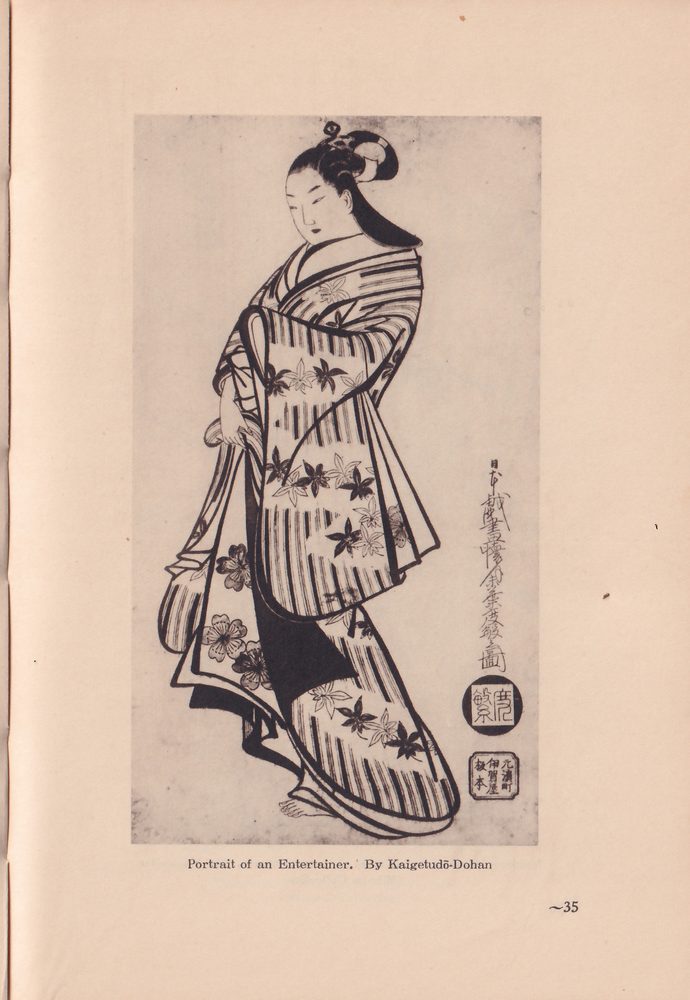
The Kaigetu-dō school is shown in the following:
- Kaigetu-dō-Ando (died circa 1714)
- Dohan
- Dosyū
- Dosin
- Dosyu
- Tyōyō-dō-Anti
- Matuno-Tikanobu
Judging by his extant works, Ando, founder of the Kaigetu-dō, seems to have made no prints.
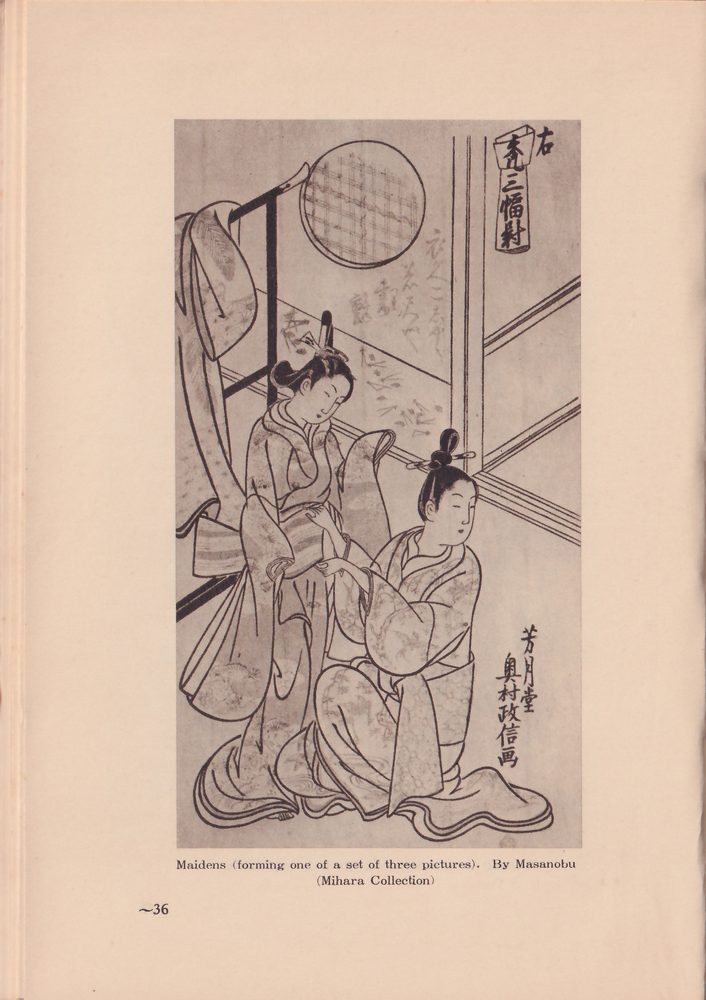
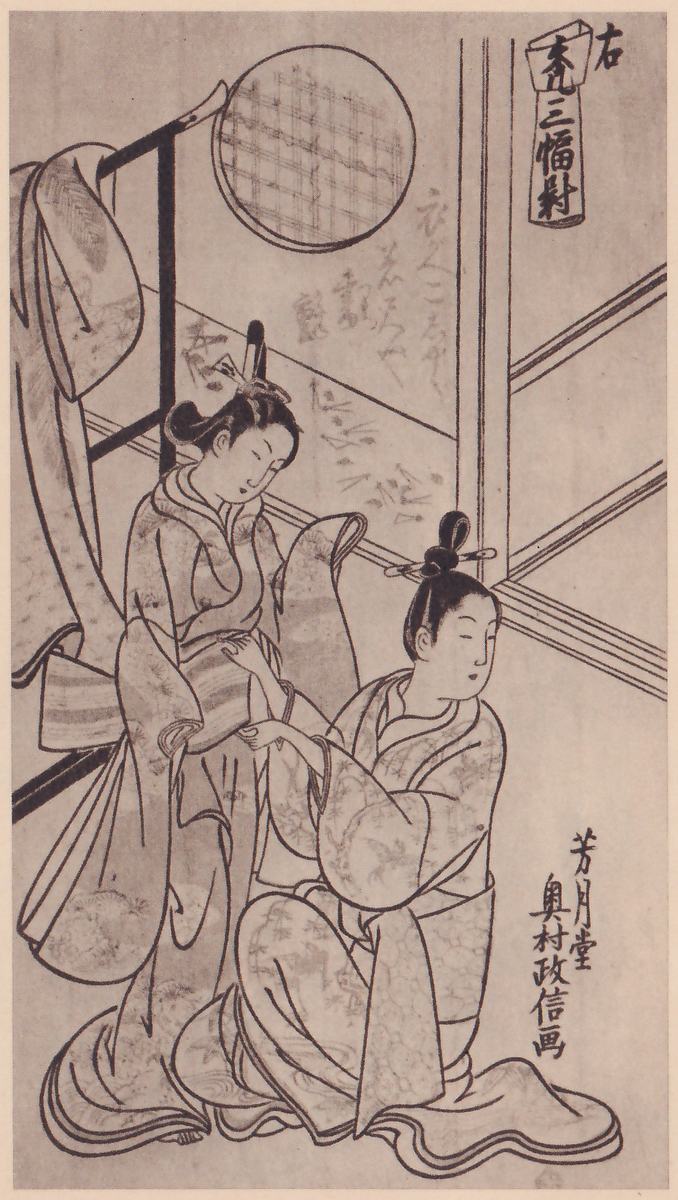
(Mihara Collection)
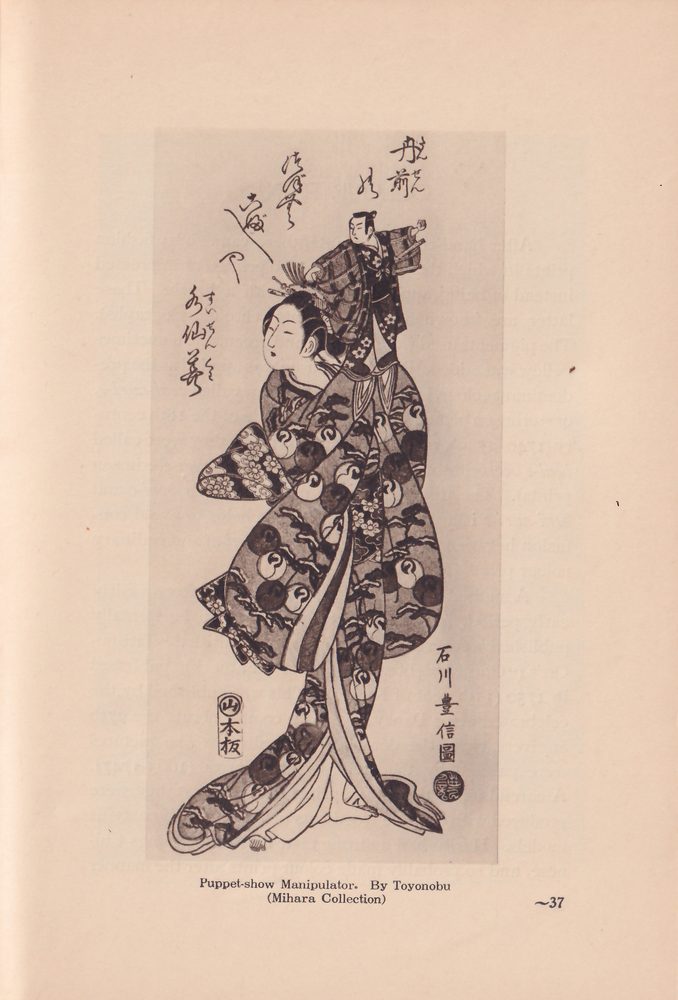
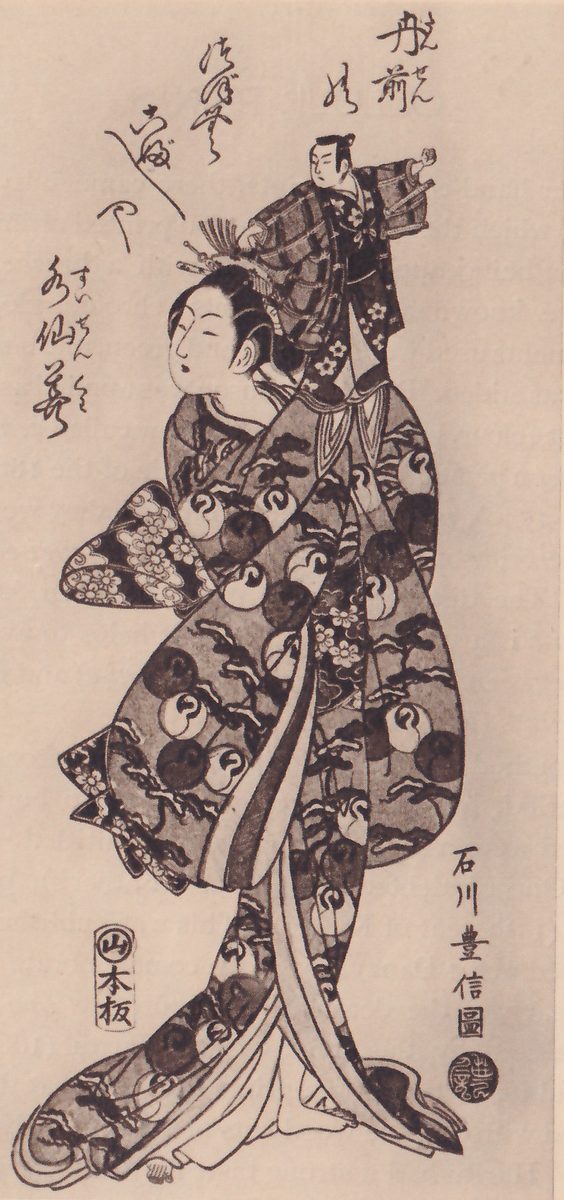
(Mihara Collection)