
COLOUR PRINTS TODAY
There has been a revival of activity and enthusiasm in chromoxylography since the year 1913, that is, since the beginning of the Taisyō era (1912–1926), down to our own day. With much of its old domain encroached upon by photography, our wood-engraving has been striving to open up new vistas of activity appropriate to it as a fine art. In other words, it is endeavouring to exhibit its unique qualities to the best possible advantage by enhancing its artistic merits within its own technical limitations. With a sense of artistic freedom born of a keen realization of the special nature of their art, the younger generation of painters interested in wood-cuts have devoted their energies to the production of works of art truly worthy of the name.
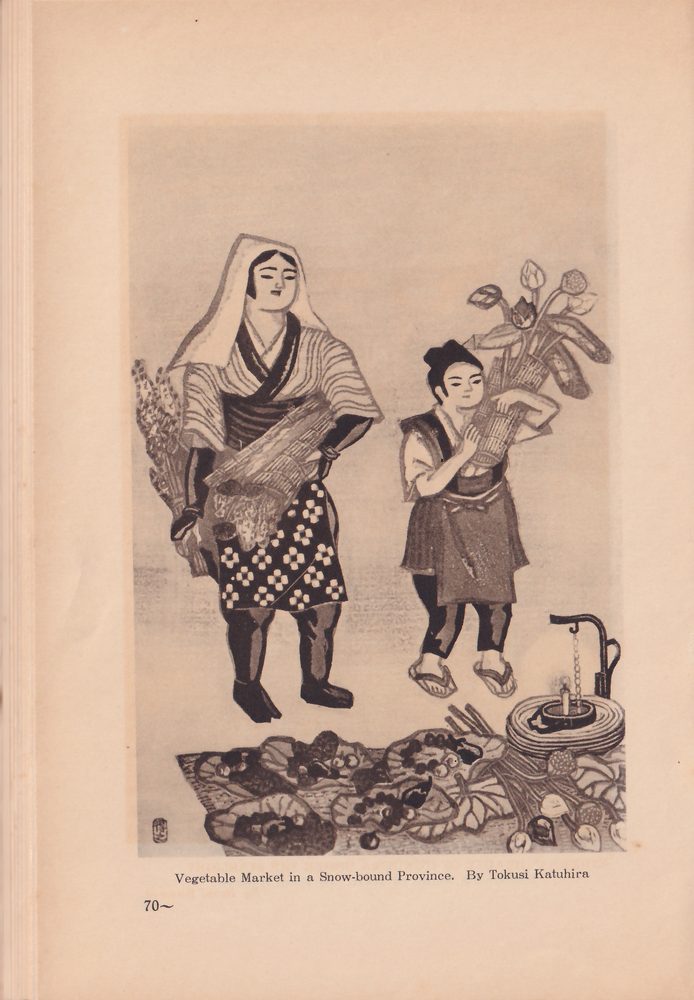
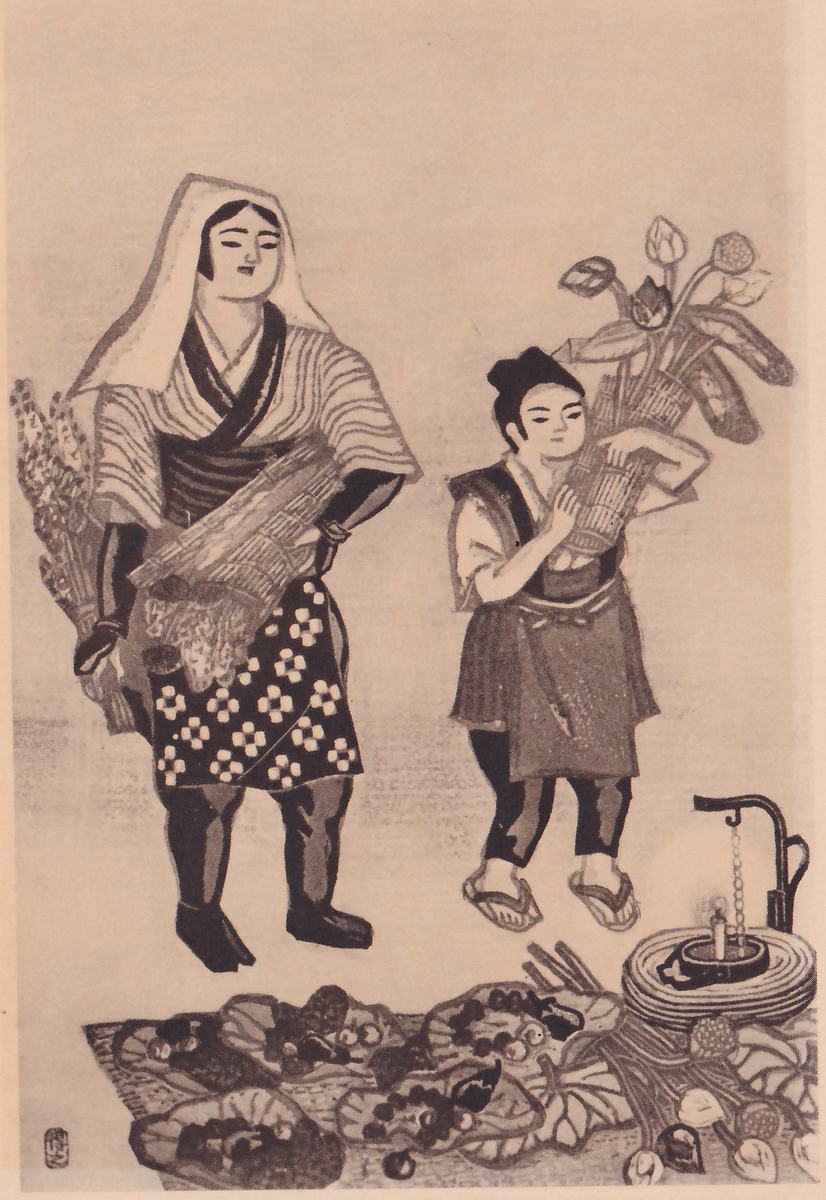
We observe two tendencies in our present-day prints thus produced. The first is seen in those who would build on the foundations of the traditional school a new edifice suitable to the new age. The other trend is discernible in those whose art is modelled on Western wood-engraving. These two schools of artists take different attitudes or positions when engaged in the making of prints. To put the difference in a nutshell, the art of the former, or traditionists, is an art of lines, that of the latter (due to Western influence) an art of colours and tints.
To explain this a little more: The former makes lines and curves the principal elements of its pictures,
and adds colours by repeated impressions. The other school, whose methods are traceable to Occidental sources, makes little if any use of lines and curves, but seeks to construct their pictures by applying different colour blocks in such a way as to secure complex effects.
The Japanese art of chromoxylography at the present time is advancing along the two main currents outlined above. Of those belonging to the first, the late, Mr. Hasiguti-Goyō produced works equalled by the products of few others. Of the living artists of the same school, Mr. Itō-Sinsui, Mr. Kawase-Hasui, Mr. Tutiya-Kōitu and Mr. Kobayakawa-Kiyosi should be mentioned as the most celebrated. Among the best-known painters of the other school I may mention Mr. Hiratuka-Un-iti and Mr. Onti-Kōsirō, who are members of the Japanese Prints Association.
The two schools of artists differ also in regard to their processes of production or division of labour. In the traditionist school the painter, like the ukiyo-e painter of old, acts as a sort of leader or conductor to the engraver and the printer, organizing to the best advantage the diverse skill of the trio, including himself. In the other or semi-Westernized school the painter himself is also at once engraver and printer, so that he actually sees the picture through the entire process and thus seeks to exhibit its total artistic quality to the fullest extent.
It is in this spirit of devotion that all the foremost wood-cut artists of present-day Japan are striving to bring their art to a state of unparalleled excellence.
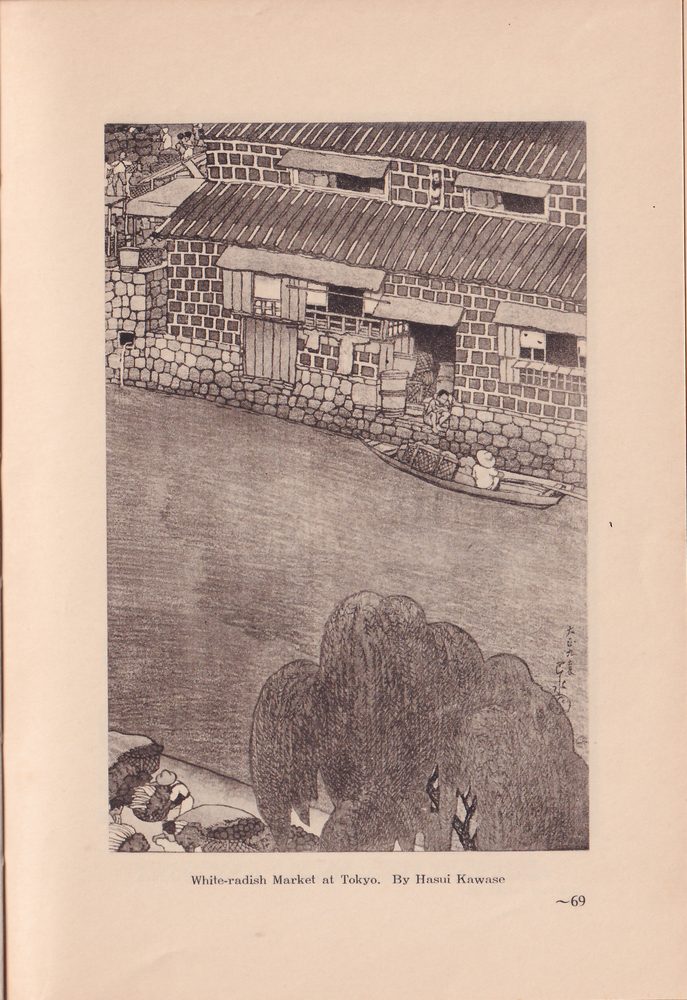
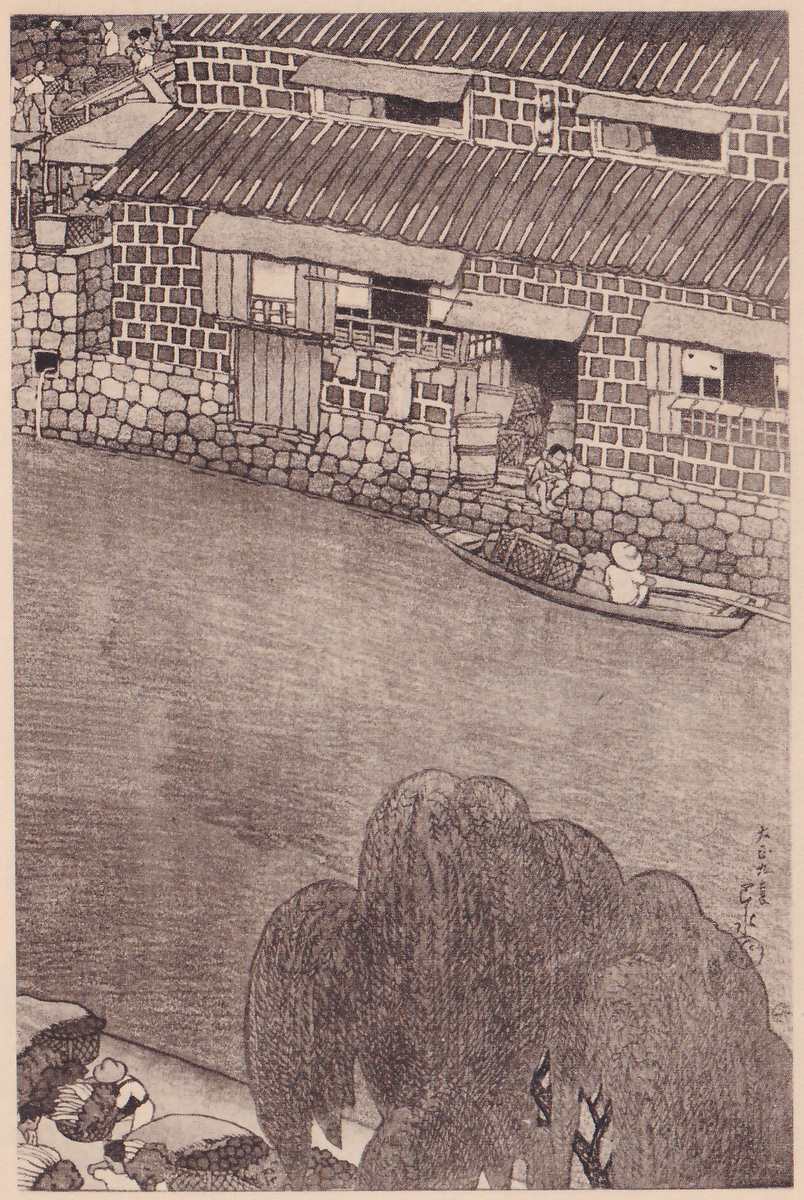
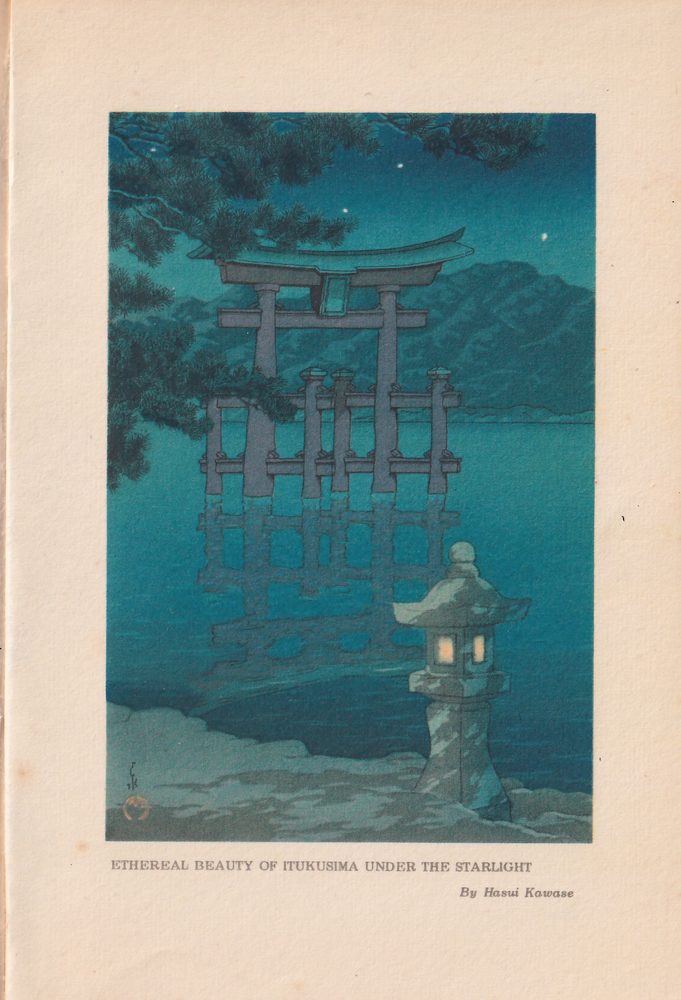
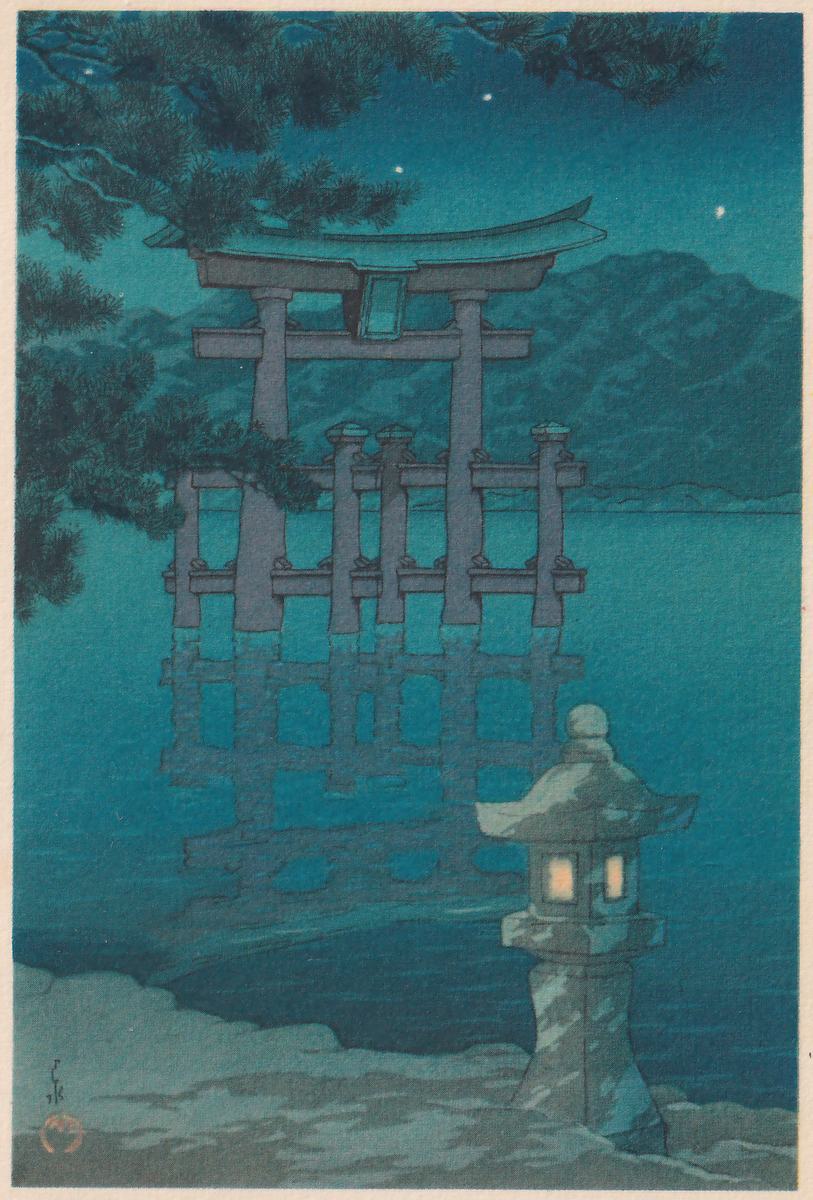
By Hasui Kawase