
COLOUR PRINTS
After hand-coloured prints, there came into fashion prints in which the colours were also printed or impressed instead of being applied by hand with a brush. These latter are known as colour prints (chromoxylographs). The pigments used were crimson and green, and sometimes yellow was added. BecausePrinted: Becanse crimson was applied as the predominant colour, however, these are now called beni-zuri-e. or “crimson prints.” In the fifth decade of the 18th century (1740–1749), when they were produced, they were called beni-e or “crimson pictures” instead of beni-zuri-e(crimson prints). The distinction now made between beni-e and beni-zuri-e is a valuable one, since it helps to avoid confusion between hand-coloured prints (beni-e) and ordinary colour prints (beni-zuri-e).
A method of colour printing had existed from a fairly early period, but the first colour prints to be formally published were a series forming a book entitled “Titi-no-On” (“One’s Indebtedness to One’s Father”), published in 1730 (15th year of Kyōho). This was published by the celebrated actor Danzyūrō II., to commemorate the 27th anniversary of the death of Danzyūrō I. The pictures were painted by the artist Ogawa-Haritu (1663–1747). A careful inspection of the prints suggests that they were produced with Chinese wood-cuts of the Ch’ing dynasty as models. Haritu had a strong taste for artistic things Chinese, and so probably made colour prints after the manner
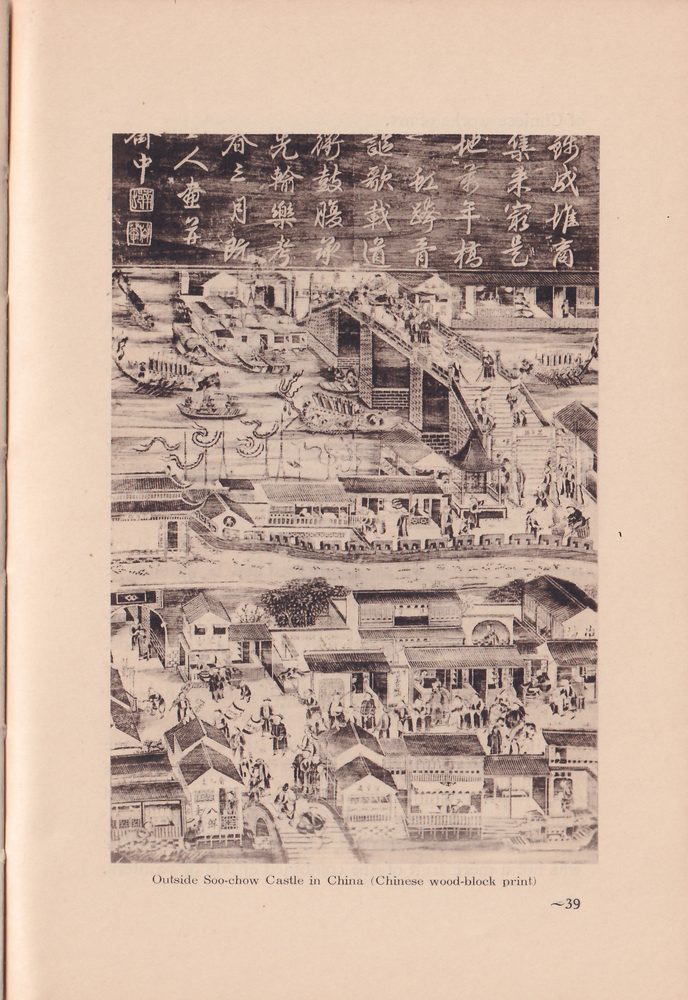
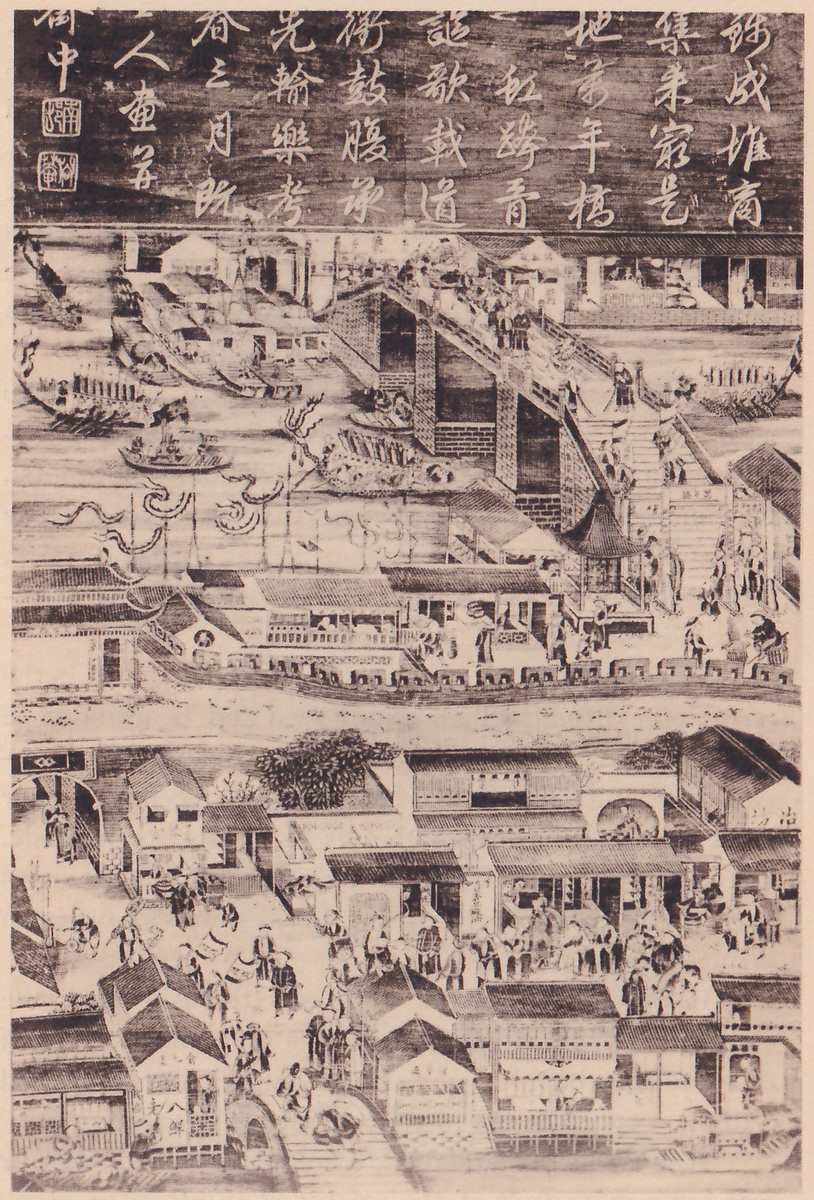
of ChinesePrinted: Chniese works of art.
It is worth while recording here that a facsimile reproduction of a Chinese book of colour prints called “Min-Tyō Seidō Ga-en” was published in this country in 1746 (3rd year of Enkyō). This single fact seems sufficient to demonstrate the debt which our art of colour prints owes the Chinese art of engraving. In these improved colour prints one colour was impressed after another so as to make the picture complete when several colour impressions had been made.
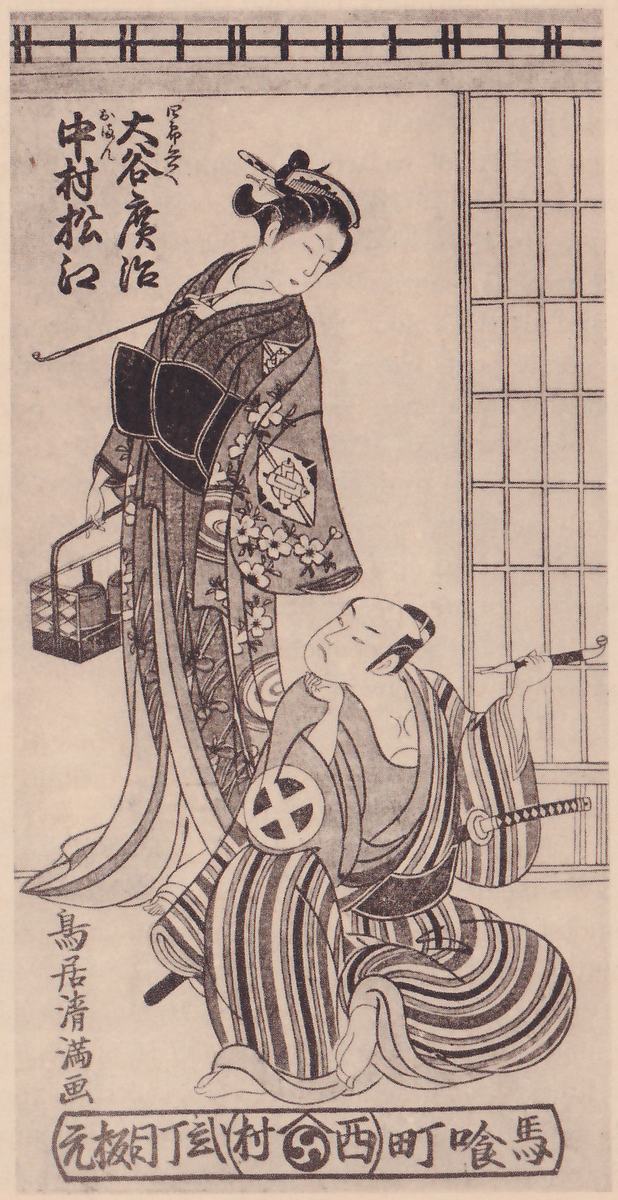
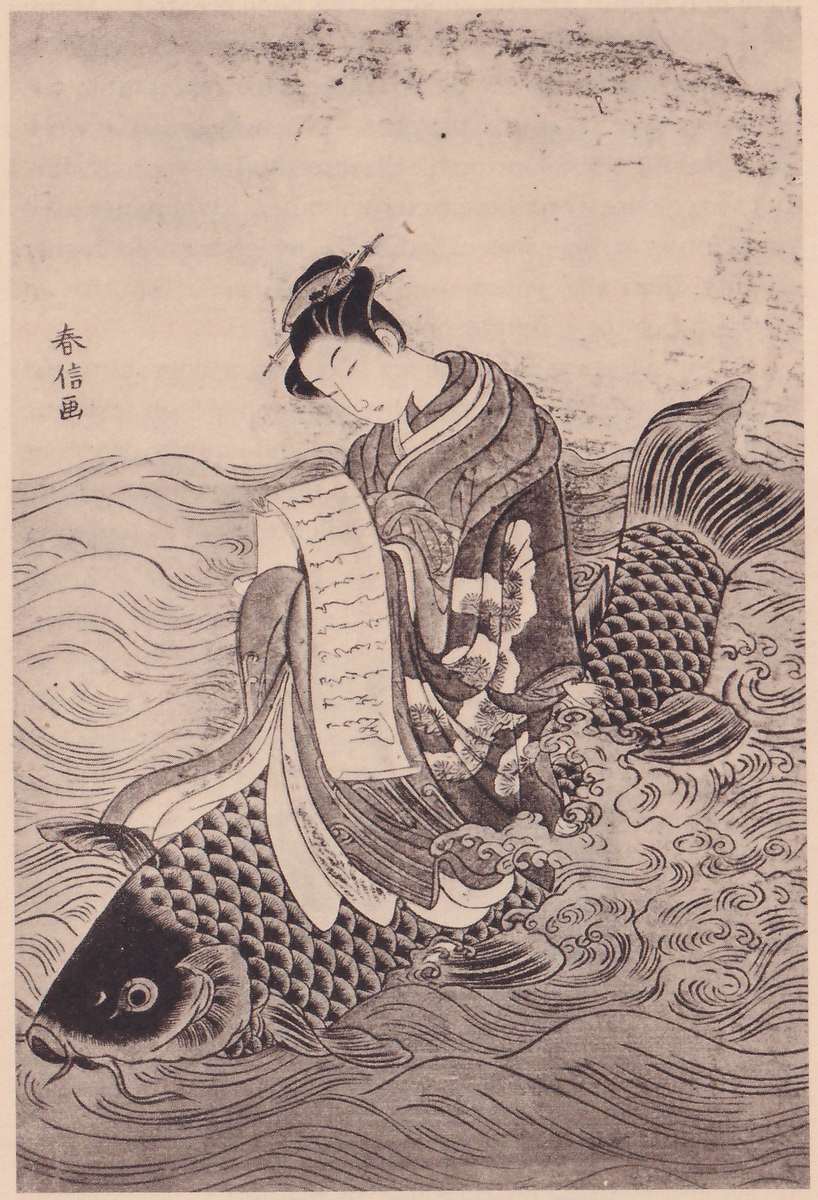
Among the foremost “crimson-print” artists who used two or three pigments must be mentioned Torii-Kiyonobu II., Torii-Kiyomasu II., Okumura-Masanobu, Nisimura-Sigenaga, and Isikawa-Toyonobu; while those who employed four to five colours were Torii-Kiyomitu, Torii-Kiyohiro, Torii-Kiyotune, Kitao-Sigemasa, Tomikawa-Ginsetu, and Suzuki-Harunobu.
Nisiki-e (literally, “brocade pictures”). This is the term applied to a still more improved and beautiful type of beni-zuri-e. Nisiki (brocade) is a very beautifully coloured fabric, and the term was transferred to a type of colour print (chromoxylograph) that is as lovely as brocade. These prints first appeared on the market in the spring of 1765 (2nd year of Meiwa), so that they must have been printed during the previous year.
It will amply repay our efforts to investigate the causes that led to the birth of this consummate type of coloured broadside known as nisiki-e, which indeed marked a distinct epoch in the history of our art of engraving.
It should be remarked in the first place that the nisiki-e was not a mere fruit of the combined efforts of painters,
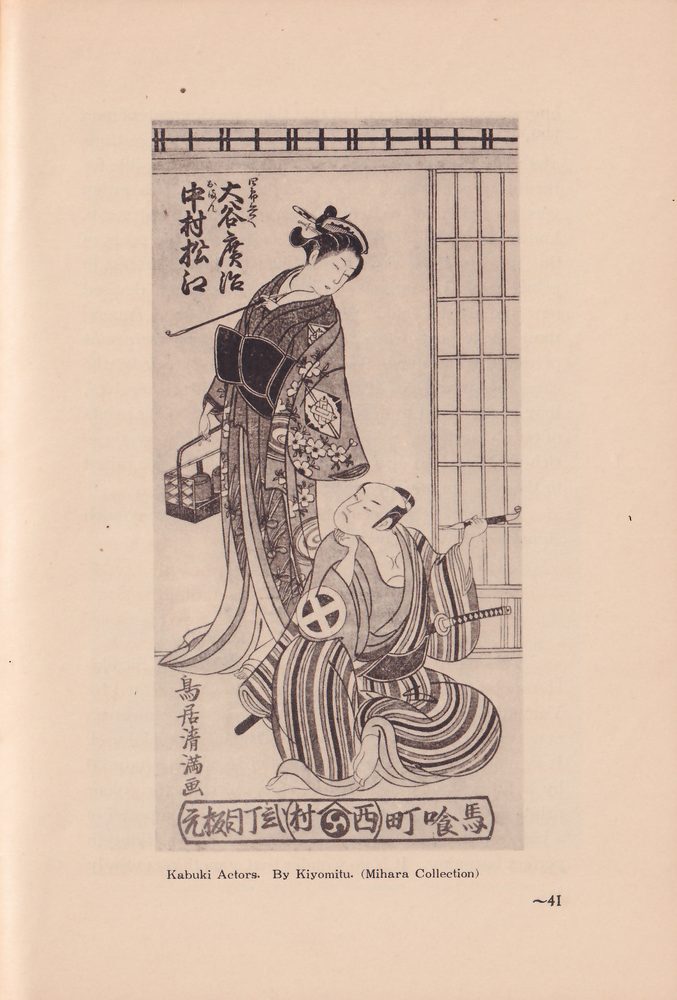
engravers, and printers, but that there was a group of men who acted as their guiding spirits and made suggestions and plans for those artists, thus rendering it possible for them to produce such superb works of art. This group was composed of writers of comic and satirical verse, known as kyōka (literally “mad songs”). Some poets of this type in those days took a deep aesthetic interest in prints used as frontispieces of books, and they devised new and artistic colour prints for this purpose. Among those comic poets were many young men who were sons of wealthy tradesmen in Edo, and being free from the cares and worries of earning a livelihood for themselves, they could afford to devise or design artistic colour prints of purely aesthetic merit. It was, thus, chiefly by these rich versifiers that beni-zuri-e (crimson prints) were raised to the stage of nisiki-e, or brocade prints.
In the earlier specimens of nisiki-e one sees such signatures as the following:
Hakusei Kō
Suzuki-Harunobu, Painter
Endō-Goryoku, Engraver
Yumoto-Kōsi, Printer.
This means that the piece was painted by Suzuki-Harunobu, engraved by Endō-Goryoku, and printed by Yumoto-Kōsi. The expression “Hakusei Kō” means a new type of print invented by the comic poet Hakusei. It signifies, in other words, that the nisiki-e was produced by a literary man with a keen appreciation for colour prints acting as a sort of conductor to a trio composed of a painter, an engraver, and a printer, all four working in perfect harmony. It is no wonder that something entirely
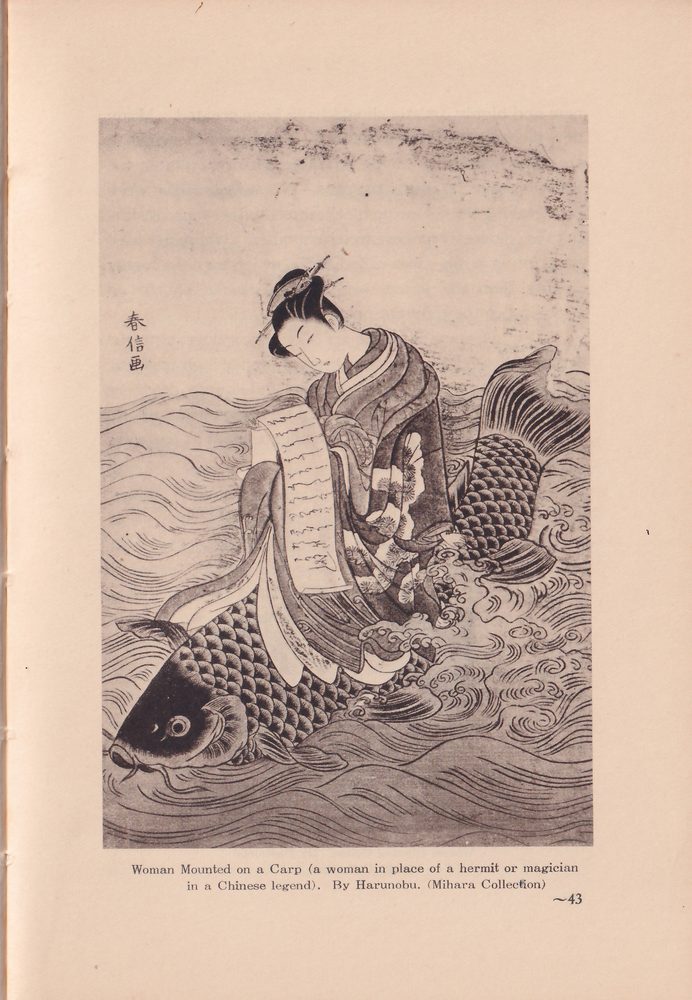
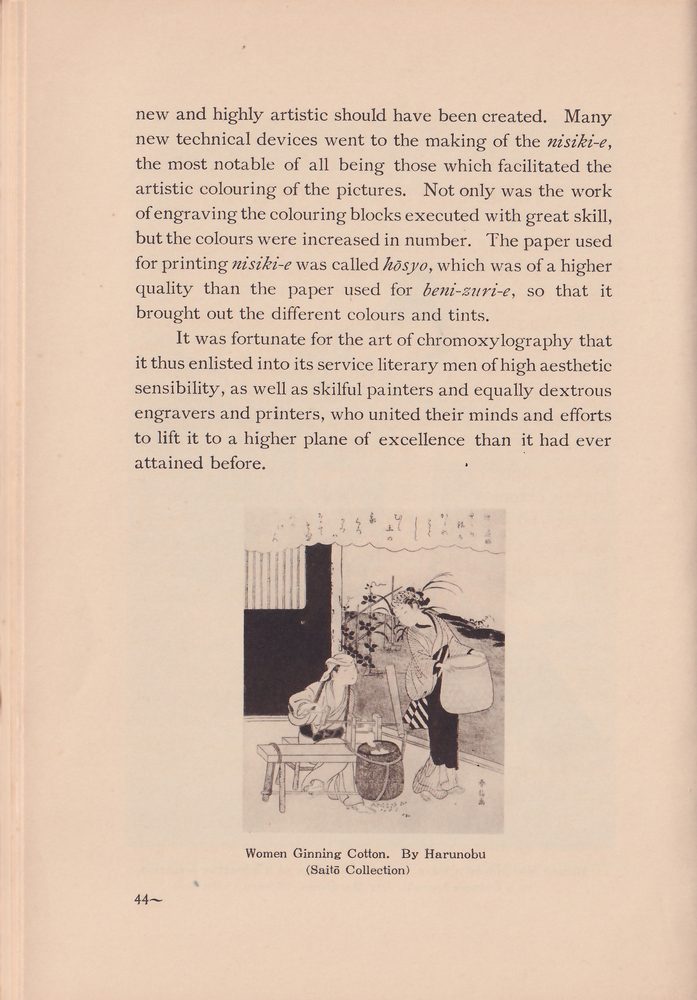
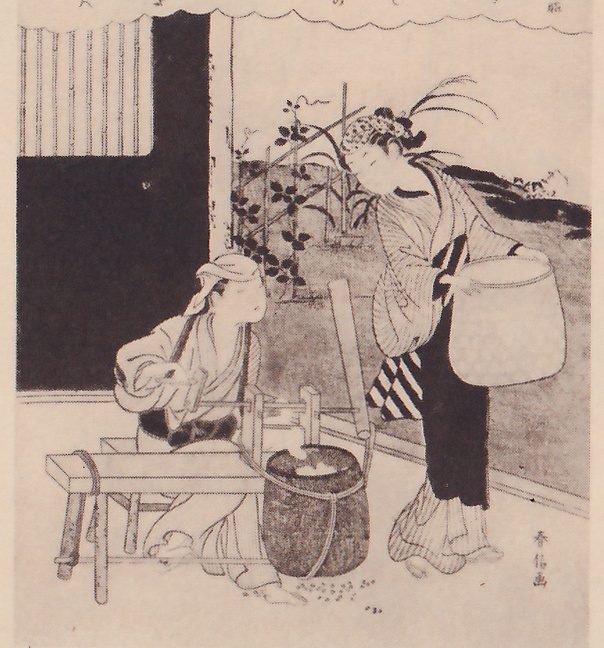
(Saitō Collection)
new and highly artistic should have been created. Many new technical devices went to the making of the nisiki-e, the most notable of all being those which facilitated the artistic colouring of the pictures. Not only was the work of engraving the colouring blocks executed with great skill, but the colours were increased in number. The paper used for printing nisiki-e was called hōsyo, which was of a higher quality than the paper used for beni-zuri-e, so that it brought out the different colours and tints.
It was fortunate for the art of chromoxylography that it thus enlisted into its service literary men of high aesthetic sensibility, as well as skilful painters and equally dextrous engravers and printers, who united their minds and efforts to lift it to a higher plane of excellence than it had ever attained before.