
PRINTS IN THE MEIZI ERA
The Meizi era (1868–1912) was a great turning-point in the cultural history of Japan. The introduction of Western civilization on a grand scale entailed sweeping reforms in all spheres of national activity, not excluding the different fields of art, where various Occidental modes and methods of art-expression were eagerly adopted and assimilated.
It is true that the Western art of painting had once been in vogue in Japan before, that is, towards the close of the 16th century, when it flourished here with ChristianityPrinted: Chritianity. After making considerable headway, it rapidly declined, but at the opening of the 18th century the Western principles of linear perspective were introduced to our artists by way of China. This new knowledge, as was pointed out in an earlier chapter, profoundly influenced the ukiyo-e painters; and towards the end of the century Siba-Kōkan, Aōdō-Denzen, and others at last revived oil-painting, while artistic copper-prints catering to good taste were also produced. A good many painters for copper-plates have since made their appearance.
This brings us, by way of contrast and comparison, to the question of the genealogy of colour-print artists in the Meizi era. Some of the artists, closely adhering to the modes and practices of the traditional schools, gradually estranged themselves from the tastes and trends of the new age. But others, like Kobayasi-Kiyotika, added Western
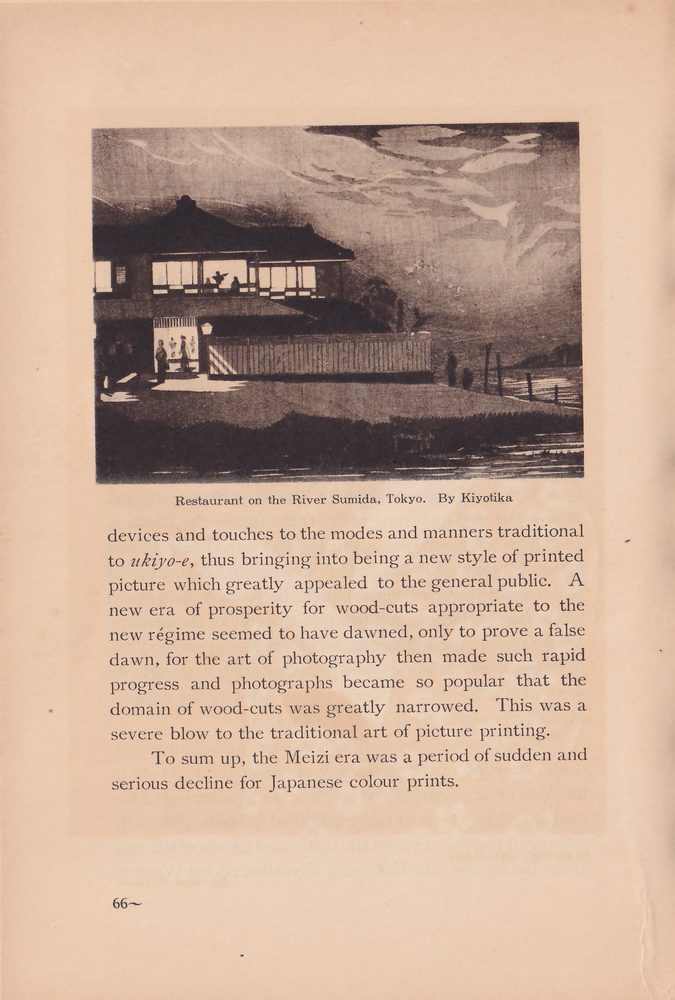
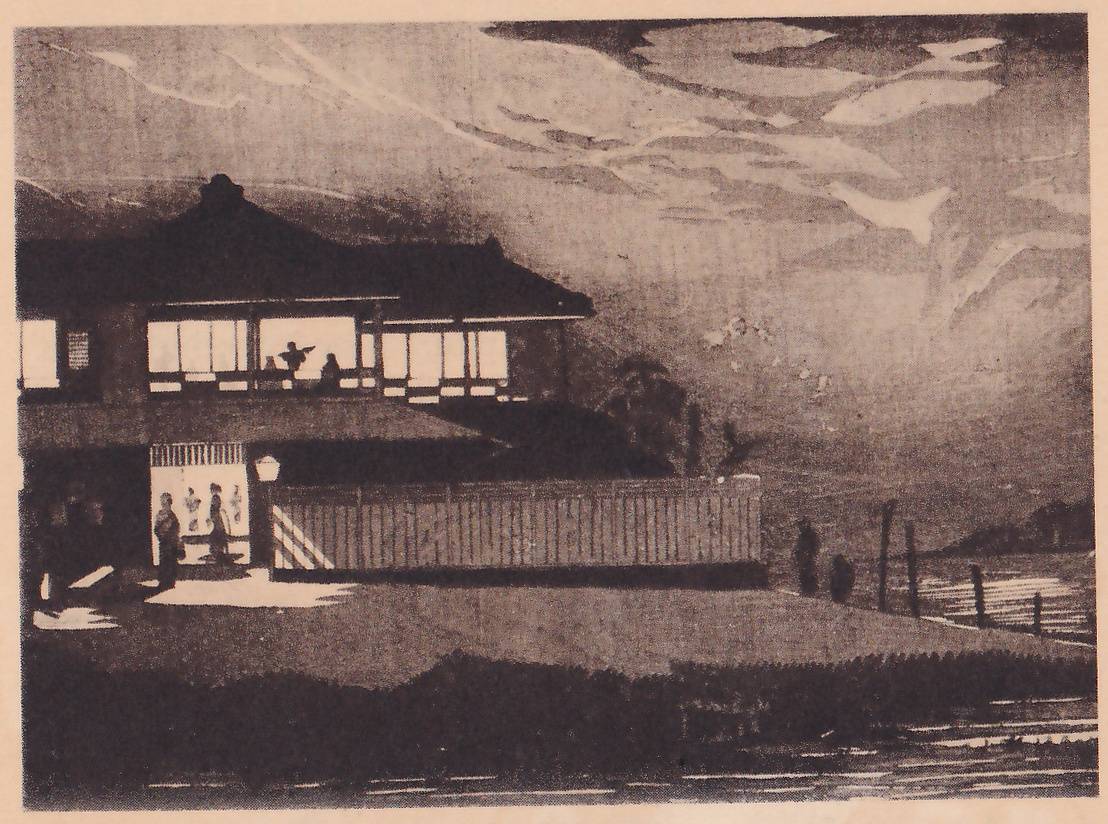
devices and touches to the modes and manners traditional to ukiyo-e, thus bringing into being a new style of printed picture which greatly appealed to the general public. A new era of prosperity for wood-cuts appropriate to the new régime seemed to have dawned, only to prove a false dawn, for the art of photography then made such rapid progress and photographs became so popular that the domain of wood-cuts was greatly narrowed. This was a severe blow to the traditional art of picture printing.
To sum up, the Meizi era was a period of sudden and serious decline for Japanese colour prints.
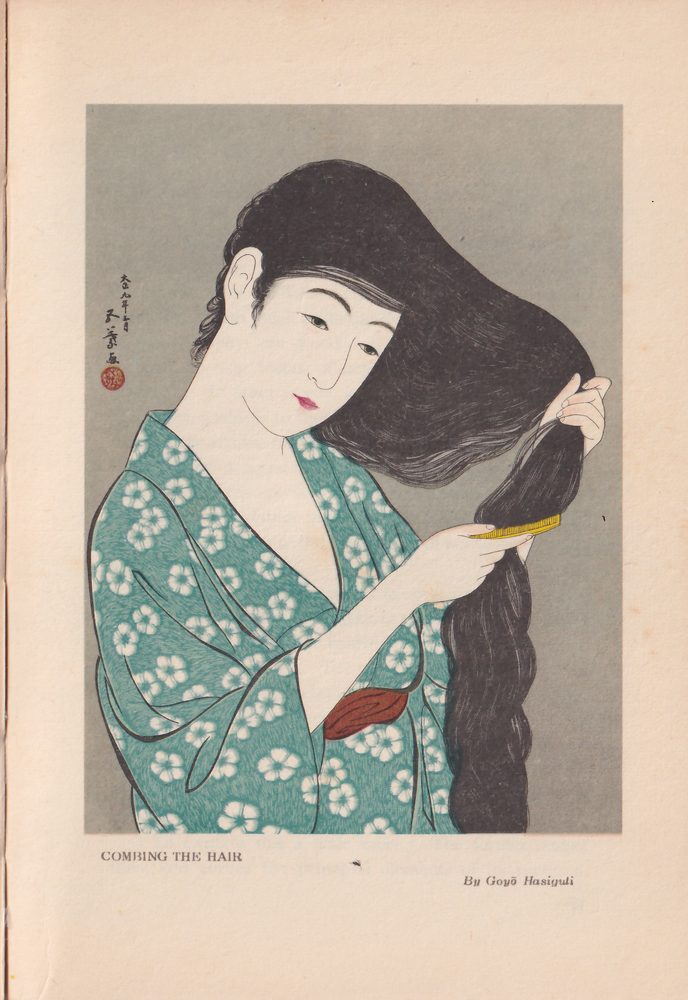
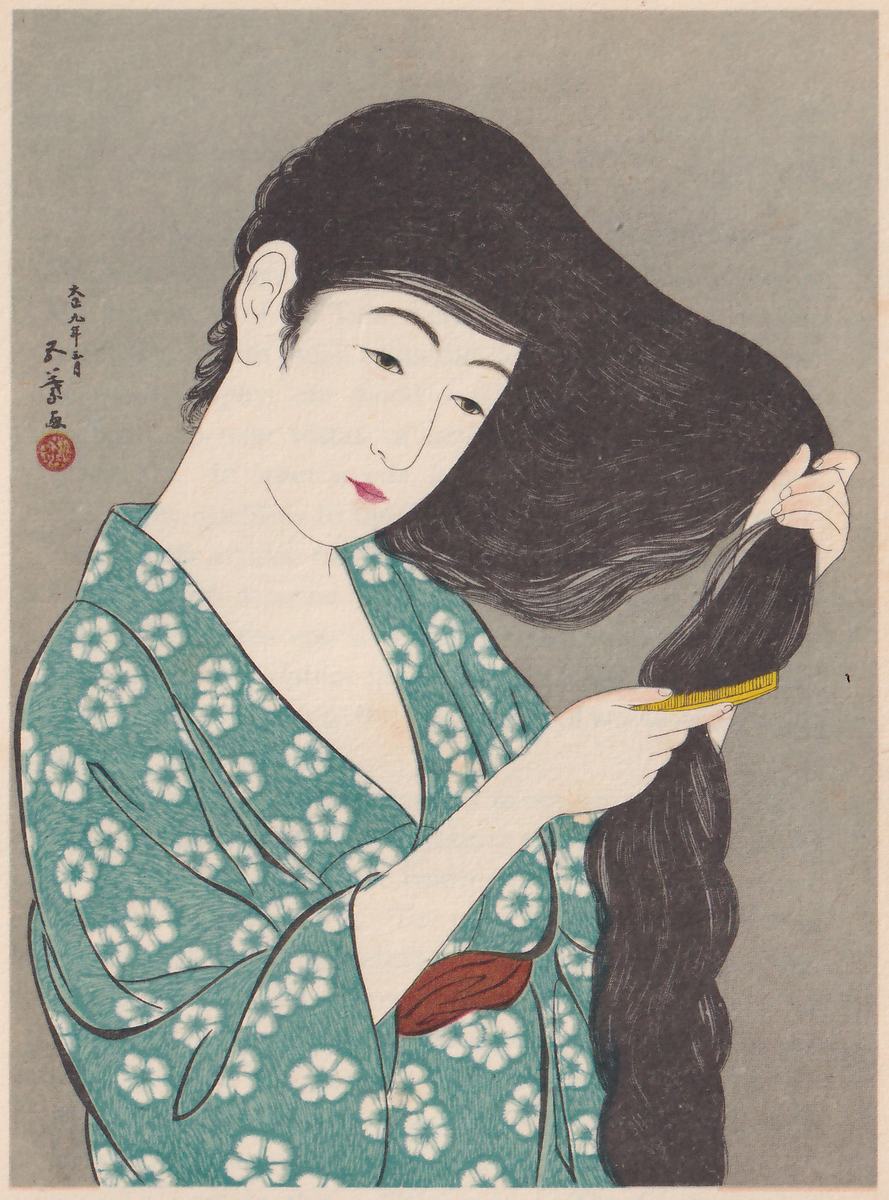
By Goyō Hasiguti