
Children’s Days in Japan
Tourist Library 12
Children’s Days in Japan
by Tamotsu Iwadō, M. A.
illustrated by Takewo Takei
Tourist Library 12
Board of Tourist Industry, Japanese Government Railways, 1936
TOURIST LIBRARY
Volumes already published
1. TEA CULT OF JAPAN By Y. Fukukita, A. B.
2. JAPANESE NOH PLAYS By Prof. T. Nogami
3. SAKURA (Japanese Cherry) By M. Miyoshi, D. Sc.
4. JAPANESE GARDENS By Prof. M. Tatsui
5. HIROSHIGE AND JAPANESE LANDSCAPES By Prof. Yone Noguchi
6. JAPANESE DRAMA By B. T. I.
7. JAPANESE ARCHITECTURE By Prof. H. Kishida, D. Sc.
8. WHAT IS SHINTŌ? By G. Katō, D. Litt.
9. CASTLES IN JAPAN By Prof. N. Ōrui, D. Litt. and Prof. M. Toba
10. HOT SPRINGS IN JAPAN By Prof. K. Fujinami, M. D.
11. FLORAL ART OF JAPAN By Issōtei Nishikawa
12. CHILDREN’S DAYS IN JAPAN By T. Iwadō, M. A.
Volumes in preparation
KIMONO (Japanese Dress) By Kenichi Kawakatsu
JAPANESE CUISINE By Prof. Kaneko Tezuka
JŪDŌ By Prof. Jigorō Kanō
MUSIC IN JAPAN By Katsumi Sunaga
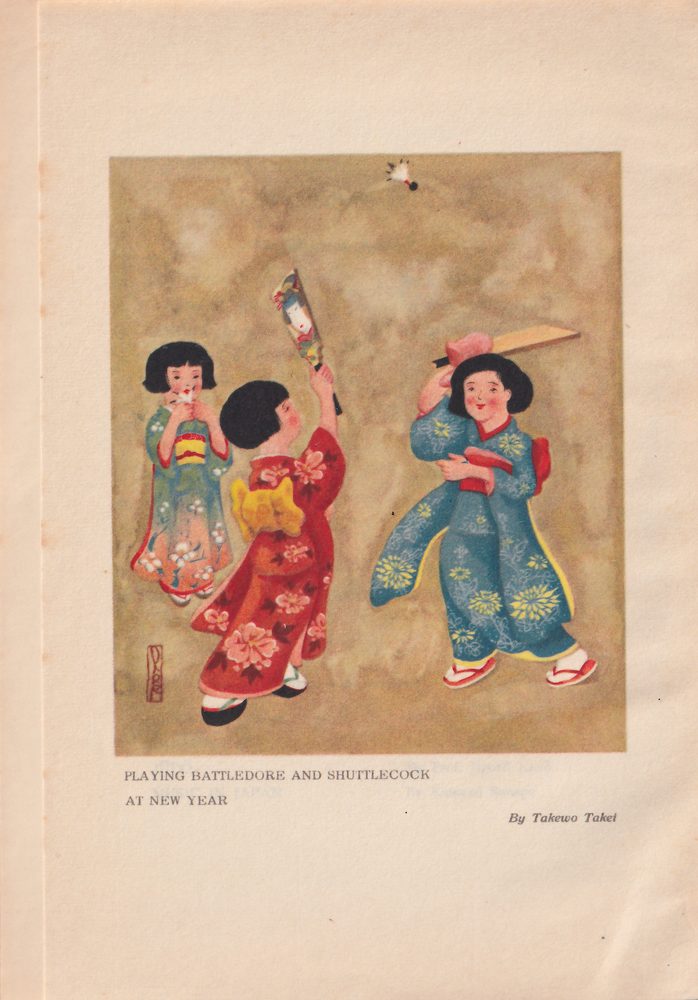
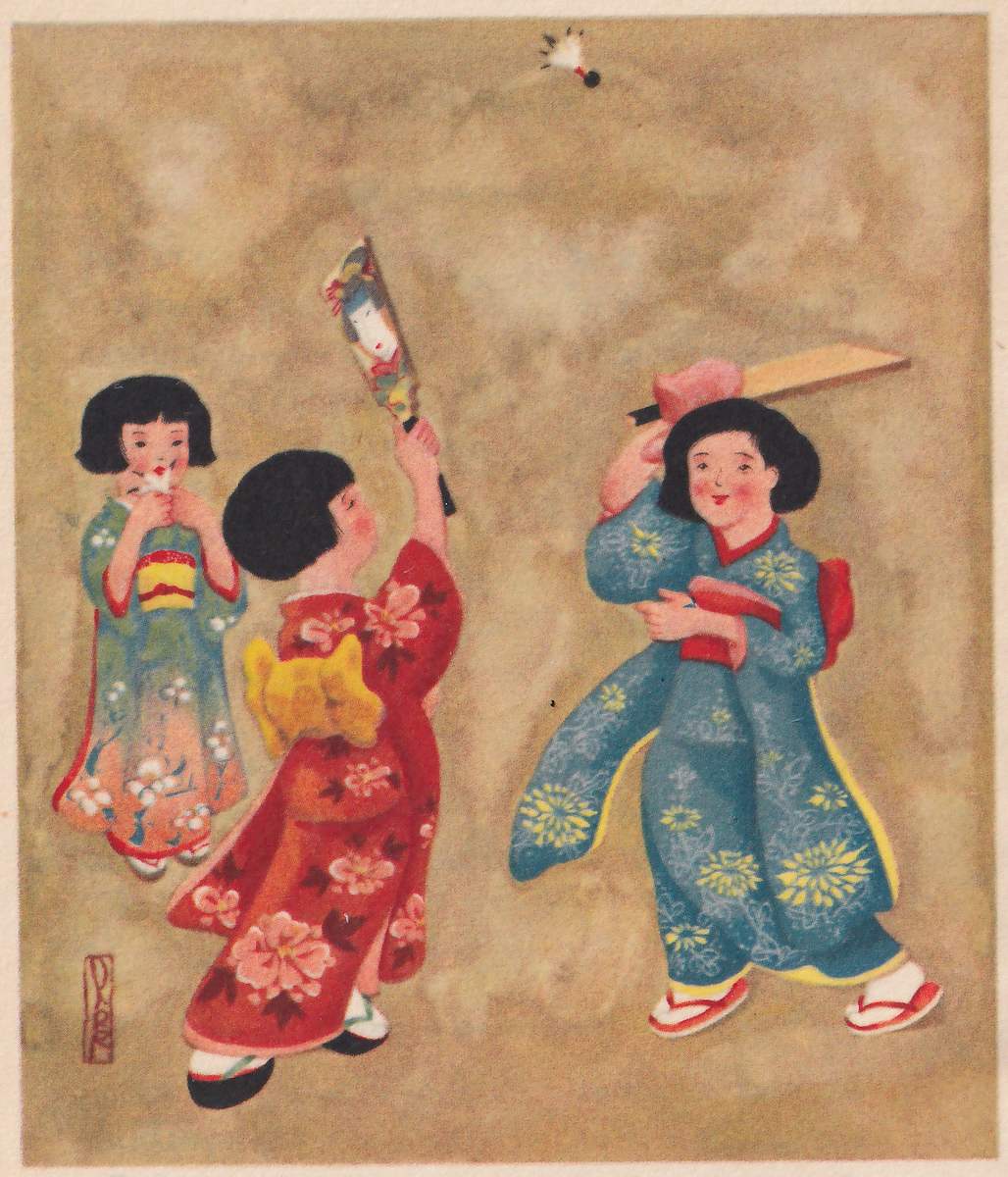
By Takewo Takei
CHILDREN’S DAYS IN JAPAN
BY
TAMOTSU IWADŌ, M. A.
Illustrated by
Takewo Takei
BOARD OF TOURIST INDUSTRY
JAPANESE GOVERNMENT RAILWAYS

COPYRIGHT 1936
EDITORIAL NOTE
It is a common desire among tourists to learn something of the culture of the countries they visit as well as to see their beautiful scenery. To see is naturally easier than to learn, but flying visits merely for sightseeing hardly furnish the time or opportunity for more than a casual glimpse of the culture of any foreign people. This is specially true of Japan.
The Board of Tourist Industry recognizes the difficulty of attaining this high purpose, viz., to provide foreign tourists with accurate information regarding the various phases of Japan’s characteristic culture. It is endeavouring therefore to meet this obligation, as far as possible, by publishing this series of brochures.
The present series will, when completed, consist of more than a hundred volumes, each dealing with a different subject, but all co-ordinated. By reading therefore the entire series the foreign student of Japan may gain an adequate knowledge of the unique culture that has developed in this country through the ages.
For those who wish to follow up these studies with a closer investigation, bibliographies are appended, which we trust may be found reliable and authoritative guides in their study.
Board of Tourist Industry,
Japanese Government Railways
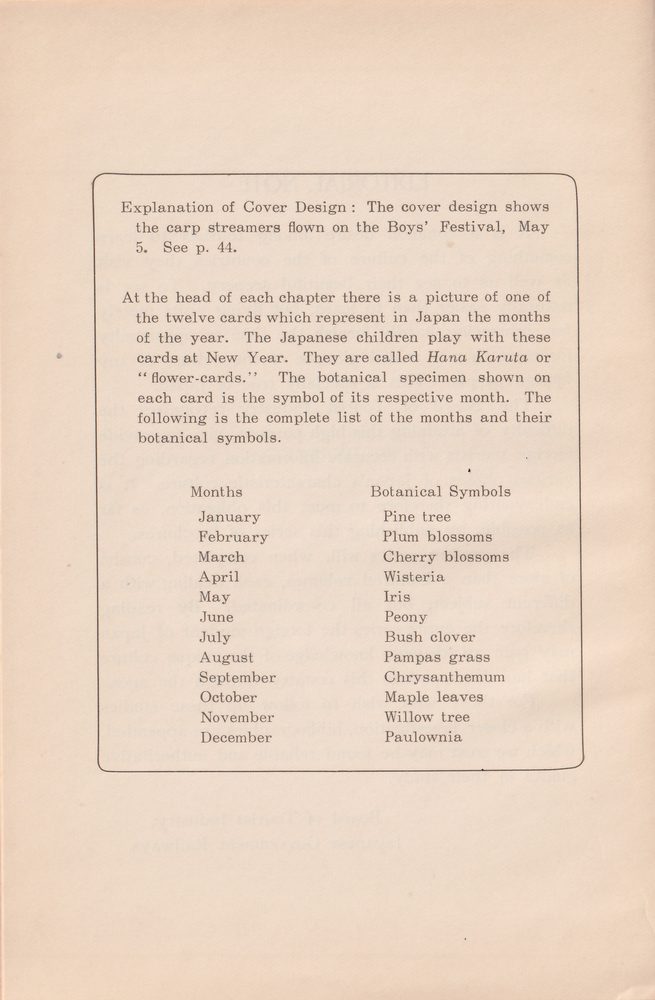
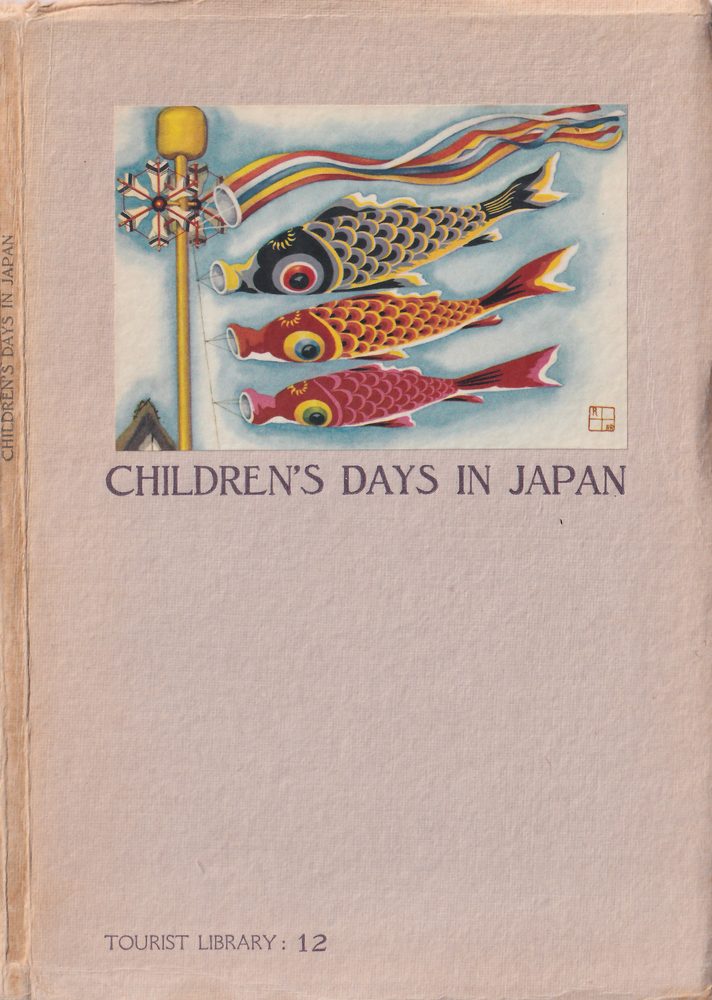
Explanation of Cover Design: The cover design shows the carp streamers flown on the Boys’ Festival, May 5. See p. 44.
At the head of each chapter there is a picture of one of the twelve cards which represent in Japan the months of the year. The Japanese children play with these cards at New Year. They are called Hana Karuta or “flower-cards.” The botanical specimen shown on each card is the symbol of its respective month. The following is the complete list of the months and their botanical symbols.
| Months | Botanical Symbols |
|---|---|
| January | Pine tree |
| February | Plum blossoms |
| March | Cherry blossoms |
| April | Wisteria |
| May | Iris |
| June | Peony |
| July | Bush clover |
| August | Pampas grass |
| September | Chrysanthemum |
| October | Maple leaves |
| November | Willow tree |
| December | Paulownia |
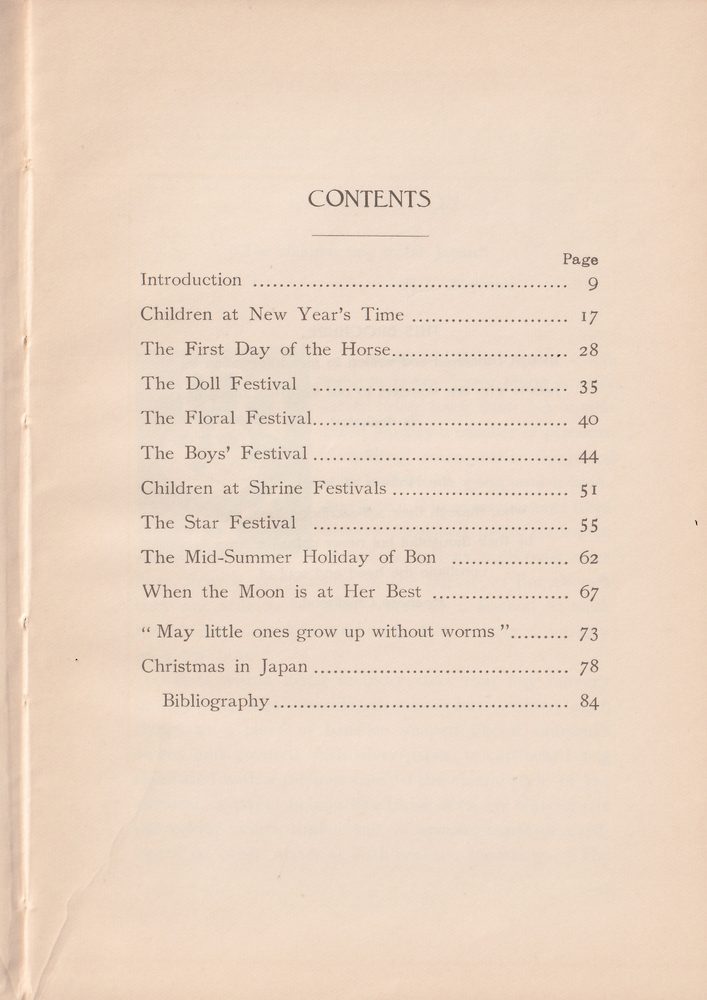
CONTENTS
Page
Introduction ..................................................... 9
Children at New Year’s Time ........................... 17
The First Day of the Horse................................ 28
The Doll Festival ............................................ 35
The Floral Festival.......................................... 40
The Boys’ Festival .......................................... 44
Children at Shrine Festivals ............................. 51
The Star Festival ........................................... 55
The Mid-Summer Holiday of Bon .................... 62
When the Moon is at Her Best ......................... 67
“May little ones grow up without worms”......... 73
Christmas in Japan ........................................... 78
Bibliography ................................................. 84
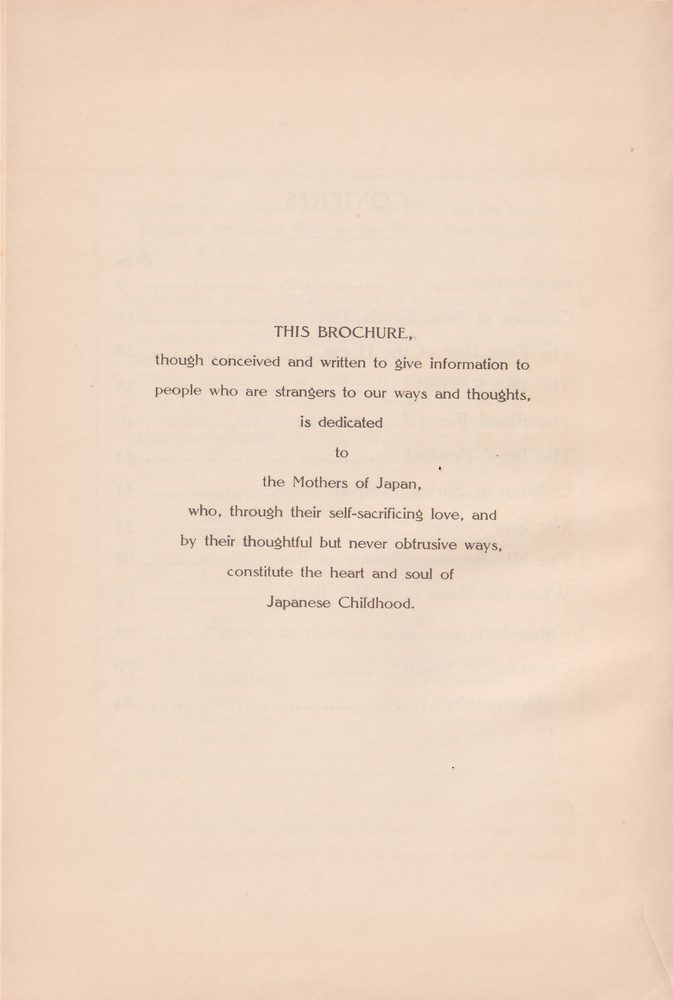
THIS BROCHURE, though conceived and written to give information to people who are strangers to our ways and thoughts, is dedicated to the Mothers of Japan, who, through their self-sacrificing love, and by their thoughtful but never obtrusive ways, constitute the heart and soul of Japanese Childhood.