
THE FLORAL FESTIVAL
Through the law of eternity I turn the wheel,
The wheel that shall never cease to turn.
—Gautama
The ancient Floral Festival owes its origin to a tradition concerning the birth of the great teacher of India. When he was born “two streams of water fell from the sky, one cold and the other hot, wherewith was performed the washing of the Bodhisattva and his mother.”
On the 8th of April, all Buddhist temples place images of Buddha within reach of the worshippers, who buy sweet tea and pour some of it over the object of their devotions. As victims of the evil eye in England used to go to be touched by the King, so Buddhists suffering from various bodily ailments come to be cured by touching an image of the infant Buddha. These people dip their fingers in the sweetened liquor and touch the image in the spots where they suffer in their own bodies.
More attractive to the general public on this day is a special religious parade which proceeds to Hibiya Park in Tokyo, bearing a small shrine in which is placed
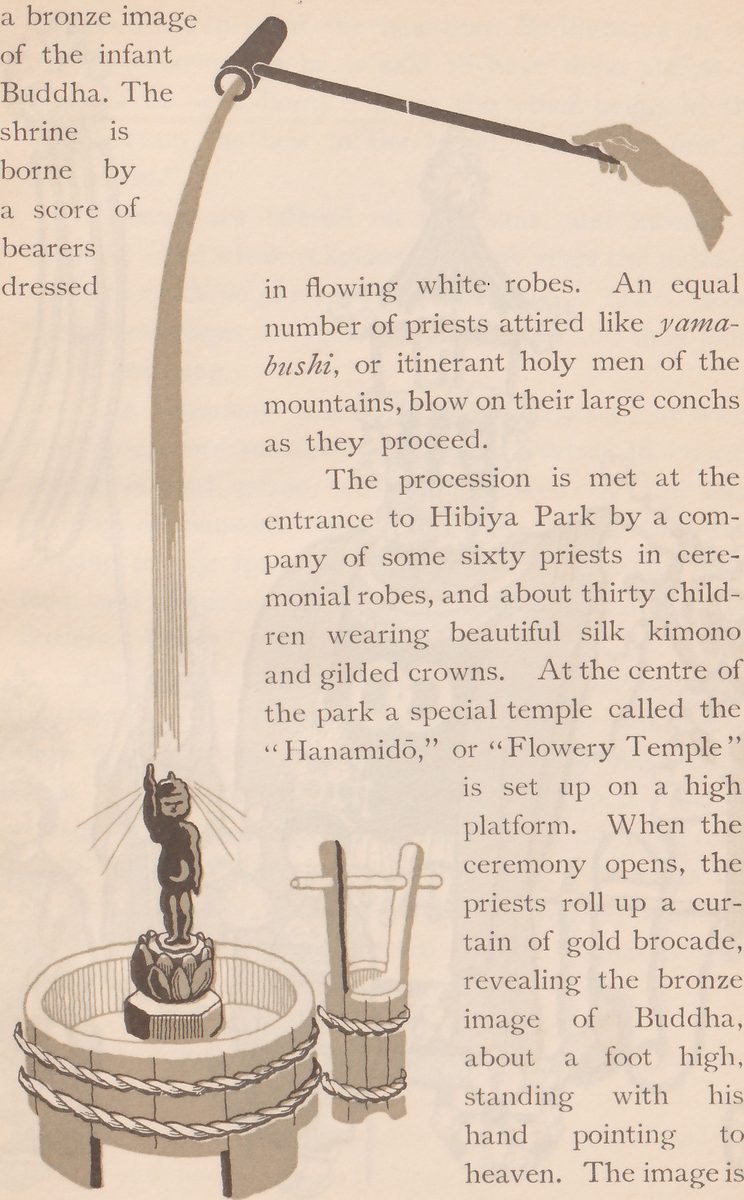
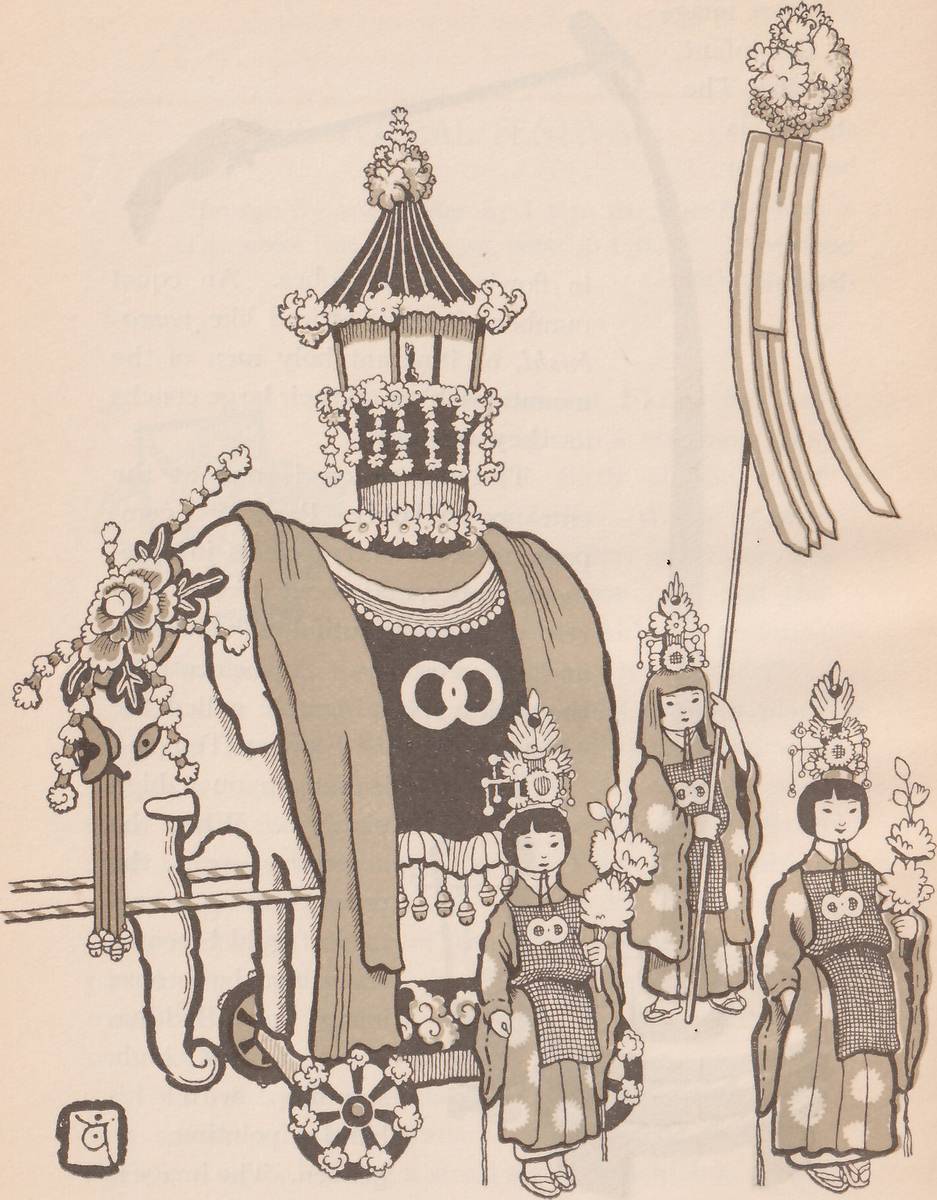
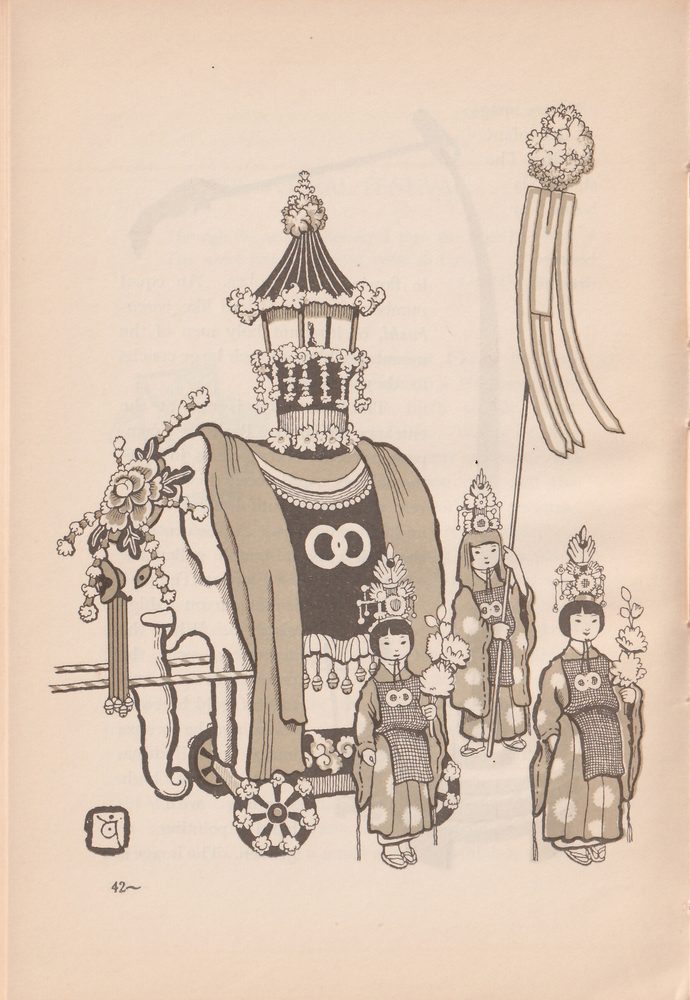
a bronze image of the infant Buddha. The shrine is borne by a score of bearers dressed in flowing white robes. An equal number of priests attired like yamabushi, or itinerant holy men of the mountains, blow on their large conchs as they proceed.
The procession is met at the entrance to Hibiya Park by a company of some sixty priests in ceremonial robes, and about thirty children wearing beautiful silk kimono and gilded crowns. At the centre of the park a special temple called the “Hanamidō,” or “Flowery Temple” is set up on a high platform. When the ceremony opens, the priests roll up a curtain of gold brocade, revealing the bronze image of Buddha, about a foot high, standing with his hand pointing to heaven. The image is
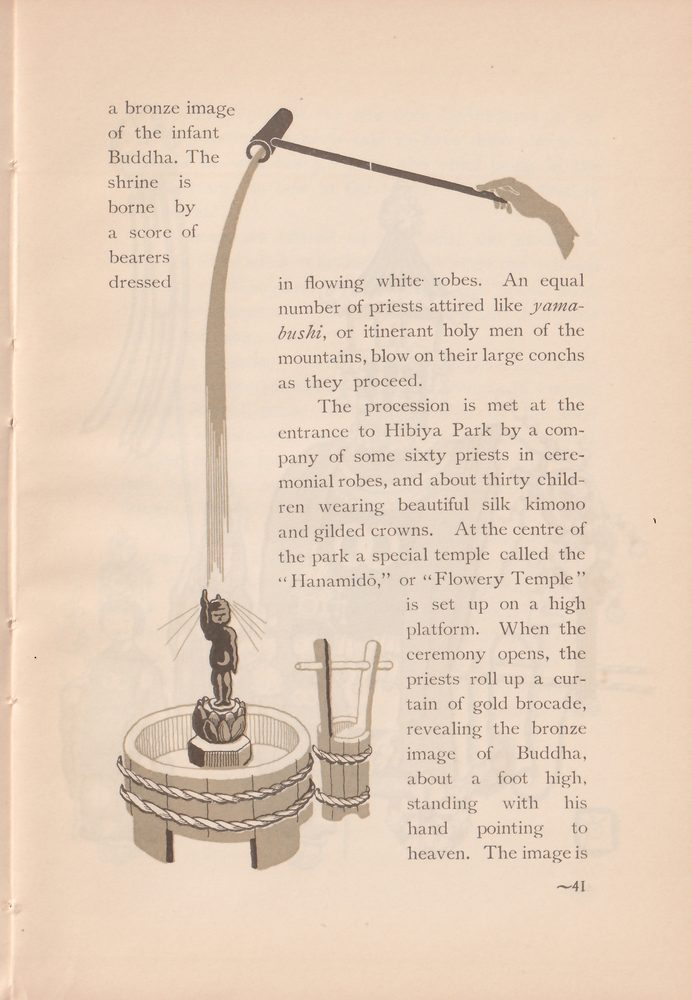
supposed to represent the new-born Bodhisattva in the act of declaring (as he is said to have done almost as soon as he was born), “I am the chief being in the world, I am the best in the world, I am the first in the world.”
Flowers are offered on the altar, and incense is burned. The whole religious company sings the national anthem, or Kimigayo, accompanied by a brass band. Special messages are recited by children, and then more songs are sung.
The ceremony takes on a more religious tone when the three score tonsured priests chant sutras in chorus. While eternal peace is being invoked by the loud reading of Sanscrit verses, the participating children, ranging in age from five to eight, appear on the platform and dance against a colourful background of many flowers.
For many children the day means a pilgrimage to one temple or another. Parents take their children on such trips if they are afflicted so that they may benefit from the inexhaustible mercy of the great Master, “Victor of the four-wayed earth, Lord of the wide rose-apple land.” Of the temples, the most popular is the Kannon temple of Asakusa, where on this day a special flower-decked shrine is erected for the numerous worshippers that come and pray,
“As king of kings and lord of men
Rule thy kingdom, O Gautama.”