
CHILDREN AT NEW YEAR’S TIME
“This marks the first of all festivities of the year. The portals of longevity are swung open to greet the first lights of eternal spring.”
—From Tsurukame
When red persimmons begin to draw raucous crows to leafless branches, the month of December will soon be here. Few young eyes fail to see that there is something “in the air,” something which makes the season different. The grown-ups seem busier; they seldom seem to have time to sit down. Before the month is half gone, the children see their mothers wrapping up all sorts of things in proper shape to be sent off somewhere as presents. And the children see, too, that things similarly done up begin to arrive at their own homes. Clothing, salted-salmon, wild duck and confectionery figure not uncommonly among these presents. They are year-end presents exchanged between good friends and relatives. Then children know that New Year is at hand. On the 25th of December all the schools close for the holiday season.
Before the entrance to every home, pine and
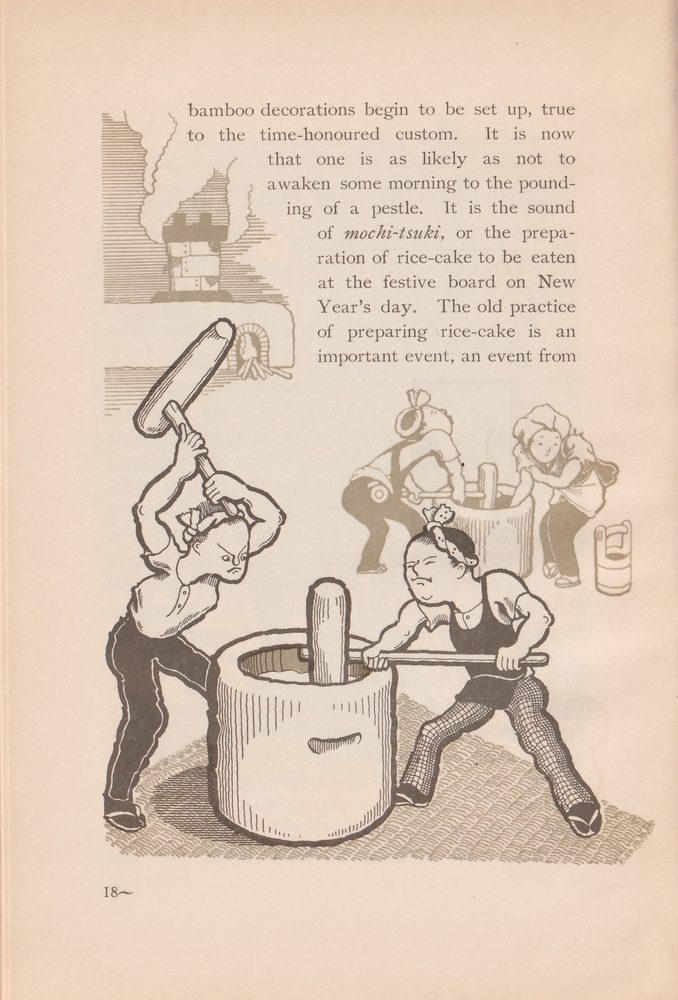
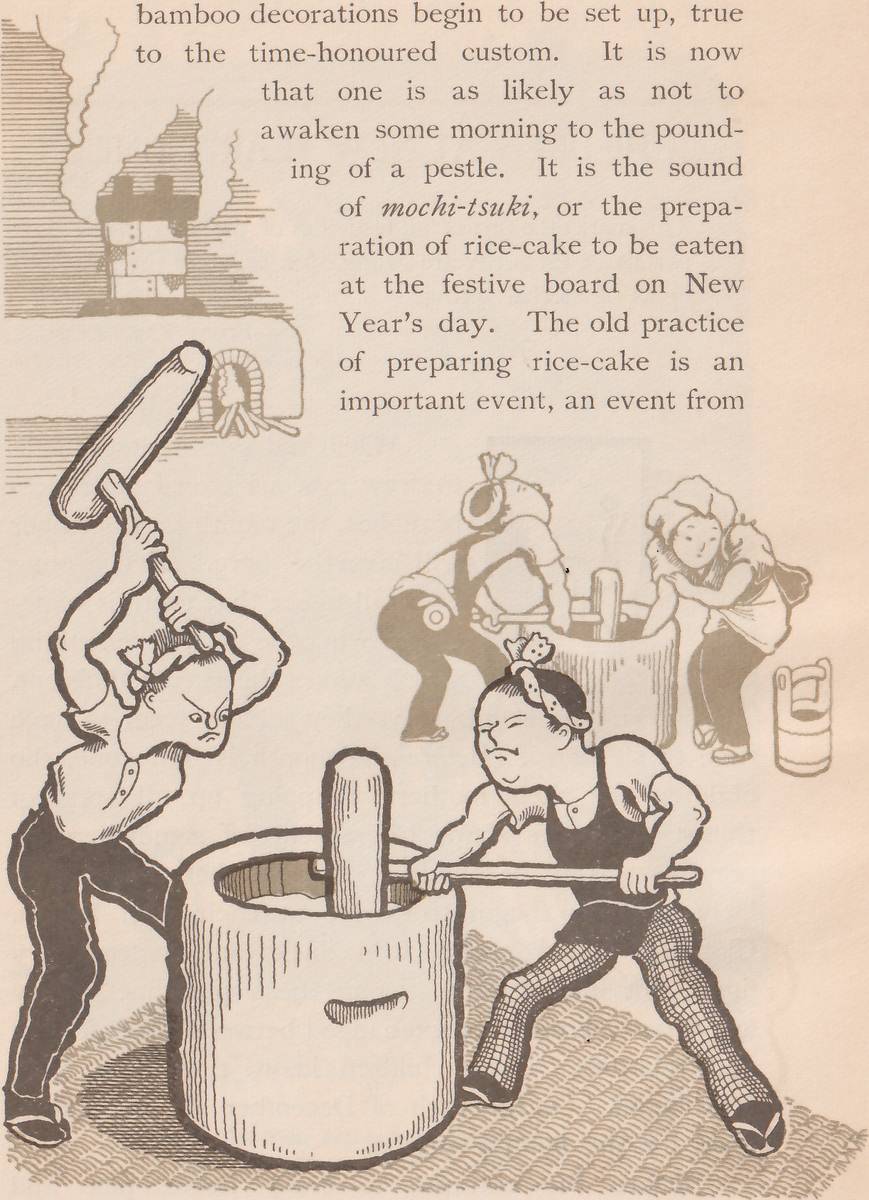
bamboo decorations begin to be set up, true to the time-honoured custom. It is now that one is as likely as not to awaken some morning to the pounding of a pestle. It is the sound of mochi-tsuki, or the preparation of rice-cake to be eaten at the festive board on New Year’s day. The old practice of preparing rice-cake is an important event, an event from
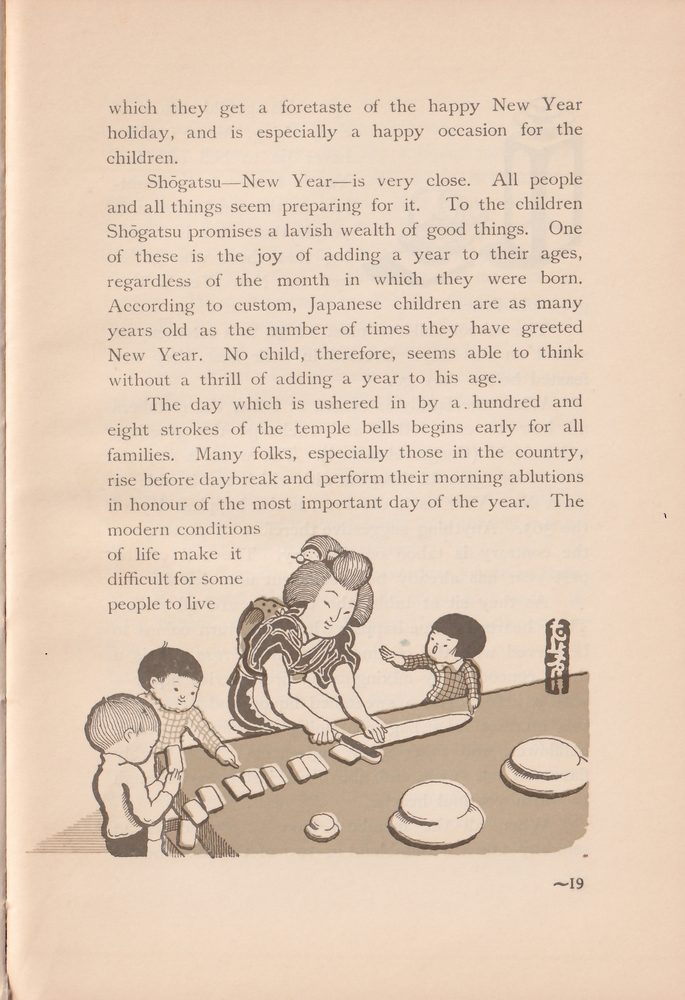
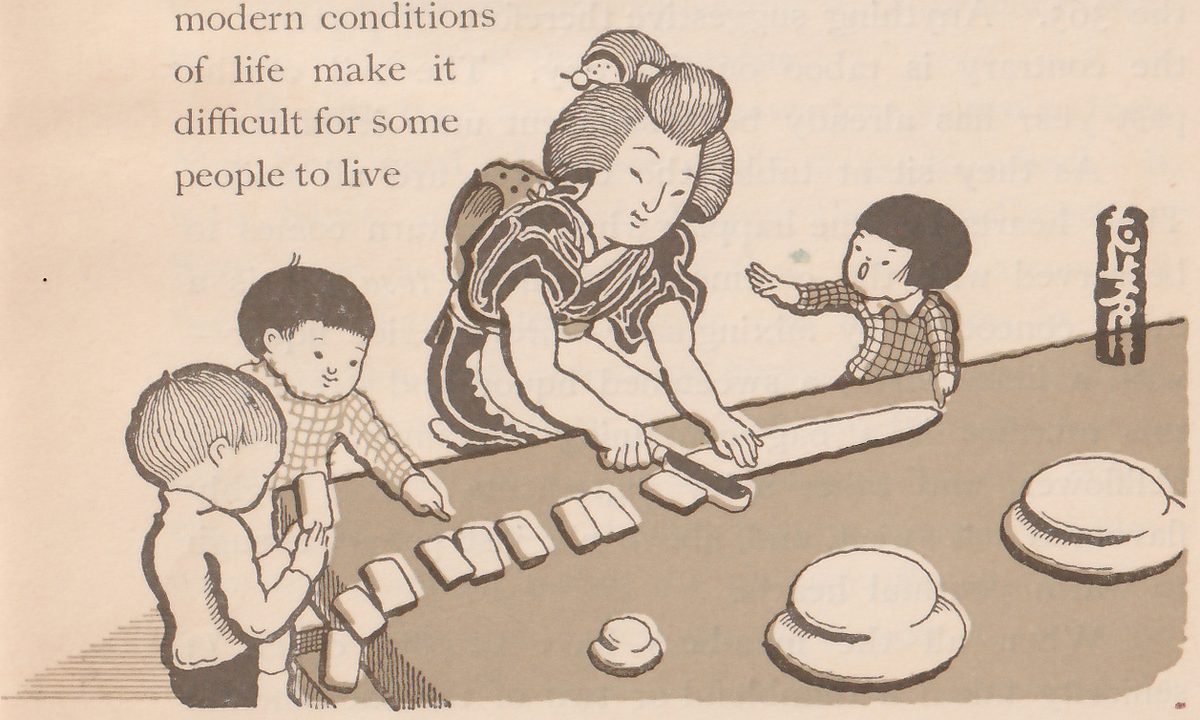
which they get a foretaste of the happy New Year holiday, and is especially a happy occasion for the children.
Shōgatsu—New Year—is very close. All people and all things seem preparing for it. To the children Shōgatsu promises a lavish wealth of good things. One of these is the joy of adding a year to their ages, regardless of the month in which they were born. According to custom, Japanese children are as many years old as the number of times they have greeted New Year. No child, therefore, seems able to think without a thrill of adding a year to his age.
The day which is ushered in by a hundred and eight strokes of the temple bells begins early for all families. Many folks, especially those in the country, rise before daybreak and perform their morning ablutions in honour of the most important day of the year. The modern conditions of life make it difficult for some people to live
up to this age-old custom of early rising. Some families never go to bed on New Year’s Eve. It is doubtless for the comfort of such people that there is a saying that those who go to bed on New Year’s Eve grow old faster.
The school children must all go to a ceremony at school on this day. Dressed in their best, they are feasted before they go.
When the family is seated at table, the members all bow to each other and exchange the greeting, “Omedetō” (Congratulations!). The word is expressive of the grateful thoughts with which one is able to greet New Year as it deserves, as the happiest day of the 365. Anything suggestive therefore of portents to the contrary is taboo on this day. The evil of the past year has already been sufficient unto itself.
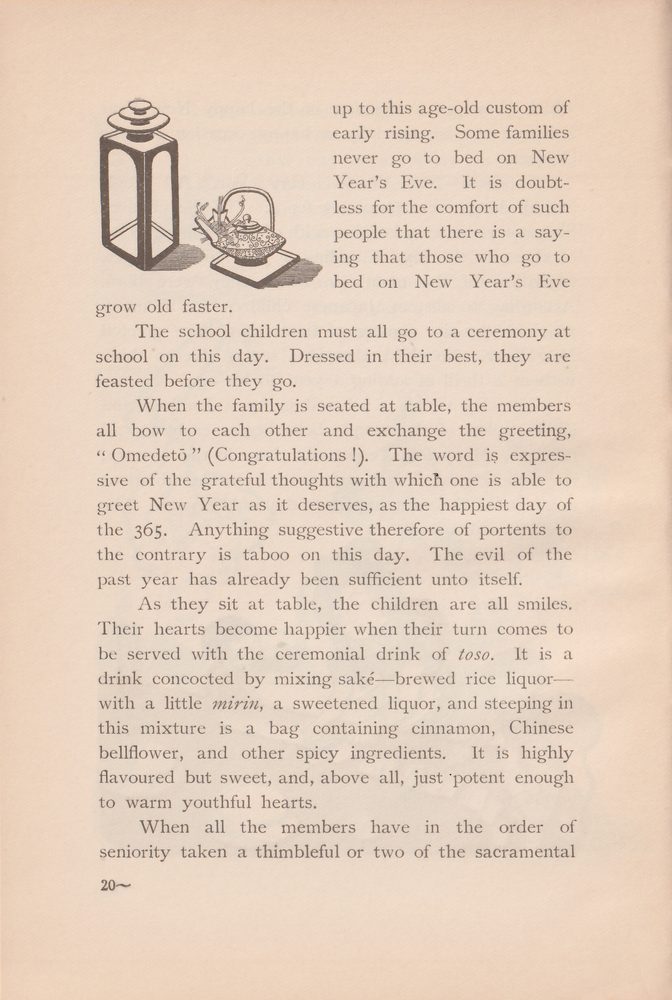
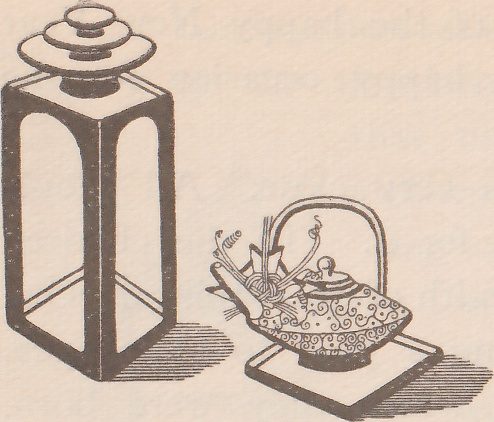
As they sit at table, the children are all smiles. Their hearts become happier when their turn comes to be served with the ceremonial drink of toso. It is a drink concocted by mixing saké—brewed rice liquor—with a little mirin, a sweetened liquor, and steeping in this mixture is a bag containing cinnamon, Chinese bellflower, and other spicy ingredients. It is highly flavoured but sweet, and, above all, just potent enough to warm youthful hearts.
When all the members have in the order of seniority taken a thimbleful or two of the sacramental
drink, the family is ready to eat what is, to the younger members at least, the most important item on the festive menu. Zōni—literally a boiled mixture—is as imperative on this happy day as is rice on any other day of the year. In fact, New Year cannot be thought of without zōni. It may perhaps be no exaggeration to say that there are as many ways of preparing this special food as there are provinces in the Empire. What is common to all is the chief ingredient, rice-cake cut in round or rectangular pieces, and which is boiled in soup of one kind or another.
Some children like so much the rice-cake thus prepared that they have no difficulty in disposing of as many pieces as the number of their years. Not a few boys boast that they will go on adding one piece with each succeeding year. The wonder is that some children really live up to their self-imposed covenant for many years, performing eating feats matched only by the strength of their stomachs.
By the time the children have done justice to their New Year meal, they are ready to go to school. It is a happy crowd that throngs the school-yard on New Year morning. When they are all assembled before morning-coated masters and mistresses in their best kimonos, the ceremony begins with the singing of the national anthem, in which the Imperial rule is extolled and the eternity of the Throne affirmed. When the singing is finished, the headmaster ascends the platform and, standing before the photographs of the Emperor and Empress, takes out of a box a scroll on which is written the Imperial Rescript on Education. In
this message, which the Emperor Meiji promulgated in the twenty-third year of His reign, and which is still read on many ceremonial occasions, the relationship of the Ruler and His subjects is set down for all time, and the true ways of humanity expounded, with the Imperial hope that the people of the country, loyal subjects that they are, may live up to all the principles set forth therein. Though this edict is couched in a language far beyond youthful understanding, each schoolchild knows by it heart. Nor do they fail to understand, at least, that it is the Imperial Will that children should be good to their parents, kind to their
brothers and sisters, and honest and true to their friends.
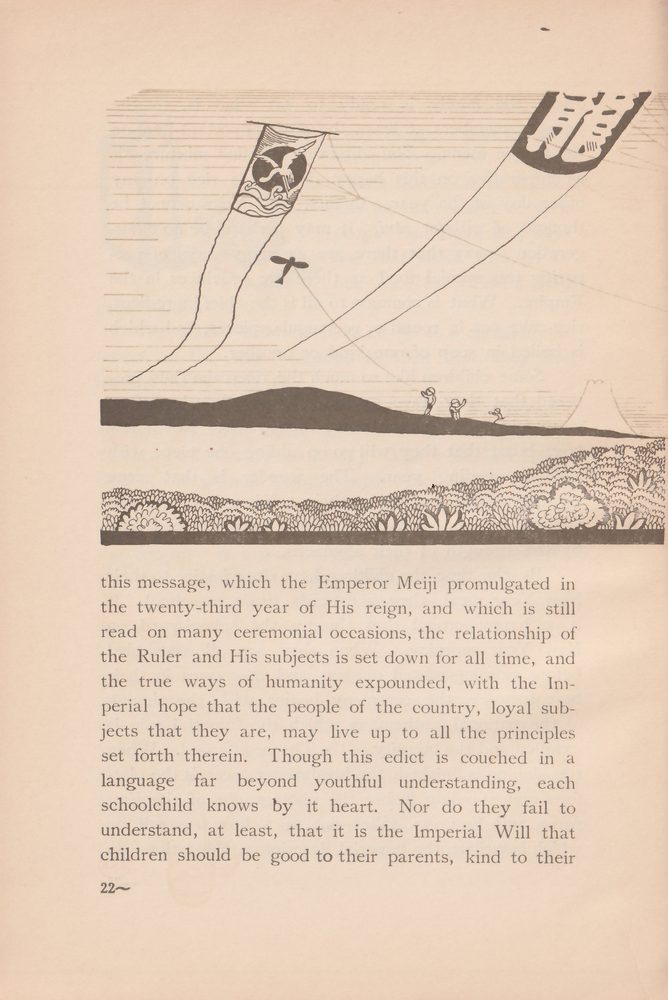
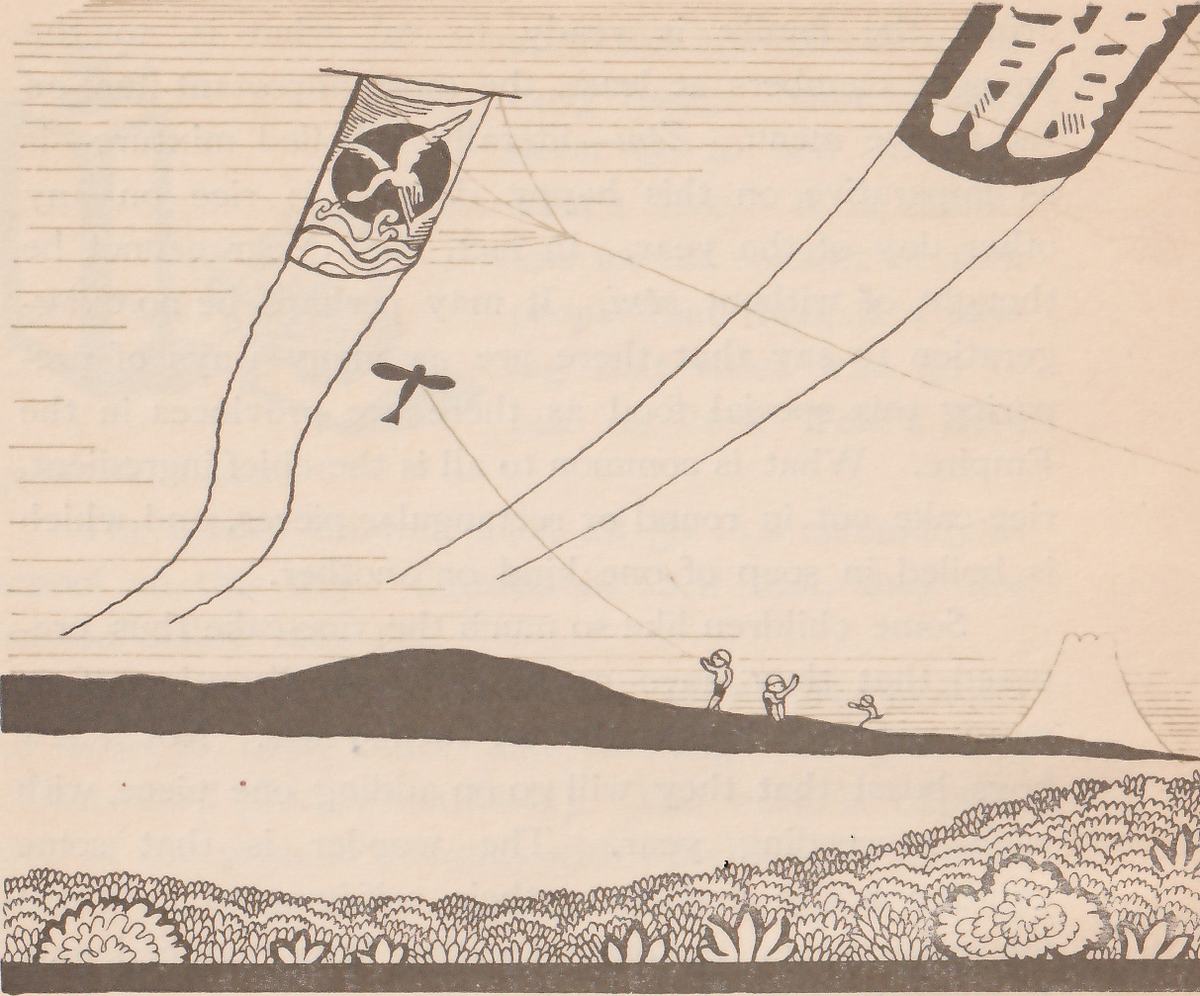
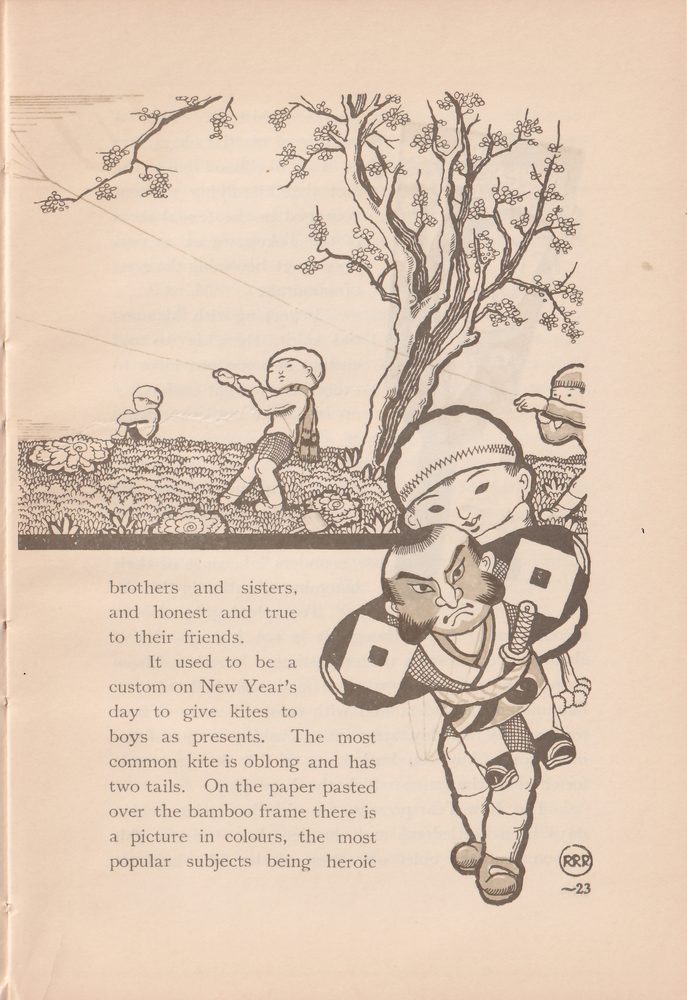
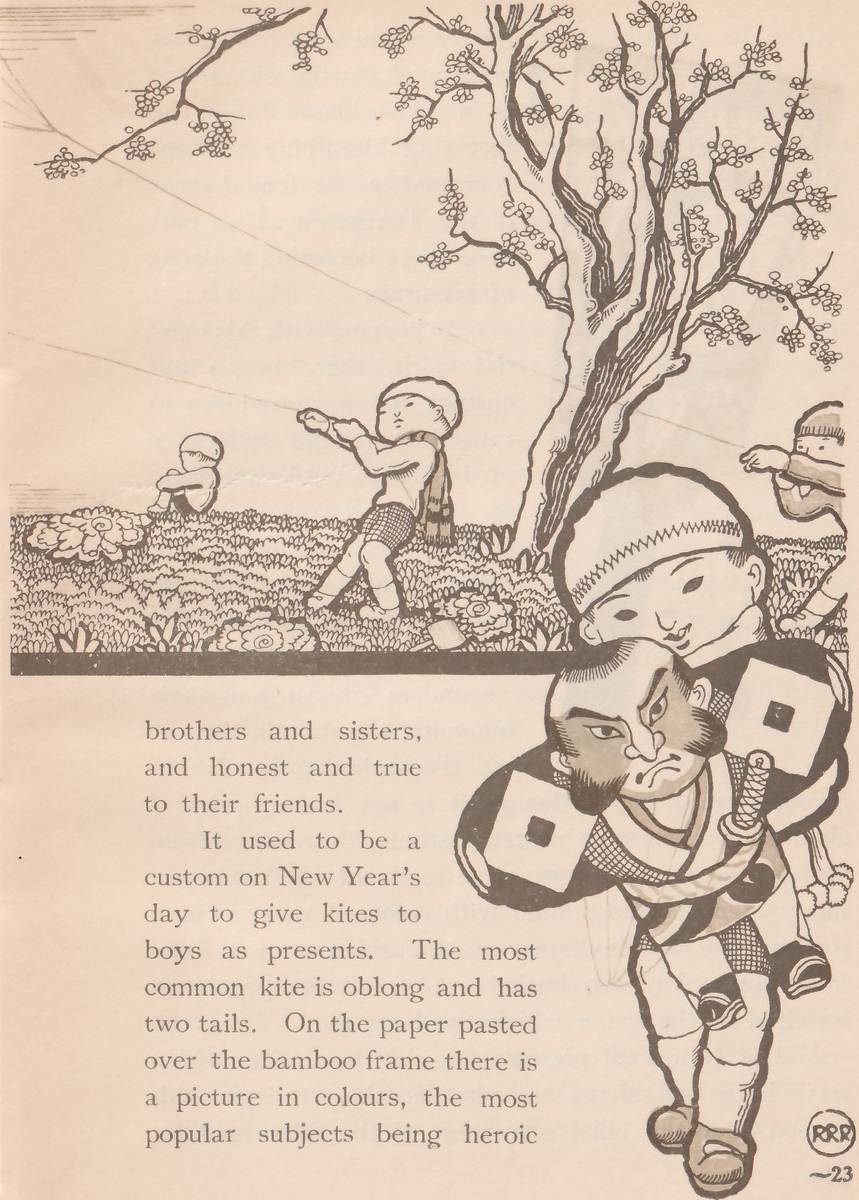
It used to be a custom on New Year’s day to give kites to boys as presents. The most common kite is oblong and has two tails. On the paper pasted over the bamboo frame there is a picture in colours, the most popular subjects being heroic
figures of history. The favouring of martial characters is in all likelihood due to the fact that kite-flying was encouraged in the feudal days of the Tokugawa as an outdoor sport becoming the sons of samurais.
In keeping with this martial spirit, there is an old custom in some provinces to cause kites to fight each other up in the air until the string of one is snapped to the discomfiture of its owner. Kites frequently have on their backs bows made of whalebone or bamboo called “sounders” because of their humming vibration in the air.
Top-spinning is also in favour among boys, though it is not known why it should have become a winter pastime. Introduced from Korea, the original tops were made of shells shaped like mud-snails and stuffed with coloured wax. These tops are to this day spun on a cushion or mat fixed in a box. Any top hurled out of this little arena is forfeited in the game which the boys play.
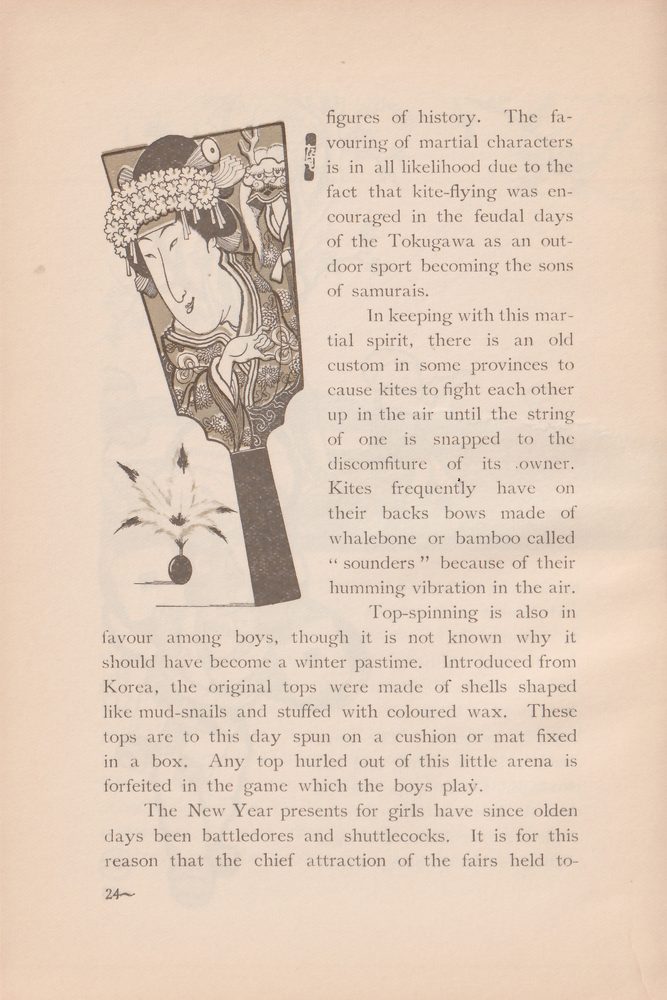
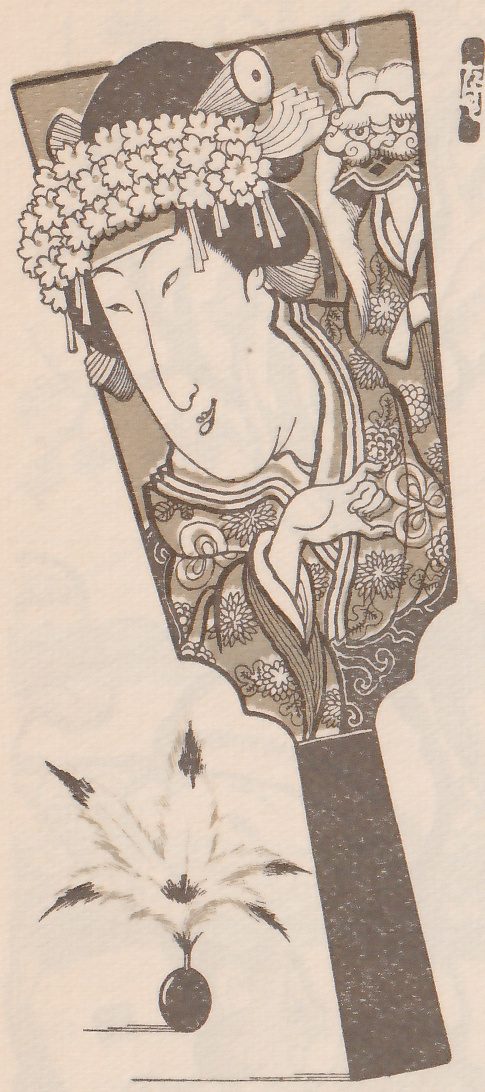
The New Year presents for girls have since olden days been battledores and shuttlecocks. It is for this reason that the chief attraction of the fairs held to-
wards the close of the year is the display of battledores. The backs of the wooden battledores are covered with designs colourful and scintillating, and sometimes of workmanship so elaborate as to bring prices amounting to hundreds of yen. For these decorative designs the pictures of both stage and screen stars are generally used.
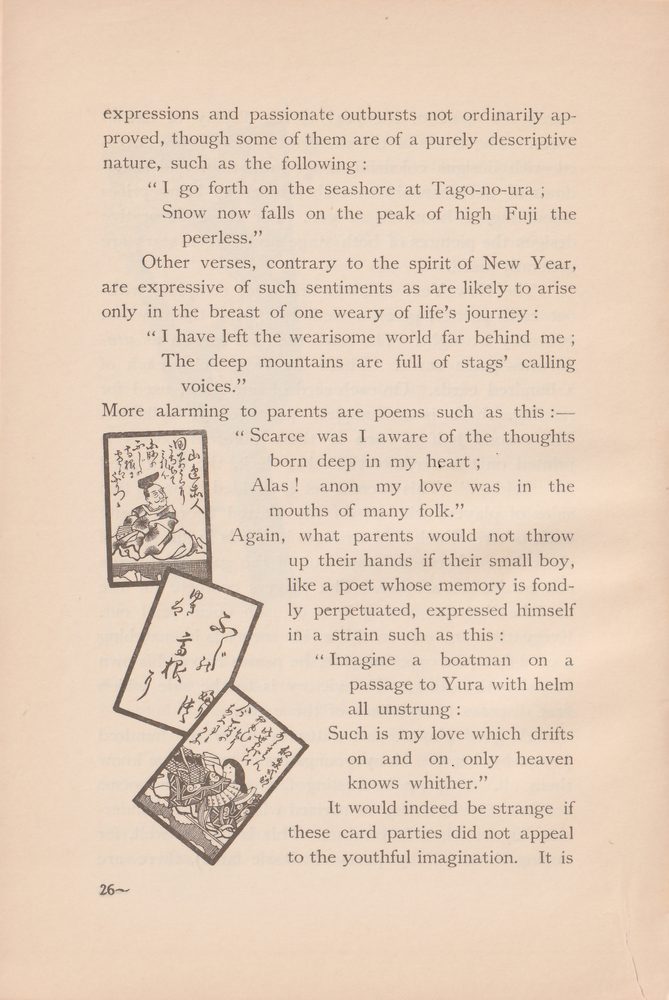
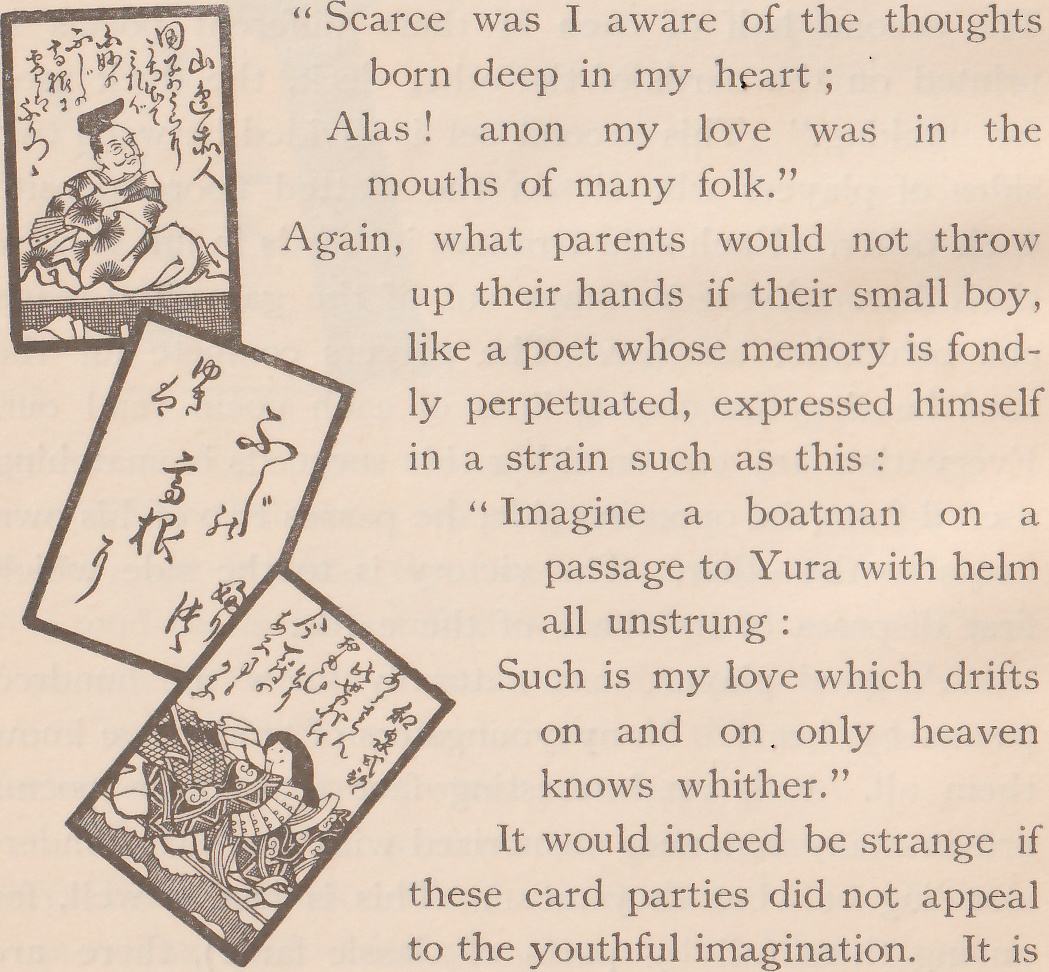
The New Year holidays are never complete without card parties, given sometimes during the day but generally at night. The cards used are known as uta-karuta—poem cards. There are two decks, each of a hundred cards. On each card of one deck, used for reading, there is a complete poem of 31 syllables. The second half of each of these different poems is printed on the cards of the other deck, the deck used for “taking.” This second set is divided between two sides of players who sit on the matted floor opposite each other. Each side arranges its cards in full view of the other. A reader stays out of the game and reads one card after another. The players compete for the card bearing the closing lines of each poem read out. Every time any one on either side succeeds in snatching a card from the opposing side, he passes two of his own cards to the other. The victory is to the side which first disposes of its share of the cards.
A good player must naturally know the hundred poems by heart. Many youngsters of tender age know them all. It is an interesting fact that these poems are in many instances memorized with but little understanding of what they mean. This is just as well, for among them (all by poets of classic fame), there are
expressions and passionate outbursts not ordinarily approved, though some of them are of a purely descriptive nature, such as the following:
“I go forth on the seashore at Tago-no-ura;
Snow now falls on the peak of high Fuji the peerless.”
Other verses, contrary to the spirit of New Year, are expressive of such sentiments as are likely to arise only in the breast of one weary of life’s journey:
“I have left the wearisome world far behind me;
The deep mountains are full of stags’ calling voices.”
More alarming to parents are poems such as this:—
“Scarce was I aware of the thoughts born deep in my heart;
Alas! anon my love was in the mouths of many folk.”
Again, what parents would not throw up their hands if their small boy, like a poet whose memory is fondly perpetuated, expressed himself in a strain such as this:
“Imagine a boatman on a passage to Yura with helm all unstrung:
Such is my love which drifts on and on, only heaven knows whither.”
It would indeed be strange if these card parties did not appeal to the youthful imagination. It is
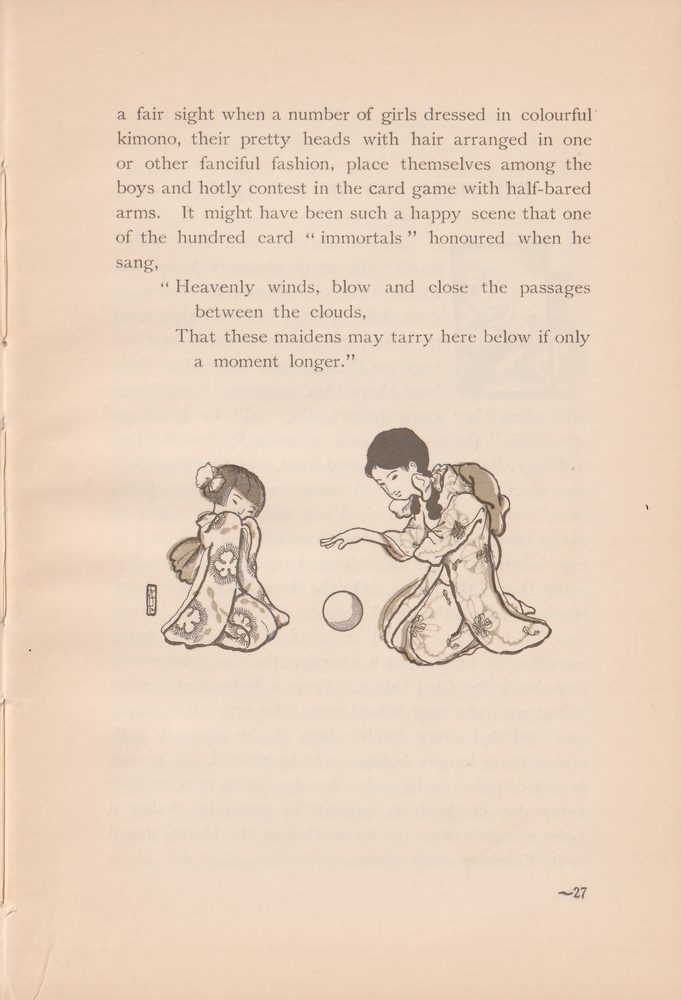
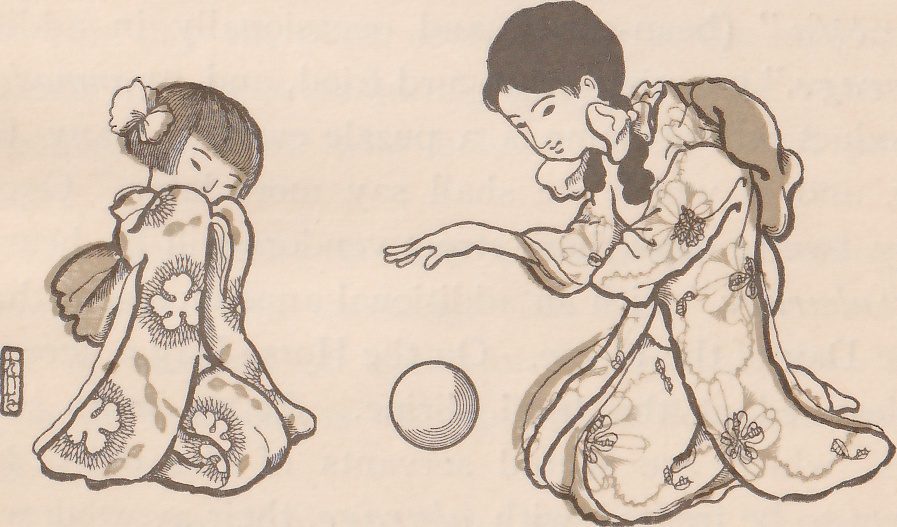
a fair sight when a number of girls dressed in colourful kimono, their pretty heads with hair arranged in one or other fanciful fashion, place themselves among the boys and hotly contest in the card game with half-bared arms. It might have been such a happy scene that one of the hundred card “immortals” honoured when he sang,
“Heavenly winds, blow and close the passages between the clouds,
That these maidens may tarry here below if only a moment longer.”