
Japanese Drama
Tourist Library 6
Japanese Drama
by B. T. I. (Board of Tourist Industry)
Tourist Library 6
Board of Tourist Industry, Japanese Government Railways, 1935
TOURIST LIBRARY
Volumes already published
1. TEA CULT OF JAPAN By Y. Fukukita, A. B.
2. JAPANESE NOH PLAYS By Prof. T. Nogami
3. SAKURA (Japanese Cherry) By Dr. M. Miyoshi
4. JAPANESE GARDENS By Prof. M. Tatsui
5. HIROSHIGE AND JAPANESE LANDSCAPES By Yone Noguchi
6. JAPANESE DRAMA By B. T. I.
Volumes in preparation
JAPANESE ARCHITECTURE By Prof. Dr. H. Kishida
WHAT IS SHINTŌ? By G. Katō, Lit. D.
CHILDREN’S DAYS IN JAPAN By T. Iwadō, M. A.
JAPAN, LAND OF HOT SPRINGS By Dr. K. Fujinami
CASTLES IN JAPAN By Prof. S. Ōrui, Lit. D.
and Prof. M. Toba
KIMONO (Japanese Dress) By Kenichi Kawakatsu
FLORAL ART OF JAPAN By Issōtei Nishikawa
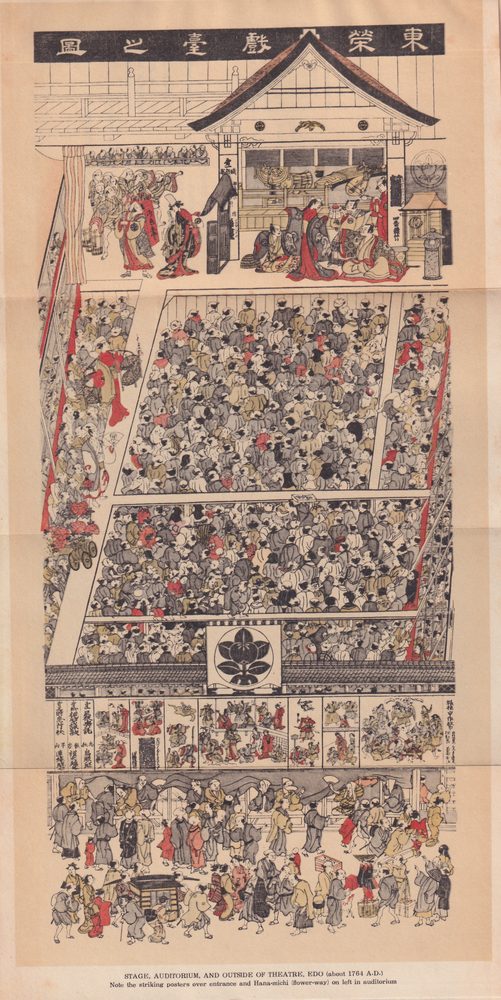
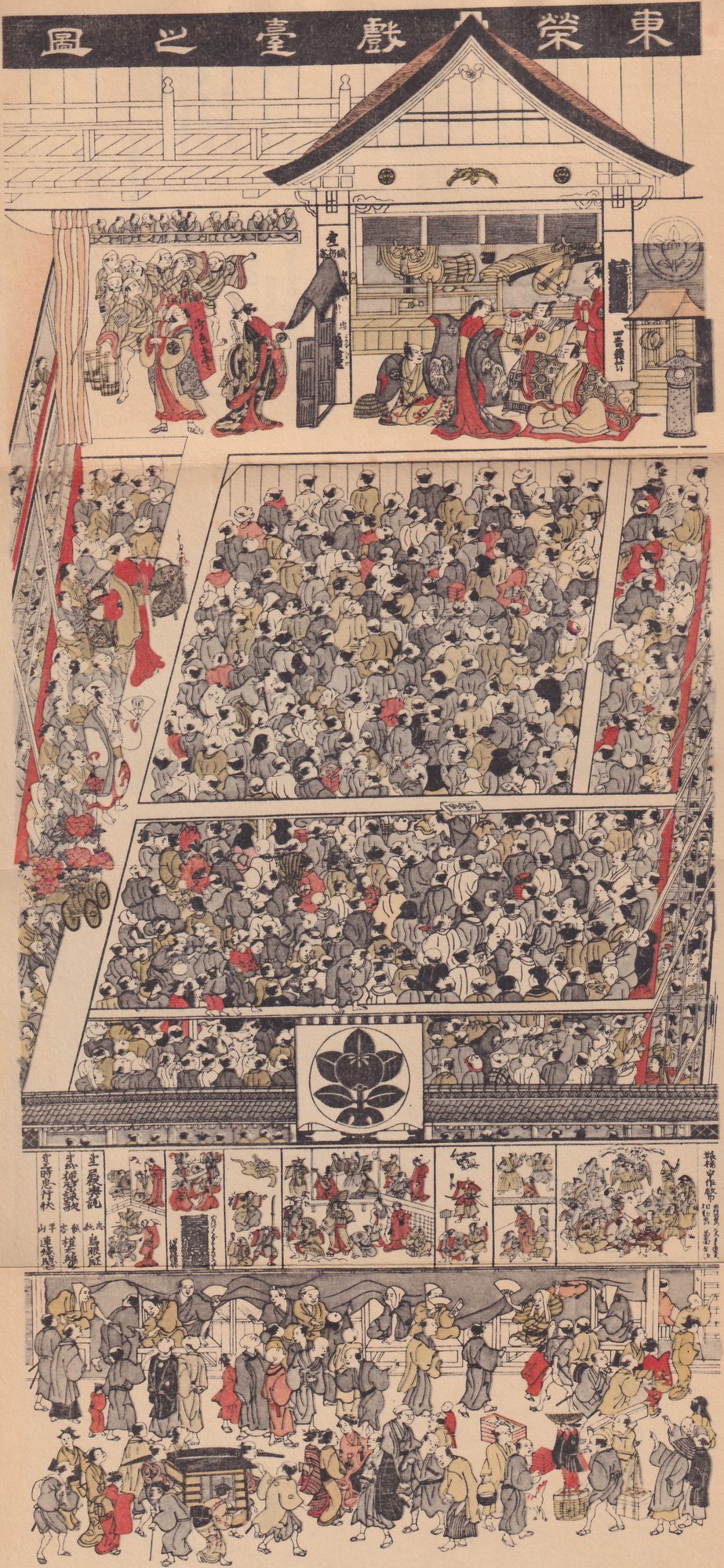
Note the striking posters over entrance and Hana-michi (flower-way) on left in auditorium
COPYRIGHT 1935
The original of this brochure was prepared by the National Committee of Intellectual Co-operation of the International Association of Japan. In order that its precious record might not be lost to the world, a request was made to have it translated into English and published as a volume of the Tourist Library. In the course of publication it was felt that some revisions would be advisable, and these were therefore made. The Theatre Guide and Bibliography were also added.
We are indebted to Mr. Yoshio Yoshikawa for the revised original, and to Professors I. Matsuhara and E. T. Iglehart of Aoyama Gakuin for the translation. We must express our special gratitude to the translators for having duplicated their labours, and to Mr. A. F. Thomas for his general supervision.
Board of Tourist Industry
April, 1935
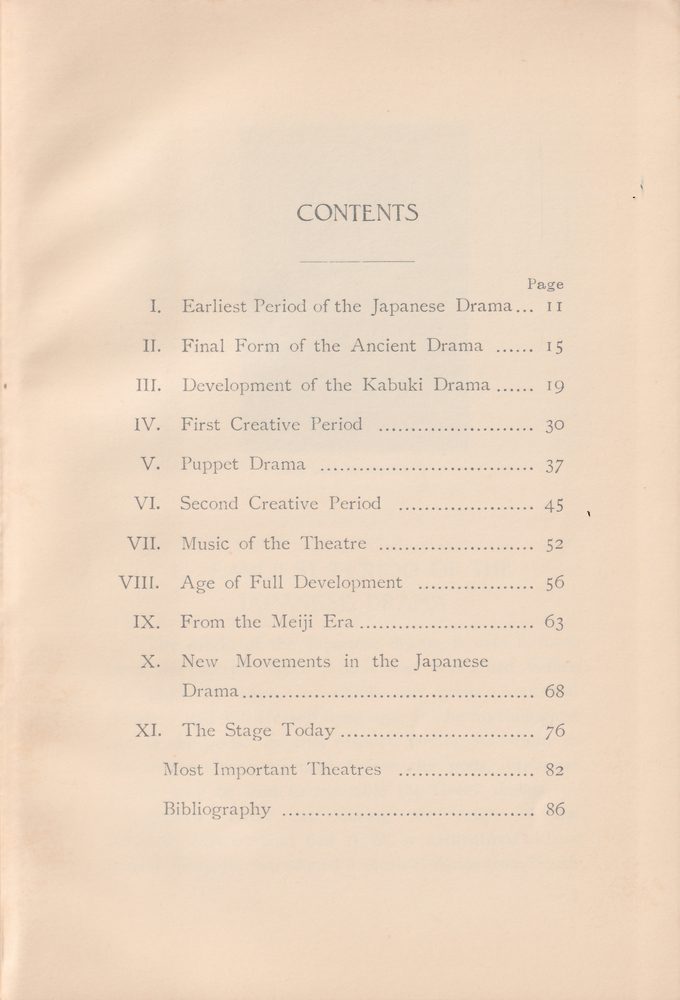
CONTENTS
Page
I. Earliest Period of the Japanese Drama... 11
II. Final Form of the Ancient Drama ...... 15
III. Development of the Kabuki Drama ...... 19
IV. First Creative Period ................... 30
V. Puppet Drama ............................ 37
VI. Second Creative Period .................. 45
VII. Music of the Theatre ................... 52
VIII. Age of Full Development ............... 56
IX. From the Meiji Era ...................... 63
X. New Movements in the Japanese Drama ................................... 68
XI. The Stage Today ......................... 76
Most Important Theatres .................... 82
Bibliography ............................... 86