IX. FROM THE MEIJI ERA
GENERAL SURVEY OF THE MEIJI ERA
The year 1868 saw the restoration of the Emperor to power, and such a national transformation as shook the Empire to its very foundations. There were fundamental changes in almost every aspect of life, in law and politics, in diplomacy, in institutions of nearly every phase of life and activity. In the drama, however, no immediate change was apparent.
It gradually began to feel the influence of the foreign stage. During all this time the Kabuki Drama retained its popularity. With the appearance of many actors of unusual ability, the stage in Japan seemed to experience its golden age. One of the great changes to be noted is that, in the new age, characterized by
so many governmental changes, by the disappearance of the old feudal system with its several fixed social classifications, those who had previously constituted the nobility and gentry now came to take a great interest in the stage. The proprietors of the theatres frequently invited high officials to see the plays. When notables came from foreign lands they seemed ready to attend theatrical performances without any loss of respect. This was notable during the visits of General Grant, former President of the United States, and the Duke of Connaught, younger brother of King Edward VII of England. Thus the Japanese drama came to be recognized by the higher classes of Japan as well as by notables of foreign lands.
THEATRES AND LEADING DRAMATISTS OF THIS PERIOD
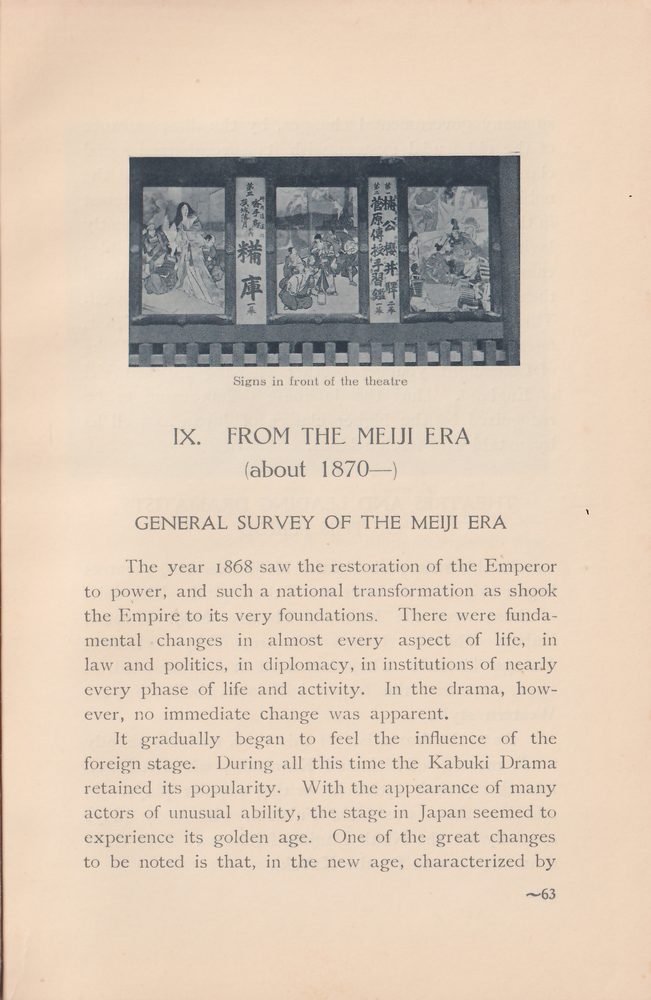
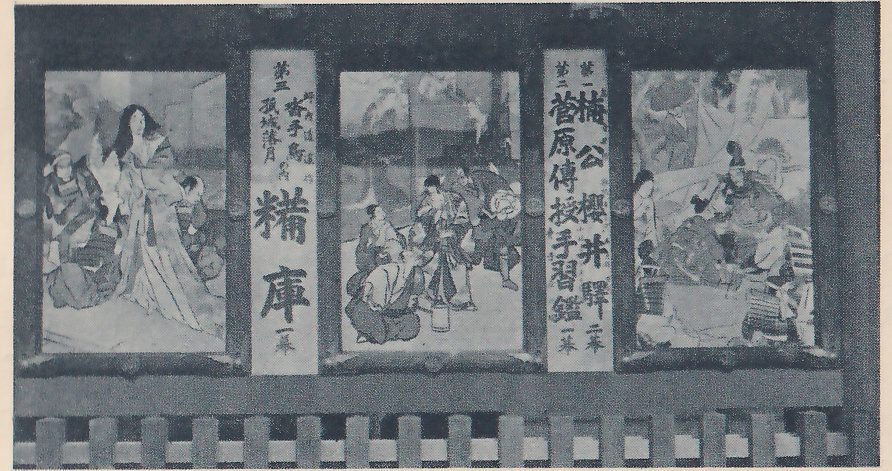
In this new period of the Meiji Emperor, theatres began to gather in the centre of the capital. The chief of these were the Ichimura Theatre, Meiji Theatre, Kabuki Theatre, Hongō Theatre, Tokyo Theatre, Masago Theatre. They increased in number until, in 1911, appeared the Imperial Theatre, built in pure Western style.
As to the dramatists of this time, we have already made mention of Mokuami Kawatake, who lived well into this period, active in writing popular plays. In addition, there was Ōchi Fukuchi, who wrote plays specially for the Ninth Danjūrō Ichikawa. Both these dramatists wrote for the Kabuki.
Dr. Shōyō Tsubouchi (1859–1935), with his extraordinary originality and erudition, composed new historical plays, and set a high example in dramatic composition. “A Leaf of Paulownia” and “Maki-no-kata” are his representative pieces. He has, in recent years, devoted himself to the study of Shakespeare, and has now completed a translation of all his works. He has also created the Association of Arts and Letters, whose work has chiefly been the production of foreign drama.
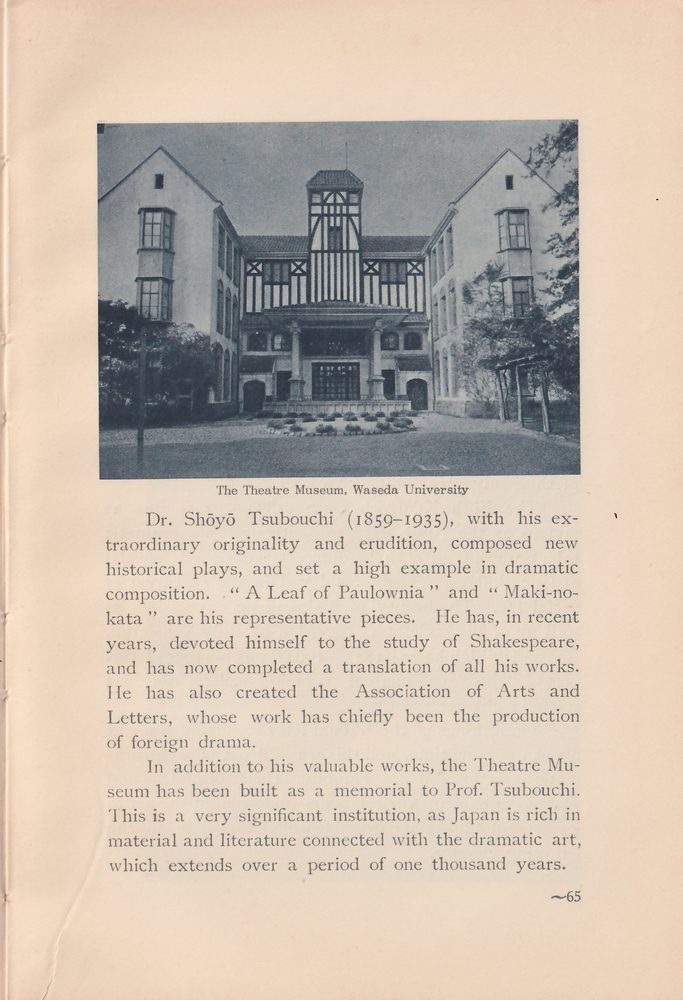
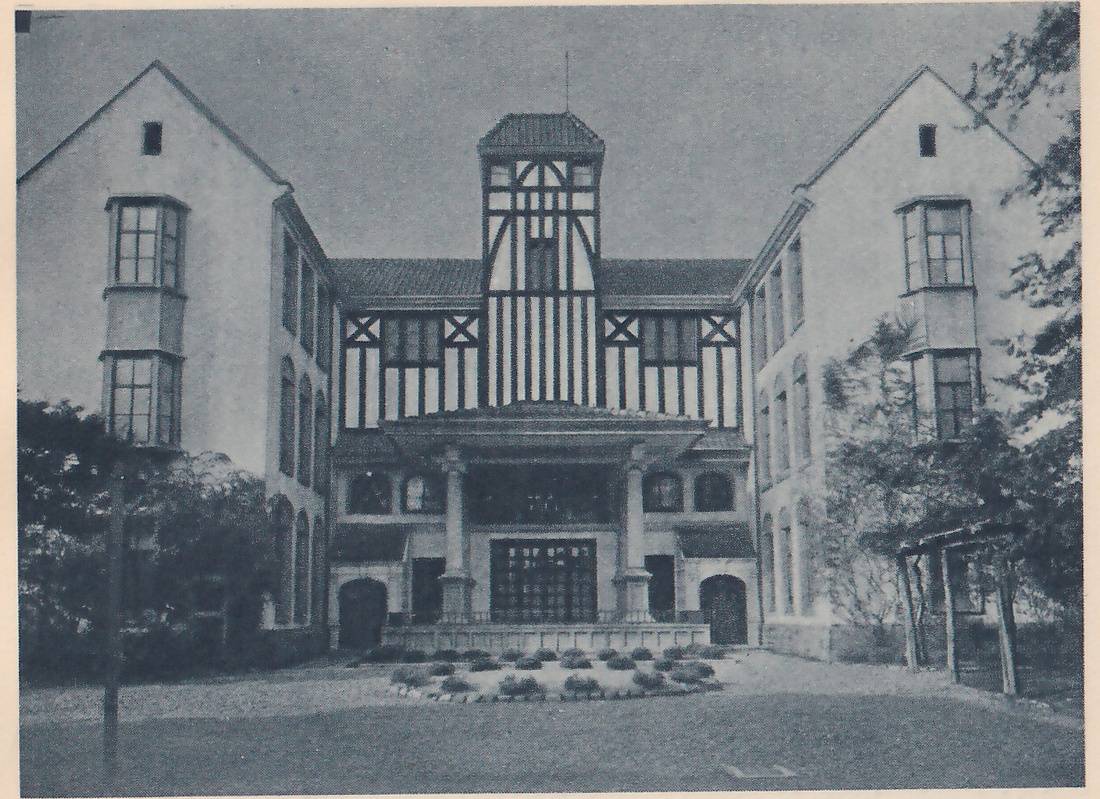
In addition to his valuable works, the Theatre Museum has been built as a memorial to Prof. Tsubouchi. This is a very significant institution, as Japan is rich in material and literature connected with the dramatic art, which extends over a period of one thousand years.
FAMOUS ACTORS OF THIS PERIOD
In general, during this period, we may say that many actors have carried on the earlier traditions of the Edo stage.
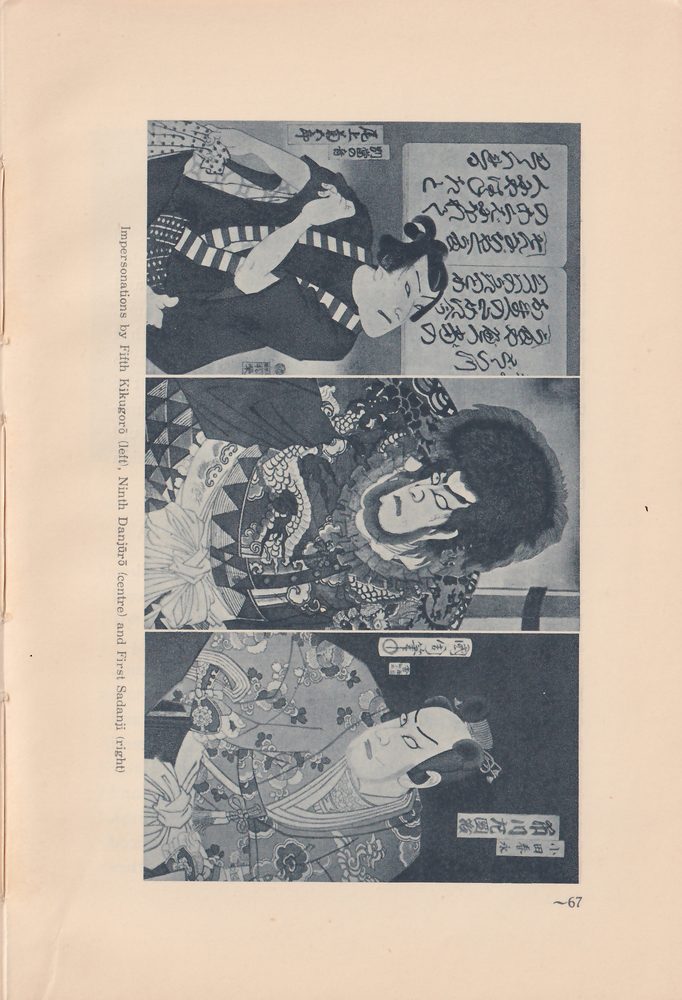
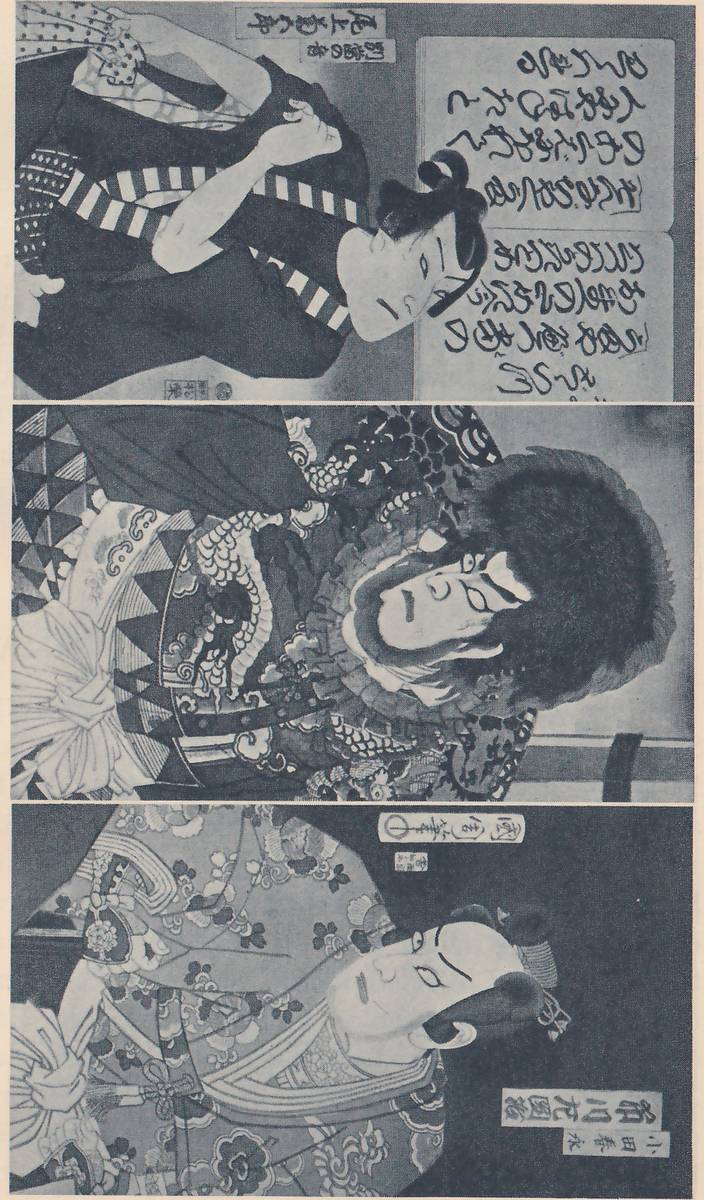
The Ninth Danjūrō Ichikawa (1838—1903) has been regarded, because of his extraordinary artistic and dramatic skill, as the greatest actor of all times. The keenest dramatic critics of today are unanimous in this judgment. He passed on to his successors certain special forms of acting, particularly the vivid representation of historical events, which he himself called “Living History.” It is possible here, of course, to make only a passing and altogether inadequate mention of this truly great stage character.
The Fifth Kikugorō Onoe (1844—1903) was as famous as the Ninth Danjūrō, although his dramatic talent was of an entirely different order. His special artistic skill was chiefly employed in the portrayal of social life. The beauty of his realistic expression, as well as of his style, was regarded as truly wonderful.
Sadanji Ichikawa (1843—1904) was another of this group, who won unusual popular acclaim for his splendid character acting.
These kings of the Kabuki left the earthly stage at about the same time, and this was a great blow to dramatic art in Japan. Happily, their disciples and successors took up their labours and brought the art to its present high standard, as we shall relate in the following chapter.