
IV. FIRST CREATIVE PERIOD
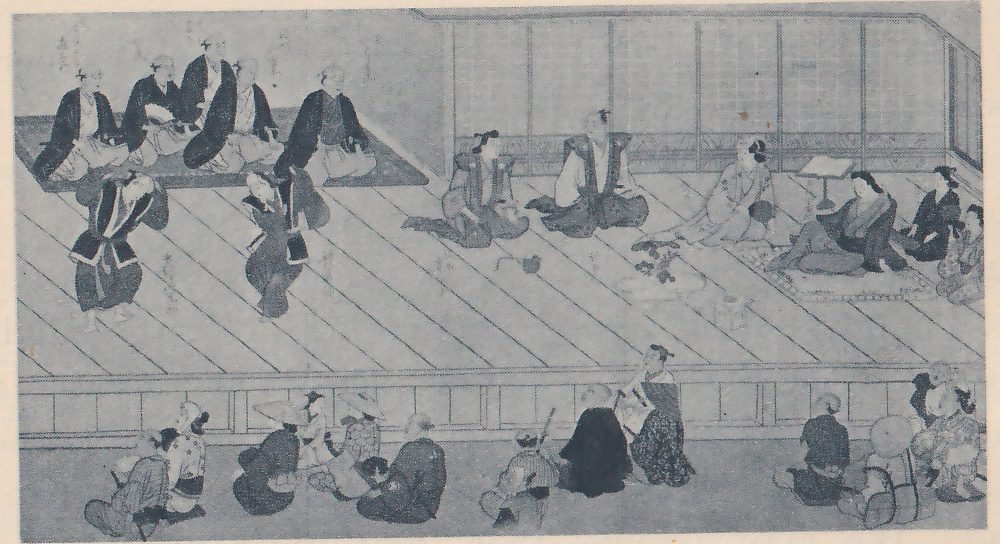
After the suppression of the Female Kabuki, and after the Youth Kabuki, with its handsome young men, had taken its place, and then itself finally been outlawed, the new Kabuki had to hold its place in the hearts of the people by the skill of its actors alone. Men had to take all the parts, male and female, and had to hold their place in the affection of the masses by the sheer cleverness of their performances. We must admit that their ability did make remarkable strides toward perfection.
THE CONTENTS OF THE DRAMA
Until the time of the Youth Kabuki the contents
of the drama were exceedingly simple. Even afterwards the performance was limited to a single act. However, the fact that the actors had to make their appeal to the audience through their skill in acting, without regard to their personal charm, introduced the performance of successive acts, from about the year 1664. Plays of three, four or five acts became the custom, and so led to a more complicated form of drama. In consequence, the actors ceased to be the creators of their own plays, and independent dramatists came into existence. Their pioneer was one, Heibei Tominaga (Dates uncertain), who worked chiefly in Osaka and Kobe. Then came Monzaemon Chikamatsu, who won such fame as to be known as the Japanese Shakespeare, and to whom further reference is made in the next chapter. In Edo, Denkichi Miyazaki and the famous actor, the First Danjūrō, were successful writers of drama.
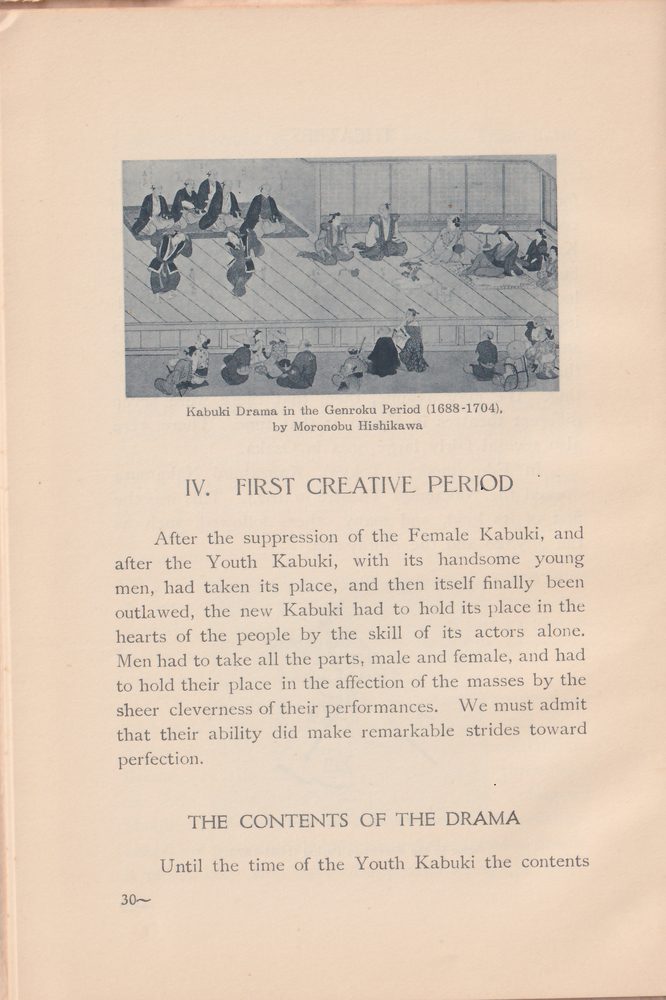
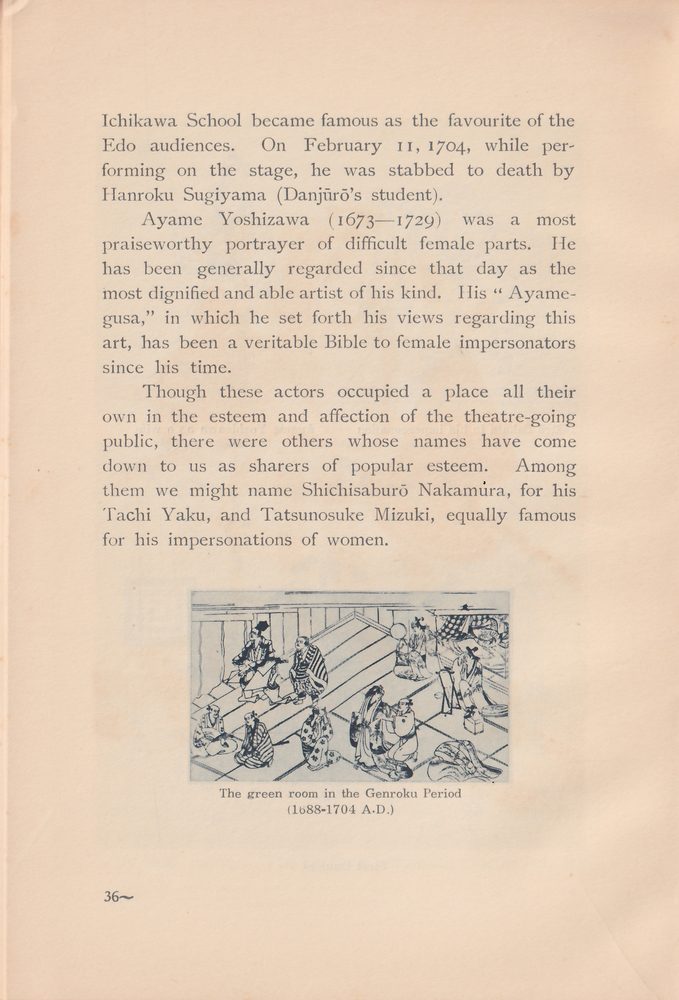
Stage settings, costumes and music, as well as the dramatic contents and dramatic arts, were steadily developed during this period, reaching their highest plane about the last decade of the seventeenth century, an age commonly known as the Genroku Period (1688–1704).
This modern drama, the only amusement of the common people, and so expressive of their spirit, has never aimed to win the upper classes as its patrons. Its literary art is inferior to the classic drama, but as Romain Rolland has said, that drama which appeals to the common people has thereby proved its right to survive.
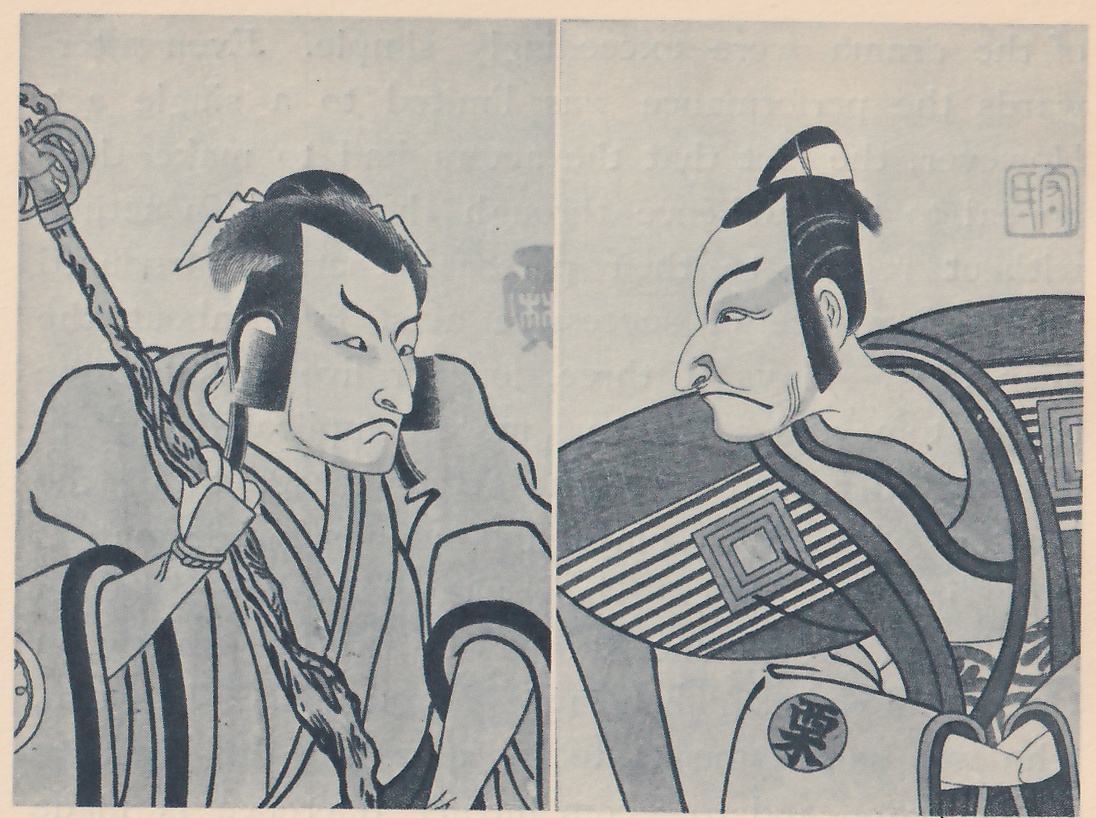
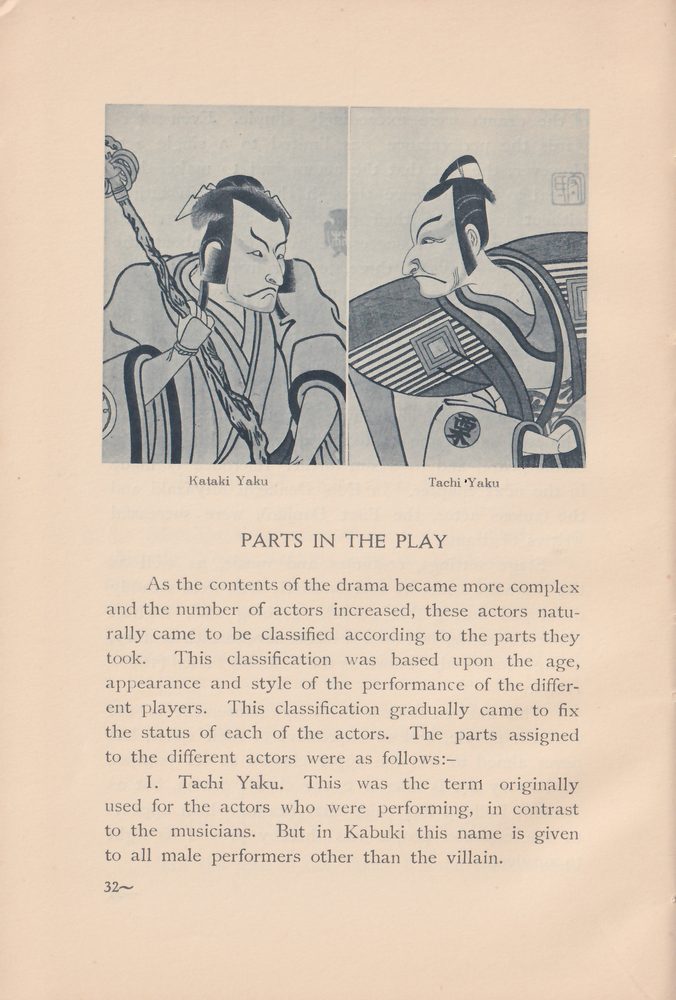
Tachi Yaku
PARTS IN THE PLAY
As the contents of the drama became more complex and the number of actors increased, these actors naturally came to be classified according to the parts they took. This classification was based upon the age, appearance and style of the performance of the different players. This classification gradually came to fix the status of each of the actors. The parts assigned to the different actors were as follows:—
I. Tachi Yaku. This was the term originally used for the actors who were performing, in contrast to the musicians. But in Kabuki this name is given to all male performers other than the villain.
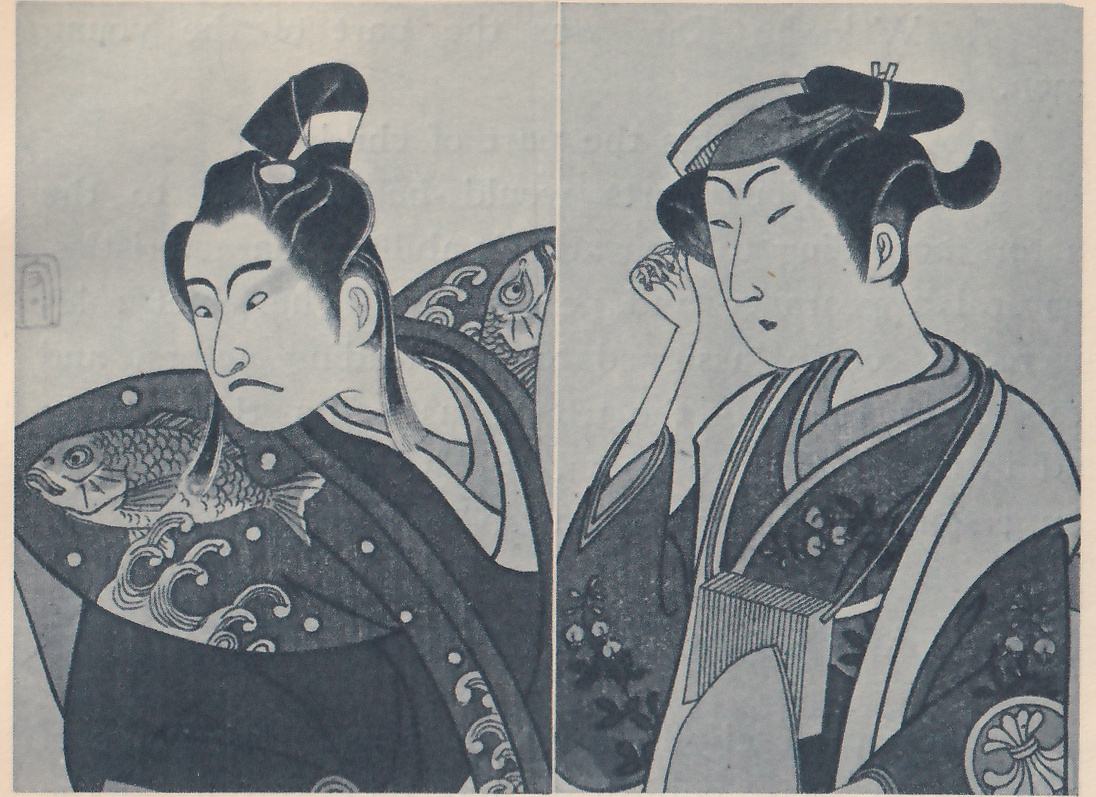
Waka Onna Kata
2. Kataki Yaku. This term denotes the villain, who stands in opposition to the Tachi Yaku. Later, however, there developed a third, called Jitsu Aku, which stood between the two. He was seemingly a loyal subject, but in reality was seeking the ruin of his country.
3. Dōke Kata. This was the part of the fool. Later there developed the character of the half-fool, a light, and frequently humorous villain.
4. Oyaji Kata. This was the part of the old man.
5. Kwasha Kata. This was the old woman, such as the queen dowager, the step-mother, the court lady.
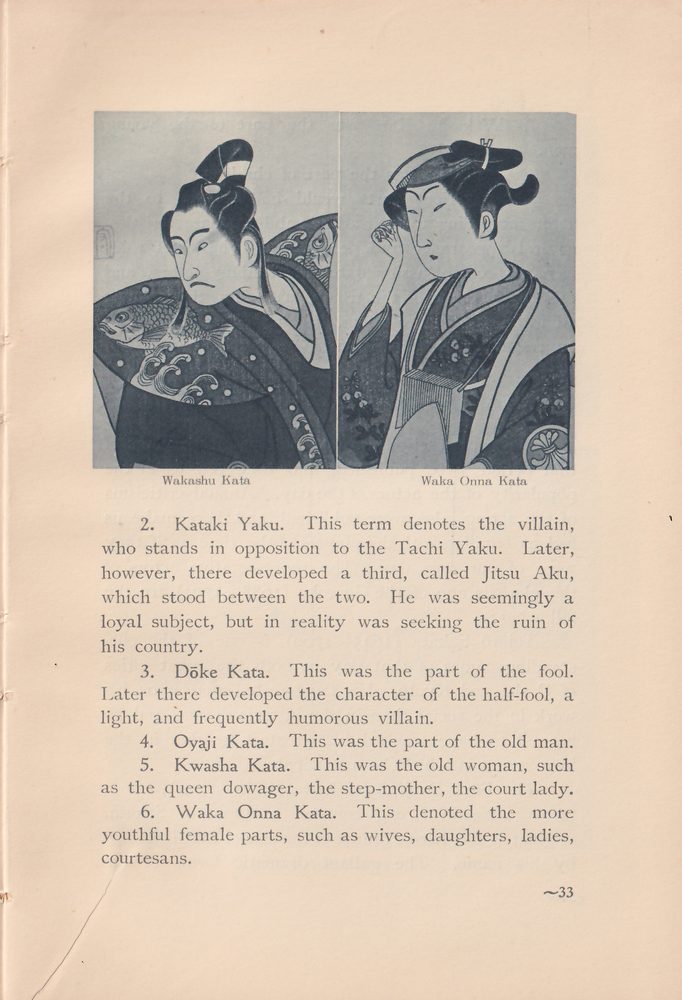
6. Waka Onna Kata. This denoted the more youthful female parts, such as wives, daughters, ladies, courtesans.
7. Wakashu Kata was the part of the young men.
8. Ko Yaku was the part of children.
These various parts would be assigned to the actors according to their artistic ability, characteristics, natural appearance and personality. The chief rôles were, of course, assigned to the leading actors, and the minor actors of the troupe, as well as those newly admitted to the profession, had to be satisfied with impersonating the minor parts.
FAMOUS ACTORS OF THE PERIOD
Many profusely-illustrated editions of the plays of that period were published, and they tell us of the popularity of the actors of the day. Annual criticisms of the acting, also, were published, and these make us feel as familiar with the players of the time as if they were of our own day. The representative actors of the glorious age of the Genroku (1688—1704) are the following:—
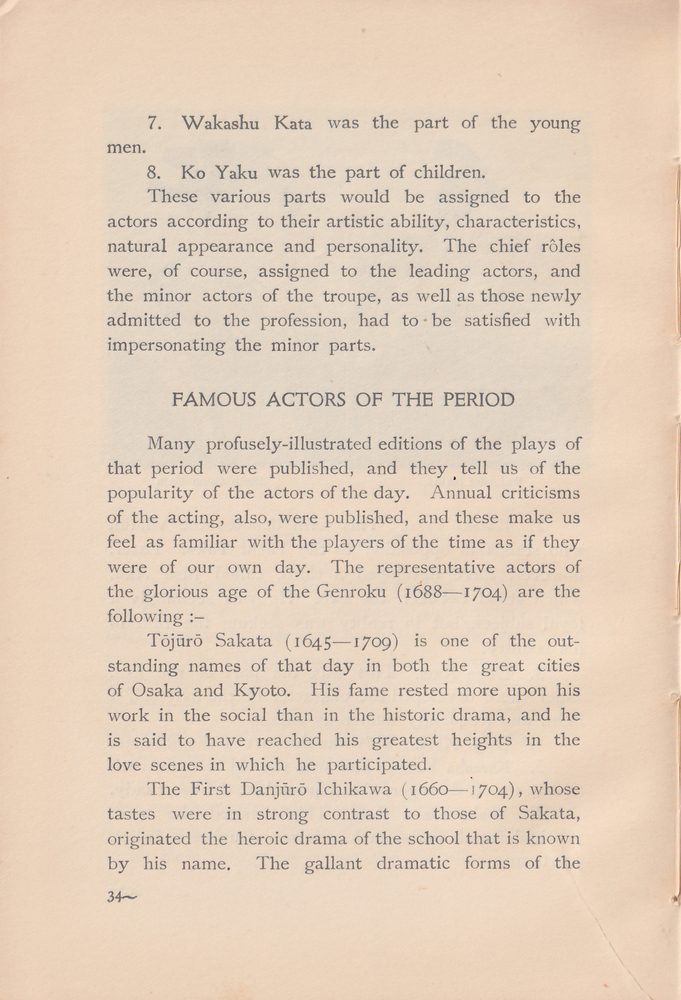
Tōjūrō Sakata (1645—1709) is one of the outstanding names of that day in both the great cities of Osaka and Kyoto. His fame rested more upon his work in the social than in the historic drama, and he is said to have reached his greatest heights in the love scenes in which he participated.
The First Danjūrō Ichikawa (1660—1704), whose tastes were in strong contrast to those of Sakata, originated the heroic drama of the school that is known by his name. The gallant dramatic forms of the
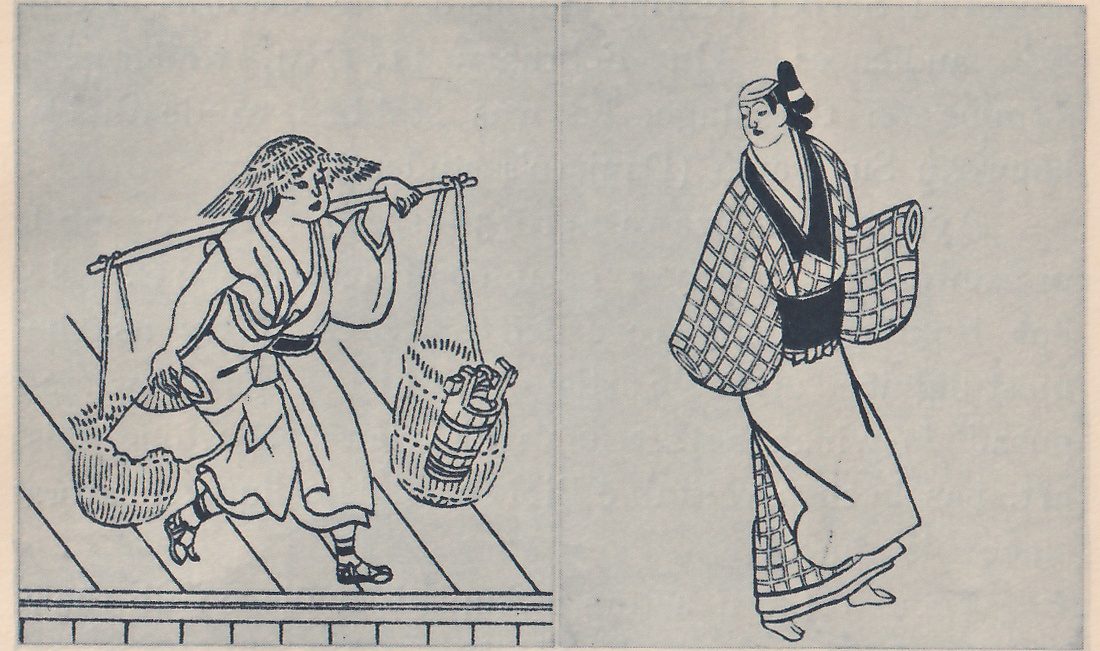
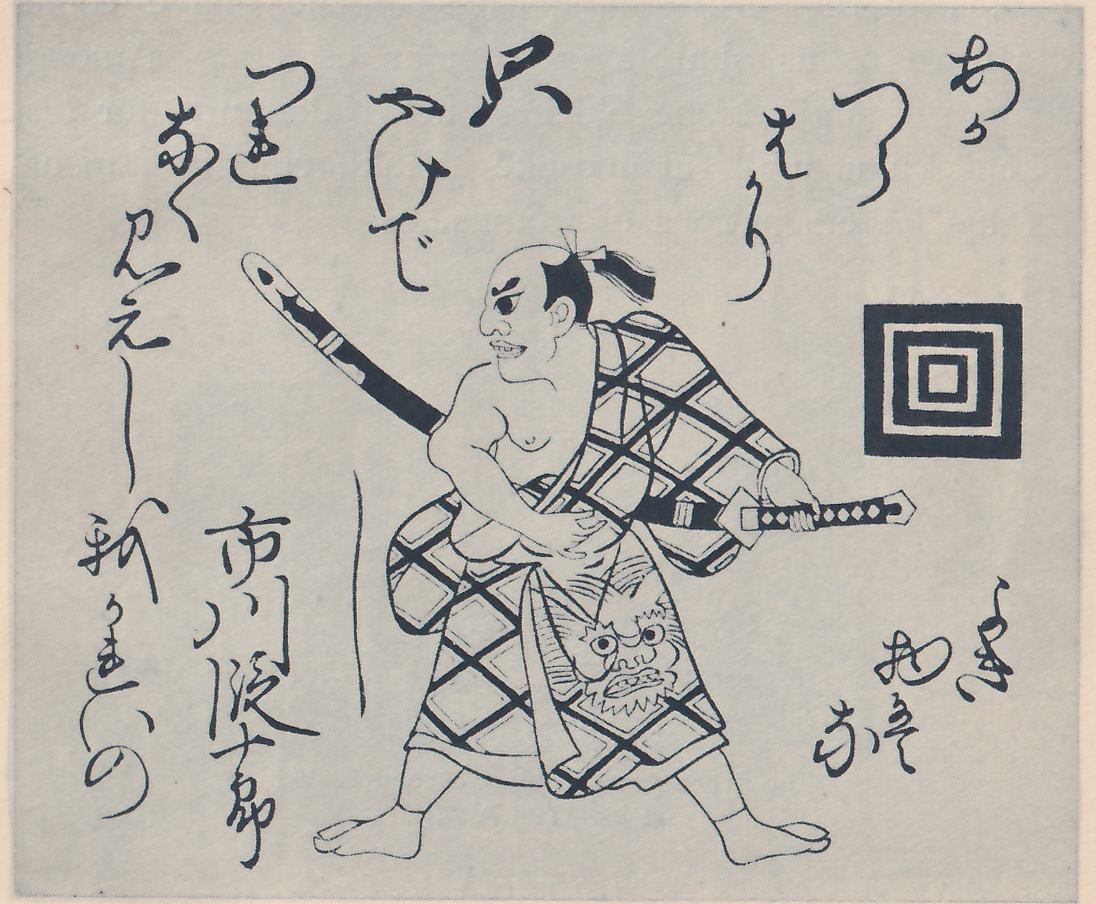
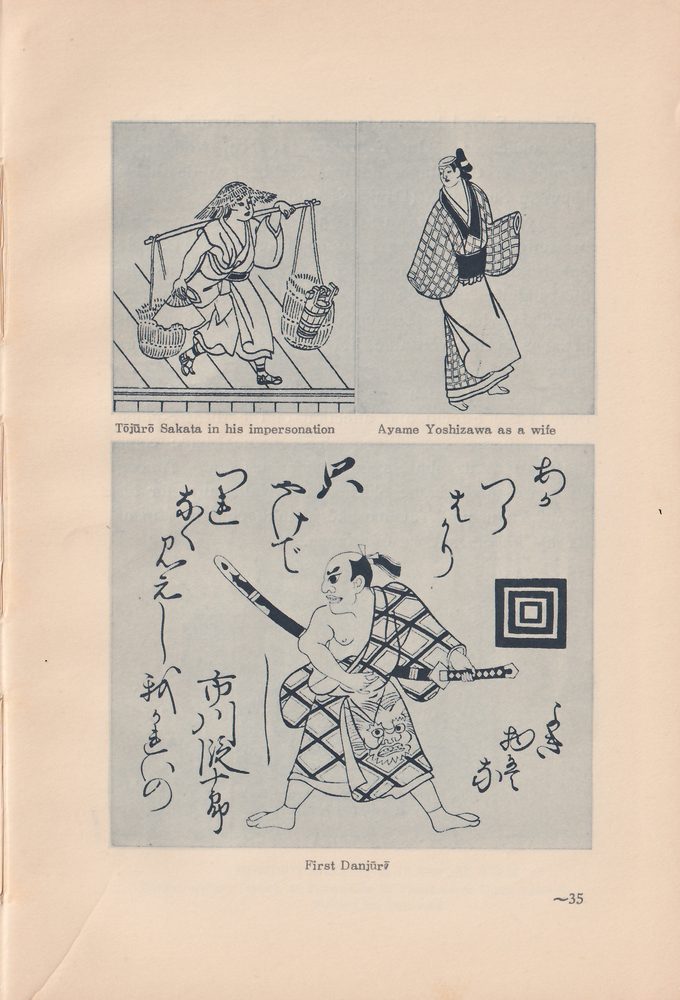
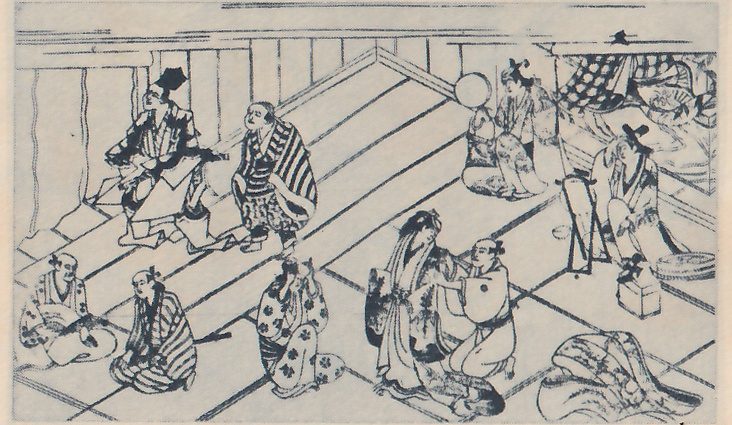
Ichikawa School became famous as the favourite of the Edo audiences. On February 11, 1704, while performing on the stage, he was stabbed to death by Hanroku Sugiyama (Danjūrō’s student).
Ayame Yoshizawa (1673—1729) was a most praiseworthy portrayer of difficult female parts. He has been generally regarded since that day as the most dignified and able artist of his kind. His “Ayame-gusa,” in which he set forth his views regarding this art, has been a veritable Bible to female impersonators since his time.
Though these actors occupied a place all their own in the esteem and affection of the theatre-going public, there were others whose names have come down to us as sharers of popular esteem. Among them we might name Shichisaburō Nakamura, for his Tachi Yaku, and Tatsunosuke Mizuki, equally famous for his impersonations of women.
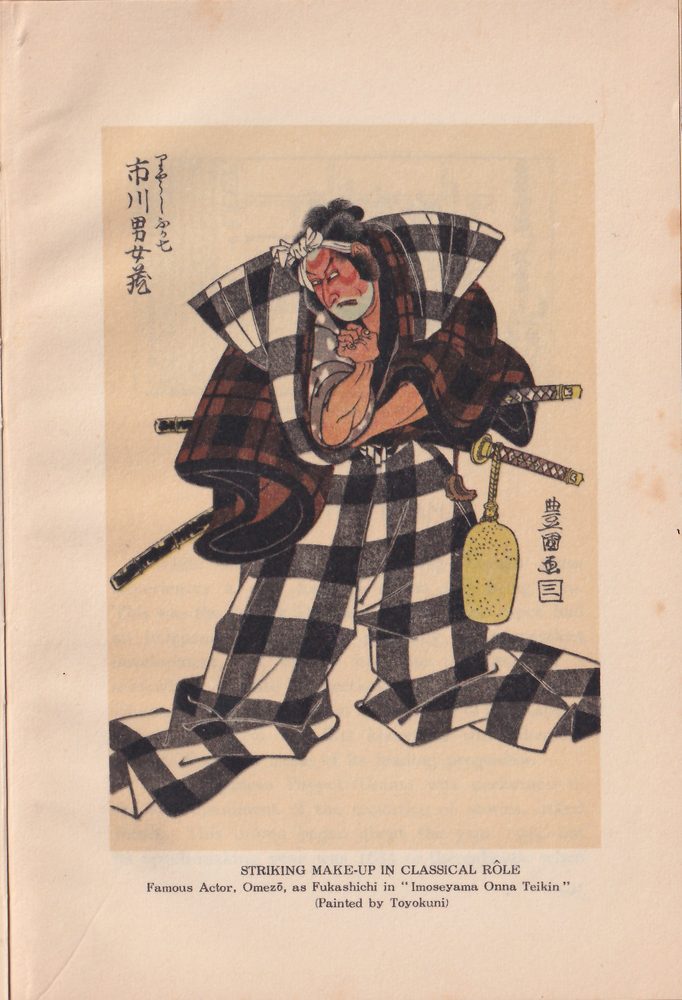
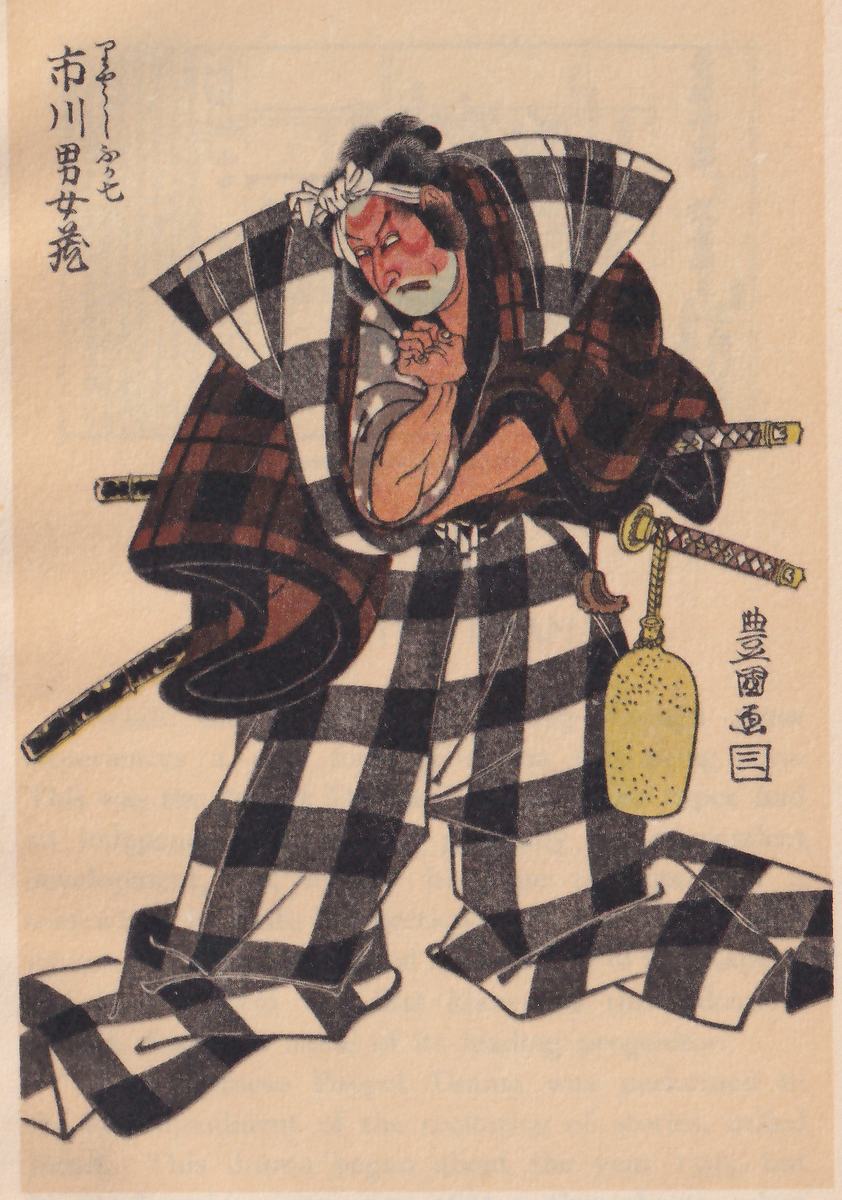
Famous Actor, Omezō, as Fukashichi in “Imoseyama Onna Teikin”
(Painted by Toyokuni)