
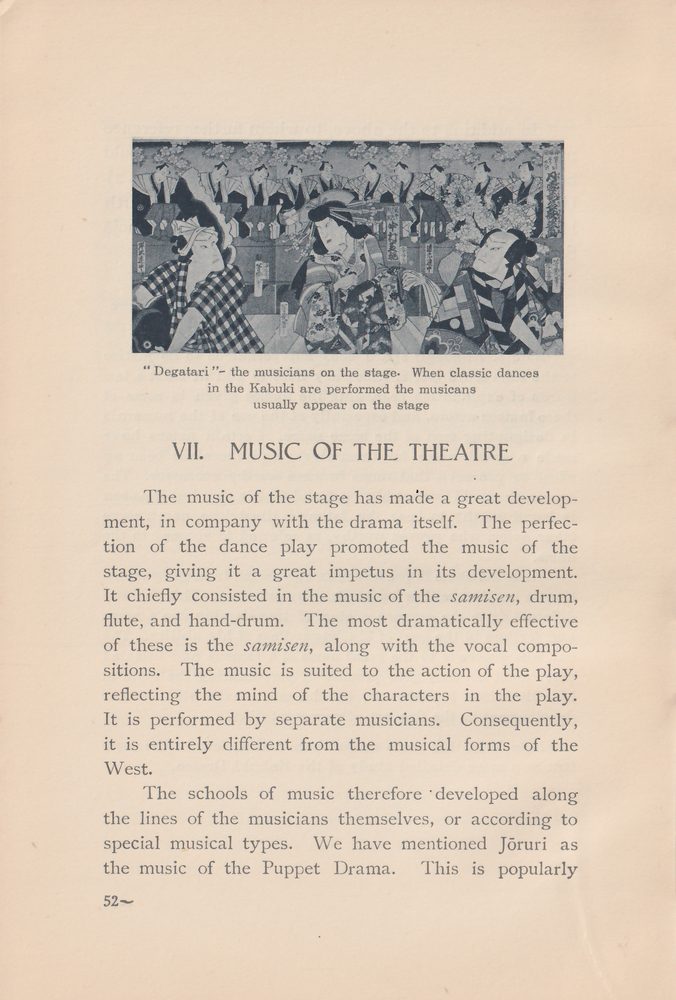
VII. MUSIC OF THE THEATRE
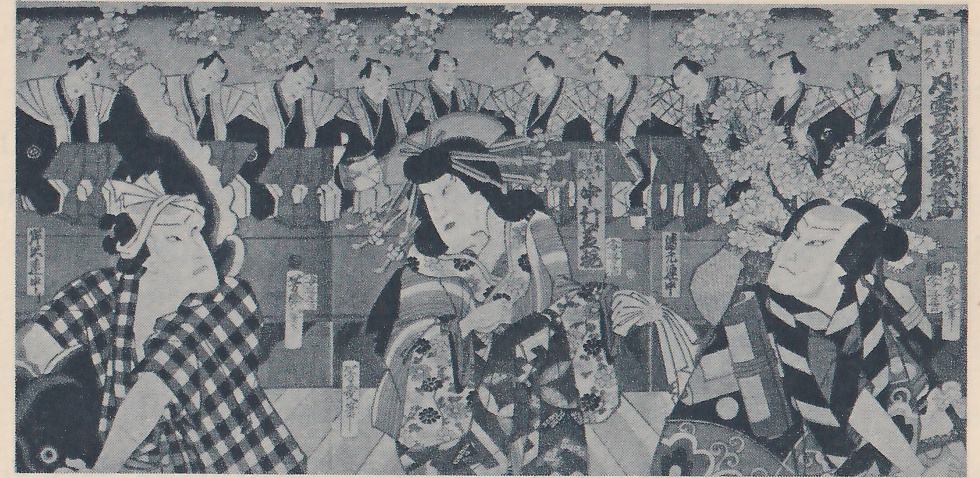
The music of the stage has made a great development, in company with the drama itself. The perfection of the dance play promoted the music of the stage, giving it a great impetus in its development. It chiefly consisted in the music of the samisen, drum, flute, and hand-drum. The most dramatically effective of these is the samisen, along with the vocal compositions. The music is suited to the action of the play, reflecting the mind of the characters in the play. It is performed by separate musicians. Consequently, it is entirely different from the musical forms of the West.
The schools of music therefore developed along the lines of the musicians themselves, or according to special musical types. We have mentioned Jōruri as the music of the Puppet Drama. This is popularly
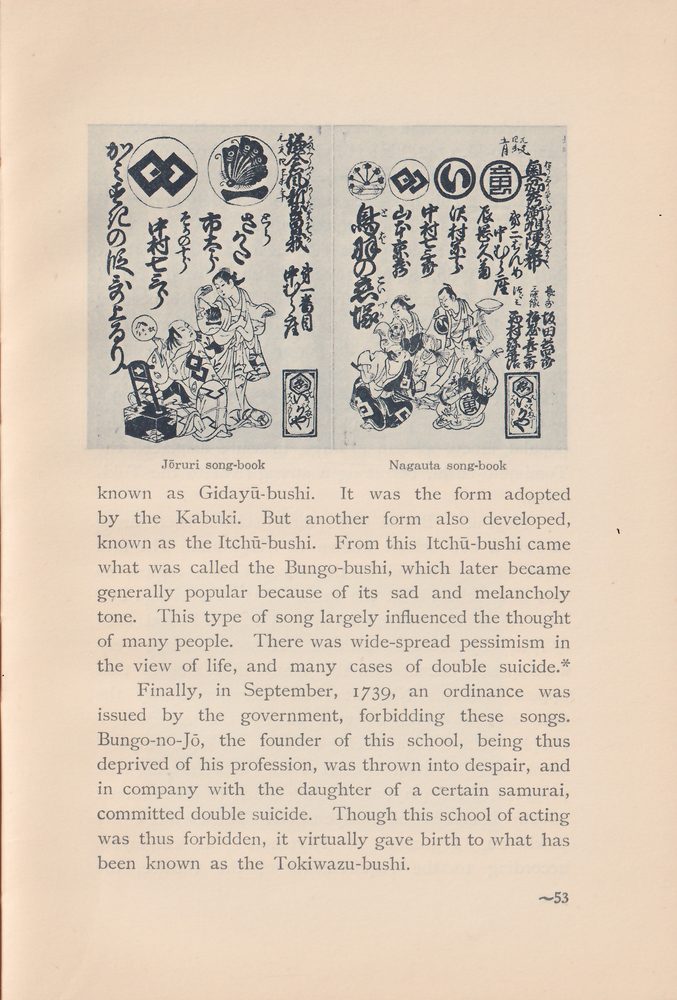
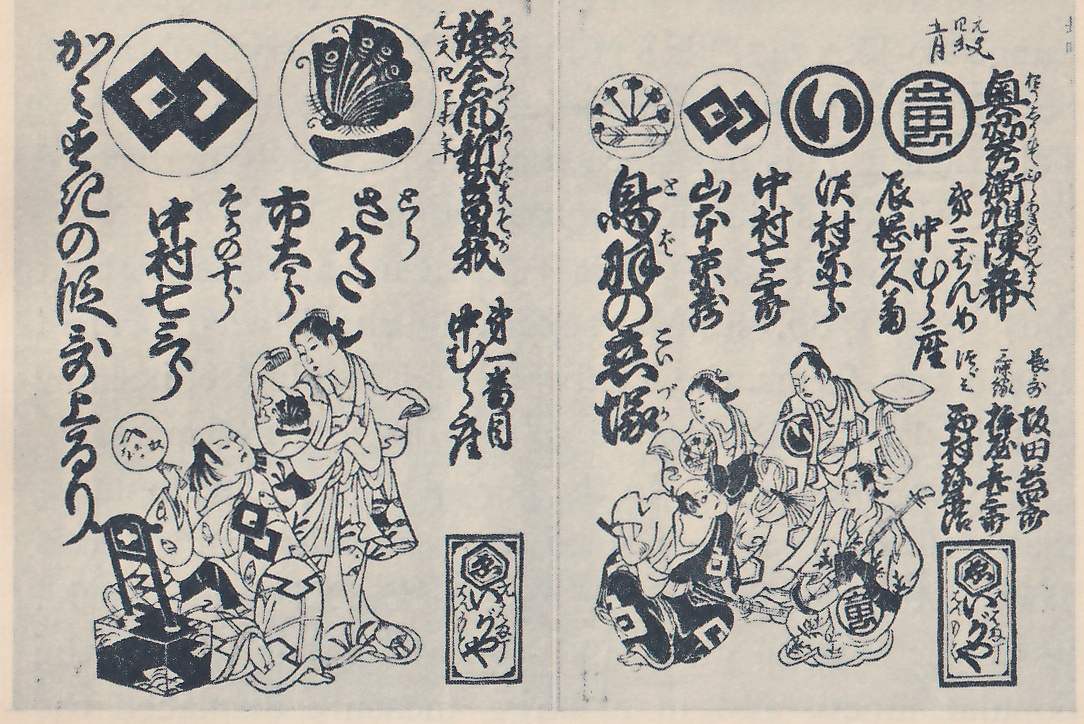
Nagauta song-book
known as Gidayū-bushi. It was the form adopted by the Kabuki. But another form also developed, known as the Itchū-bushi. From this Itchū-bushi came what was called the Bungo-bushi, which later became generally popular because of its sad and melancholy tone. This type of song largely influenced the thought of many people. There was wide-spread pessimism in the view of life, and many cases of double suicide.*
Finally, in September, 1739, an ordinance was issued by the government, forbidding these songs. Bungo-no-Jō, the founder of this school, being thus deprived of his profession, was thrown into despair, and in company with the daughter of a certain samurai, committed double suicide. Though this school of acting was thus forbidden, it virtually gave birth to what has been known as the Tokiwazu-bushi.
Tokiwazu-bushi. Eleven years after the death of Bungo-no-Jō, 1747, his son-in-law, Monji-Dayū, obtained permission to found a new school under the name of Tokiwazu. This has since come to be widely performed in the theatres throughout the land.
Tomimoto-bushi. This Tokiwazu was revised about the year 1760, and a separate school was formed. These two forms, the Tokiwazu and Tomimoto, became in this way indispensable to all dance performers.
Kiyomoto-bushi. In the period of high development that followed, a new form was evolved out of this Tomimoto-bushi, taking the name of the Kiyomoto-bushi. Its music was so clear and appealing that it won the popular fancy, and in a large measure displaced the Tomimoto-bushi, becoming a strong rival to the Tokiwazu.
Naga-uta. Beside these three schools there arose in Edo a new school known as Naga-uta. The first three had originated in the Kyoto-Osaka region, so this new school took the name of the Edo Naga-uta. This Naga-uta was founded in the Genroku Period (1688—1704) by Kangorō Kineya. It soon became very wide-spread because of the many able singers that appeared. This Naga-uta was accompanied by the flute and a drum, as well as by the samisen, a simple orchestra thus being formed. This accompaniment had its own special value in furthering the progress of the play, and adding much to its dramatic effect. It made itself indispensable. Thus, while either Tokiwazu, Tomimoto or Kiyomoto was employed, according to the requirements of the theatre, the
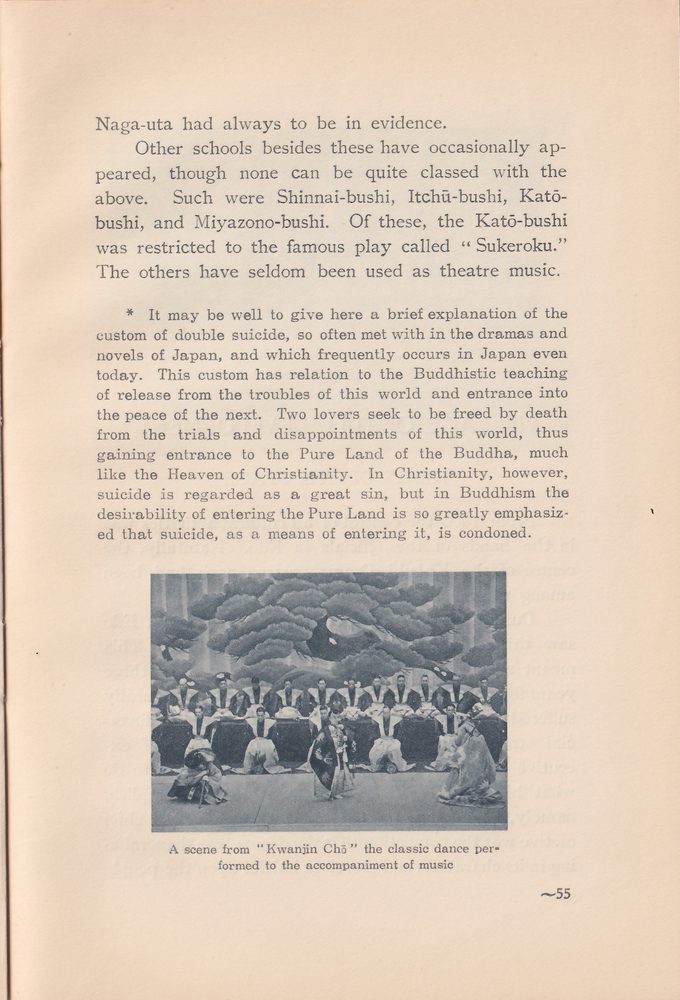
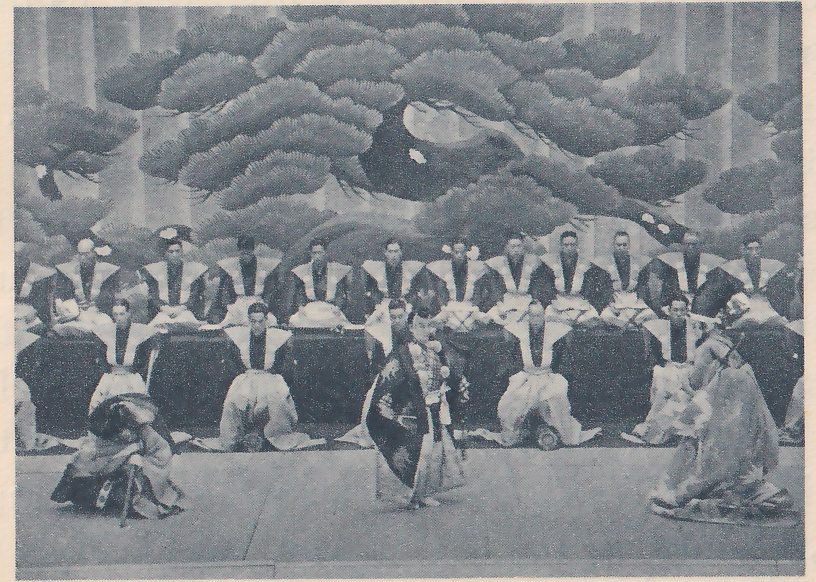
Naga-uta had always to be in evidence.
Other schools besides these have occasionally appeared, though none can be quite classed with the above. Such were Shinnai-bushi, Itchū-bushi, Katō-bushi, and Miyazono-bushi. Of these, the Katō-bushi was restricted to the famous play called “Sukeroku.” The others have seldom been used as theatre music.
* It may be well to give here a brief explanation of the custom of double suicide, so often met with in the dramas and novels of Japan, and which frequently occurs in Japan even today. This custom has relation to the Buddhistic teaching of release from the troubles of this world and entrance into the peace of the next. Two lovers seek to be freed by death from the trials and disappointments of this world, thus gaining entrance to the Pure Land of the Buddha, much like the Heaven of Christianity. In Christianity, however, suicide is regarded as a great sin, but in Buddhism the desirability of entering the Pure Land is so greatly emphasized that suicide, as a means of entering it, is condoned.