
XI. THE STAGE TODAY
FAMOUS ACTORS OF THE KABUKI SCHOOL
Every theatre of today changes its repertoire at the beginning of each year, and remains open all the year round. About seventy per cent of the plays performed in the large theatres belong to the Kabuki, or are closely related to it. The Kabuki is still the centre of dramatic interest in Japan. Although the theme of the Kabuki has as its background the life of the Edo Period (1603—1868) which is far removed from the life of today, it possesses its own peculiar artistic beauty, preserving the classical forms created by its masters through the ages, and making its appeal through its accumulated treasures of dramatic art. Those who are striving to create a drama for our new age recognize the mistake of those who simply discarded the Kabuki as being too remote from the life of today. With a fresh appreciation of the Kabuki they are taking over some of its elements in their effort to create a new national drama.
Brief reference should here be made to the leading actors of our day. The chief and ablest among them all are the Fifth Utaemon Nakamura (1865—) and the Sixth Baikō Onoye, who was born in 1870 and passed away in November, 1934, as this brochure was being prepared. Both have been famous for
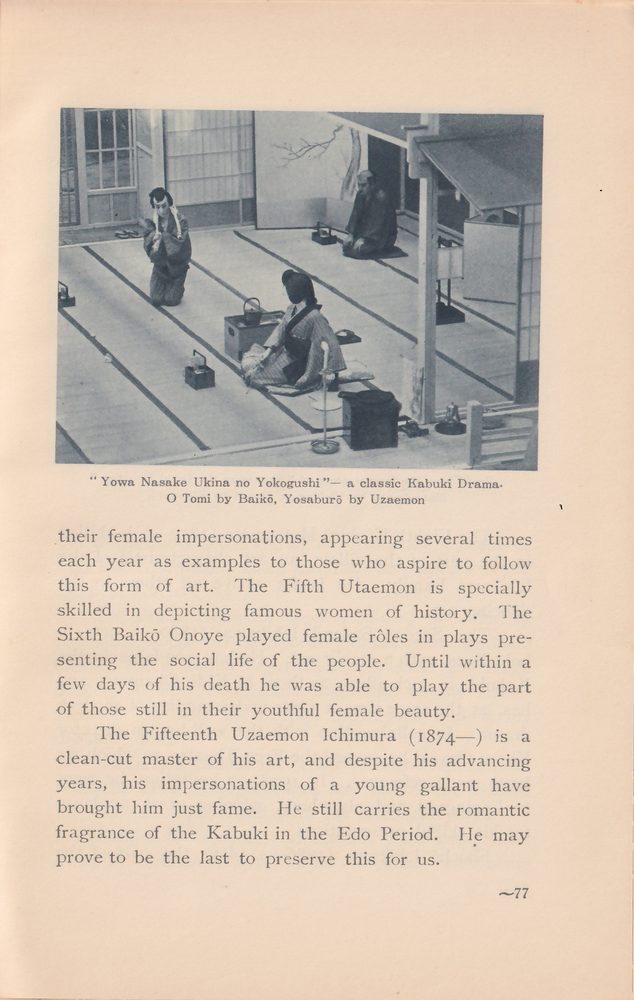
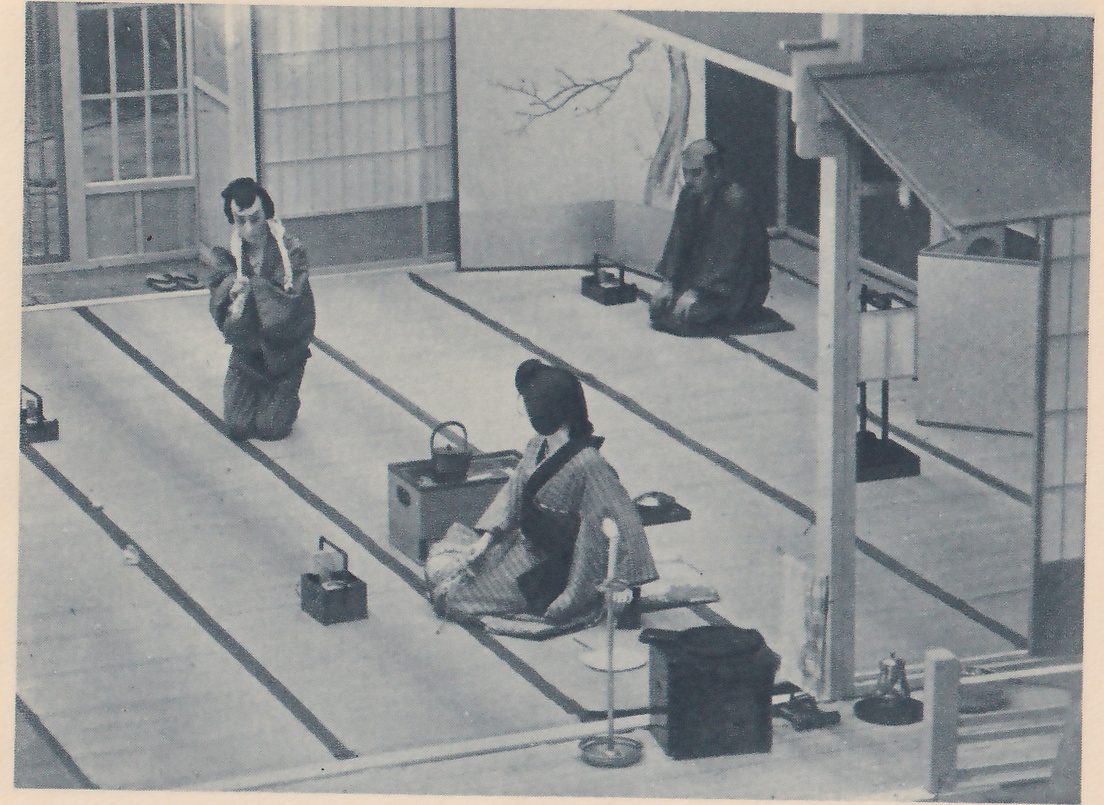
O Tomi by Baikō, Yosaburō by Uzaemon
their female impersonations, appearing several times each year as examples to those who aspire to follow this form of art. The Fifth Utaemon is specially skilled in depicting famous women of history. The Sixth Baikō Onoye played female rôles in plays presenting the social life of the people. Until within a few days of his death he was able to play the part of those still in their youthful female beauty.
The Fifteenth Uzaemon Ichimura (1874—) is a clean-cut master of his art, and despite his advancing years, his impersonations of a young gallant have brought him just fame. He still carries the romantic fragrance of the Kabuki in the Edo Period. He may prove to be the last to preserve this for us.
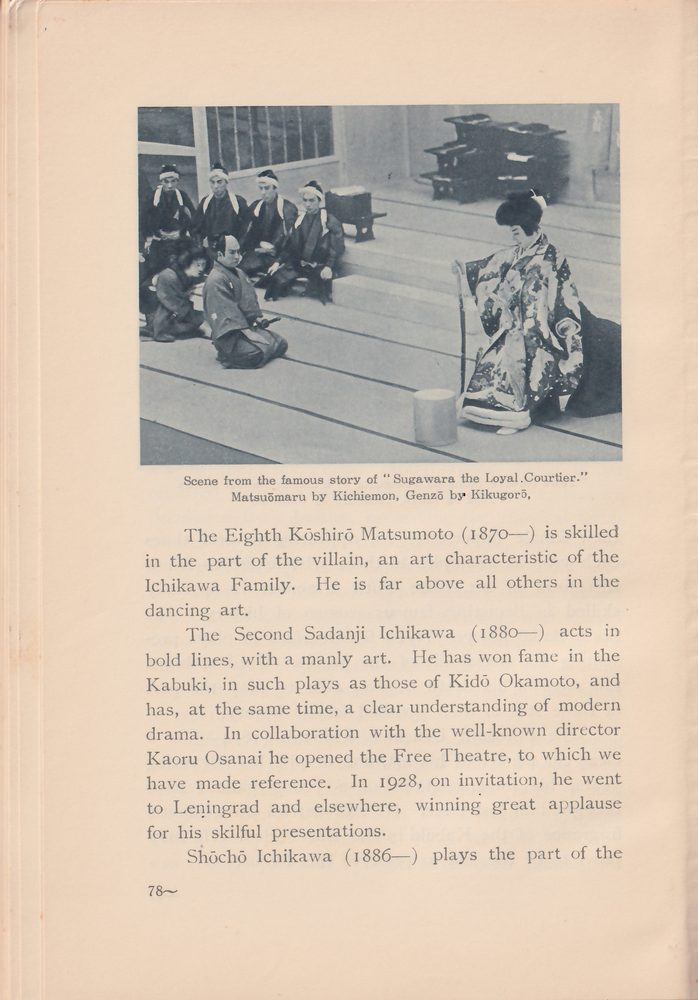
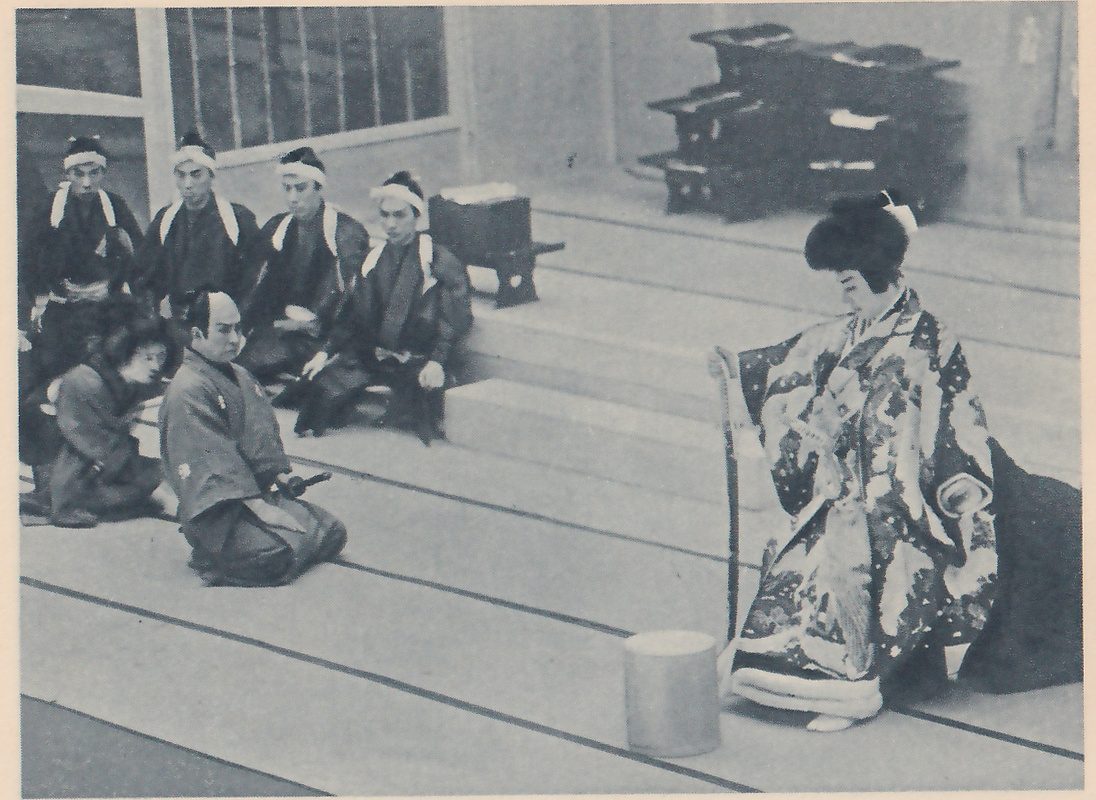
Matsuōmaru by Kichiemon, Genzō by Kikugorō,
The Eighth Kōshirō Matsumoto (1870—) is skilled in the part of the villain, an art characteristic of the Ichikawa Family. He is far above all others in the dancing art.
The Second Sadanji Ichikawa (1880—) acts in bold lines, with a manly art. He has won fame in the Kabuki, in such plays as those of Kidō Okamoto, and has, at the same time, a clear understanding of modern drama. In collaboration with the well-known director Kaoru Osanai he opened the Free Theatre, to which we have made reference. In 1928, on invitation, he went to Leningrad and elsewhere, winning great applause for his skilful presentations.
Shōchō Ichikawa (1886—) plays the part of the
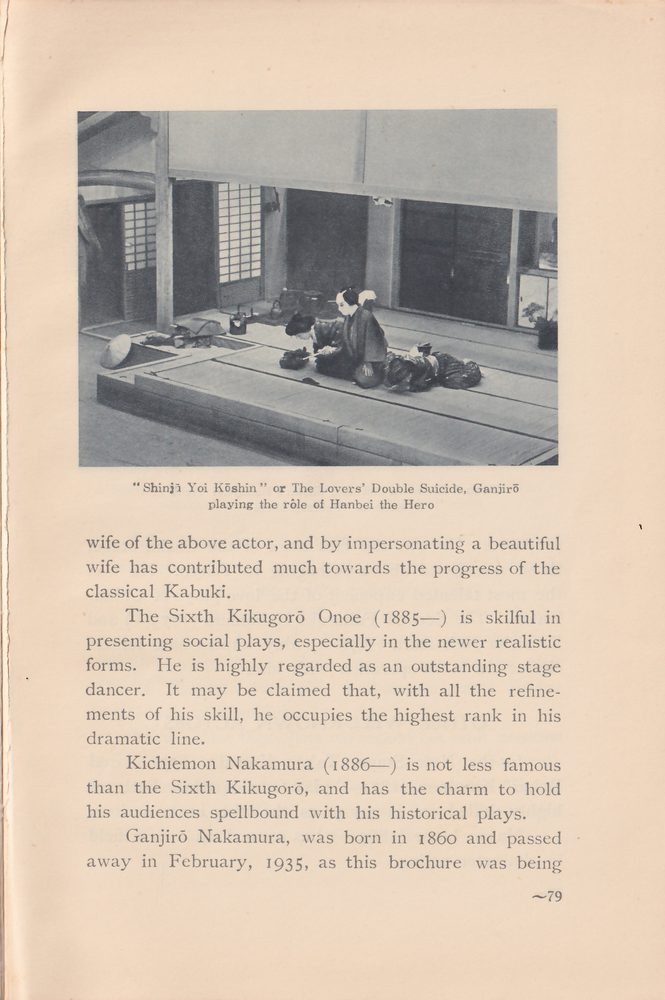
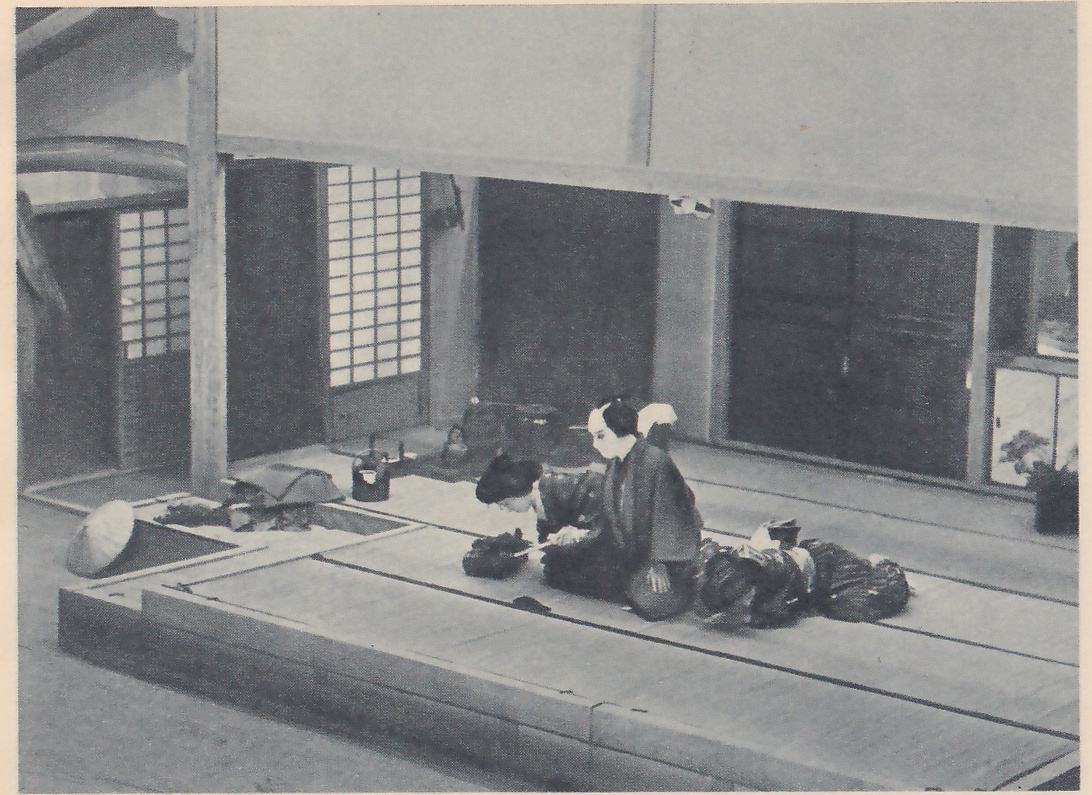
wife of the above actor, and by impersonating a beautiful wife has contributed much towards the progress of the classical Kabuki.
The Sixth Kikugorō Onoe (1885—) is skilful in presenting social plays, especially in the newer realistic forms. He is highly regarded as an outstanding stage dancer. It may be claimed that, with all the refinements of his skill, he occupies the highest rank in his dramatic line.
Kichiemon Nakamura (1886—) is not less famous than the Sixth Kikugorō, and has the charm to hold his audiences spellbound with his historical plays.
Ganjirō Nakamura, was born in 1860 and passed away in February, 1935, as this brochure was being
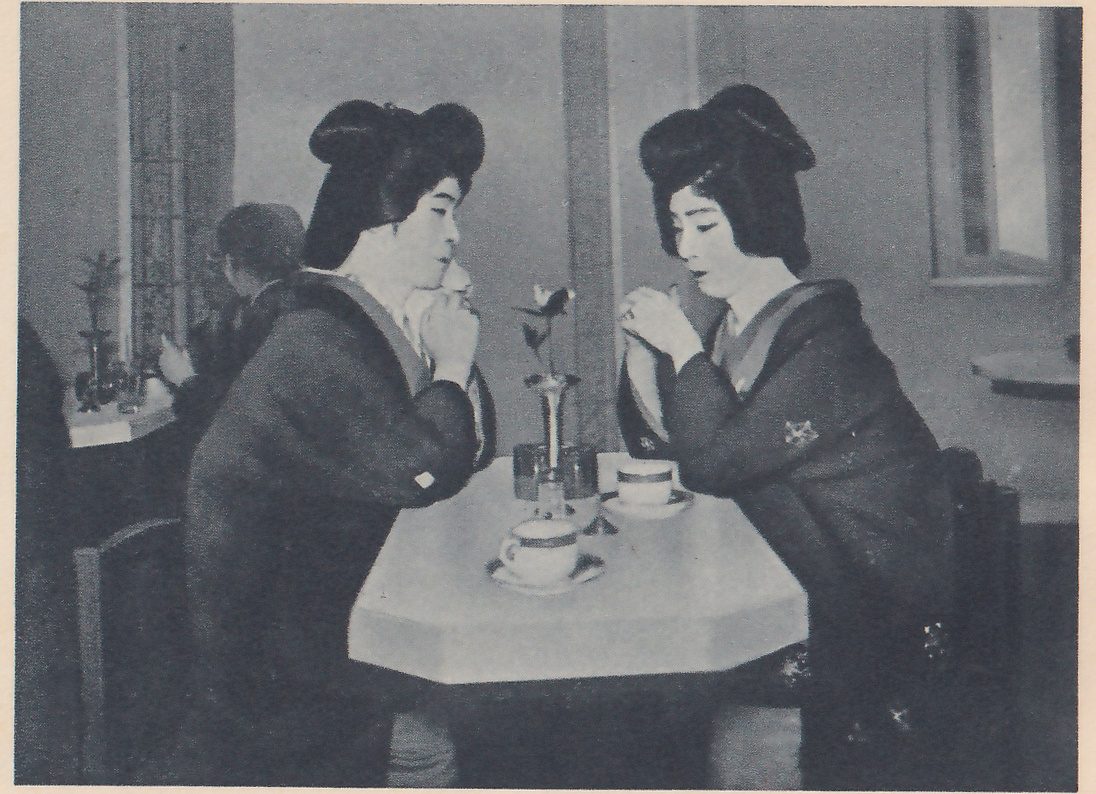
prepared. He was the first actor of the Osaka stage, those mentioned above belonging to Tokyo. He was the most talented exponent of the love plays of Chikamatsu. The Second Fukusuke Nakamura (1875—) and Kwaisha Nakamura (1876—) ably impersonate female characters in co-operation with him.
OTHER WELL-KNOWN ACTORS
In the New Stage, Takeo Kawai (1877—) and Rokurō Kitamura, (1871—) play female parts. Both are highly skilled, one in gay parts, the other in the serious.
Masao Inoue (1882—) has opened up a new field in character acting.
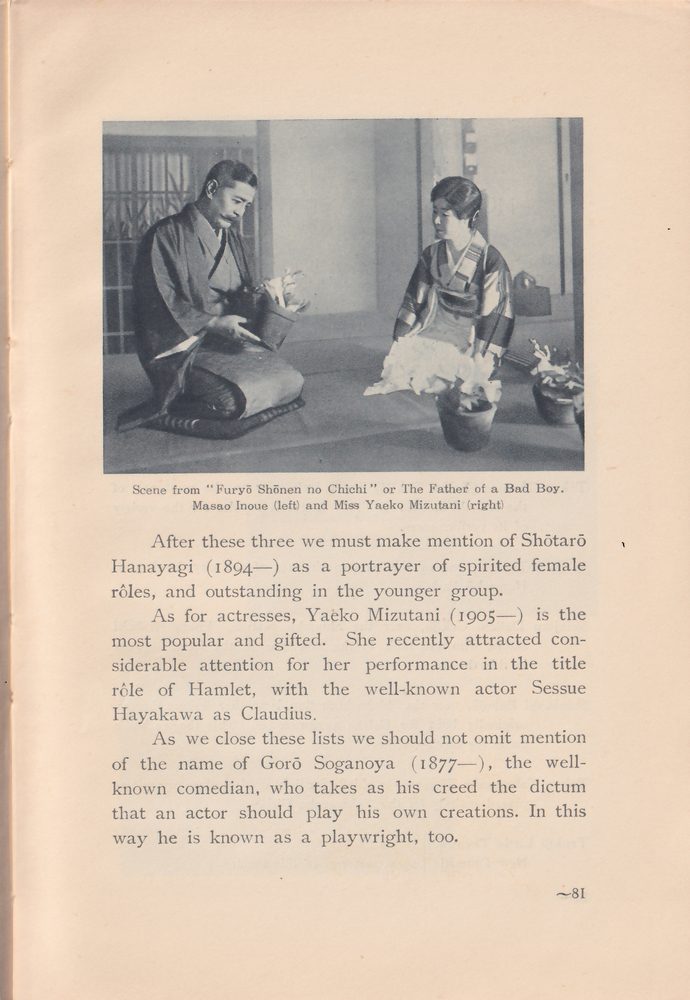
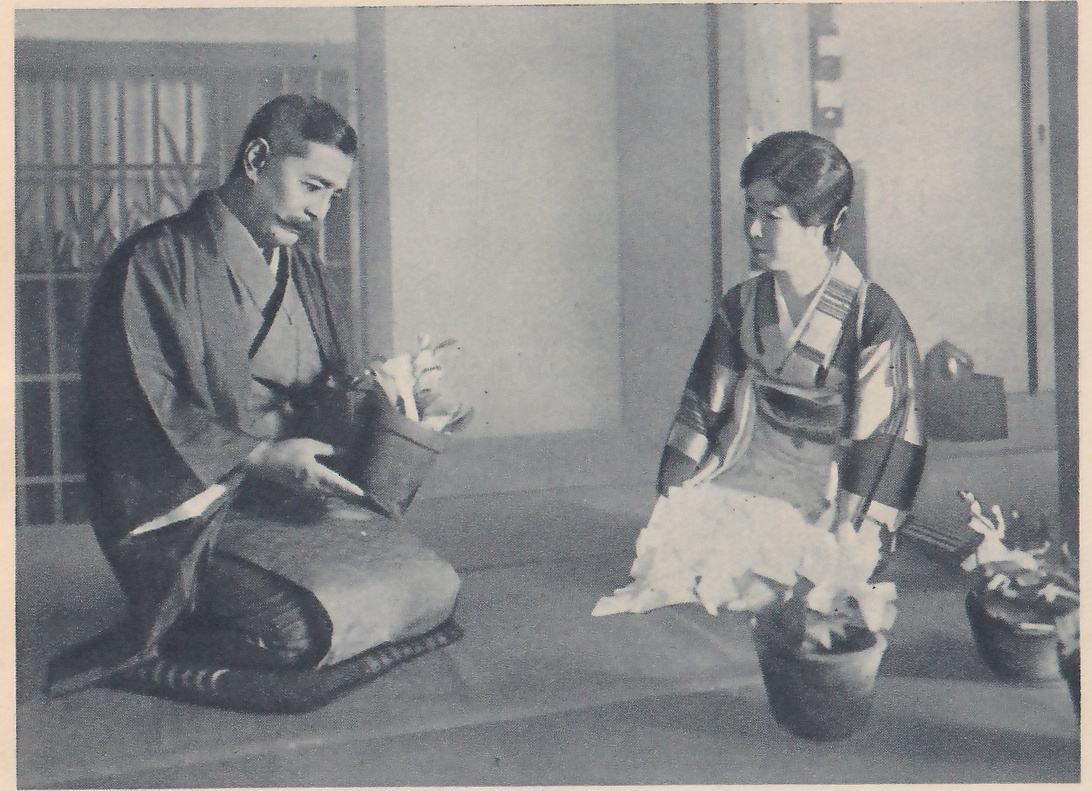
Masao Inoue (left) and Miss Yaeko Mizutani (right)
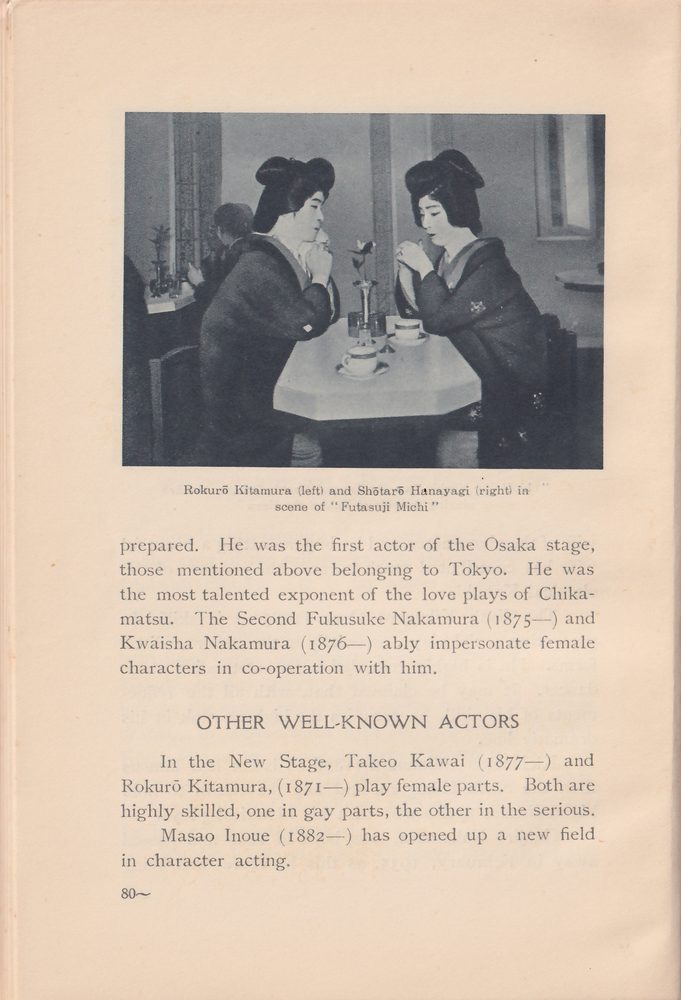
After these three we must make mention of Shōtarō Hanayagi (1894—) as a portrayer of spirited female rôles, and outstanding in the younger group.
As for actresses, Yaeko Mizutani (1905—) is the most popular and gifted. She recently attracted considerable attention for her performance in the title rôle of Hamlet, with the well-known actor Sessue Hayakawa as Claudius.
As we close these lists we should not omit mention of the name of Gorō Soganoya (1877—), the well-known comedian, who takes as his creed the dictum that an actor should play his own creations. In this way he is known as a playwright, too.