
V. PUPPET DRAMA
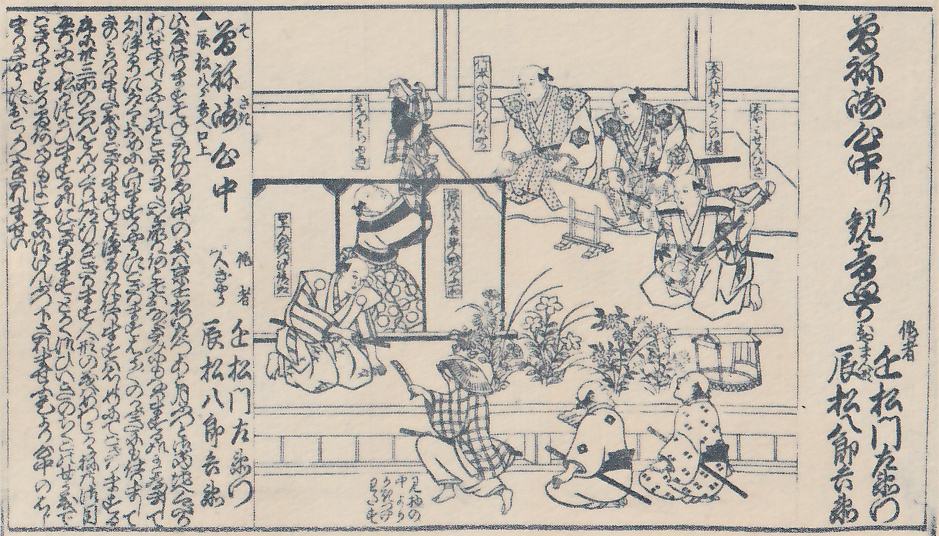
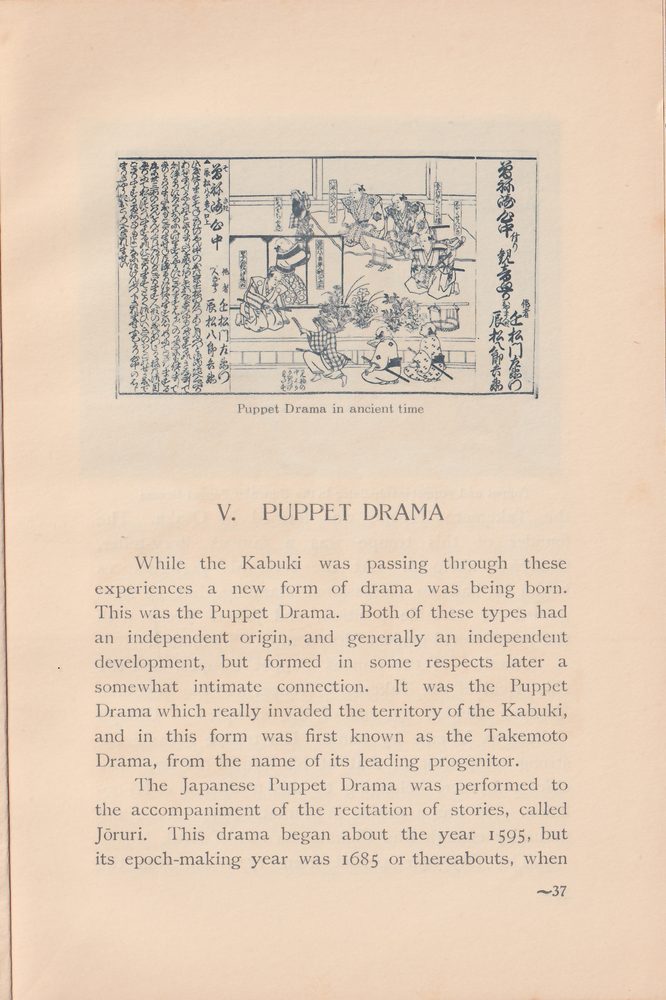
While the Kabuki was passing through these experiences a new form of drama was being born. This was the Puppet Drama. Both of these types had an independent origin, and generally an independent development, but formed in some respects later a somewhat intimate connection. It was the Puppet Drama which really invaded the territory of the Kabuki, and in this form was first known as the Takemoto Drama, from the name of its leading progenitor.
The Japanese Puppet Drama was performed to the accompaniment of the recitation of stories, called Jōruri. This drama began about the year 1595, but its epoch-making year was 1685 or thereabouts, when
the Takemoto Troupe was formed in Osaka. The founder of this troupe was a famous story-teller, Gidayū Takemoto. At the time his performances began he had no professional standing, but he soon gained an enviable position, and joined forces with the great world-genius, Monzaemon Chikamatsu.
Another of the famous Puppet troupes, and the chief rival of the Takemoto Troupe, was the Toyotake Troupe, founded by one of the disciples of Gidayū Takemoto, Uneme by name. His troupe became the strong competitor of that of his former master. The chief composer, belonging to this troupe, was Ki-no-kaion. He was a genius in dramatic composition, and naturally enough was Chikamatsu’s chief rival.
The fifty-year period from 1710 on, was the
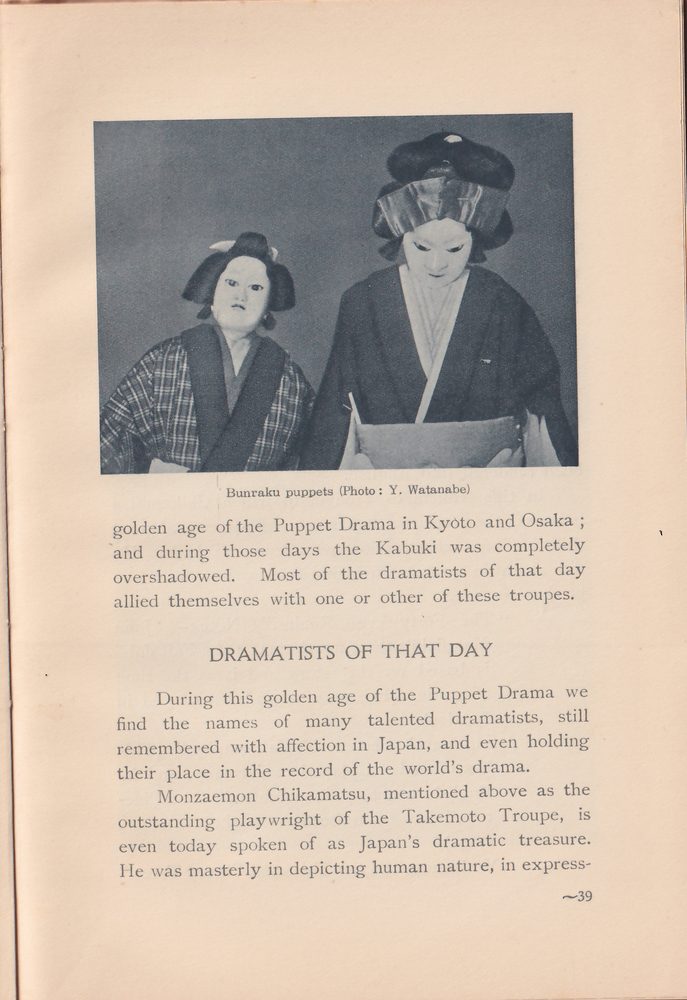
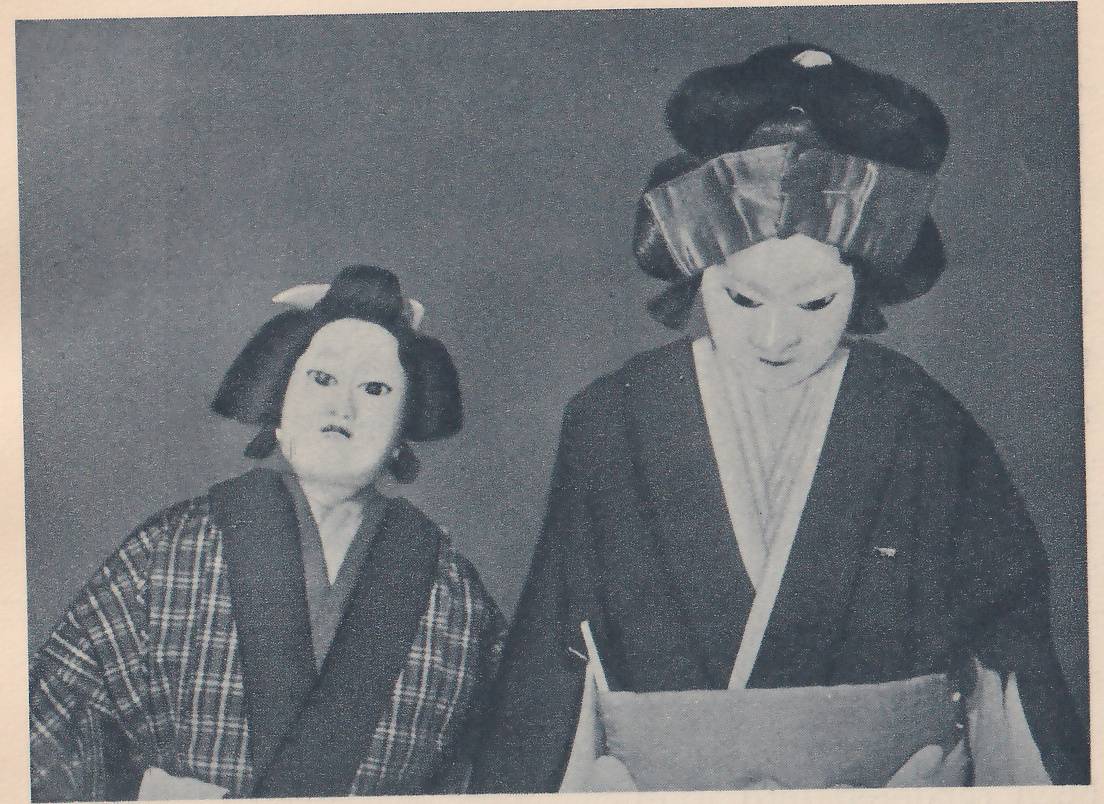
golden age of the Puppet Drama in Kyōto and Osaka; and during those days the Kabuki was completely overshadowed. Most of the dramatists of that day allied themselves with one or other of these troupes.
DRAMATISTS OF THAT DAY
During this golden age of the Puppet Drama we find the names of many talented dramatists, still remembered with affection in Japan, and even holding their place in the record of the world’s drama.
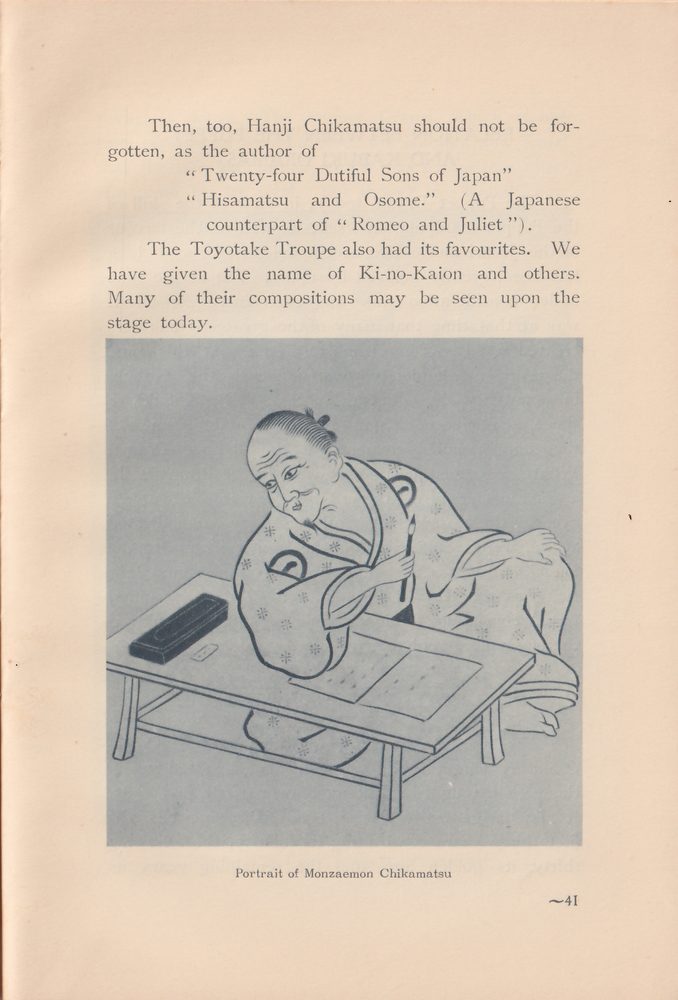
Monzaemon Chikamatsu, mentioned above as the outstanding playwright of the Takemoto Troupe, is even today spoken of as Japan’s dramatic treasure. He was masterly in depicting human nature, in express-
ing the spirit of his time, in attaining high dramatic effects. His first plays were largely historical in type, but later he gained great success in the creation of love dramas, with a decided penchant for double suicides. His style was masterly, and perhaps the most harmonious in all Japanese literature. His works totalled more than one hundred in number, of which might be named, as chief among them,
“The Courier for Hades”
“The Almanac of Love”
“The Adventures of the Hakata Damsel”
“The Love Suicide at Amijima”
“The Battles of Kokusenya.”
These representative plays of Chikamatsu have been rendered into English.
In this Takemoto Troupe, to which Chikamatsu belonged, the proprietor and the one who possessed great skill in stage construction was Izumo Takeda. He did much in partnership with others, but his chief productions are,
“The Forty-seven Rōnins.” (Note:— John Masefield’s three act drama, “The Faithful,” is based on this story and is at the time of writing (February 1935) being played in London).
“Sugawara’s Secrets of Calligraphy.” (This has often been played in Germany, and its English counterpart, “Matsu,” or “Pine-tree,” has often been upon the American stage).
“Yoshitsune and the Thousand Cherry Trees.”
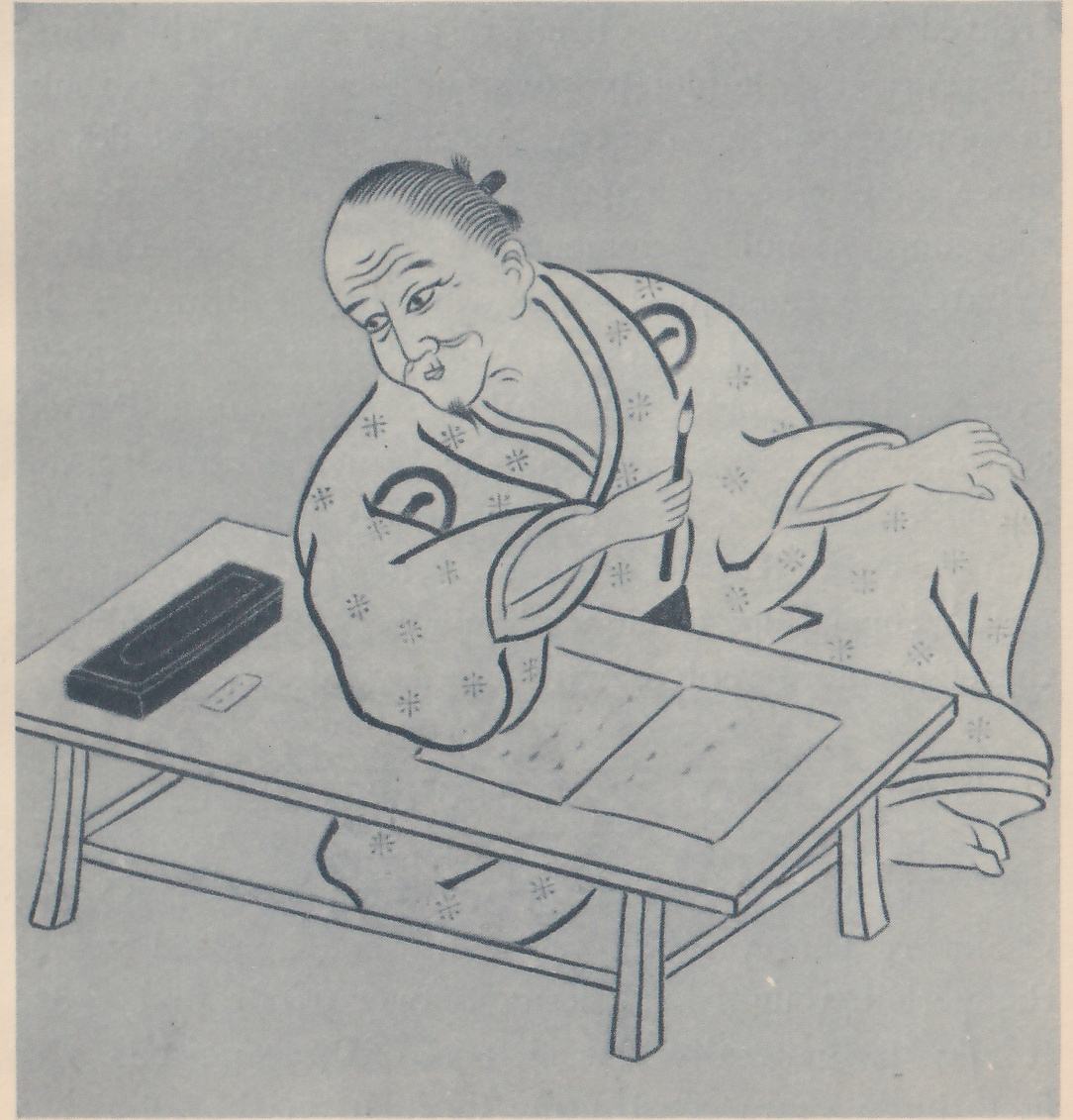
Then, too, Hanji Chikamatsu should not be forgotten, as the author of
“Twenty-four Dutiful Sons of Japan”
“Hisamatsu and Osome.” (A Japanese counterpart of “Romeo and Juliet”).
The Toyotake Troupe also had its favourites. We have given the name of Ki-no-Kaion and others. Many of their compositions may be seen upon the stage today.
RELATION BETWEEN THE PUPPET AND KABUKI DRAMAS
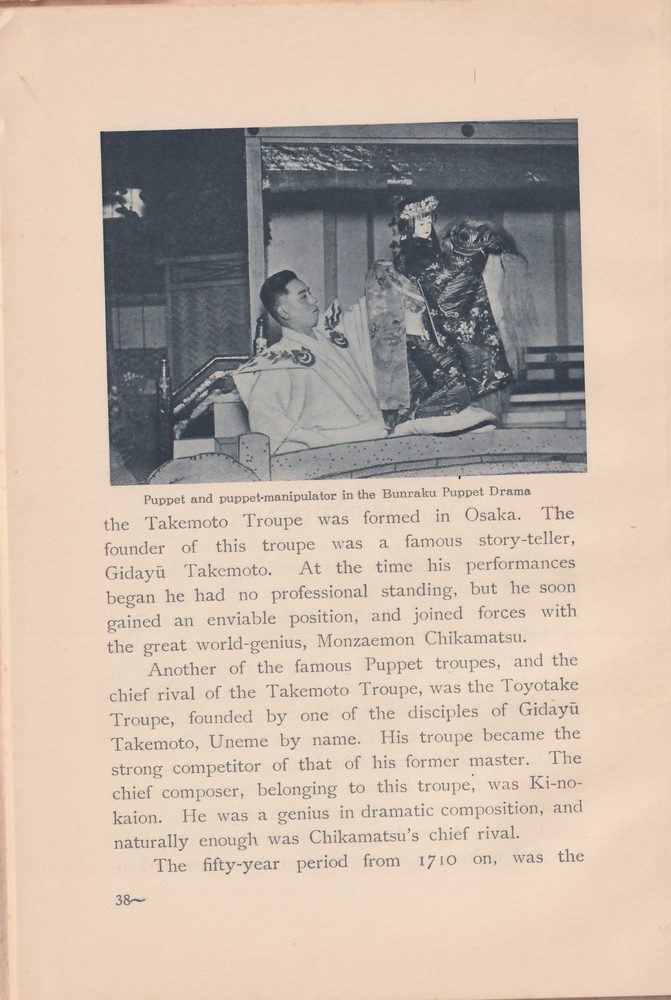
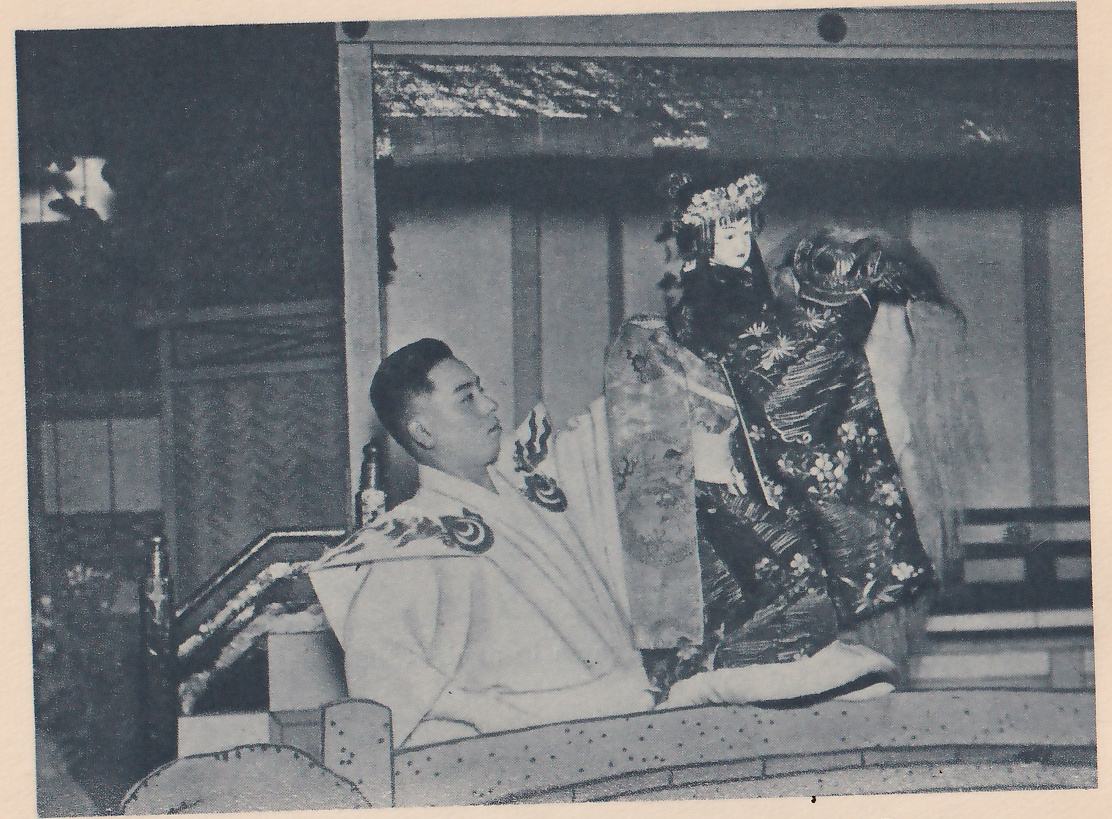
The Puppet Drama today, in view of the skill of the Puppet manipulation itself, as well as the fervour of the Jōruri music that accompanies it, is, as it long has been, greatly beloved by many. But at the time under consideration this was even more so, for it was at that time that many of the greatest composers created a succession of masterpieces. At this time the Puppet completely overshadowed the Kabuki in popularity and general success. The Kabuki, in sheer self-defence, began to appropriate some of the more popular elements of the Puppet Drama. Whatever seemed most interesting, in the drama itself, as in the method of its performance, was boldly taken over by the Kabuki. And all these plays, as indicated above, were transferred from the Puppet Drama to the Kabuki. By this act alone we may understand how rich was the Kabuki in adaptability, and how gifted in appropriating foreign elements. The Kabuki is therefore more replete with literary value.
THE DECAY OF THE PUPPET DRAMA
The age of the Puppet Drama in the Kyoto-Osaka region covered practically one hundred years, the period, roughly speaking, between 1685 and 1785. It may be generally classified as of three periods, the first thirty years constituting its infancy, the following thirty its golden age, and the remaining years its
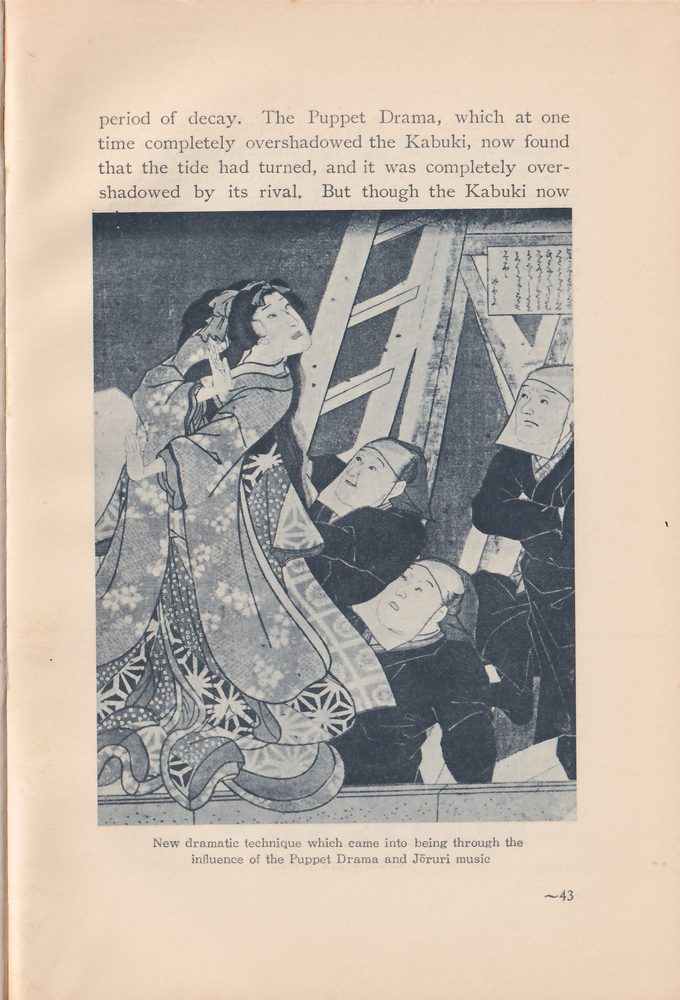
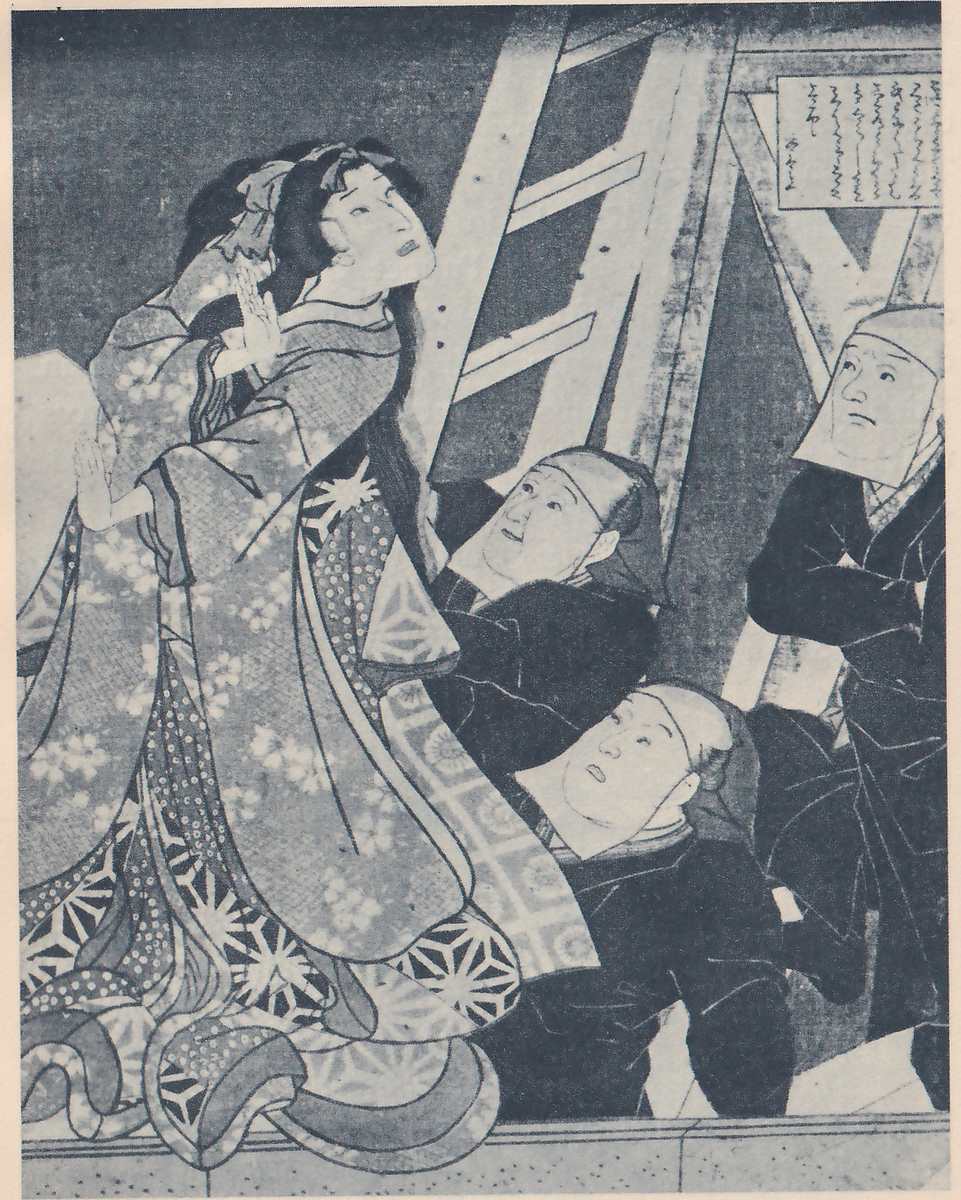
period of decay. The Puppet Drama, which at one time completely overshadowed the Kabuki, now found that the tide had turned, and it was completely overshadowed by its rival. But though the Kabuki now
largely replaced the Puppet in popular affection, it absorbed some of its important characteristics. Much of its movement was boldly taken over into the new movement of the Kabuki; its music, the Jōruri, too, was taken over in the same way; and with the movement and the music, certain artistic and lyrical elements that are to be found in the Kabuki Drama even today. These valuable contributions were grudgingly made by the Puppet to the Kabuki in those declining years.
The true home of the Puppet Drama was Osaka and Kyoto; but in Edo as well there were popular theatres, the best-known being the Toyotake Hizen Theatre and the Satsuma Theatre. Many of the plays that were then popular are still being performed. Among the popular plays in that day were,
“The Old Colour Prints at Kagami Yama” and
“The Famous Hagi-Tree at Sendai.”
These are performed even today.