
VIII. AGE OF FULL DEVELOPMENT
TRIALS OF THE STAGE
From 1800 the control of all cultural activities was in the hands of the officials in Edo. Naturally, the centre of the Kabuki Drama, reared as it had been among the people, also came up to Edo.
During the forty years, from 1804 to 1844, Edo saw thirteen fires in its three large theatres. This meant an average of one heavy fire loss every three years for each of those theatres. Their owners naturally suffered heavy reverses and were in extreme financial straits. Mizuno Echizen-no-Kami, the chief executive of Edo at that time, finally determined to do what his predecessors had been unable to accomplish, namely, completely destroy these theatres. His chief motive was the conviction that the drama was demoralizing in its character, and therefore baleful upon the people
generally. On October 6, 1841, there was a great fire in Edo, and among other buildings the Nakamura and Ichimura Theatres were totally destroyed. Governor Mizuno refused to grant permission for the rebuilding of these theatres. At this most critical stage in the life of the Japanese theatre it was through the earnest efforts of Toyama, one of the city officials, that its complete destruction was prevented.
The theatres were compelled, nevertheless, to change their location and to occupy a segregated area in Yamano-shuku in Asakusa. So, in the following year a new Theatre Street was opened in the above restricted section, with Nakamura Theatre in Itchome, Ichimura Theatre in Nichome, and Morita Theatre in Sanchome. The theatre was now returning to its flourishing condition of the past.
Although further misfortunes came, following upon this reform, such as the great earthquake of the Ansei Period (1854–1860), and the floods and fires that came with all too great frequency, the theatres managed to survive and to welcome the advent of the Meiji Era. The reason for their ability thus to survive was that they really had a secure place in the affections of the people of Edo, who were ready to offer them their enthusiastic support in the midst of their misfortunes.
DRAMATISTS OF THE PERIOD
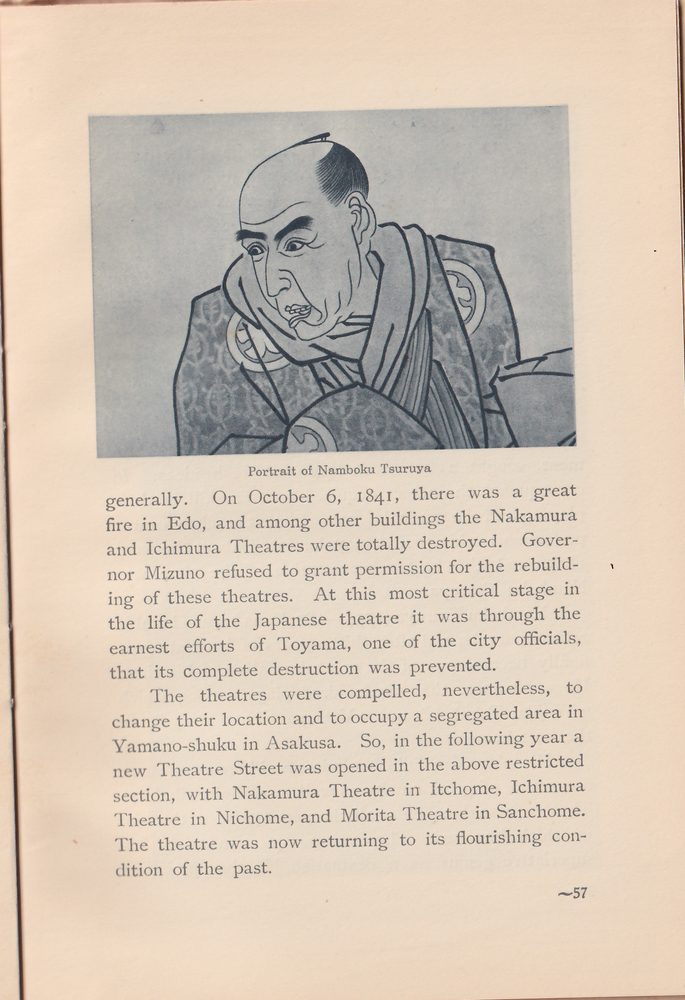
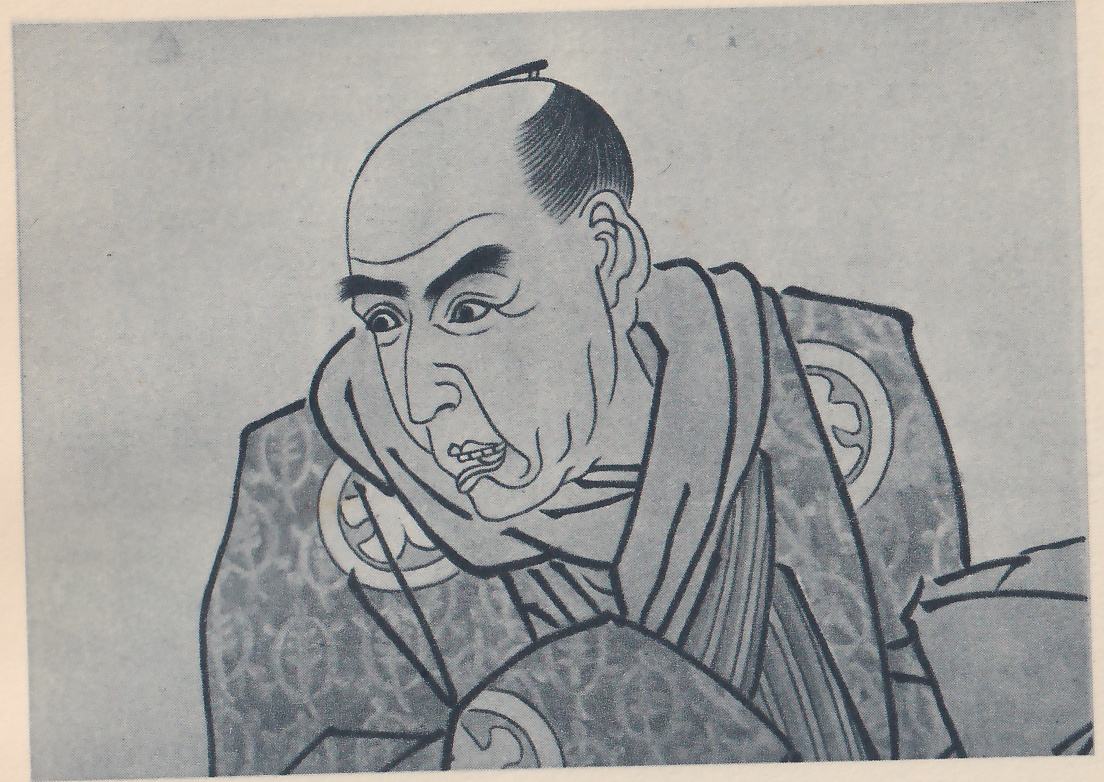
The Kabuki, having passed the zenith of its development, sought a new technique and fresh ideas. In consequence the actors acquired greater skill in their playing and the musical accompaniment reached nearer perfection. This period may be dated about the year 1815, and the best representative of the time was Namboku Tsuruya.
Namboku Tsuruya (1755—1829) was born of humble artisan parents, and after thirty years of hard struggle finally became one of the great dramatists of his time. He wrote more than one hundred plays, among which “Tenjiku Tokubei” and “Yotsuya Ghost Story” are the best known.
His plays are full of wonders and horrors. There are scenes of great cruelty as well as of light ribaldry. These are said to be realistic portrayals of the age in which he lived. There is no question as to his superlative genius as a dramatist. In the opinion of
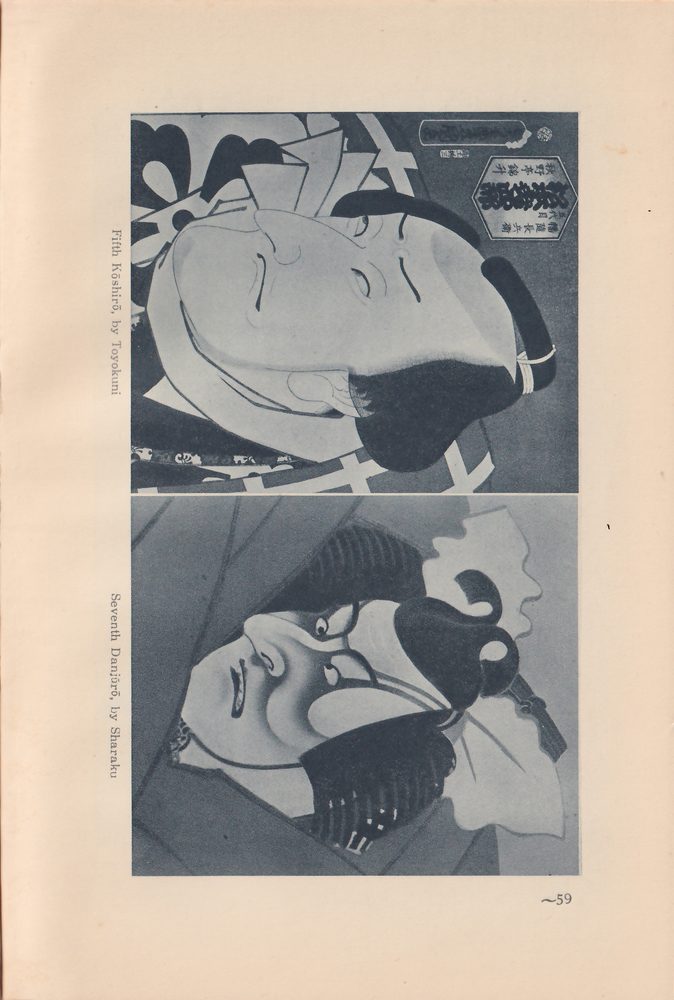
Seventh Danjūrō, by Sharaku
the late Dr. Shōyō Tsubouchi, the well-known dramatist and Shakespearean scholar, it is not Monzaemon Chikamatsu who should be called the Japanese Shakespeare, but Namboku Tsuruya.
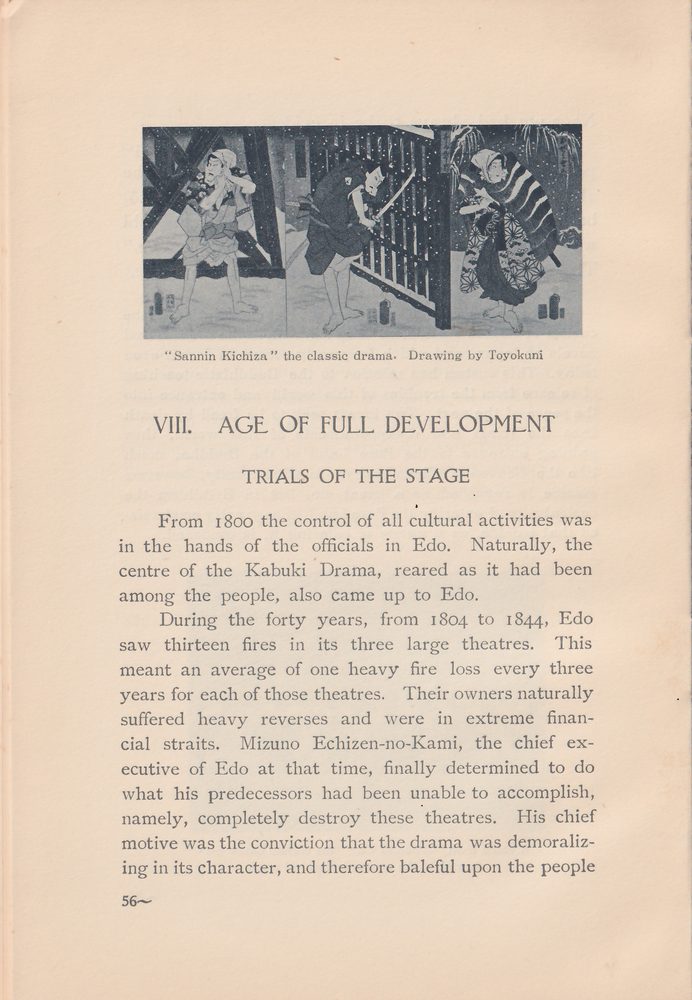
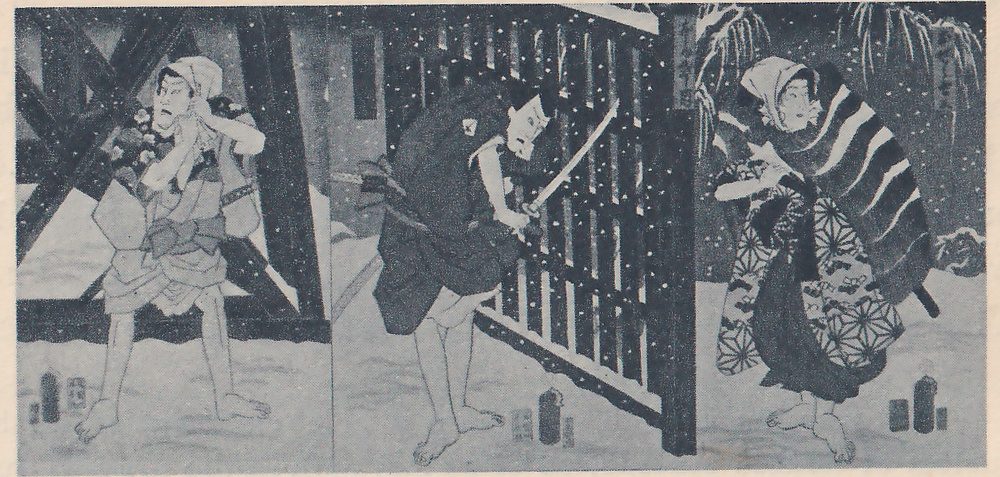
Mokuami Kawatake (1813—1893) was a native of Edo, and was the greatest of the group of dramatists extending from the Edo Period (1603—1868) well into the Meiji Era (1868—1912). At the age of twenty eight he became a composer for the Kawarasaki (later the Morita) Theatre, and from then until his death, at the age of seventy-eight, he composed more than three hundred plays, far exceeding in number his nearest rival. On every stage today the compositions most frequently presented are those of Kawatake. Among his masterpieces, though it is difficult to make any small selection, are “Sannin Kichiza” and “Murai Chōan.” It has been said of him that many centuries are embraced in this one person. He was the creator of many forms of the Kabuki Drama. He was specially gifted in creating the social drama, his style being intensely realistic. The very music of the words themselves is so beautiful that it charms our ears even today.
FAMOUS ACTORS OF THIS PERIOD
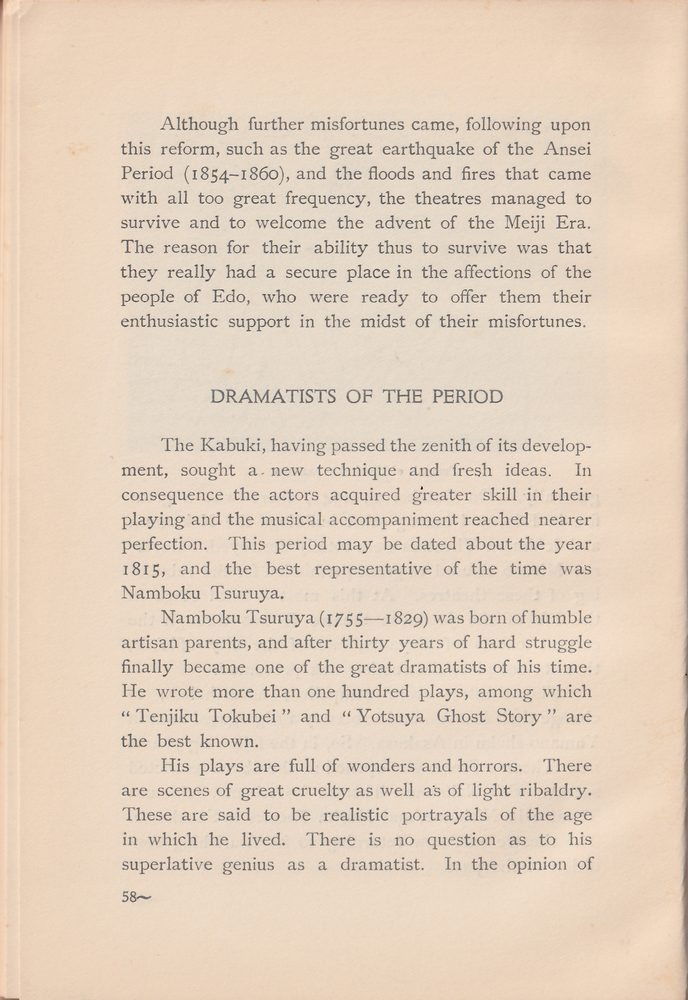
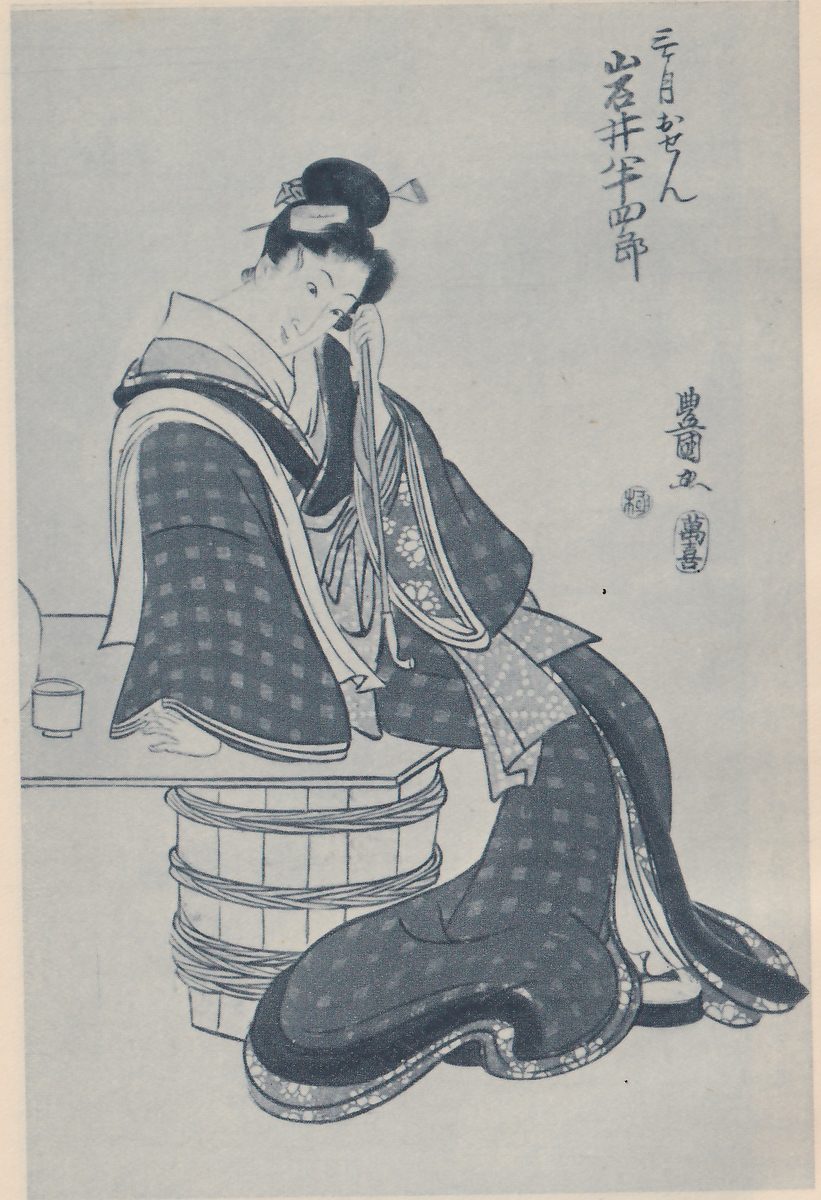
The Fifth Kōshirō Matsumoto (1764—1838) was a man of disagreeable facial expression, with small eyes and high nose. But he made this fact his stock in trade, and became justly famous in his part of the villain. His acting was simple, but penetrated the emotions of those who saw it. His style of acting
might be termed a stage revolution.
The Seventh DanjūrōPrinted: Danjurō Ichikawa (1791—1859) was the great Edo actor of that day. He had the talent to portray every kind of impersonation, and was original in his interpretations. The so-called “Eighteen Kabuki Plays of Ichikawa” were selected by him and revised into a more perfect dramatic form. Among these, “Sukeroku” and “Shibaraku” are the best known. In his personal life he was so extravagant that he was prosecuted and punished by the government.
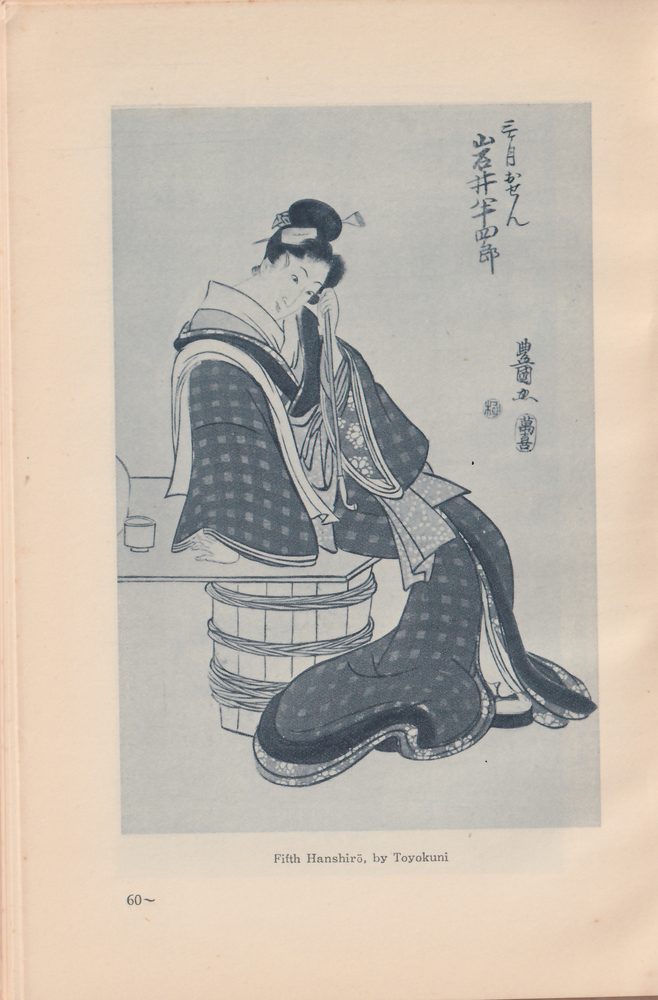
The Fourth Kodanji Ichikawa (1812—1866), though not at all of commanding features, and though diminutive in stature, was unusually talented in stage acting, and won much popular applause. His style of acting became more and more realistic, and, joining hands with Mokuami Kawatake, a similarly realistic composer, he received great popular acclaim. In addition to the above three, the Third Utaemon Nakamura, the Fifth Hanshirō Iwai (female parts) and the Third Kikugorō Onoe, each evolved his unique art.
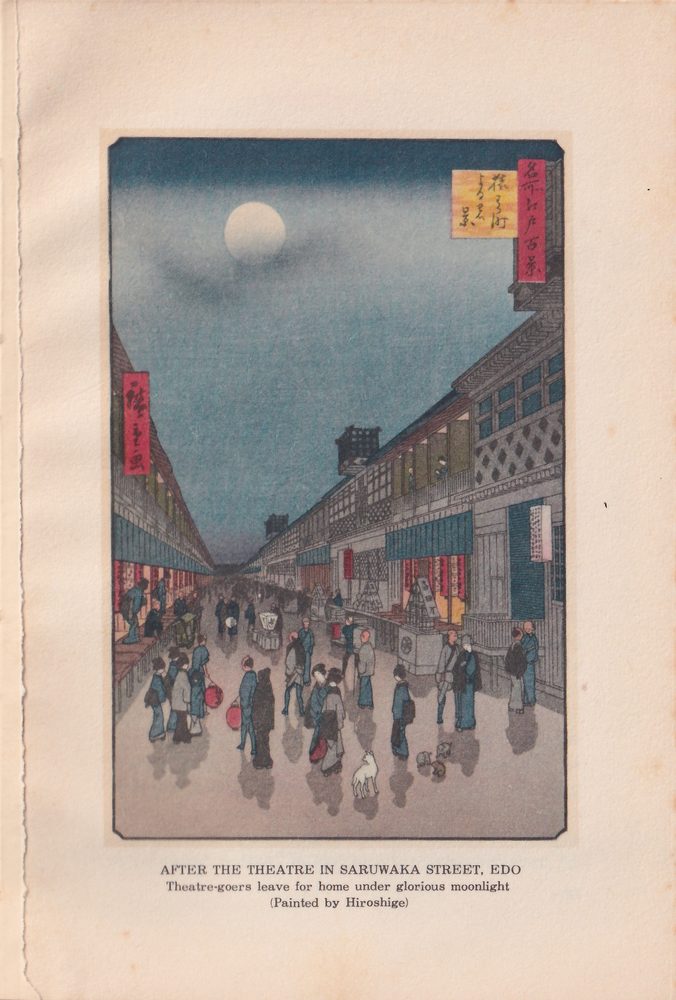
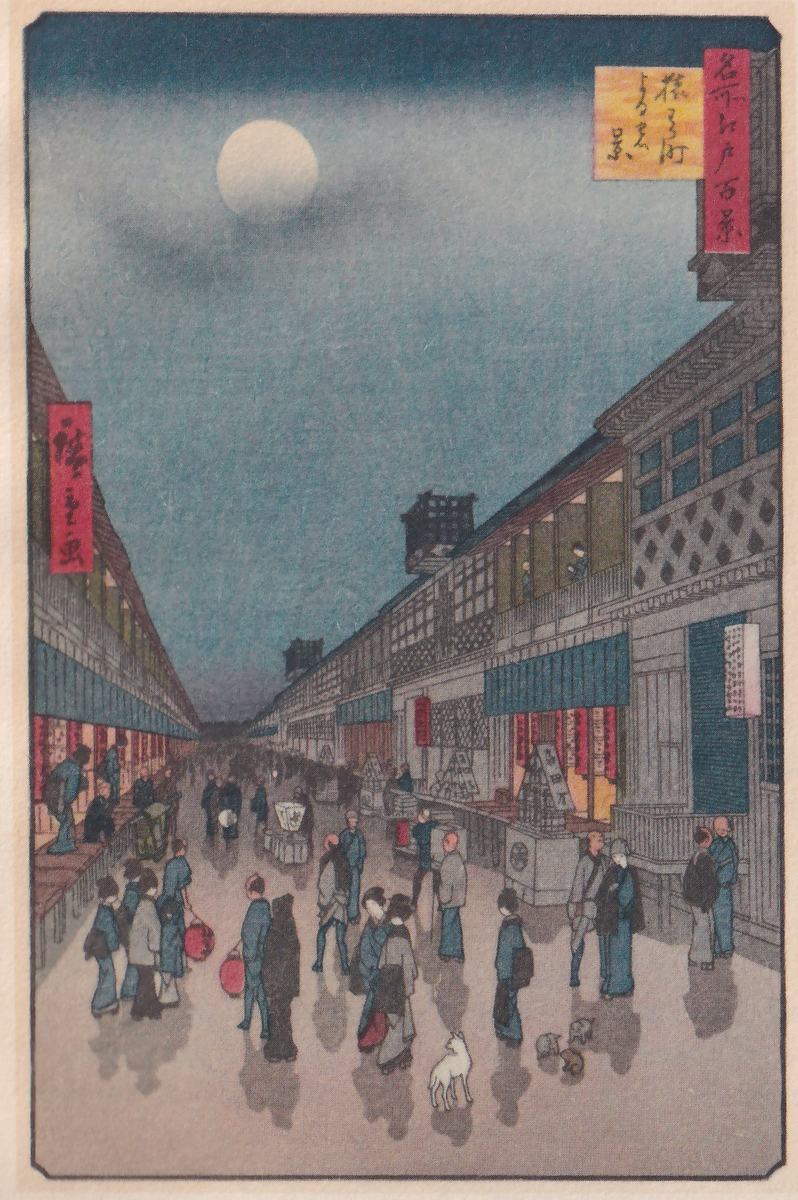
Theatre-goers leave for home under glorious moonlight
(Painted by Hiroshige)