
II. FINAL FORM OF THE ANCIENT DRAMA
The time was approaching for our national drama, through imitation and assimilation of foreign drama, to achieve its final form. From the Heian Period (about 780 A. D.), the dramatic form became clarified, and various popular plays made their contribution to its basic forms. The chief among these are:
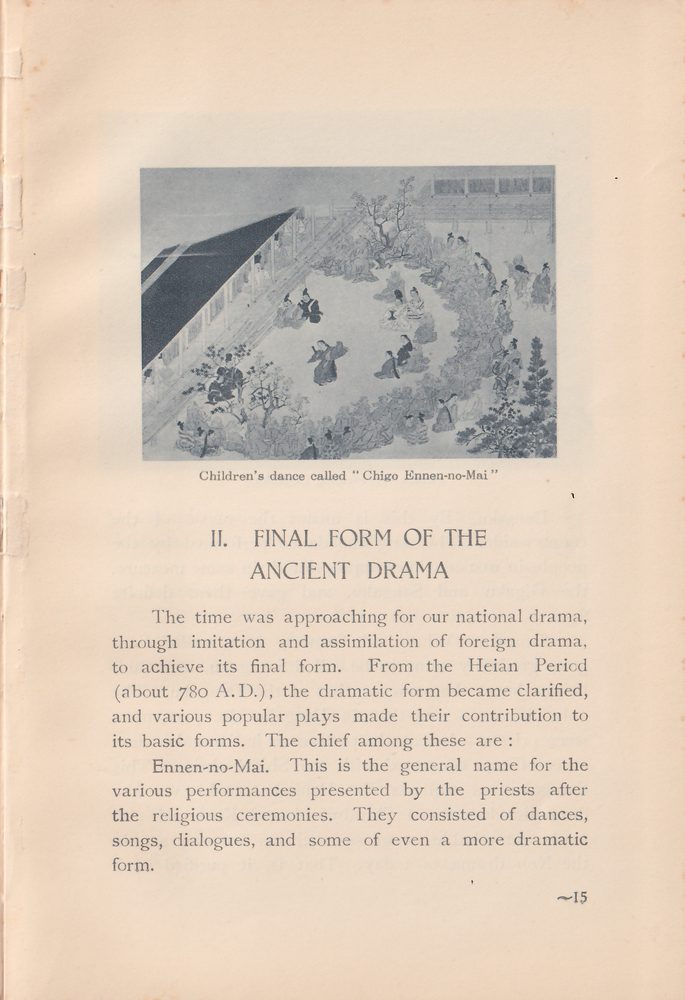
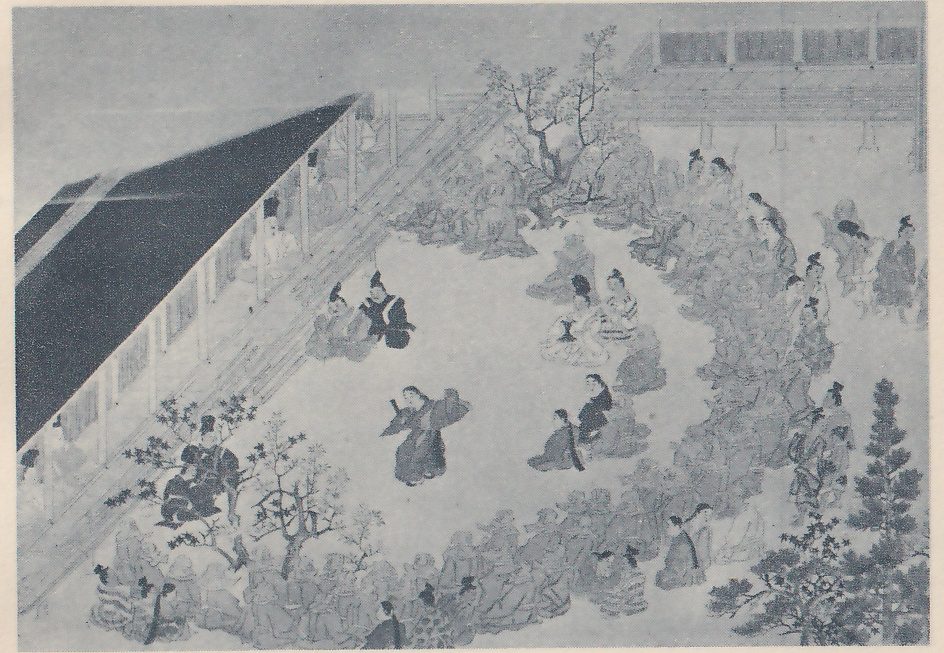
Ennen-no-Mai. This is the general name for the various performances presented by the priests after the religious ceremonies. They consisted of dances, songs, dialogues, and some of even a more dramatic form.
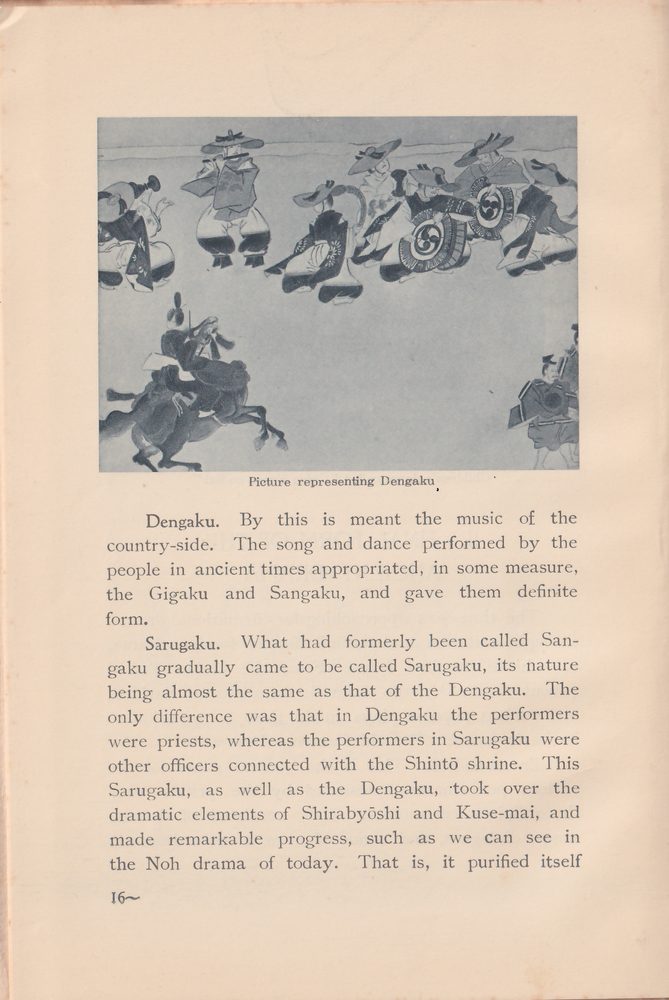
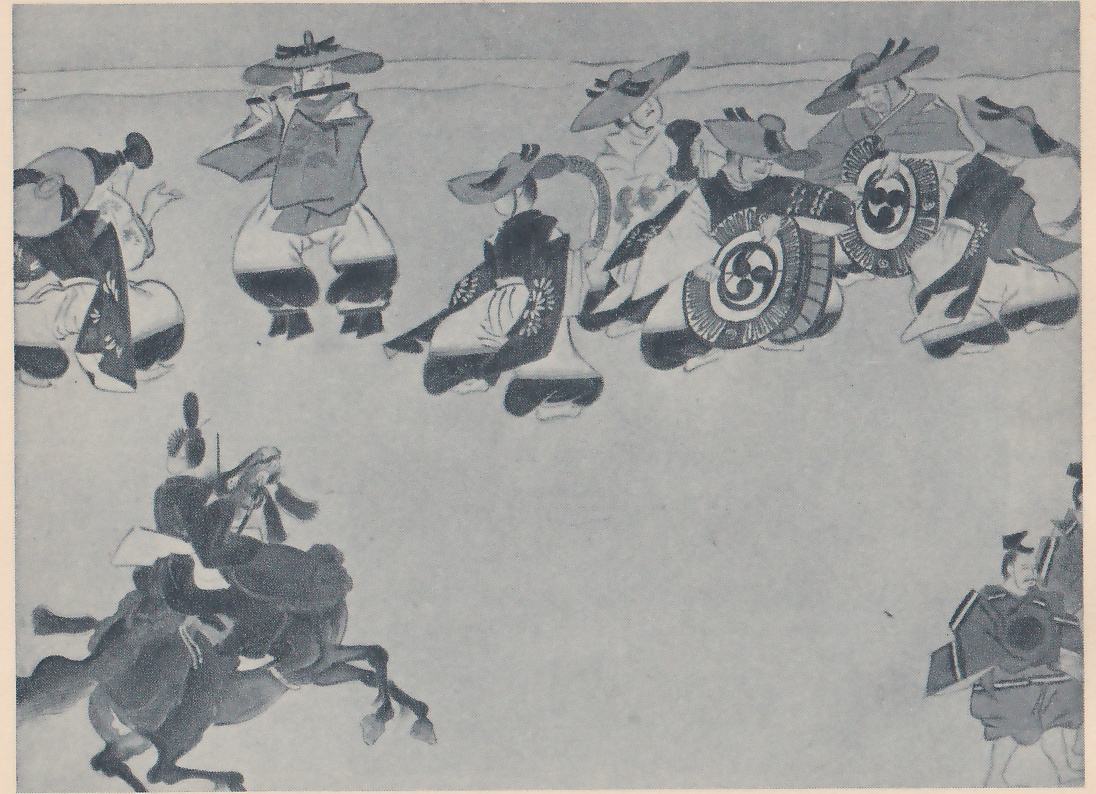
Dengaku. By this is meant the music of the country-side. The song and dance performed by the people in ancient times appropriated, in some measure, the Gigaku and Sangaku, and gave them definite form.
Sarugaku. What had formerly been called Sangaku gradually came to be called Sarugaku, its nature being almost the same as that of the Dengaku. The only difference was that in Dengaku the performers were priests, whereas the performers in Sarugaku were other officers connected with the Shintō shrine. This Sarugaku, as well as the Dengaku, took over the dramatic elements of Shirabyōshi and Kuse-mai, and made remarkable progress, such as we can see in the Noh drama of today. That is, it purified itself
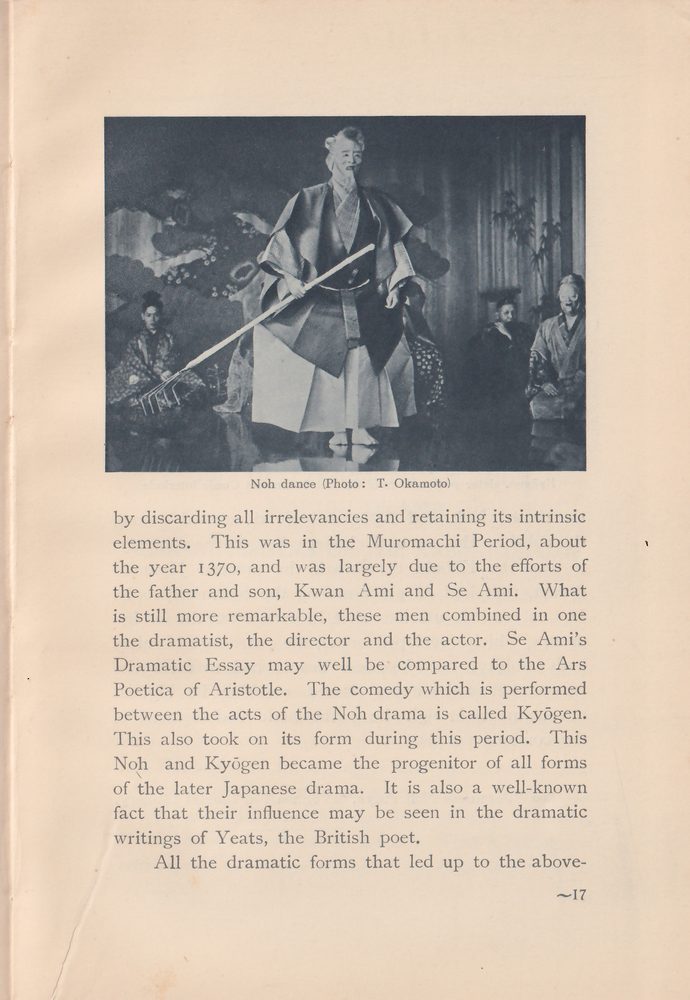
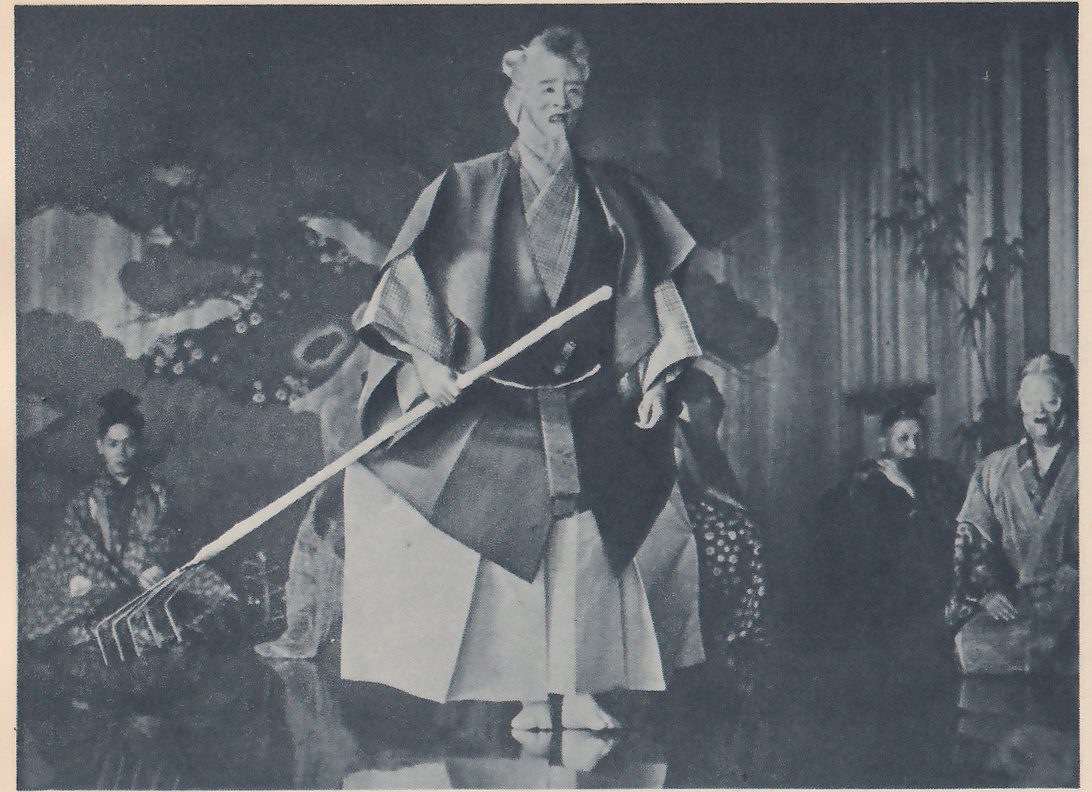
by discarding all irrelevancies and retaining its intrinsic elements. This was in the Muromachi Period, about the year 1370, and was largely due to the efforts of the father and son, Kwan Ami and Se Ami. What is still more remarkable, these men combined in one the dramatist, the director and the actor. Se Ami’s Dramatic Essay may well be compared to the Ars Poetica of Aristotle. The comedy which is performed between the acts of the Noh drama is called Kyōgen. This also took on its form during this period. This Noh and Kyōgen became the progenitor of all forms of the later Japanese drama. It is also a well-known fact that their influence may be seen in the dramatic writings of Yeats, the British poet.
All the dramatic forms that led up to the above-
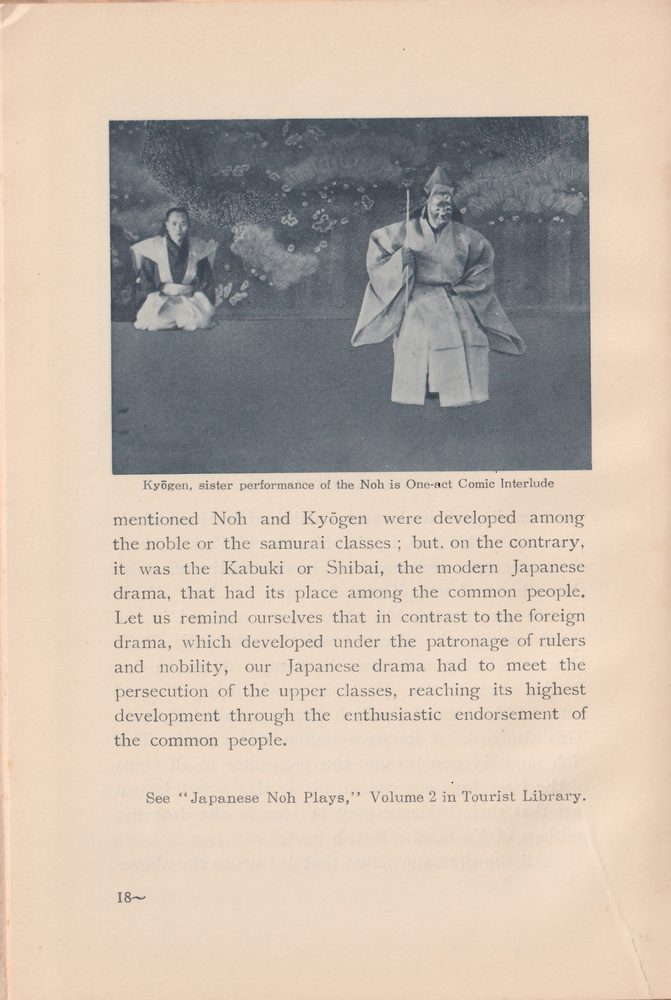
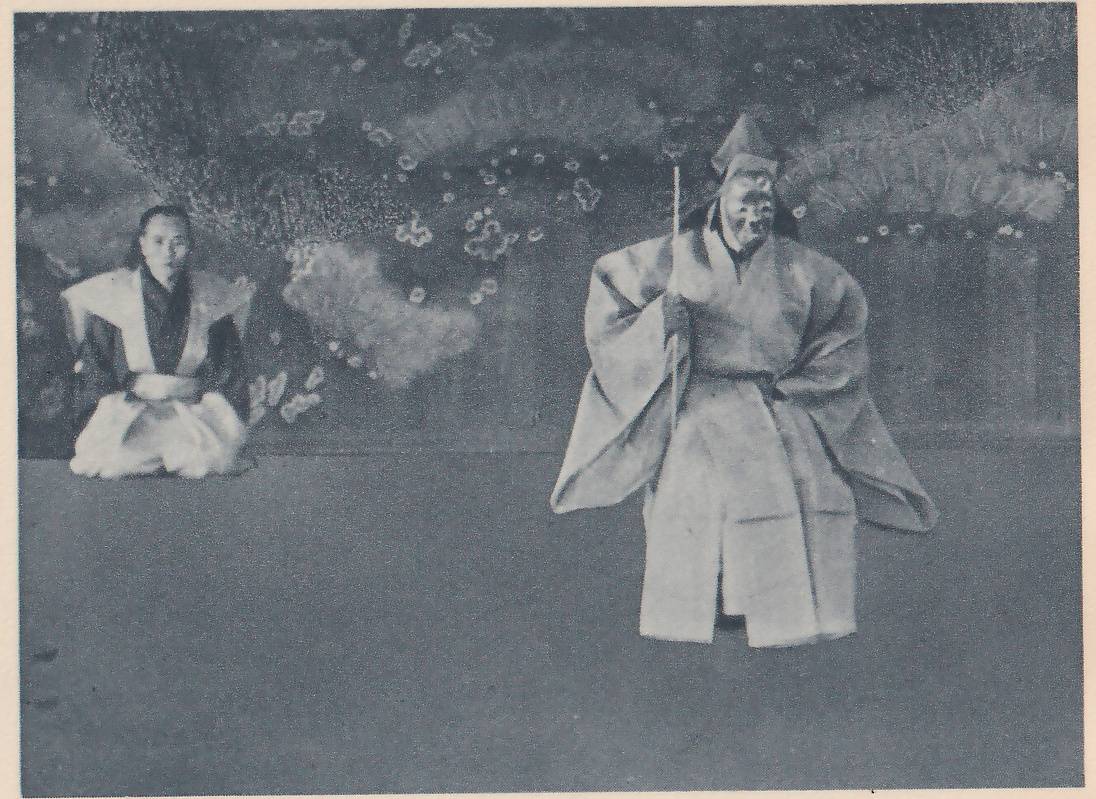
mentioned Noh and Kyōgen were developed among the noble or the samurai classes; but, on the contrary, it was the Kabuki or Shibai, the modern Japanese drama, that had its place among the common people. Let us remind ourselves that in contrast to the foreign drama, which developed under the patronage of rulers and nobility, our Japanese drama had to meet the persecution of the upper classes, reaching its highest development through the enthusiastic endorsement of the common people.
See “Japanese Noh Plays,” Volume 2 in Tourist Library.