

Tea Cult of Japan: An Aesthetic Pastime
Tourist Library 1
Tea Cult of Japan: An Aesthetic Pastime
by Yasunosuke Fukukita (福喜多靖之助)
Tourist Library 1
Board of Tourist Industry, Japanese Government Railways, 1934
TOURIST LIBRARY
Volumes already published
I. TEA CULT OF JAPAN, By Y. Fukukita, A. B.
II. JAPANESE NOH PLAYS, By Prof. T. Nogami
III. SAKURA, By Dr. M. Miyoshi
Volumes in preparation
IV. JAPANESE GARDENS, By Prof. M. Tatsui
V. HIROSHIGE AND JAPANESE LANDSCAPES, By, Yone Noguchi
VI. THE JAPANESE DRAMA.
TEA CULT OF JAPAN
AN AESTHETIC PASTIME
BY
YASUNOSUKE FUKUKITA
Author of “Cha-no-yu, Tea Cult of Japan”
BOARD OF TOURIST INDUSTRY
JAPANESE GOVERNMENT RAILWAYS
EDITORIAL NOTE
It is a common desire among tourists to see the beautiful scenery of the countries they visit, as well as to learn something of their culture. Now, to see is easier than to learn, for flying visits hardly furnish the time or opportunity for more than a casual glimpse of the culture of any foreign people. This is specially true of Japan.
The Board of Tourist Industry recognizes the difficulty of attaining this high purpose, viz. to provide foreign tourists with accurate information regarding the various phases of Japan’s peculiar culture. It is endeavoring therefore to meet this obligation, as far as possible, by publishing this series of brochures.
The present series will, when completed, consist of more than a hundred volumes, each dealing with a different subject, but all co-ordinated. By reading therefore the entire series the foreign student of Japan may gain an adequate knowledge of the unique culture that has developed in this country through the ages.
For those who wish to follow up these studies with a closer investigation, bibliographies are appended, which we trust may be found reliable and authoritative guides in their study.
Board of Tourist Industry,
Japanese Government Railways.
May, 1934
FOREWORD
The Board of Tourist Industry of the Japanese Government Railways is publishing a series of handbooks dealing with things Japanese. It is gratifying to note that at present greater interest is shown in the interpretation of the cultural life of the nation. The author has, therefore, gladly complied with the request to write on the Tea Cult of Japan, of which he is a devotee.
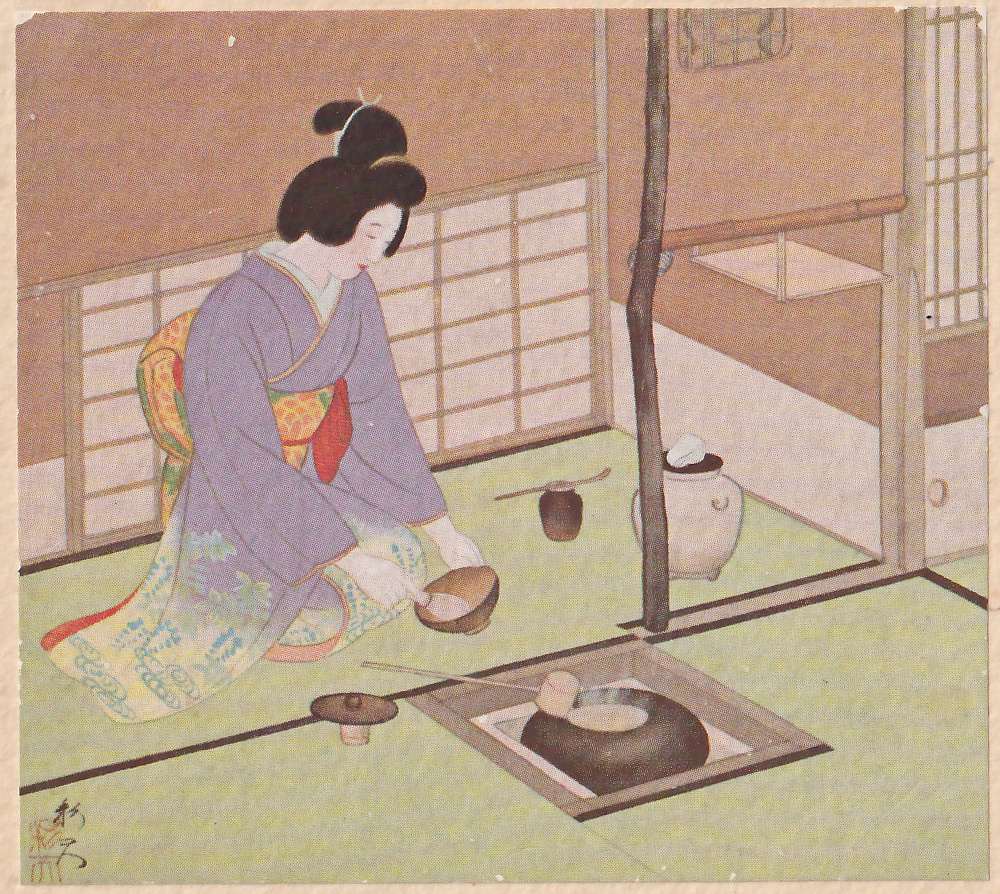
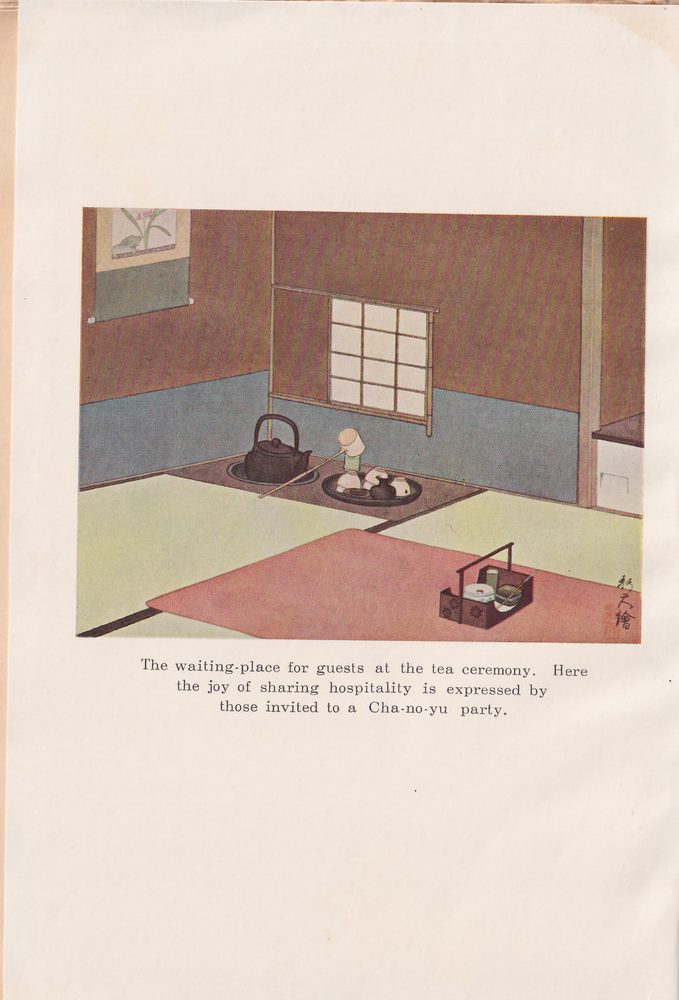
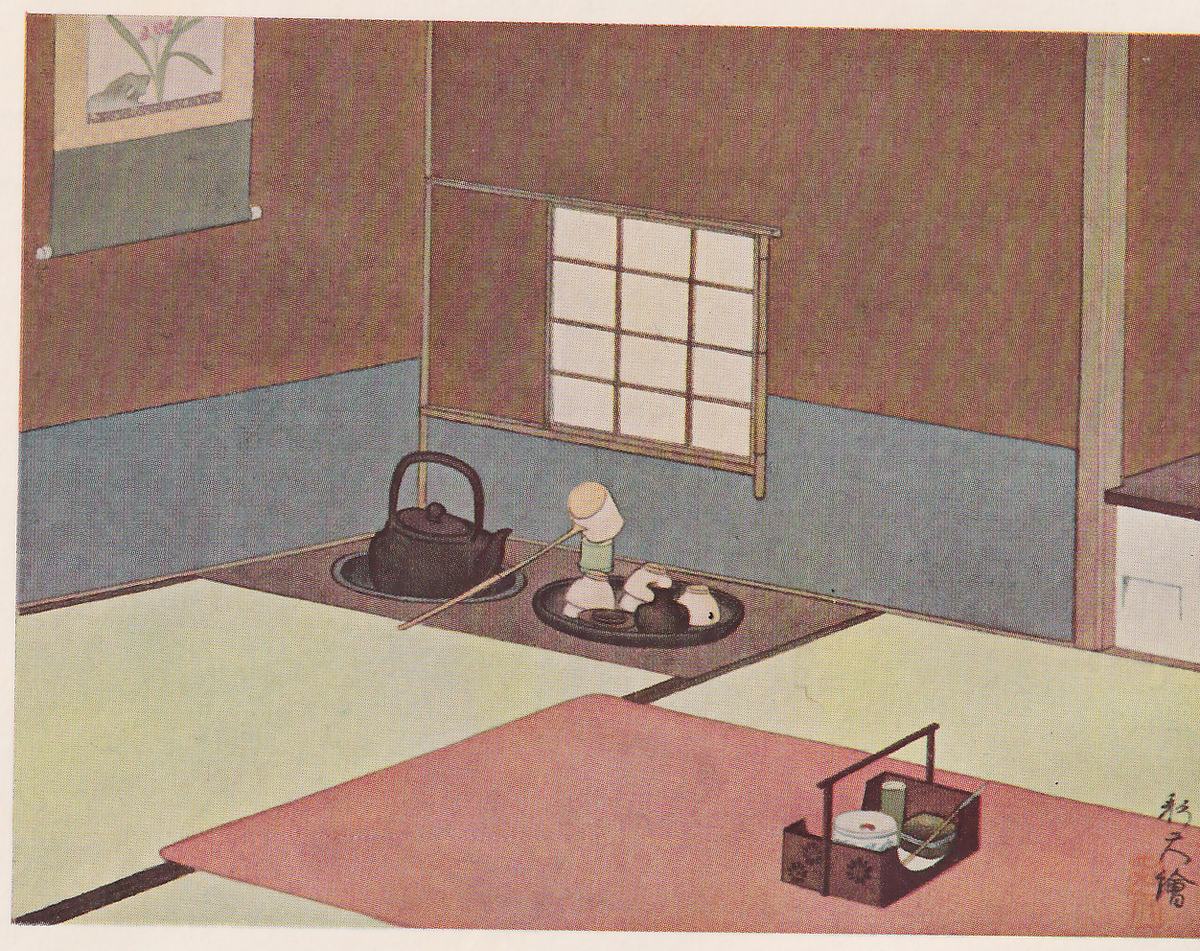
The publication committee’s suggestions have been followed in copiously illustrating the present volume with sketches and photographs, which, it is hoped, will be found helpful in the comprehension of the general practice of Cha-no-yu.
Visitors from overseas in increasing numbers now take a deeper interest in the Japanese entertainment of serving powdered tea. The author’s primary object is to furnish visitors from overseas with a handy book of reference, but he also hopes that the publication may be of use to his compatriots in the explanation of this phase of their national culture. Should those who read this little book care to know more about the tea cult, rich in tradition and romance, the author’s larger book: “CHA-NO-YU, TEA CULT OF JAPAN”, published in 1932, will be found useful for reference.
YASUNOSUKE FUKUKITA
Tokyo, March 1934
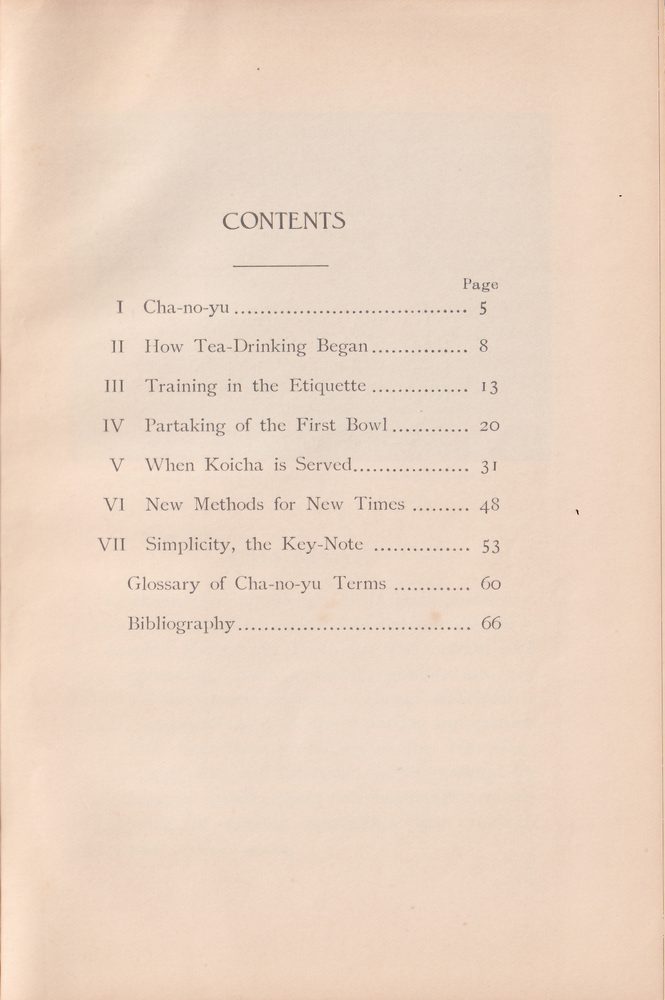
CONTENTS
Page
I Cha-no-yu .............. 5
II How Tea-Drinking Began .............. 8
III Training in the Etiquette .............. 13
IV Partaking of the First Bowl .............. 20
V When Koicha is Served .............. 31
VI New Methods for New Times .............. 48
VII Simplicity, the Key-Note .............. 53
Glossary of Cha-no-yu Terms .............. 60
Bibliography .............. 66
“Tea with us became more than an idealization of the form of drinking; it is a religion of the art of life.”
— Okakura’s The Book of Tea