
Section 4: kaisho Basic
Welcome to Takase Shodokai
This is the fourth section of the Takase Shodokai Japanese Calligraphy Series.
In this section we introduce samples with two kanji. Work on getting a nice balance between the two characters. It is also helpful to move back and forth between single character samples and double character samples.
-
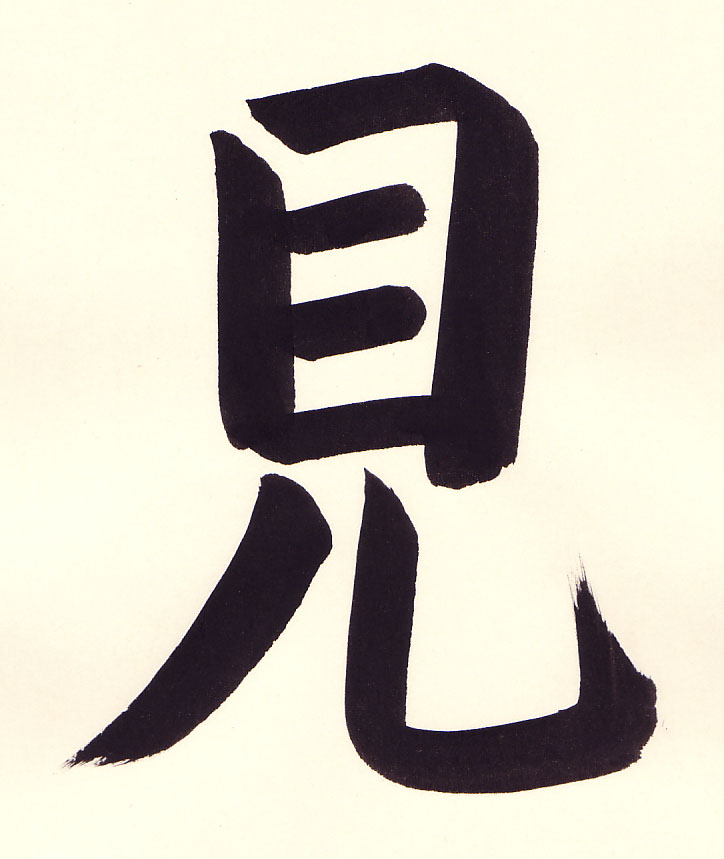 Lesson 19
見 ken · See
ken is one of two characters in this section that is a single character. This will give us a chance to move back and forth between different size characters in this lesson. Concentrate on getting the lines correct, but also on planning the layout of the character.
-
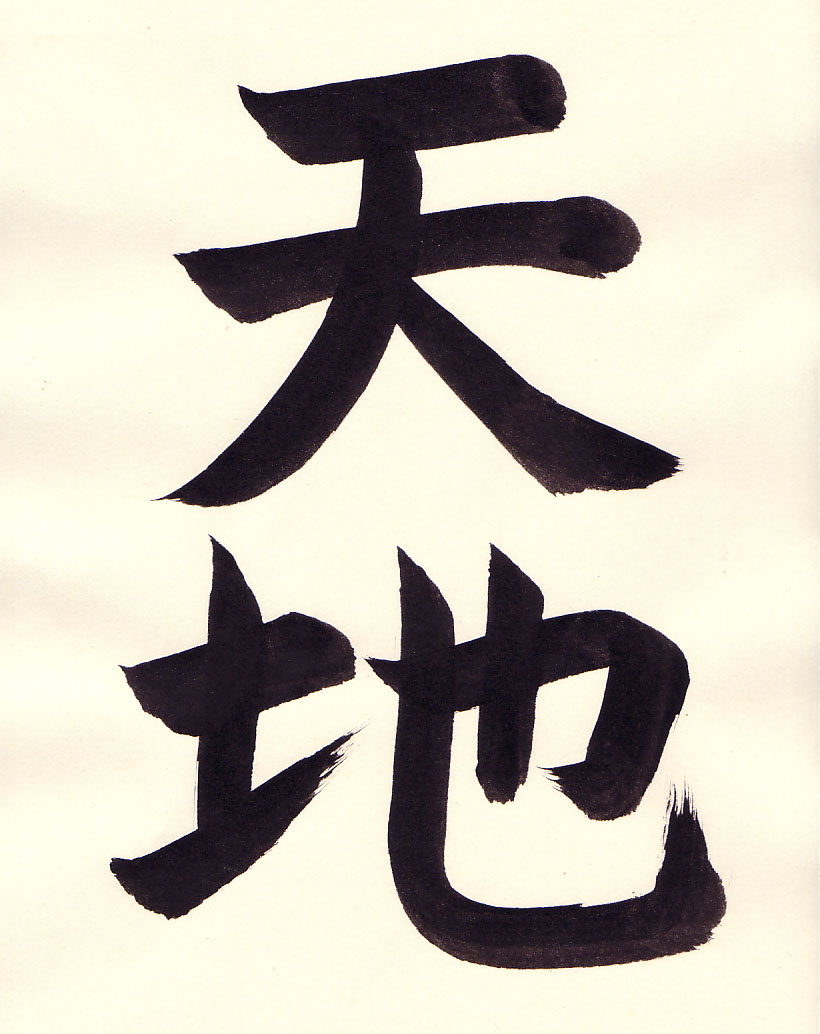 Lesson 20
天地 tenchi · Heaven and Earth
tenchi is almost all hane and harai strokes. Plan the relative sizes of the characters in your mind before beginning.
-
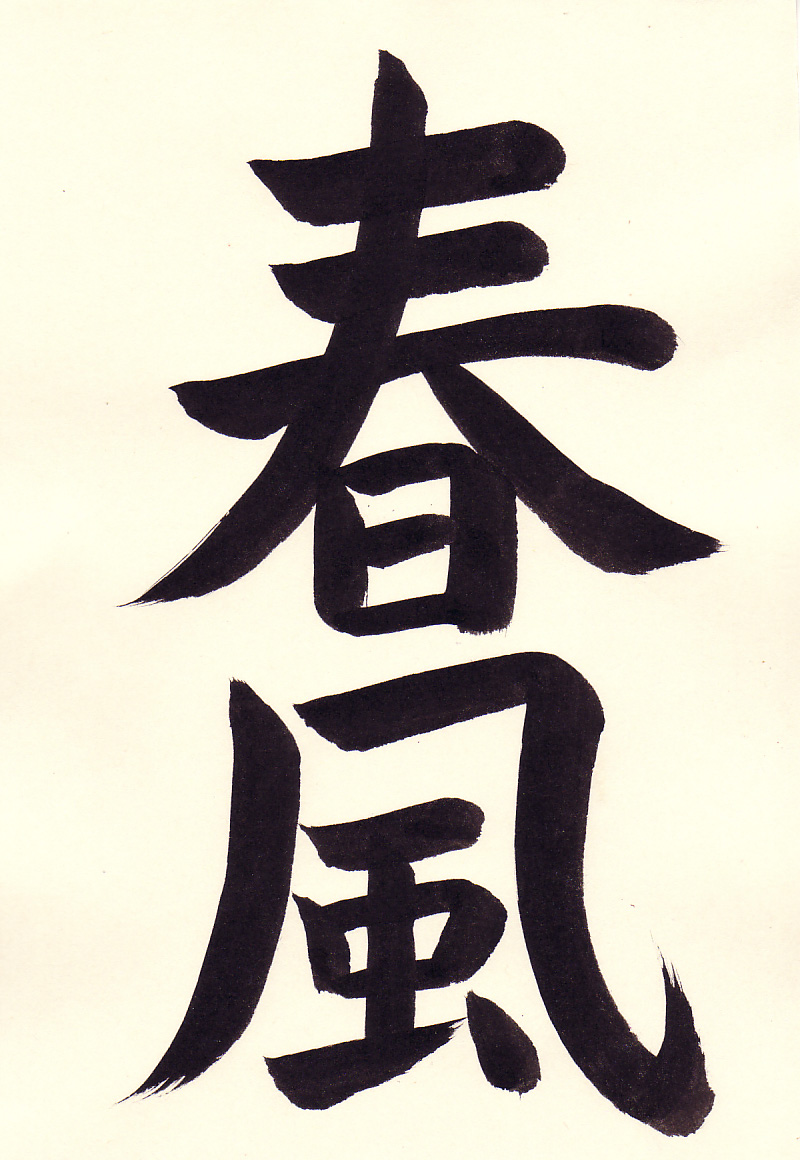 Lesson 21
春風 harukaze · Spring Wind
harukaze combines both the standard three types of yokoga along with a series of harai and hane strokes. You might want to take this moment to reflect that moving from one character to two characters takes some getting used to, but you probably do not feel nervous on the last stroke of the last character. This is important to note as we increase the number of characters and we want to keep this nervousness away.
-
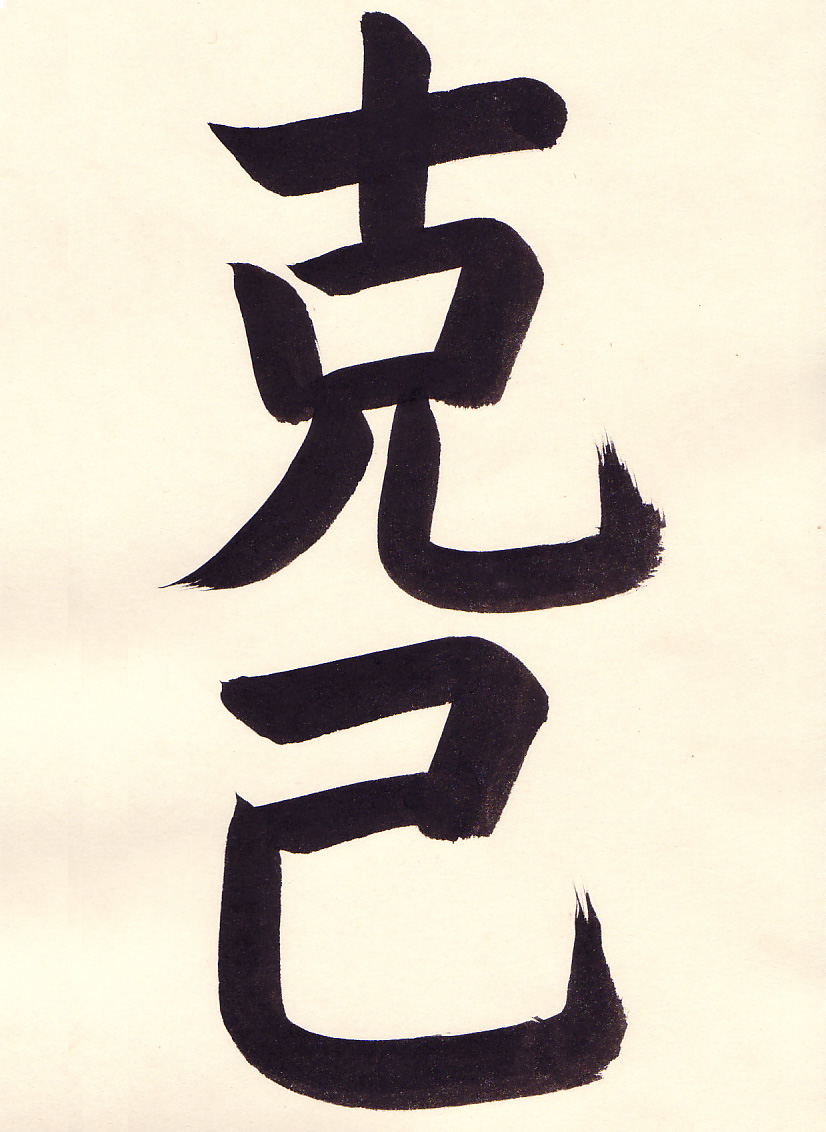 Lesson 22
克己 kokki · Self-restraint
kokki is a nice combination of a complex character combined with a simple character. Keeping these well balanced is important.
-
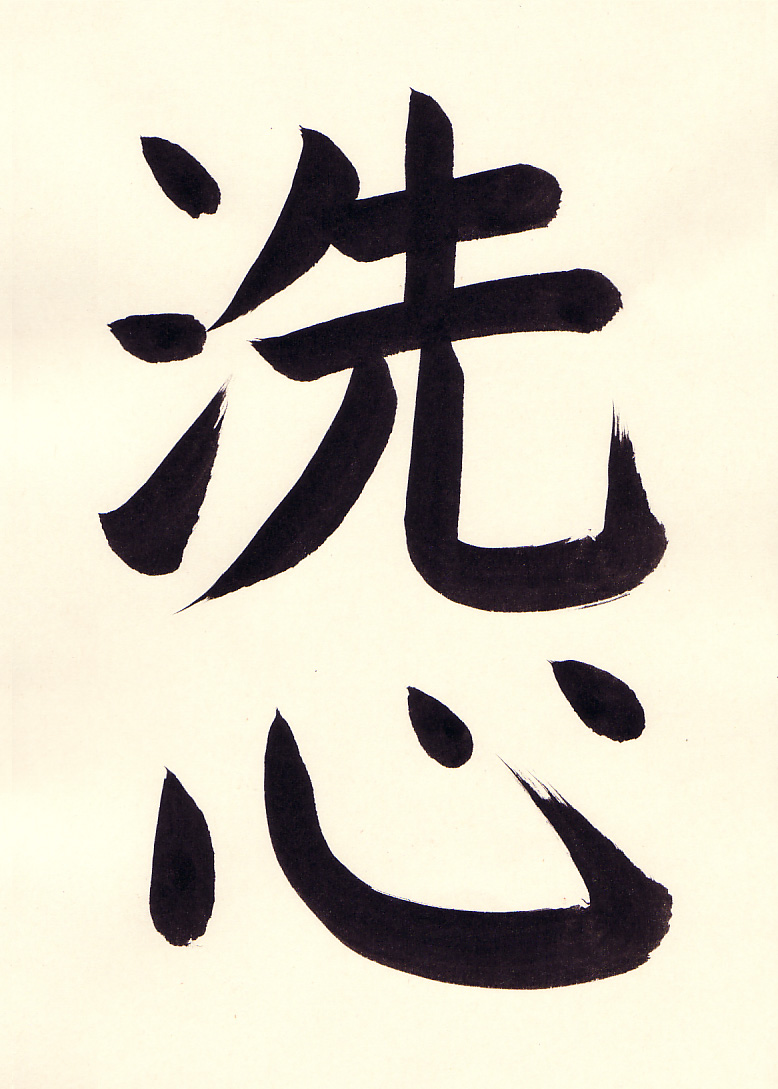 Lesson 23
洗心 senshin · Clear Mind
senshin is an important concept in Zen which is also important to calligraphy. This character gives us a chance to practice the ten stroke and a chance to compare a hidarihane and a hidaribarai.
-
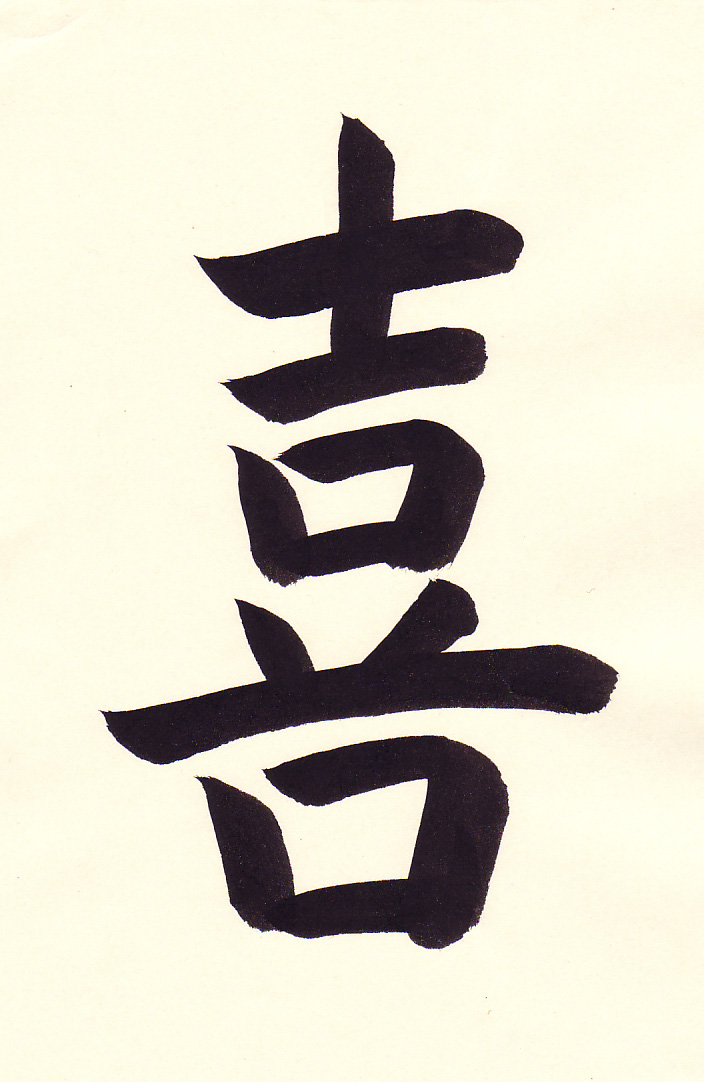 Lesson 24
喜 ki · Joy
ki is a long and complex character. While this is a single character planning is required to get a nice balance on the page. This character is almost all tatega, yokoga, and tensetsu.