
Japanese Gardens
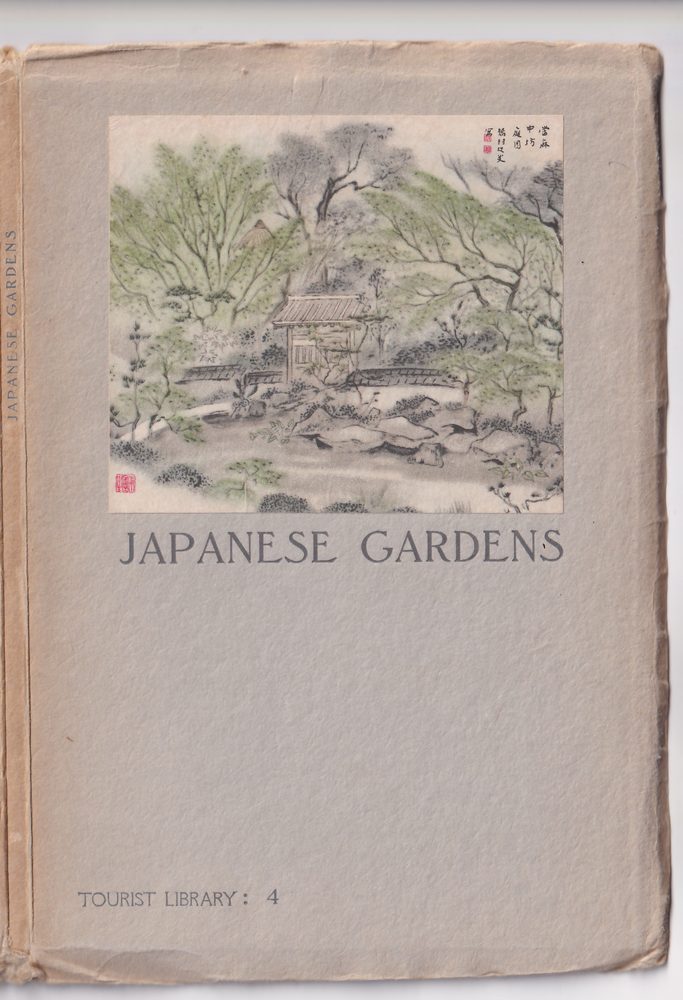
Tourist Library 4
Japanese Gardens
by Matsunosuke Tatsui (龍居松之助)
Tourist Library 4
Board of Tourist Industry, Japanese Government Railways, 1936
TOURIST LIBRARY
Volumes already published
1. TEA CULT OF JAPAN By Y. Fukukita, A. B.
2. JAPANESE NOH PLAYS By Prof. T. Nogami
3. SAKURA (Japanese Cherry) By Dr. M. Miyoshi
4. JAPANESE GARDENS By Prof. M. Tatsui
5. HIROSHIGE AND JAPANESE LANDSCAPES By Yone Noguchi
6. JAPANESE DRAMA By B. T. I.
7. JAPANESE ARCHITECTURE By Dr. H. Kishida, D. Sc.
8. WHAT IS SHINTŌ? By G. Katō, D. Litt
9. CASTLES IN JAPAN By Prof. N. Orui, D. Litt.
and Prof. M. Toba
10. HOT SPRINGS IN JAPAN By Prof. K. Fujinami, M.D.
Volumes in preparation
CHILDREN’S DAYS IN JAPAN By T. Iwadō, M.A.
FLORAL ART OF JAPAN By Issōtei Nishikawa
KIMONO (Japanese Dress) By Ken-ichi Kawakatsu
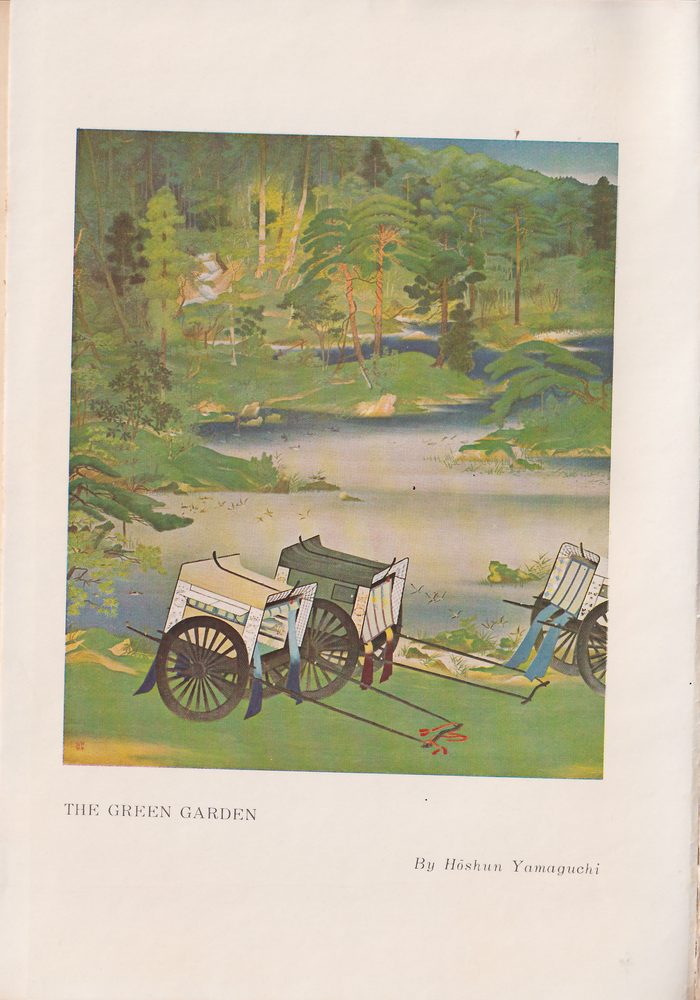
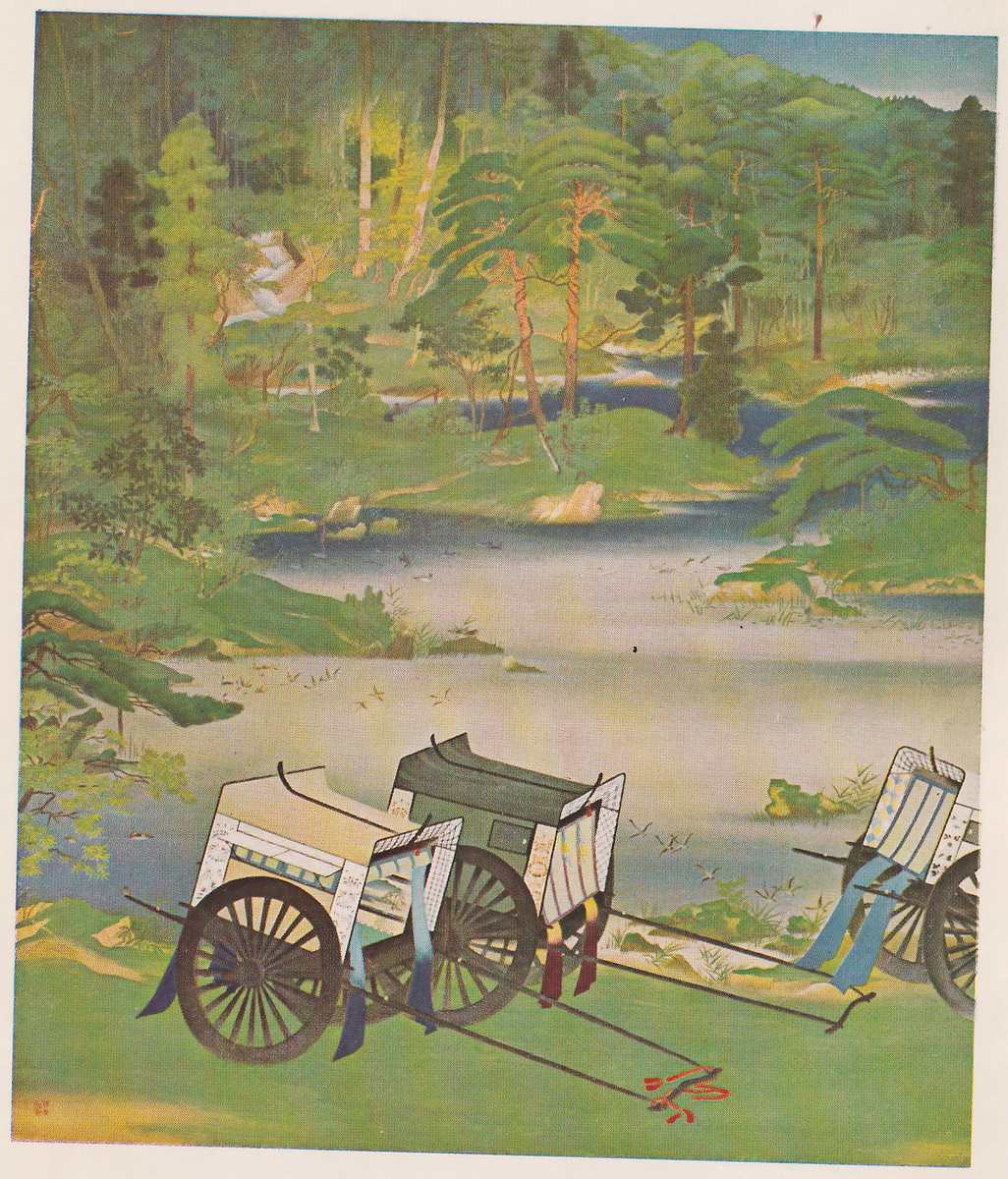
By Hōshun Yamaguchi
JAPANESE GARDENS
BY
Prof. MATSUNOSUKE TATSUI
(SECOND EDITION)
BOARD OF TOURIST INDUSTRY
JAPANESE GOVERNMENT RAILWAYS

COPYRIGHT 1936
EDITORIAL NOTE
It is a common desire among tourists to see the beautiful scenery of the countries they visit, as well as to learn something of their culture. Now, to see is easier than to learn, for flying visits hardly furnish the time or opportunity for more than a casual glimpse of the culture of any foreign people. This is specially true of Japan.
The Board of Tourist Industry recognizes the difficulty of attaining this high purpose, viz., to provide foreign tourists with accurate information regarding the various phases of Japan’s characteristic culture. It is endeavouring therefore to meet this obligation, as far as possible, by publishing this series of brochures.
The present series will, when completed, consist of more than a hundred volumes, each dealing with a different subject, but all co-ordinated. By reading therefore the entire series the foreign student of Japan may gain an adequate knowledge of the unique culture that has developed in this country through the ages.
For those who wish to follow up these studies with a closer investigation, bibliographies are appended, which we trust may be found reliable and authoritative guides in their study.
Board of Tourist Industry,
Japanese Government Railways
PREFACE
Japan’s natural beauty is her proud heritage. The Japanese know therefore how to enjoy land and water, and they are used to a keen and sensitive observation of nature. It is the hands of such people that have evolved Japanese art as it is today. Hence, their art is elegant and refined, and it is these characteristics which are the most conspicuous in the Japanese garden.
When we look over history, we see that the Japanese civilization was affected by the advanced civilization introduced from China nearly two thousand years ago. In Japan it made rapid progress, and it was soon skilfully naturalized by the artistic temperament of the people. It certainly surprises us to see the Hō-ō-dō of the Byōdō-in Temple at Uji, so elaborately remodelled on Chinese architecture, and yet so wonderfully Japanese that no one could be sure of its origin. Since then, and for about one thousand years, much has been changed, till finally we have evolved the present Japanese garden. In every detail of its structure, we may easily recognize that all is taught by nature, that is, all the technique in Japanese landscape gardening is learned from nature herself.
Later, through the eras of Meiji and Taishō, Japan eagerly imported both the European and American civilizations, in which we find architecture and landscape gardening. Occasionally, geometrical or formal gardens
were built, but they never met with the general appreciation of the people. In fact the Japanese have never lost the spirit of loving nature which they have cherished for three thousand years, and in consequence they never neglect to adopt the constituting elements of natural beauty in their gardens, whether they are the grand promenading gardens, castle gardens or even the tiny gardens.
It is noteworthy that the Japanese garden seems to make even greater and better development under similar coercion from abroad. The English garden is usually characterized by lawns and flowerbeds. However, it should not be disregarded here that the naturalness in the Japanese garden is not a mere copy of nature as she is, but it is the essence of nature herself, so to speak. The Japanese landscape gardener composes his picture, exaggerating the impression he obtains from nature, in accordance with his ideal, just as a painter transfers an extensive view to his canvas, containing similarly a poetic or philosophic idea.
Seeing as I do both the European and American architecture changing in recent times, I believe that the landscape gardening in these countries would do well to imitate the principle of the Japanese garden, and not to remain content with mere curiosity in it.
In conclusion I have to acknowledge, with sincere thanks, my indebtedness to Mr. S. Katsumata and Mr. A. F. Thomas who helped me to complete this work.
Matsunosuke Tatsui
Tokyo, February, 1936
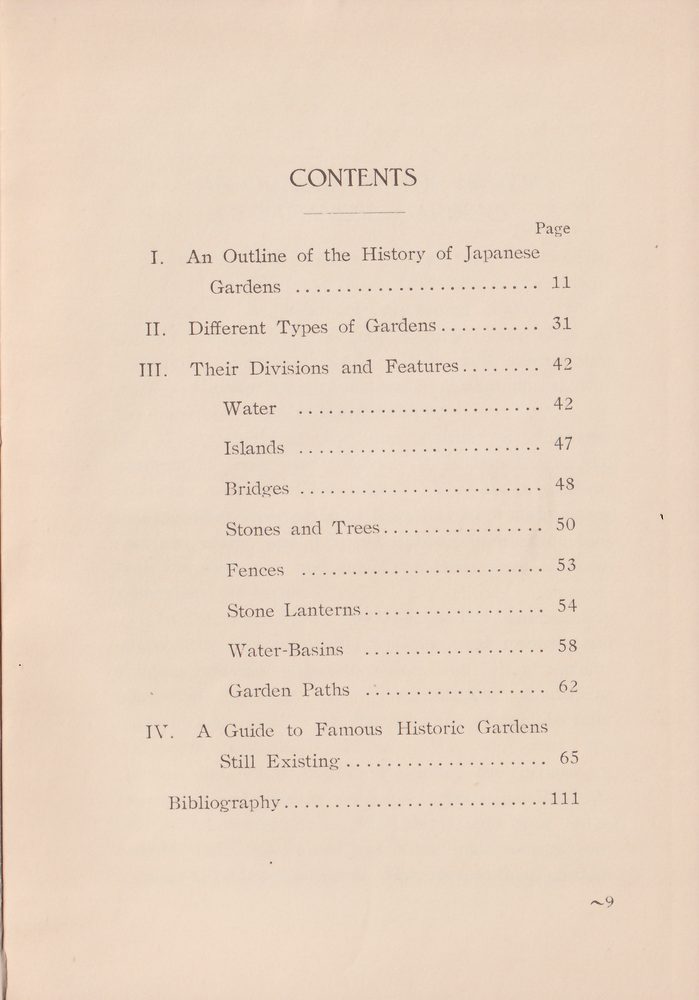
CONTENTS
Page
I. An Outline of the History of Japanese Gardens .............. 11
II. Different Types of Gardens .............. 31
III. Their Divisions and Features .............. 42
Water .............. 42
Islands .............. 47
Bridges .............. 48
Stones and Trees .............. 50
Fences .............. 53
Stone Lanterns .............. 54
Water-Basins .............. 58
Garden Paths .............. 62
IV. A Guide to Famous Historic Gardens Still Existing .............. 65
Bibliography .............. 111