

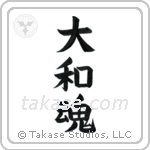
大和魂 yamato-damashii Japanese Spirit
大和魂 (yamato-damashii) is the Japanese spirit, the courage and loyalty held to be the nation's own. In the Tale of Genji, about 1008, the same word meant practical good sense set against Chinese learning. This study follows how scholars, novelists and the state turned one sense into the other, and who objected.
Abstract
大和魂, yamato-damashii, holds two senses eight centuries apart. In the Tale of Genji, about 1008, it is the native good sense that Chinese book-learning needs as its base, and the medieval writers use it for a minister's political wit and for the prudence a scholar lacked. In 1765 賀茂真淵 tied the word to the high, straight heart of ancient Japan, and in the 1790s 本居宣長 made it the native mind to be held firm against Chinese thought; the 日本国語大辞典's earliest example of the brave sense is a novel of 1808, in which a father calls the readiness to die shallow; by the 1850s and 1860s a philologist complained that many people read the word as uprightness and valor. In 1887 a philologist lectured that every modern use of the word was wrong and was answered in print within the year, the army wrote it into its field regulations from 1889, the Ministry of Education made it the root of the national polity in 1937, and in 1905 Natsume Sōseki had a character say that everyone spoke of it and no one had seen it.
Overview
The sense. One word with two senses: in the Tale of Genji, the native good sense that Chinese book-learning is the base of; in the modern sense, the spirit proper to the Japanese people, brave and loyal. The 精選版日本国語大辞典 gives the Heian sense first, with its earliest example in the Genji, and the modern sense second. ① 「ざえ(漢才)」に対して、日本人固有の知恵・才覚または思慮分別をいう。学問・知識に対する実務的な、あるいは実生活上の才知、能力: against zae, Chinese learning, the wit, judgment or discretion native to the Japanese; practical or real-life ability as against learning and knowledge. ② 日本民族固有の気概あるいは精神。「朝日ににおう山桜花」にたとえられ、清浄にして果敢で、事に当たっては身命をも惜しまないなどの心情をいう。天皇制における国粋主義思想の、とりわけ軍国主義思想のもとで喧伝された: the spirit or mettle proper to the Japanese people, likened to the mountain cherry in the morning sun, pure and bold, ready to give life and limb when it comes to it; loudly promoted under the nationalist and especially the militarist thought of the imperial state [1]. The デジタル大辞泉 lists the same two the other way round, the modern sense first: 日本民族固有の精神。勇敢で、潔いことが特徴とされる, the spirit proper to the Japanese people, held to be marked by courage and a clean readiness [1]. JMdict glosses it the Japanese spirit [2].
The words. 大和 Yamato is the old province around Nara where the early emperors sat, and by extension the country; the two characters are read as the native word. 魂 tamashii, voiced to -damashii in the compound, is the native word for the soul. The witnesses write the compound many ways and mean one word: やまとだましひ or やまとたましひ in kana, with or without the voicing mark; 和魂 in the 今昔物語集; 大和玉しゐ in a glossary of 1784; 日本 read yamato in 馬琴; and 大和魂, which is the common form from the nineteenth century on. A sister word, 大和心 yamato-gokoro, has its own entry in the dictionaries, where its first sense is given as the same as 大和魂's Heian sense (the 日国's first, the 大辞泉's second); it is the word in 宣長's poem on the mountain cherry, which the 大辞泉 quotes under its second sense, a natural, unaffected Japanese heart [3].
The text in English. JMdict has the Japanese spirit; Yamato-damashii [2]. English has carried the word since Hepburn's dictionary of 1867, where it already meant courage and disregard of death (§ The word in English).
The historical record
About 1008. 紫式部, 源氏物語, the chapter 少女, a court romance. Genji is explaining why his son must go to the university before he is given rank: なほ、才をもととしてこそ、大和魂の世に用ゐらるる方も強うはべらめ, it is with learning as the base that the yamato-damashii's usefulness in the world will be the stronger [4]. 才 zae is Chinese book-learning; the 大和魂 is what the learning is applied with, the sense to be of use. The 世界大百科事典 lists what the Genji's commentators have made of it: worldly wit, good sense, natural quickness, flexible political judgment, the knack of getting on [1].
About 1100. 大鏡, a history in dialogue, the life of the minister 時平. あさましき惡事を申し行ひ給へりし罪により、このおとゞの御末はおはせぬなり。さるはやまとだましひなどはいみじくおはしましたるものを, for the sin of that shameful slander his line has not lasted; and yet in yamato-damashii he was remarkable [5]. The slander is of 菅原道真; the yamato-damashii is shown in three stories: he had the emperor rebuke him in public so that a sumptuary law would be obeyed; a clerk's fart made him laugh so hard he ceded the day's business to 道真; and he drew his sword on 道真's thunder over the palace. Political craft, quick wit, a sense of humor.
About 1120. 今昔物語集, book 29, the tale of the scholar 善澄. Burglars broke in; he hid under the floor, then ran out after them to shout that he had seen their faces and would have them all arrested. They came back and killed him. 善澄才は微妙かりけれとも露和魂无かりける者にて此る心幼き事と云て死ぬる也, Yoshizumi's learning was superb, but he had not a grain of wakon, and it was for saying that childish thing that he died [6]. The 和魂 the scholar lacked is the sense to keep quiet.
1145 and about 1220. The 中外抄 and the 愚管抄. The 中外抄 is the talk of the regent 藤原忠実, taken down by his secretary [7]. Under 久安元年八月十一日 (1145) he recalls that when an elder of his house, 故殿, regretted that he would not study, 大江匡房 answered: 攝政關白必しも漢才不候ねとも、やまとたましひたに、かしこくおはしまさは、天下ハまつりこたせ給なん, a regent or chancellor need not have Chinese learning; if only his yamato-damashii is sound, he will govern the realm well [8]. 慈円's 愚管抄, written about 1220, weighs whether 公実 should have been regent, and says it might have gone otherwise had he been rich in learning and 知足院殿ニ人カラヤマトダマシヒノマサリテ, surpassed the lord of 知足院 in character and yamato-damashii [9][10]. A poem under the title 文章博士, doctor of letters, quoted in an Edo print, praises the reader who opens a new text without stumbling: 新しき文を見るにもくらからしよみひらきぬるに大和たましひ [11]. The 世界大百科事典 says that, apart from three or four glossaries, nobody made anything of the word from the end of the middle ages to the start of the Edo period [1].
Date unsettled. The 菅家遺誡, a book of precepts under 道真's name. It carries the sentence 凡国学所要、雖欲論渉古今究天人、其自非和魂漢才、不能闞其閫奥矣, in the learning of the realm, though one would range over past and present and probe heaven and man, unless one has Japanese spirit and Chinese learning both, one cannot see into its depths, which the 日本国語大辞典 gives as the earliest example of 和魂漢才 [12]. The dictionaries date the book differently: the 日国 says it was probably written by the end of the Kamakura period, the 大辞泉 that it is said to be of the Muromachi period, and the 大辞泉 calls the attribution to 道真, who died in 903, a pretense, which the 日国 calls likely [13]. 加藤仁平, in a study of its manuscripts printed in 1925, judged it a forgery of, at his rough reckoning, the middle or late Muromachi period, and the chapters carrying this sentence a still later insertion: 竄入年代は分明しないが享和二年を溯ること甚だしく遠くはないだらう, the date of the insertion is unclear, but it may not be long before 1802 [14]. In his reading the four-character pairing entered the book around 1800. 田中康二 writes that 平田篤胤 found 和魂漢才 in the 菅家遺誡, took it for 道真's own words and older than the Genji, and spread it [15]. Before 1867 the philologist 黒川春村 had already called it a late corruption: 和魂漢才と見えたるも。いと後世の訛言にこそあれ, where 和魂漢才 appears, it is a corruption of much later times [16].
1765. 賀茂真淵, にひまなび, an essay on the ancient learning. The first of the scholars of the native learning to set the word against the later age: 下れる世人乃くせにてそのことせばくたくめるに心よりて高く直きやまと魂を忘るめり, the people of the declining ages, by the habit of their time, set their hearts on what is narrow and contrived, and seem to have forgotten the high, straight yamato-damashii [17]. He frames it with the old pair of the rough spirit and the gentle, 男は荒魂女は和魂を得て, men receiving the rough spirit, women the gentle, and then lists goddesses and empresses who raised armies, and women of later times who founded houses and took vengeance: かゝれば此やまとたましひは女も何かおとれる, so in this yamato-damashii, how are women any less?, and adds that the wives of warriors must never forget it [17]. The essay is dated 1765 by the 世界大百科事典 and is read here in a manuscript copy of 1797 [18][17]. 田中 sees in 真淵 the first sign of the word's sense tilting [15].
1775. 谷川士清's stone. The lexicographer set up a stone by a shrine, and a visitor's account printed in 1904 says his drafts were thought to lie beneath it. It gives the stone's back as 何故爾、碎計志身曾登、人問婆、其禮登荅邊、日本玉之…, dated 安永四年乙未五月, in man'yōgana: if someone asks why I wore myself to pieces, I will answer that it was yamato-damashii [19]. The last character is blurred in the print. The word here is a scholar's devotion to the native learning.
1784. しをり萩, a glossary of poetic words. Under や: 大和玉しゐとハ 日本にて才智かしこき事也, yamato-tamashii means skill and wisdom in Japan; three entries on, the warrior's heart is a different word: やたけこゝろとハ 武士乃心也, yatake-gokoro is the heart of the warrior [20]. A glossary still gives the old sense nineteen years after 真淵's essay.
1790s. 本居宣長. His poem on the mountain cherry, which the 大辞泉 quotes under 大和心, uses that word, not 大和魂: 敷島の大和心を人問はば朝日ににほふ山桜花, if someone asks what the heart of Yamato is: mountain cherry blossom, fragrant in the morning sun [3]. The 世界大百科事典 says 真淵 and 宣長 revived the word as a heart natural, gentle and even womanish, and that the poem was later read for the cleanness of the cherry's fall [1]. 宣長's own uses of やまとたましひ are about the mind, not the sword. In a commentary on the great purification prayer, prefaced 1795: 漢籍のいはゆる寓言の如く心得なば。やまとたましひにあらず。そは例のなまさかしきから心也, to take it as the Chinese books' so-called allegory is not the Japanese spirit; that is the usual half-clever Chinese mind [21]. In うひ山ふみ, his advice to beginners, dated 1798 by the 大辞泉 [22]: やまとだましひよく堅固まりて、漢意におちいらぬ衛にもよかるべき也、道を學ばんと心ざすともがらは、第一に漢意儒意を、清く濯ぎ去て、やまと魂をかたくする事を、要とすべし, (reading these books early) the yamato-damashii will set firm and guard you against falling into the Chinese mind; those who would learn the Way must first wash away the Chinese and Confucian mind and make the yamato-damashii firm [23]. The 1927 complete works print it in these words. 田中 calls 宣長 cautious with the word [15].
1808 to 1842. 曲亭馬琴, and the novels. The 日本国語大辞典's earliest example of the brave sense is in 椿説弓張月, in the volumes headed 後編, dated 1808 on their title leaf [1][24][25]. A father tells his son: 事に迫りて死を軽んずるは。日本だましひなれど。多くは慮の浅きに似て学ざるの誤なり, to make light of death when pressed is the Japanese spirit; but it mostly looks like shallow thought, the error of the unschooled [24]. The kana reads 日本 as yamato. Two years later, in the part headed 拾遺 (1810), 馬琴 uses the word of his hero without the caveat: おそれぬ日本魂に諫めかねたる主従三人, the master and his two men, who could not dissuade that fearless yamato-damashii [26][25]. 式亭三馬's picture book 江戸水福話 (1812) has みくにのひろくゆたけくまことあるやまとたましひのいさをし, the merit of the true yamato-damashii of our broad and abundant land [27]. 為永春水's 春色梅暦 (1832 to 1833) has it of a man's pride: 一言にこらへかねたるやまとだましひまけぬ気性の, the yamato-damashii that could not bear a single word, the temper that will not lose [28]. And in the ninth part of 南総里見八犬伝, a novel published from 1814 to 1842, 馬琴 praises a son in his own voice: 忠と孝とに敷嶋の。日本魂潔く。那親にして此子ある, loyal and filial, his yamato-damashii clean: such a father, such a son [29]. 橋本堯 reports that the 世事見聞録, a critique of society prefaced 1816, calls 大和魂 the temper of the warrior and the substance of bushidō [30]; that passage is not read for this study (§ Sources not seen).
1813. 平田篤胤, the lecturer of the native learning. In the lectures printed as 講本気吹颫, which the 日国 dates to 1813 [31], 篤胤 introduces the story of 濱田彌兵衛 and his men, who seized the Dutch governor at Taiwan, with this: 此御国ニ生レタカラニハ … 御国恩ノ有ガタキヿヲ辨ヘテ。大和魂ノアル人人ハ。小踊リシテ悦ビ。愉快〻〻ト云ハネバナラヌヿデム, having been born in this land … knowing what we owe it, those who have yamato-damashii must leap for joy and cry "splendid, splendid" [32]. The word is now something a person has by birth in Japan, and what it applauds is a feat against foreigners.
By 1832, printed 1836. 頼山陽, 書後. A Confucian's note on reading the 本居 school, in a collection whose editor's prefaces are dated 1832 and which was printed in 1836: 其人爽然。然渠其混是非。宗自然。實竊取青牛紫氣之旨。壞人心非小。豈可謂之大和魂哉, the man was taken aback; yet he confuses right and wrong and makes nature his master, which in truth steals the Taoists' teaching; the harm to men's minds is not small. How can that be called yamato-damashii? [33] The word is argued over between the schools a generation before 松陰's poems.
1854. 吉田松陰, passing 泉岳寺. After his attempt to stow away on one of Perry's ships [34], he was carried from 下田 to Edo as a prisoner. His letter to his elder brother from the 伝馬町 prison, dated 四月廿四日, says: 坐輿過泉岳寺前、思義士事、作歌曰, carried in a palanquin past 泉岳寺, I thought of the loyal retainers and made a poem, and gives the poem in man'yōgana, ending 也滿登駄滿志意, then 蓋武士之道在于此, the way of the warrior lies in this [35]. On the back of a later letter he wrote the poem out again with his own headnote: 下田ゟ囚人となり江戸へ送られし時泉岳寺ノ前を過義士ニ手向侍ル / かくすれハかくなるものと知ながら已ムニ已マれぬ大和魂, passing 泉岳寺 when I was sent from 下田 to Edo as a prisoner, an offering to the loyal retainers: knowing that doing this would bring that, the yamato-damashii that would not be stopped [36]. The letter opens on the forty-seven loyal retainers of 赤穂, 昔赤穗之国難、有義士四十七名 [35]. An 1896 collection prints the letter with the note 右は四月二十四日江戸傳馬町の獄にて作りし書なり, the above is a letter written on 24 April in the 伝馬町 prison [35].
1859. 吉田松陰, 留魂録. The opening poem of the testament he wrote in prison in the year of his execution, 1859 [34], dated in its text 十月念五日, the twenty-fifth of the tenth month: 身ハタトヒ武藏ノ野邊ニ朽ヌトモ留置マシ大和魂, though my body rot in the fields of Musashi, I would leave my yamato-damashii behind [37].
1859 to 1867. 黒川春村, 碩鼠漫筆. In a note on the 菅家遺誡, in a collection whose compiler's preface is dated 1859 and which was printed in 1905, the philologist explains the old sense: 和魂はやまとだましひとも。やまと心とも古書どもに見えて。こは文才に相對へて。小賢き世才を稱へり, 和魂 appears in the old books as yamato-damashii and as yamato-gokoro, and names a small, clever worldly sense set against literary talent. In a note in small type he adds: 猶此大和魂を。皇國人の廉直勇猛の事。とおぼえたる人も多かれど。それはた文字にのみ泥みて。語意をばよくも思はぬ物也, many people take this 大和魂 to mean the uprightness and valor of our countrymen, but that is to cling to the characters without thinking about the meaning of the word [16]. 春村 died on 慶応2年12月26日, early in 1867 [38]. So by a contemporary's own report, the brave reading was common before the Meiji era. The print does not show whether the small-type note is his or his editor's.
慶応2年12月 (January 1867), printed 1899. 前島密, a memorial on abolishing kanji. The text, signed 慶應二年十二月 前島來輔, is known from a print of 1899 whose editor says it was presented to the shogun 慶喜 [39]: 御國人の所謂大和魂は一種特有の魂氣の如く御坐候得共決して然るものには有御坐間敷取りも直ほさす愛國の一心に外ならすと奉存候(自盡決死に果敢なるか如きは大和魂の一部分なるに過きすと奉存候), what our countrymen call yamato-damashii is spoken of as a peculiar soul-stuff; it is nothing of the sort; it is simply the one heart of love of country (readiness to die by one's own hand is only a part of it) [39]. Japanese Wikipedia, citing 山本正秀 (1965), says the text was unknown until that print; it cites 野口武彦 (1994) as doubting it existed in 慶応2年12月, and reports 大槻文彦's guess that 前島 revised it after the Restoration [40]. The equation with 愛国心 stands in an 1899 print; its date of 1867 is the text's own and is disputed.
1882. 外山正一, 抜刀隊, in the 新体詩抄. 刃の下に死ぬべきぞ大和魂ある者の死ぬべき時は今なるぞ, die under the blade; for those with yamato-damashii the time to die is now [41]. The police sword unit of the 1877 rebellion, in the new-style verse.
1887 and 1890. A quarrel in the journals. 黒川真頼, 春村's pupil and adopted heir [42], lectured, in about 1887, to the Tokyo Academy that the moderns used the word wrongly throughout: 大和魂ト云フコトヲ近世ノ人ハ能クモ心得ヌニヤアラン其ノ用井ル所皆誤レリ, the people of recent times seem not to understand yamato-damashii; every use they make of it is wrong; they call up 大和魂 when patriotic fervor rises and revile foreigners; but ざえハ學才ナリやまとだましひハ世才ナリ, zae is learning; yamato-damashii is worldly sense [43]. A reply signed 萩廼家主人, identified in the text as 直文, that is 落合直文, appeared in December 1887: the worldly senses were only the word's passing uses, 大和魂の本義にあらざる, not its true meaning, which is 我國古來の風土と習慣とによりて固結せる誠心誠意, the sincerity hardened by our country's ancient land and customs [44]. Early in 1890 本居豊穎, 宣長's great-grandson [45], told a lecture audience that a new and strange interpretation of the word had appeared and had since been refuted, and that やまとたましひ and やまとこゝろ were one word [46]. The three are read in the text layers of the National Diet Library's copies, which cannot be opened as images from outside Japan, so their wording here is the machine reading's.
1889. The army's field regulations. The draft 野外要務令 of 1889: 例ヘハ今日ノ軍制兵器歐洲諸國ニ倣傚スルモ亦形而下ノ物ニ過キス其ノ所謂ル軍人精神ハ即チ我カ固有ノ大和魂ノミ武士道ノミ, though today's military system and weapons are modeled on the European countries, these are only material things; what is called the soldier's spirit is nothing but our own yamato-damashii, nothing but bushidō [47]. The National Diet Library's full text finds the same sentence in the editions of 1891 and 1894.
1868 to 1945. The numbers. The Diet Library's full-text index of public-domain books has the word in 3 books of the 1860s, 27 of the 1870s, 131 of the 1880s, 433 of the 1890s, 925 of the 1900s, 1,627 of the 1910s, 1,436 of the 1920s, 2,590 of the 1930s and 1,218 of 1940 to 1945; the peak year is 1935 [48].
1904. 福本日南, 愛国本義. A nationalist's anthology of the poems of the 1850s and 1860s, with a claim about the words themselves: the plain ancestors had not been able to name their love of country, and so 固有の國語に基きて新造せり。而も誰が新造せしといふこと無く、國民的に新造せり。『大和心』なる辭は卽ち是なり。『大和魂』なる辭は卽ち是なり, they coined it from the native language; no one coined it, the nation coined it; that is the word 大和心, that is the word 大和魂 [49]. Both words were Heian; the claim is a witness to how Meiji felt them, as new.
1905. 夏目漱石, 吾輩は猫である, the sixth installment, a comic novel. The schoolteacher reads his friends a short composition:
「大和魂! と叫んで日本人が肺病やみのような咳をした」…「大和魂! と新聞屋が云う。大和魂! と掏摸が云う。大和魂が一躍して海を渡った。英国で大和魂の演説をする。独逸で大和魂の芝居をする」…「東郷大将が大和魂を有っている。肴屋の銀さんも大和魂を有っている。詐偽師、山師、人殺しも大和魂を有っている」…「大和魂はどんなものかと聞いたら、大和魂さと答えて行き過ぎた。五六間行ってからエヘンと云う声が聞こえた」…「三角なものが大和魂か、四角なものが大和魂か。大和魂は名前の示すごとく魂である。魂であるから常にふらふらしている」…「誰も口にせぬ者はないが、誰も見たものはない。誰も聞いた事はあるが、誰も遇った者がない。大和魂はそれ天狗の類か」
"Yamato-damashii!" cried the Japanese, and coughed like a consumptive … The newspaperman says it, the pickpocket says it, it has leapt across the sea; they make speeches on it in England and plays on it in Germany … Admiral Tōgō has it, the fishmonger's Gin has it, swindlers, speculators and murderers have it … Asked what it was, he said "yamato-damashii" and walked on; a few yards off you heard him clear his throat … Is it three-cornered or square? It is a soul, as the name says, and so it is always wobbling … Everyone speaks of it and no one has seen it; everyone has heard of it and no one has met it. Is it some kind of tengu?
Written in the year of the Russian war [50].
1937. 文部省, 国体の本義, the state's account of the national polity. 蒙古襲来以後は、神国思想が顕著なる発達を遂げて、大和魂として自覚せられた。… 近くは日清・日露の戦役に於て力強く覚醒せられ、且具現せられた, after the Mongol invasions the idea of the divine land grew and became conscious of itself as yamato-damashii … lately, in the wars with China and Russia, it was powerfully reawakened and made real [51]. 明治天皇's poem on the manliness of the 大和心 stands above it, and 道真 is named for 和魂漢才 below. This is what the 日国 means by 喧伝された [1].
1942. 愛國百人一首. The wartime card game's hundred loyal poems carries 真木和泉's 大山の峰の岩根に埋めにけりわが年月の日本(やまと)だましひ, buried in the rock at the mountain's peak: the yamato-damashii of my years [52].
What is not a source. Not Chinese: the compound is two native words, and 頼山陽's kanbun sentence is an argument about the word, not a source for it [33]. Not 道真's: the book that carries 和魂漢才 under his name is a pretense by the dictionaries' account, and 加藤 dates the sentence itself to around 1800 [13][14]. Not 宣長's poem: his poem is 大和心, and the cherry that falls cleanly is a later reading of it [3][1]. Not the Mongol invasions': the 国体の本義's claim that the word became conscious of itself after 1281 has no witness here, between the 愚管抄 and 真淵, of the word as a national spirit [51].
The word in English
1867. J. C. Hepburn, 『和英語林集成』, the first edition. YAMATO-DAMASHII, ヤマトダマシヒ, 大和靈, n. Japanese spirit, or temper; viz., courage, fearlessness, and disregard of death [53]. The oldest English for the word in the sources read for this study, and already in the brave sense; the kanji he gives is 靈, not 魂.
1871. A. B. Mitford, Tales of Old Japan. The preface: We may deplore and inveigh against the Yamato Damashi, or Spirit of Old Japan, which still breathes in the soul of the Samurai, but we cannot withhold our admiration from the self-sacrifices which men will still make for the love of their country [54]. The spirit of old Japan is his phrase, thirty-three years before Hearn's soul of old Japan.
1872. Hepburn, the second edition. Japanese spirit or temper; viz. patriotism, loyalty, now mostly used for a conservative spirit [55]. Patriotism is in English print here, in a dictionary, twenty-seven years before the 1899 print of 前島's memorial.
1870s to 1880s. Satow, Griffis, Dixon, Faulds. Ernest Satow, summarizing 篤胤 in The Revival of Pure Shintau: the Japanese are born with a naturally perfect and true disposition, which from the most ancient times has been called Yamato-damashihi or Yamato-gokoro [56]. William Elliot Griffis, The Mikado's Empire, 1876, has Yamato damashi five times, all martial or conservative: a band of fanatics, fired with the Yamato damashi; the extreme conservatives of the Yamato damashi; worshipers of Yamato damashi; his twelfth edition adds, of the 1877 rebellion, that ferocious military virtue of Old Japan — Yamato damashii [57]. William Gray Dixon, The Land of the Morning, 1882: Yamato-damashii means the spirit of old Japan, the spirit of true patriotism and self-sacrifice [58]. Henry Faulds, Nine Years in Nipon, 1885: Japanese patriotism — the Yamato-damashi or Soul of Old Japan [59].
1886 and 1897. Japanese writers in English. The historian Oleg Benesch reports Uchimura Kanzō's article Moral Traits of the Yamato Damashii in the Methodist Review of January 1886, and quotes Captain S. Sakurai's Old and New Japan of 1897, whose own text reads: Yamato-Damashii, the Samurais spirit, still remains intact in the heart of those occupying the middle class [60].
1900. Inazo Nitobe, Bushido: The Soul of Japan, Philadelphia, preface dated Twelfth Month 1899. Chapter XV: though the populace could not attain the moral height of those loftier souls, yet Yamato Damashii, the Soul of Japan, ultimately came to express the Volksgeist of the Island Realm. He translates 宣長's poem and asks is this flower the type of the Yamato spirit? Is the Soul of Japan so frailly mortal? Chapter XVI: It was an honest confession of the race when Yoshida Shôin, one of the most brilliant pioneers of Modern Japan, wrote on the eve of his execution the following stanza;— "Full well I knew this course must end in death; / It was Yamato spirit urged me on / To dare whate'er betide." [61] The stanza is the 1854 poem made passing 泉岳寺, not a poem of his last days.
1904. Lafcadio Hearn, Japan: An Attempt at Interpretation, p. 159. For this national type of moral character was invented the name Yamato-damashi (or Yamato-gokoro),—the Soul of Yamato (or Heart of Yamato),—the appellation of the old province of Yamato, seat of the early emperors, being figuratively used for the entire country. We might correctly, though less literally, interpret the expression Yamato-damashi as "The Soul of Old Japan." [62] Hearn gives the etymology correctly, says invented of a word the Genji already had, and repeats a phrase Mitford, Dixon and Faulds had printed before him.
1927. Arthur Waley, A Wreath of Cloud, the third part of The Tale of Genji. Genji's sentence: For the truth is, that without a solid foundation of book-learning this "Japanese spirit" of which one hears so much is not of any great use in the world [63]. Waley renders the Heian word with the modern one in quotation marks, and adds of which one hears so much, which is 1927 and not in the Japanese. Suematsu Kenchō's English Genji of 1882 has only the first seventeen chapters, so Waley's is the first English of this sentence, not the first English Genji [63].
1994. Michael Carr, "Yamato-Damashii 'Japanese Spirit' Definitions", International Journal of Lexicography. Read in fragments through the Internet Archive's full-text search. His abstract has the word originate a millennium ago from cultural antithesis with "Chinese learning", be revived as a samurai notion of valor, and end with World War II militaristic propaganda; his list of the 日国's earliest dates gives nihon-damashii (1808) [64].
Today. JMdict has the Japanese spirit; Yamato-damashii [2]. What a rendering must keep: that it is the Japanese spirit, a national noun and not a personal one; and that the noun has two histories, which a reader should be able to choose between.
A reading
The brave sense is not two hundred years old, as this history first said; it is more than two hundred and fifty, and it was made in two places at once.
The scholars of the native learning made the national half. 真淵 in 1765 heard in the word the high, straight heart of the ancient age, and gave it to the armed goddesses and the women who took vengeance; 宣長 made it the mind to be held firm against the Chinese mind. Neither of them makes it a readiness to die. The fiction made the brave half: 馬琴's father calls it shallow in 1808, 馬琴 praises it in his own voice by 1810, and by the time 春村 wrote his note, many read the characters as uprightness and valor. 篤胤 joined the two, a heart a Japanese has by birth that leaps for joy at a feat against foreigners, and 松陰 carried it to 泉岳寺.
Those who objected were philologists, and they objected from the old sense, not from politics: 春村 before 1867, his son in 1887. They lost. The answer to the son came within the year and called the new sense the true one, and two years later the army wrote it into its regulations. The old sense is still inside the characters: the sense to be of use, the wit that kept 時平 in power and that 善澄 lacked at the gate.
Waley's aside, this "Japanese spirit" of which one hears so much, is the one English sentence that holds both senses at once.
Notes
Nitobe's occasion for the 1854 poem, the eve of his execution, is repeated by his Japanese translator of 1908, 櫻井鷗村 (刑に就くの前夜に當り) [65], and the 2005 second edition of Sources of Japanese Tradition prints the poem with 親を思ふ心にまさる親心 as the two poems that were his last testament in prison [34]. 松陰's own letter and headnote place it on the road from 下田 to Edo in 1854 [35][36].
The 1869 print of the 留魂録 has its date line under the library's stamp, where the first character can be taken for 七; a typeset of 1937, 吉田松陰遺訓, prints 十月念五日 [37].
The 菅家遺誡 is quoted here from the 日国's citation; the 1852 print read at its page is a commentary that quotes the medieval witnesses, and it is cited for the 文章博士 poem only [11][12].
Quotations from Japanese prints keep their spelling, including the absence of voicing marks; the 1887 and 1890 journal texts are machine readings and are given as such.
Sources not seen
武陽隠士, 『世事見聞録』, preface 文化13 (1816), book 7, 〈日本神国といふ事〉, as reported by 橋本堯, 「十九世紀末における大和魂の成立」, 東西南北 (和光大学), 1997. Every typeset the National Diet Library holds is closed to readers outside Japan; the English translation by Mark Teeuwen, Kate Wildman Nakai and others, Lust, Commerce, and Corruption (Columbia University Press, 2014), indexes Japanese spirit (yamato-damashii) and is not on hand. Either would show whether the temper of the warrior and the substance of bushidō are the book's words or 橋本's.
若井勲夫, 『大和魂・大和心の語誌的研究』, 2023. The book-length history of the two words; it would test every paragraph above.
Uchimura Kanzō, "Moral Traits of the Yamato Damashii", Methodist Review, January 1886. Reported by Benesch; not opened.
A reader with access to any of these is invited to write to Takase Studios at Tim@Takase.com.
References
- 「大和魂」, デジタル大辞泉 · 精選版日本国語大辞典 · 改訂新版世界大百科事典 (斎藤正二) · 日本大百科全書, at kotobank. https://kotobank.jp/word/大和魂
- JMdict (EDRDG), 「大和魂」, at jisho.org. https://jisho.org/api/v1/search/words?keyword=大和魂
- 「大和心」, デジタル大辞泉 · 精選版日本国語大辞典, at kotobank. https://kotobank.jp/word/大和心
- 紫式部, 源氏物語, 乙女, c. 1008, at ja.wikisource. https://ja.wikisource.org/wiki/源氏物語/乙女
- 大鏡, c. 1100, at ja.wikisource, and in 国文大観 四鏡, 1903, scan 21. https://ja.wikisource.org/wiki/大鏡_(國文大觀) · https://dl.ndl.go.jp/pid/991359/1/21
- 『今昔物語集』 巻第29, 近藤圭造, 1882, p. 35, scan 38. https://dl.ndl.go.jp/pid/877541/1/38
- 「中外抄」, 改訂新版世界大百科事典 · 百科事典マイペディア, at kotobank. https://kotobank.jp/word/中外抄
- 中外抄 下, 久安元年八月十一日, in 『大日本史料』 第3編之12, 1954, p. 230, scan 128. https://dl.ndl.go.jp/pid/3450560/1/128
- 慈円, 愚管抄 巻四, in 『国史大系』 第14巻, 経済雑誌社, 1901, p. 479, scan 247. https://dl.ndl.go.jp/pid/991104/1/247
- 「愚管抄」, デジタル大辞泉 · 精選版日本国語大辞典, at kotobank. https://kotobank.jp/word/愚管抄
- 『菅家遺誡』 2巻, 1852 preface, scan 20. https://dl.ndl.go.jp/pid/2543229/1/20
- 「和魂漢才」, 精選版日本国語大辞典 · デジタル大辞泉, at kotobank. https://kotobank.jp/word/和魂漢才
- 「菅家遺誡」, デジタル大辞泉 · 精選版日本国語大辞典, at kotobank. https://kotobank.jp/word/菅家遺誡
- 加藤仁平, 「菅家遺誡とその和魂漢才說」 (三), 哲學研究 10(8), 1925, pp. 706–739. http://hdl.handle.net/2433/271233
- 田中康二, 「村田春海の和学論――「大和魂」の解釈をめぐって」, 日本文学 47(9), 1998, pp. 30–33. https://doi.org/10.20620/nihonbungaku.47.9_30
- 黒川春村, 『碩鼠漫筆』 巻十四 「菅家遺誡考」, 黒川真道 校訂, 吉川弘文館, 1905, scan 134. https://dl.ndl.go.jp/pid/991485/1/134
- 賀茂真淵, 『にひまなび』, 伴信友's copy, 1797, scans 5–6. https://dl.ndl.go.jp/pid/2533348/1/5 · https://dl.ndl.go.jp/pid/2533348/1/6
- 「にひまなび」, 改訂新版世界大百科事典, at kotobank. https://kotobank.jp/word/にひまなび
- 『国学者伝記集成』, 大日本図書, 1904, p. 438, scan 238. https://dl.ndl.go.jp/pid/992687/1/238
- 『しをり萩』 2巻, vol. 2, 1784, scan 11. https://dl.ndl.go.jp/pid/2557744/1/11
- 本居宣長, 『大祓詞後釈』, vol. 2, 1795 preface, scan 31. https://dl.ndl.go.jp/pid/2599566/1/31
- 「うひ山ぶみ」, デジタル大辞泉, at kotobank. https://kotobank.jp/word/うひ山ぶみ
- 本居宣長, うひ山ふみ, in 『本居宣長全集』 第9, 吉川弘文館, 1927, p. 481, scan 248. https://dl.ndl.go.jp/pid/1148658/1/248
- 曲亭馬琴, 『椿説弓張月』 後編, 1808, title leaf scan 2, the passage scan 111. https://dl.ndl.go.jp/pid/2557124/1/2 · https://dl.ndl.go.jp/pid/2557124/1/111
- 「椿説弓張月」, 日本大百科全書, at kotobank. https://kotobank.jp/word/椿説弓張月
- 曲亭馬琴, 『椿説弓張月』 拾遺, 1810, scan 48. https://dl.ndl.go.jp/pid/2557127/1/48
- 式亭三馬, 『江戸水福話』 3巻, 1812, scan 6. https://dl.ndl.go.jp/pid/10301012/1/6
- 為永春水, 『春色梅暦』 4編12巻, vol. 8, 1832–1833, scan 8. https://dl.ndl.go.jp/pid/2559386/1/8
- 曲亭馬琴, 『南総里見八犬伝』 第九輯巻一, scan 34. https://dl.ndl.go.jp/pid/2551636/1/34
- 橋本堯, 「十九世紀末における大和魂の成立」, 東西南北 (和光大学), 1997. https://wako.repo.nii.ac.jp/record/3907/files/tz9720.pdf
- 「気吹颪」, 精選版日本国語大辞典, at kotobank. https://kotobank.jp/word/気吹颪
- 平田篤胤, 『講本気吹颫』 2巻, vol. 1, scan 36. https://dl.ndl.go.jp/pid/2582738/1/36
- 頼山陽, 『山陽先生書後』 中, 「讀本居氏家言」, 1836, scans 27–28. https://dl.ndl.go.jp/pid/2564898/1/27 · https://dl.ndl.go.jp/pid/2564898/1/28
- Wm. Theodore de Bary et al., eds., Sources of Japanese Tradition, vol. 2, 2nd ed., Columbia University Press, 2005, "Yoshida Shōin: Death-Defying Heroism".
- 吉田松陰, 「獄中上家兄伯教書」, 安政元年四月廿四日, in 『吉田松陰全集』 第1巻, 岩波書店, 1936, pp. 613–614, scans 349–350; and in 『少年伝記叢書 號外 吉田松隂文』, 民友社, 1896, scan 22. https://dl.ndl.go.jp/pid/1048649/1/349 · https://dl.ndl.go.jp/pid/1169675/1/22
- 吉田松陰, headnote on the back of a letter of 安政元年十二月, in 『吉田松陰全集』 第5巻, 岩波書店, 1935, p. 271, scan 156. https://dl.ndl.go.jp/pid/1051547/1/156
- 吉田松陰, 『留魂録』, 松下村塾, 1869, scan 4; and 『吉田松陰遺訓』, 1937 (text layer). https://dl.ndl.go.jp/pid/754593/1/4 · https://dl.ndl.go.jp/pid/1097872
- 「黒川春村」, 日本大百科全書, at kotobank. https://kotobank.jp/word/黒川春村
- 前島密, 『国字国文改良建議書』, 1899 preface, pp. 18 and 24, scans 4, 11 and 14. https://dl.ndl.go.jp/pid/992770/1/11
- Japanese Wikipedia, 「漢字御廃止之議」. https://ja.wikipedia.org/wiki/漢字御廃止之議
- 外山正一, 抜刀隊, in 新体詩抄, 1882, at ja.wikisource. https://ja.wikisource.org/wiki/新体詩抄/抜刀隊の詩(丶山仙士)
- 「黒川真頼」, デジタル大辞泉 · 精選版日本国語大辞典, at kotobank. https://kotobank.jp/word/黒川真頼
- 黒川真頼, 「大和魂ノ說」, 東京学士会院雑誌 第九編之二, scans 20–25 (text layer). https://dl.ndl.go.jp/pid/1571611/1/20
- 萩廼家主人 (落合直文), 「黑川氏の大和魂の說を評す」, 東洋学会雑誌 二編二號, December 1887, scans 16–17 (text layer). https://dl.ndl.go.jp/pid/1573969/1/16
- 「本居豊穎」, デジタル大辞泉, at kotobank. https://kotobank.jp/word/本居豊穎
- 本居豊穎, 「學事の評論」, 皇典講究所講演 3巻25号, 1890, scan 12 (text layer). https://dl.ndl.go.jp/pid/1563261/1/12
- 『野外要務令草案』, 川流堂, 1889, pp. 2–3, scan 11. https://dl.ndl.go.jp/pid/843872/1/11
- National Diet Library, NDL Lab full-text search on 大和魂, counted by decade, 1860s–1945. https://lab.ndl.go.jp/dl/
- 福本日南, 『愛国本義』, 金港堂, 1904, p. 92, scan 52. https://dl.ndl.go.jp/pid/754609/1/52
- 夏目漱石, 吾輩は猫である, 1905, at ja.wikisource. https://ja.wikisource.org/wiki/吾輩は猫である
- 文部省, 国体の本義, 1937, at ja.wikisource. https://ja.wikisource.org/wiki/国体の本義
- 愛國百人一首, 1942, at ja.wikisource. https://ja.wikisource.org/wiki/愛國百人一首
- J. C. Hepburn, A Japanese and English Dictionary, Shanghai: American Presbyterian Mission Press, 1867, at the Internet Archive. https://archive.org/details/japaneseenglishd00hepb
- A. B. Mitford, Tales of Old Japan, vol. 1, London: Macmillan, 1871, preface, at the Internet Archive. https://archive.org/details/talesoldjapan03unkngoog
- J. C. Hepburn, A Japanese-English and English-Japanese Dictionary, 2nd ed., 1872, at the Internet Archive. https://archive.org/details/japaneseenglishe00hepb_0
- Ernest Satow, "The Revival of Pure Shintau", Transactions of the Asiatic Society of Japan III, appendix, read in the reprint of 1883, at the Internet Archive. https://archive.org/details/transactionsasi29japagoog
- William Elliot Griffis, The Mikado's Empire, New York: Harper, 1876, and the twelfth edition, at the Internet Archive. https://archive.org/details/mikadosempire00grif_0 · https://archive.org/details/bub_gb_PRbVAAAAMAAJ
- William Gray Dixon, The Land of the Morning, Edinburgh, 1882, at the Internet Archive. https://archive.org/details/cu31924023514312
- Henry Faulds, Nine Years in Nipon, London, 1885, at the Internet Archive. https://archive.org/details/cu31924023514338
- Oleg Benesch, Inventing the Way of the Samurai, Oxford University Press, 2014, pp. 85 and 143–44; and S. Sakurai, Old and New Japan: Samurais and Their Descendants, 1897, at the Internet Archive. https://archive.org/details/oldnewjapansamur00sakurich
- Inazo Nitobe, Bushido: The Soul of Japan, Philadelphia, 1900, ch. XV–XVI, at Project Gutenberg. https://www.gutenberg.org/ebooks/12096
- Lafcadio Hearn, Japan: An Attempt at Interpretation, 1904, p. 159, at Project Gutenberg. https://www.gutenberg.org/ebooks/5979
- Arthur Waley, trans., A Wreath of Cloud, Allen & Unwin, London, 1927, at the Internet Archive; and Suematsu Kenchō, trans., Genji Monogatari, 1882, the translator's introduction, in The Tale of Genji, Delphi Classics, 2025. https://archive.org/details/AWreathOfCloud
- Michael Carr, "Yamato-Damashii 'Japanese Spirit' Definitions", International Journal of Lexicography 7(4), 1994, pp. 279–306, read in the Internet Archive's full text of the issue. https://doi.org/10.1093/ijl/7.4.279 · https://archive.org/details/international-journal-of-lexicography_winter-1994_7_4
- 新渡戸稲造, 『武士道』, 櫻井鷗村 訳, 1908, at ja.wikisource. https://ja.wikisource.org/wiki/武士道