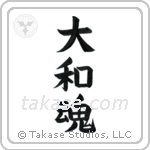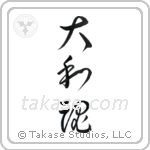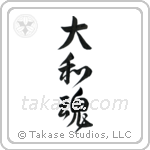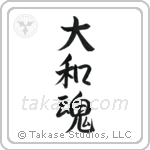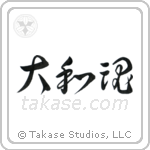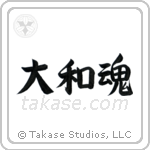

大和 (yamato) is the old province around Nara where the first emperors sat, and so the old name for Japan itself; 魂 (tamashii) is the native word for the soul, voiced to damashii in the compound. The word has two senses and the dictionaries list both.
The one people mean today is the spirit of the nation, bold, pure and loyal, the mountain cherry in the morning sun, ready to give everything when it comes to it; it is the sense of the loyalist poets and the marching songs, and for the decades before the war it was the state's own word, taught in every school, which is why a Japanese reader may hear that history in it.
The older sense lives inside the same characters and is a good one: in the Tale of Genji the word is the native good sense that book-learning is the base of, the practical wit that gets on in the world, set against Chinese scholarship and needing it. Natsume Sōseki, in his comic novel, wrote that everyone spoke of the Japanese spirit and no one had ever seen it, which is the affection and the doubt the word has carried together ever since.
Japanese Spirit is the plain English of it, and the rendering the Genji's first English translator chose.
大和魂 is composed of 大和 (read yamato) an old name for Japan and 魂 (read tamashii) meaning "spirit; soul".
Philology of 大和魂