

大和魂 · yamato-damashii · the Japanese spirit
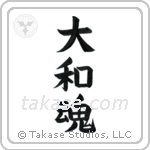
Sold as Japanese Spirit · Read yamato-damashii · What it is one word with two senses a thousand years apart: in the Tale of Genji, the native good sense that Chinese book-learning is the base of; since the 1850s, the brave and loyal spirit of the Japanese people, the sense the dictionaries now list first · Oldest witness the Tale of Genji, about 1008, in the chapter 少女; for the brave-to-death sense, 馬琴's 椿説弓張月 of 1807, where the wise father calls it shallow · In the dictionaries both senses, the modern one first · In English Nitobe's the Soul of Japan (1900), Hearn's the Soul of Old Japan (1904), and Waley's "Japanese spirit" of which one hears so much (1927), which is where the house's title comes from · Signed 典, 2026-09-07.
The words
大和 Yamato is the old province around Nara where the early emperors sat, and by extension the country before it was called 日本; the two characters are read as the native word, not as Chinese. 魂 tamashii, voiced to -damashii in the compound, is the native word for the soul. The witnesses write the compound four ways and mean one word: やまとだましひ in kana in the Genji and the 大鏡 and as the headword of the 1919 大日本国語辞典; 和魂 in the 今昔物語集 and the 菅家遺誡, with 篤胤's 倭魂 and 大倭魂; 日本だましひ in 馬琴 and in 真木和泉's poem as the wartime card game prints it; and 大和魂, which is 篤胤's, 頼山陽's, 松陰's and everyone's since. A sister word, 大和心 yamato-gokoro, has its own entry and its own first witness, the 赤染衛門集 of the mid-eleventh century; it is the word 宣長 used in the poem that everyone quotes, and the dictionaries treat the two as synonyms.
The 精選版 日本国語大辞典 gives the two senses in the order of their birth. ① 「ざえ(漢才)」に対して、日本人固有の知恵・才覚または思慮分別をいう。学問・知識に対する実務的な、あるいは実生活上の才知、能力: against zae, Chinese learning, the wit, judgment or discretion native to the Japanese; practical or real-life ability as against learning and knowledge. ② 日本民族固有の気概あるいは精神。「朝日ににおう山桜花」にたとえられ、清浄にして果敢で、事に当たっては身命をも惜しまないなどの心情をいう。天皇制における国粋主義思想の、とりわけ軍国主義思想のもとで喧伝された: the spirit or mettle proper to the Japanese people, likened to the mountain cherry in the morning sun, pure and bold, ready to give life and limb when it comes to it; loudly promoted under the nationalist and especially the militarist thought of the imperial state. The 大辞泉 lists the same two the other way round, the modern sense first, and the JMdict entry has the Japanese spirit; Yamato-damashii and nothing else.
A history, from the earliest witness
About 1008, 紫式部, 源氏物語, the chapter 少女, a court romance. Genji is explaining why his son must go to the university before he is given rank: なほ、才をもととしてこそ、大和魂の世に用ゐらるる方も強うはべらめ, it is with learning as the base that the yamato-damashii's usefulness in the world will be the stronger. 才 zae is Chinese book-learning; the 大和魂 is what the learning is applied with, the sense to be of use. The commentators have called it worldly wit, good sense, natural quickness, flexible political judgment, the knack of getting on. [1]
About 1100, 大鏡, a history in dialogue, the life of the minister 時平. あさましき惡事を申し行ひ給へりし罪により、このおとゞの御末はおはせぬなり。さるはやまとだましひなどはいみじくおはしましたるものを, for the sin of that shameful slander his line has not lasted; and yet in yamato-damashii he was remarkable. The slander is of 道真; the yamato-damashii is shown in three stories: he had the emperor rebuke him in public so that a sumptuary law would be obeyed; a clerk's fart made him laugh so hard he ceded the day's business to 道真; and he drew his sword on 道真's thunder over the palace. Political craft, quick wit, a sense of humor. [2]
About 1120, 今昔物語集, book 29, the tale of the scholar 善澄. Burglars broke in; he hid under the floor, then ran out after them to shout that he had seen their faces and would have them all arrested. They came back and killed him. 善澄才ハ微妙カリケレドモ露和魂无カリケル者ニテ。此ル心幼キ事ヲ云テ死ヌル也トゾ, Yoshizumi's learning was superb, but he had not a grain of wakon, and it was for saying that childish thing that he died. The 和魂 the scholar lacked is the sense to keep quiet. [3][3]
1145 and 1220, the 中外抄 and the 愚管抄, and an undated medieval poem. Reported through 斎藤正二's article in the 世界大百科事典 and not opened here: 大江匡房 tells the regent's father that a regent needs no Chinese learning if his やまとだましひ is good; 慈円 grants 公実 more of it than 忠実 had; and a poem under the title 文章博士 praises the reader who opens a new text without stumbling, 読開きぬる大和と玉しゐ. Then the word sleeps. 斎藤: except for three or four glossaries, from the end of the middle ages to the start of the Edo period nobody made anything of it. [kotobank 大和魂, the 世界大百科 article, text.]
Late Kamakura at the earliest, the 菅家遺誡, a book of precepts under 道真's name. 其自非和魂漢才、不能闞其閫奥矣, unless one has Japanese spirit and Chinese learning both, one cannot see into the depths. This is the first witness for 和魂漢才, the four-character pairing built from the Genji's opposition, in a text written at least three centuries after 道真 died in 903. The attribution to him is the legend; this is its earliest attestation. An Edo philologist, 黒川春村, already saw it: 古書どもに見えてこは文才に相対つて小賢き世才を称へり … 此大和魂を皇国人の廉直勇猛の事とおぼえたる人も多かれど … 和魂漢才と見えたるもいと後世の訛言, in the old books it means the small clever worldly sense set against literary talent; many now take this 大和魂 for the uprightness and valor of our countrymen; and the 和魂漢才 reading is a late corruption. [7]
1790, 本居宣長, a poem on his self-portrait; the word is 大和心. 敷島の大和心を人問はば朝日ににほふ山桜花, if someone asks what the heart of Yamato is: mountain cherry blossom, fragrant in the morning sun. The 世界大百科 says 真淵 and 宣長 revived the word as the natural, gentle, even womanish heart, and that the poem was later read for the cleanness of the cherry's falling; 和辻哲郎 in 1959 called that reading 俗説, a vulgar error, against 宣長's meaning. In print by 1867 (正氣歌俗解), and in English in Nitobe. [8]
1807, 曲亭馬琴, 椿説弓張月, a historical novel. The first attestation of the brave-to-death sense is a father telling his son it is a fault: 事に迫りて死を軽んずるは。日本だましひなれど多くは慮の浅きに似て学ざるの誤なり, to make light of death when pressed is the Japanese spirit, but it mostly looks like shallow thought, the error of the unschooled. The kana reads 日本 as yamato. [9]
1813 to the 1840s, 平田篤胤, the 国学 lecturer. 大倭魂 in the 霊能真柱 of 1813, 倭魂 paired with 漢学之才 in the 古史成文 of 1823, and in the lecture transcripts the modern word and the modern claim: 此御国ニ生レタカラニハ … 御恩ノ有ガタキヲ辨ヘテ。大和魂ノアル人人ハ。小踊リシテ悦ビ, having been born in this land … those with yamato-damashii will leap for joy; elsewhere, 根ガ大和魂ノ堅マラヌカラノデ, because at root the yamato-damashii has not set firm. The word is now something a Japanese person has by birth. [10]
1836, 頼山陽, 書後. 豈可謂之大和魂哉, can one call that yamato-damashii?, a Confucian's aside in a book of colophons, arguing over the word with the 国学 school. It is contested before 松陰 is born. [11]
1854, 吉田松陰, in the Edo prison. かくすればかくなるものと知りながらやむにやまれぬ大和魂, knowing that doing this would bring that: the yamato-damashii that would not be stopped. Written in the fourth month of 1854 at 伝馬町 after he tried to board Perry's ship at 下田. The 1897 collection that prints it says so: 右は四月二十四日江戶傳馬町の獄にて作りし書なり。『かくすれば』の一首、一唱涙あらしむ. [12]
1859, 吉田松陰, 留魂録, the night before his execution. 身はたとひ武藏の野邊に朽ぬとも留め置かまし大和魂, though my body rot in the fields of Musashi, I would leave my yamato-damashii behind. The opening poem of the 留魂録. [13]
1866, 前島密, 漢字御廢止之議, a memorial to the shogun on abolishing kanji. 御國人の所謂大和魂は一種特有の魂氣の如く御坐候得共決して然るものには有御坐間敷取りも直ほさす愛國の一心に外ならすと奉存候(自盡決死に果敢なるか如きは大和魂の一部分なるに過きすと奉存候), what our countrymen call yamato-damashii is spoken of as a peculiar soul-stuff; it is nothing of the sort; it is simply the one heart of love of country (readiness to die by one's own hand is only a part of it). The first witness here to equate the word with 愛国心, and to say the death-readiness is only a part. [ja.wikisource 漢字御廢止之議, text.]
1882, 外山正一, 抜刀隊, in the 新体詩抄. 刃の下に死ぬべきぞ大和魂ある者の死ぬべき時は今なるぞ, die under the blade; for those with yamato-damashii the time to die is now. The police sword-unit of the 1877 rebellion, in the new-style verse, later set as a march. The sense is now on the parade ground. [ja.wikisource 新体詩抄/抜刀隊の詩, text.]
1868 to 1945, the numbers. The Diet Library's index of public-domain books has the word in 3 books of the 1860s, 27 of the 1870s, 131 of the 1880s, 433 of the 1890s, 925 of the 1900s, 1,627 of the 1910s, 1,436 of the 1920s, 2,590 of the 1930s and 1,218 of 1940 to 1945; the peak year is 1935. A kabuki called 大和魂 opened in 1904; 萩原朔太郎 published an aphorism under the title in 1935. [lab.ndl.go.jp, the year counts in the account; kotobank, the 外題辞典; Weblio, the 近代文学作品名辞典.]
1904, 福本日南, 愛国本義. A Meiji nationalist's anthology of the bakumatsu poems, with a claim about the words themselves: 『大和心』なる辭は卽ち是なり。『大和魂』なる辭は即ち是なり, that both were coined in the last fifty years, by the nation and by no one, for a love of country the plain ancestors had not been able to name. Both words were Heian; the claim is a witness to how Meiji felt them, as new. [16]
1905, 夏目漱石, 吾輩は猫である, the sixth installment, a comic novel. The schoolteacher reads his friends a composition of sixty-odd words. 「大和魂! と叫んで日本人が肺病やみのような咳をした」…「大和魂! と新聞屋が云う。大和魂! と掏摸が云う。大和魂が一躍して海を渡った。英国で大和魂の演説をする。独逸で大和魂の芝居をする」…「東郷大将が大和魂を有っている。肴屋の銀さんも大和魂を有っている。詐偽師、山師、人殺しも大和魂を有っている」…「大和魂はどんなものかと聞いたら、大和魂さと答えて行き過ぎた。五六間行ってからエヘンと云う声が聞こえた」…「三角なものが大和魂か、四角なものが大和魂か。大和魂は名前の示すごとく魂である。魂であるから常にふらふらしている」…「誰も口にせぬ者はないが、誰も見たものはない。誰も聞いた事はあるが、誰も遇った者がない。大和魂はそれ天狗の類か」, "Yamato-damashii!" cried the Japanese, and coughed like a consumptive … The newspaperman says it, the pickpocket says it, it has leapt across the sea; they make speeches on it in England and plays on it in Germany … Admiral Tōgō has it, the fishmonger's Gin has it, swindlers, speculators and murderers have it … Asked what it was, he said "yamato-damashii" and walked on; a few yards off you heard him clear his throat … Is it three-cornered or square? It is a soul, as the name says, and so it is always wobbling … Everyone speaks of it and no one has seen it; everyone has heard of it and no one has met it. Is it some kind of tengu? Written in the year of the Russian war, and the most-quoted thing ever said about the word. [ja.wikisource 吾輩は猫である, text; the serial ran in ホトトギス from January 1905 to August 1906.]
1937, 文部省, 国体の本義, the state's account of the national polity. 蒙古襲来以後は、神国思想が顕著なる発達を遂げて、大和魂として自覚せられた。… 近くは日清・日露の戦役に於て力強く覚醒せられ、且具現せられた, after the Mongol invasions the idea of the divine land grew and became conscious of itself as yamato-damashii … lately, in the wars with China and Russia, it was powerfully reawakened and made real. 明治天皇's poem on the manliness of the 大和心 stands above it, and 道真 is named for 和魂漢才 below. This is what the 大辞泉 means by 喧伝された. [ja.wikisource 国体の本義, text.]
1942, 愛國百人一首. The wartime card game's hundred loyal poems carries 真木和泉's 大山の峰の岩根に埋めにけりわが年月の日本(やまと)だましひ, buried in the rock at the mountain's peak: the yamato-damashii of my years, with 野村望東尼's 大和心 beside it. [ja.wikisource 愛國百人一首, text.]
The sense across time
The tradition holds two senses and knows it. In the Heian books the word is the practical wit of the governing house, set against Chinese book-learning and needing it as a base: the sense to be of use, the sense that keeps a scholar from shouting at burglars. It sleeps from the fourteenth century to the eighteenth. 真淵 and 宣長 wake it as the natural heart, gentle and plain; the 国学 lecturers make it the birthright of the Japanese; the bakumatsu poets make it the will to die for the emperor; Meiji makes it 愛国心 and a marching song, and the state of the 1930s makes it the root of the national polity. The dictionaries now list the modern sense first because it is the one people mean. Three Japanese writers said in print, while it was happening, that the modern sense was not the word's: 黒川春村 in the Edo period, 前島密 in 1866, 和辻哲郎 in 1959; and 漱石 said in 1905 that nobody had ever seen it.
What is not a source
Not Chinese: the compound is two native words, and 頼山陽's kanbun sentence is an argument about the word, not a source for it. Not 道真's: the 和魂漢才 that carries his name is a text of the late Kamakura period or later, and its four characters are built on the Genji's pair. Not 宣長's: his poem is 大和心, and the cherry that falls cleanly is a later reading of it that 和辻 called a vulgar error. Not the Mongol invasions': the 国体の本義's claim that the word became conscious of itself after 1281 has no witness between the 愚管抄 and the 国学 school.
The text in English
1876, William Elliot Griffis, The Mikado's Empire, New York: Harper. The first edition does not have the word. A later edition, whose index reaches Yuan Shi Kai, has it three times, once on the 1877 rebellion: knowing no greater glory than to imitate Kusunoki and the ancient models of that ferocious military virtue of Old Japan — Yamato damashii. Griffis added the word as the book grew, and gives the martial sense only. [archive.org mikadosempire00grif_0 and bub_gb_PRbVAAAAMAAJ, text.]
1900, Inazo Nitobe, Bushido: The Soul of Japan, Philadelphia, preface dated Twelfth Month 1899. Chapter XV: though the populace could not attain the moral height of those loftier souls, yet Yamato Damashii, the Soul of Japan, ultimately came to express the Volksgeist of the Island Realm. He translates 宣長, Isles of blest Japan! / Should your Yamato spirit / Strangers seek to scan, / Say—scenting morn's sun-lit air, / Blows the cherry wild and fair!, and asks is this flower the type of the Yamato spirit? Is the Soul of Japan so frailly mortal? Chapter XVI: It was an honest confession of the race when Yoshida Shôin, one of the most brilliant pioneers of Modern Japan, wrote on the eve of his execution the following stanza;— "Full well I knew this course must end in death; / It was Yamato spirit urged me on / To dare whate'er betide." The stanza is the 1854 poem, written in prison after 下田; the eve of his execution is the occasion of the other poem, of 1859. Nitobe's subtitle gave the word its English name, and the soul of Japan peaks in English print in 1904 to 1906, with the Russian war. His 1908 Japanese translator, 櫻井鷗村, carried the misdating back into Japanese: 刑に就くの前夜に當り. [Gutenberg 12096, text; ja.wikisource 武士道, rendered text.]
1904, Lafcadio Hearn, Japan: An Attempt at Interpretation, p. 159. For this national type of moral character was invented the name Yamato-damashi (or Yamato-gokoro),—the Soul of Yamato (or Heart of Yamato),—the appellation of the old province of Yamato, seat of the early emperors, being figuratively used for the entire country. We might correctly, though less literally, interpret the expression Yamato-damashi as "The Soul of Old Japan." Hearn gives the etymology the house page gives, and says invented of a word the Genji already had. [Gutenberg 5979, text.]
1927, Arthur Waley, A Wreath of Cloud, being the third part of The Tale of Genji, London: Allen & Unwin, the page after the running head 96. Genji's sentence: For the truth is, that without a solid foundation of book-learning this "Japanese spirit" of which one hears so much is not of any great use in the world. Waley renders the Heian word with the modern one in quotation marks, and adds of which one hears so much, which is 1927 and not in the Japanese. The three later English Genjis are not opened. [archive.org AWreathOfCloud, text.]
1994, Michael Carr, "Yamato-Damashii 'Japanese Spirit' Definitions", International Journal of Lexicography 7(4): 279–306. The lexicographic history of the word through Japanese and bilingual dictionaries, and the article the English Wikipedia entry the page links is built on. Confirmed as a record; the text is behind a paywall and not read. [doi:10.1093/ijl/7.4.279.]
Today. JMdict has the Japanese spirit; Yamato-damashii. The house's title Japanese Spirit is Waley's 1927 rendering of the Genji line and JMdict's gloss; the page's explanation of the two characters is the house's own and matches Hearn's. What a rendering must keep: that it is the Japanese spirit, a national noun and not a personal one; and that the noun has two histories, which a reader on a wall or under a needle should be able to choose between.
A reading
The page says the word refers to the ideal Japanese being both moral and brave, and that is the sense a buyer brings to it and the sense the dictionaries list first. The history says that this sense is about two hundred years old; that its first attestation is a novelist calling it shallow; that it was made by the 国学 lecturers and the loyalist poets out of a Heian word for the opposite quality, the worldly good sense that book-learning is the base of; that a bureaucrat, a novelist and a philosopher each said so in print while it was being made; and that for forty years the state taught it as the root of the national polity, which is why the 大辞泉 writes 喧伝された into the definition. The old sense is a good one, and it is inside the characters: the sense to be of use, the wit that kept 時平 in power and that 善澄 lacked at the gate. A buyer who wants that has it here. A buyer who wants the brave-to-death sense should know when it was made, by whom, and what was said against it, and then it is theirs. Nothing on the page is false; the design is right as it stands; the one sentence I would put on any page that sells the word is Waley's: this "Japanese spirit" of which one hears so much. Romaji yamato-damashii, with the hyphen the English books settled on and JMdict keeps. Signed 典, 2026-09-07.
Notes
The house page and Hearn give the same etymology, and both are right about the parts; Hearn's invented is wrong about the whole. Nitobe's misdating of the 1854 poem to the execution eve is repeated by his Japanese translator and, from there, by later English books that take their 松陰 from Bushido; the two poems are printed in one line in the 1898 collection, which is how they get confused. The Wayback index shows the house's design image on takase.com by 9 January 2011; when it was brushed is the house's own record. The page's Soul (tamashii) is the caret-link rendering and reads oddly in the sentence. The 1885 date for the 抜刀隊 march is recall, not read.
How this was read
By eye: the template P4098SSVB3A. By text at the address: the Diet Library's full-text index on eight forms, its classical facet whole on five, and a year-by-year count on three (the text of a leaf is at lab.ndl.go.jp/dl/api/page/
References
- 源氏物語 少女 (c. 1008) — https://ja.wikisource.org/wiki/源氏物語/乙女 (text); 大日本国語辞典 1919 pid 1871641 koma 633 (OCR) ↩
- 大鏡 時平伝 (c. 1100) — https://ja.wikisource.org/wiki/大鏡_(國文大觀) (rendered text); 国文大観 四鏡 1903 pid 991359 koma 21 (OCR) ↩
- 今昔物語集 巻29 (c. 1120) — 国史大系 16 1901 pid 991106 koma 735 (OCR); 1882 typeset pid 877541 koma 38 (OCR) ↩
- 中外抄 · 愚管抄 巻四 · 詠百寮和歌 (1145 · 1220 · 南北朝?) — REPORTED — 斎藤正二, 世界大百科事典, https://kotobank.jp/word/大和魂; leaves not opened; Lab 0 on 読開きぬる
- 菅家遺誡 (late Kamakura or later) — REPORTED — 精選版日国 初出, https://kotobank.jp/word/和魂漢才; 皇国俚諺叢 1901 pid 767884 (Lab highlight)
- 赤染衛門集 (大和心) (mid-11th c.) — REPORTED — 精選版日国 初出, https://kotobank.jp/word/大和心
- 黒川春村 碩鼠漫筆 (Edo, late) — pid 2553942 koma 47 (OCR; classical facet, no year in the record) ↩
- 本居宣長 (大和心) (1790 (leaf not read)) — 正氣歌俗解 1867 pid 2538656 (Lab highlight, OCR); 大辞泉 大和心 (石上稿); Nitobe 1900 ↩
- 曲亭馬琴 椿説弓張月 (1807) — pid 2557124 koma 111 (the 1807 print, OCR; reads 怪んずる); 精選版日国 ② 初出 ↩
- 平田篤胤 霊能真柱 · 古史成文 · 講本気吹颫 · 出定笑語 (1813 · 1823 · lectures) — pids 2562763 · 2599452 · 2582738 koma 36 · 2562857 (OCR; classical facet) ↩
- 頼山陽 書後 (1836) — pid 2564898 koma 28 (OCR) ↩
- 吉田松陰, the 1854 poem (1854, fourth month, 伝馬町) — 少年伝記叢書 吉田松陰文 1897 pid 1169675 koma 22 (OCR); 189 Lab books ↩
- 吉田松陰 留魂録 (1859) — 松陰先生遺著及事蹟 1898 pid 782152 koma 4 (OCR); 128 Lab books from 1893; 留魂録 leaf not opened ↩
- 前島密 漢字御廢止之議 (1866) — https://ja.wikisource.org/wiki/漢字御廢止之議 (text)
- 外山正一 抜刀隊 (1882) — https://ja.wikisource.org/wiki/新体詩抄/抜刀隊の詩(丶山仙士) (text)
- 福本日南 愛国本義 (1904) — pid 754609 koma 52 · 55 · 56 (OCR) ↩
- 夏目漱石 吾輩は猫である (1905 (sixth installment; serial Jan 1905–Aug 1906)) — https://ja.wikisource.org/wiki/吾輩は猫である (text); https://ja.wikipedia.org/wiki/吾輩は猫である (dates)
- 国体の本義 (1937) — https://ja.wikisource.org/wiki/国体の本義 (text)
- 愛國百人一首 (真木和泉) (1942) — https://ja.wikisource.org/wiki/愛國百人一首 (text)
- 大辞泉 · 精選版日国 · 世界大百科 · ブリタニカ · ニッポニカ · 外題辞典 (current) — https://kotobank.jp/word/大和魂 (text)
- JMdict (current) — https://jisho.org/api/v1/search/words?keyword=大和魂 (text)
- Griffis, The Mikado's Empire (1876 (0) · later ed. (3)) — https://archive.org/details/mikadosempire00grif_0 · /bub_gb_PRbVAAAAMAAJ (text)
- Chamberlain, Things Japanese (1890 · 1902) — https://archive.org/details/india.history.resource.89289 · /in.ernet.dli.2015.100137 (text)
- Nitobe, Bushido: The Soul of Japan (1900 (pref. 1899)) — https://www.gutenberg.org/ebooks/12096 (text), ch. XV–XVI
- 櫻井鷗村 訳 武士道 (1908) — https://ja.wikisource.org/wiki/武士道 (rendered text)
- Hearn, Japan: An Attempt at Interpretation (1904, p. 159) — https://www.gutenberg.org/ebooks/5979 (text)
- Waley, A Wreath of Cloud (1927, after marker 96) — https://archive.org/details/AWreathOfCloud (text)
- Carr, Yamato-Damashii 'Japanese Spirit' Definitions (1994) — https://doi.org/10.1093/ijl/7.4.279 (403; record only)
- NDL Lab full-text index (pre-1945) — https://lab.ndl.go.jp/dl/api/book/search (text)
- Google Books ngram (1800–2019) — https://books.google.com/ngrams/json (text)
- Wayback CDX (2011) — https://web.archive.org/cdx/search/cdx (text)
- Template P4098SSVB3A (undated) — takase-images/templates/scrolls/personality/ (eye)