

禁じられた愛 · 母なる自然 · ゴルファー · kinjirareta ai · haha naru shizen · gorufā · Forbidden love · Mother Nature · Golfer
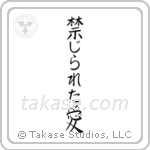
Sold as Forbidden Love · Mother Nature · Golfer · Read kinjirareta ai · haha naru shizen · gorufā · Register 母なる自然 is literary, with the classical copula なる; 禁じられた愛 is standard written Japanese; ゴルファー is a katakana loanword, the ordinary word for a golfer · Oldest witness 母なる自然 in a 1900 Japanese account of Francis Parker's pedagogy and, as a full sentence, in a 1903 devotional translation; ゴルファー in a 1925 dictionary of words born from English, five years before the national dictionary's first citation; 禁じられた愛 only inside 禁じられた愛情 in a 1924 anthropology primer · Sense three things English gave Japanese: a personification, a sportsman, and a phrase.
The sense: three ways English enters Japanese
Three designs, three routes. ゴルファー is the plain borrowing: the English word written in the syllabary Japanese keeps for foreign sounds, and it is the only Japanese word for a golfer. 母なる自然 is a calque, Mother Nature rebuilt from Japanese parts, 母, mother, なる, the classical that is, 自然, nature, and it entered with the Meiji translators of Western education and devotion, who needed the personification and made it. 禁じられた愛, forbidden love, is a phrase the language can form and has hardly used: one Japanese page before 1946 carries the string, and there it is the head of a longer word, 禁じられた愛情, forbidden affection, in a translated passage of psychoanalysis. The famous Japanese titles with 禁じられた are Forbidden Games, the French film of 1952, and Forbidden Love, 禁じられた恋, Moriyama Ryōko's song of 1968, which uses 恋, romantic love, not 愛. A buyer of 禁じられた愛 is getting a phrase that reads at once and has no Japanese story; a buyer of 母なる自然 is getting a phrase with a Meiji one.
The words
母 haha, mother: デジタル大辞泉's second sense is 物事を生み出す根源, the source from which things are born, with the dictionary's own example 母なる大地, mother earth; 精選版日本国語大辞典 cites that figurative sense from the 続日本紀 of 774, 諸仏之母也, the mother of all buddhas, and from Nakamura's Self-Help, 窮困は創造の母なり, want is the mother of invention. なる is the classical form of which is, so 母なる自然 is nature, which is a mother; the construction is literary and the phrase would not be said in conversation. 自然 shizen, nature: デジタル大辞泉 山や川、草、木など、人間と人間の手の加わったものを除いた、この世のあらゆるもの, everything in the world except human beings and what their hands have made; 精選版日本国語大辞典 山、川、海、草木、動物、雨、風など、人の作為によらずに存在するものや現象, what exists without human contrivance, cited from the 色葉字類抄 of 1177–81. The bilingual dictionary carries 母なる自然 as an expression, Mother Nature. [kotobank.jp/word/母 · /word/自然 · jisho.org/word/母なる自然, text; read by the investigator]
禁じる kinjiru, to forbid, is the modern one-step form of 禁ずる, first cited in that form from 1925; 禁じられた is its passive past, forbidden. 愛 ai, love: デジタル大辞泉 runs the senses from family affection through romantic love, 特定の人をいとしいと思う心, to Christian charity, キリスト教で、神が人類をいつくしみ, and Buddhist craving, 仏教で、主として貪愛; 精選版日本国語大辞典 cites the word from the 梁塵秘抄 of about 1179. The design's 愛 is the second sense, and a Japanese reader may hear the other four behind it; 恋 koi would name only the romance. [kotobank.jp/word/禁じる · /word/愛, text; read by the investigator]
ゴルファー gorufā: デジタル大辞泉 ゴルフをする人, a person who plays golf; 精選版日本国語大辞典 the same, from English golfer, first cited from Hosoda Tamiki's novel 真理の春 of 1930, 眼の下のゴルフ・リンクに、ゴルファの自動車を運ぶ道, the road that carries the golfers' cars to the links below. [kotobank.jp/word/ゴルファー · jisho.org/word/ゴルファー, text; read by the investigator]
The English is the source in all three, so the question is what the Japanese kept. Mother Nature and 母なる自然 are the same figure; the Japanese is a shade more written, because of なる. Golfer and ゴルファー are one word in two scripts. Forbidden love and 禁じられた愛 overlap fully in sense, and the Japanese 愛 is wider than the English love in the romantic use, reaching to charity and to craving; the narrower Japanese word is 恋, which the 1968 song used. [jisho.org/word/愛 · /word/恋, text]
A history, from the earliest witness
1900–1915. 母なる自然 comes in with the educators and the devout. The oldest page is an account of the American educator Francis Parker, where a school's copybook drill is faulted for going 母なる自然の法則に違つて, against the law of Mother Nature. [『パーカー氏統合教授之学理』市川源三解説 育成会 1900, NDL pid 810643, koma 78, OCR]
The first whole sentence is in a Russian Orthodox devotional translated for the Tokyo youth society, addressed to a child with a lily: おん身と花とは母なる自然の懐に宿る兄弟よ。見ませ、春を盛りに咲く此百合の花をば, you and the flower are brothers lodged in the bosom of Mother Nature; look at this lily blooming in the height of spring. [『宗教と自然美』昇曙夢等訳 正教青年会 1903, NDL pid 824530, koma 17, OCR]
Froebel's Education of Man, in the 1909 Japanese version, pairs the figure with its counterpart: 母なる自然と父なる神とは世の親達を導くに違ない, Mother Nature and Father God will surely guide the parents of the world; and a 1915 Wordsworth gives the daisy 母なる自然の保護の下に奔放に、四季を通じて歡喜又は悲哀の子なり, under Mother Nature's protection, unconstrained, a child of joy or of sorrow through the four seasons. Eighty-five books carry the phrase to 1946, nearly all of them translations or books about the West; the calque did its work and stayed. [フレーベル『人之教育』原田助閲 警醒社 1909, NDL pid 809248, koma 169, OCR; 畔上賢造訳註『ウヲルヅヲス詩集』聖書研究社 1915, NDL pid 954124, koma 63, OCR]
1924. 禁じられた愛, once, and inside another word. The single prewar page is Nishimura Shinji's anthropology primer, quoting a psychoanalytic account of a mother-in-law: 此危險な、悲しい愛情は、屢〓禁じられた愛情を抑壓する爲めに、義理の子に對する反感となつて現はれる, this dangerous, sad affection, in order to repress a forbidden affection, often shows itself as antipathy toward the child-in-law. The scroll's phrase is the first four characters of a six-character word there; the history records the hit and does not lend it to the design. [西村真次『人類学概論』第1編 早稲田大学出版部 1924, NDL pid 982388, koma 94, OCR; the 〓 is the OCR's mark for the repeat sign 〻]
1925 and 1929. ゴルファー, before the dictionary's date. A dictionary of modern words born from English, compiled by the Osaka Mainichi's English-study staff, has the entry ゴルファー(Golfer)ゴルフ戯をする人, a person who plays the game of golf, in 1925, five years before the citation the national dictionary gives. By 1929 the journalist Shimomura Kainan, a golf writer, can joke that ゴルファーは馬鹿に早起をする, golfers get up absurdly early, and that 親爺のゴルフには年中休暇がない, father's golf has no holidays all year; seven of the fifty prewar pages with the word are his. [英文大阪毎日学習号編輯局編『英語から生れた現代語の辭典』大阪出版社 1925, NDL pid 1900269, koma 281, OCR, which runs the next entry's words into this one; 下村海南『鯖を讀む話』日本評論社 1929, NDL pid 1881586, koma 144, OCR]
What is not a source
The English is the source of all three, and in Japanese none has an author. 母なる自然's Meiji pages are translations; the phrase is Japanese now, but it was made to carry a Western figure and the Japanese encyclopedia's article on it is a translation of the English one. 禁じられた愛 has no Japanese page as itself before 1946. The 1968 song and the 1952 film are titles that use the participle, not sources for the design.
The phrases in English
Mother Nature is the personification of nature as a life-giving mother; the encyclopedia dates nature in English to 1266 and the earliest mother-earth figure to Mycenaean Greek. Golfer is golfer. Forbidden love has no author and is the ordinary English for a love that a rule stands against. What a rendering must keep: なる in 母なる自然, which is what makes it a personification and not maternal nature; the katakana of ゴルファー, which tells a Japanese reader it is the English word; and in 禁じられた愛 the passive, forbidden, by someone, not merely impossible. The house's page for 1010 explains the katakana and the explanation is right; the page romaji gorufā carries the macron the seat's standard wants, and the catalogue's gorufa- is the wapuro spelling of the same. [en.wikipedia.org/wiki/Mother_Nature · ja.wikipedia.org/wiki/母なる自然, text]
A reading
Three English-born designs, and the reading sorts them. ゴルファー is what it looks like and needs one sentence on a page. 母なる自然 is the interesting one: a phrase Meiji translators built for Parker and Froebel and Wordsworth, kept by the language, and now a bilingual dictionary entry; a buyer who wants Mother Nature in Japanese is getting the phrase Japanese itself uses for her, with a hundred and twenty years behind it. 禁じられた愛 is honest house Japanese for an English phrase, correct, immediately readable, and without a Japanese past, and the page should say that rather than borrow the song's; if the buyer's love is a romance, 恋 is the word the song chose, and the design's 愛 is the larger word. Signed, the philologist, 2026-09-06.
Notes
- 愛 and 恋. The 1968 Moriyama Ryōko song is 禁じられた恋; the design is 禁じられた愛. Both are forbidden love in English; 恋 is the romance and 愛 is love in every sense. Not a defect, a choice a page can name.
- The substring hit. The 1924 page carries 禁じられた愛情; the history quotes it as such.
- The 1925 dictionary's OCR runs the gorilla entry's words into the golfer entry; the quotation is the headword and its gloss only.
- Romaji. gorufā on the page; gorufa- in the catalogue, the wapuro long-vowel mark. One word.
How this was read
A bracket that names a National Diet Library leaf as pid and koma resolves at lab.ndl.go.jp/dl/api/page/<pid>_<koma> for the OCR text and at dl.ndl.go.jp/api/iiif/<pid>/R<koma, seven digits>/full/2400,/0/default.jpg for the image. By OCR, own-hand at the koma: the seven books in the brackets. By the Lab's full-text search, own-hand, the whole result set of each phrase sorted by year (1 · 85 · 50, the last returning 29). By text: the kotobank entries for 母, 自然, 禁じる, 愛 and ゴルファー, read whole by investigate-ten on 2026-09-05 and quoted from its reading files, not re-opened by the seat; the EDRDG entries at jisho; the Japanese Wikipedia articles on 禁じられた遊び and 禁じられた恋 as the investigator opened them; the English and Japanese Wikipedia articles on Mother Nature, pulled through the parse API. Not opened: any leaf by eye; Hosoda's 1930 novel; the other 78 pages with 母なる自然; the 1968 song's lyric; an English dictionary.
References
- 129 誇りと喜び (164 books; 1937) — F0056
- 164 子供の為に (1,684 books; 1912) — F6000
- 222 家族は永遠 (2 books; 1924) — F6058
- 291 自分を信じる (39 books; 1946) — I6002
- 295 精一杯生きる (0) — I6006
- 299 強く生きる (207 books; 1937) — I6010
- 319 希望は最大の宝 (0) — I6030
- 327 自由に生まれて (0) — I6038
- 331 新たな始まり (1 book; 1948) — I6042
- 415 永遠に心の中に (1 book; 1927) — L5033
- 418 永遠に私の心に (3 books; 1935, 1941) — L5036
- 566 危険を冒す (2,388 books; 1897 among the first five) — M6013
- 961 生きる笑う愛する (0) — S0000
- 968 誕生日おめでとうございます (0) — S0007
- 988 有難う御座います (1,739 books; 1914 among the first five) — S0030
- 1010 ゴルファー (50 books; 日国 初出 1930) — S5009
- 392 禁じられた愛 (1 book; 1924) — L5010
- 834 永遠の若さ (202 books) — P4103
- 627 母なる自然 (85 books) — N4014