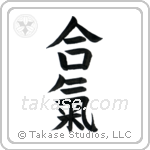
合気 aiki Aiki
This is a philological study of 合気 (aiki), the word that gives aikido its name. It follows the word from the Edo sword schools, where it named a deadlock to be broken, through a Meiji book that sold it as a secret technique, to Ueshiba Morihei's art, and sets out how it came into English from 1913 to today.
Abstract
合気 (aiki) is the word that gives aikido its name, and it is older than the art. In the Edo sword schools, written 合氣 or 相氣, it named the state in which two fighters' ki have matched, cotton on cotton, stone on stone, so that neither can win, and the teaching was to break that match. Popular fiction turned the sign around and made 相氣の術 the secret that wins every bout; a Musashi book of 1887 defined 合氣の術 as the art of taking the initiative before the swords cross, and in 1892 an author who claimed no teacher sold that definition in a ten-sen book, while the novels of the next decade made the art a paralyzing gaze and explained it by hypnotism. Takeda Sōkaku 武田惣角 and Ueshiba Morihei 植芝盛平 took that technique sense into the name of an art in the 1920s, Ueshiba gave the word a third sense, the joining of one's own ki with the ki of the universe, and the word carries all three while no Japanese dictionary has ever headed it on its own.
Overview
The sense. A martial term, never a headword in the general dictionaries. kotobank carries no entry for 合気; what it carries under that heading is the 世界大百科事典's paragraph on the word inside its article on 合気道, by Shishida Fumiaki 志々田文明, which gives the word two lives: in the Edo transmissions, 相互に気勢や拍子があう状態, the state in which two sides' spirit and rhythm coincide, and in the modern art, 相手の心の動きを察知する心法と,相手の攻撃を無効にする技法, a method of mind that reads the opponent's intention and a technique that nullifies the attack, with the closing sentence that 現在,合気は流派によって異なったニュアンスで用いられている, today aiki is used with a different nuance by each school [1][2]. The witnesses below show three senses in order of age. First, the sword schools' deadlock: 敵ノ氣ト我レノ氣ガ同シ樣ニアル處, the point at which the enemy's ki and mine are in the same state, a stalemate the swordsman must break [3]. Second, the technique of Meiji print: 未だ劍を交へず … 早く既に敵の氣を制す, before the swords have crossed, to have already seized the enemy's ki [4]. That second sense has two faces in print: the timing that seizes the initiative before contact, and an occult faculty that reads the other man's intent or fixes him where he stands, which a novel of 1905 explains as hypnotism and a compendium of 1920 as sensing an attack before it comes. Third, Ueshiba's: aiki as the joining of one's ki with the universe, which his son's book of 1984 renders as the Way (dō) of harmony (ai) with ki [5]. English harmony covers the third sense and none of the first; English timing covers one face of the second and Harrison's occult force the other; no English word covers the deadlock, which the schools themselves expressed by the verb they set against it, 相氣ヲ外ス, to get out of aiki. The word's nearest kin is 気合 (kiai), the same two characters in the other order, which the dictionaries do head: 精選版 日本国語大辞典 gives its first sense as 気が合うこと, the coinciding of ki, with a first attestation in the 本福寺跡書 of about 1560, and its fourth as the shout that concentrates the spirit, first attested in Kunikida Doppo 国木田独歩 in 1902 [6]. The Meiji books set the two words side by side and sometimes equate them; the record below keeps them apart.
The words. 合 ai is to join, to meet, to match, to fit together; 気 ki is spirit, breath, disposition, the animating energy. The compound is a verb and its object, the joining of ki, and it takes its sign from the context: whose ki is joined with whose, and whether that is a fault or a feat. The reading is aiki: the 北辰一刀流 manuscript writes the syllables アイキ beside 相氣 [7], a novel of 1905 writes あひき beside 合氣 [8], and kotobank gives あいき [1]. No witness gives another. The word is written three ways and they are one word: 相氣, the Edo schools' usual spelling, in which 相 is mutual; 合氣, the spelling of the Meiji books and of the art; and 合気, the modern form of the second, which the design writes. One book of 1889 uses 合氣 and 相氣 in consecutive sentences for the same thing [9]. Every witness before 1946 below prints the old form 氣.
The text in English. The Meiji and Taishō bilingual dictionaries do not have the word. Inouye's dictionary of 1909 runs from Aikawarazu to Aiken with no aiki between them [10]; Kenkyūsha's of 1942 has an aiki, but it is 愛機, a favourite machine (plane, air-plane) [11]; the fourth edition of 1974 adds aiki-dō 合気道, an art of self-defense derived from judo, in which the opponent's joints are used to advantage in executing holds and throws, and still no 合気 [12]. The earliest known English discussion of the word is not in a dictionary but in E. J. Harrison's The Fighting Spirit of Japan of 1913, which defines aiki as an occult force written with the characters of kiai reversed, silent where kiai is a shout, and reports a jūdō master's lecture on it as an art verging on the divine [13]; in his revised edition of 1955 he kept that reading and set a second beside it, assembled consciousness, the accumulated force, which Ratti and Westbrook's gloss follows. Ratti and Westbrook in 1973 gloss the art as the technique (jutsu) of coordinated, assembled, harmonized, or concentrated (ai) consciousness, spirit, or mind (ki) [14]. The aikido literature in English begins with the founder's son, Ueshiba Kisshōmaru 植芝吉祥丸, whose Aikido of 1963 gives the founder's own sentences, Aiki is such an assimiliation of spiritual and bodily ways (the book's own spelling) and Aiki is the expression of Truth itself [15], and whose Spirit of Aikidō of 1984 gives the etymology the art has used since, the Way (dō) of harmony (ai) with ki [5]. John Stevens's books from 1984 fix the two-character gloss, ai, meaning "to come together, to blend, to join, to harmonize," and ki … "spirit" and "disposition" [16][17], and JMdict today has aiki (principle that allows a conditioned practitioner to negate or redirect an opponent's power) [18]. Every one of these renders the third sense. The first, the deadlock, has been in English only once, and by accident: Kisshōmaru's 1963 book reports the old scrolls' warning don't be aiki-ed by the opponent and calls it obscure [15].
The historical record
About 1790, Mikami Genryū 三上元龍, 『擊劒叢談』, a survey of the sword schools, in the typeset of 1915. On the 天心流 the author lists its named teachings: 相氣、氣先、鉑相、水月、寒夜霜、心妙劍、來る如くなどいふ傳有り, there are transmissions called aiki, kisaki, hakusō, suigetsu, kan'ya no shimo, shinmyōken, kitaru gotoku and the like [19]. 相氣 here is the name of a teaching, one item in a school's curriculum, and the earliest dated use of the word the record has.
Early nineteenth century, Matsura Seizan 松浦静山 (1760–1841), 『常靜子劍談』, a daimyō's notes on swordsmanship, in the typeset of 1915. 一、劍術生の口上に、相氣の仕合と謂ことを言ふ、是は何なることにや、相氣の心とて別に有るものにや、有るならば、相氣の心と常刀の心と分めを聞きたき也、返答は出來まじ, Students of the sword speak of an aiki bout. What is that? Is there some separate aiki mind? If there is, I should like to hear how the aiki mind differs from the ordinary mind of the sword. No answer will come. He goes on: 傳刀以上を仕ふときは、對太刀とて十分に仕ふ也、是ぞ相氣なり、仕ふ者の方に相氣と言こと心得ぬ言方なり, when one fences at the level of the transmitted sword one fences fully against the opposing blade; that is aiki; for the fencer to speak of aiki is a way of talking I do not understand [20]. Seizan hears the word as swordsmen's jargon for a bout fought on equal terms and refuses it a mind of its own.
Edo period, 『柳生流新祕抄』, a Yagyū-school text, in the typeset of 1915. 敵小調子にきらば大調子に勝ち、大調子にきらば小調子にて勝つべし、皆以て相氣を闘くことなり, if the enemy cuts on a small rhythm, win on a large one; if on a large, win on a small; all of this is to open the aiki [21]. The typeset prints 闘く where the sense of the sentence wants 開く or 外す, to open or to get out of; the character is left as printed. The teaching is the one the 北辰一刀流 gives next: the match of rhythms is the thing to break.
Undated manuscript, 『北辰一刀流十二個条訳』, the twelve articles of the 北辰一刀流 sword school. The article 松風之事, On the pine wind: 松風トハ相氣ヲハヅセト云フナリ松ニ風ノ朝々トシテ常ニ相氣ナリ相氣ヲ旁下子ハ善勝ハ非ズ弱ニ弱強ニ強石ニ石綿ニ綿ノ如ク打合シテハ勝負見ヘズ依之當流ハ拍子ニ無拍子ノ拍子ト打ナリ敵弱カラン所ヲ強ク強キ所ヲ弱ク敵晴眼ナレハ下段ニシテ拳下ヨリ責敵下段ナレハ晴眼ニシテ上太刀ニ抑ルト云ヤウニ相氣ヲ旁下テ勝有ベシ, "Pine wind" means: get out of aiki. Wind in the pines, morning after morning, is always aiki. If you do not get out of aiki there is no good victory. Weak against weak, strong against strong, stone against stone, cotton against cotton: strike together like that and no decision appears. So this school strikes with the rhythm of no-rhythm against rhythm: strong where the enemy is weak, weak where he is strong; if the enemy takes the middle guard, take the low and press from under the fist; if he takes the low, take the middle and pin his blade from above. Get out of aiki in this way and victory will be yours [7]. The scribe writes the reading アイキ beside 相氣, and writes 旁下 for the verb hazusu, which is left as he wrote it. This is the deadlock sense in full: two matched forces, and an art that consists in unmatching them.
Edo period, 『繪本二島英勇記』, a yomihon of the Musashi legend, in the typeset of 1929. Here the same word is the secret that wins. Kasahara Shinzaburō 笠原新三郎 teaches the young Musashi: 武藝には相氣といふものありて。この相氣をだに得るときは百發百中千發千中。さらに勝を取ずといふ事なし, in the martial arts there is a thing called aiki; once one has this aiki, a hundred strikes hit a hundred times, a thousand a thousand, and there is no bout one fails to win; Musashi 相氣の工夫に寢食を忘れ。終に其玄機に通達せり, forgot food and sleep in the study of aiki and at last penetrated its mystery, and the master says 若相氣の術を相傳せばまさに天下に敵なかるべし, if the art of aiki is handed down, there will be no enemy under heaven, and writes 相氣の印書を一卷に書したゝめて, the certificate of aiki in one scroll [22]. In fiction the schools' fault has become a hero's secret art; the sign has reversed while the word stays the same.
Eighteenth century, the 一刀流 teaching of Terada Muneari 寺田宗有 as printed in 1889. The miscellany 『劍法遺傳』 prints, under the head ○一刀流韜袍起源ニ中西是助寺田宗有ニ當時一刀流ノ主意ヲ取違ヘタル者多シ願クハ之ヲ教ヘヨト答テ曰, in the Origin of the Ittō-ryū's Tōhō, when Nakanishi Chūsuke 中西是助 asked Terada Muneari to teach him, since many then mistook the intent of the Ittō-ryū, he answered: 然ルニ敵ニ向フト合氣ニナリ負ケヤセシ之ニ勝ント相互ヒニ勝負氣ニカリ修行シテハ終身勤苦ソ兵法ヲ得ルヽ難カルヘシ今世ニ一刀流ト稱スル兵法遣ヒヲ見ルニ多ク竹刀ヲ持チ鐵面ヲ掛ケ竹具足ヲ用ヒ互ヒニ相氣ヲ用ヒテ我打レマシ敵ヲハ打ント志シテ日々ニ打合ヲ大汗ヲ流ス者夥シ是レ一刀流ノ名ノミニシテ一刀流ニ非ス, But facing an enemy one falls into aiki, each afraid of losing and bent on beating the other, and to train in that contest of wills is a lifetime of toil with no art gained. Look at those who call themselves Ittō-ryū today: most take up bamboo swords, iron masks and bamboo armor, use aiki against each other, resolve not to be hit and to hit the other, and sweat through bouts day after day. That is the Ittō-ryū in name only, not the Ittō-ryū [9]. The passage is the one the 世界大百科事典 cites under the title 《一刀流兵法韜袍起源考》 [1]. The same book's account of Yoshitsune's 義經 swordsmanship says 戰ヲ爭ハスシテ勝チ易キニ勝ツ者ハ無形ニシテ相氣ノ術ヲ離レタル也, he who wins without contending, winning where winning is easy, is formless and has left the art of aiki behind, and its afterword calls the man who fights for the victory in front of him 相氣邪念, aiki, the wrong-headed mind [23]. In the school's own voice 合氣 is the fault that a whole generation of fencers has mistaken for the art.
1887 to 1888, 『絵本英雄美談 佐々木岸柳宮本武蔵』, a popular illustrated life of Musashi. The Musashi legend retold with the modern spelling, and with a definition. Bokuden hands the art to Musashi, 則ち名付て合氣の術と云, this is what is named the art of aiki, and the book explains it: 此合氣の術と云は劒道のみに限らず何藝にても總て敵に向ひし時双方の氣の一圖に勝合ふと云なり是を仿て敵より懸る氣を外し後の先を取か又は先の先に懸るか何れとも其の玄妙に至らざれば此合氣は會得爲難きものなり … 只其氣合而己にて敵を倒すの妙あれバ是を合氣の術と云ふ, this art of aiki is not confined to the way of the sword: in any art, whenever one faces an enemy, the two sides' ki contend single-mindedly for the win; following that, one slips the ki the enemy brings and takes the second initiative, or takes the first, and either way, short of its mystery, this aiki is hard to master … since there is the marvel of felling the enemy by kiai alone, that is called the art of aiki [24]. The spelling 合氣, the sense secret technique and the definition by the two initiatives are all in place five years before the 1892 book, whose definition is this sentence.
1892, Bukotsu Koji 武骨居士, 『武道秘訣 合氣之術』, a ten-sen book on the secret of the martial arts. The earliest known Japanese book with 合氣 in its title. Its first chapter defines the art from Sunzi: 孫子曰、『百戰百勝、非善之善者也、不戰而屈人之兵、善之善者也』と是れ殆んど合氣の術なり、何ぞや合氣の術なるものは、兩雄將さに鬪はんとして、而して未だ劍を交へず、甲の一雄、乙の一雄に先ちて、早く既に敵の氣を制す、局外者は之を觀て、其何の故たるを知らず、然れども其兩雄間には、已に其勝敗決して、亦敢て爭ふ可らず、是れ之を名づけて合氣の術と云ふ, Sunzi says: "To win a hundred victories in a hundred battles is not the best of the best; to subdue the enemy's army without fighting is the best of the best." That is very nearly the art of aiki. What is the art of aiki? Two champions are about to fight, and before the swords have crossed one has already, ahead of the other, seized the enemy's ki. An onlooker sees it and does not know why; but between the two the outcome is already decided and there is nothing left to contest. This is what is named the art of aiki [4]. The same chapter then defines it by the two initiatives: 抑も合氣の術なるものは、一ッに呼びて、即ち氣合の法と云ふ … 總て敵に向ひし時、雙方の氣、一圖に勝合ふの際、我れ一歩先んじて、以て先の先に懸る歟、將た又敵より懸る氣を外して、以て後の先を取る歟 … 是れ即ち合氣の術なり、所謂先んずれば則ち人を制し、後るれば則ち人に制せらるゝと云ふものなり, the art of aiki, called by one name, is the method of kiai … whenever one faces an enemy and the two kis contend single-mindedly for the win, either to take one step ahead and seize the first initiative, or to slip the ki the enemy brings and take the second … that is the art of aiki, what is meant by "he who moves first controls the other, and he who moves second is controlled" [4], and the second chapter repeats the sentence with the words 又前章已に論述せし如く, as the previous chapter has already argued [25]. The definition is the 1887 Musashi book's sentence, with its order of the two initiatives reversed [24]. The author says he learned it from no teacher: 若し强ひて師と云ふ可くんば、造化は我が合氣の術の師なり, if a teacher must be named, Creation is the teacher of my art of aiki [4]; his definition came from the popular book of five years earlier, or both from a source not known. His fourth chapter names the two gates to the secret, 敵人讀心の術、及び掛聲の氣合, the art of reading the enemy's mind, and the kiai shout, and turns to the 讀心術, the mind-reading, then in vogue in the West [4]. His second chapter gives the art to Uesugi Kenshin 上杉謙信, Tsukahara Bokuden 塚原卜傳, Miyamoto Musashi 宮本武藏, Itō Ittōsai 伊藤一刀齋 and Napoleon, with Bokuden teaching it to Musashi, which is the yomihon legend told as history [25]. The colophon dates the printing to 25 November 1892 and the issue to 10 December; the book was reissued in April 1900 by 藍外堂 under the name 無名氏, Anonymous, at ten sen, with the first publisher still on the colophon [4][25]. It is the book the 世界大百科事典 names as its Meiji witness, 《合気之術》(1892) [1], and the one Kisshōmaru quotes in English in 2004 as Budo Hiketsu: Aiki no Jutsu [26].
1900, Ryūkatei Tanekazu 柳下亭種員, 『白縫譚』, a serial romance begun in 1849, in the typeset of 1900. 即ち合氣の術と唱へ妖怪變化幻術をたちまち破る, this is called the art of aiki, and it breaks the spells of monsters and apparitions at once [27]. In the popular fiction of the nineteenth century the art of aiki is a shout that undoes sorcery.
1905, Uryūshi 雨柳子, 『粂の平內』, a novel of the strongman Kume no Heinai. 柳生流の所謂『不動心合氣の術』なるものは、詰り此內官の働きを鋭敏にするのである, what the Yagyū school calls the "art of aiki of the immovable mind" is, in short, the sharpening of this inner sense, the 內官 that the chapter has just introduced, in the name of 今の心理學, today's psychology, as a sense beside the five [8]. At the end of the book the author explains the art his hero has used, a gaze that fixes a man where he stands: 猫でさへ鼠を睨み竦める、蛇でさへ蛙を睨み竦めるのだ、萬物の靈長たる人間に於て出來ない道理が無い。雨柳子は物好から此理窟を研究した、ところで、其結果は、彼の『睡眠術』と同じことだと知れた、『人身錫氣』とか『動物電氣』とか夫れは何だか分らないけれど、兎に角人間には、此力が澤山あるのだ, even a cat stares a mouse into stillness, and even a snake a frog; there is no reason a human being, lord of creation, cannot. Out of curiosity Uryūshi studied the theory of it, and the result was that it is the same thing as hypnotism, call it human magnetism or animal electricity, whatever those may be; at any rate people have a great deal of this power, with the rubi メスメリズム, mesmerism, printed over 睡眠術; and he closes 平內の『合氣の術』は決して不思議で無い。讀者諸君よ、修行して御覽なさい, Heinai's "art of aiki" is nothing miraculous. Readers, train and see [8]. Two years later Emi Suiin 江見水蔭 has a narrator say 粂の平內なら此所で合氣の術を出して、ハッと聲を掛けながら四五人を投飛すといふ處だが, Kume no Heinai would bring out the art of aiki here and throw four or five men with a shout [28], an allusion to this novel's hero, not an art of the narrator's own. In popular fiction the art has become a paralyzing gaze, and its explanation is the mesmerism of the day.
1911, Kumashiro Hikotarō 熊代彦太郎, 『氣合術 殺活自在』, a manual of kiai. Its first section, 一、合氣と氣合, splits the pair: 合氣とはその靜的方面をいひ、氣合とは動的方面をいふ, aiki names the still aspect and kiai the moving aspect, the first 無心氣合, kiai without intent, the second 有心氣合, kiai with intent [29]. His definition of the art is the 1892 book's sentence reworded, so the two stand as one witness for the definition. The leaf prints 氣合術又氣合術ともいふ where the sense wants 合氣術, a misprint.
1913, 『飯山史』, a local history of Iiyama. In an anecdote of the Bunsei years a swordsman tells the actor Ichikawa Ebizō 市川海老藏 that 眞ノ武術ノ氣合(之ヲ合氣ノ術ト云)此ニアリ, the true kiai of the martial arts (this is called the art of aiki) is here, and demonstrates it with a shout, 「ヱーツ」ト一聲其氣橫溢滿坐ヲ壓ス, one cry of "ei!", and his ki overflowed and pressed down the whole room [30]. By 1913 a provincial historian treats 氣合 and 合氣ノ術 as one thing.
1915, Ueda Kazutoshi 上田万年 and Matsui Kanji 松井簡治, 『大日本國語辭典』, the first great modern dictionary of Japanese. Between あひ-がも 相鴨 and あひ-ぎ 間着 there is no あひき [31]. The word was in twenty years of print and no lexicographer had entered it; none has since [2].
1916, Buyōken Kensai 武揚軒健齋, 『忍術氣合術秘傳 即席活用』, a primer of ninjutsu and kiai. Under the head ○氣合術と合氣術との區別, the difference between kiai-jutsu and aiki-jutsu: 氣合術を行ふときは肉體の力を主とし精神力を從として其働を外部に發動するも合氣術は之れに反して精神の力を主として肉體の力を從として人を制せんとするものである、故に合氣は氣合よりも進めるものである, in kiai-jutsu the body's power leads and the mind's follows, and the working shows outwardly; in aiki-jutsu, the reverse, the mind's power leads and the body's follows, and one controls the other man; so aiki is a step beyond kiai [32]. This is the distinction Kisshōmaru translates in 2004 without naming its source [26]. The same primer's later chapter on 合氣の術 opens with the 1892 book's Sunzi sentence.
1920, 日本武士道研究会 (the Japan Bushidō Research Society), 『日本武術大全』, a popular compendium of the martial arts. The section 合氣術の部: 合氣術は我邦古來武道に用ゐし術にて、又單に氣合の法とも云ふ。如何なる術かと云へば、甲乙相鬪はんとする者、双方見合ふて擊初むる際敵の發するに先だち、ヤツと聲かけ一步先んじ、敵の氣を折く術なり。若し又敵先づ掛聲を發して蒐りたれば、其の氣を外して第二次の先を取るも合氣の術なり。つまり先んずれば人を制す, aiki-jutsu is an art used in our country's martial ways from of old, also called simply the method of kiai. What kind of art? When two men are about to fight and face each other at the moment of the first strike, to shout "ya!" before the enemy moves, take one step ahead and break his ki: that is the art. And if the enemy shouts first and charges, to slip his ki and take the second initiative is also the art of aiki. In short, he who moves first controls the other [33]. The Meiji technique, now in a book for everyone. The section goes on to give the art a theory: 對手の者より我に對して害心ありて、其の害を加ふる先發を豫じめ前感するの機能は、彼れに先んずるの素因なればなり … 對手が我に加害を發せんとするを、其の刹那に於て一歩先に知覺するの機能 … 之を感ずる理由は他なし、天と人と同一にして、天人感應するに生る, the faculty of sensing beforehand the first move of a man who means me harm is the ground of getting ahead of him … the faculty of perceiving, in that instant and one step ahead, that the opponent is about to strike … and the reason one senses it is nothing else than this: heaven and man are one, and it arises from the response between them [33]. The compendium keeps the Meiji technique and grounds it in 天人感應, the sympathy of heaven and man; the novel's hypnotism of 1905 has become a doctrine by 1920.
1920, Orihara Sasuke 折原佐助, 『劍道練習基本書』, a kendo training manual. In the same year the schools' sense is still taught, and written 合氣: 一〇、合氣トハ敵ノ氣ト我レノ氣ガ同シ樣ニアル處ヲ云フ假令ヘハ綿ト綿。石ト石トカ相合シタル時ノ如シ斯ル塲合ニハ勝負ハツカヌモノナリ 一一、合氣ヲ外ストハ敵ノ意表ニ出テヽ敵ヲシテ轉氣セシメテ其ノ虛ニ乘スルヲ云フ例ヘハ敵强ク來レハ我ハ弱ク應シ弱ク來レハ强ク攻ムルカ如シ或ハ敵上段ナレハ我ハ下段ニテ下ヨリ攻メ下段ナレハ我ハ八相ニ構ヘテ上ヨリ攻ムルカ如シ, 10. Aiki means the point at which the enemy's ki and mine are in the same state, as when cotton meets cotton or stone meets stone; in such a case no decision comes. 11. To get out of aiki means to do what the enemy does not expect, make him change his ki, and ride the opening: if he comes strong, answer weak; if weak, attack strong; if he takes the high guard, take the low and attack from below; if the low, take hassō and attack from above [3]. The wording is the 北辰一刀流 article's, cotton and stone, middle guard and low. In 1920 the two senses of 合氣 stood in print in the same year, the deadlock in a kendo manual and the technique in a popular compendium.
1922, the scroll 〈合気柔術秘伝奥儀之事〉 from Takeda Sōkaku to Ueshiba, as reported. The 世界大百科事典 says that in the Daitō-ryū's own materials the word is first seen in this scroll: この語は同流関係の史料では,1922年に植芝が武田惣角から与えられた〈合気柔術秘伝奥儀之事〉に初見される, and that 大東流関係者の間では,明治期から秘技として合気の語が使用されていた, among those connected with the Daitō-ryū the word aiki had been used for a secret technique since the Meiji period [1]. The scroll itself is private and is not read here. Kisshōmaru dates his father's proclamation of Aiki-bujutsu to 1922 [5]; Saotome Mitsugi gives 1923 [34].
1934, 『昭和天覽試合』, the record of the imperial tournament, under the supervision of the Imperial Household Ministry. The earliest known printed use of the art's name. The entry for the jūdōka Takeda Jirō 武田二郎: 植芝道場に於て大東流合氣柔術を修行し奧義祕傳を許さる, trained in Daitō-ryū aiki-jūjutsu at the Ueshiba dōjō and was licensed in its secret teachings; the entry for the kendo master Hashimoto Saisuke 橋本才輔 of the 北辰一刀流: 更に天神眞揚流柔道及大東流合氣術及劍道を修行す, further trained in Tenjin Shin'yō-ryū jūdō, Daitō-ryū aiki-jutsu and kendo [35]. The word is now the name of a school's art, and a book with the Household Ministry on its title page prints it.
1935, 『大本教事件の全貌』, a newspaper's account of the suppression of Ōmoto. 王仁三郎を總裁に、宇知麿を副總裁に、大日本武道會(合氣武道ともいふ)植芝守高氏を會長としてをり、東京における植芝道場がその事實上の中心となつてゐる, with Onisaburō as president and Uchimaro as vice-president, the Dai-Nippon Budōkai (also called aiki-budō) has Ueshiba Moritaka as its chairman, and the Ueshiba dōjō in Tokyo is its actual center [36]. Two years later the Ministry of Justice's report on the affair calls the art 合氣武道と稱する一種の柔道, a kind of jūdō called aiki-budō [37]. The name 合氣武道, which Kisshōmaru dates to 1936 [5], is in print in 1935.
1939 to 1943, the name in other books. A commemorative gazetteer of the Kinki region describes an Osaka dentist as 大東流合氣柔術の武田惣角氏の門下生である, a disciple of Takeda Sōkaku of Daitō-ryū aiki-jūjutsu [38]; the prospectus of the Kenkoku University in Manchukuo lists 合氣武道 among its subjects [39]; the army and navy yearbook of 1943 lists 大東流(合氣柔術之形) among the schools [40]. 合氣道 itself appears in no book printed before 1945 in the National Diet Library's digitized collection except library catalogues [41].
1942 or 1944, the renaming. The dictionaries at kotobank disagree on the year the art took the name 合気道: the 世界大百科事典 and マイペディア say 42年以後, and Kisshōmaru says Aikido, the official designation, dates from February, 1942, when the art entered the Dai-Nippon Butokukai under that name [5]; the 日本人名大辞典 and ニッポニカ say 昭和19, 1944 [1]. This page holds both.
What is not a source. 気合 (kiai) is the word's mirror, not its origin: the two are set side by side in every Meiji manual above and sometimes equated, and the dictionaries head the one and not the other [6]. The Daitō-ryū's descent from Minamoto Yoshimitsu in the eleventh century, which the aikido books repeat, is the school's own tradition, and the books themselves say so [16]; nothing in it bears on the word. Stevens's statement that Takeda Sōemon taught aiki-in-yō-hō, "the aiki system of yin and yang" [16] has no Japanese witness in this record. Stevens's aside that in Chinese sex manuals, aiki was the term used for the ultimate sexual experience [17] is not followed here. The Sunzi sentence the 1892 book quotes is a motto the author chose, not a source of the word.
The word in English
1913, E. J. Harrison, The Fighting Spirit of Japan. The earliest known English discussion of the word, by a journalist who had trained in jūdō in Tokyo. On the esoteric side of the arts: Technically this force is known as aiki, a term which is written with the same two Chinese characters as kiai, though with their order reversed. Aiki, however, the power which actually accomplishes these seeming miracles, is silent, the kiai shout being, shall we say, something in the nature of an auxiliary agent contributing to mental concentration upon the one object; jūdō seeks to invest its exponents with power over life and death, within certain limits, its secret lying in the wonderful aiki-no-jutsu; a lecturer, Kunishige, tells him that a man who has thoroughly acquired the art of aiki verges on the divine. The clairvoyance so much talked about nowadays is nothing but a part of aiki; and in the chapter on kiai, briefly kiai implies the active side of one's mind, whereas aiki has to do with its passive state [13]. That last sentence is Kumashiro's 靜的 and 動的 of 1911 [29], two years old when Harrison wrote. What Harrison carried into English was the Meiji kiai-jutsu sense, occult and silent; he knew nothing of the schools' deadlock, and his book stands a decade before the art took the name.
1909, 1942 and 1974, the bilingual dictionaries. Inouye's has no entry [10]; Kenkyūsha's of 1942 has aiki 愛機, a favourite machine [11]; Kenkyūsha's fourth edition of 1974 has aiki-dō 合気道 and defines the art as derived from judo, which the record above does not support, and no 合気 [12]. A reader of English had no dictionary for the word until JMdict.
1955, E. J. Harrison, The Fighting Spirit of Japan, the revised edition. Forty-two years on, the book keeps its chapters of 1913, with the silent occult aiki still at its page 103, and adds a chapter on karate and aikido that sets a second reading beside the first: The reader should be warned that the word aiki itself is not an antonym for the kiai nor even a synonym for it, although respiration plays an important part in its exercise as also does development of the saika tanden (lower abdomen). In this context "ai" means grouped, assembled, etc. and "ki" feeling, consciousness, etc. Thus aiki is not the force liberated by the occult kiai shout described elsewhere in these pages but is rather the accumulated force, unity of thought and action, the grip of consciousness. He then reports, from an unnamed source, that more than 700 years ago there existed to the north of Mt. Fuji a school of "Budo", the ancient martial arts, which specialized in the teaching of so-called aikijutsu, an art that had originated from kenjutsu, or swordsmanship, and little by little it had become an arm of combat superior to jujutsu, and that the schools of aikijutsu or aikido preserved their independence when the jūjutsu schools joined Kanō [42]. The occult force of 1913 stands in the earlier chapters and the accumulated force in the new one, unreconciled; the founder's art has a name; the seven-hundred-year school has no witness in this record.
1963, Ueshiba Kisshōmaru, Aikido, in the printing of 1974. The founder's son opens with Aikido is The Way of Chivalrous (or Martial) Spiritual Harmony and quotes his father, Aiki is such an assimiliation of spiritual and bodily ways and Aiki is the expression of Truth itself. It is the way of calling people together and reconciling them with love whenever they may attack us. On the word's past: When we look back to the old records and scrolls, in a few cases, we come across the words "a technique of Aiki" or "Aiki throw." But the explanations are abstract, such as "don't be aiki-ed by the opponent." … It is quite doubtful whether or not the true meaning of the word was understood [15]. The warning he found obscure is the schools' 相氣ヲ外セ; the book records the deadlock sense without recognizing it.
1973, Oscar Ratti and Adele Westbrook, Secrets of the Samurai. This art may be described as the technique (jutsu) of coordinated, assembled, harmonized, or concentrated (ai) consciousness, spirit, or mind (ki), and the central idea of aiki … was that of using the coordinated power of ki (intrinsic or inner energy) in harmony (ai) with the various requirements and circumstances of combat [14]. The section opens with the seven-hundred-year school, quoted from Harrison's edition of 1955 at its page 79; the copy held prints a school of "Wo" and an art of combat where Harrison prints "Budo" and an arm of combat [42]. The gloss itself, assembled and consciousness, is Harrison's of 1955, not acknowledged as his.
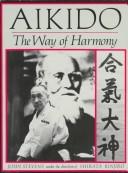
1984, John Stevens, Aikido: The Way of Harmony. The glossary: aiki 合気 (blending of ki) All elements of the universe arise through the blending of positive and negative ki; practitioners of Aikido attempt to harmonize their ki with both that of their partner and that of the larger environment [16]. Blending is the rendering the American literature has kept.
1984, Ueshiba Kisshōmaru, The Spirit of Aikidō. Aikido, which literally means the Way (do) of harmony (ai) with Ki, and the history of the name: 1922 Aiki-bujutsu, 1936 aiki-budō, February 1942 aikidō. On the word: His originality appears in the use of aiki as a specific term. There are scattered references in various budō transmissions to the idea of "matching" (ai) ki with the opponent in combat, but this was the first time for the compound itself to be used. There can also be found mention of aiki-jutsu, but this had a psychological connotation and was not an essential part of a martial art [5]. The claim that 1922 was the first use of the compound is an error: the compound stands in the 1889 typeset [9], in the title of 1892 [4], in the manuals of 1911 and 1920 [29][3], and in the manuscript [7]. His book of 1963 and his book of 2004 knew the older uses; this one, written for the art's history, forgot them.
1991, Stanley Pranin, The Aiki News Encyclopedia of Aikido. The first English reference work to enter the word on its own: AIKI. Blended, or matched ki. In aikido, refers to the concept of blending physically and mentally with the attacker. Used in DAITO-RYU AIKIJUJUTSU to refer to the perception and nullification of an opponent's attack. An old term used in various martial arts; and under the school, The Daito-ryu concept of aiki implies an early neutralization of the attack. The aikido version states that aiki was first added while Sokaku Takeda was instructing in Ayabe in 1922 at the suggestion of Onisaburo DEGUCHI … Entries from 1922 read Daito-ryu Aikijujutsu, the entries being those of Takeda's enrollment register, the 英名録 [43]. Pranin is the one English writer to give the Daitō-ryū's own sense, an attack perceived and undone early, beside aikido's blending, and to say plainly that the word is older than either; his 1922 rests on the school's register where the 世界大百科事典's rests on the scroll [1].
1993, Saotome Mitsugi, Aikido and the Harmony of Nature. In 1923, the Founder officially named his art Aiki Bujutsu. Aiki Bujutsu is the blending of spirit based on classical martial movement [34]. The year differs from Kisshōmaru's 1922.
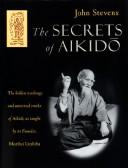
1995, John Stevens, The Secrets of Aikido. Aiki, the first half of the word Aikido, consists of the two Chinese characters ai, meaning "to come together, to blend, to join, to harmonize," and ki, a word with manifold meanings that include (as in this case) "spirit" and "disposition." Then Ueshiba's own widening, "My interpretation of aiki is much broader than those of the past," and the technical sense, Technically, aiki is "perfect timing." In the dojo one attempts to blend smoothly with the attacking force [17]. Perfect timing is the 1892 book's 先の先 and 後の先 [25], and Stevens is the only English writer to keep it beside the cosmology. His Three Budo Masters of the same year has Takeda throwing attackers through aiki, the subtle blending of positive and negative energy [44].
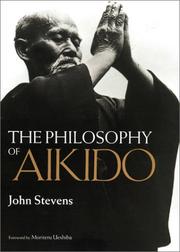
2001, John Stevens, The Philosophy of Aikido. The two kanji characters that comprise the word aiki are ai, meaning "to come together, to blend, to join" and ki, "life force, spirit, disposition" [45].
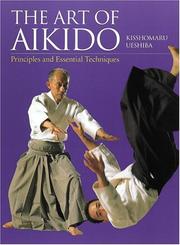
2004, Ueshiba Kisshōmaru, The Art of Aikido. When asked, "What is Aikido?" the Founder Morihei would reply, "The Way to harmonize heaven, earth, and humankind"; then a passage from Budo Hiketsu: Aiki no Jutsu, the 1892 book, The most marvelous thing in this world is the art of aiki. The art of aiki is a mystery, the secret to all the martial arts of this sacred land; and the 1916 primer's distinction, In kiai-jutsu the mind follows the power of the body, and the force is expressed externally; in aiki-jutsu the body follows the power of the mind, and the opponent is controlled internally [26]. Neither Japanese book is named, but both are quoted, and this is the one English book that sets the Meiji sense beside the founder's.
2007 and 2013, Ueshiba Morihei in John Stevens's translations. What I mean by the term aiki is fundamentally different from the way ancient martial artists understood it. They saw aiki as an effective martial technique. I see it as a function of love [46]; and the pun 愛気は合気, Aiki 愛気 is aiki 合気 (the spirit of harmony is the spirit of love), with the glossary's Aiki (to come together, to blend, to join, to harmonize) [47]. Linda Holiday's book of 2013 reports the founder saying although the name "aiki" has existed since ancient times, I decided to call my unique path "Aikido," because the words for "harmony" and for "love" are both pronounced "ai" [48]. The founder himself, in these sayings, knew the word was old and knew its old sense was a technique.
Today. JMdict has aiki (principle that allows a conditioned practitioner to negate or redirect an opponent's power), marked as a martial-arts term, and aikido for 合気道 with 合氣道 as a variant form [18]; Wiktionary's English entry for aikido gives the etymology lit. way of adapting the spirit, and has no entry for aiki [49]. The house title, Aiki, leaves the word untranslated; the reading given at the head of this page, the joining of ki, is what the two characters say word for word, and it is chosen because it is the one rendering true of all three senses: the schools' joined ki that must be broken, the Meiji fighter's joining that seizes the initiative, and Ueshiba's joining with the universe. A rendering must keep 気 as ki and not as energy, and must not choose among the three for the reader.
A reading
The word is older than the art and meant, for most of its life, the thing the art is named against. In the Edo sword schools 合氣 or 相氣 is the deadlock: two men whose ki have locked, cotton on cotton, stone on stone, each afraid to lose, and the whole teaching is 相氣ヲ外セ, get out of it. That is the sense a 北辰一刀流 scribe glossed アイキ, the sense the 一刀流 text scolds a generation of fencers for mistaking for the art, the sense a kendo manual still taught in 1920, and it is what Kisshōmaru reports from the old scrolls without recognizing it, don't be aiki-ed by the opponent. Fiction turned the sign around early: the Musashi yomihon makes 相氣の術 the secret that wins every bout, and a popular Musashi book of 1887 defined 合氣の術 by the two initiatives; five years later a Bukotsu Koji who claimed no teacher sold that very sentence for ten sen as the secret of the martial arts, with Sunzi for a motto and Kenshin and Napoleon for masters. So the Meiji technique sense entered print through fiction, not through a school, and the 1892 book is the bridge. Its sentence became Kumashiro's kiai-jutsu in 1911, the ninjutsu primer's aiki-jutsu in 1916 and the compendium's of 1920, and the primer's rule, mind first and body second, is the one Kisshōmaru translated in 2004. Beside the timing ran an occult strand: the novel of 1905 made the art a gaze that fixes a man and explained it by mesmerism, the compendium of 1920 made it the sensing of an attack before it comes and grounded it in the sympathy of heaven and man, and Harrison carried exactly that face into English in 1913, occult and silent, a decade before the art had its name, then in 1955, when the art had a name, set a second reading beside it without withdrawing the first: the accumulated force, unity of thought and action. When Takeda Sōkaku and then Ueshiba put the word into a name in the 1920s they took the technique sense, the popular one, not the schools'; and Ueshiba, who said in his own voice that the old martial artists saw aiki as an effective martial technique, added the third sense on top of it, the joining of one's ki with the universe, which the English literature has rendered harmony and blending ever since; Pranin, in 1991, is the one English writer who gives the Daitō-ryū's own sense beside it and says plainly that the word is old. Kisshōmaru's sentence of 1984, that 1922 was the first time the compound was used, is wrong by ninety years of print and by a manuscript, and his own books of 1963 and 2004 are the better witnesses. What the two characters carry, then, is a word with three faces, and the faces are in order of age: the match that must be broken, the timing that wins before contact, with the novels' paralyzing gaze riding on it, and the joining that Ueshiba meant. A reader who takes the word for harmony alone has the youngest of them. The reading is aiki, and there is nothing in the text to ask a native reader.
Notes
- The 柳生流新祕抄 typeset prints 相氣を闘く; the sense wants 開く or 外す. The page prints the typeset's character.
- The 北辰一刀流 manuscript writes 旁下 for the verb hazusu in 相氣ヲ旁下子ハ and 相氣ヲ旁下テ; the page prints the scribe's characters and translates the verb.
- Kumashiro's leaf of 1911 prints 氣合術又氣合術ともいふ where the second word should be 合氣術.
- The 1889 miscellany's editor, 坂似水, is a name only; its preface is dated 13 November 1889 and names 寺田翁 and 白井先生.
- The year of the renaming to 合気道 is 1942 in the 世界大百科事典, マイペディア and Kisshōmaru, and 1944 in the 日本人名大辞典 and ニッポニカ; the year Ueshiba proclaimed Aiki-bujutsu is 1922 in Kisshōmaru and 1923 in Saotome.
- Ratti and Westbrook's quotation of Harrison's seven-hundred-year school is from the edition of 1955, page 79, and is not in the edition of 1913; the copy of Ratti and Westbrook held prints "Wo" where Harrison prints "Budo" and art where he prints arm.
- The 1905 novel prints 『人身錫氣』 with the rubi じんしんせふき where the sense, beside 動物電氣, wants 磁氣, magnetism; the page prints the leaf and translates the sense.
- A text of the 起倒流 dated 1764, 『燈下問答』, has been said to use 相氣 in the sword schools' sense. The manuscript copy in the Kanō collection of Tōhoku University, a copy of 1848 of a text dated 寶暦十四年四月 at its close, does not contain the word in any spelling, though it teaches 先ノ先 and 後ノ先; the copy at Nippon Sport Science University is the same recension [50].
- Kenkyūsha's fourth edition defines aikidō as an art of self-defense derived from judo; the record above shows the art's name descending from the Daitō-ryū and the Meiji kiai literature, not from jūdō.
Sources not seen
〈合気柔術秘伝奥儀之事〉, the scroll given by Takeda Sōkaku to Ueshiba Morihei in 1922, reported by the 世界大百科事典 as the earliest appearance of the word in the Daitō-ryū's own materials; a private document. It would settle what the scroll itself writes and how the word is used in it.
植芝吉祥丸『合気道』, 光和堂, Tokyo, 1957, and 『合気道開祖植芝盛平伝』, 講談社, Tokyo, 1977, the two Japanese books from which the English naming histories descend; held by the National Diet Library and served to readers in Japan only. They would settle the Japanese wording behind the 1922, 1936 and 1942 dates.
《槍剣事理問答》, the second of the two Edo transmissions in which the 世界大百科事典 finds the word [1]; no digitized copy is known to the author, and a modern anthology, 渡辺一郎編『武道伝書聚英』, 筑波大学体育科学系, 1981, is reported by a library catalogue to reprint it, in print only. It would settle the text's own sentence and its date, which may stand before the survey of about 1790.
池月映『会津の武田惣角:ヤマト流合気柔術三代記』, 本の森, 会津若松, 2004; 『合気の発見:会津秘伝武田惣角の奇跡』, 2009; 『合気の創始者武田惣角』, 2012; in print only. They would settle what the Aizu sources make of the word in Takeda's line before 1922, where this page has only the encyclopedia's one sentence [1].
A reader with access to any of these is invited to write to Takase Studios at Tim@Takase.com.
References
- 「合気道」, 改訂新版 世界大百科事典 (志々田文明), デジタル大辞泉, 精選版 日本国語大辞典, 日本大百科全書(ニッポニカ), マイペディア, ブリタニカ国際大百科事典, and 「植芝盛平」, 日本人名大辞典, at kotobank. https://kotobank.jp/word/合気道
- 「合気」 at kotobank, which carries no dictionary entry for the word and only the 世界大百科事典's mention of it under 合気道. https://kotobank.jp/word/合気
- 折原佐助編『劍道練習基本書』家庭衛生新聞社, 1920, pp. 48–49. National Diet Library pid 962070, scan 49. https://dl.ndl.go.jp/pid/962070/1/49
- 武骨居士『武道秘訣 合氣之術』林平次郎, Tokyo, 1892, the preface at scans 3 to 6, 第一章 at scans 7 to 13 with the definition at scan 11 (p. 8) and the author's account of his teacher at scan 9 (p. 4), the fourth and fifth chapters opening at scans 29 and 36, the colophon at scan 42. National Diet Library pid 859828. https://dl.ndl.go.jp/pid/859828/1/7
- Kisshomaru Ueshiba, The Spirit of Aikidō, translated by Taitetsu Unno, Kodansha International, Tokyo, 1984, pp. 15 and 96–99.
- 「気合」, デジタル大辞泉 and 精選版 日本国語大辞典, at kotobank. https://kotobank.jp/word/気合
- 『北辰一刀流十二個条訳』, manuscript, undated, 松風之事. National Diet Library pid 2538953, scan 9. https://dl.ndl.go.jp/pid/2538953/1/9
- 雨柳子『粂の平內』敬文館, 1905, pp. 76–77 and 238–239. National Diet Library pid 886152, scans 43, 62 and 124. https://dl.ndl.go.jp/pid/886152/1/43
- 坂似水編『劍法遺傳』瀧澤市太郎, 1889, 一刀流韜袍起源. National Diet Library pid 859944, scan 14. https://dl.ndl.go.jp/pid/859944/1/14
- Jukichi Inouye, Inouye's Japanese-English Dictionary, Sanseido, Tokyo, 1909, p. 14. Internet Archive inouyesjapanesee00inou. https://archive.org/details/inouyesjapanesee00inou
- Takenobu Yoshitarō, Kenkyusha's New Japanese-English Dictionary, American edition, Harvard University Press, Cambridge, 1942, p. 12.
- Kō Masuda, editor, Kenkyusha's New Japanese-English Dictionary, fourth edition, Kenkyusha, Tokyo, 1974, p. 9.
- E. J. Harrison, The Fighting Spirit of Japan and Other Studies, T. Fisher Unwin, London, 1913, pp. 122, 132, 139 and 159. Internet Archive india.history.resource.91404. https://archive.org/details/india.history.resource.91404
- Oscar Ratti and Adele Westbrook, Secrets of the Samurai: A Survey of the Martial Arts of Feudal Japan, Charles E. Tuttle, Rutland, 1973, the section "The Schools of Aikijutsu". Internet Archive secretsofsamurai0000ratt_w1w0. https://archive.org/details/secretsofsamurai0000ratt_w1w0
- Kisshomaru Ueshiba, Aikido, translated by Kazuaki Tanahashi and Roy Maurer Jr., Hozansha, Tokyo, 1963, in the printing of 1974, pp. 14–15 and 155. Internet Archive aikido0000uesh_y8q6. https://archive.org/details/aikido0000uesh_y8q6
- John Stevens, under the direction of Rinjiro Shirata, Aikido: The Way of Harmony, Shambhala, Boston, 1984, pp. 5 and 195–196. Internet Archive aikidowayofharmo0000stev. https://archive.org/details/aikidowayofharmo0000stev
- John Stevens, The Secrets of Aikido, Shambhala, Boston, 1995, pp. 4–8. Internet Archive secretsofaikido0000stev. https://archive.org/details/secretsofaikido0000stev
- JMdict, 「合気」 and 「合気道」, at Weblio 英和・和英辞典. https://ejje.weblio.jp/content/合気
- 三上元龍『擊劒叢談』(1790), in 国書刊行会編『武術叢書』, 1915, pp. 170–171. National Diet Library pid 945805, scan 95. https://dl.ndl.go.jp/pid/945805/1/95
- 松浦静山『常靜子劍談』, in 国書刊行会編『武術叢書』, 1915, pp. 388–389. National Diet Library pid 945805, scan 204. https://dl.ndl.go.jp/pid/945805/1/204
- 『柳生流新祕抄』, in 国書刊行会編『武術叢書』, 1915. National Diet Library pid 945805, scan 162. https://dl.ndl.go.jp/pid/945805/1/162
- 『繪本二島英勇記』, in 三田村鳶魚校『仇討小説集』博文館, 1929, pp. 196–197. National Diet Library pid 1181374, scan 108. https://dl.ndl.go.jp/pid/1181374/1/108
- 坂似水編『劍法遺傳』, 1889, the 義經 passage at scan 11 and the 跋 at scan 27. National Diet Library pid 859944. https://dl.ndl.go.jp/pid/859944/1/11
- 『絵本英雄美談 佐々木岸柳宮本武蔵』, 1887–1888, p. 206. National Diet Library pid 880039, scan 106; the printing of 1888, pid 880041, scan 98. https://dl.ndl.go.jp/pid/880039/1/106
- 無名氏『武道秘訣 合氣之術』藍外堂, Tokyo, 1900, 第一章 at scan 8, 第二章 at scan 15, the author's account of his teacher at scan 10, the colophon at scan 44. National Diet Library pid 859829. https://dl.ndl.go.jp/pid/859829/1/8
- Kisshomaru Ueshiba, The Art of Aikido: Principles and Essential Techniques, translated by John Stevens, Kodansha International, Tokyo, 2004, pp. 21, 66 and 69–70.
- 柳下亭種員『白縫譚』, typeset of 1900. National Diet Library pid 1882615, scan 67. https://dl.ndl.go.jp/pid/1882615/1/67
- 江見水蔭『地底探検記』, 1907. National Diet Library pid 770106, scan 60. https://dl.ndl.go.jp/pid/770106/1/60
- 熊代彦太郎『氣合術 殺活自在』東亜堂, 1911, pp. 4–5. National Diet Library pid 859889, scan 10. https://dl.ndl.go.jp/pid/859889/1/10
- 『飯山史』飯山町, 1913, pp. 126–127. National Diet Library pid 949999, scan 73. https://dl.ndl.go.jp/pid/949999/1/73
- 上田万年・松井簡治『大日本國語辭典』卷一, 1915, pp. 98–99. National Diet Library pid 954645, scan 62. https://dl.ndl.go.jp/pid/954645/1/62
- 武揚軒健齋『忍術氣合術秘傳 即席活用』, 1916, pp. 38–39. National Diet Library pid 913519, scan 32. https://dl.ndl.go.jp/pid/913519/1/32
- 日本武士道研究会編『日本武術大全』日進堂, 1920, pp. 126–129. National Diet Library pid 909222, scans 69 and 70. https://dl.ndl.go.jp/pid/909222/1/69
- Mitsugi Saotome, Aikido and the Harmony of Nature, Shambhala, Boston, 1993, the account of the Founder's life that opens the book.
- 宮内省監修『昭和天覽試合』大日本雄辯會講談社, 1934, pp. 754 and 843. National Diet Library pid 1232699, scans 408 and 452. https://dl.ndl.go.jp/pid/1232699/1/452
- 『大本教事件の全貌 附・第一次検挙の予審調書』大阪毎日新聞社, 1935. National Diet Library pid 1096040, scan 25. https://dl.ndl.go.jp/pid/1096040/1/25
- 司法省調査課『報告書』第八, 1937, 第六項 大日本武道宣揚會. National Diet Library pid 1886676, scan 73. https://dl.ndl.go.jp/pid/1886676/1/73
- 日本同盟通信社『光輝近畿大観 皇紀2600年記念誌』, 1939, p. 123. National Diet Library pid 1030146, scan 381. https://dl.ndl.go.jp/pid/1030146/1/381
- 『建国大学要覧』, 1941. National Diet Library pid 1276998, scan 28. https://dl.ndl.go.jp/pid/1276998/1/28
- 『陸海軍軍事年鑑』, 1943. National Diet Library pid 1451423, scan 464. https://dl.ndl.go.jp/pid/1451423/1/464
- 国立国会図書館 次世代デジタルライブラリー, full-text search over the library's digitized public-domain books, on the spellings 合気, 合気之術, 合気術, 合気の術, 合気柔術, 合気武道, 合気道, 相気, 気合術, 大東流, 植芝盛平, 武田惣角 and their kin, with the titles of every hit read. https://lab.ndl.go.jp/dl/
- E. J. Harrison, The Fighting Spirit of Japan: The Esoteric Study of the Martial Arts and Way of Life in Japan, W. Foulsham, London, 1955, pp. 78–79 and 103. Internet Archive fightingspiritof0000harr, a lending copy. https://archive.org/details/fightingspiritof0000harr
- Stanley A. Pranin, The Aiki News Encyclopedia of Aikido, Aiki News, Tokyo, 1991, pp. 4 and 19. Internet Archive the-aiki-news-encyclopedia-of-aikido. https://archive.org/details/the-aiki-news-encyclopedia-of-aikido
- John Stevens, Three Budo Masters: Jigaro Kano (Judo), Gichin Funakoshi (Karate), Morihei Ueshiba (Aikido), Kodansha International, Tokyo, 1995, p. 103. Internet Archive threebudomasters0000stev. https://archive.org/details/threebudomasters0000stev
- John Stevens, The Philosophy of Aikido, Kodansha International, Tokyo, 2001, p. 29. Internet Archive philosophyofaiki0000stev. https://archive.org/details/philosophyofaiki0000stev
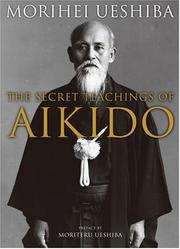
- Morihei Ueshiba, The Secret Teachings of Aikido, translated by John Stevens, Kodansha International, Tokyo, 2007, p. 34. Internet Archive secretteachingso0000uesh. https://archive.org/details/secretteachingso0000uesh
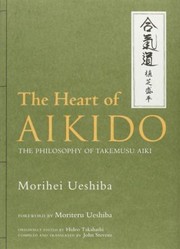
- Morihei Ueshiba, The Heart of Aikido: The Philosophy of Takemusu Aiki, translated by John Stevens, Kodansha International, Tokyo, 2010, in the Kodansha USA printing of 2013, pp. 11 and 125. Internet Archive heartofaikidophi0000unse. https://archive.org/details/heartofaikidophi0000unse
- Linda Holiday, Journey to the Heart of Aikido: The Teachings of Motomichi Anno Sensei, Blue Snake Books, Berkeley, 2013, p. 65. Internet Archive journeytoheartof0000holi. https://archive.org/details/journeytoheartof0000holi
- "aikido", Wiktionary, the English entry. https://en.wiktionary.org/wiki/aikido
- 『(起倒流)燈下問答』, manuscript, a copy of 1848 (弘化5) of a text dated 寶暦十四年四月 (1764) at its close, 東北大学附属図書館 狩野文庫 狩10-24212-1; the copy at 日本体育大学 民和文庫 is the same recension. 国文学研究資料館 国書データベース, DOI 10.20730/100331954 and 10.20730/100338130. https://doi.org/10.20730/100331954
Books Cited
Books this article cites that can be ordered today.