

石の上にも三年 · ishi no ue ni mo sannen · Three years, even on a stone
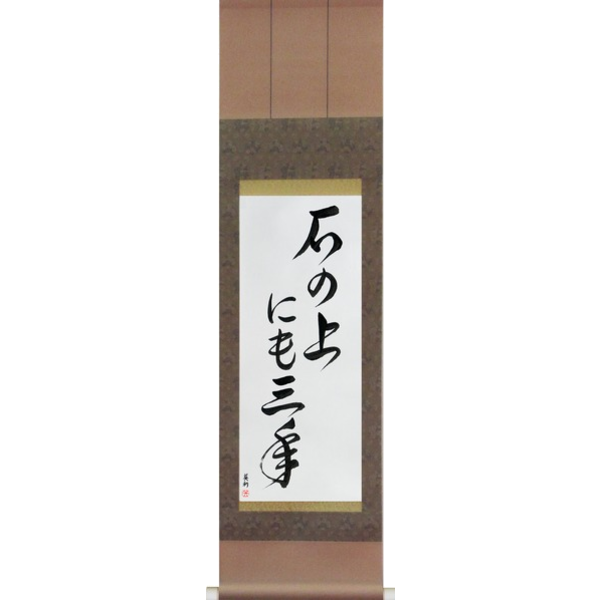
Sold as On a stone for three years · Read ishi no ue ni mo sannen · Oldest witness the first printed proverb collection, 1638, as the dictionaries report it; the first dated sentence is 西鶴's, 1694, opening a chapter of advice to tradesmen · Sense sit long enough even on a cold stone and it warms: endurance is repaid.
The words
石の上, ishi no ue, is on a stone, a rock rather than a paving stone; the one Edo picture of the proverb puts its hero on a garden boulder. にも is even on, and the も is the proverb's concession. 三年, sannen, three years, which the ことわざを知る辞典 reads not as a count but as the symbolic span in which one settles into a new place or work. The proverb once had a second half: 石の上にも三年居れば温まる, sit three years even on a stone and it warms, where 居る means to sit. The dictionary dates the shortening to the late seventeenth century, and warns that without the verb many now hear the proverb as stay long enough and you get used to it, which is not what the stone said. The house page's grows warm quietly restores the dropped half.
A history, from the earliest witness
1638. 毛吹草, 松江重頼's haikai handbook, the list of sayings. The 精選版日本国語大辞典's first witness. Its wording was not seen: the 1662 printing was opened at the head of the proverb section and read in strips without finding the line, and no transcribed copy answers a full-text search. A collection of 1901 gives the early form as 石の上にも三年すめばあたたまる and hangs 毛吹草 on it. [reported; the 1901 collection, 皇国俚諺叢, National Diet Library pid 767884, scan 23, by eye; text at lab.ndl.go.jp/dl/api/page/767884_23]
1694. 井原西鶴, 西鶴織留, book four, the first sentence of the first chapter. 商人職人によらず住なれたる所を替る事なかれ、石の上にも三年と俗云に傳へし, whether merchant or craftsman, do not change the place you have grown used to; "three years even on a stone," as the common saying has it. Two things are on the leaf that the dictionaries flatten: 西鶴 quotes the short form, six characters and no verb, and he marks it 俗云 with the reading ぞくげん, a saying in the mouth of the people. The proverb was already a proverb in 1694, and already short. [2]
1718. やふにまくは, a book of the floating world. 石の上にも三年居れやぬくもる, sit three years even on a stone and it warms, with the verb still on. [3]
The eighteenth century. A 気質物, a character-sketch book. 石の上にも三年居れば煖まるといひならはせし世話も、今は人の氣も短く, the old saying that three years' sitting warms even a stone; but people's tempers are short now. The verb kept, and already a complaint that the proverb no longer holds. [10]
1791. 石上三之助辛抱, a comic book by 樹下石上. The proverb taken literally for a laugh: a young man sits cross-legged on a rock with a meal tray and a kettle beside him, and いしのうへにも三年といふ事がたいくつなあれは, since three years on a stone is tedious, what tires him is climbing up and down. [6]
1828. 十返舎一九, 有喜世諺草. 石の上にも三年 … 辛抱, the proverb glossed with the word for endurance. [pid 10300971, koma 6, OCR]
About 1844. A manuscript miscellany, the item 達磨の辨. 石の上にも三年といへ共九年面壁の達磨あり (the OCR layer reads 九季雨壁の達二; read as 九年面壁の達磨), three years on a stone, they say, but there was Bodhidharma, nine years facing a wall, and ten years for a courtesan to become a wife: three, nine, ten, all long enough to know sweet from sour. A joke setting two famous sittings side by side. [8]
1910. 藤井乙男, 諺語大辞典. 【石ノ上ニモ三年】忍耐の德に譬ふ, a figure for the virtue of endurance, with 西鶴's sentence and the 気質物's, and no source; 茨の中にも三年の辛抱, three years' endurance even among thorns, entered as its twin. [10]
1933. 中野吉平, 俚諺大辞典. The one dictionary to read the warmth as between people: 石の如き冷かなる所にも三年辛抱すれば、相互の思情溫りて深くなる, endure three years even in a place cold as stone and the feeling between you warms and deepens; its twin entry adds 姑嫁の間も, between a mother-in-law and a bride too. [pid 1766149, scan 39 and scan 47, by eye and OCR; text at lab.ndl.go.jp/dl/api/page/1766149_39]
Today. The 日国: たとえつらくてもしんぼう強くがんばれば、やがて報われるということ, however hard, endure and you will be repaid in time, with 毛吹草 as first witness and 西鶴 as first quotation. The ことわざを知る辞典 restores the verb, dates the shortening, and records the use the 1933 reading comes from: a go-between quoting it to a new wife who wants to go home. [kotobank.jp/word/石の上にも三年-431901; text]
The sense across time
One sense from 1694 to today: endurance is repaid. What moved is the image. With the verb, the stone warms and the sitter is rewarded; without it, from the late seventeenth century on, the six characters name only the sitting, and the reward has to be supplied by the hearer. 西鶴's use is advice to tradesmen not to move shop, the stone a place of business and the three years the time for custom to warm; the 1933 dictionary's use is the go-between's, the stone a cold household; the modern ear, the ことわざを知る辞典 says, often hears only get used to it. The page's grows warm keeps the older image.
What is not a source
The web, and Japanese Wikipedia, attach an Indian monk, Pārśva, 脇尊者, said to have left home at eighty and sat three years on a stone until enlightened. The encyclopedia entry for the monk has the vow and the three years and no stone and no sitting: he vowed not to lay his side down until he understood, hence his name. Nothing opened before this century ties him to the proverb, and Wikipedia's own sources are a temple newsletter and a 2023 magazine piece. What Edo did tie to it is Bodhidharma's nine years at the wall, as a joke about two long sittings, in the 1844 manuscript, a 1914 book of comic proverb glosses and two almanacs; a pairing, not a source. No source opened claims a Chinese origin; the image is domestic, a cold stone and a patient sitter. [kotobank.jp/word/脇尊者-52865; text]
The text in English
None of twenty bilingual dictionaries from Hepburn 1872 to 1948 carries the proverb, where the same shelf has 塵も積もれば from 1872. The English is postwar. 2004. Edward Trimnell, Tigers, Devils, and Fools, Beechmont Crest, page 60. Three years upon a stone. Not many people would have the patience to spend three years sitting on a stone. [It] is said to encourage patience and perseverance. The six characters as they stand, verb dropped. [the text layer; a printed book] Not in Buchanan (1965), Galef (1987, 2000) or Zona (1996). Today. JMdict: perseverance prevails; three years on a (cold) stone (will make the stone warm), the Edo verb restored in parentheses. 研究社: Perseverance will win in the end. The house title, On a stone for three years, is the six characters as they stand, and a reader who does not know the proverb gets a fragment, which is also what a Japanese reader of the short form gets; the page's explanation supplies the warming. What a rendering must keep is the stone, the sitting and the warmth.
A reading
The design, the romaji and the page's gloss are sound, and the page's grows warm carries the half the proverb dropped three centuries ago, which is right. What the page lacks is the sentence it could stand on: 西鶴, 1694, do not change the place you have grown used to, which turns a motto into a piece of advice with a date and a speaker, and which the buyer of a scroll for a new shop or a new post would like to know. The Indian monk is a modern web gloss with no witness and no stone in his own legend; the pairing with Bodhidharma is an Edo joke and should not be told as a source. The one open textual question is the 1638 verb, 居れば or すめば, and it waits on the leaf. Signed, 典, 2026-09-05.
How this was read
By eye: 西鶴's leaf, re-read on the day of writing; 藤井's 1910 entry; the 1901 collection; the 1933 dictionary's main entry; the 1791 picture and the 1844 heading; the 1914 and 1929 leaves. By text at the address: the kotobank entry with its three dictionaries, and the entry for the monk; the nine leaves above at the National Diet Library's page API; the Edo witnesses of 1718 to 1861 and eleven Meiji and Shōwa dictionaries by OCR; twenty bilingual dictionaries by OCR; the four English proverb books in their text layers; the 1662 毛吹草 at the National Institute of Japanese Literature, in strips, without finding the line. Not opened: the 1638 line at its leaf; the 気質物 the dictionaries quote; the Edo witnesses after 1694 beyond their OCR; the 傳燈錄's entry for the monk. Every address in this history is a text address except Trimnell's page, which a reader checks by holding the book. The full apparatus, with every address, is in the account.
References
- 毛吹草 巻二 世話 (重頼 編) (1638) — reported; the 1662 printing opened at the head of the 世話 section, line not found
- 西鶴織留 巻四 一 家主殿の鼻ばしら (西鶴 作, 団水 編) (1694) — pid 2554438 koma 3, by eye ↩
- やふにまくは 巻二 (1718) — pid 2568480 koma 14, by OCR ↩
- the 気質物 藤井 and 中野 cite as 小性気質 巻三 (18th c.) — 藤井 1910 by eye; the book not identified this session
- 珍術罌粟散國 (1776) — the lab, by OCR
- 石上三之助辛抱 (樹下石上 作) (1791) — pid 9892703 koma 19, leaf by eye, text by OCR ↩
- 有喜世諺草 (十返舎一九) (1828) — pid 10300970 koma 6, by OCR
- 麗斎叢書 35, item 達磨の辨 (manuscript) (c. 1844) — pid 2577191 koma 25, heading by eye, body by OCR ↩
- 桜荘子後日文談 (河竹新七) (1861) — pid 2592654, by OCR
- 諺語大辞典 (1910) — pid 862766 scans 45 (by eye), 70 ↩
- The catalogue and both live pages (2026) — cultural_works.csv:359