

明日は明日の風が吹く · ashita wa ashita no kaze ga fuku · Tomorrow, tomorrow's wind will blow
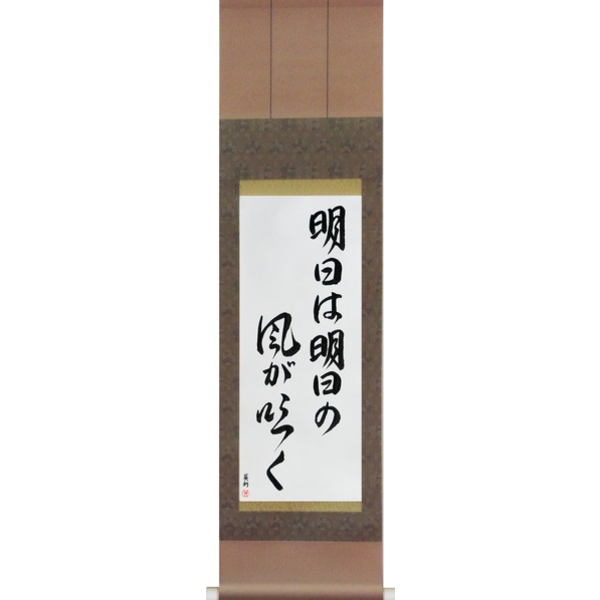
Sold as Tomorrow Is Another Day · Read ashita wa ashita no kaze ga fuku, or asu wa asu no kaze ga fuku, both old · Oldest witness a novel of the pleasure quarter, 1784, in a young rake's mouth, eighty years before the dictionaries' first citation · Sense do not borrow tomorrow's trouble; tomorrow will have its own weather.
The words
明日 is tomorrow, read あす in the 1784 witness and あした in the 1865 one; あす is the older and more literary reading, あした the spoken one, and the house page's note that both are seen is right, though the one it calls the alternative is the older. は … の doubles the topic, as for tomorrow, tomorrow's, which is the proverb's shape and the shape of its kin, 明日は明日、今日は今日. 風, kaze, is the wind, and in this family the wind is fortune, the way things blow; a wife in an 1865 play makes the figure explicit by answering the proverb with a better wind may come too. 吹く, fuku, blows; the 1784 form ふかふ is the Edo spoken future. Half the witnesses carry a 又, again: 明日は又明日の風が吹く, tomorrow another wind will blow, and it is in the oldest.
A history, from the earliest witness
1784. 月亭可笑, 角鶏卵, a novel of the 内藤新宿 quarter. A young man, 粂, has forged his father's seal on a promissory note and cannot pay. Asked what he will do: どふのこふのと此ひどい中から仕かたはねへが、又あすはあすの風がふかふはさ (the OCR reads ねへか; the が is the eye's), nothing to be done in such a mess, but tomorrow another wind will blow, and he worries only about the morning's scolding. The line is already a saying in his mouth, unexplained, so the proverb is older than the book; nothing earlier was found under twelve spellings. [1][1]
1865. 河竹黙阿弥, 上総綿小紋単地, act six. The 精選版日本国語大辞典's first citation, and the finest scene the proverb has. 市兵衛 and お賤 are counting their last coins in a basket, a 笊; the pawnshop is exhausted; a worn under-kimono is to be carried to the lender. 市兵「まあ、差掛つて今夜の所を、明日は明日の風が吹けば。 お賤「ほんにさうでござんす、一寸延びれば尋とやら、又よい風もござんせう, "Well, for tonight, at a pinch; tomorrow's wind blows tomorrow." "True; an inch stretched becomes a fathom, they say, and a good wind may come too." The reading あした is printed beside the word. [2]
1889 to 1908. The novelists. 宇田川文海: 出來たことなら仕方がない明日は明日の風が吹くだらう; 広津柳浪, 1898, a carter over his cup: 酒でも明日は又明日の風か吹くぺいから; 村上浪六, 1908: また明日は明日の風が吹くよ、實は一日、飮まず食ずだからね. The proverb in the mouths of people with nothing. [pids 888015 scan 76, 885753 scan 81, 887793 scan 50; OCR; text at lab.ndl.go.jp/dl/api/page/
1893 to 1934. The dictionaries. 古今俚諺類聚 (1893) and its successors list it; 皇国俚諺叢 (1901) prints 又あすはあすの神がまもる, tomorrow's god keeps tomorrow, as its second half; 藤井乙男's 諺語大辞典 (1910): 【明日ハ又明日ノ風ガ吹ク】明日の事は明日の運命に委せて、安んずべし, leave tomorrow's business to tomorrow's fate and be at ease, with no source; 大日本国語辞典 (1915): 未來の事は、その時の運命に任せて、取越苦勞をすべからず, do not borrow trouble; 言泉 (1922) adds the practical note that when the time comes there will be some expedient; 俚諺大辞典 (1933) calls it the same proverb as 明日は明日の神が守る. [6][8]
1920 to 1938. The readers. 北原白秋 uses it for what a sparrow is not: 明日は明日の風が吹くと云ふやうな自棄くそなボヘミヤンの心, the reckless bohemian heart. 権田保之助 (1922) reads the Edo craftsman who kept no money overnight by it. 円朝, in a story told in the 1880s and printed in 1927, gives it to the same townsman: 明日は明日の風が吹かア、男は裸體百貫. The 高島易断 almanacs of 1921 and 1930 hand it out as a month's fortune. 杉山平助 (1938) hears in it a Chinese patience he calls sullen. [pids 962907 koma 49, 971732 koma 48, 1882523 koma 169, 2535561 koma 11, 1268079 koma 32; OCR; text at lab.ndl.go.jp/dl/api/page/
1958. A film and a song. 井上梅次's film 明日は明日の風が吹く, with 石原裕次郎, and 裕次郎's song of the same name: the proverb as a title. [kotobank.jp/word/明日は明日の風が吹く-424516, the 大辞泉プラス entry; text]
Today. デジタル大辞泉: 明日はまた、別の成り行きになるので、くよくよするな、の意, tomorrow will turn out otherwise, so do not fret. The ことわざを知る辞典 quotes 石牟礼道子 in 1974, 明日は明日の風の吹く、と思うてばかり暮らしよりました, and gives the English Tomorrow is another day. [the same address]
The sense across time
One sense, with two faces. The dictionaries from 1910 to today read it as a rule against 取越苦労, borrowing tomorrow's trouble, and 藤井's gloss adds be at ease. The readers split it: in the rake of 1784, the carter of 1898 and 白秋's bohemian it is let it blow, a shrug; in お賤's answer of 1865 and 言泉's note it is a better wind may come, a hope. The older shape with 又, another wind, leans to the second. The proverb has never been fatalism in the dictionaries; it has sometimes been fatalism in the mouth.
What is not a source
No dictionary names a source, and the honest state is that none is known: 藤井 gives none, the 日国 gives a usage. The kin the dictionaries set beside it are pairings: 明日は明日の神が守る; 明日の事は明日案じよ, worry about tomorrow tomorrow, which the 1915 and 1933 dictionaries pair with the Tang poet 羅隱's couplet 今朝有酒今朝醉、明日愁來明日愁; and the Chinese 船到橋頭自然直, the boat straightens itself when it reaches the bridge, which two readers of 1925 set beside it. And a legend, named as one: that the proverb comes from the Japanese Gone with the Wind, where Scarlett's last line, After all, tomorrow is another day, is rendered 明日は明日の風が吹く. The rendering is real and everywhere repeated, unattributed; the proverb is a century and a half older than the film, so the translator borrowed it, not the reverse.
The text in English
No bilingual dictionary from Hepburn 1872 to the Standard of 1946 renders the proverb; the Meiji dictionaries have another day only for 後日 and 他日. The English equations are postwar: Tomorrow is another day (英語ことわざ教訓辞典, ことわざを知る辞典), Tomorrow will take care of itself (プログレッシブ和英, JMdict), and JMdict's literal, tomorrow, the winds of tomorrow will blow. No English proverb book on the shelf carries it. The house title takes the film's line, and it is the equation every modern dictionary gives; the page's explanation gives the literal, which is fair. What a rendering must keep is the wind, because the wife's answer depends on it.
A reading
The design and the romaji are sound, and the literal in the explanation is right. The page is thin: one sentence, no source, and a title borrowed from an American film whose Japanese translator borrowed it from this proverb. What the sources give is better: a 1784 line in a young rake's mouth, and an 1865 exchange between a husband and wife over their last coins in which the wife's answer, a good wind may come too, is better than the proverb. The page should carry the 1865 exchange and say that the English equation is postwar and that the film only lent the proverb its fame. My own reading: the proverb has two faces, the townsman's let it blow and the housewife's a better wind may come, and the scroll can be either; the older shape with 又 leans to the second. Signed, 典, 2026-09-05.
How this was read
By eye: the 1784 leaf and the 1926 黙阿弥 leaf, both re-read on the day of writing; 藤井's 1910 entry; the 1915 and 1933 dictionaries. By text at the address: the kotobank entry with its four dictionaries; the six leaves above at the National Diet Library's page API; the novelists, the readers, eleven Meiji and Shōwa proverb dictionaries, the two 1925 Chinese pairings and the bilingual shelf by OCR; JMdict and Weblio. Not opened: the 1865 play in its own print; 羅隱's poem and the 恒言録 at the line; the Japanese Gone with the Wind at its last page and the film's subtitles, so the rendering stands as reported; 石牟礼 at the page; the 1958 film. Every address in this history is a text address. The full apparatus, with every address, is in the account.
References
- 角鶏卵 (月亭可笑; a 洒落本 of 内藤新宿); the same text bound in 傾城買談三部集 下 (天明4 = 1784) — pid 2534171 koma 24, by eye; pid 8942812 the same; 1916 typeset pid 1884152 ↩
- 上総綿小紋単地 (河竹黙阿弥), act 6 (1865) — 黙阿弥全集 21 (1926) pid 1884536 koma 428, by eye; the 日国's 初出 ↩
- 貧福 (宇田川文海) (1889) — by OCR
- 古今俚諺類聚 · 通俗世界節用 · 皇国俚諺叢 · 俗諺辞林 · 俚諺辞典 (1893–1906) — by OCR
- 俗諺論 (藤井) · 諺語大辞典 (藤井) (1906, 1910) — 1910 by eye, no source
- 大日本国語辞典 (1915) — pid 954645 koma 44, by eye ↩
- 俗諺集解 北京官話 · 日華大字典 (1925) — by OCR
- 俚諺大辞典 (中野吉平) (1933) — pid 1453041 canvas 10, by eye ↩
- 広辞林 (1934) — by OCR
- The 1958 film and song (石原裕次郎, 井上梅次) (1958) — 大辞泉プラス
- The catalogue and both live pages (2026) — cultural_works.csv:364