
II. THE DEVELOPMENT OF JAPANESE BUDDHISM
Japanese Buddhism belongs to the Mahayana school, and as it has developed in this country for more than one thousand years entirely independently of Hinayana influence, it presents in various ways quite a different form of Buddhism from that persisting in Ceylon, Siam, and Burma.
1. Buddhism was officially introduced to Japan from Tyōsen (Korea) in 552 A. D., when the King of Kudara presented to the Emperor Kinmei a bronze image of Sakyamuni together with sutras and religious implements. But it is possible that some of the immigrants from the Continent who had settled prior to the above date were Buddhists, and that their religion was making quiet progress among the people. The Emperor Kinmei was not quite sure as to what kind of reception he would accord to the new faith, for his court officials were divided into two factions. A struggle for supremacy went on for some time, but the Buddhist party finally won the day.
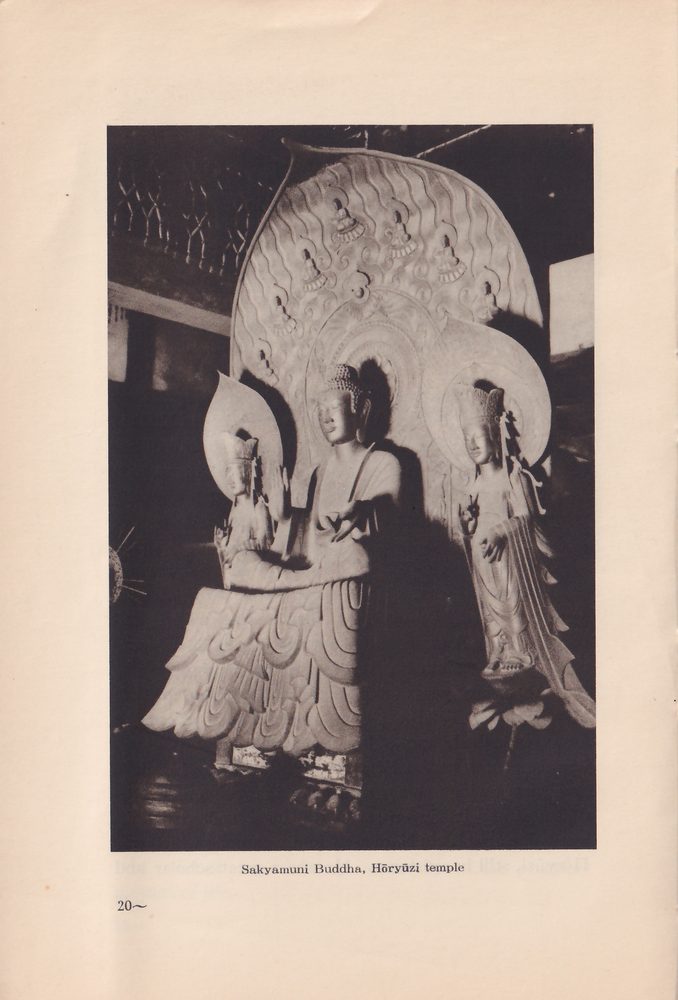
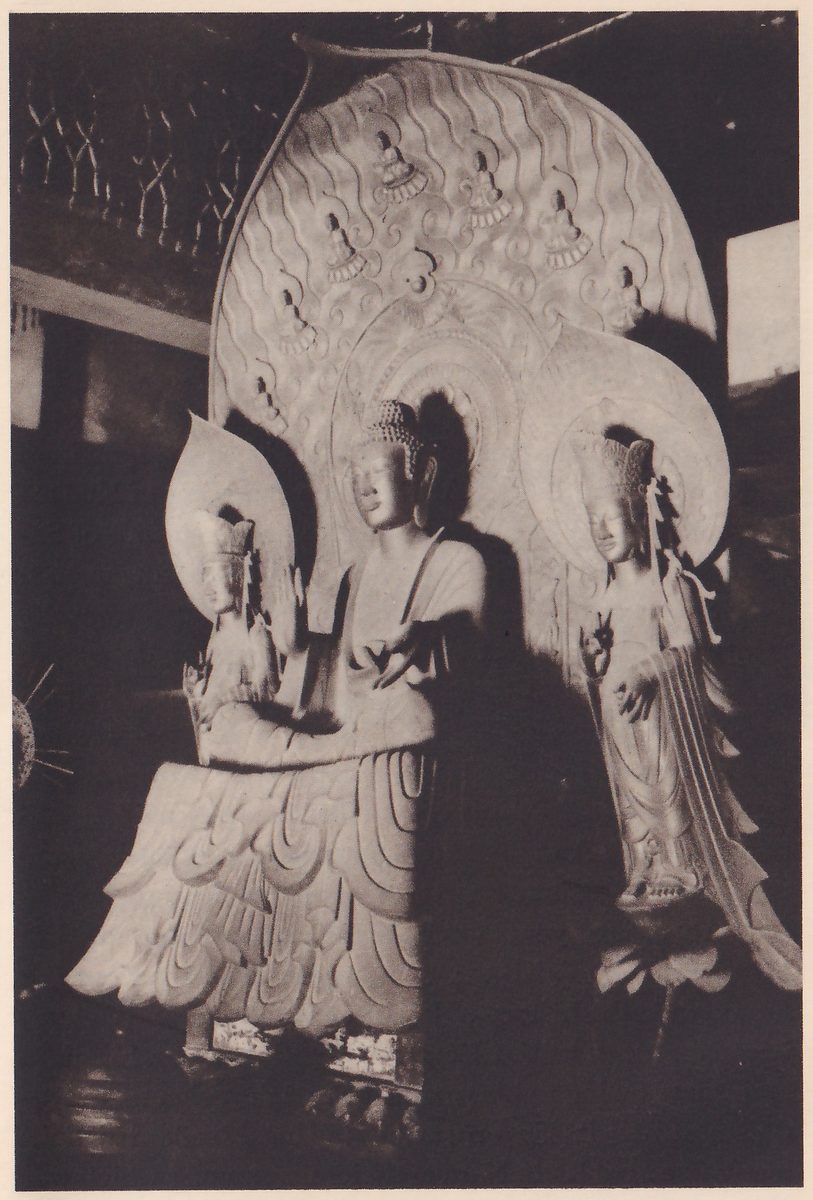
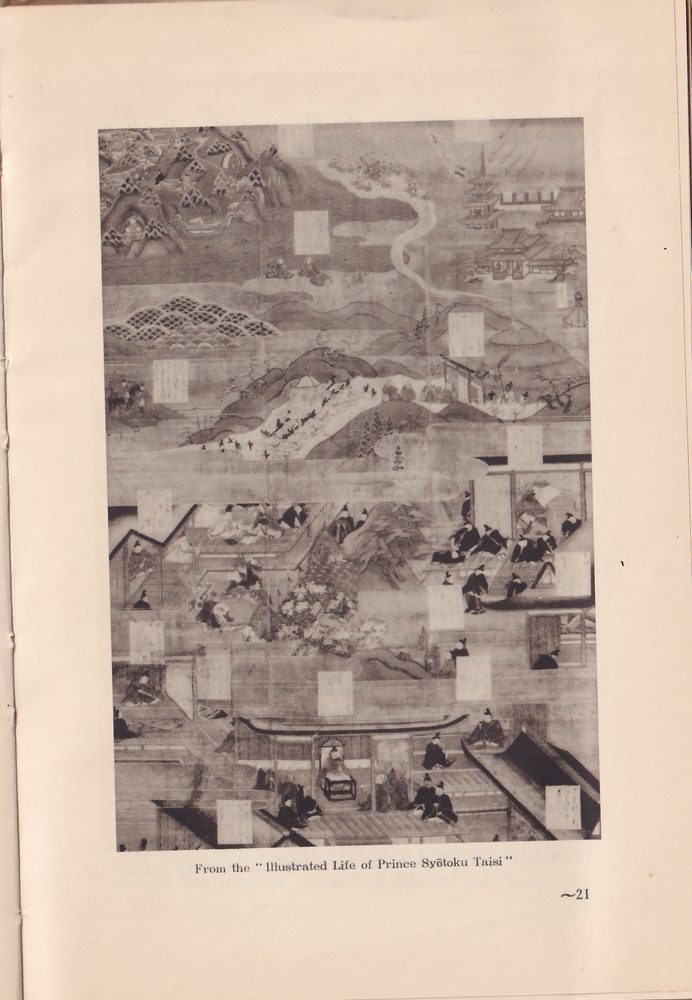
About fifty years after the official introduction, the Prince Syōtoku Taisi (574–622), whose name is never to be forgotten in the history of Japanese Buddhism and culture, became regent to the Empress Regnant Suiko, his aunt, and it was owing to his patronage and devotion that Buddhism struck its firm roots on Japanese soil. He built many fine temples in Nara and vicinity, among which was Hōryūzi, still in existence. He was a great scholar and
wrote commentaries on the three important Buddhist Sutras: the Pundaríka (in Japanese, Hokekyō), Śrimálá (Syōmangyō), and Vimalakirti (Yuimakyō). In those days Buddhism meant progress and indeed everything that was of value in social life.
2. Buddhism of the Nara and earlier period (593–782) was not divided into definite sects as we know them now, but we can distinguish the following six schools that flourished in Nara: the Abhidharmakośa (Kusya in Japanese), Satyasiddhi (Zyōzitu), Vinaya (Ritu), Yogācāra (Hosso), Madhyamika (Sanron), and Avatamsaka (Kegon). Teachers belonging to these schools wrote many commentaries on sutras. It is wonderful to note that they were all products of learned scholarship, showing how eagerly those Japanese Buddhists took up the study of Buddhism which was to them a new philosophy, a new science, a new religion, a new culture, and an inexhaustible mine of artistic impulses.
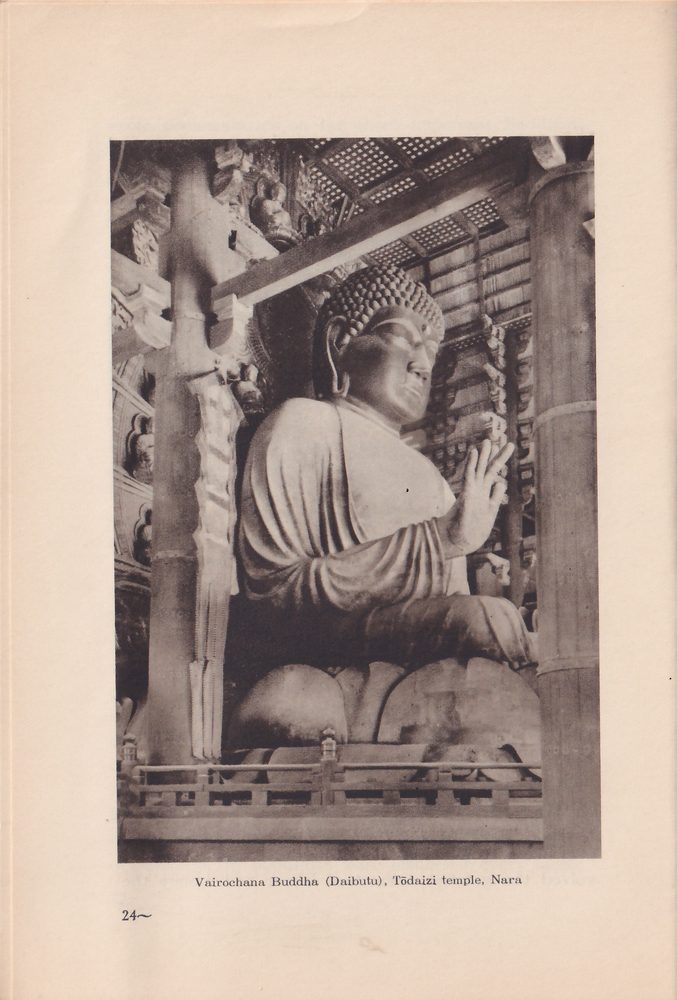
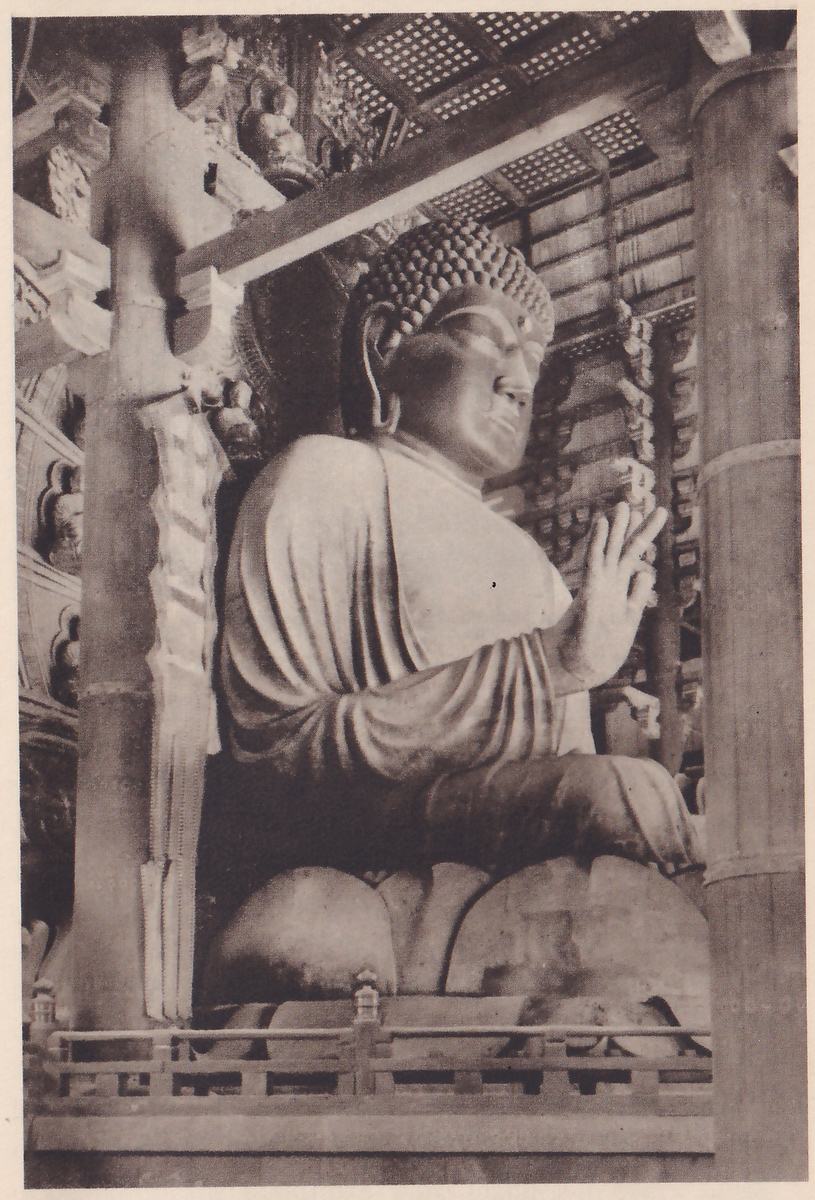
The building of many temples and monasteries, the maintenance of monks and nuns, the erection of a gigantic bronze image of Vairochana (finished in 749)—all these were defrayed from the government exchequer. We may wonder how the government came to engage in such undertakings. The truth is, however, that we ought not to judge the religion in the modern light; for in those days the Buddhist temples were schools, hospitals, dispensaries, orphanages, refuges for old age; and the monks were school-masters, nurses, doctors, engineers, keepers of free lodges, cultivators of land, explorers of the wildernesses, etc. When the community was still in a primitive stage of evolution, the Buddhists were leaders in every sense,
and the government naturally encouraged their activities.
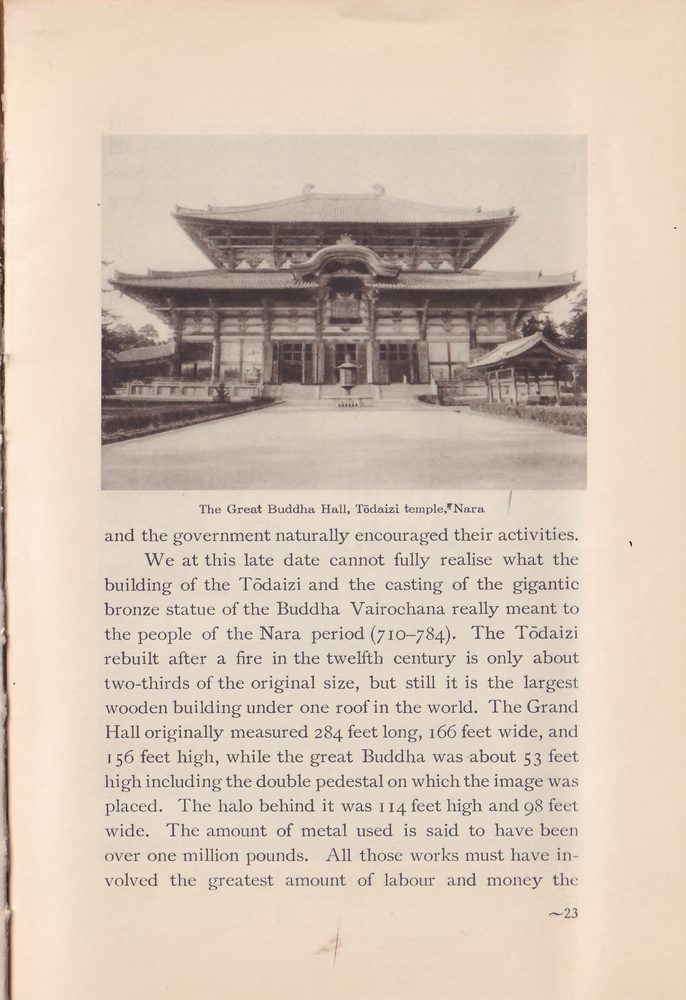
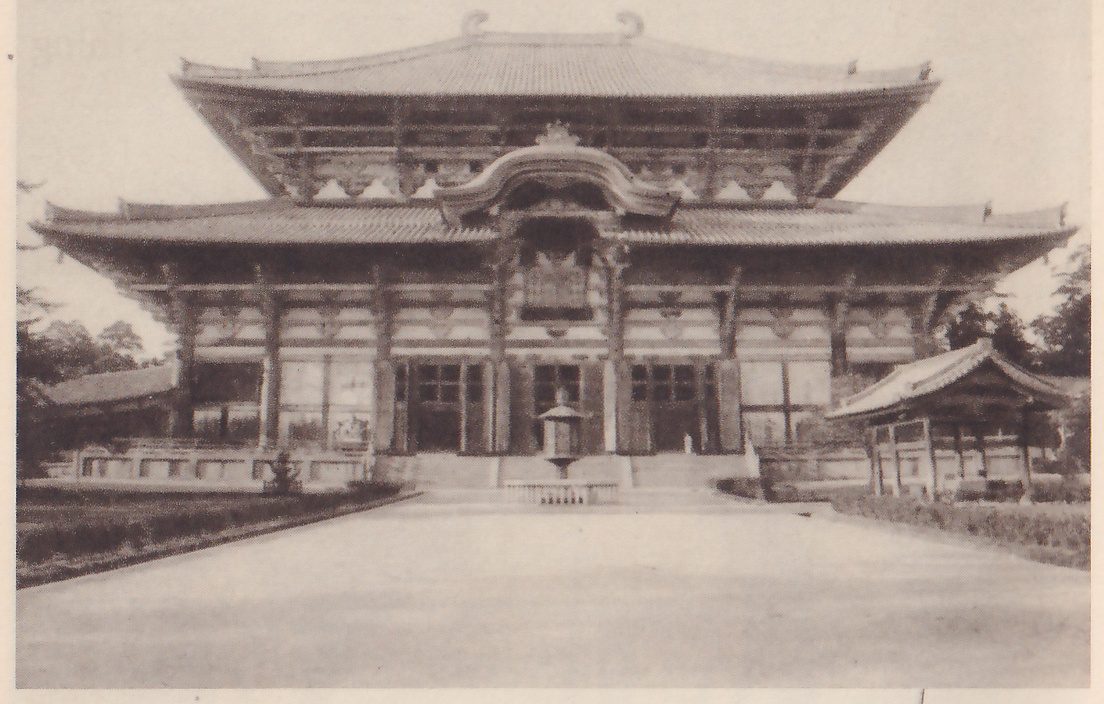
We at this late date cannot fully realise what the building of the Tōdaizi and the casting of the gigantic bronze statue of the Buddha Vairochana really meant to the people of the Nara period (710–784). The Tōdaizi rebuilt after a fire in the twelfth century is only about two-thirds of the original size, but still it is the largest wooden building under one roof in the world. The Grand Hall originally measured 284 feet long, 166 feet wide, and 156 feet high, while the great Buddha was about 53 feet high including the double pedestal on which the image was placed. The halo behind it was 114 feet high and 98 feet wide. The amount of metal used is said to have been over one million pounds. All those works must have involved the greatest amount of labour and money the
Emperor and his advisers could command in those earlier days. Modern critics may have their views about these undertakings, but there is no doubt they were a great stimulus morally, financially, culturally, and even physically, to the national aspirations of the people generally. Nations as well as individuals are occasionally required to take leaps in their lives in order to keep their spiritual energies always on the qui vive. If this could be done by peaceful means so much the better. Buddhism was the very thing the Japanese people of the Nara period (710–784) needed for their forward movement in culture and civilisation, although this might have meant a great strain on them in every possible way.
Among other things that have to be mentioned here, there is one which concerns the movement of Buddhist women in the Nara period. The Empress Kōmyo and Empress Regnant Kōken and the nun Hōkin and others are the names to be long remembered by the Japanese typifying the Buddhist life of love and compassion.
3. Perhaps the growth of Buddhism was fosteredPrinted: fosterd too lavishly or too artificially in the beginning. Although it aided the development of Japanese culture immensely, it became a burden too heavy for the nation of the eighth century to bear, especially financially. And then the favoured monks behaved too selfishly. The distinction between secular powers and religious attainments began to be wiped out. Even in the latter the unessentials were brought out more conspicuously at the expense of the essentials. The time came for Buddhism to face about. Nara Buddhism was to be replaced by Heian Buddhism.
The Emperor Kwanmu (reigned 781–806) moved his
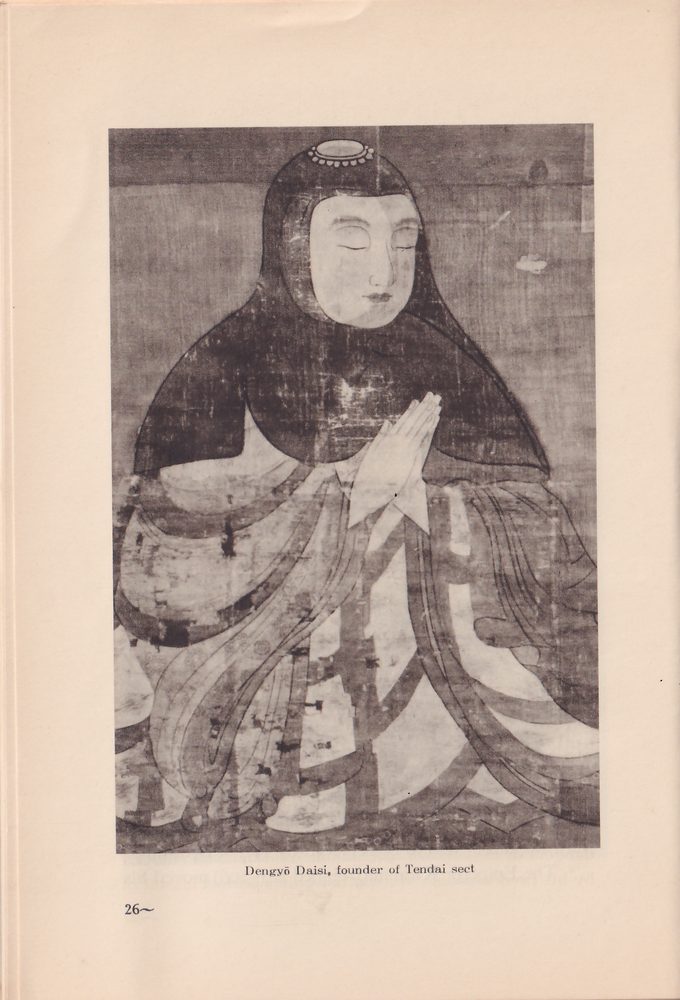
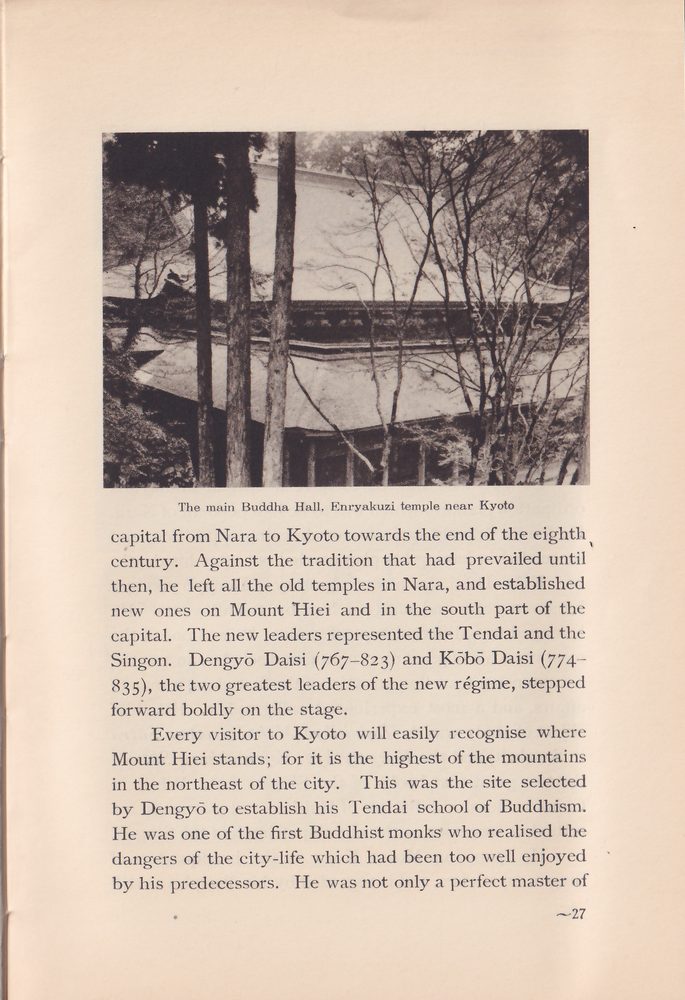
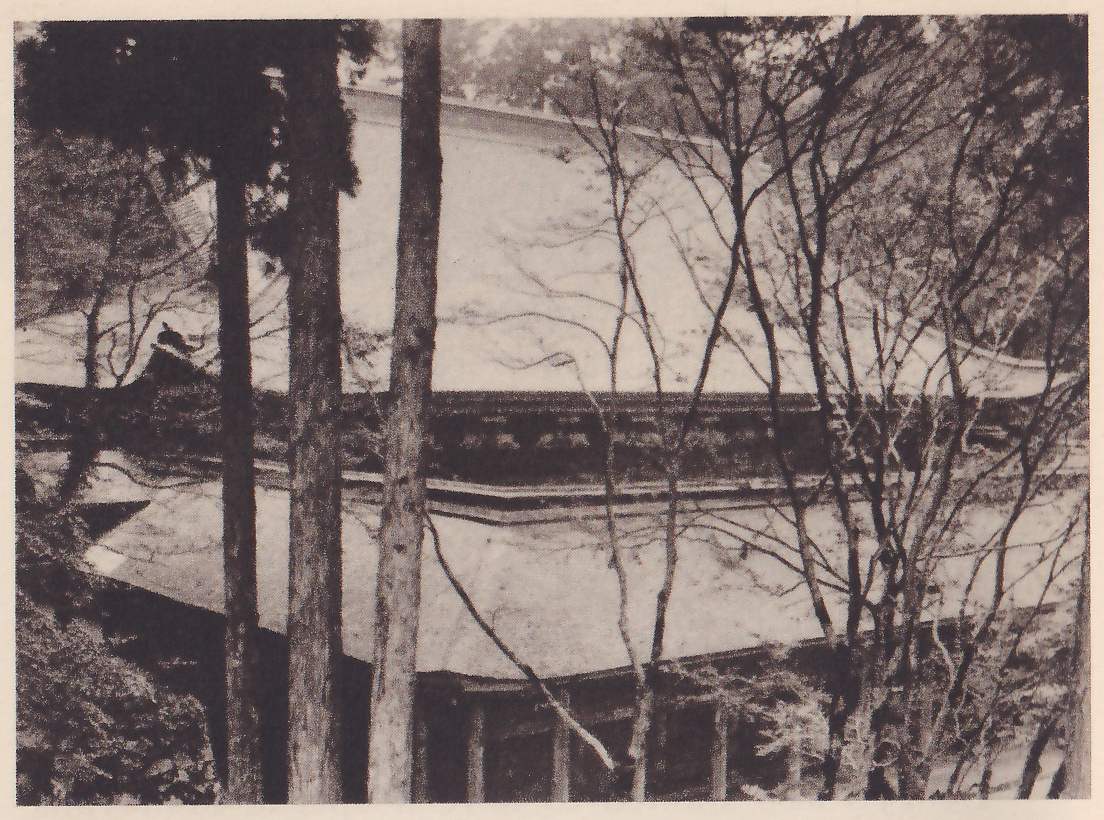
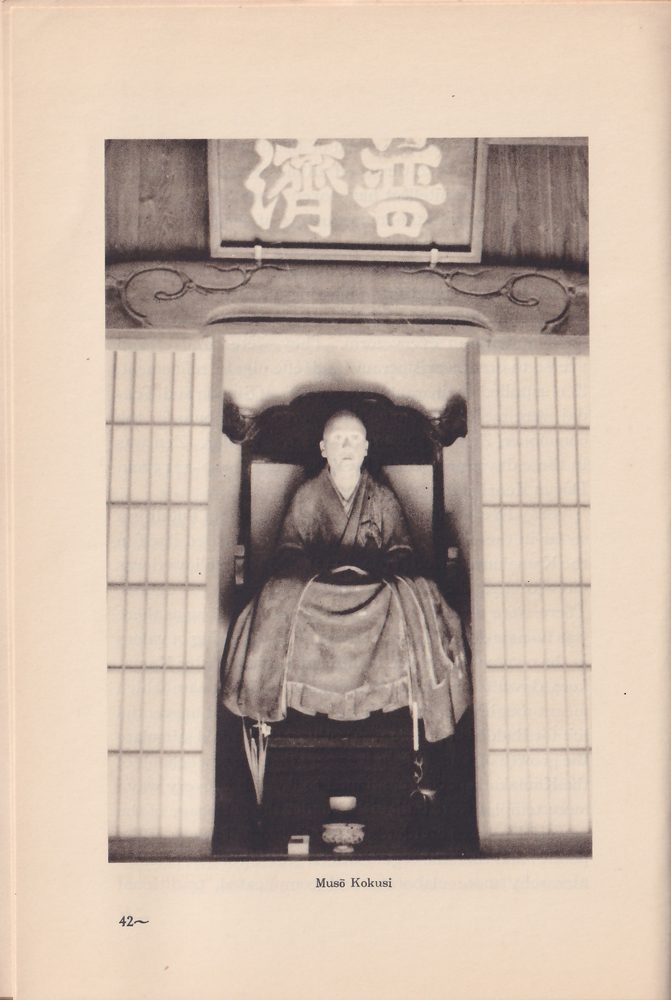
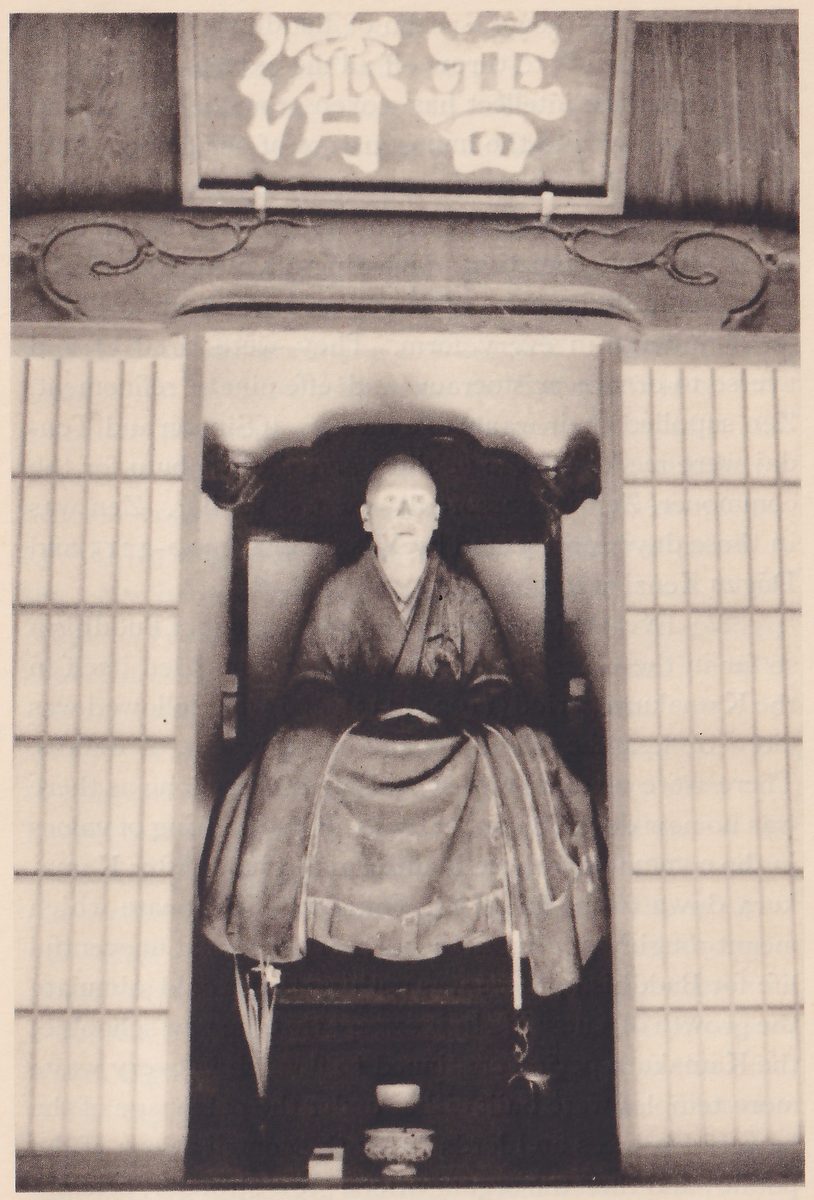
capital from Nara to Kyoto towards the end of the eighth century. Against the tradition that had prevailed until then, he left all the old temples in Nara, and established new ones on Mount Hiei and in the south part of the capital. The new leaders represented the Tendai and the Singon. Dengyō Daisi (767–823) and Kōbō Daisi (774–835), the two greatest leaders of the new régime, stepped forward boldly on the stage.
Every visitor to Kyoto will easily recognise where Mount Hiei stands; for it is the highest of the mountains in the northeast of the city. This was the site selected by Dengyō to establish his Tendai school of Buddhism. He was one of the first Buddhist monks who realised the dangers of the city-life which had been too well enjoyed by his predecessors. He was not only a perfect master of
the abstruse philosophy of the T’ien-tai, but a profound student of the mystic rites and the Dhyana practice. His ambition was to synthesise all the schools of Buddhism that were known in his day. All the new sects of Buddhism that were unfolded later in the Kamakura period can be traced back to Mount Hiei, the headquarters of Dengyō.
The old schools of Nara were inevitable opponents of the new leaders, not only for sentimental reasons but also for the more important reason of doctrinal differences. For Dengyō belonged to the T’ien-tai school which upheld the absolutism of the One Vehicle whereas the old Nara defended the Yogācāra doctrine. The issue was concerned with the ultimate character of the teaching of the Pundarika.
Dengyō also wanted to have a special Mahayana ordination platform which was to be independent of Nara. He fought bravely against overwhelming opposition, and succeeded in having his plan carried out after his death.
Kōbō Daisi was a contemporary of Dengyō younger by seven years and survived him by twelve years. He belonged to a different type of genius; he was one of the most versatile of great men, a profound scholar, an ascetic, an extensive traveller, an artist of the first class, a man of affairs, and a most experienced calligrapher. His chief object of study was the Dainitikyō (Mahāvairocana Sūtra in Sanskrit) and the Kongōtyōkyō (Vajrasekhara Sūtra), the two great text-books of the Singon sect. While in China he became a disciple of Hui-kuo and was made his orthodox successor as the eighth patriarch of the Singon.
He opened up Mount Kōya as the headquarters of Singon mysticism, and is regarded by his disciples as still
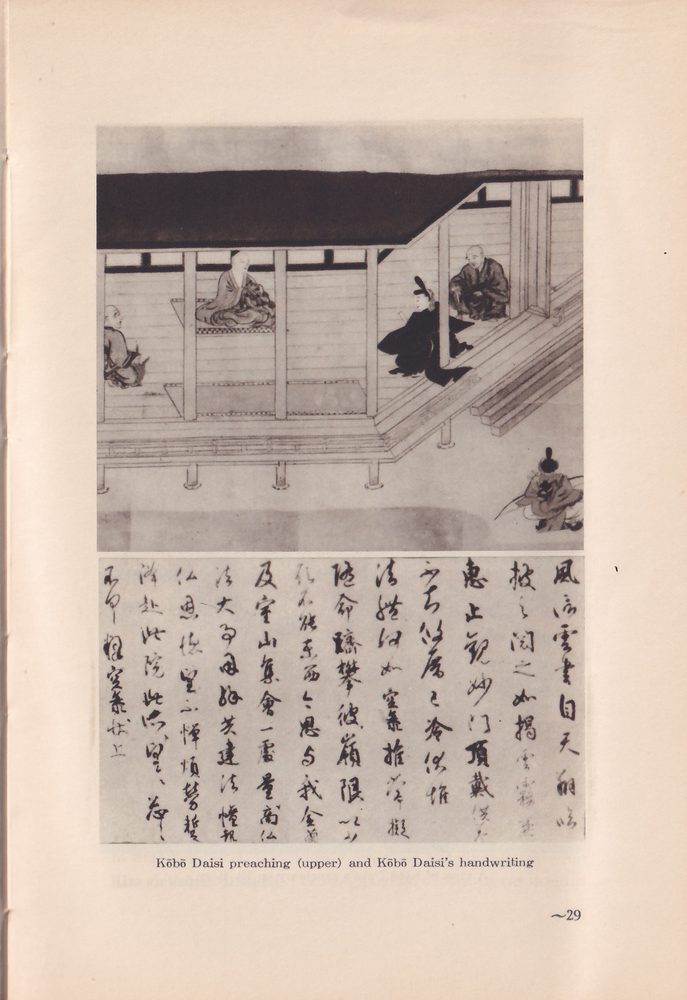
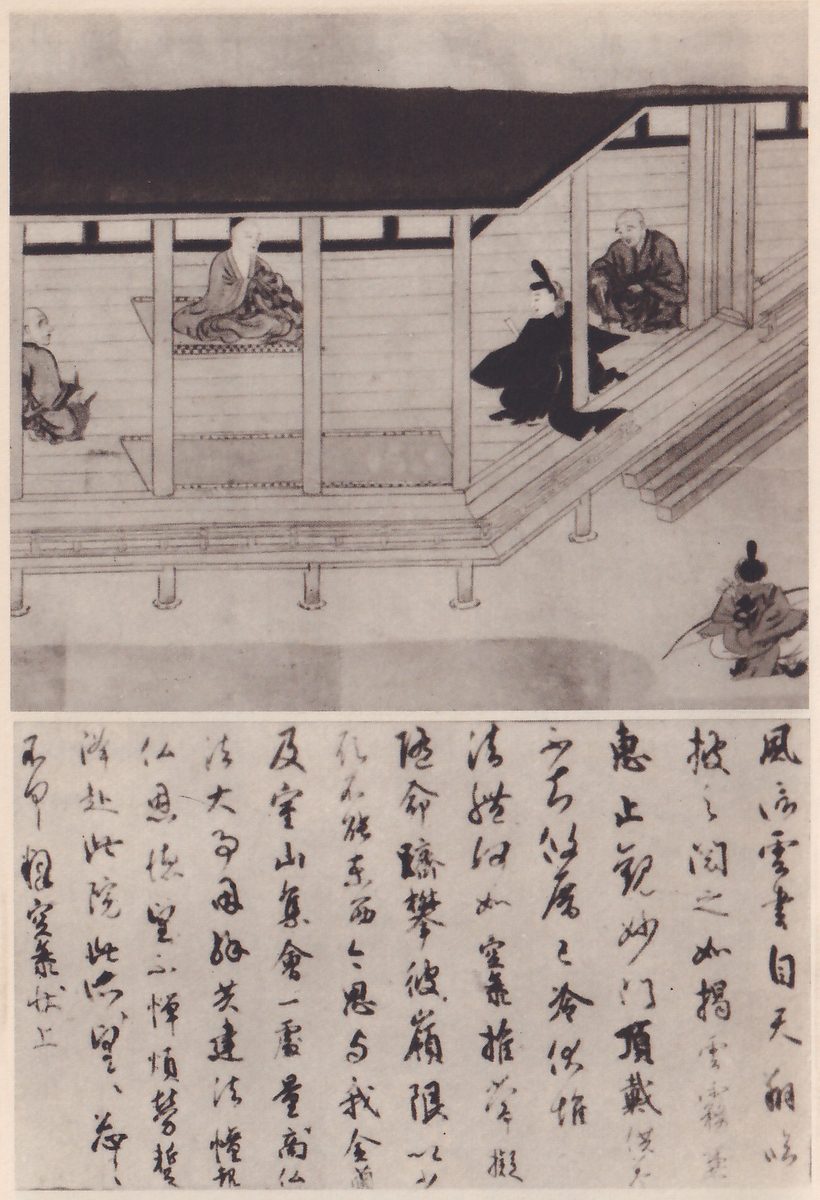
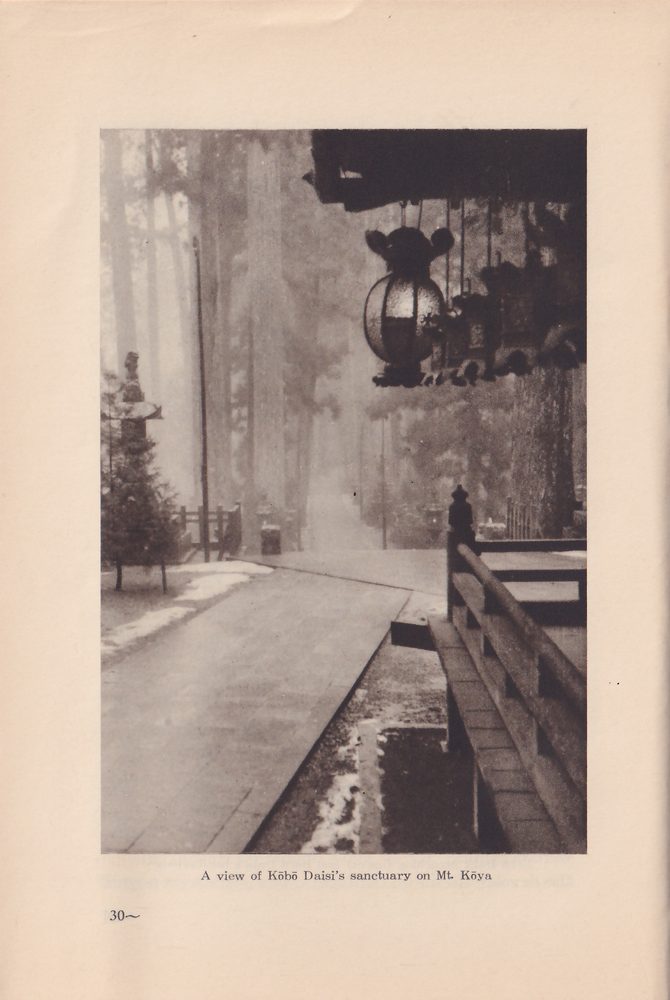
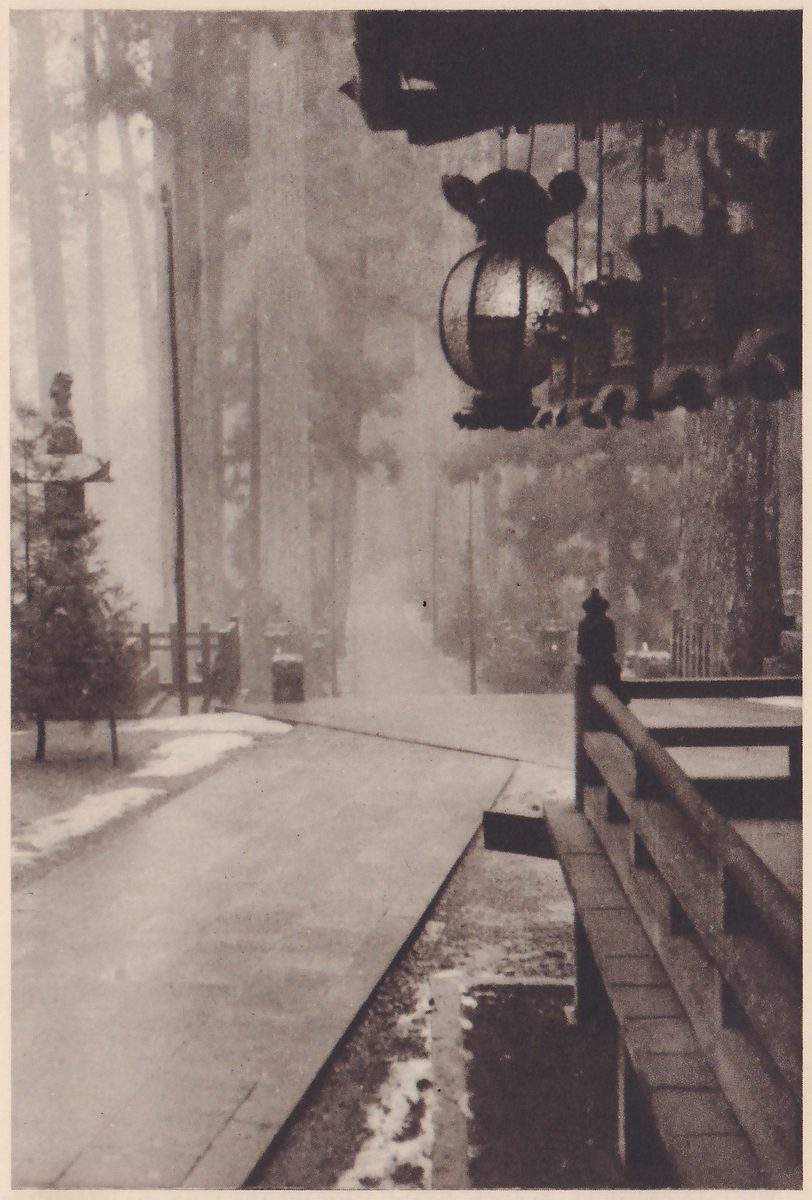
living there in a state of Samadhi. He liked to have a monastery in the mountains but did not forget to keep up his connection with the world. The Tōzi in the south of Kyoto marks his deep footprints in the capital. Dengyō seems to have kept himself away too much from the world, and Hiei remains solitary in spite of its nearness to the city. Kōya is quite an inaccessible place compared to Hiei, but how many pilgrims congregate there every year! On the mountain a little town has come into existence.
The Heian period (784-1192) was chiefly taken up by the Singon and the Tendai, almost overshadowing the old Buddhism of Nara, but at the same time there were signs that they, too, had to give way to the new force which had quietly but steadily been lifting its head.
4. The Tendai in its pure form is too philosophical for popular consumption, and it was necessary for it to find a way from its speculative flights back to the hearts of the masses. The way was found in the performing of mystic rites, which however properly belong to the Singon. The Japanese Tendai thus became a mixture of Chinese T’ien-tai metaphysics with the practical ritualism of Singon; and we can say that the Buddhism of the Heian period was flooded with magical ritualism. To put a stop to evil influences the rite called “Sokusai Hō” was performed; to increase happiness, the “Zōyaku”; to invite good powers, the “Kuso”; to overturn enemies, the “Gōhuku”; to pray for the loving protection of the Buddhas and Bodhisattvas, the “Kyōai”; and to achieve prolongation of life, the “Enmei.” All these mystic rites were considered thoroughly effective to bring about what the devotee desired.
Besides these, there were all kinds of ceremonies performed on different occasions auspicious or otherwise and at various chief temples in the land. The performance sometimes lasted a week. As a matter of fact these could be attended only by people of the leisure classes, that is, by the nobility of the time. In those days when there were not many and varied social entertainments, it was natural enough for the nobility to turn some of the Buddhist ceremonials into a sort of refined entertainment to pass away their holidays. That the present-day Buddhism still wears an air of aristocracy is no doubt traceable to the traditions of those bygone days.
5. The aristocratic and ritualistic Buddhism, however, is not of Mahayana Buddhism. When it undergoes such transformations it is high time for it to go back to its original form, that is, democratic and practical and spiritual. While the Singon was enjoying its heyday of prosperity, there was another movement going on undermining its apparent influence. This was the rise of the Pure Land school whose principal teaching consists in repeating the Buddha’s name (Nenbutu) and being born in the country of Amida.
Buddhism was so far confined to the upper classes of society who had enough mentality and leisure to master its abstruse philosophy and its extraordinarily complicated system of rituals. This was inevitable. It first came to Japan through official channels; it aided the Court and those who surrounded it in carrying out their programme of national policy. Buddhism became solidly amalgamated with all that was symbolic of power, culture, knowledge, and morality. It was all well as far as it went, but
aristocracy is a one-eyed child, it sees the refined surface but lacks solidity. Real power must grow from life itself. The Buddhism of the Heian period could not continue any longer in the way it had been going; it was to become the Kamakura Buddhism.
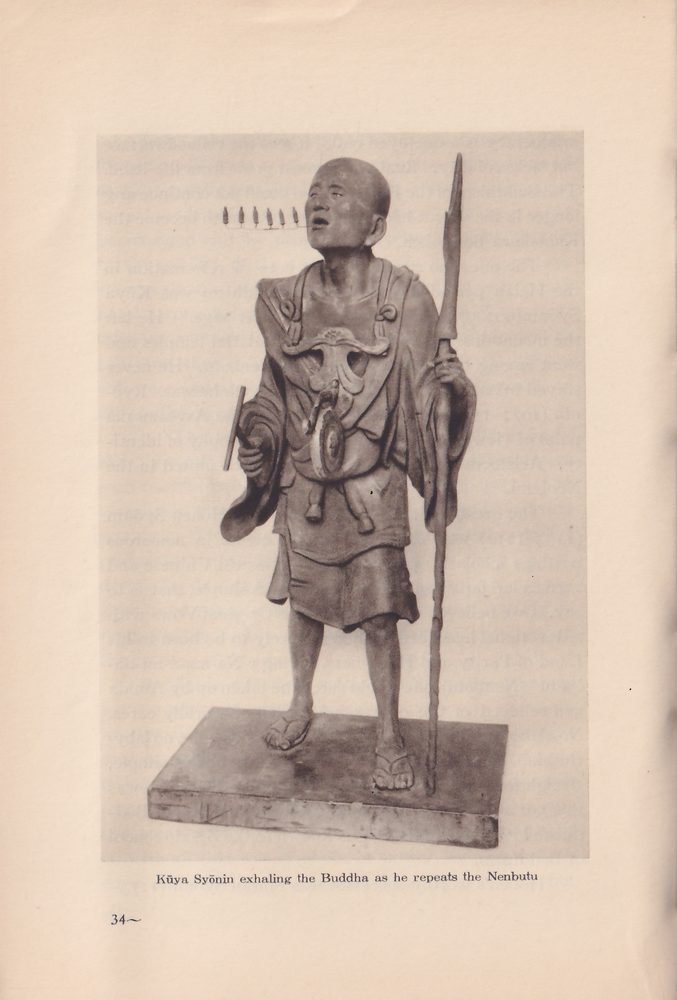
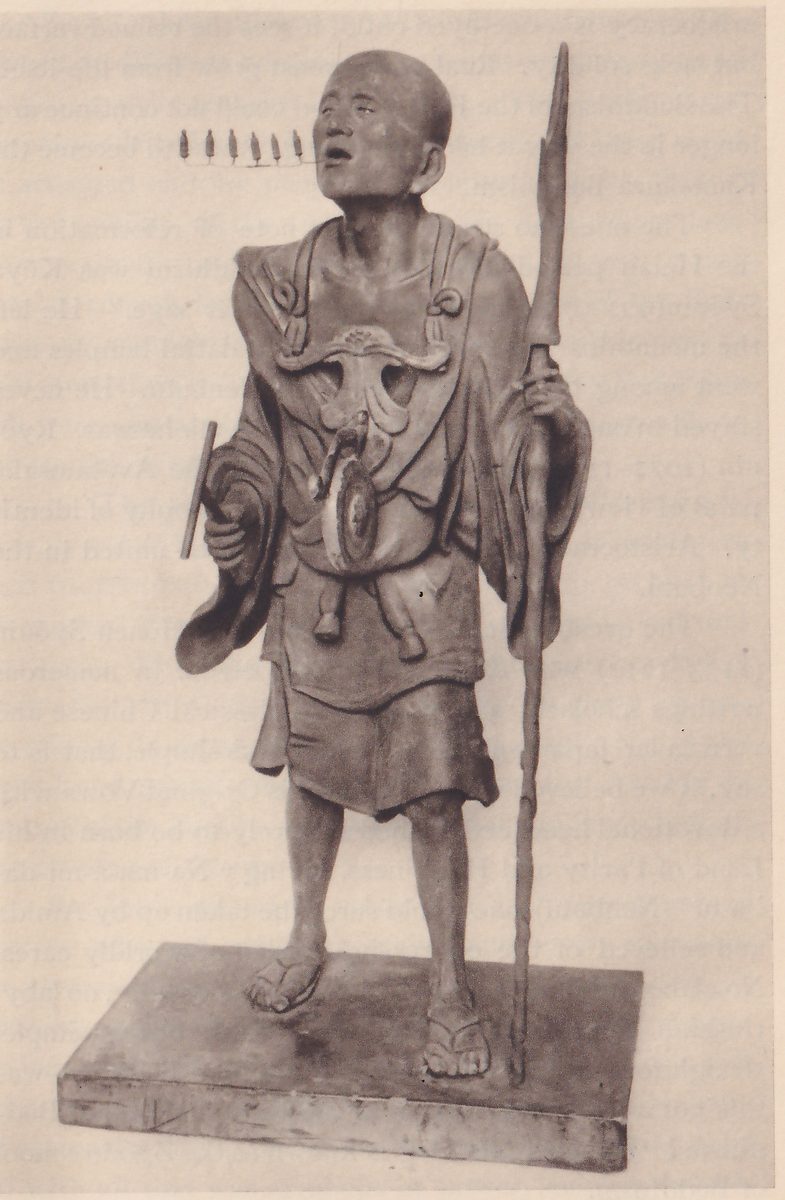
The one who struck the first note of reformation in the Heian period for democratic Buddhism was Kūya Syōnin (902–972), known as the “market sage.” He left the mountains and monasteries and palatial temples and went among the masses saying his Nenbutu. He never stayed in one place, a real wandering monk he was. Ryōnin (1072–1132) followed him but from the Avatamsaka point of view, which is founded on a philosophy of identity. Aristocracy and democracy were to be united in the Nenbutu.
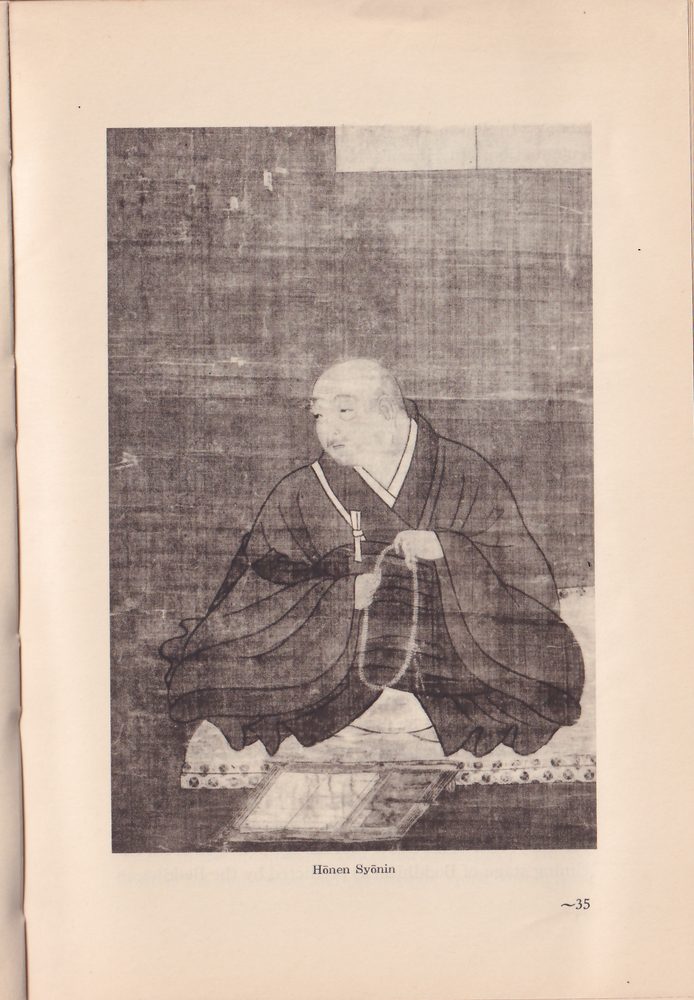
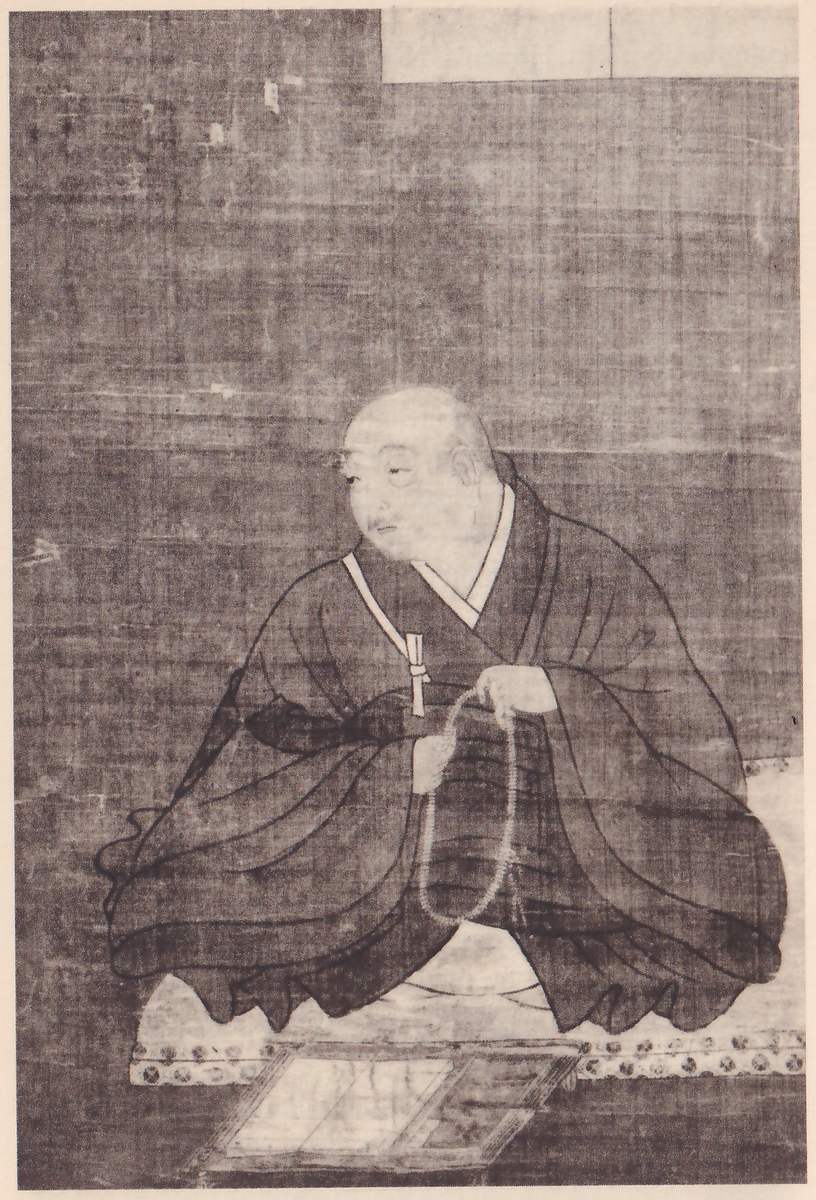
The great leader of the Nenbutu was Hōnen Syōnin (1133–1212) who expounded his doctrine in numerous writings scholarly and popular, in classical Chinese and vernacular Japanese. His teaching was simple, that is to say, if we believed in Amida and his Original Vows with a devotional heart and wished sincerely to be born in his Land of Purity and Happiness, saying “Na-mu-a-mi-da-bu-tu” (Nenbutu), one would surely be taken up by Amida and relieved of the oppressive burden of worldly cares. No elaborate ritualism, no mystifying philosophy, no labyrinthian complexity of technical terms, but a simple, straightforward invocation of Amitabha Buddha—was this not a wonderful leap from the Nara and Heian Buddhism? Hōnen’s teaching is known as the Zyōdo school of Buddhism.
Hōnen’s worthy successor was Sinran Syōnin (1173–
1262). In Sinran the Pure Land Buddhism reached its culmination. In Hōnen’s Nenbutu there was still something of “self-power” but in Sinran’s all is given up to the “other-power,” although in practice we can never get away from “self-power” as long as we are relatively conditioned individuals. Sinran frankly admitted not only in theory but in practice that we are all sinful beings, and made no pretension to escape the outcome of our sinfulness. It is, he stated, in the very constitution of our being that we are sinful, therefore let us take refuge in the “other-power,” and let alone our ignorance and sinfulness. This was, in a way, a dangerous doctrine. When it is not carefully balanced by reason and morality, it will surely turn into antinomianism. Sinran’s teaching is the culmination of the Zyōdo doctrine, and it is known as the Sin sect and is the most powerful one in Japan, comprising millions of followers.
Ippen Syōnin (1239–1289) was a wandering monk like Kūya. He went around all over Japan, saying his Nenbutu and telling others to follow his example. As he came after Hōnen and his disciples and also studied Zen, his Nenbutu has its own note. His sect never attained the popularity of the Sin or Zyōdo, because he was a rolling stone which gathered no moss. He burned all his writings just before he died. What is left of them is a short collection of his letters and sayings and poems. His school is known as the Zisyū.
One of the reasons why the Nenbutu schools prevailed in this period was due to the idea which then gained currency, that is, the belief that the age belonged to the declining stage of Buddhism as predicted by the Buddha, in
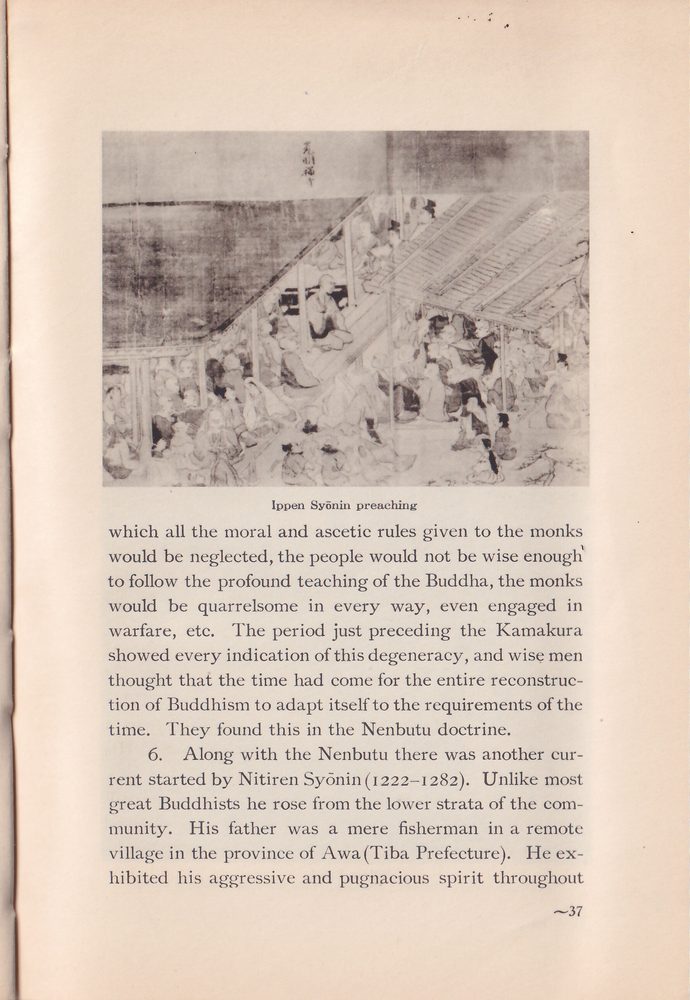
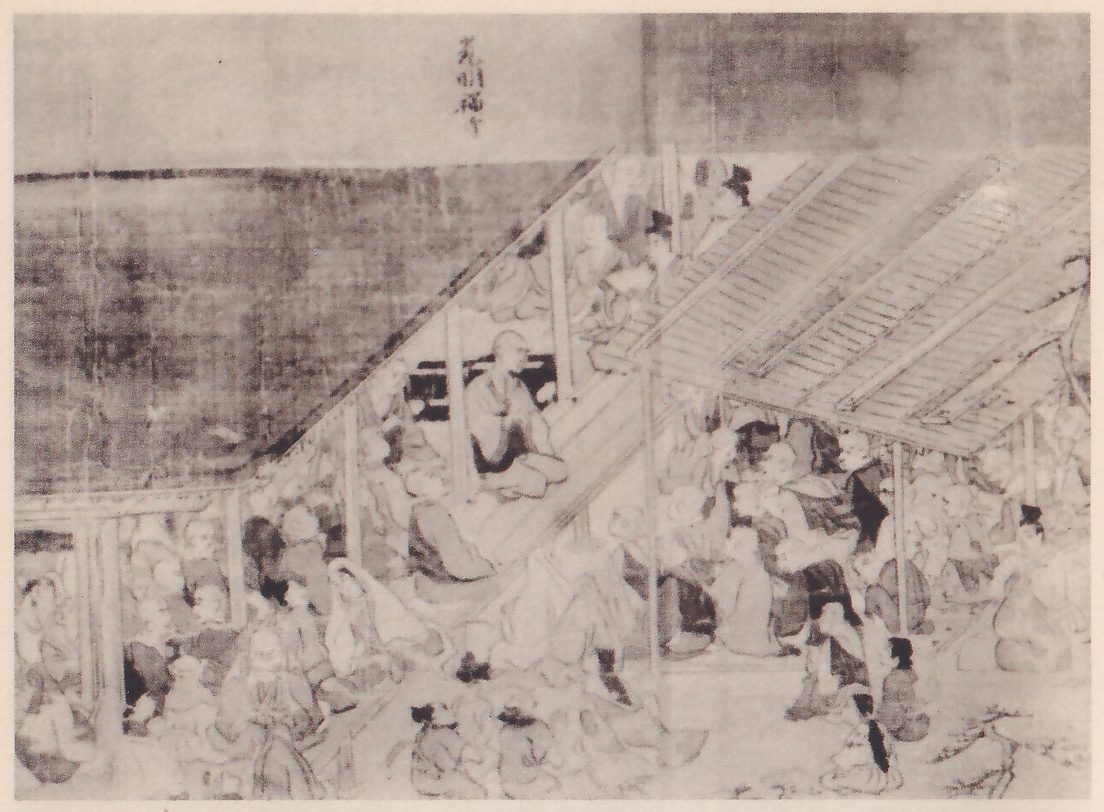
which all the moral and ascetic rules given to the monks would be neglected, the people would not be wise enough to follow the profound teaching of the Buddha, the monks would be quarrelsome in every way, even engaged in warfare, etc. The period just preceding the Kamakura showed every indication of this degeneracy, and wise men thought that the time had come for the entire reconstruction of Buddhism to adapt itself to the requirements of the time. They found this in the Nenbutu doctrine.
6. Along with the Nenbutu there was another current started by Nitiren Syōnin (1222–1282). Unlike most great Buddhists he rose from the lower strata of the community. His father was a mere fisherman in a remote village in the province of Awa (Tiba Prefecture). He exhibited his aggressive and pugnacious spirit throughout
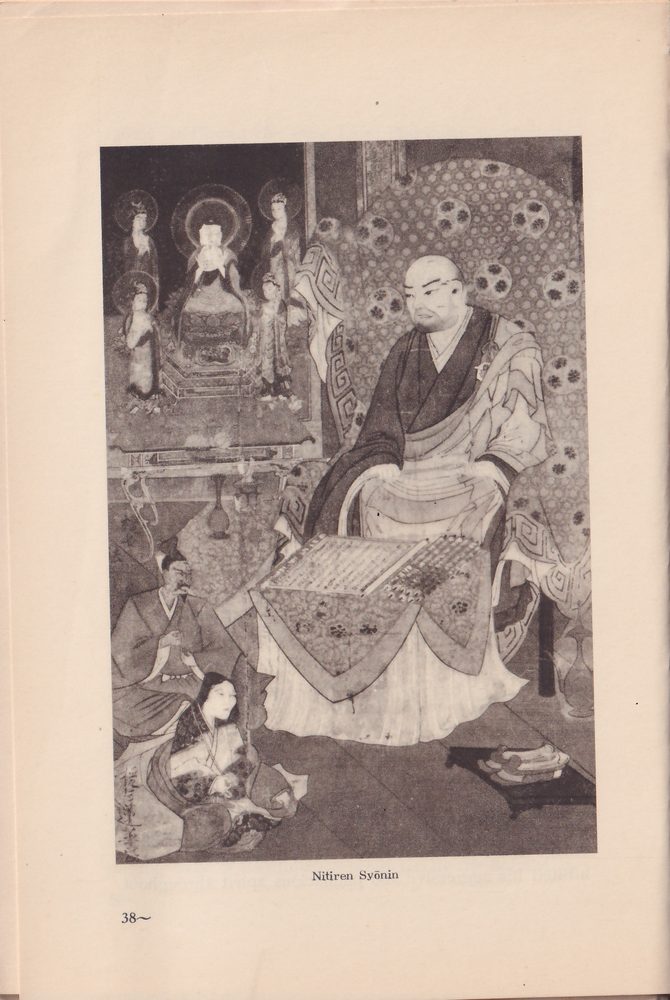
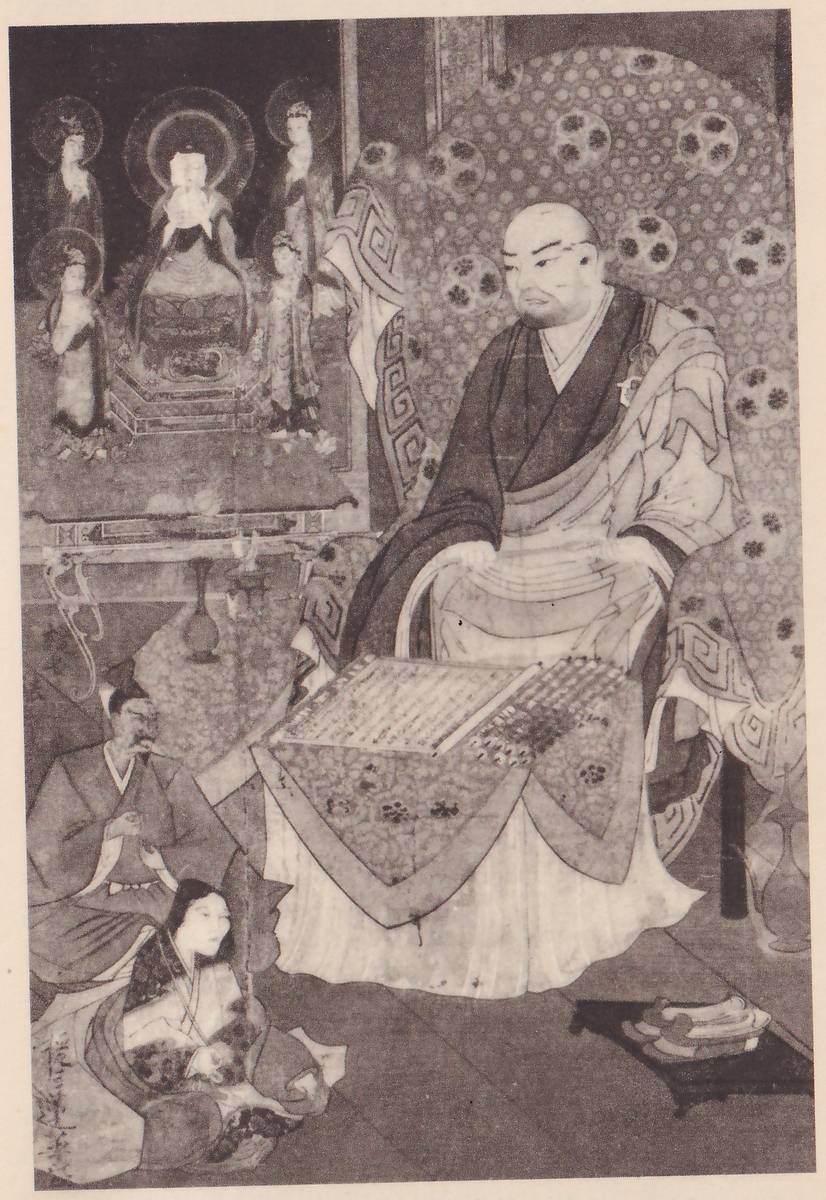
his religious career. His followers even now are sometimes quite militant and self-assertive.
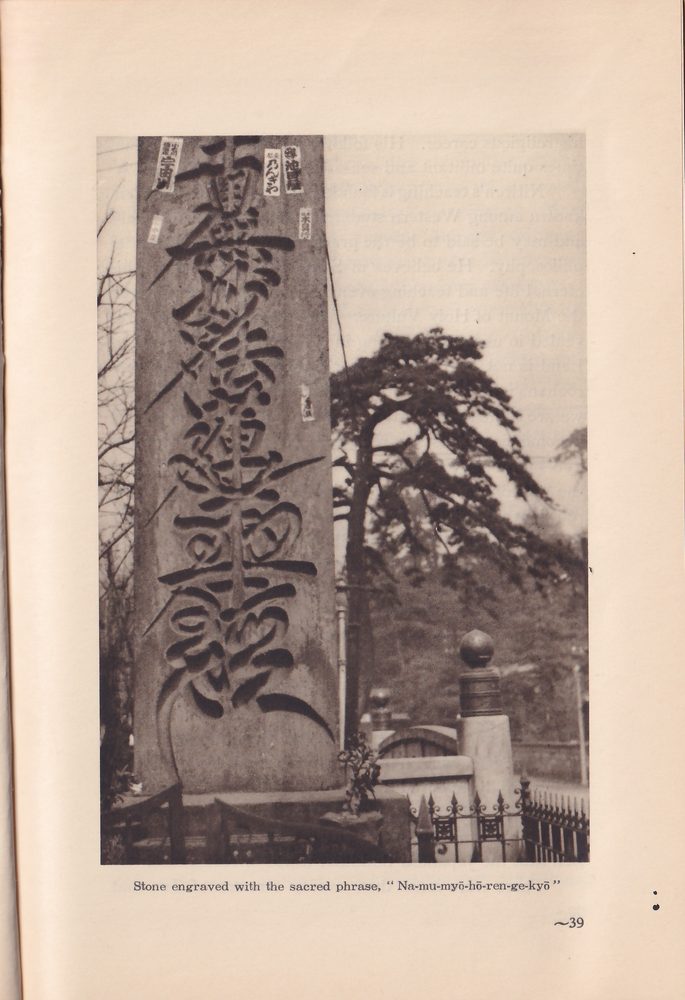
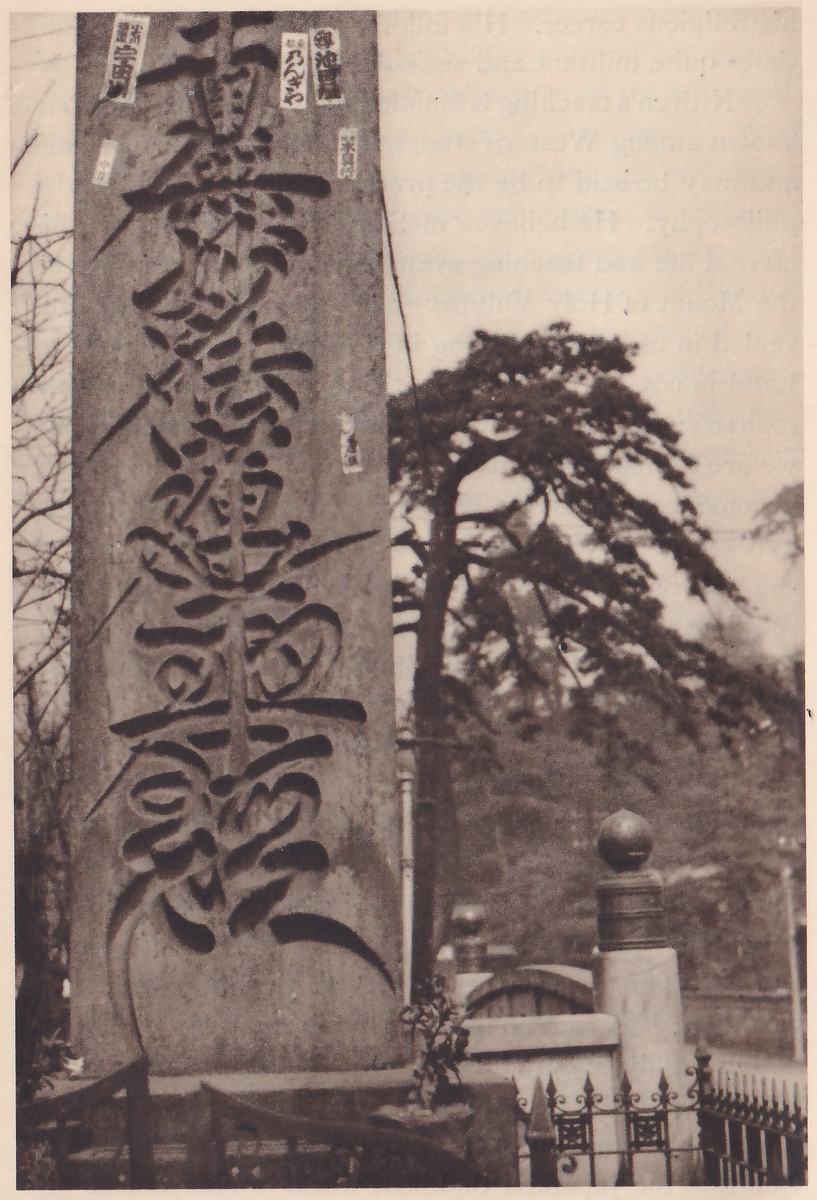
Nitiren’s teaching is founded on the Pundarika Sūtra, known among Western students as the “Lotus Gospel” and may be said to be the practical applicationPrinted: applicaton of Tendai philosophy. He believes in Sakyamuni Buddha and his eternal life and teaching even as he did in former days on the Mount of Holy Vulture. This eternal Buddha is revealed in us who are living in this world. Amida’s Pure Land is not of this world, nor is the Lotus World of Vairochana; but, says Nitiren, his Sakyamuni is here, and we are so many revelations of him. Of this revelation we become conscious by reciting “Na-mu-myō-hō-ren-ge-kyō” with singleness of purpose and sincerity of heart, as the “Myōhōrengekyō” (Pundarīka) has grown out of our religious yearnings. Thus, the Nitiren sect is strongly characterised with this-worldliness. Its association with the patriotic spirit was a natural consequence.
7. The Buddhism of Kamakura was the affirmation of religious consciousness itself against externalism and intellectualism which characterised the Buddhism of the preceding period, but at the same time it was a sort of reassertion which consisted in the unfolding of the spiritual yearnings hitherto kept suppressed by historical conditions. When towards the end of Nara Buddhism there was a tendency to cast off all the intellectual complications which highly coloured the study of Buddhism at the time, it was superseded by the ritualism of Singon. This tendency now came up to the surface in the introduction of Zen into the Japanese Buddhist world of Kamakura.
There were more than twenty streams of Zen that
poured into the thought realm of Buddhism from China. The aim of Zen is to throw off all the external paraphernalia which the intellect has woven around the soul, and to see directly into the inmost nature of our being. Man is not a simply constructed creature, he requires many appendages, but when they grow too heavy he wants to unload himself, sometimes including his own existence.
The military class of Kamakura had a great liking for simplicity in every form. They were tired of and averse to ornate aristocracy and effeminate refinement. Zen supplied their wants to a nicety. If Singon and Tendai were meant for the nobility and the Nenbutu for the commoner, Zen was assuredly for the soldier. Zen was in those days represented by Yōsai Zenzi (1140–1215) and Dōgen Zenzi (1200–1253).
8. Everything that could be drawn out of Buddhism so far in the course of Japanese history unfolded itself in the Kamakura period (1192–1333), and what followed was more or less the filling-up and working-out of details. There were no more new schools possible so long as there was no new development of ideas and no shifting of values in the community where Buddhism thrived. After Kamakura down to the fall of the Tokugawa Shogunate which meant roughly six hundred years of peace and uneventful life for Buddhism, there was nothing that would stimulate the growth of a new life in it except that the new schools of the Kamakura period continued to flourish in every way: more temples were built either under the patronage of the powerful princes and lords or by the contributions of the public; and then the organisations grew stronger, priestly hierarchy more elaborate and complicated, traditional
authorities more autocratic, faith and devotion more formal, scholarship and speculation more ossified. In other words, Buddhism was gradually losing its vitality because of the non-stimulating character of its surroundings.
The Buddhists were, however, rudely awakened from their long narcosis when the downfall of feudalism took place towards the end of the nineteenth century. Sintoism which was kept down under the yoke ever since the completion of the Ryōbu Sinto doctrine, shook itself off by an official interference; and what may be called a mild form of persecution came over Buddhism, and whatever patronage and endowment in the form of estate or donation it used to receive from the authorities local and central were taken away, and the temples and monasteries including all their occupants were thrown out into the streets with nothing save their dreams of past comfort and prosperity.
Since then more than half a century has elapsed and the Buddhists are growing more and more keenly alive to the situation; for if they were not, there would be no choice left for them but to resign themselves to the fate of annihilation. Besides, Christianity backed by its modern methods of propaganda and its full grasp of modern ideas has been living among them for some years now. With these stimulations what Buddhism has to do is to draw more intensely and deeply than ever upon its own vital sources which are still theirs.
At present there are eleven sects of Buddhism in existence:
(1) Ritu-syū (Vinaya school). It was introduced to
Japan by Ganzin (Chien-chen,—763), a Chinese priest, in 754. The Tōsyōdaizi, of Nara, is its head-temple.
(2) Hossō-syū (Dharmalaksha or VijnānamātraPrinted: Vijnānnamātra school). Dōsyō (629–700) brought it from China in 653. There are at present three main temples in Nara belonging to this sect: Hōryūzi, Kōhukuzi, and Yakusizi.
(3) Kegon-syū (Avatamsaka school). Rōben (689–773) opened this sect in 740. The head-temple is Tōdaizi, Nara.
(4) Tendai-syū. The founder is Saityō known as Dengyō Daisi who came back from China in 805. It is divided into three branches; their head-temples are: Enryakuzi, Sakamoto; Onzyōzi, Ōtu; and Saikyōzi, Sakamoto.
(5) Singon-syū. The founder is Kūkai known as Kōbō Daishi who came back from China in 806 after three years’ stay there. It is divided into two main branches, the Kōgi and the Singi, which are subdivided into eleven smaller ones. The following are the most celebrated temples of this sect: Kongōbuzi, Kōya; Tōzi, Kyoto; Sanbō-in, Kyoto; Hasedera, Hase; Tizyaku-in, Kyoto.
(6) Yuzūnenbutu-syū. Ryōnin (1072–1132) founded it in 1117. Its head-temple is Dainenbutuzi, Osaka.
(7) Zyōdo-syū. Hōnen Syōnin is the father of this sect in Japan. He first proclaimed the doctrine of the Pure Land in 1125. It has two main branches, one of which is further divided into three. Tion-in, of Kyoto, is the head-temple of the more flourishing branch.
(8) Sin-syū, that is, Zyōdo Sin-syū. Its founder is Sinran Syōnin who wrote the text-book of this sect in 1224, claiming that it truly transmits the faith and thought
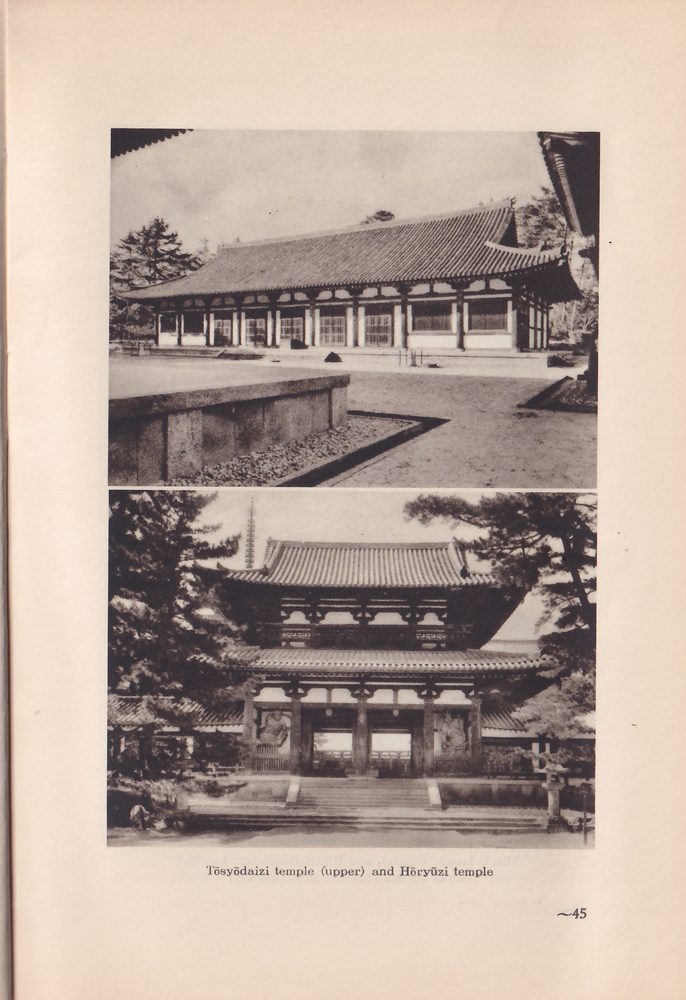
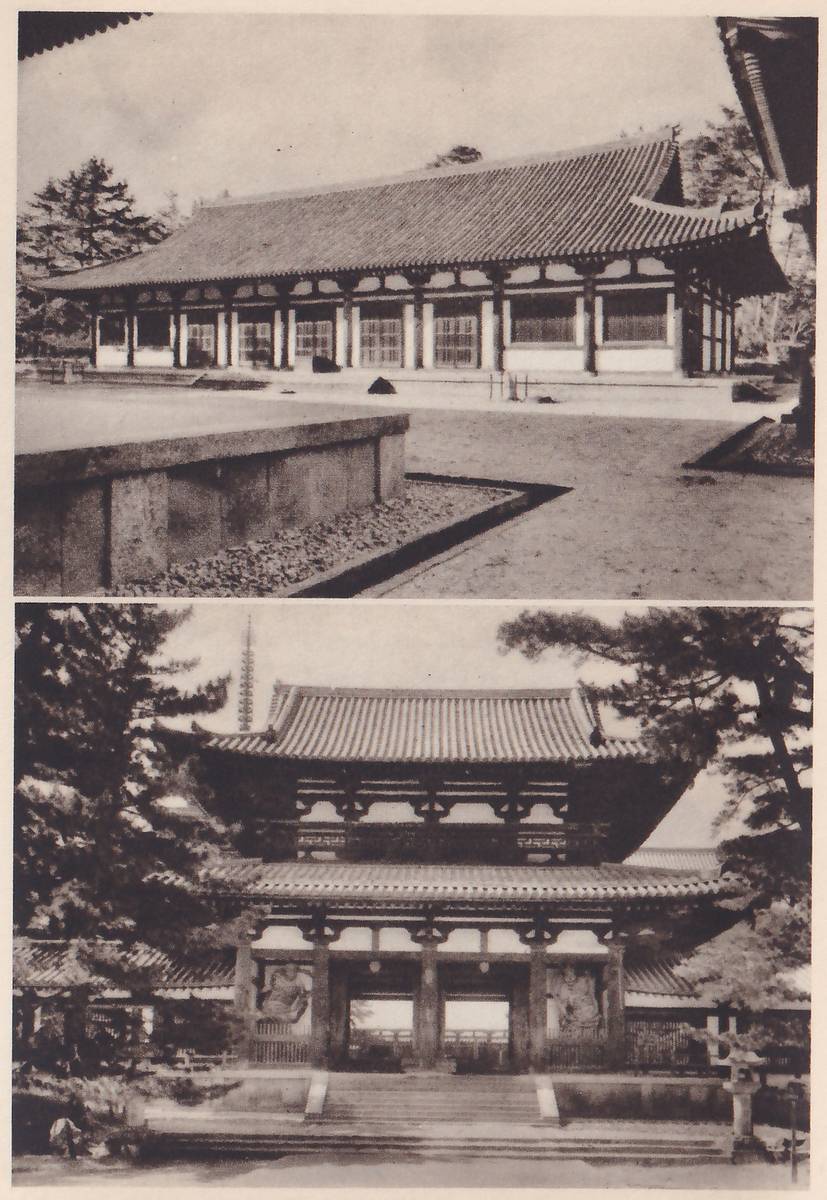
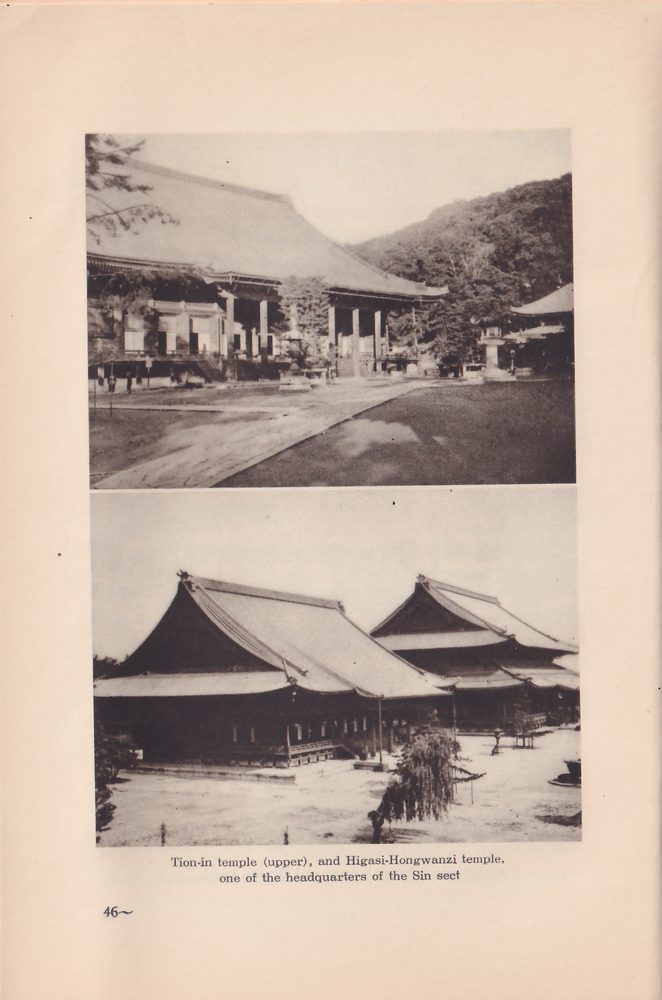
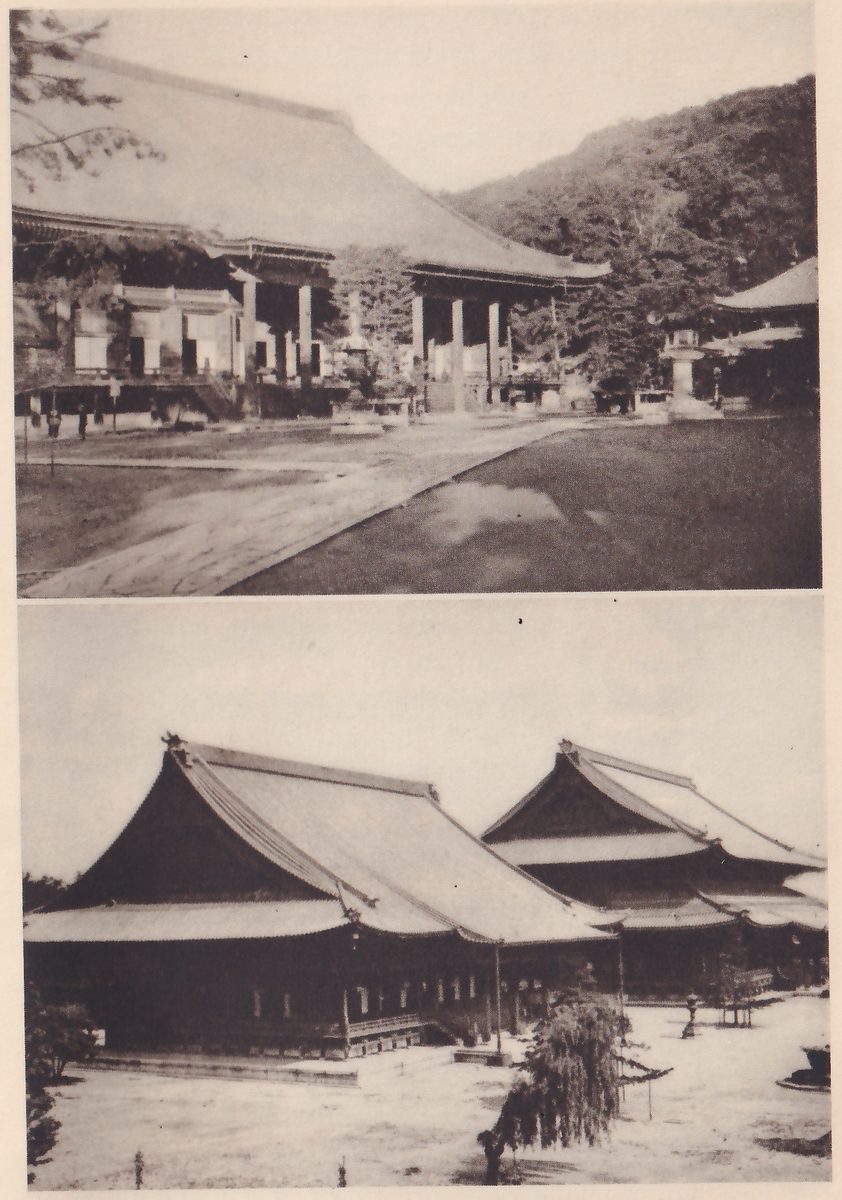
one of the headquarters of the Sin sect
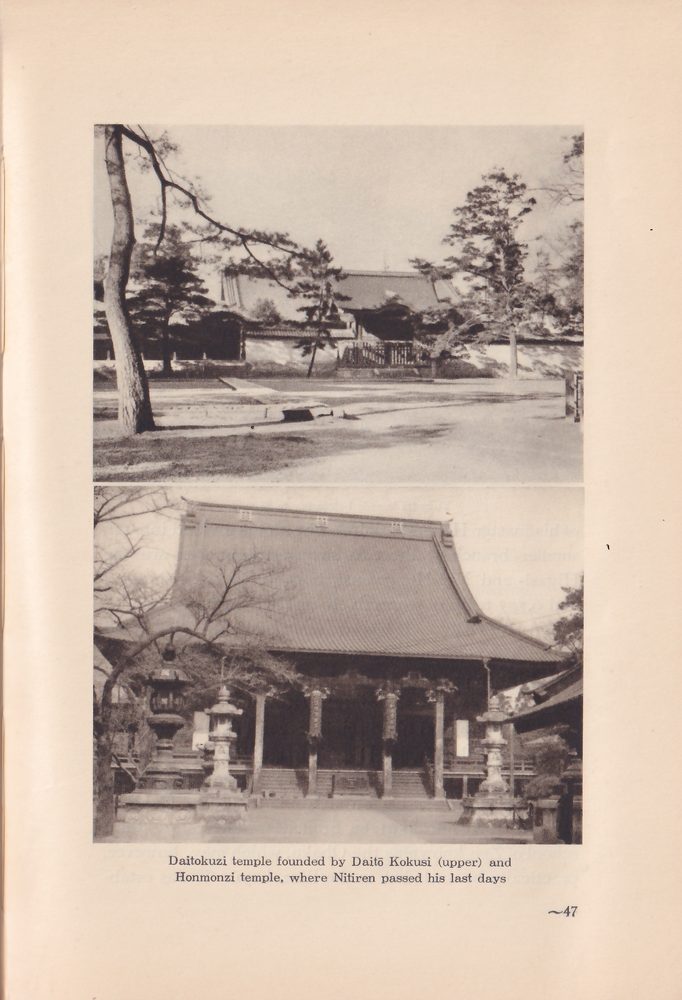
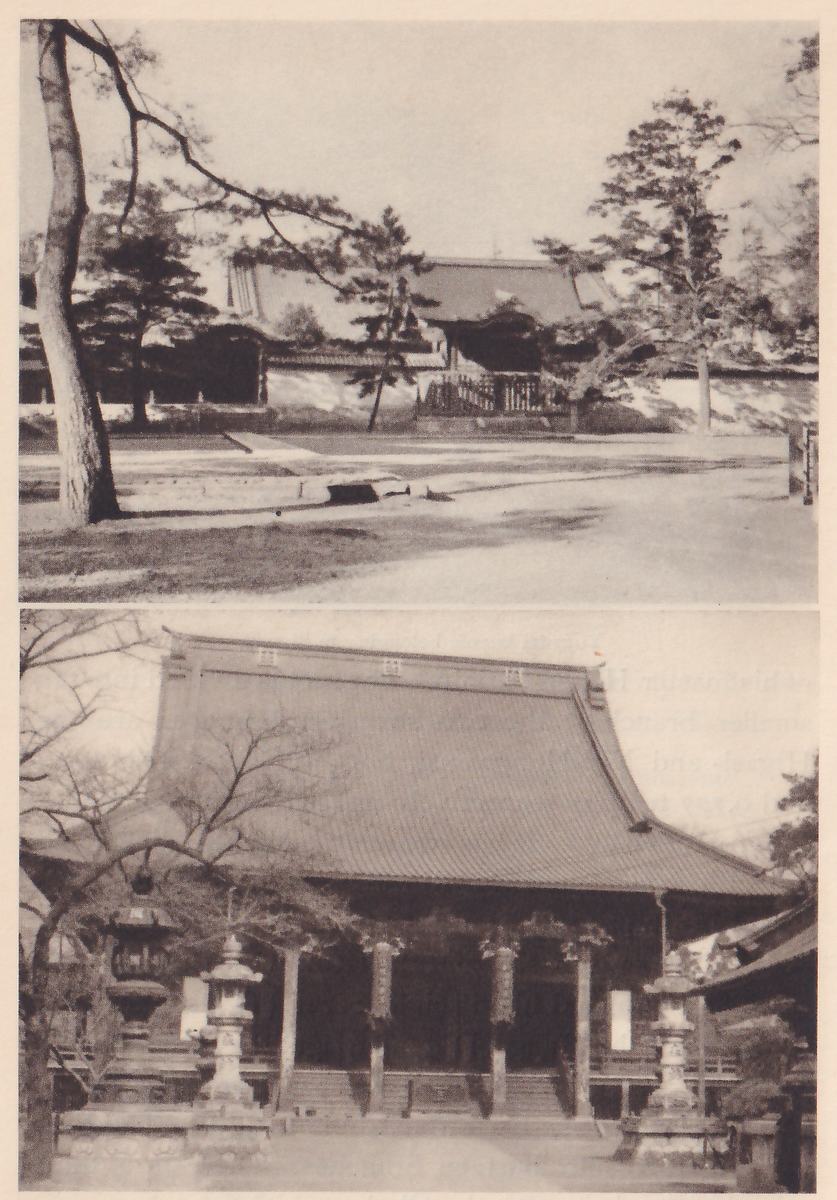
Honmonzi temple, where Nitiren passed his last days
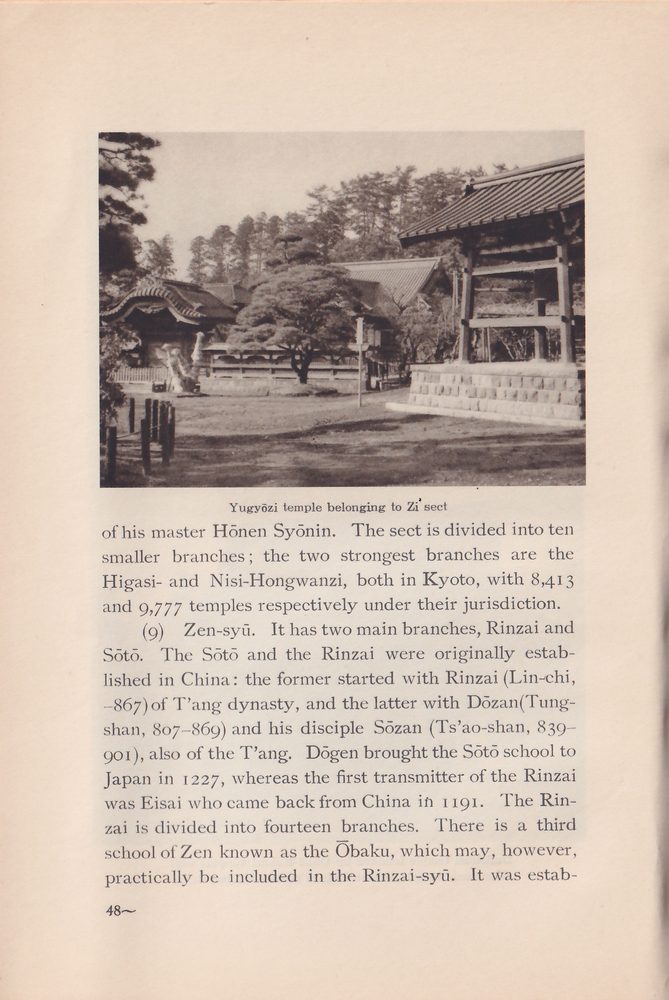
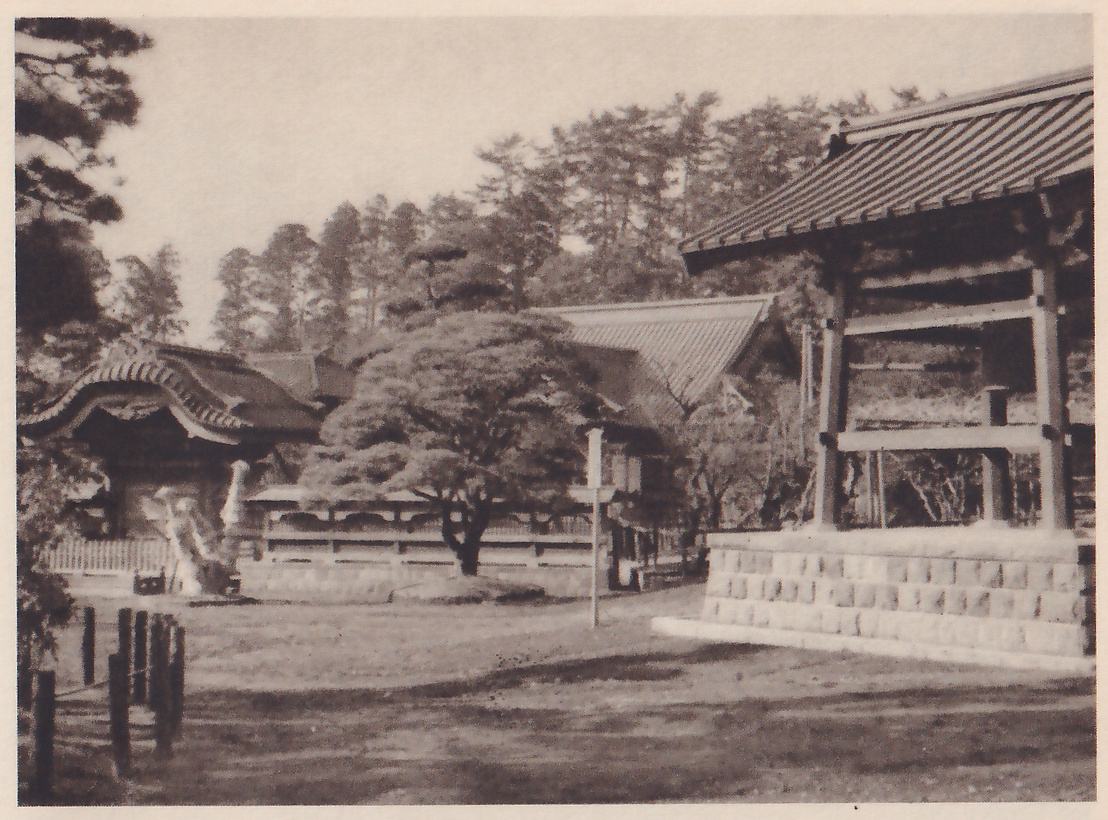
of his master Hōnen Syōnin. The sect is divided into ten smaller branches; the two strongest branches are the Higasi- and Nisi-Hongwanzi, both in Kyoto, with 8,413 and 9,777 temples respectively under their jurisdiction.
(9) Zen-syū. It has two main branches, Rinzai and Sōtō. The Sōtō and the Rinzai were originally established in China: the former started with Rinzai (Lin-chi, –867) of T’ang dynasty, and the latter with Dōzan (Tung-shan, 807–869) and his disciple Sōzan (Ts’ao-shan, 839–901), also of the T’ang. Dōgen brought the Sōtō school to Japan in 1227, whereas the first transmitter of the Rinzai was Eisai who came back from China in 1191. The Rinzai is divided into fourteen branches. There is a third school of Zen known as the Ōbaku, which may, however, practically be included in the Rinzai-syū. It was estab-
lished in Japan by a Chinese Zen-master, Ingen (1592–1673), in 1661. The Manpukuzi, of Uzi, which was built in the style of a Chinese temple is its main temple. The Sōtō-syū has two main temples, Eiheizi near Hukui, and Sōzizi at Turumi. The Rinzai has fourteen, of which Myōsinzi is the largest.
(10) Nitiren-syū. Nitiren Syōnin who first proclaimed its teaching in 1253 is its founder. It is divided into two schools, which are further divided into nine, and the largest and most influential of them all is known as the Nitiren-syū, bearing the original title unchanged. The head-temple of the Nitiren-syū is Kuonzi at Minobu.
(11) Zi-syū. This was established by Ippen Syōnin in 1226, and its head-temple is the Syōzyōkōzi, popularly known as Yugyōzi, in Huzisawa.
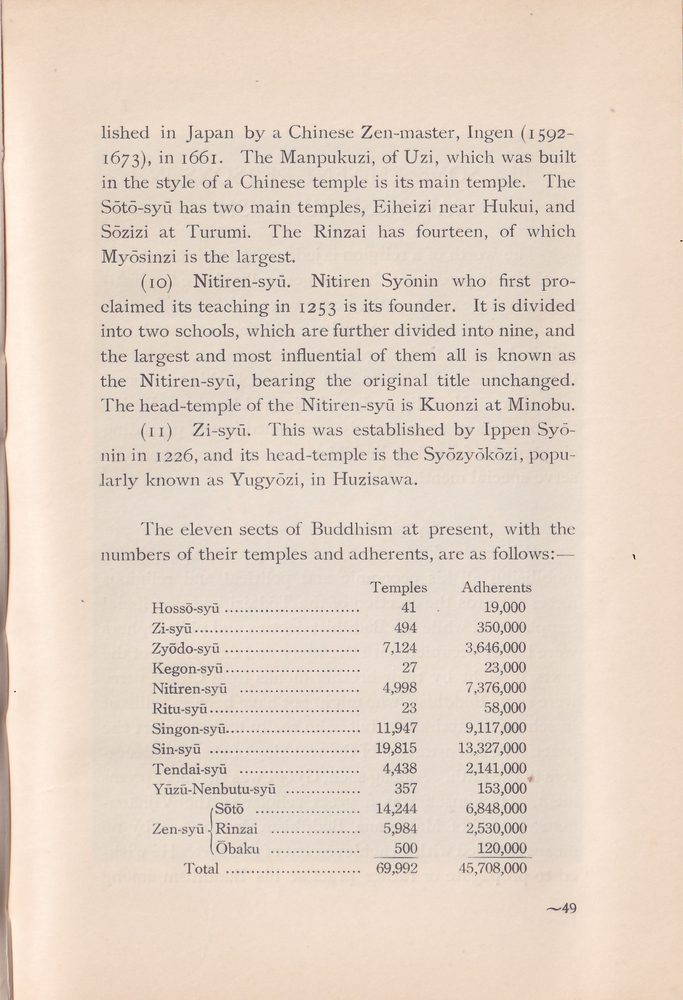
The eleven sects of Buddhism at present, with the numbers of their temples and adherents, are as follows:—
| Temples | Adherents | ||
|---|---|---|---|
| Hossō-syū | 41 | 19,000 | |
| Zi-syū | 494 | 350,000 | |
| Zyōdo-syū | 7,124 | 3,646,000 | |
| Kegon-syū | 27 | 23,000 | |
| Nitiren-syū | 4,998 | 7,376,000 | |
| Ritu-syū | 23 | 58,000 | |
| Singon-syū | 11,947 | 9,117,000 | |
| Sin-syū | 19,815 | 13,327,000 | |
| Tendai-syū | 4,438 | 2,141,000 | |
| Yūzū-Nenbutu-syū | 357 | 153,000 | |
| Zen-syū | Sōtō | 14,244 | 6,848,000 |
| Rinzai | 5,984 | 2,530,000 | |
| Ōbaku | 500 | 120,000 | |
| Total | 69,992 | 45,708,000 | |