

IX. TWO NEW SCHOOLS OF FLORAL ART—TEN-CHI-JIN AND BUNJIN-IKE
Ten-chi-jin, or the heaven-earth-man style, and bunjin-ike, or the literati style, are both new schools in the art of flower arrangement, the former belonging to rikkwa, the standing style, and the latter to nageire, the thrown-in style.
The beginnings of the ten-chi-jin school date from the middle of the 19th century. The founder of the school was Mishōsai Ippo, who later came to be better known as the originator of the Mishō School. The nature and characteristics of the school ten-chi-jin may be best illustrated by a concrete example. Suppose there are three branches of cherry blossoms of different length to be arranged. The longest branch will be called ten, heaven, the medium length jin, man, the shortest chi, earth. The heaven branch will be put in the middle of the vase, the man branch at one side, and the earth branch in front of the heaven branch. If lines are drawn passing through the end of each branch, an irregular triangle will be formed. According to this school of flower arrangement, the form must be triangular. The art of flower arrangement as taught by this school was, no doubt, very simple at the beginning, but as time went on, the followers of the school became tired of its simplicity and monotony, and began
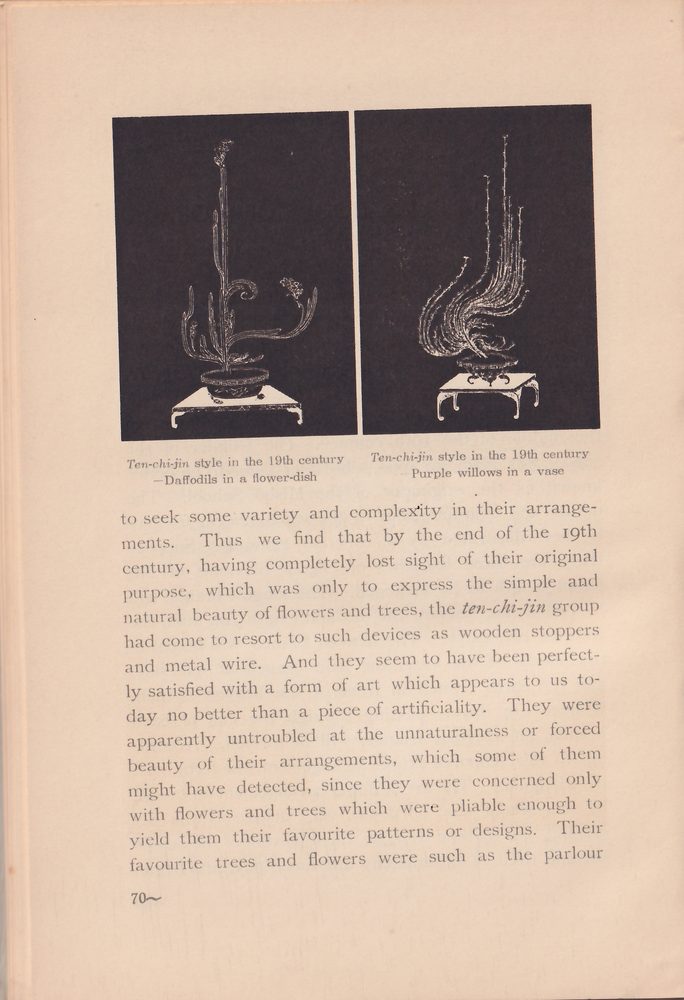
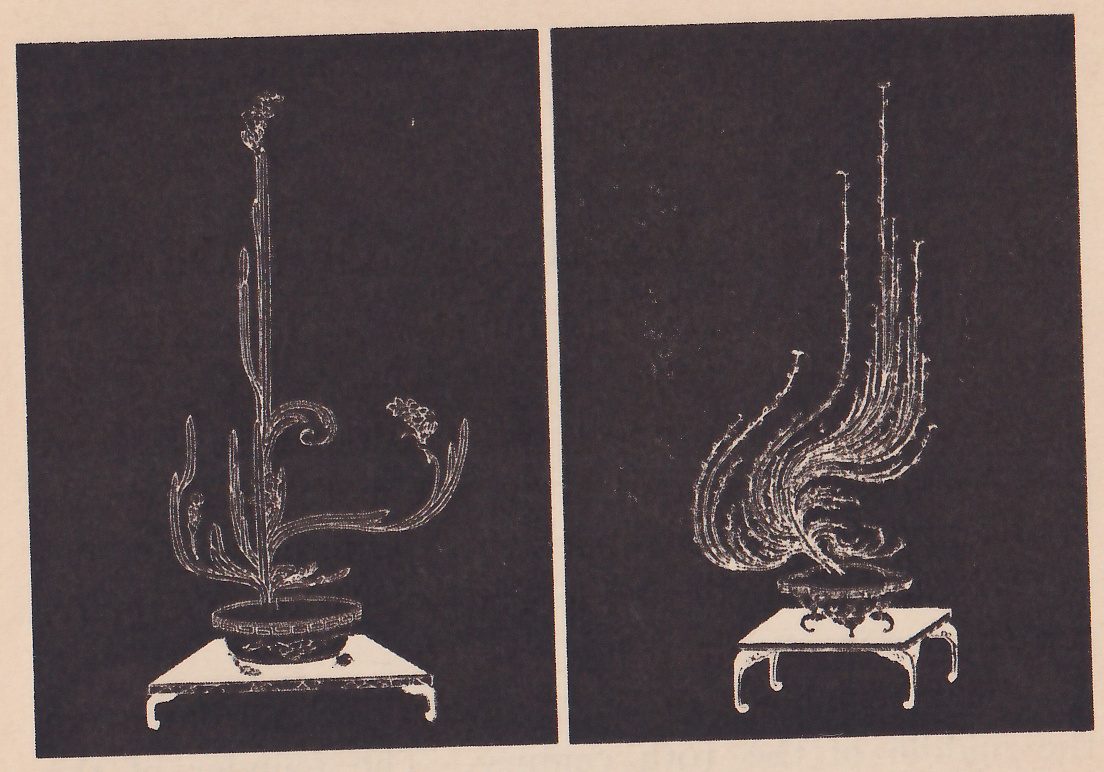
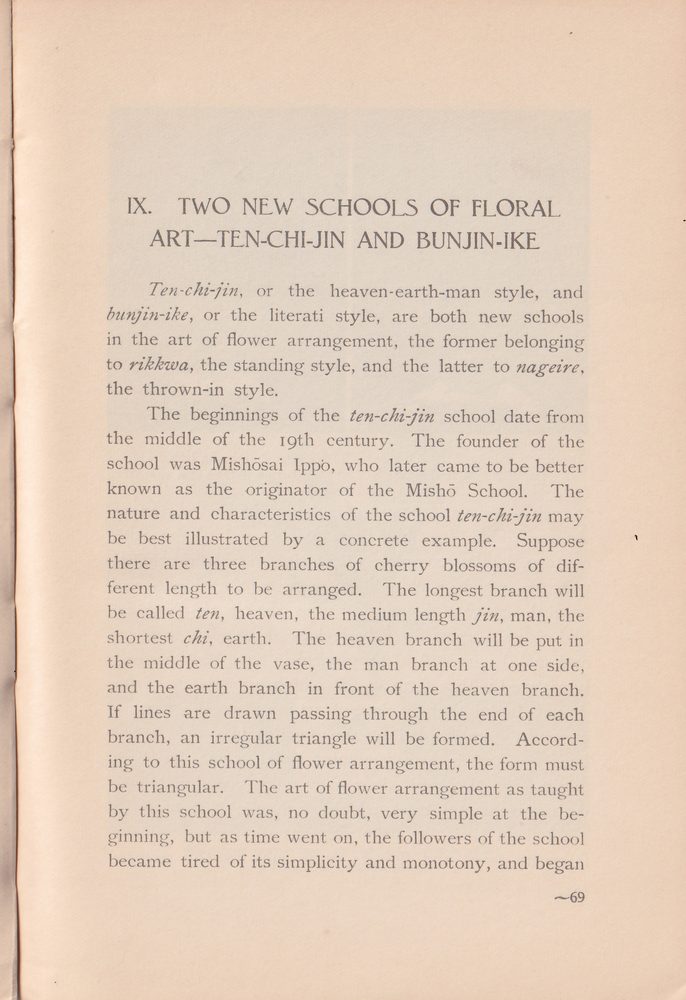
Ten-chi-jin style in the 19th century Purple willows in a vase
to seek some variety and complexity in their arrangements. Thus we find that by the end of the 19th century, having completely lost sight of their original purpose, which was only to express the simple and natural beauty of flowers and trees, the ten-chi-jin group had come to resort to such devices as wooden stoppers and metal wire. And they seem to have been perfectly satisfied with a form of art which appears to us to-day no better than a piece of artificiality. They were apparently untroubled at the unnaturalness or forced beauty of their arrangements, which some of them might have detected, since they were concerned only with flowers and trees which were pliable enough to yield them their favourite patterns or designs. Their favourite trees and flowers were such as the parlour
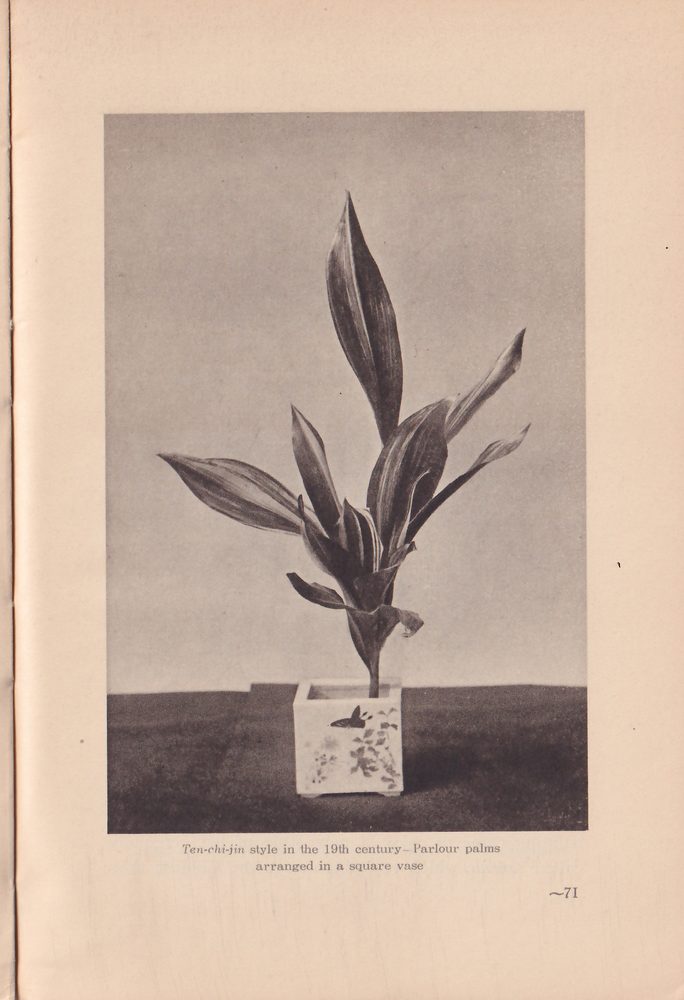
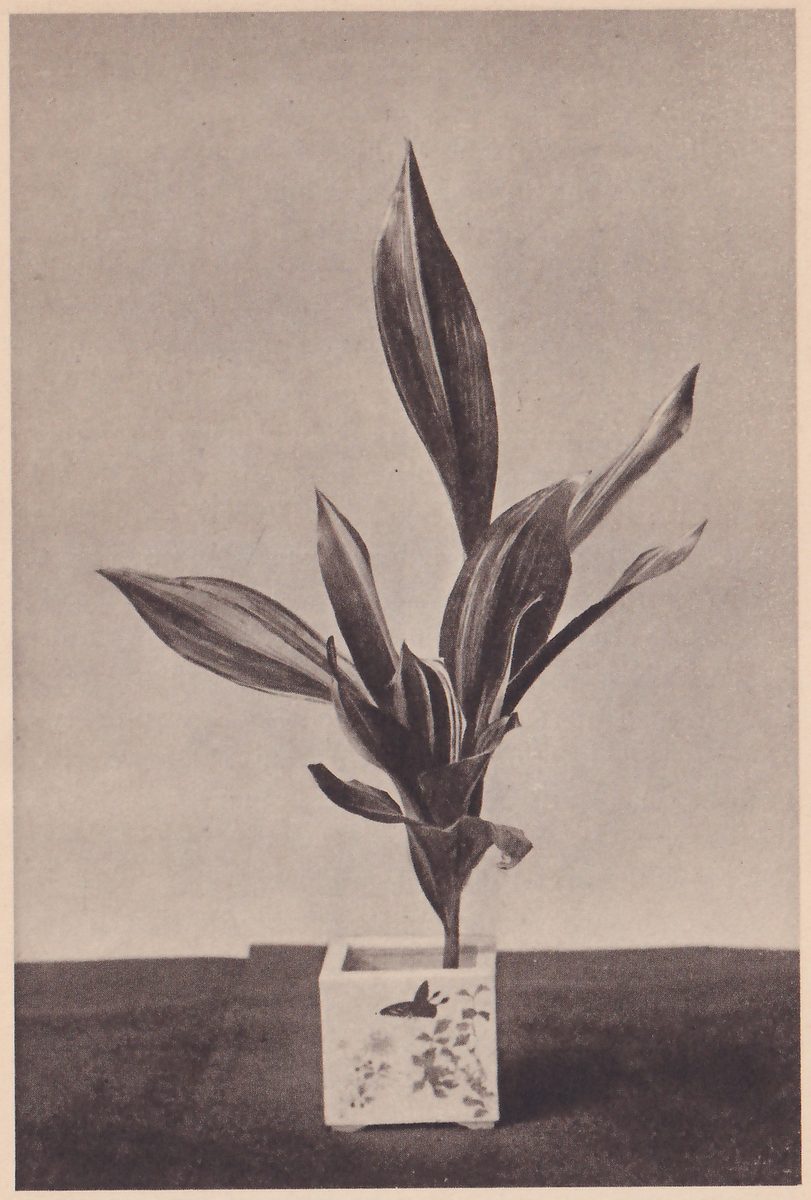
palm, itasugi (cypress), podocarpus chinensis, the Scotch broom, the purple willow, the basket willow, and the enkō willow.
The ten-chi-jin school, though it may indicate the nimbleness of the Japanese finger and a love of minuteness or subtlety, hardly deserves to be regarded as having much esthetic or cultural value. It is rather a decadent form of the art, and hence it cannot be regarded as of much significance. But from the standpoint of the architectural use of nature, or fashioning nature into a design, or of providing house decoration, it is undoubtedly of great value. Moreover, it is in harmony with Western style of architecture rather than with simple and almost artless Japanese forms. Hence the Western student may find in it much to interest him, especially as it contains, I think, great possibilities for developing a new school of floral art in the West.
New nageire, or the new school of thrown-in style, hitherto called bunjin-ike, differs from old nageire, or the old school of thrown-in style, in many ways. The term bunjin-ike came to be applied to the new school of thrown-in style since it originated in the bun-jin school of Japanese painting. The bun-jin (literati) pictures developed in Japan under the influence of Chinese painting at the end of the 18th century. As a school of Japanese painting, therefore, it is of comparatively recent development. Among the masters of this school of painting are Ikeno Taiga, Yosa Buson, Tani Bunchō, Tanomura Chikuden. The lovers of this new school of painting came to enjoy a new style of tea ceremony called sencha, which resembles more the Chinese than
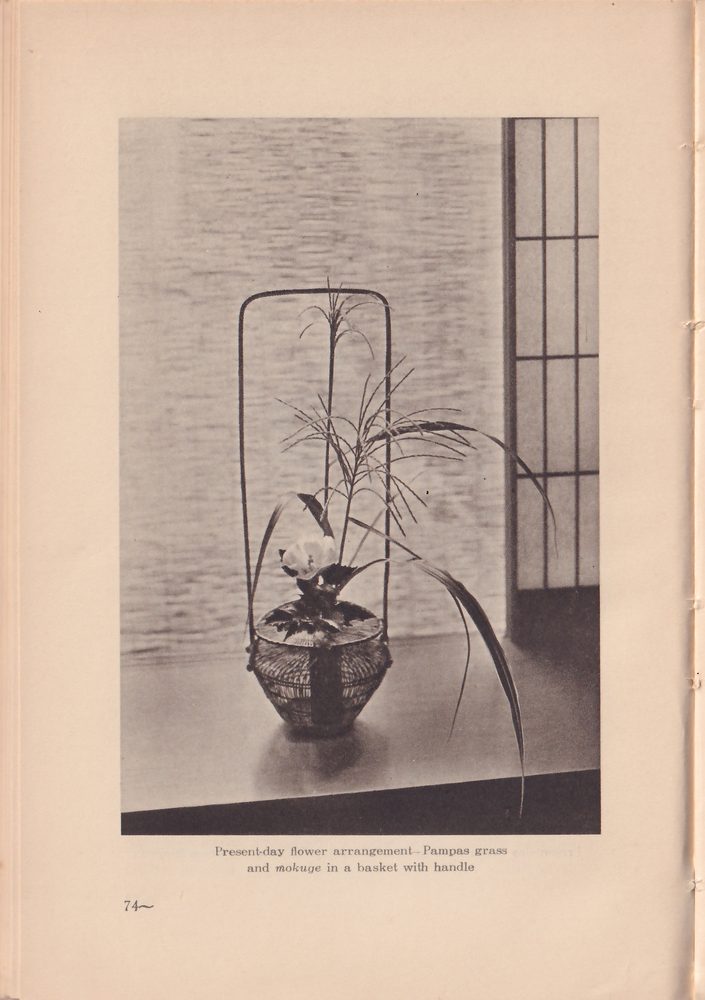
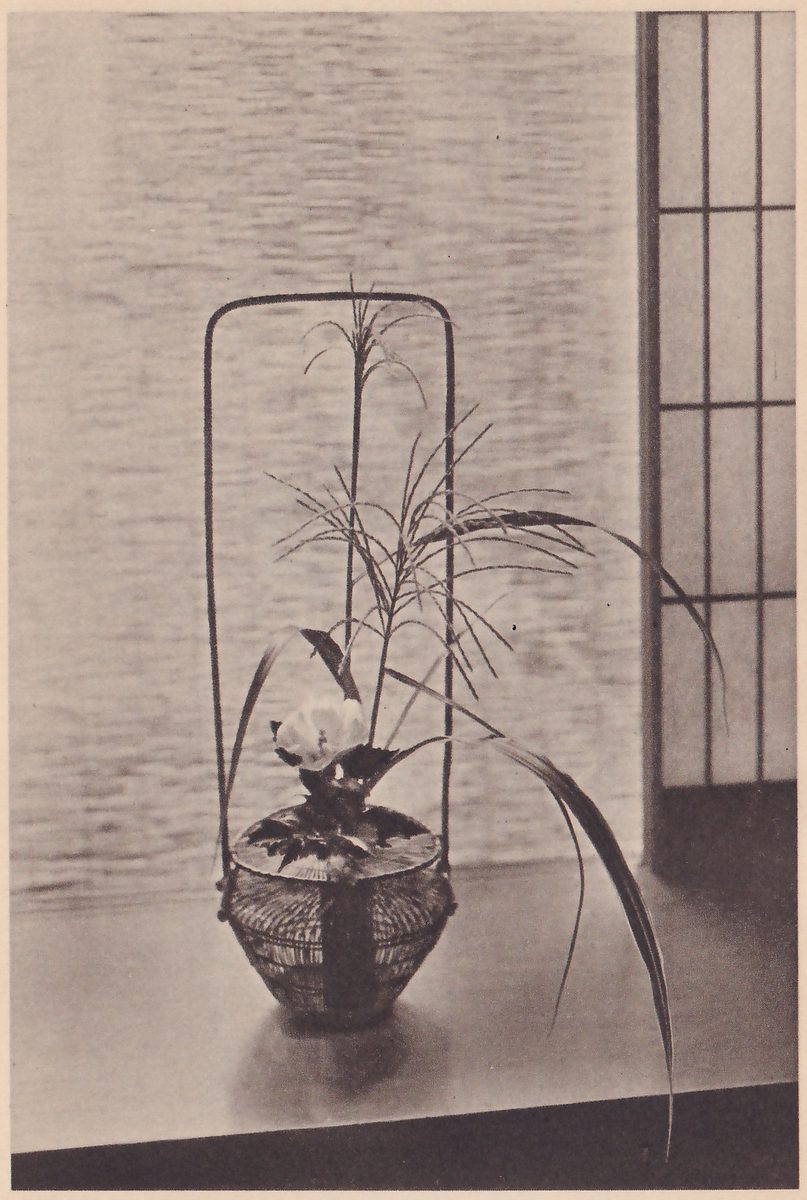
the hitherto existing Japanese tea ceremony. With this new tea ceremony came a new school of floral art, which was no other than bunjin-ike.
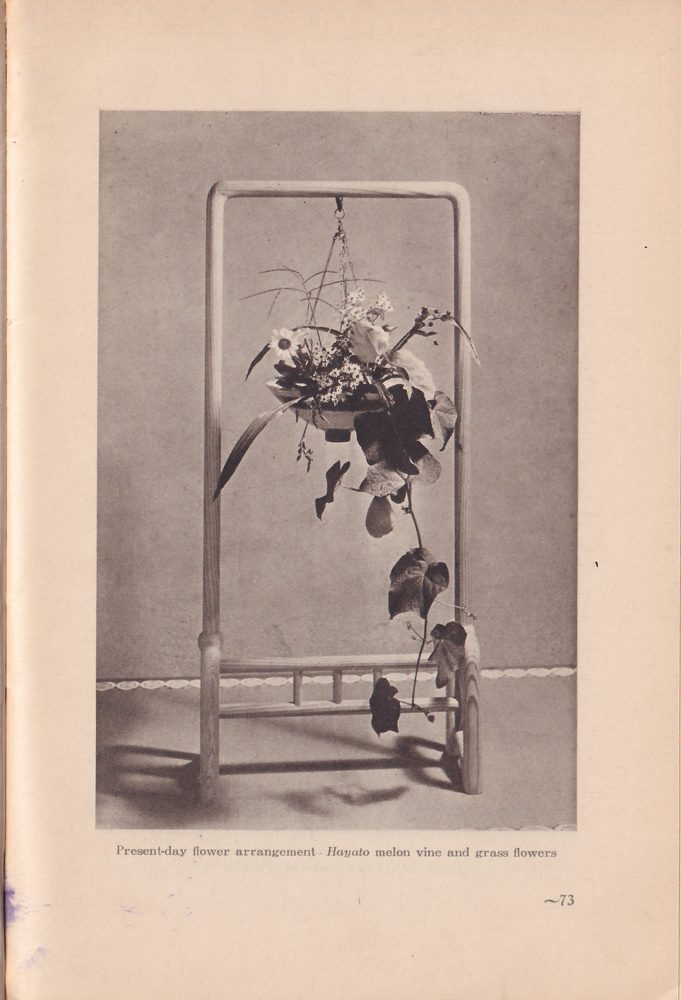
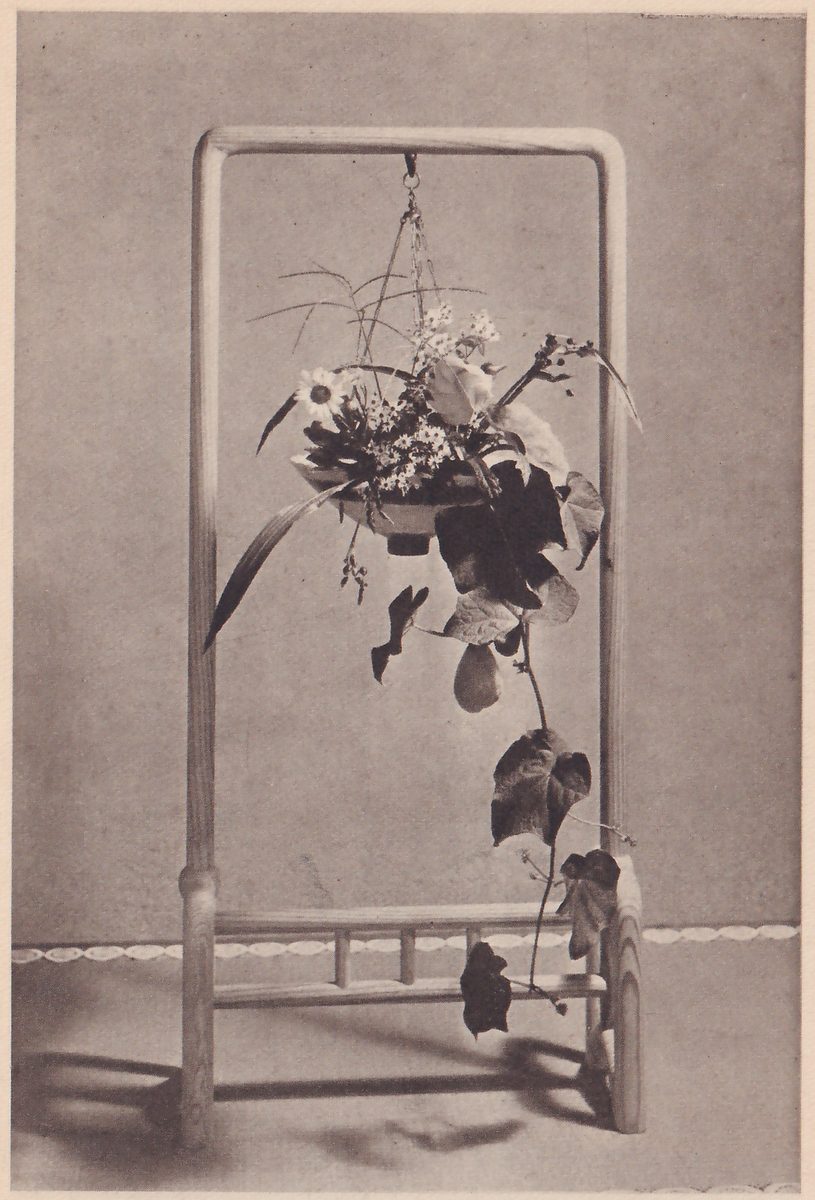
Bunjin-ike departs greatly from the traditions of Japanese floral art. If compared with other forms of flower arrangement, it is more like amateur arrangement, or, one might say, a free style drawing. But because of its amateurishness it is characterized by freedom from conventionality, and newness of spirit. The birth of this new school is attributed to the painters of so-called bunjin-gwa, or the literati pictures, among whom the most famous was Tanomura Chikuden, who was very fond of the new school of floral art and wrote concerning it. His book is still extant. But in the days of Chikuden, those who really appreciated the new school of art were very few, perhaps only the men who associated with him and loved sencha. In the Meiji Era, however, the new style attracted more attention, as it found a spokesman in the learned man Hosokawa Junjirō, who wrote on the subject and published a work entitled “Nenge Bishō” (Beaming Eyes at the Flowers Arranged in Water). Even then the public paid very little attention to the new school. It is only in the last twenty years that the beauty and worth of the art have come to be recognized by the public. It is this art which has replaced the ten-chi-jin school, and come to be recognized as representative of the Japanese floral art, and which is now called shin nageire, or the new thrown-in style.
The difference between the new and the old in nageire does not seem very clear even to the Japanese.
As a matter of fact, it can never be clearly understood by any except those who have been initiated into this new school of the art. The new school is characterized by greater freedom, candidness, variety, and gaiety, while the old school, having been influenced by the tea ceremony, has been simple, sombre, plain, and somewhat over-scrupulous and methodical in character. The origin of these differences is to be found in the fact that the one was born of the strict, colourless, and very simple life of the masters of tea ceremony, while the other is to be traced to the care-free, colourful, and active life of the artists of the literati school. It is difficult, however, to find such clear-cut distinctions today, since in these days so many forms of the past schools have come to be intermingled, and a pure style has come to be as rare a thing in floral art as in all other forms of art today. Strictly speaking, the ikebana of Japan today is neither that of bunjin-ike nor that of old nageire. It is perhaps a combination of all these past forms plus some new elements, which is in the process of forming a new school of floral art for the Japan of tomorrow.