

X. HOW TO ARRANGE FLOWERS
The number of flowers or branches to be arranged in a vase varies from two to eight or nine, according to the size of the vase and the nature of the flowers or branches. One branch may sometimes be sufficient, but usually a single branch or flower makes too simple an arrangement to be satisfying, since it is obvious, for instance, that the situation becomes geometrically complicated by the simple mathematical addition of one branch, say C, to the two already arranged branches A and B. So at least two or three branches should be used.
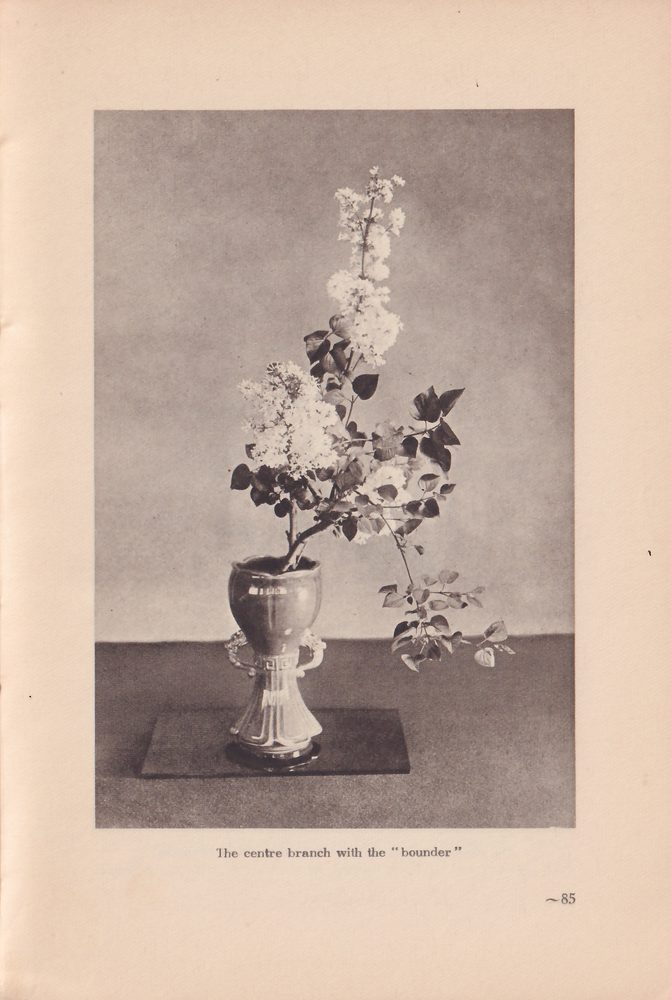
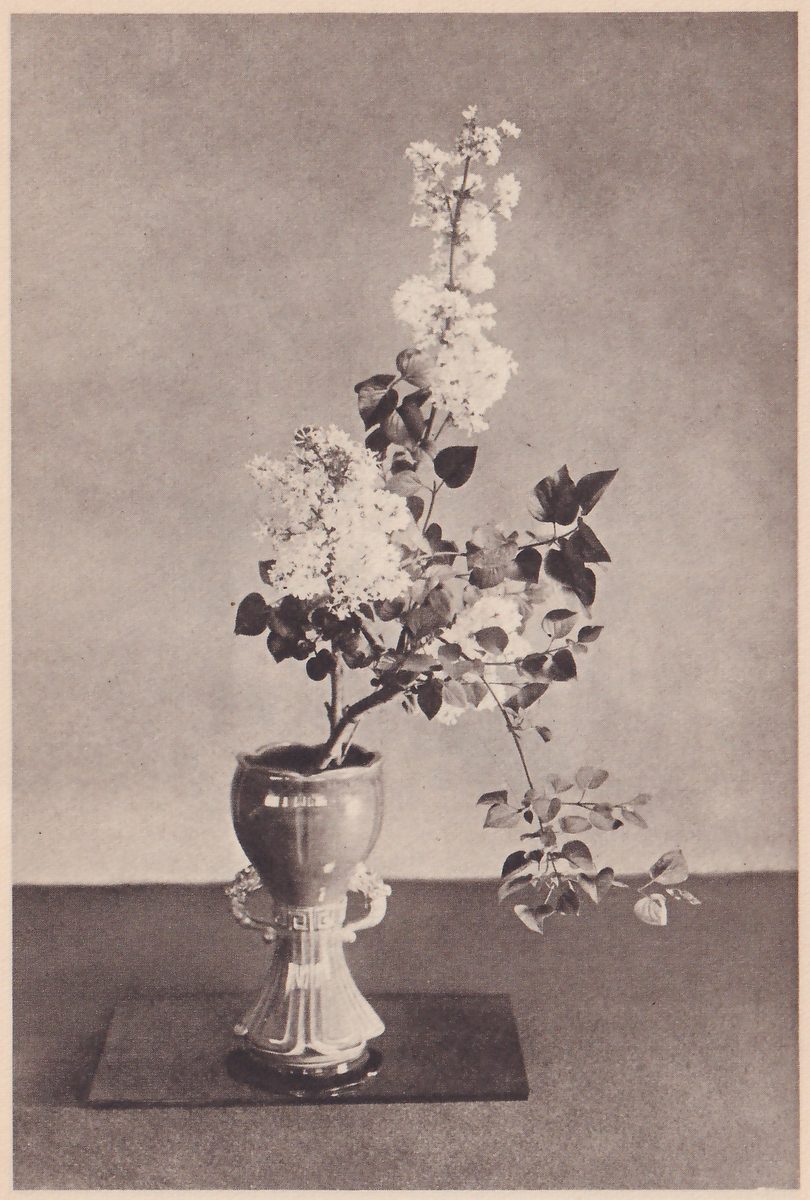
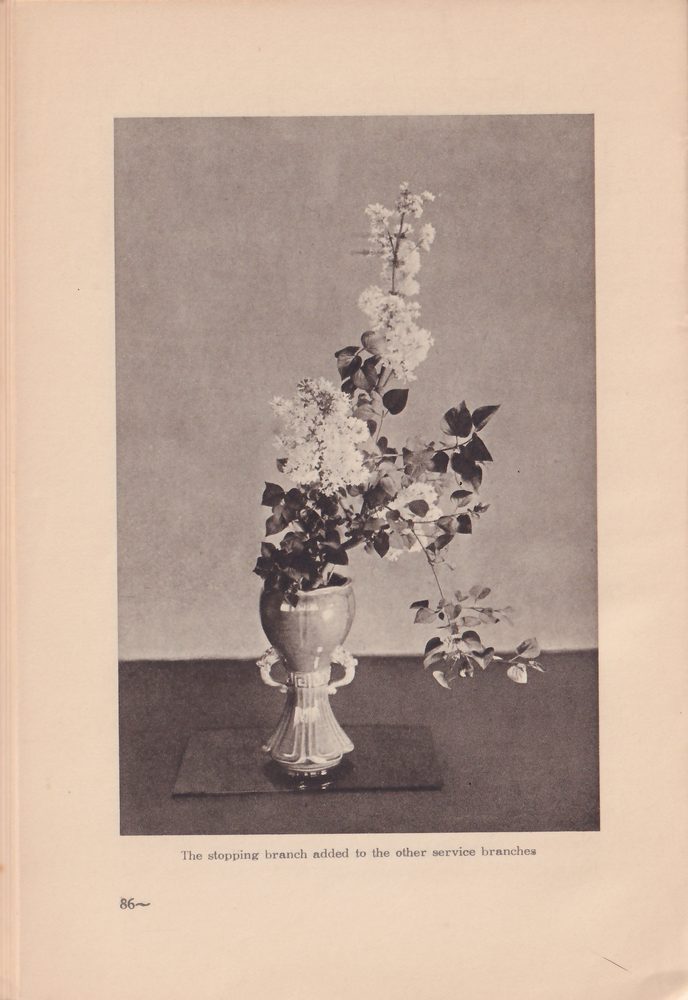
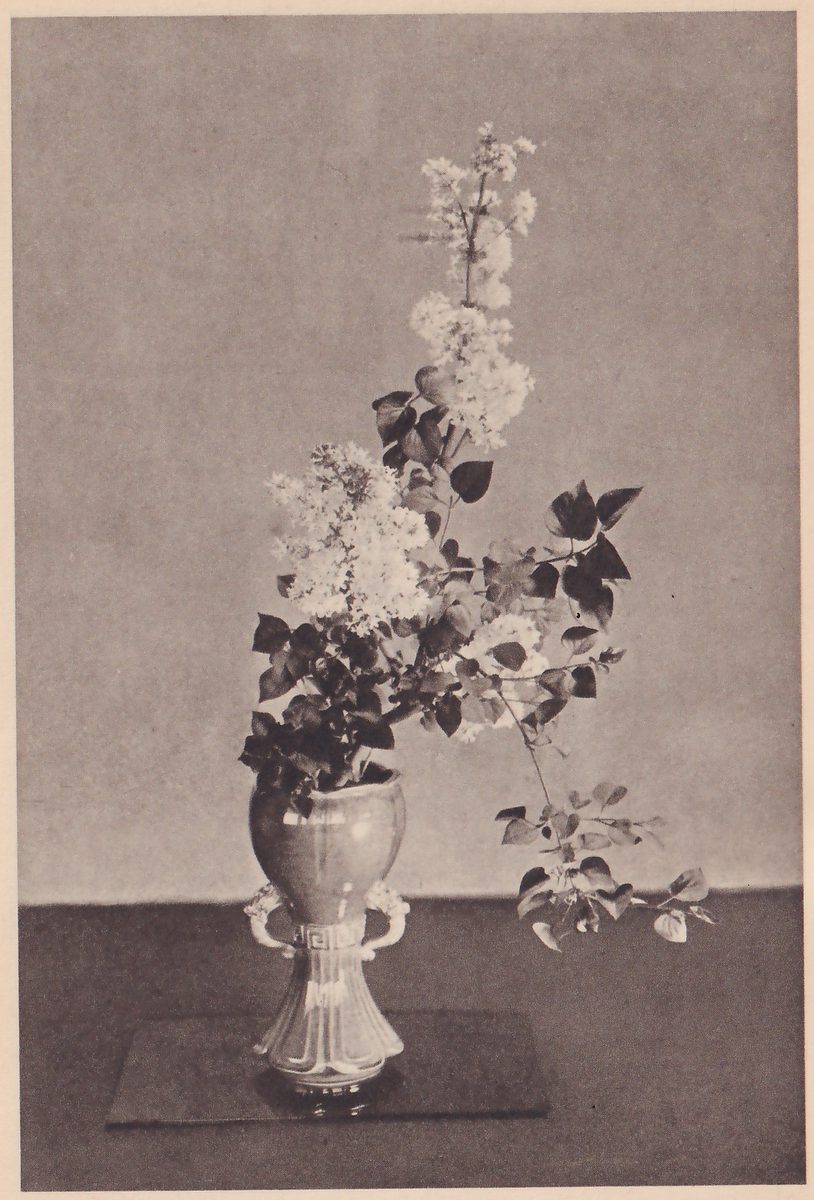
Suppose there are three branches to be arranged, namely, A, B, C. The main serving branch A will be called shin, the centre; B acting upon A will be called hazumi, the “bounder”; C inserted between A and B will be called tome, the “stopper.” Shin, the centre, forming the backbone of the arrangement; hazumi, the “bounder,” the variety; and tome, the “stopper,” the conclusion: these three constitute the service branches of flower arrangement.
When these three branches do not seem sufficient, however, or when there is something lacking in form, another branch may be added. All the branches arranged after the main service branches have been arranged are called “added branches.”
When arranging flowers, one should put the tray
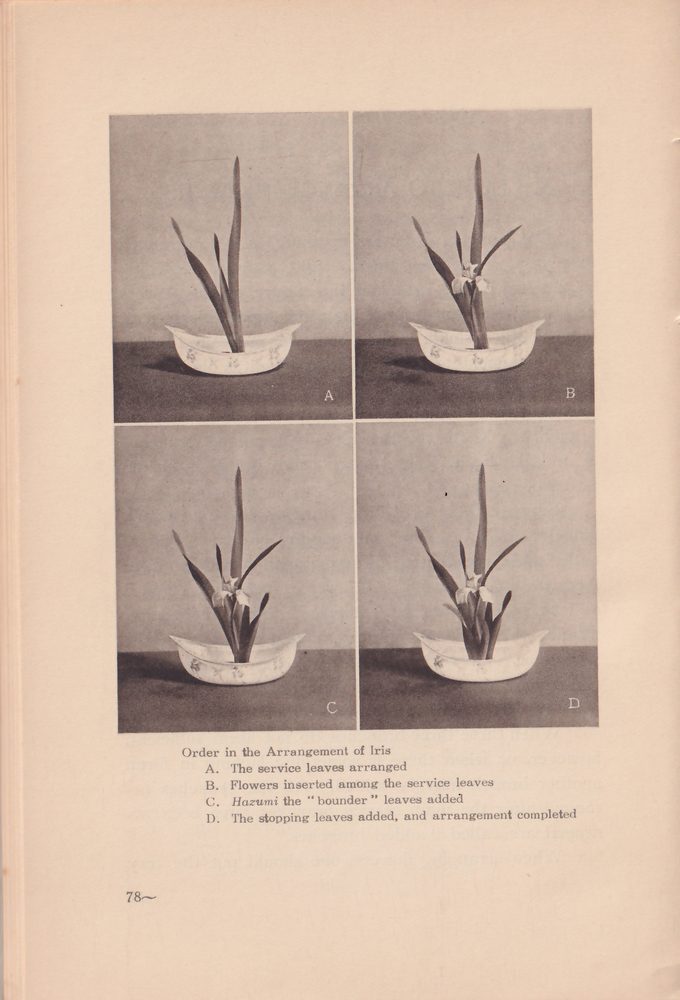
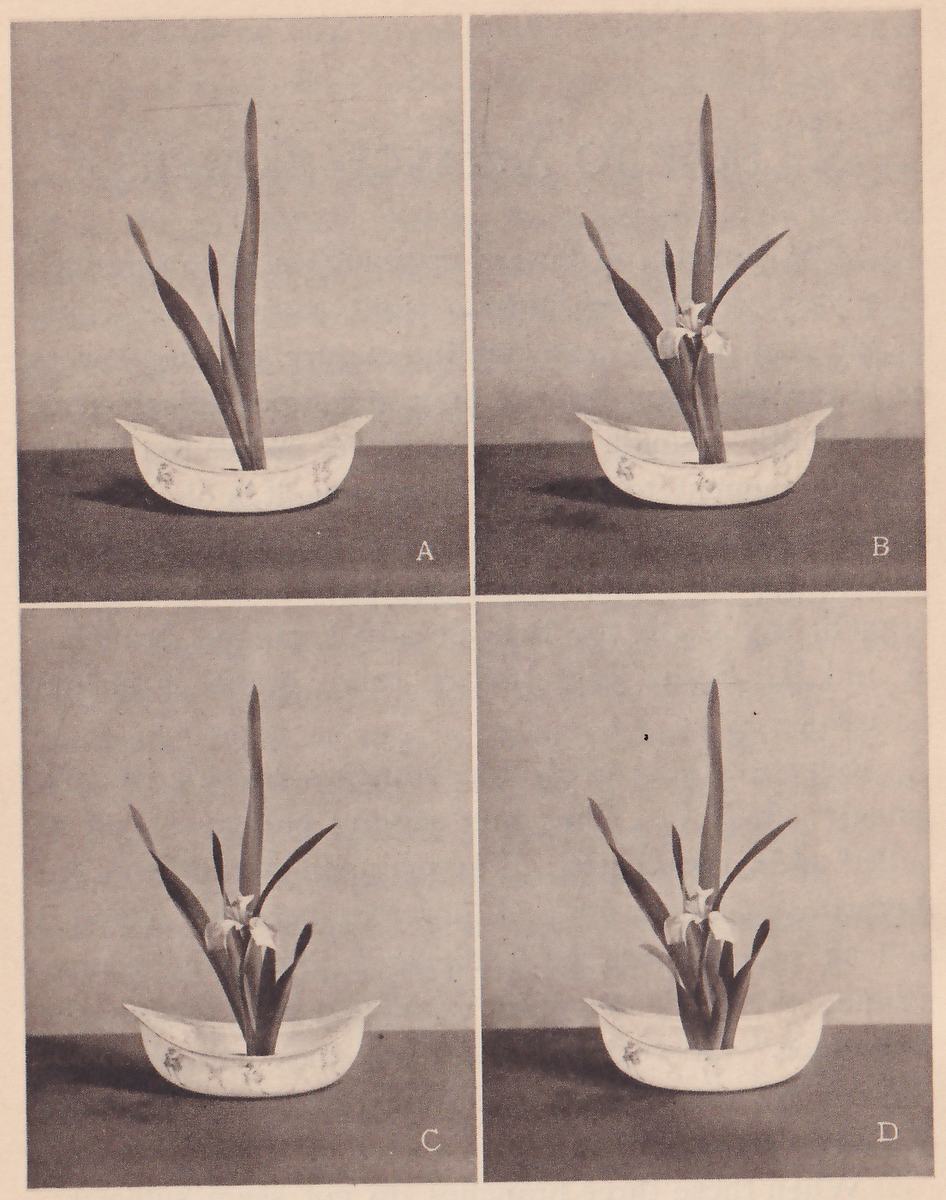
A. The service leaves arranged
B. Flowers inserted among the service leaves
C. Hazumi the “bounder” leaves added
D. The stopping leaves added, and arrangement completed
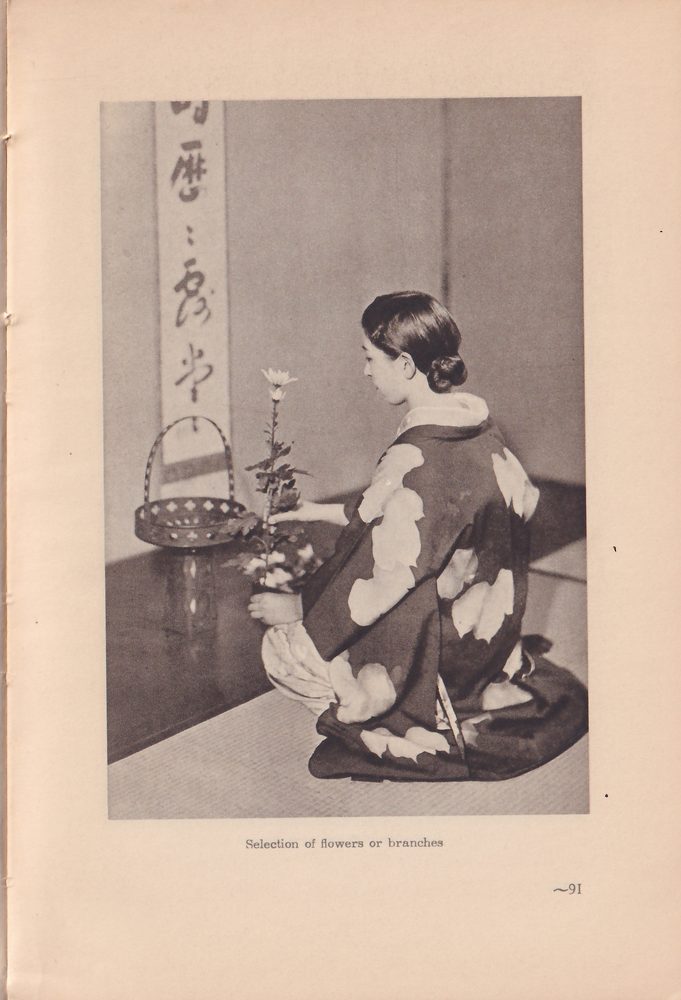
containing all the flowers necessary for arrangement to his right, and a flower vase in front of him about two feet away. It is easier to arrange flowers if the vase is very near, but in order to view the flowers while they are being arranged, it is better to keep it as far away as possible. Also, the position of the vase should be a little higher than the level of the eye. The proper position, I think, is somewhere between one’s chair and the level of the eye. It is better to have it too high rather than too low, because if the vase is too low, one is apt to look down on the flowers when arranging them, and consequently the flowers will look quite different from what they were intended to look like when the arrangement is completed. The most important of all, however, is what the Japanese call mizugiwa, the water’s edge, or the point where the flowers come into contact with the water in the vase. This point often escapes the eye if the vase is placed too low while making the arrangement, and when all is finished, it may appear very awkward or clumsy, and thus may ruin the entire effect of the art.
Selection of Flowers
It is of primary importance to examine the shape and size of the vase in which flowers are to be arranged before the selection of flowers is made, since the arrangement depends largely upon the size of the vase’s mouth, as also its width and depth. To think of the security or fixity of each flower or branch is, of course, necessary, but at the same time it is well to keep in mind the fact that some flowers may look best if ar-
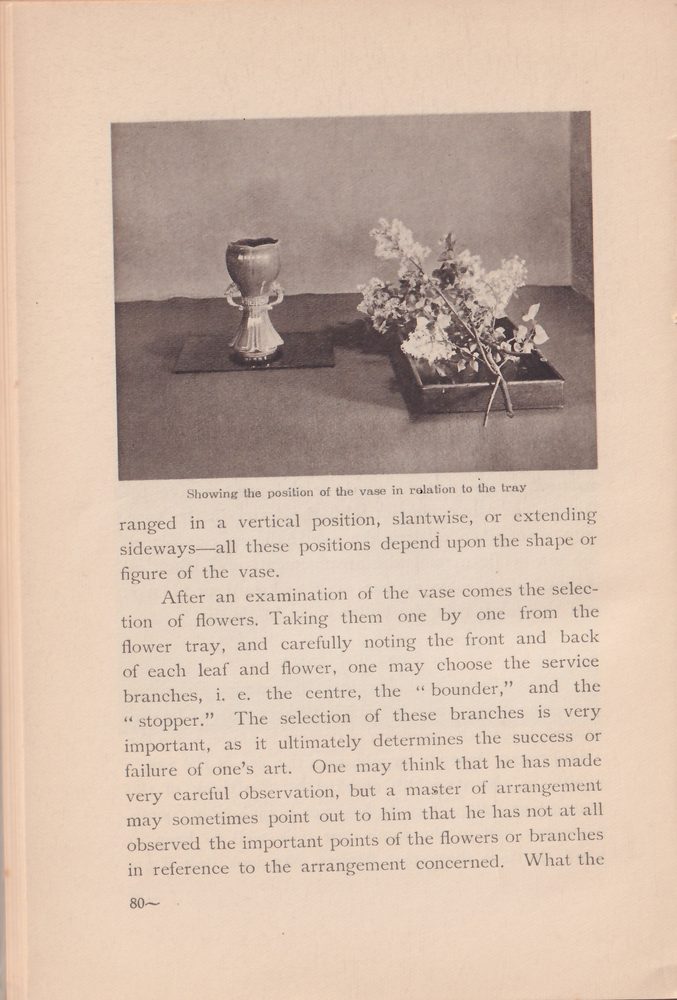
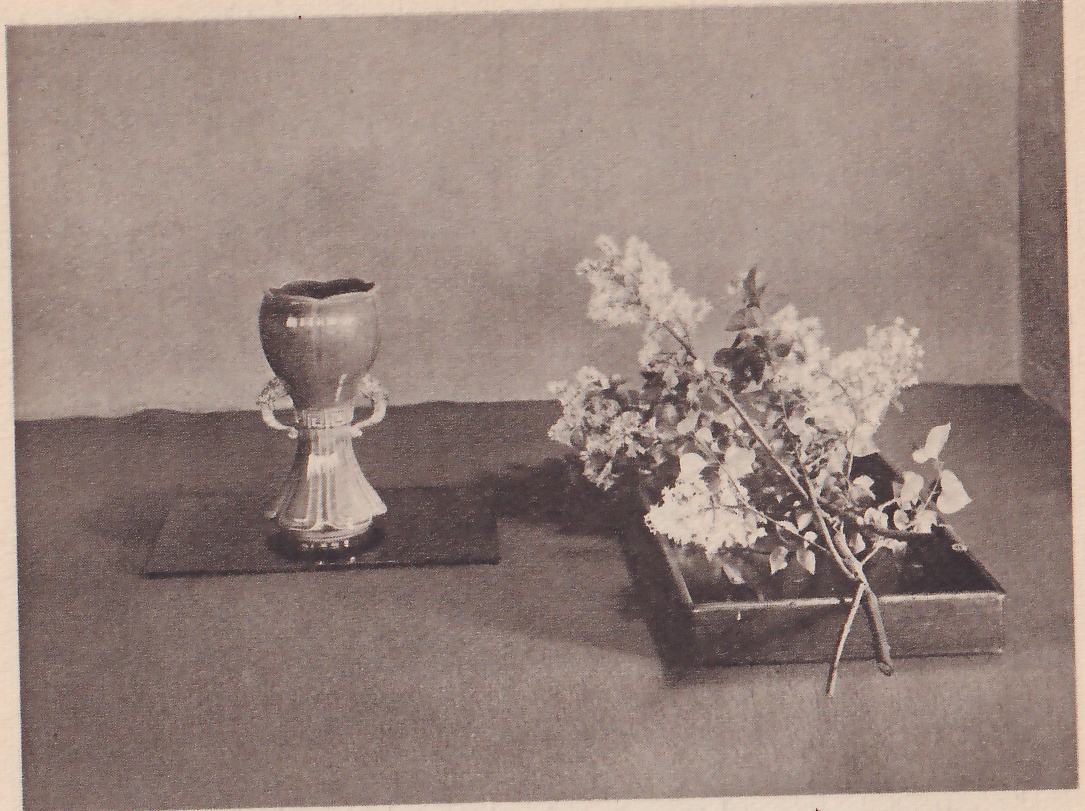
ranged in a vertical position, slantwise, or extending sideways—all these positions depend upon the shape or figure of the vase.
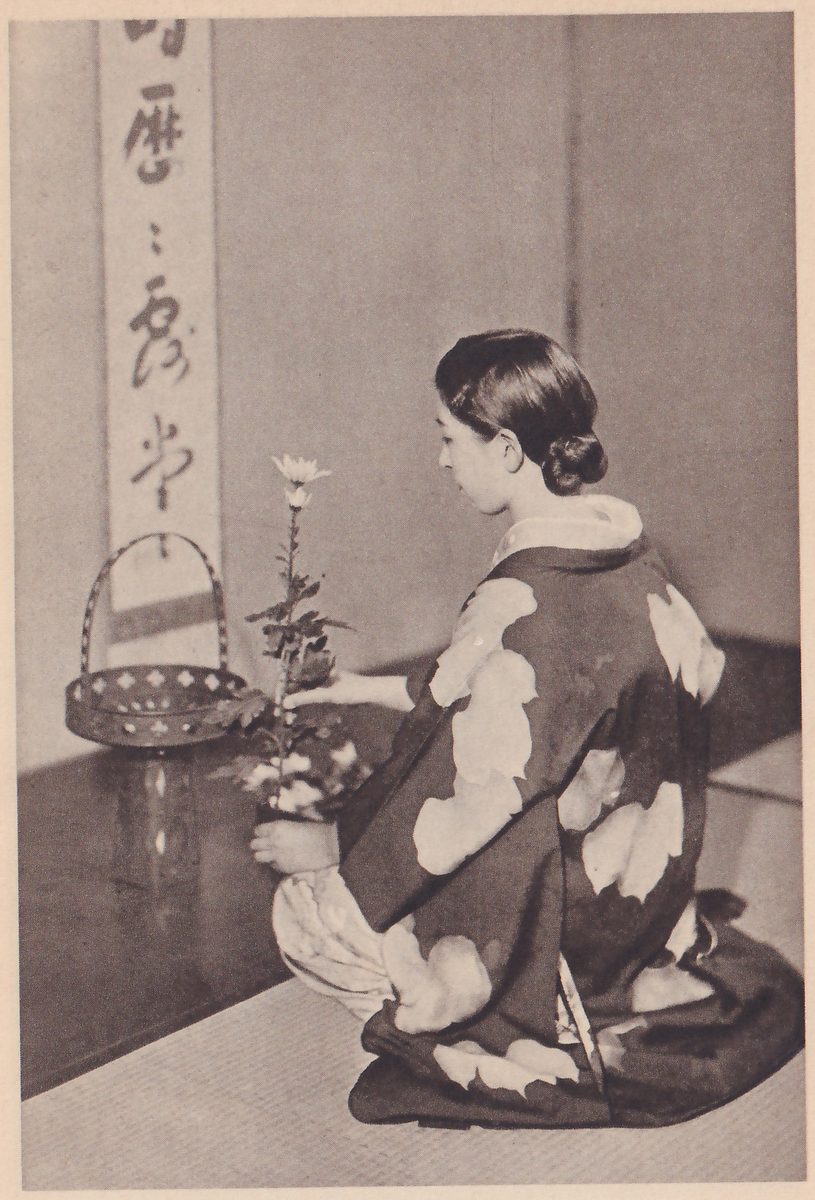
After an examination of the vase comes the selection of flowers. Taking them one by one from the flower tray, and carefully noting the front and back of each leaf and flower, one may choose the service branches, i. e. the centre, the “bounder,” and the “stopper.” The selection of these branches is very important, as it ultimately determines the success or failure of one’s art. One may think that he has made very careful observation, but a master of arrangement may sometimes point out to him that he has not at all observed the important points of the flowers or branches in reference to the arrangement concerned. What the
interesting points of flowers are, what feeling a branch of a tree may convey to the onlooker, what branches are important, or unimportant—these perhaps require years of experience in the art before satisfactory answers can be given. And then, it may sometimes appear that what determines the choice of flowers after all is not one’s experience but insight. At any rate, a great deal of experience is indispensable for the selection of the proper flowers for arrangement.
Pruning of Flowers and Branches
When the flowers or branches have been chosen, the next step is the pruning. For there are no flowers or branches under the sun, however shapely or orderly they may have grown, which are without some superfluous parts. They all therefore need some pruning. Just what flower or branch should be cut off depends upon one’s knowledge of nature and one’s experience in the art of arrangement. The greater part of the pruning should be done before the arrangement is completed, the rest being performed while assembling the branches or after they have been assembled.
The Security of Flowers in Arrangement
Flowers or branches should be arranged so that they will have, first of all, security or equilibrium, i. e. they should be firmly fixed in the vase. This fixity or security depends upon the curve at the “foot” of each flower or branch,—the part of a branch or flower-
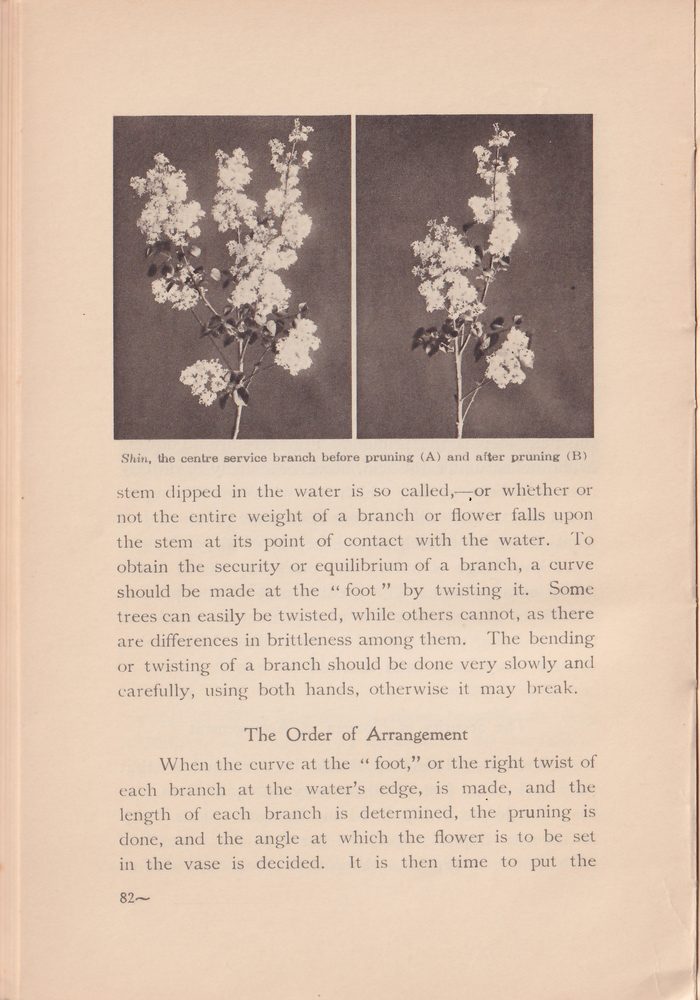
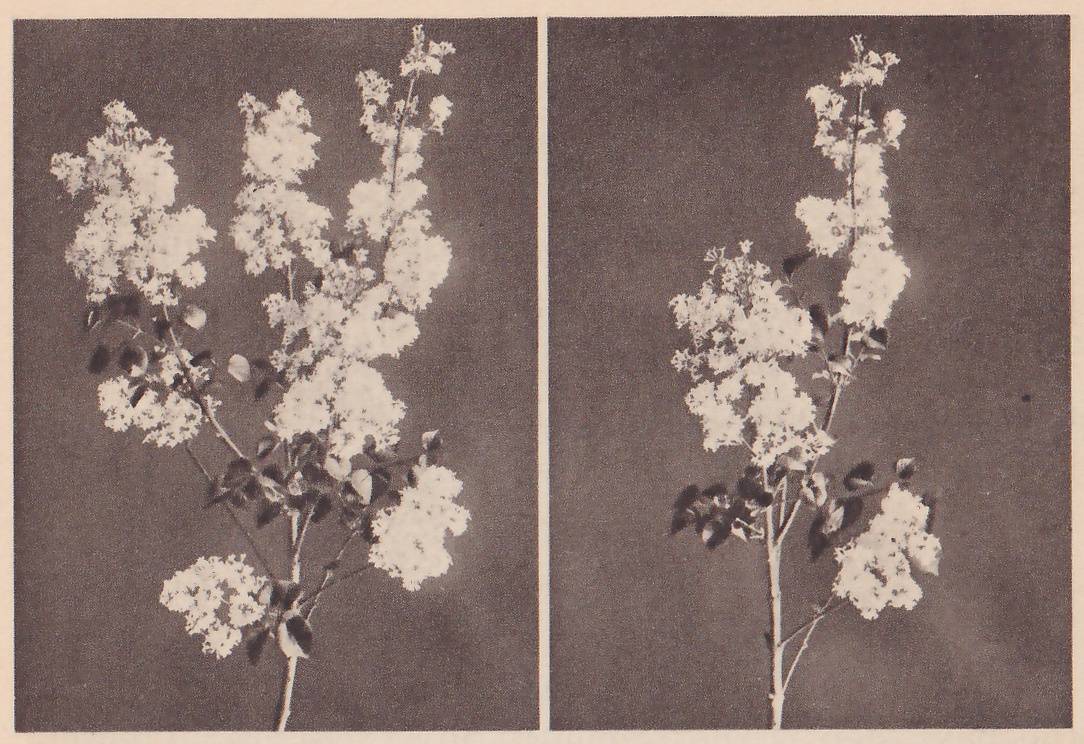
stem dipped in the water is so called,—or whether or not the entire weight of a branch or flower falls upon the stem at its point of contact with the water. To obtain the security or equilibrium of a branch, a curve should be made at the “foot” by twisting it. Some trees can easily be twisted, while others cannot, as there are differences in brittleness among them. The bending or twisting of a branch should be done very slowly and carefully, using both hands, otherwise it may break.
The Order of Arrangement
When the curve at the “foot,” or the right twist of each branch at the water’s edge, is made, and the length of each branch is determined, the pruning is done, and the angle at which the flower is to be set in the vase is decided. It is then time to put the
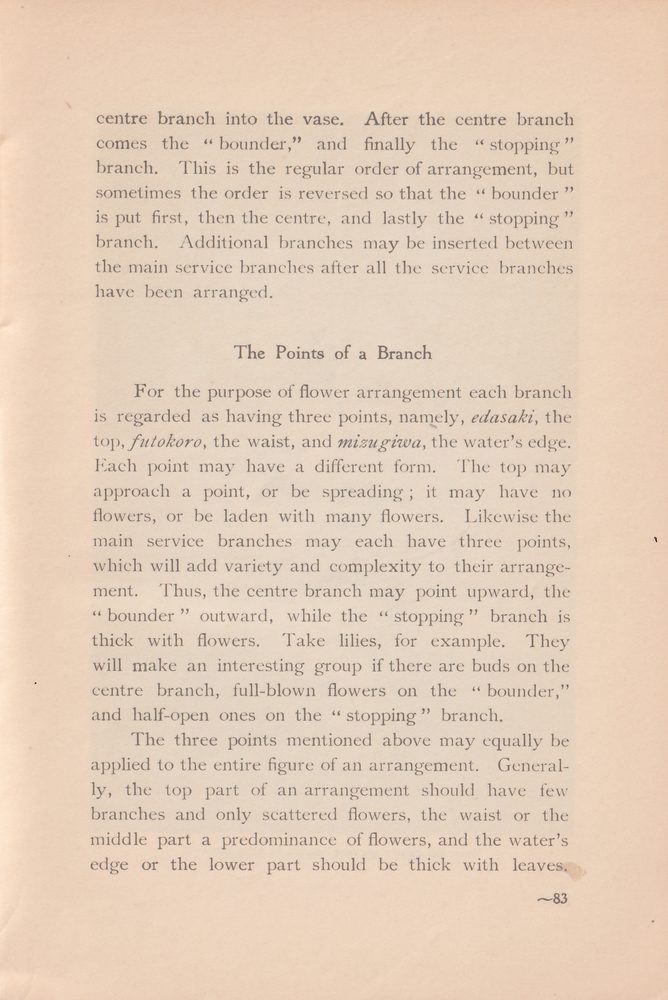
centre branch into the vase. After the centre branch comes the “bounder,” and finally the “stopping” branch. This is the regular order of arrangement, but sometimes the order is reversed so that the “bounder” is put first, then the centre, and lastly the “stopping” branch. Additional branches may be inserted between the main service branches after all the service branches have been arranged.
The Points of a Branch
For the purpose of flower arrangement each branch is regarded as having three points, namely, edasaki, the top, futokoro, the waist, and mizugiwa, the water’s edge. Each point may have a different form. The top may approach a point, or be spreading; it may have no flowers, or be laden with many flowers. Likewise the main service branches may each have three points, which will add variety and complexity to their arrangement. Thus, the centre branch may point upward, the “bounder” outward, while the “stopping” branch is thick with flowers. Take lilies, for example. They will make an interesting group if there are buds on the centre branch, full-blown flowers on the “bounder,” and half-open ones on the “stopping” branch.
The three points mentioned above may equally be applied to the entire figure of an arrangement. Generally, the top part of an arrangement should have few branches and only scattered flowers, the waist or the middle part a predominance of flowers, and the water’s edge or the lower part should be thick with leaves.
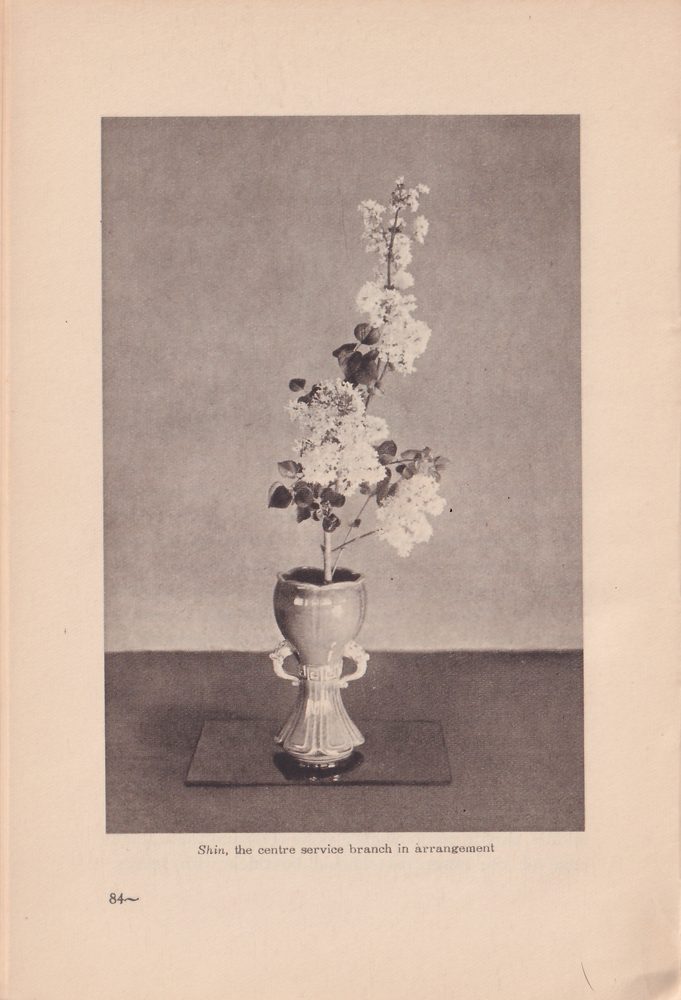
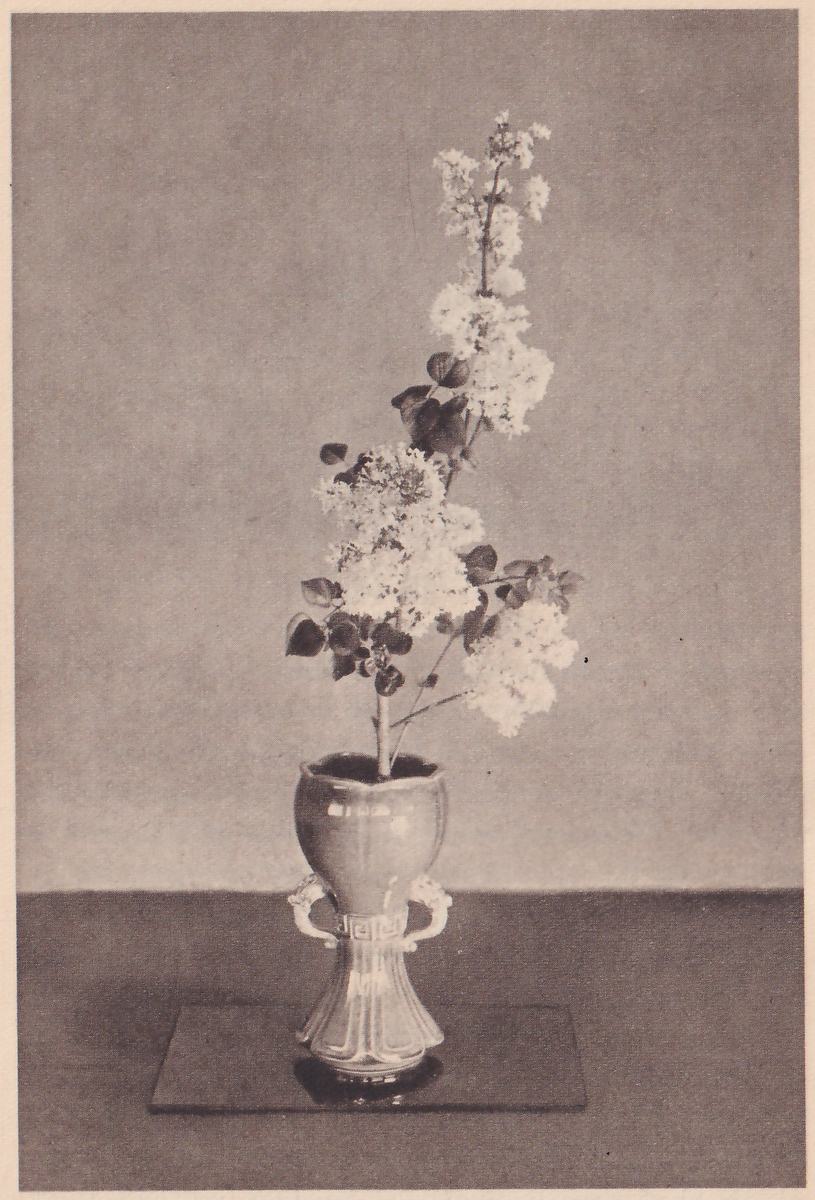
If the middle part should be sparse and spreading, the top luxuriant with flowers or leaves, and the water’s edge thin, there is no depth in the art.
Hachi-ike or the Water-Vase Arrangement
Arrangement in a water-vase is called hachi-ike. There are two kinds of this form of arrangement, namely, kishi-ike, the “land-arrangement,” and mizu-ike, the “water-arrangement.” In kishi-ike, a metal tripod holder is put upon the edge of the vase, and flowers are arranged in this holder. This is to represent flowers growing close by a pond. In mizu-ike, flowers are supposed to grow out of the water, so that a holder is put in the water of the vase. The commonest flowers for this style of arrangement are the iris laevigata (kakitsubata), the lotus, the water lily, and the candock. The position of the holder may be in the middle of the vase, towards a corner, or in two places.
The Beauty of Flowers, Leaves, and Branches
The beauty of a flower may be in the flower itself, or in the branches, or in the leaves, or in all three together. Thus, for instance, the tree-peony, the (herbaceous) peony, and the lily attract the eye with their flowers, while it is the branches rather than the flowers of the cherry and plum trees which charm. Therefore, if one arranges these trees, with regard to the branches, the blossoms will naturally become animated. Such flowers as the iris ensata (hanashōbu), the lotus, the
gibōshu (hosta coerulea), the iris laevigata (kakitsubata), and the daffodil attract us with their lovely leaves rather than with their flowers. And if in arranging them attention is paid to their leaves, the beauty of the flowers themselves will be enhanced. Because of this fact a special study has been made of their arrangement since olden days. The arrangement of these flowers has been called hagumi, or the “leaf-arrangement.”
If the beauty of a flower lies chiefly in the flower itself, importance must be given to the flower. And if it is in the branches, the branches should be made the object of arrangement. But if the real charm is to be found in the leaves, the attention should be centred on the leaves themselves.
If any one is ignorant of the character of different flowers, and should centre his attention on the branches when the leaves should be given the greater importance, or should approach the arrangement from the standpoint of the flowers when he should be considering the branches, his efforts will end in failure. For they are quite beside the mark. Those who arrange flowers are like those who employ men. In order to make full use of the employees the employer should know their strong points as well as their weaknesses. So with those who manipulate flowers—they, too, must be aware of the strength as well as weakness of each flower in order to succeed in properly manipulating these delicate creations of nature.
I. ARRANGEMENT IN A VASE FOR TOKONOMA
II. ARRANGEMENT IN A HANGING VASE
III. ARRANGEMENT IN A WATER VASE
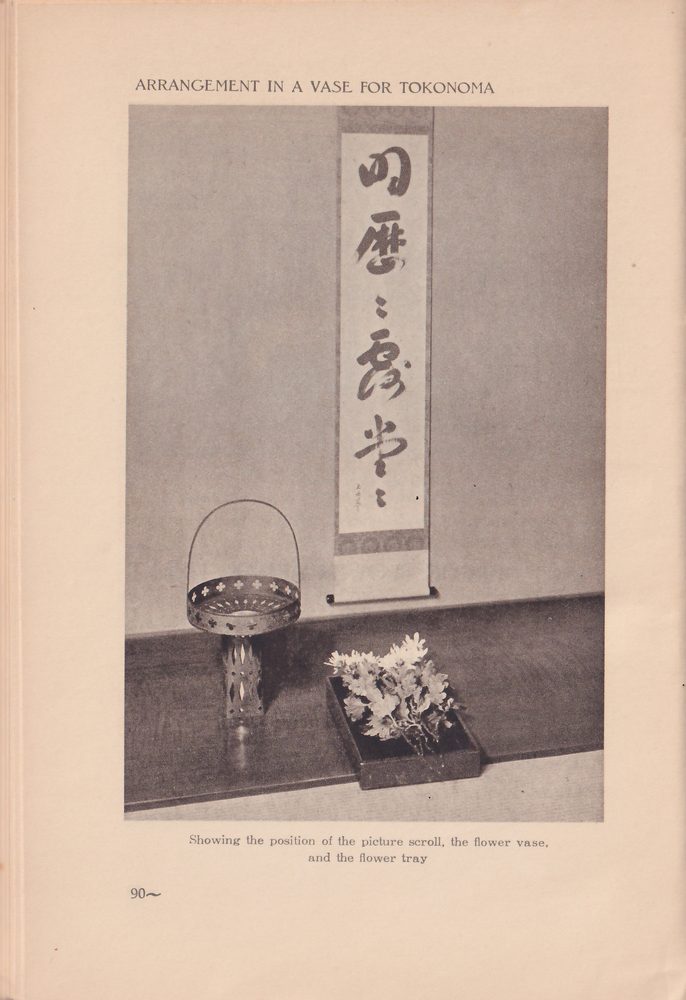
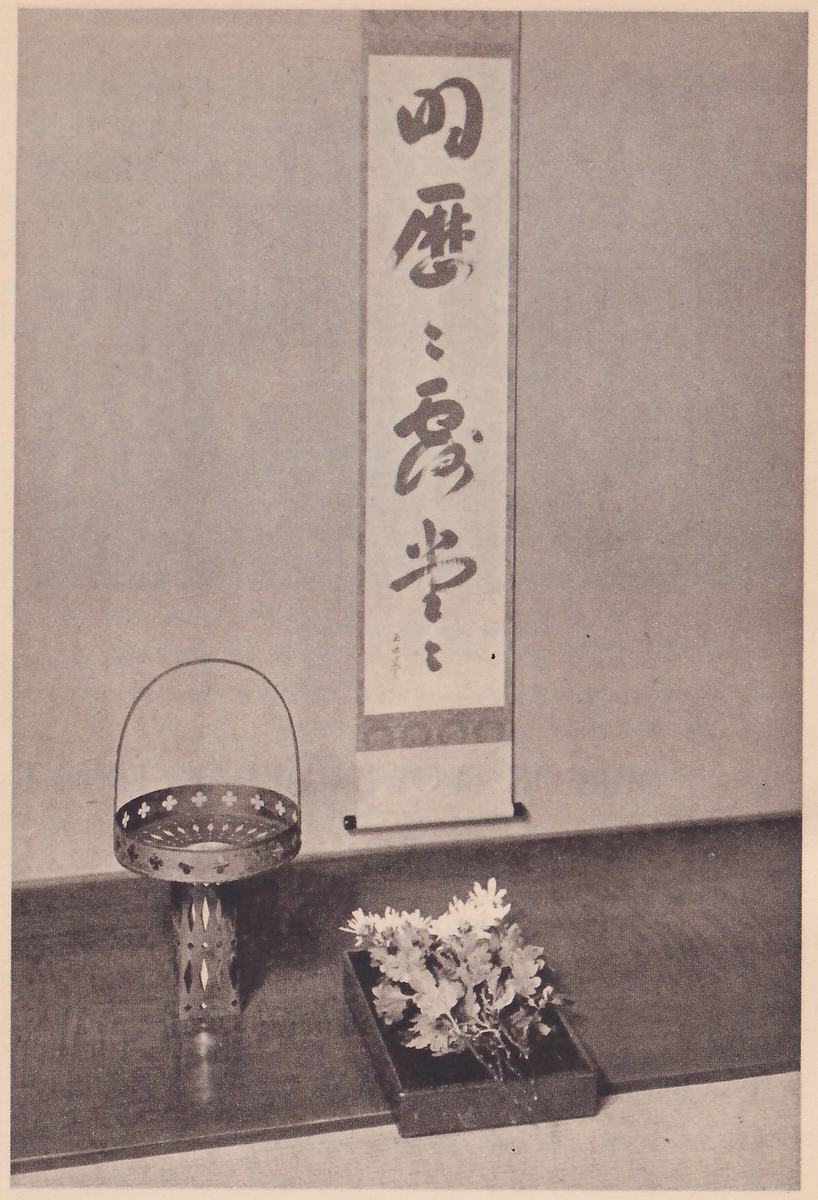
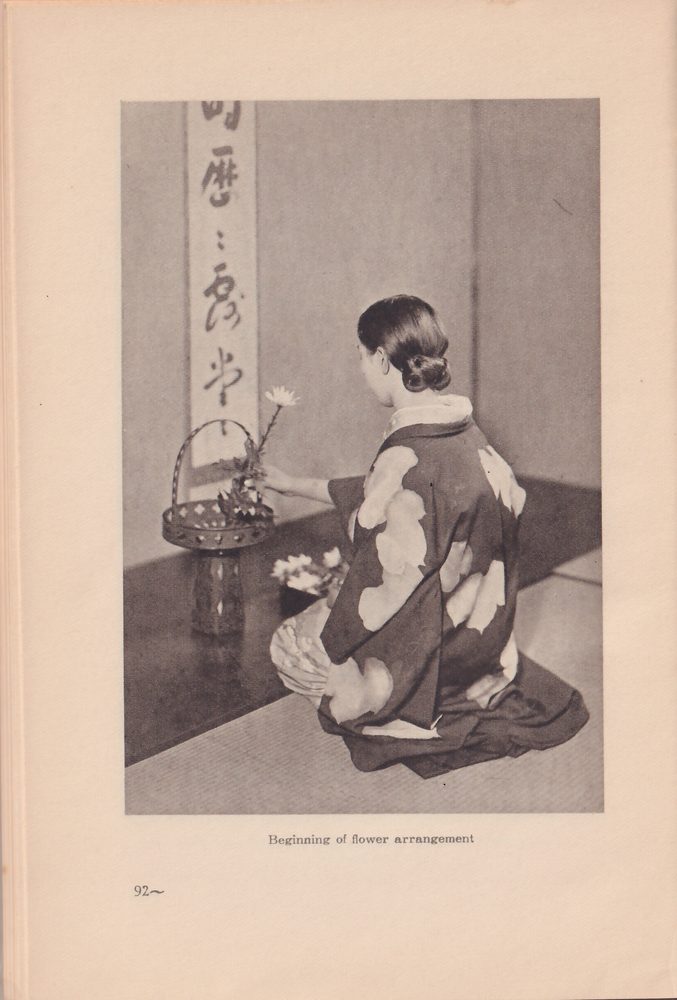
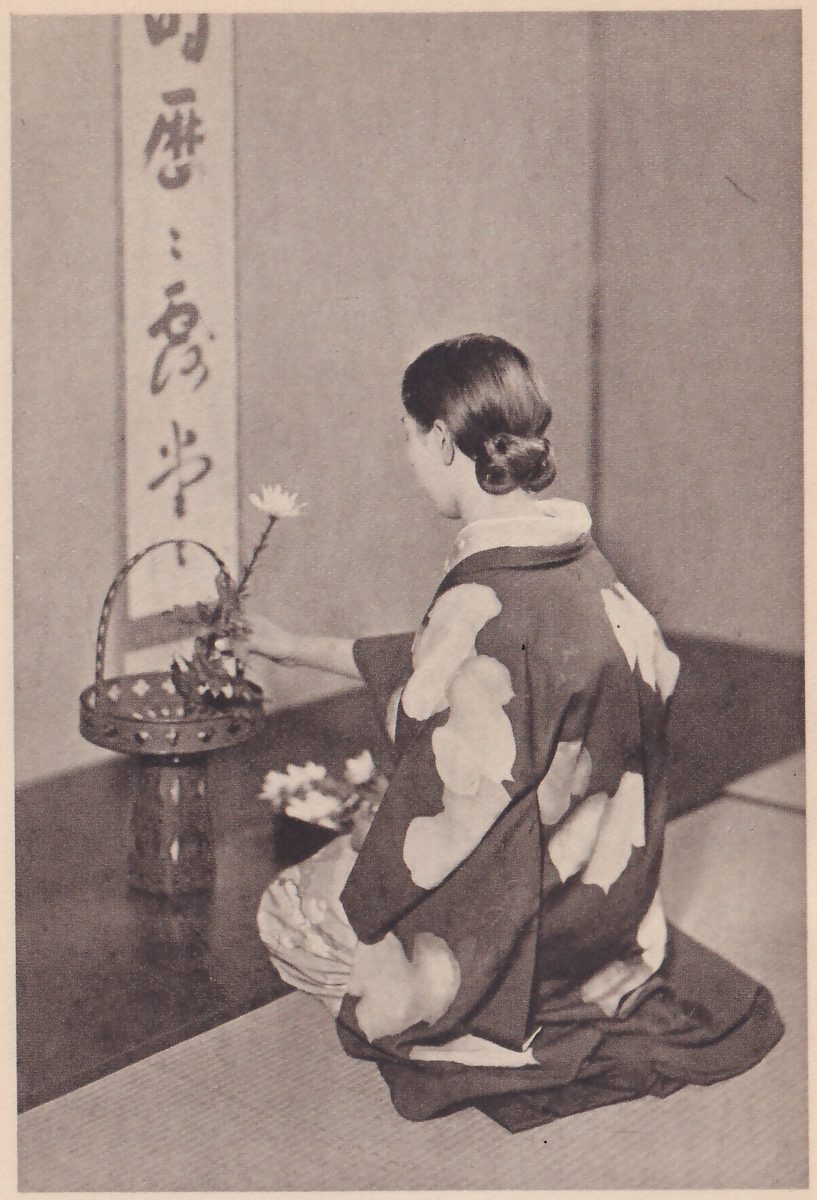
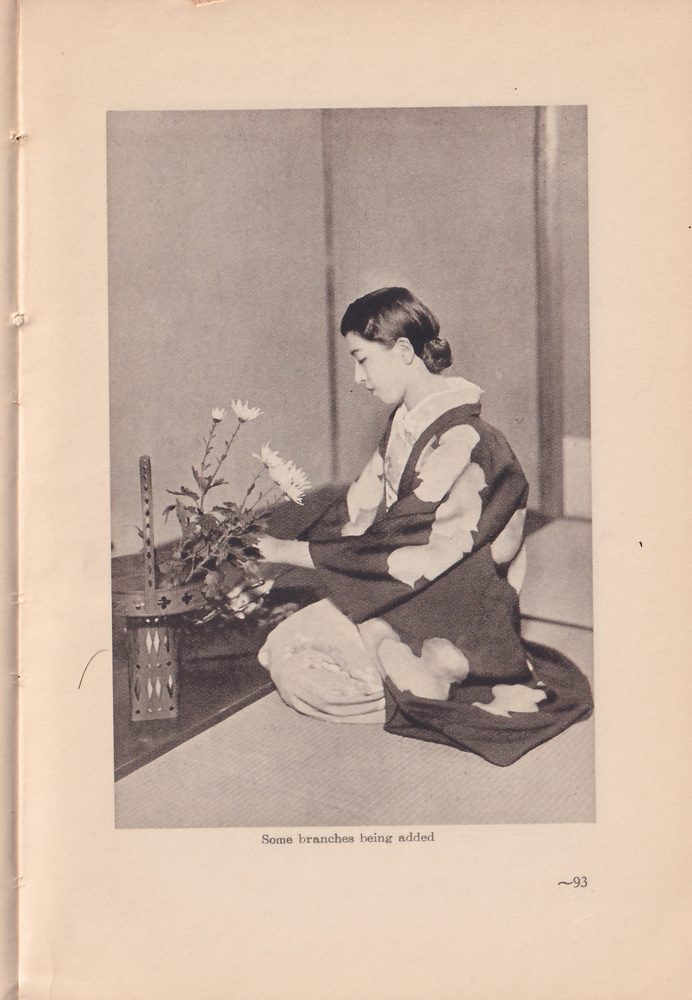
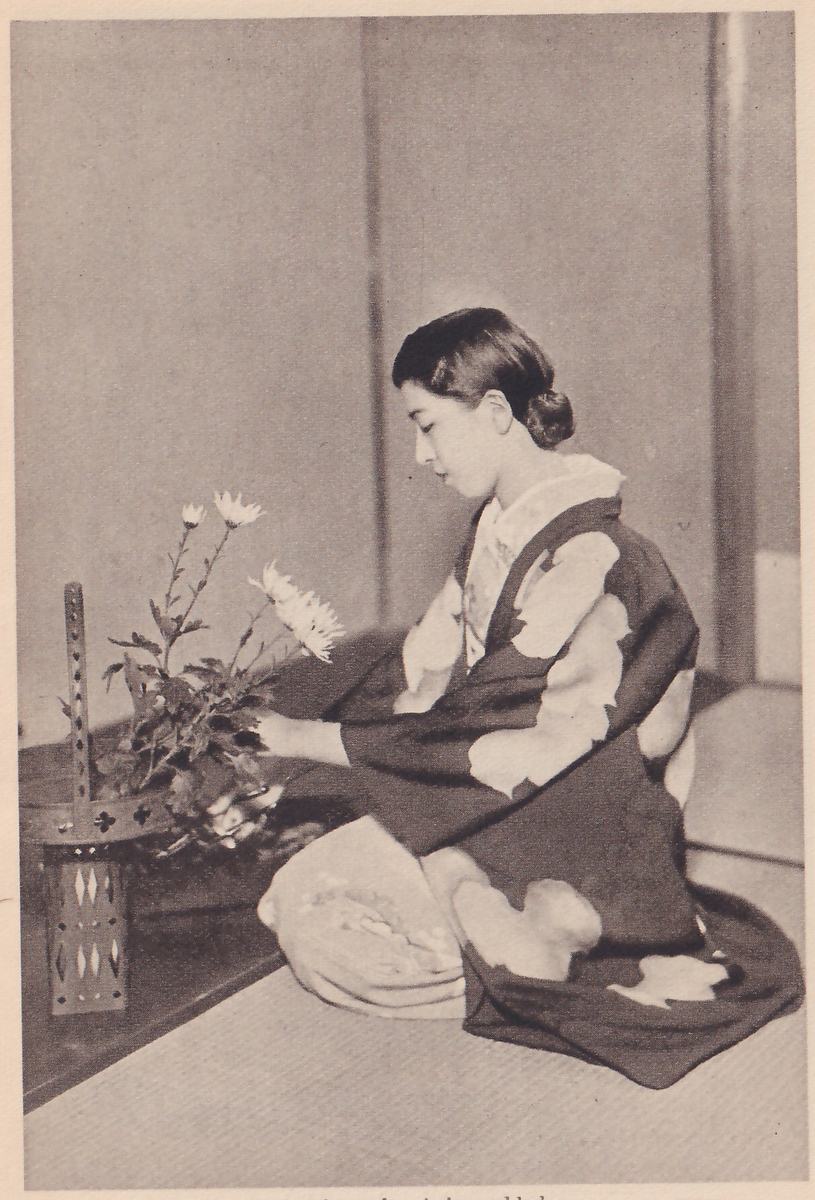
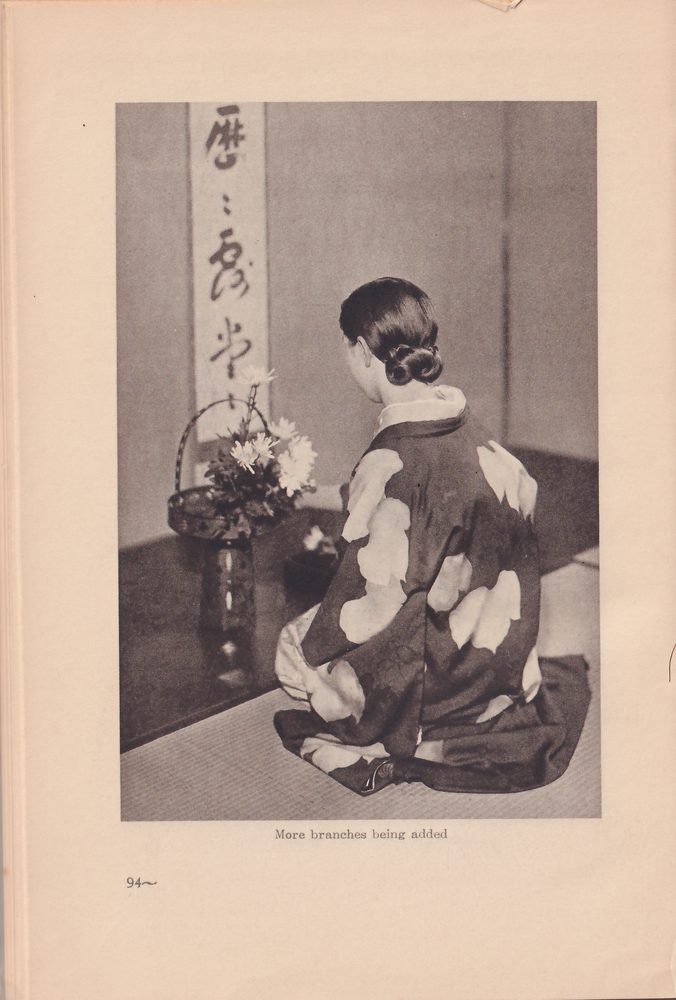
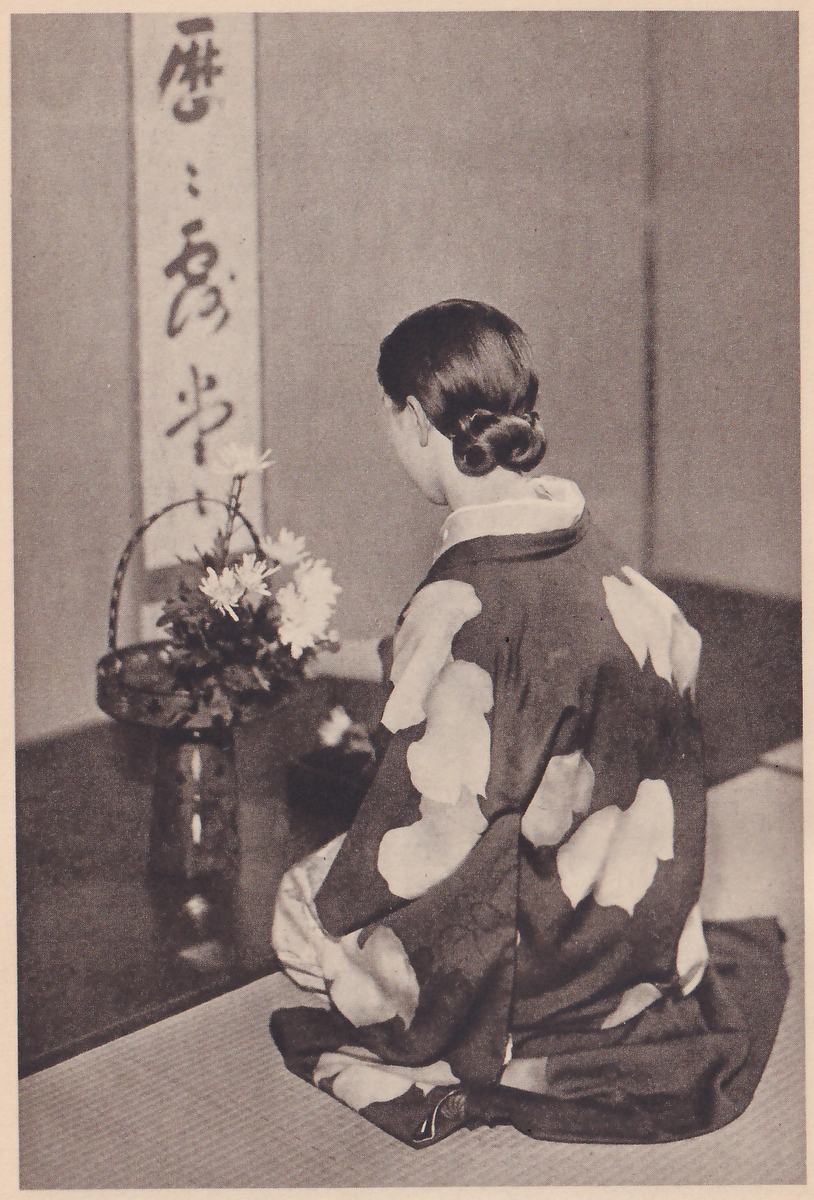
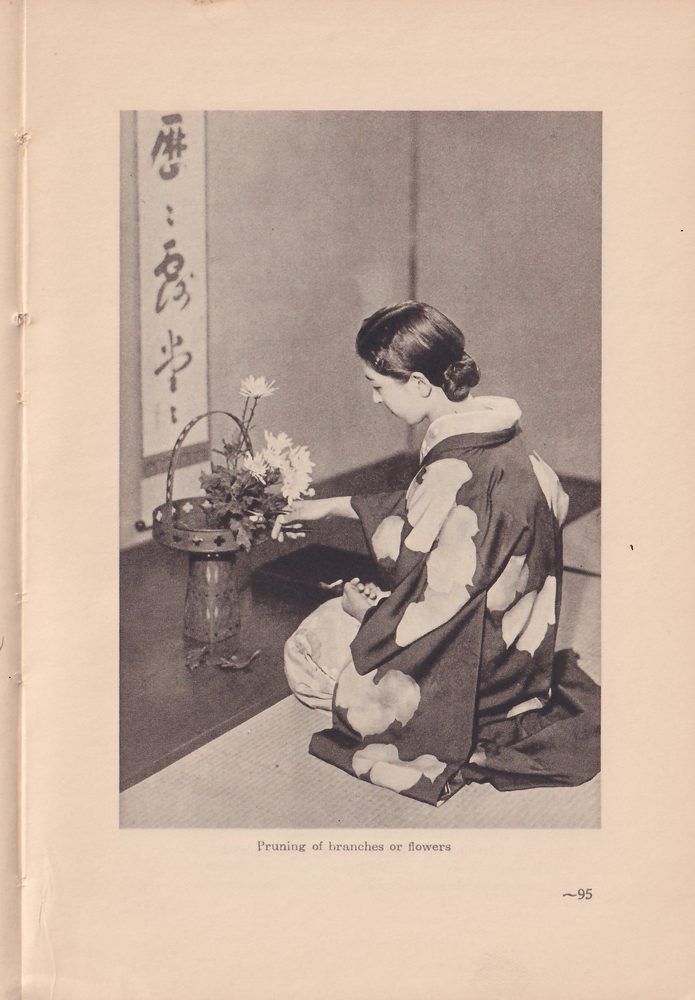
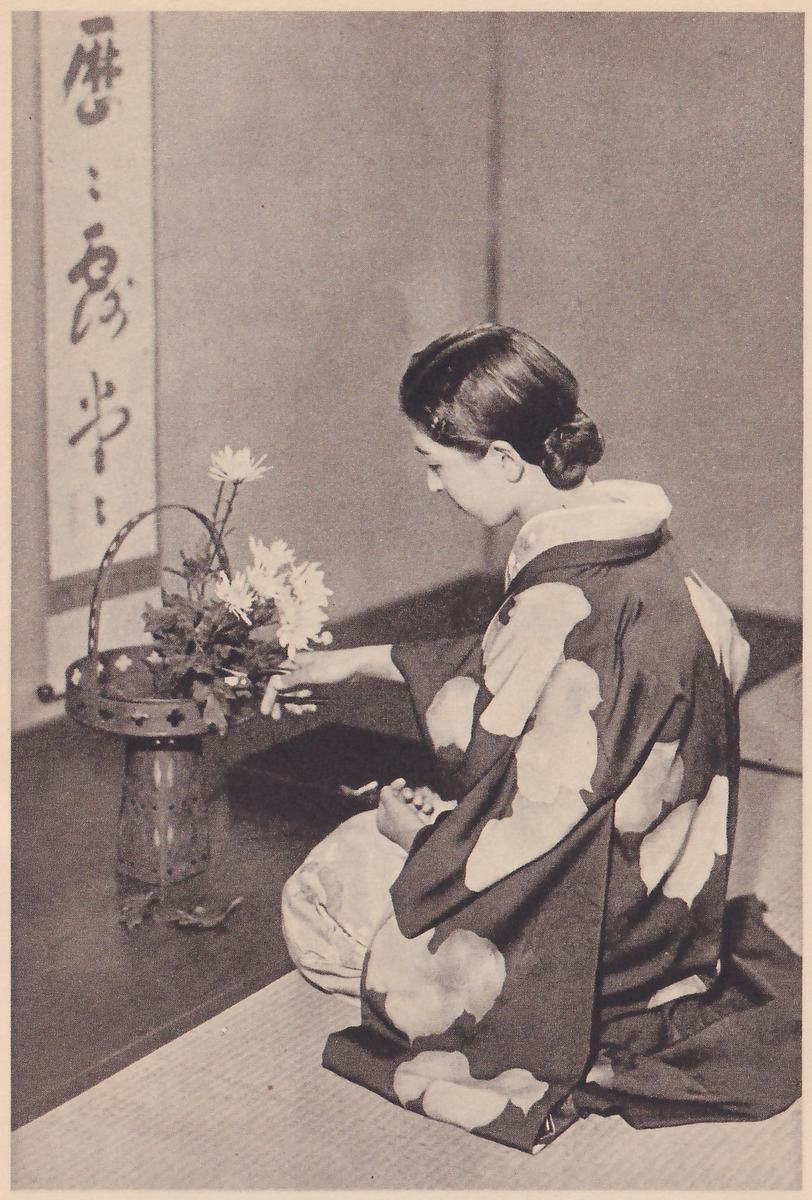
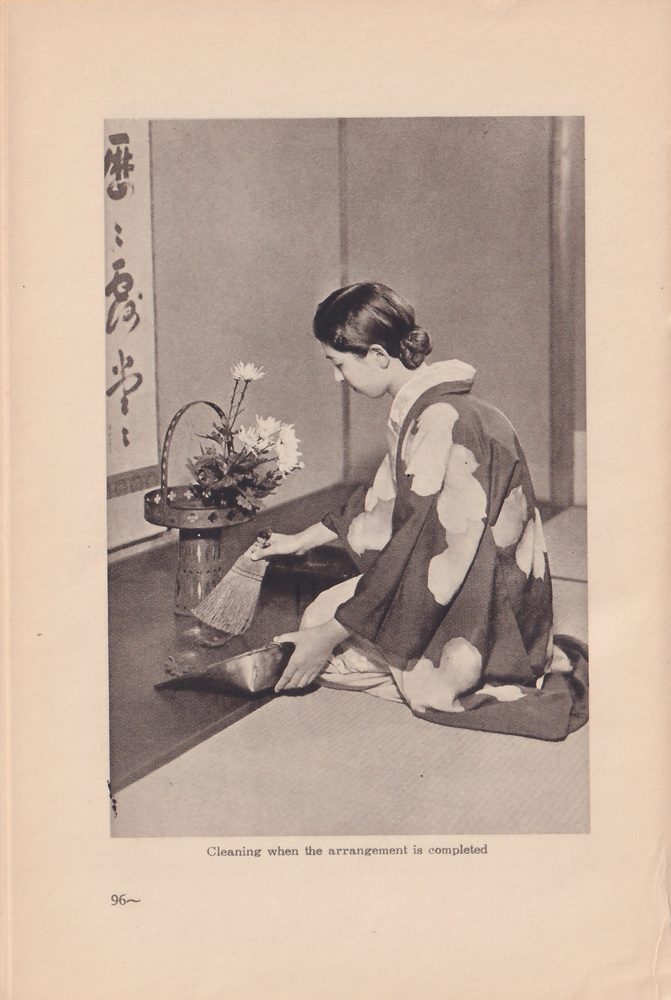
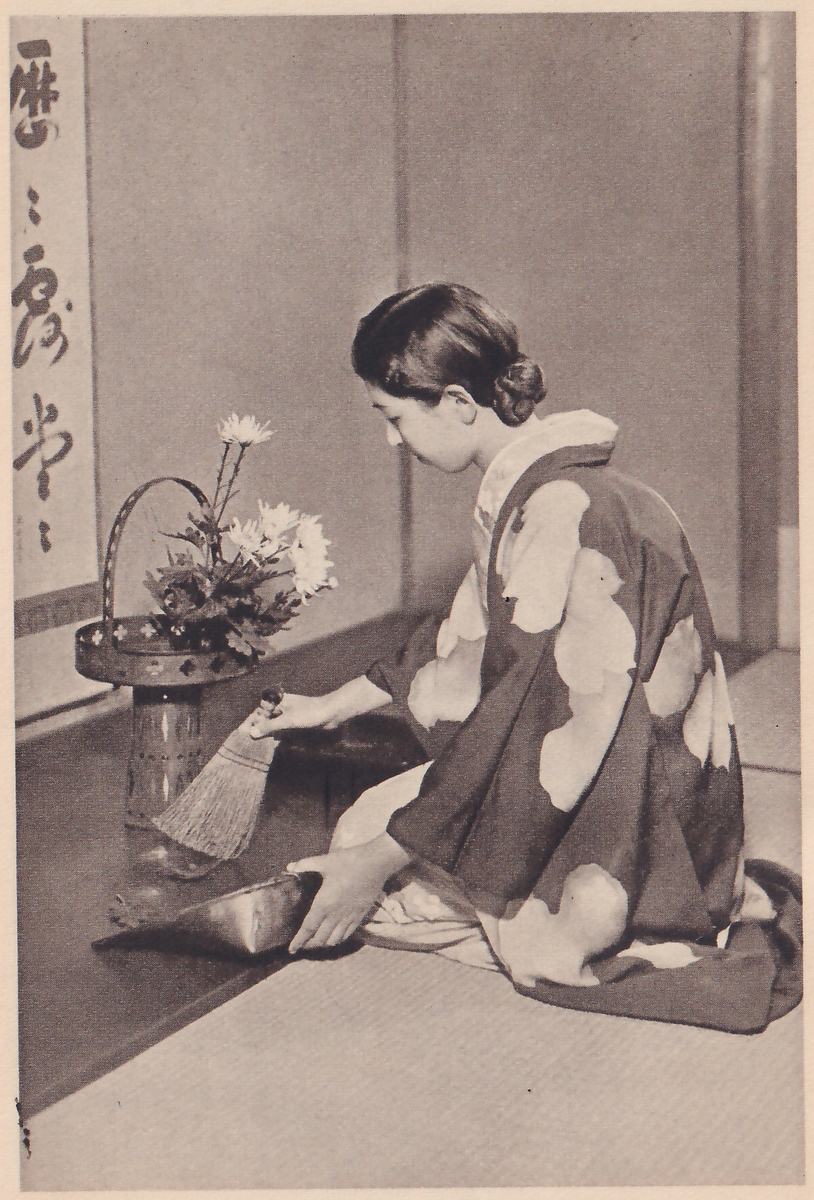
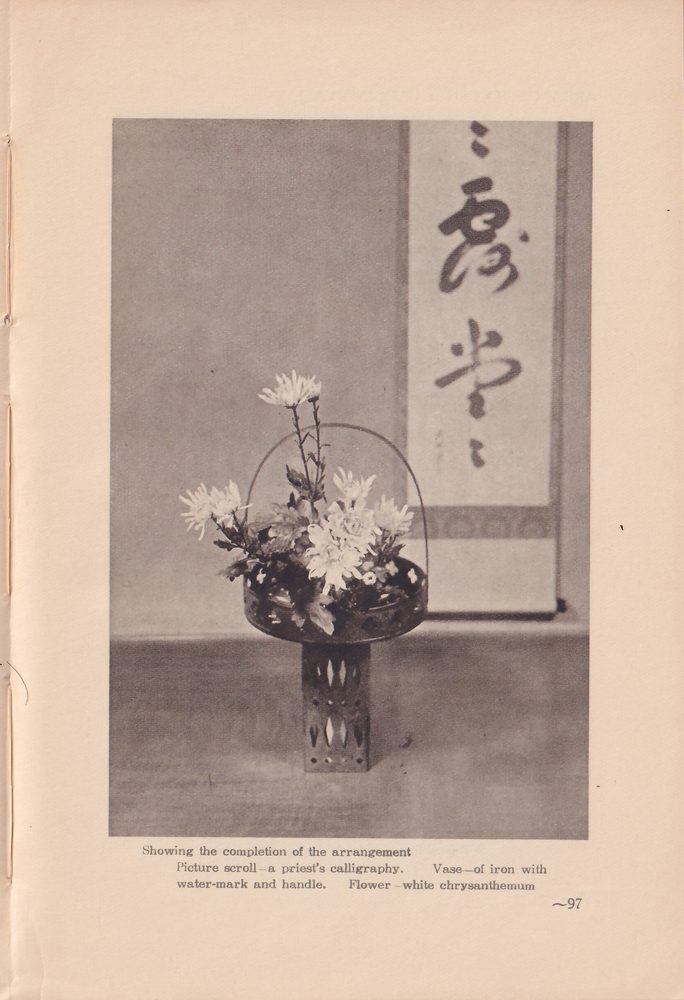
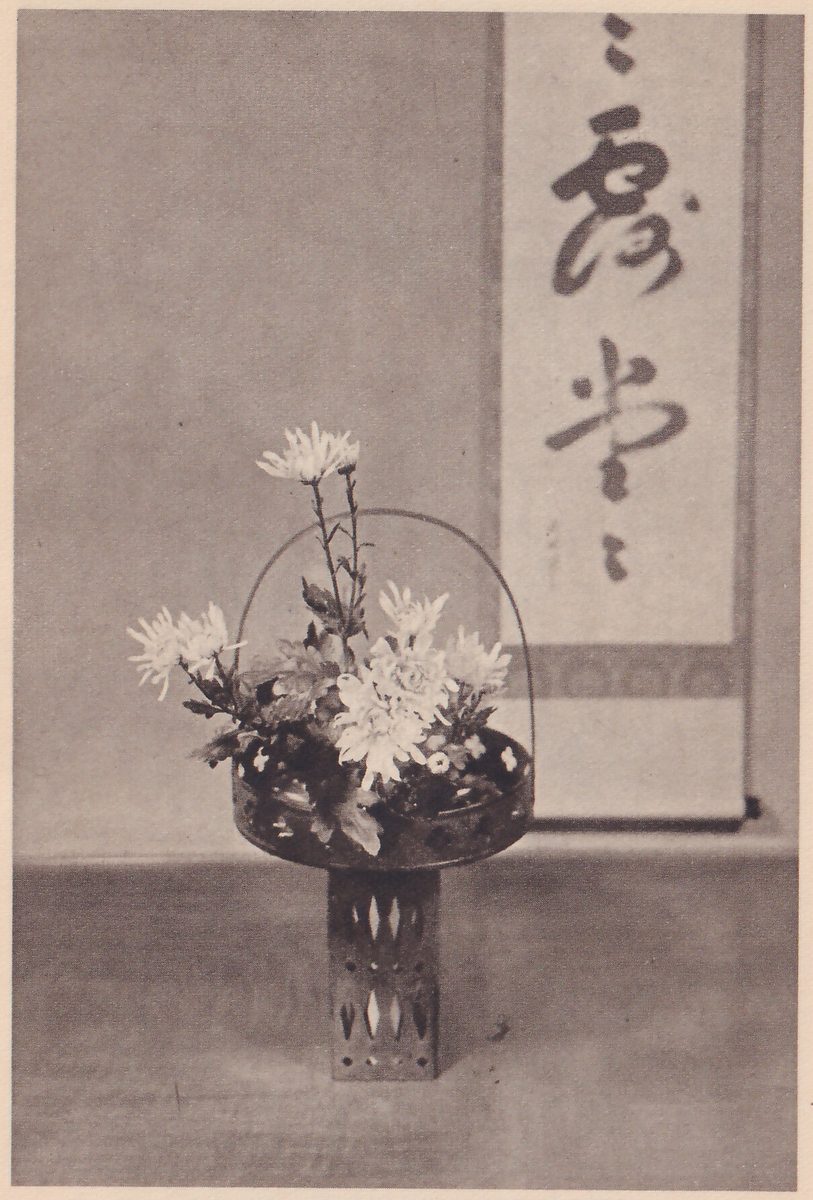
Picture scroll—a priest’s calligraphy. Vase—of iron with water-mark and handle. Flower—white chrysanthemum
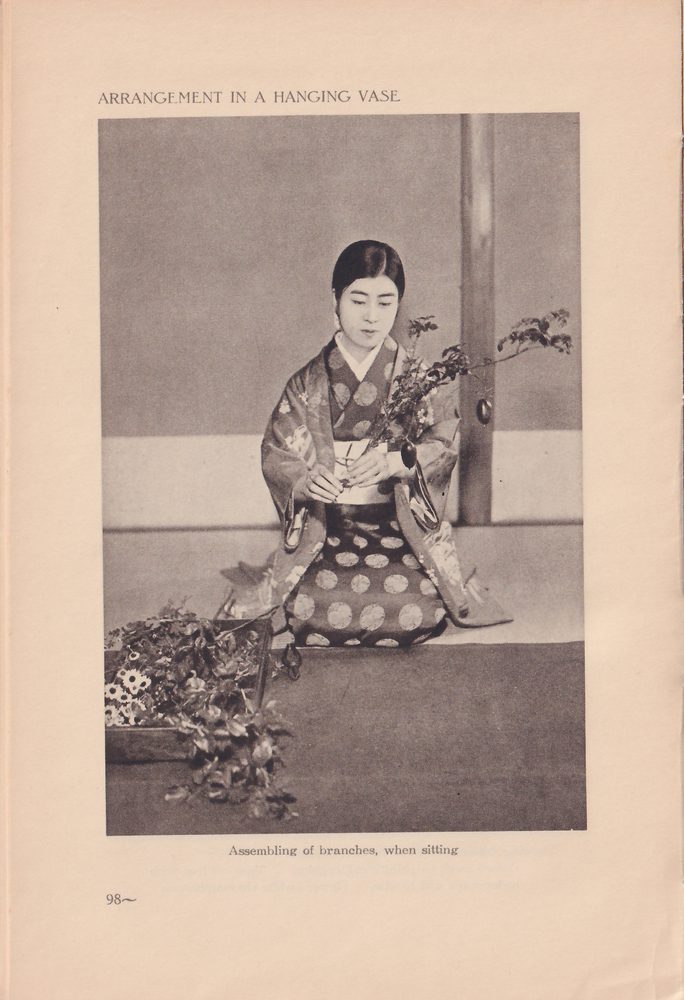
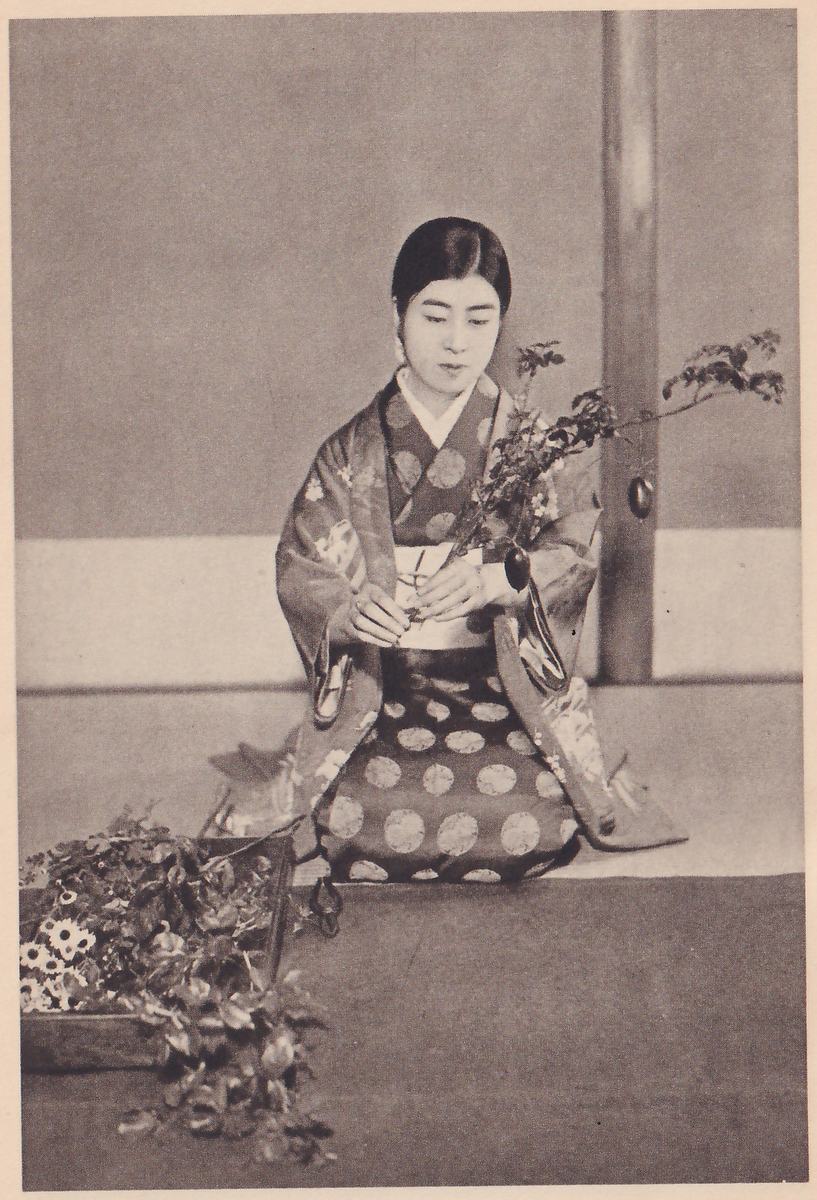
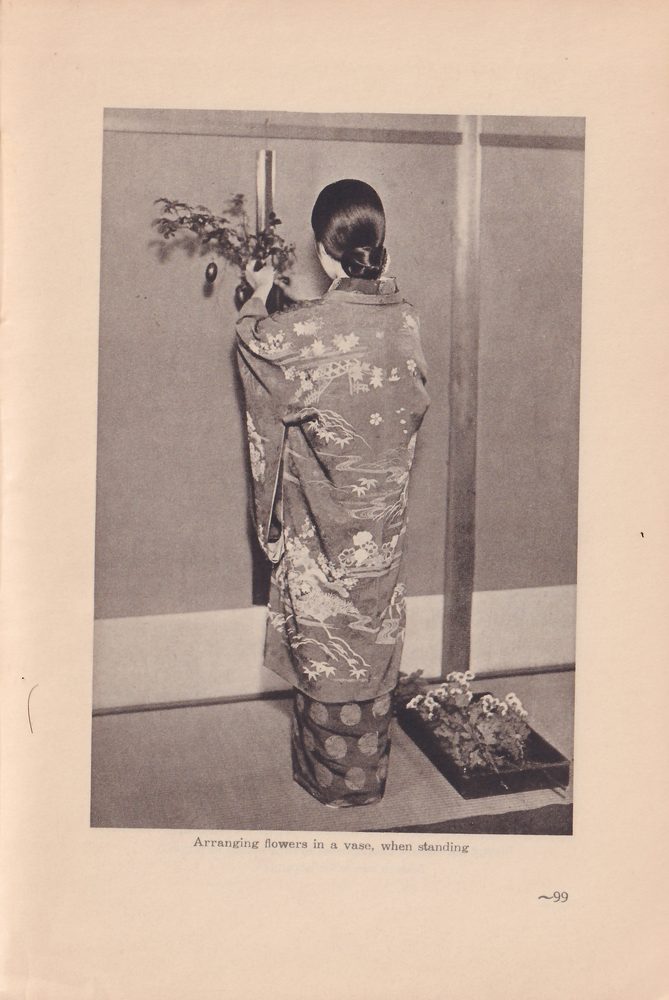
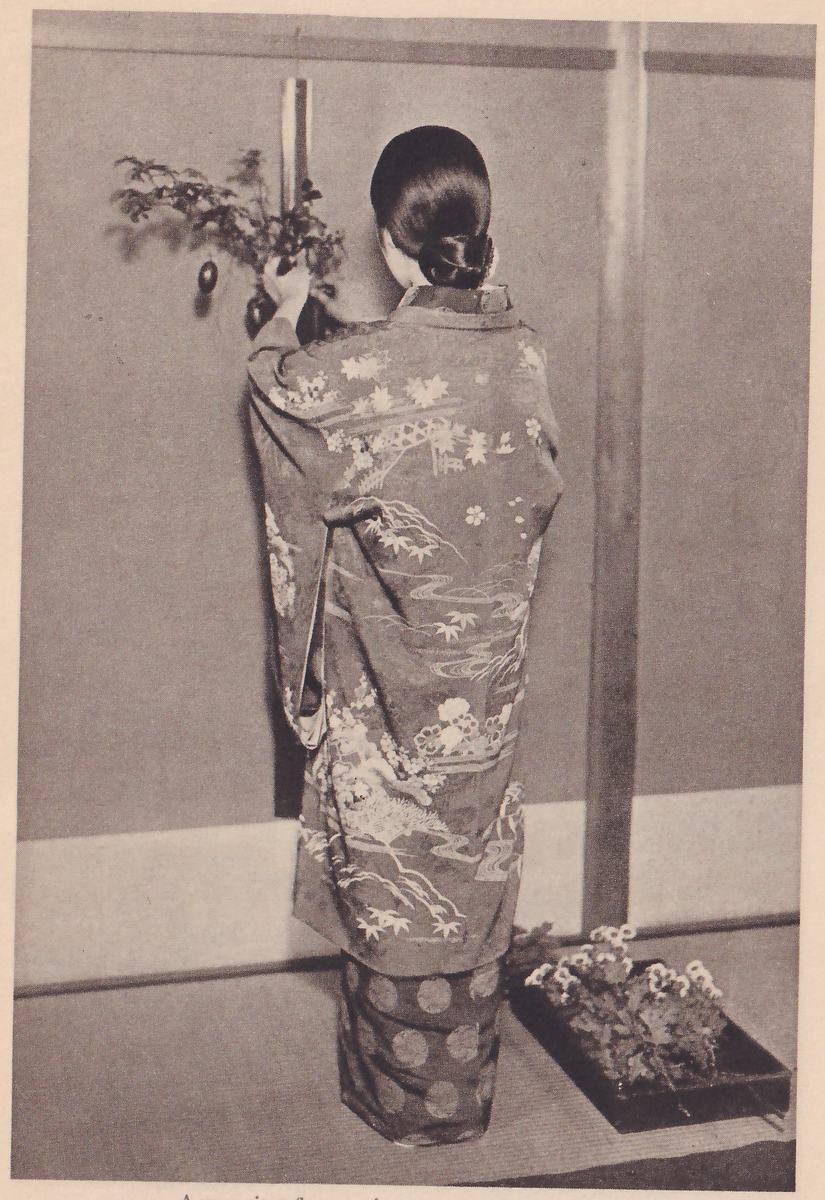
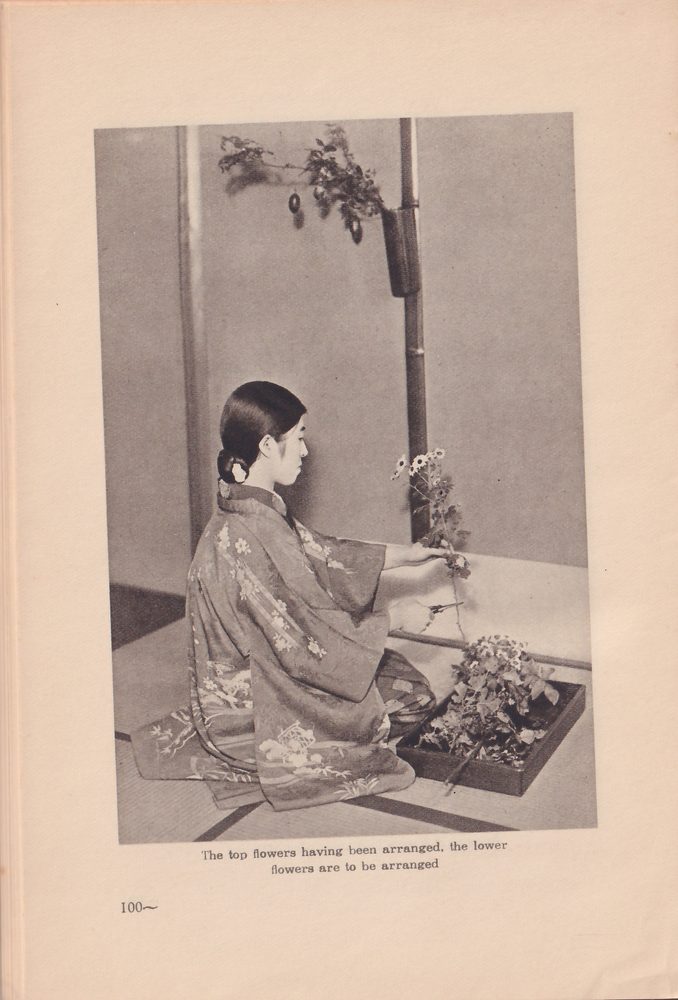
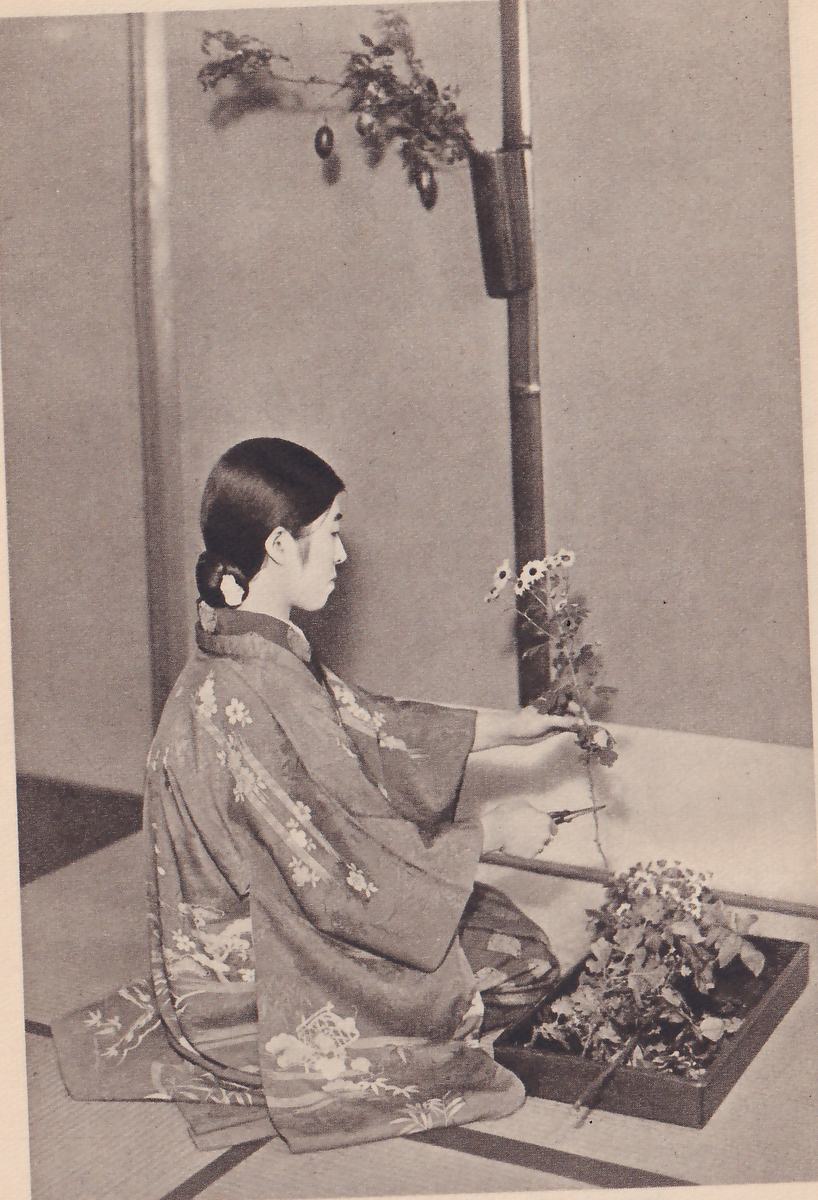
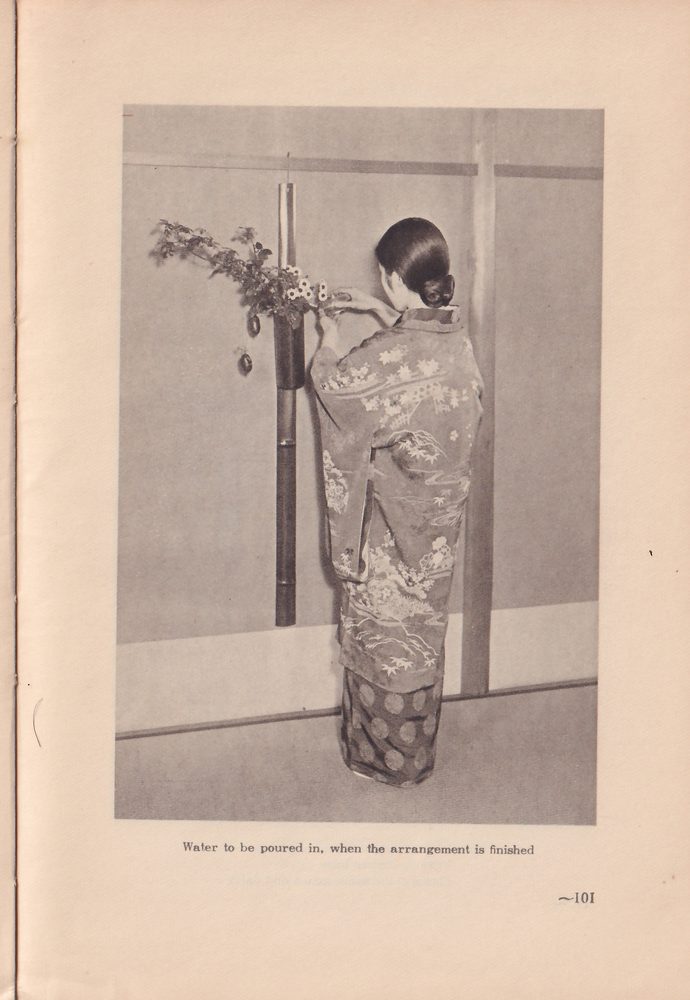
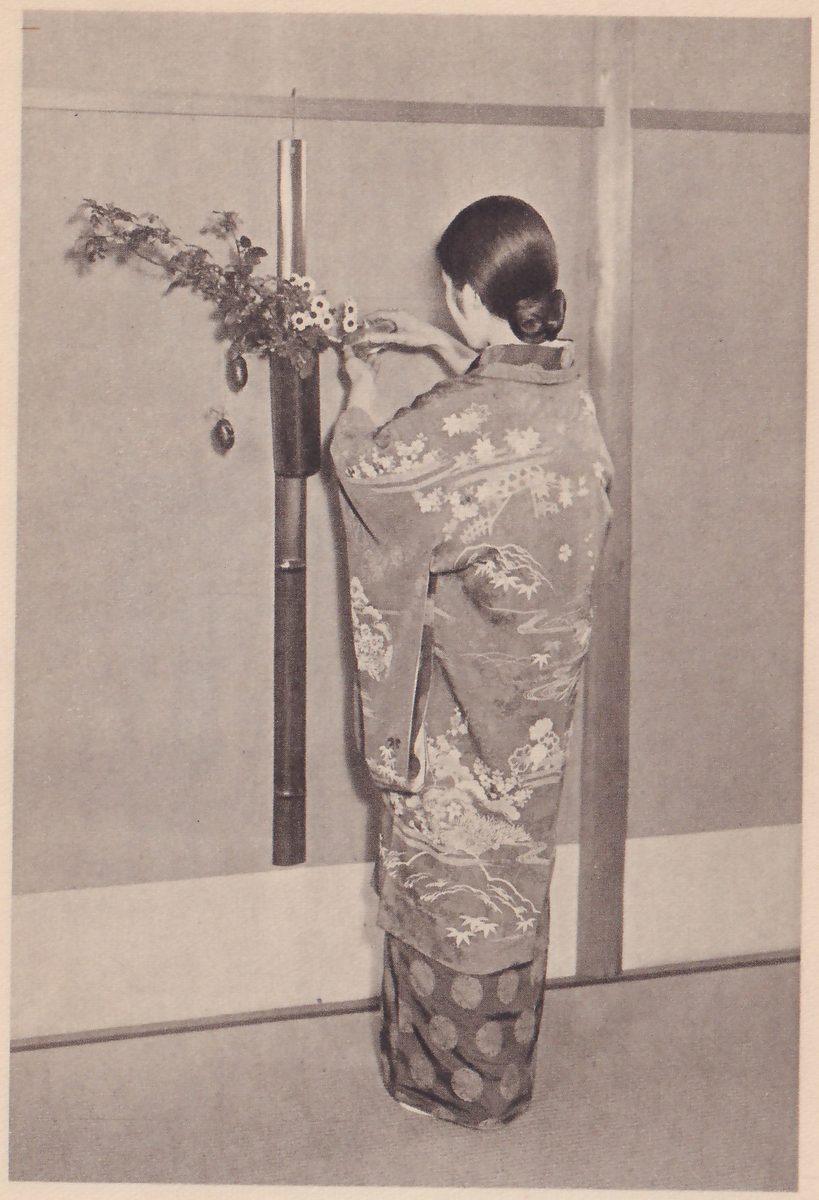
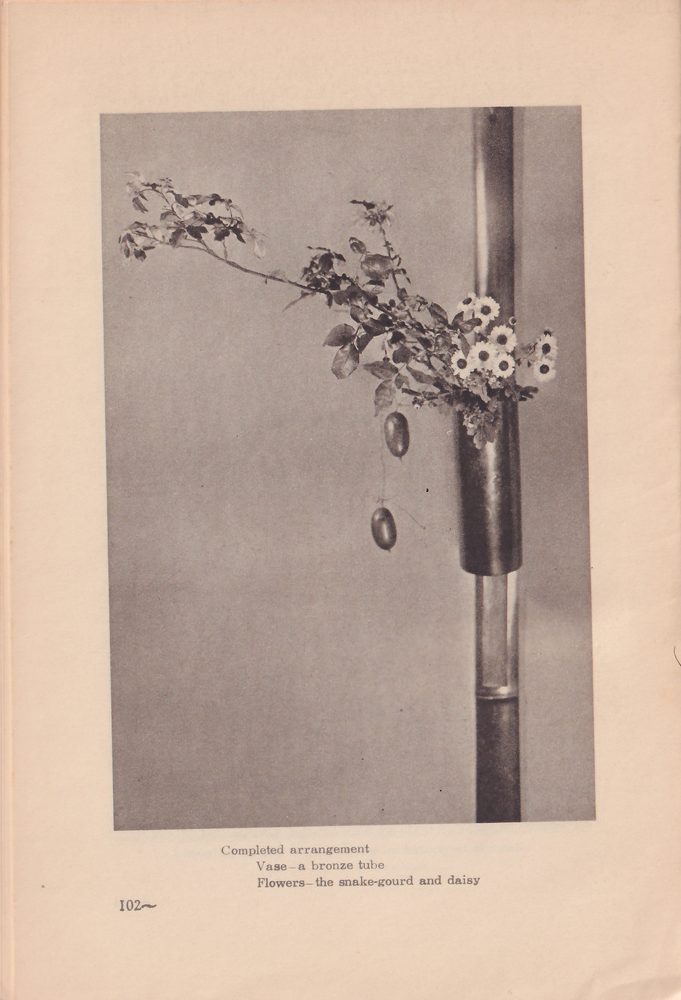
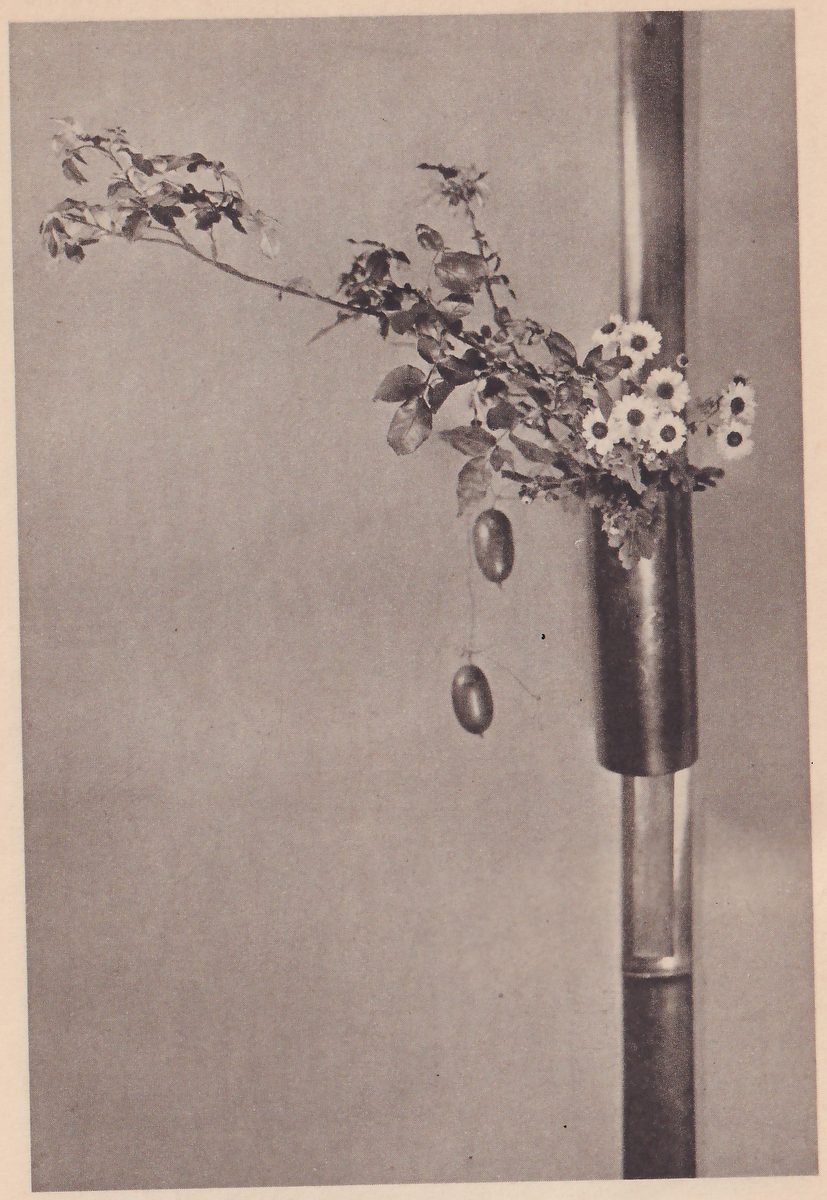
Vase—a bronze tube
Flowers—the snake-gourd and daisy
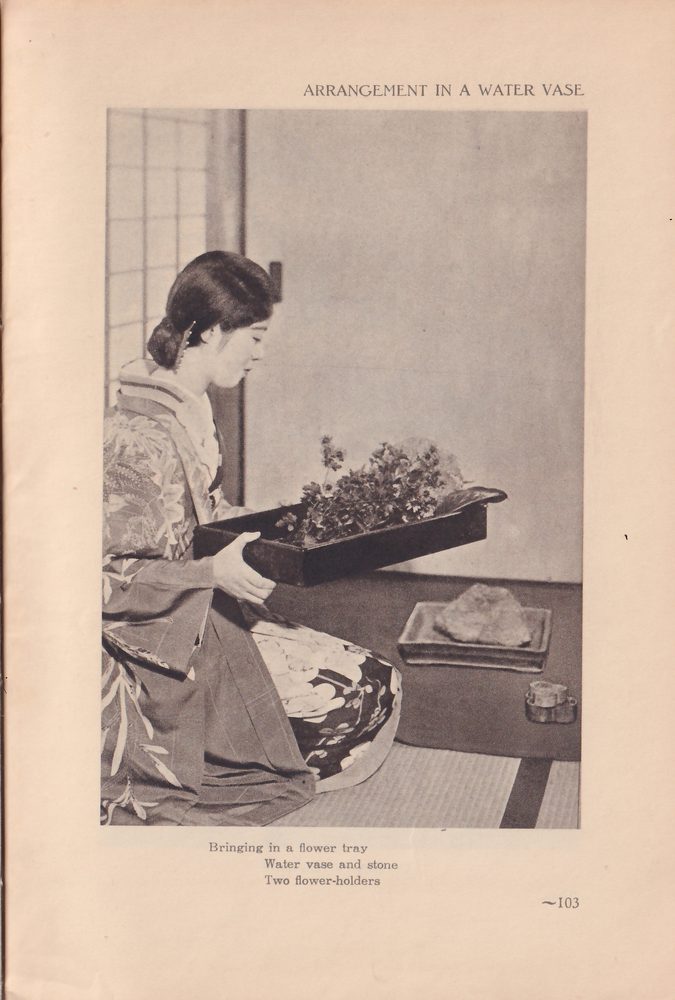
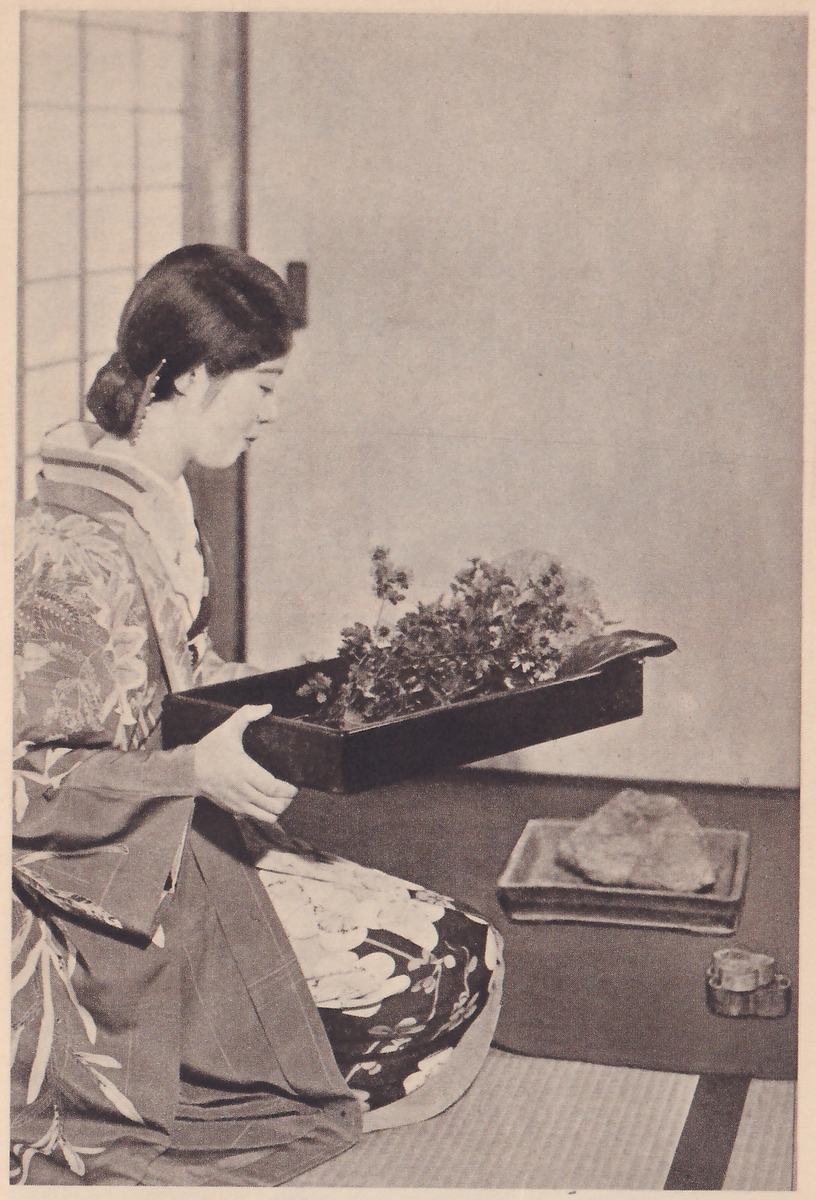
Water vase and stone
Two flower-holders
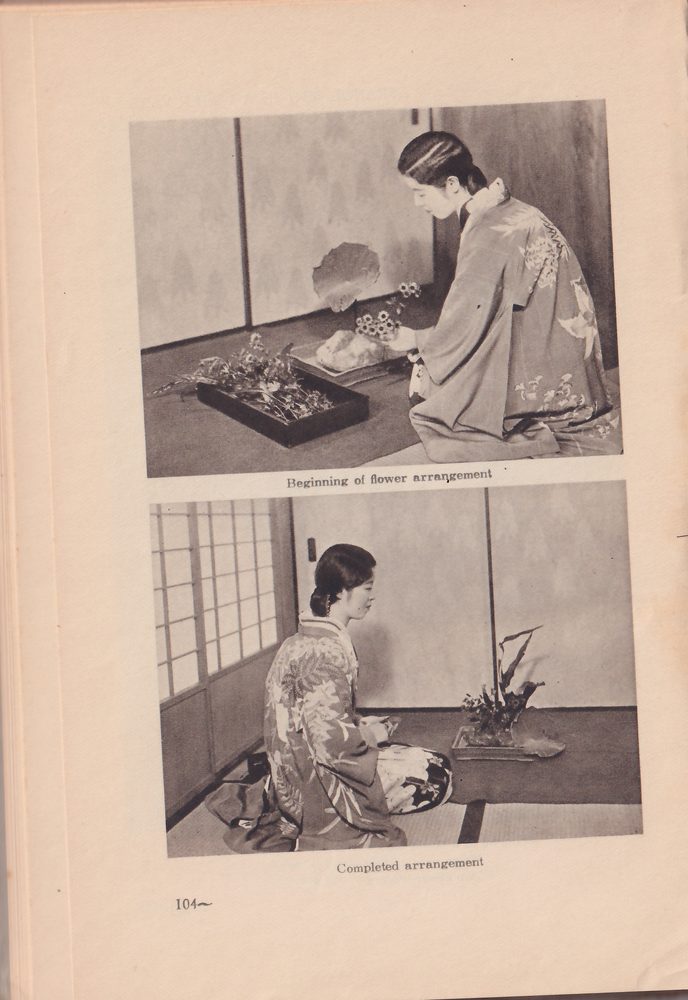
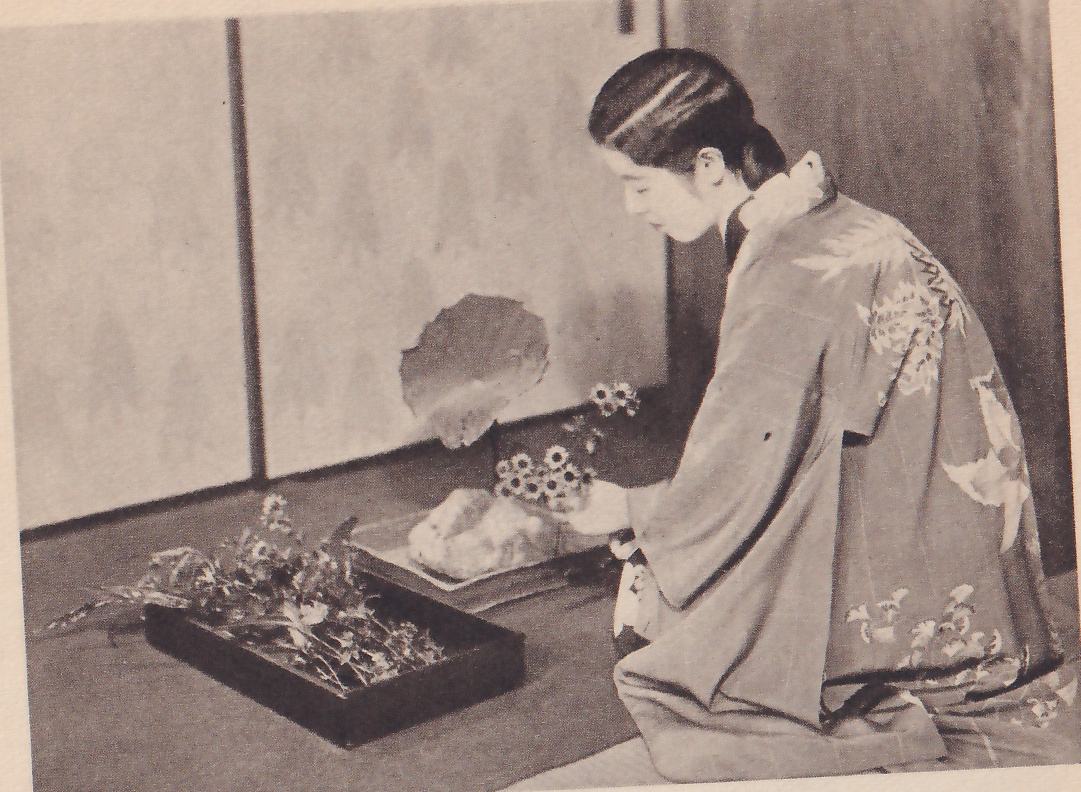
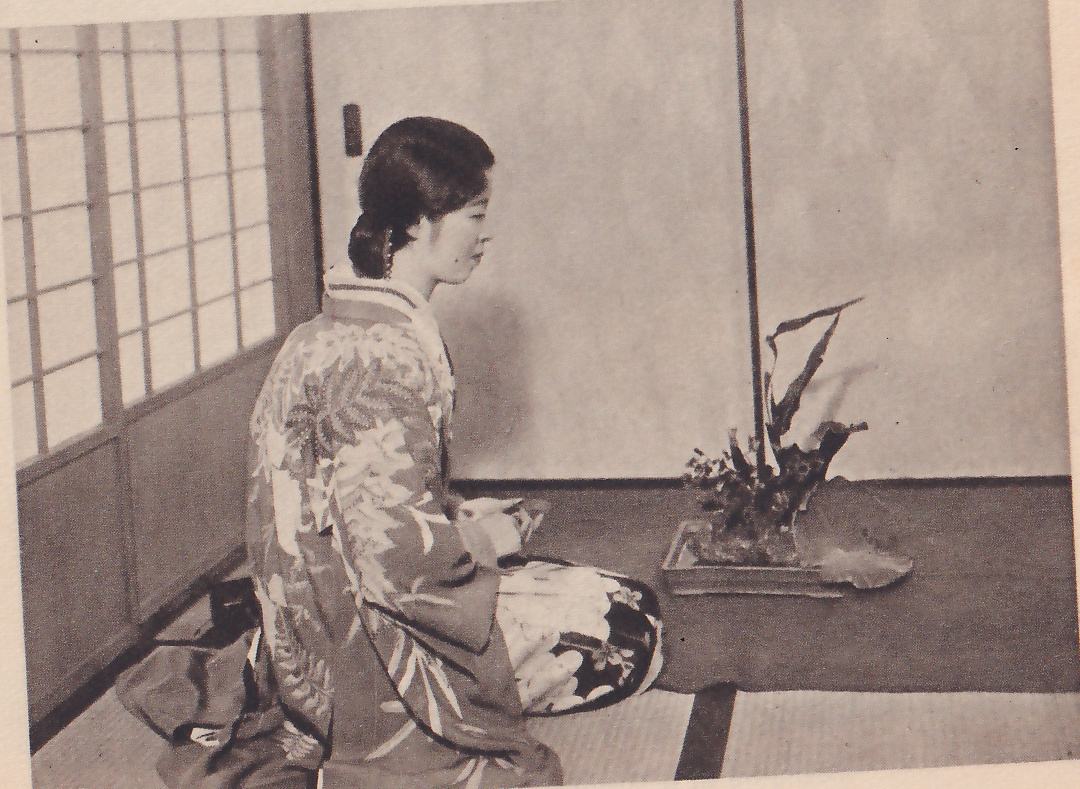
Completed arrangement
BIBLIOGRAPHY
Conder, J.: The Flowers of Japan and the Art of Flower Arrangement.
,, ,,: The Floral Art of Japan, 1899.
Averill, M.: Japanese Flower Arrangement (Ikebana) Applied to Western Needs, 1925.
,, ,,: The Flower Art of Japan (illustrated), 1915.
Koehn, A.: The Way of Japanese Flower Arrangement, 1935.
,, ,,: The Art of Japanese Flower Arrangement, 1934.
Sadler, A.L.: The Art of Flower Arrangement in Japan, 1933.