
VIII PLANTING OF CHERRY TREES
The size and form of cherry trees, the colour and shape of their flowers, their blossoming season, etc. are not uniform, but differ with the different species. There is also a marked difference as to the degree of longevity between one species and another; some trees die comparatively early, while others live for centuries. These and other differences must be taken into consideration in planting cherries, and above all there is the necessity of selecting proper species or varieties best suited to the location. In a word, suitable kinds for suitable places is the motto when planting cherry trees. In old times, Yama-zakura, or mountain cherries, were quite common and were admired by most people. No less popular were Sato-zakura, or domestic cherries. Besides, Higan-zakura and Shidare-zakura, namely equinox cherries and weeping cherries, were also widely planted. Lately, Somei-Yoshino cherries have won popularity, and have, so to speak, displaced mountain cherries. But Somei-Yoshino is without historic value because the trees of this group are of modern origin. None of the cherries representing the Somei-Yoshino type is seen in any ancient pictures. Cherry flowers depicted in colour prints are mostly Yama-zakura. Growing naturally in woodland as they do, Yama-zakura trees harmonize with the natural scenery of their sylvan environment. Especially attractive are those mountain cherries whose young leaves are either of crimson or yellowish green. Young trees
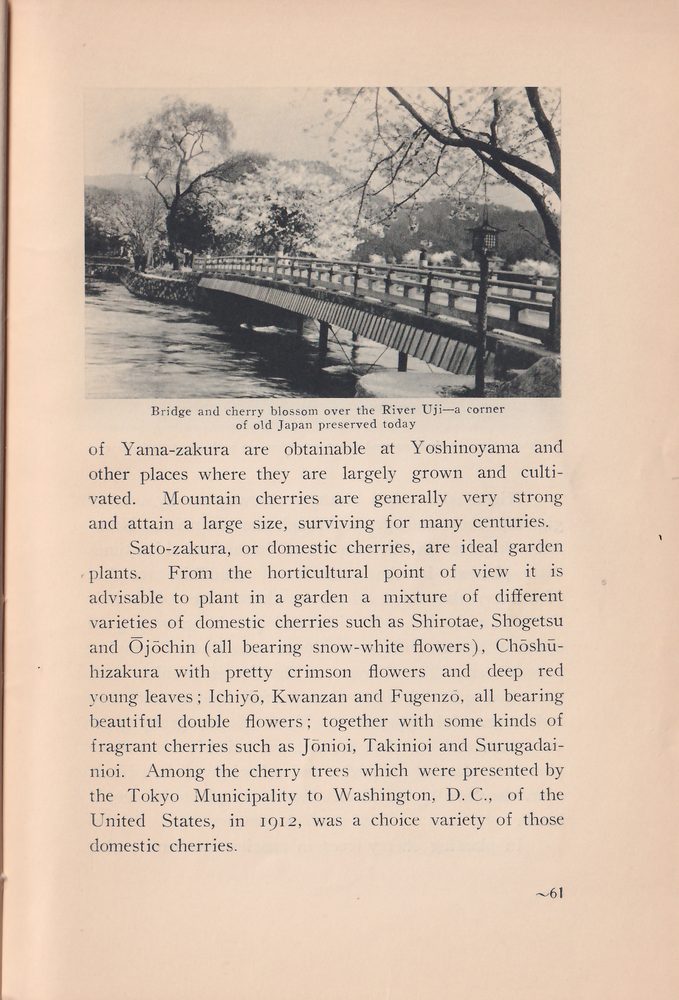
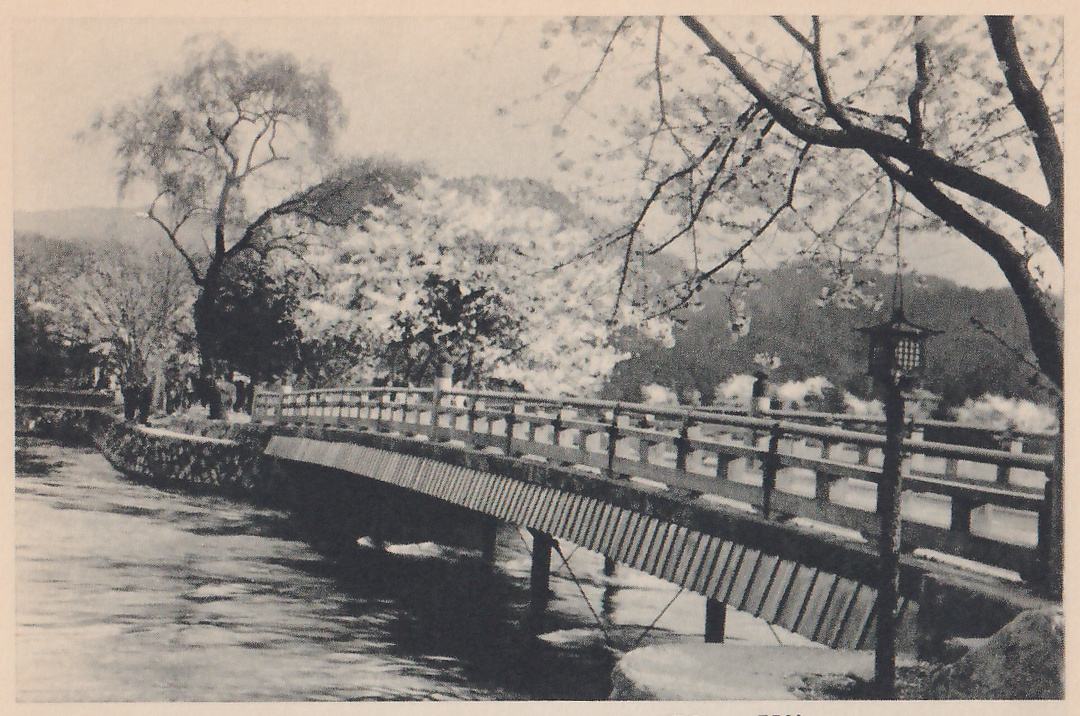
of Yama-zakura are obtainable at Yoshinoyama and other places where they are largely grown and cultivated. Mountain cherries are generally very strong and attain a large size, surviving for many centuries.
Sato-zakura, or domestic cherries, are ideal garden plants. From the horticultural point of view it is advisable to plant in a garden a mixture of different varieties of domestic cherries such as Shirotae, ShōgetsuPrinted: Shogetsu and Ōjōchin (all bearing snow-white flowers), Chōshū-hizakura with pretty crimson flowers and deep red young leaves; Ichiyō, Kwanzan and Fugenzō, all bearing beautiful double flowers; together with some kinds of fragrant cherries such as Jōnioi, Takinioi and Surugadai-nioi. Among the cherry trees which were presented by the Tokyo Municipality to Washington, D. C., of the United States, in 1912, was a choice variety of those domestic cherries.
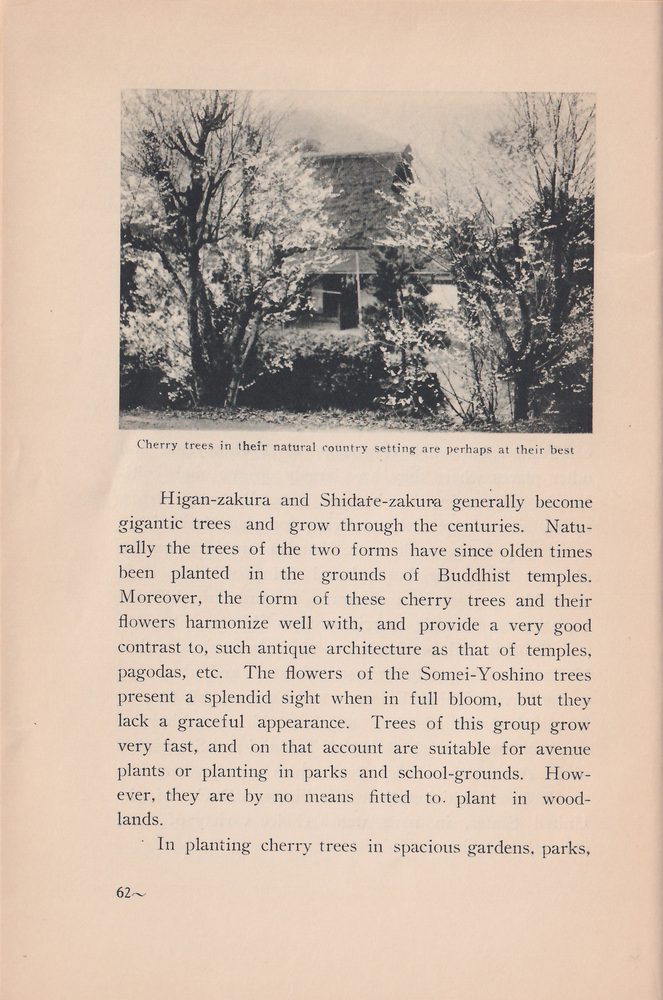
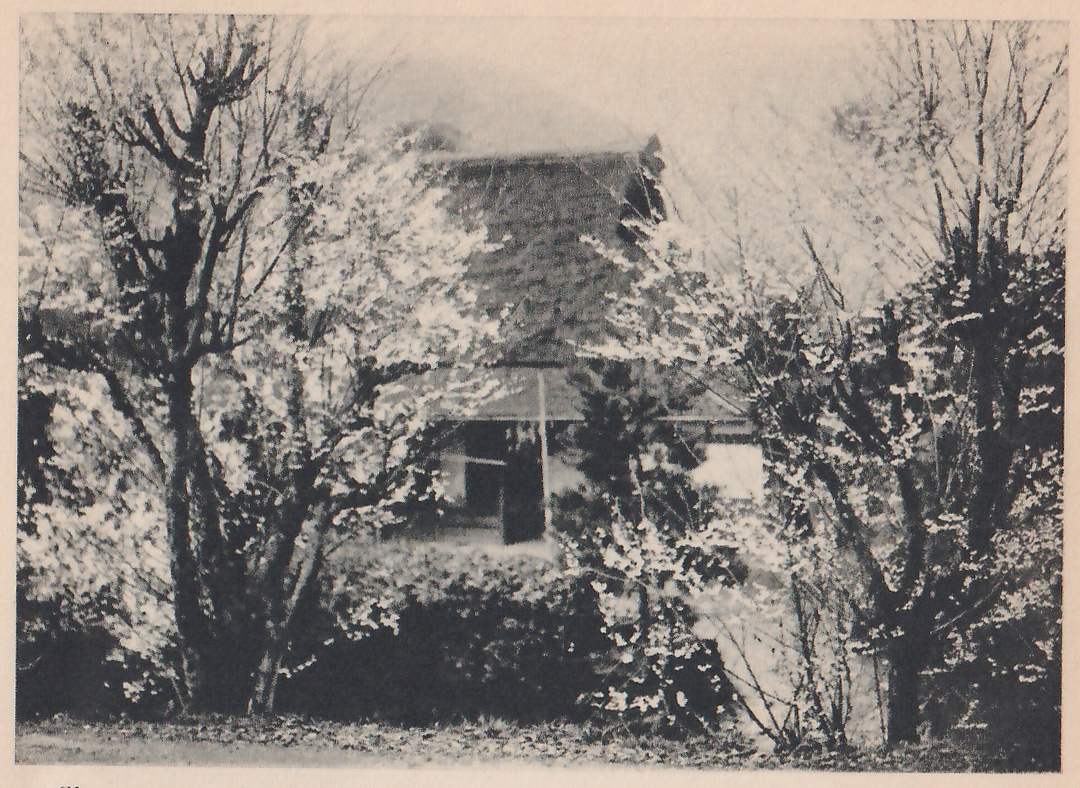
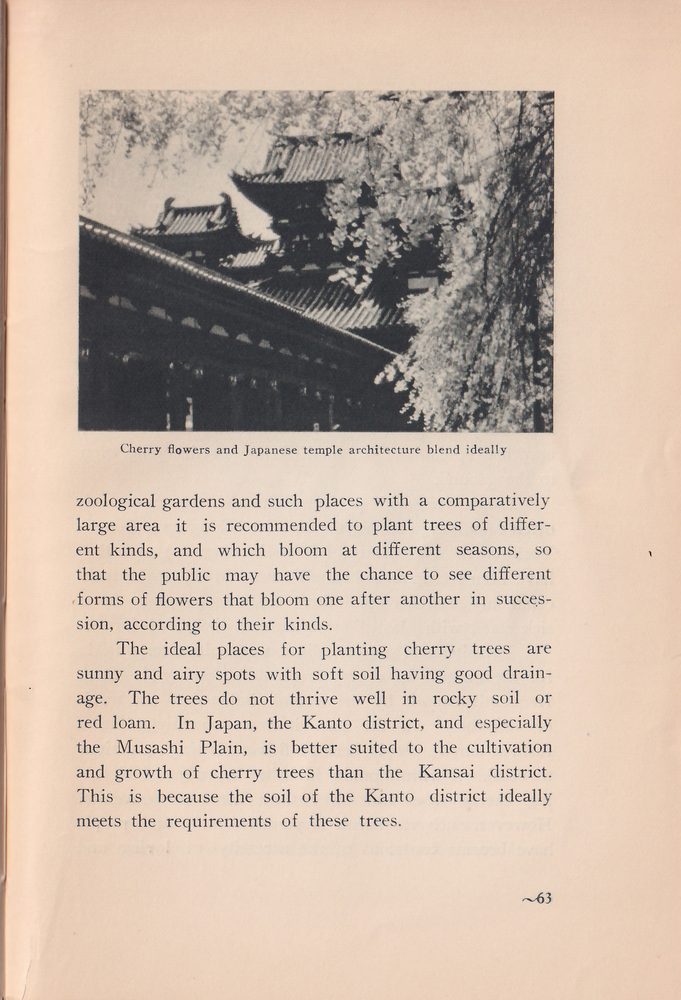
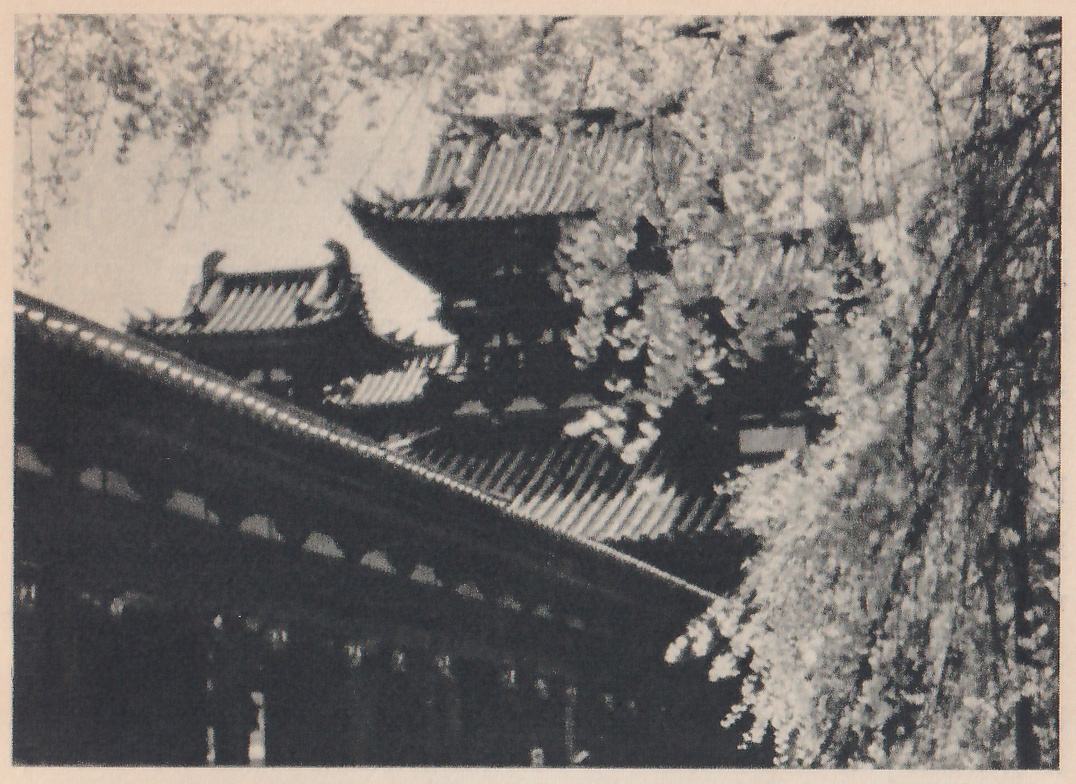
Higan-zakura and Shidare-zakura generally become gigantic trees and grow through the centuries. Naturally the trees of the two forms have since olden times been planted in the grounds of Buddhist temples. Moreover, the form of these cherry trees and their flowers harmonize well with, and provide a very good contrast to, such antique architecture as that of temples, pagodas, etc. The flowers of the Somei-Yoshino trees present a splendid sight when in full bloom, but they lack a graceful appearance. Trees of this group grow very fast, and on that account are suitable for avenue plants or planting in parks and school-grounds. However, they are by no means fitted toPrinted: to. plant in woodlands.
In planting cherry trees in spacious gardens, parks,
zoological gardens and such places with a comparatively large area it is recommended to plant trees of different kinds, and which bloom at different seasons, so that the public may have the chance to see different forms of flowers that bloom one after another in succession, according to their kinds.
The ideal places for planting cherry trees are sunny and airy spots with soft soil having good drainage. The trees do not thrive well in rocky soil or red loam. In Japan, the Kanto district, and especially the Musashi Plain, is better suited to the cultivation and growth of cherry trees than the Kansai district. This is because the soil of the Kanto district ideally meets the requirements of these trees.