
IX PROTECTION OF CHERRY TREES
Cherry trees are generally delicate. To break their branches or wound the trunk does great harm to the trees. Wounds should be promptly attended to, because the wounded parts are apt to be infected by injurious fungi, which will eventually kill the trees. If decay begins, the affected parts must be removed without delay, cleaned with disinfectants like creosote, and coated with coal-tar. Holes should be stuffed with cement. Speaking generally, however, cherry trees that attain perfect growth become very strong and survive several hundred years, growing into magnificent trees with their branches spreading in all directions or drooping even to the ground.
Large trees with perfect form and appearance are often found, even among the cherries belonging to Somei-Yoshino or Sato-zakura (domestic cherries) and that have been left in an uninjured state. Most of the trees commonly seen here and there are, so to speak, in a sick state, with blasted branches and disfigured forms.
Parasites and smoke pollution are often responsible for the blasting of cherry trees, but fatality is more frequently caused by the wounds inflicted to the trunk or branches. In the past it was something like a fashion among people bent on flower-viewing excursions to break off with impunity branches or twigs of blooming cherry trees and carry them home as souvenirs. However, such vandalism is punished now and people have become conscious of the necessity of loving and
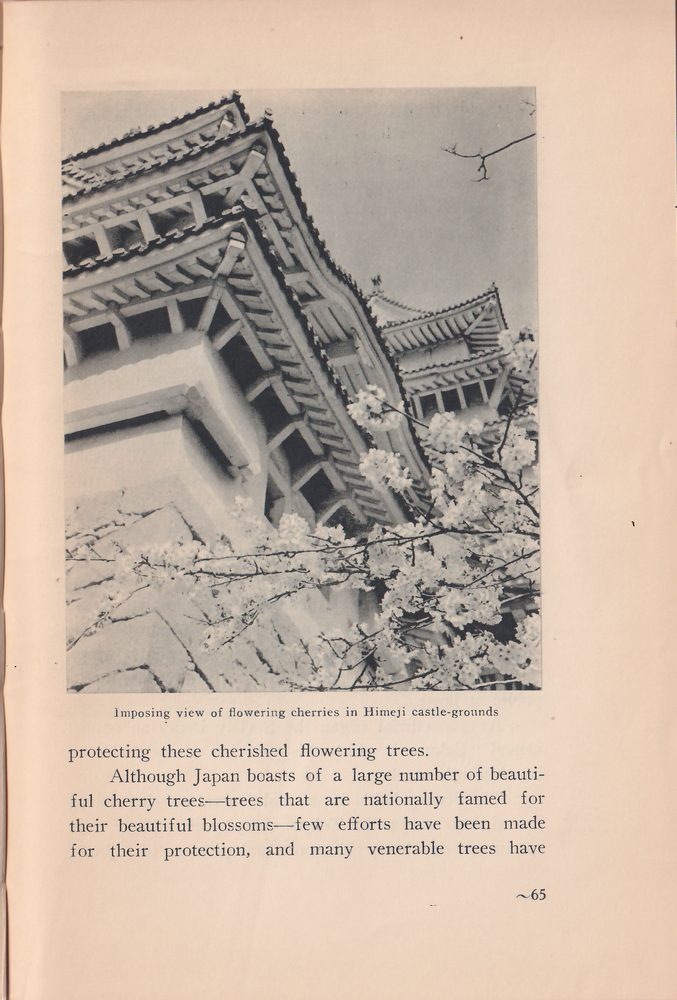
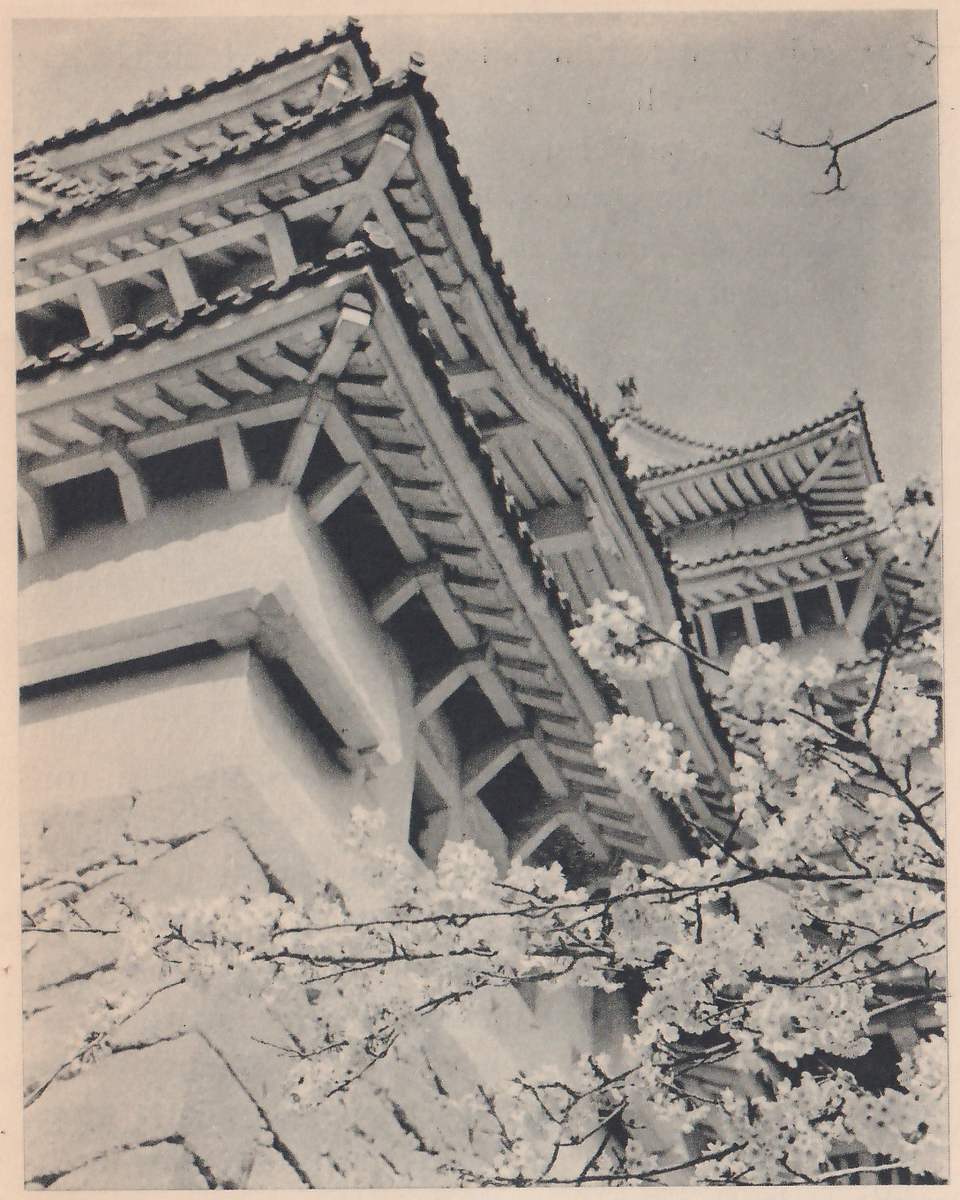
protecting these cherished flowering trees.
Although Japan boasts of a large number of beautiful cherry trees—trees that are nationally famed for their beautiful blossoms—few efforts have been made for their protection, and many venerable trees have
regrettably been left in rather a neglected state. The remarkable growth of street traffic in recent years, and the almost constant changes of natural features in the country have done, and still are doing, no small harm to the trees, and not a few noted cherry trees, some of which have survived many centuries, have unfortunately died.
Deploring such a state of affairs, and awakened to the necessity of considering proper measures for the protection of the nation’s noted cherry trees, as well as of diffusing among the Japanese people the idea of loving the national flower of the country and the refined taste of the sakura cult, a group of prominent men, including the late Marquis R. Tokugawa, the late Viscount E. Shibusawa, Baron Y. Sakatani, Mr. Aisaku Hayashi, Mr. K. Inoshita and others, organized in 1918 a society named “Sakura-no-Kai” (Cherry Society) in Tokyo. This society they formed with a view to arousing public interest in the protection of sakura trees, and to encourage the replanting of noted species of cherry. It also aims at making widely known to all people those public places noted for the beauty of their cherry blossoms and rare specimens of sakura trees, which are now known but locally, or little known to the public at large.
As its official organ the Society issues an annual named “Sakura”, which this year has already reached its sixteenth number.
The Society holds its annual general meeting during the cherry season in Tokyo every year. Many rare specimens of cherry blossoms and pictures of sakura,
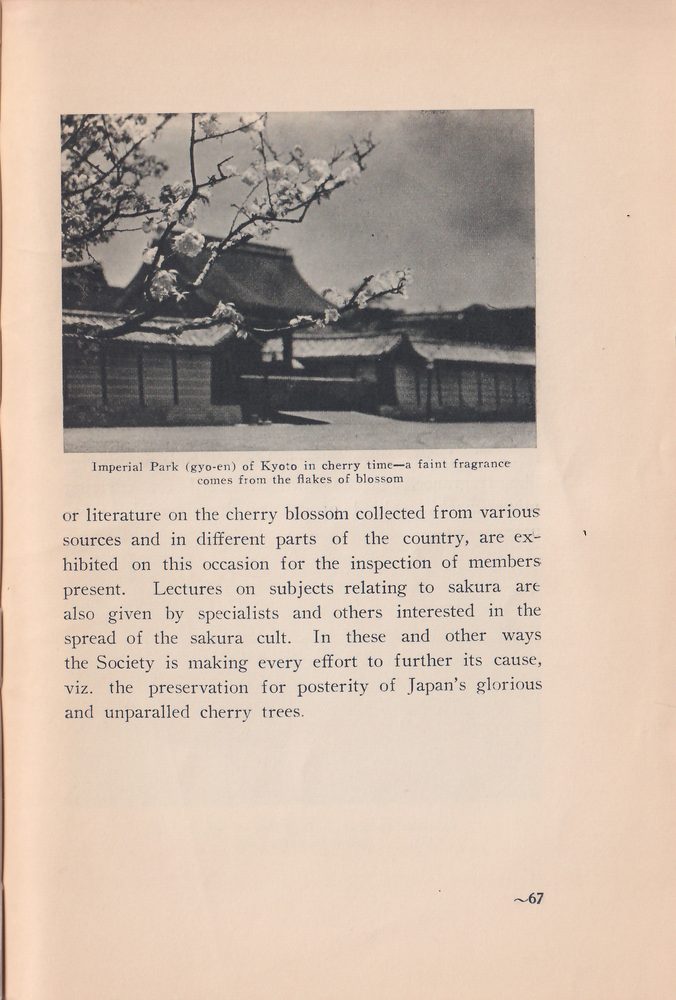
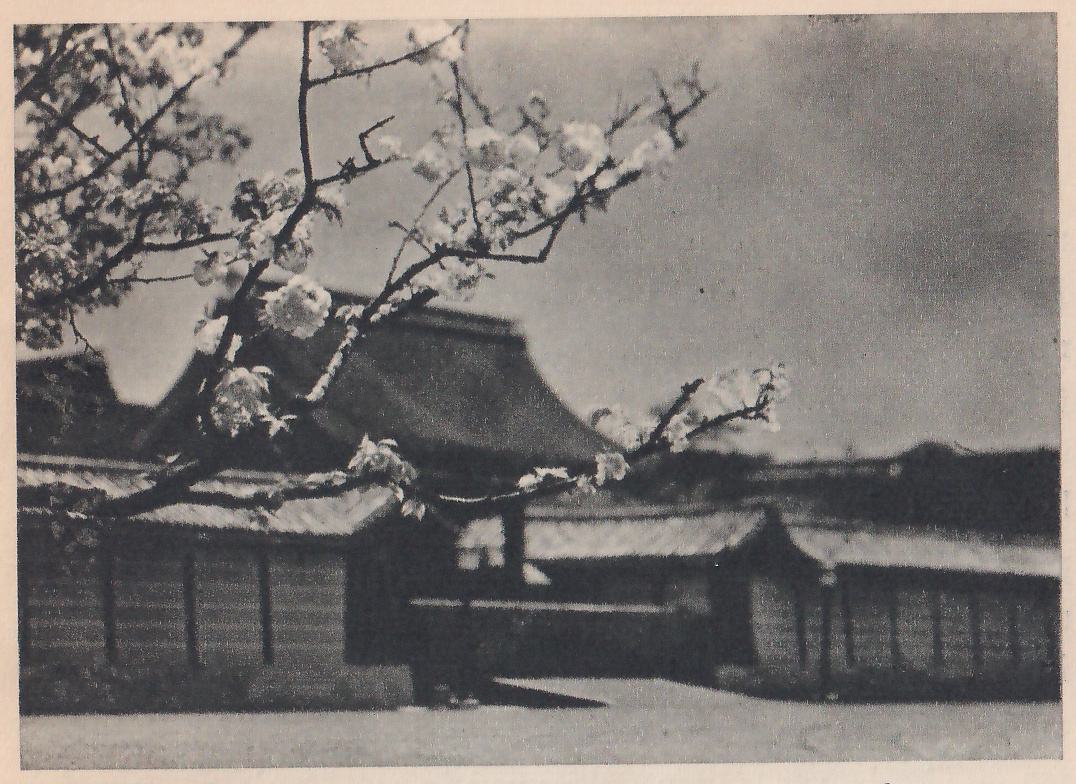
or literature on the cherry blossom collected from various sources and in different parts of the country, are exhibited on this occasion for the inspection of members present. Lectures on subjects relating to sakura are also given by specialists and others interested in the spread of the sakura cult. In these and other ways the Society is making every effort to further its cause, viz. the preservation for posterity of Japan’s glorious and unparalleledPrinted: unparalled cherry trees.