
VII NOTED CHERRY TREES
Among many well-known sakura trees there are not a few protected by law as national cherry trees, either on account of their being rare kinds or because of their peculiar growth. The trees listed below, each with a brief description, are representative:—
(1) “Nara Yae-zakura” (Prunus antiqua)
This famed old cherry tree stands in the grounds of the Chisokuin Temple in Nara and is highly valued on account of the graceful beauty of its double crimson flowers. The tree blossoms early in May.
(2) “Shiroko Fudan-zakura” (Prunus serrulata f. semperflorens).
This cherry tree, well known since very olden times, is in the compound of the Koyasu-kannon Temple at Shiroko, Kawage County, Miye Prefecture. The small area in which the tree grows is walled in with stone. Except in mid-summer the tree has white flowers all through the year. The stalks are short in the winter flowers, but long in late spring flowers. Even in the cold season its leaves retain their green colour, as with evergreens. A cherry tree blooming with green leaves under snow looks very singular of course.
(3) “Kenrokuen Kiku-zakura” or Chrysanthemum Cherry (Prunus serrulata f. sphaerantha).
This cherry tree, bearing a peculiar name, is found in the famous Kenroku Park in the city of Kanazawa, and is widely known as Kiku-zakura or chrysanthemum cherry. Each of its flowers consists of numerous large
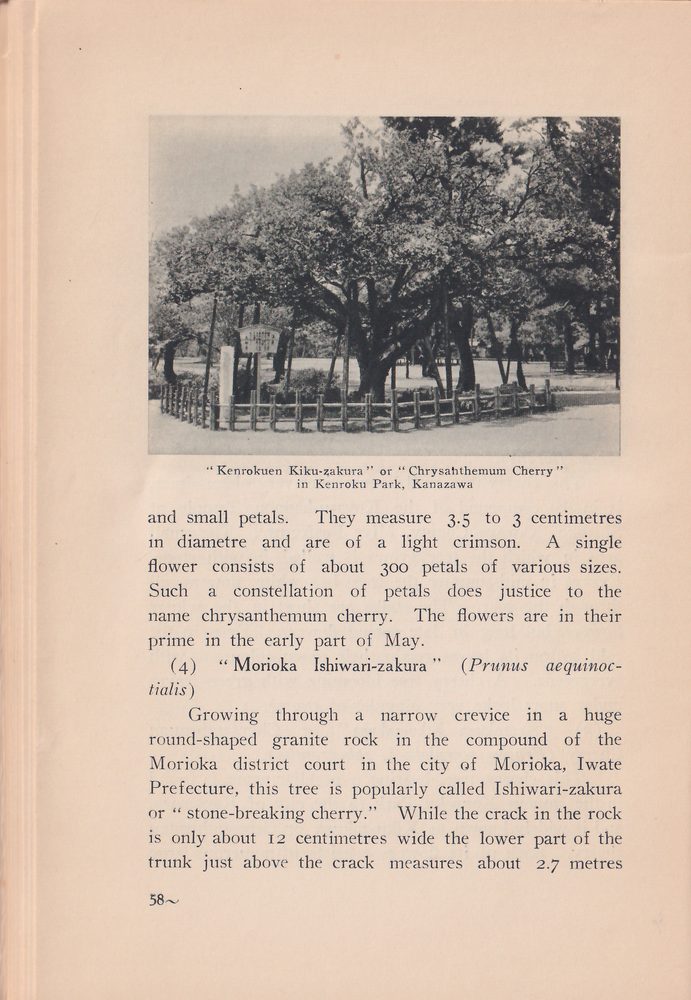
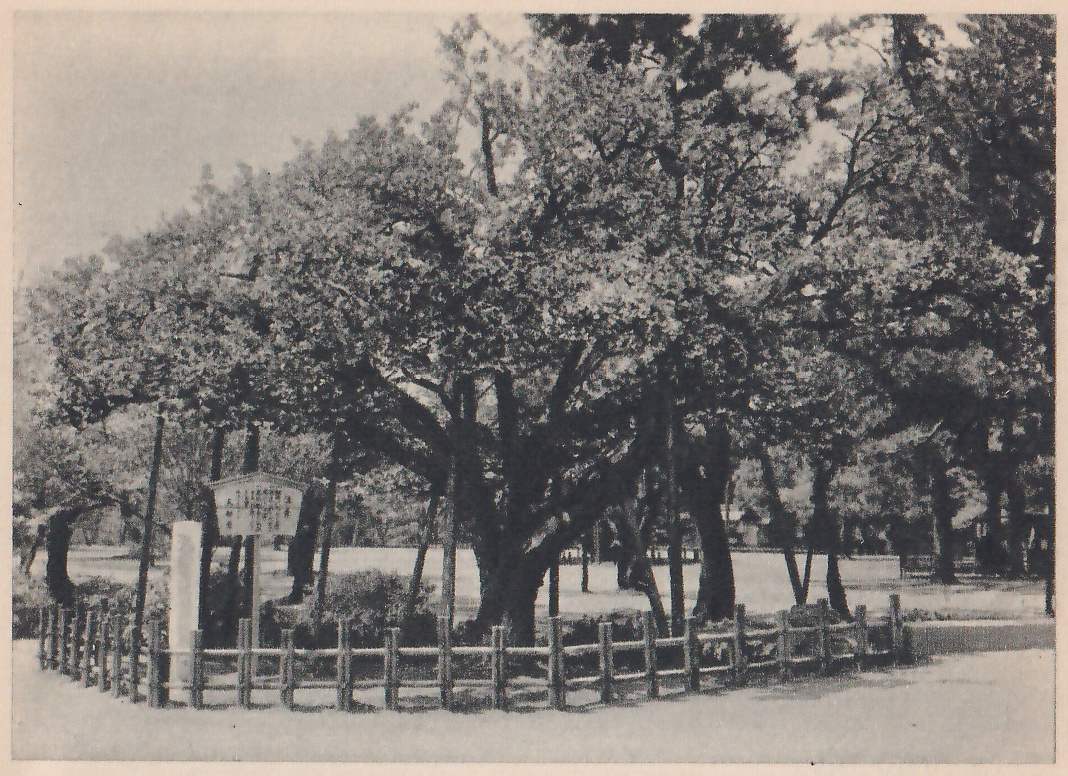
and small petals. They measure 3.5 to 3 centimetres in diametre and are of a light crimson. A single flower consists of about 300 petals of various sizes. Such a constellation of petals does justice to the name chrysanthemum cherry. The flowers are in their prime in the early part of May.
(4) “Morioka Ishiwari-zakura” (Prunus aequinoctialis)
Growing through a narrow crevice in a huge round-shaped granite rock in the compound of the Morioka district court in the city of Morioka, Iwate Prefecture, this tree is popularly called Ishiwari-zakura or “stone-breaking cherry.” While the crack in the rock is only about 12 centimetres wide the lower part of the trunk just above the crack measures about 2.7 metres
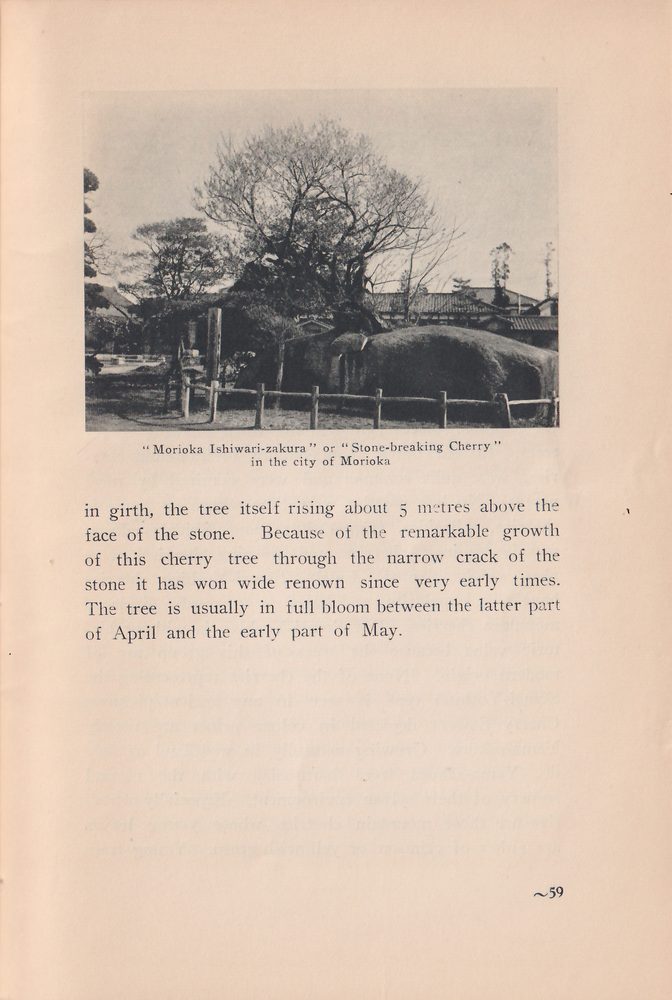
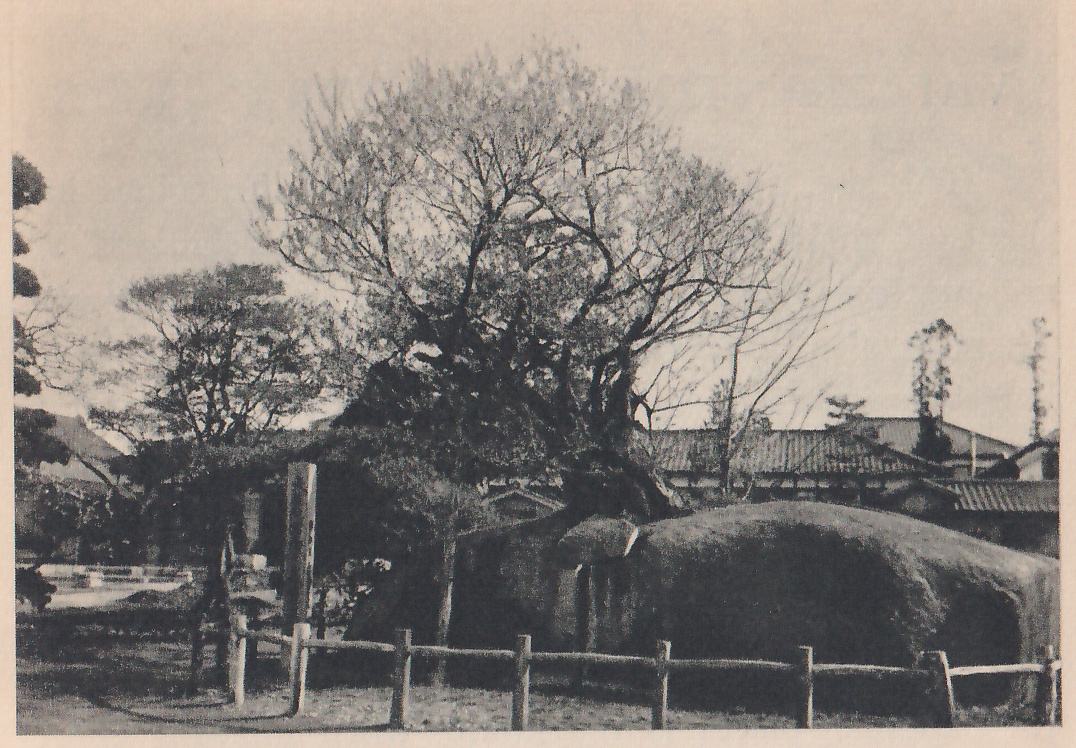
in girth, the tree itself rising about 5 metres above the face of the stone. Because of the remarkable growth of this cherry tree through the narrow crack of the stone it has won wide renown since very early times. The tree is usually in full bloom between the latter part of April and the early part of May.