
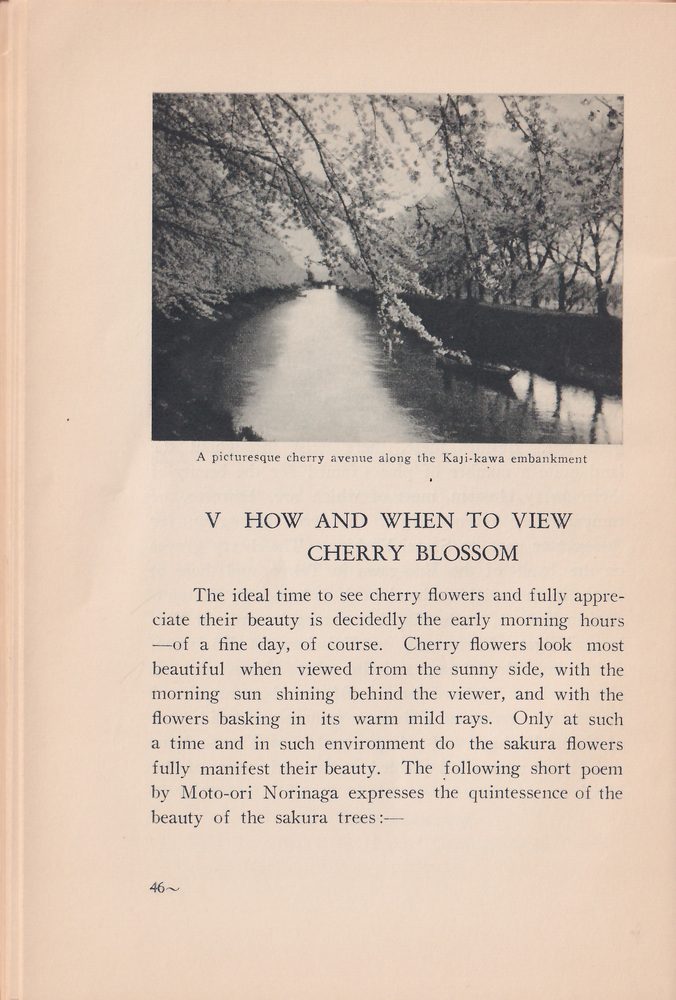
V HOW AND WHEN TO VIEW CHERRY BLOSSOM
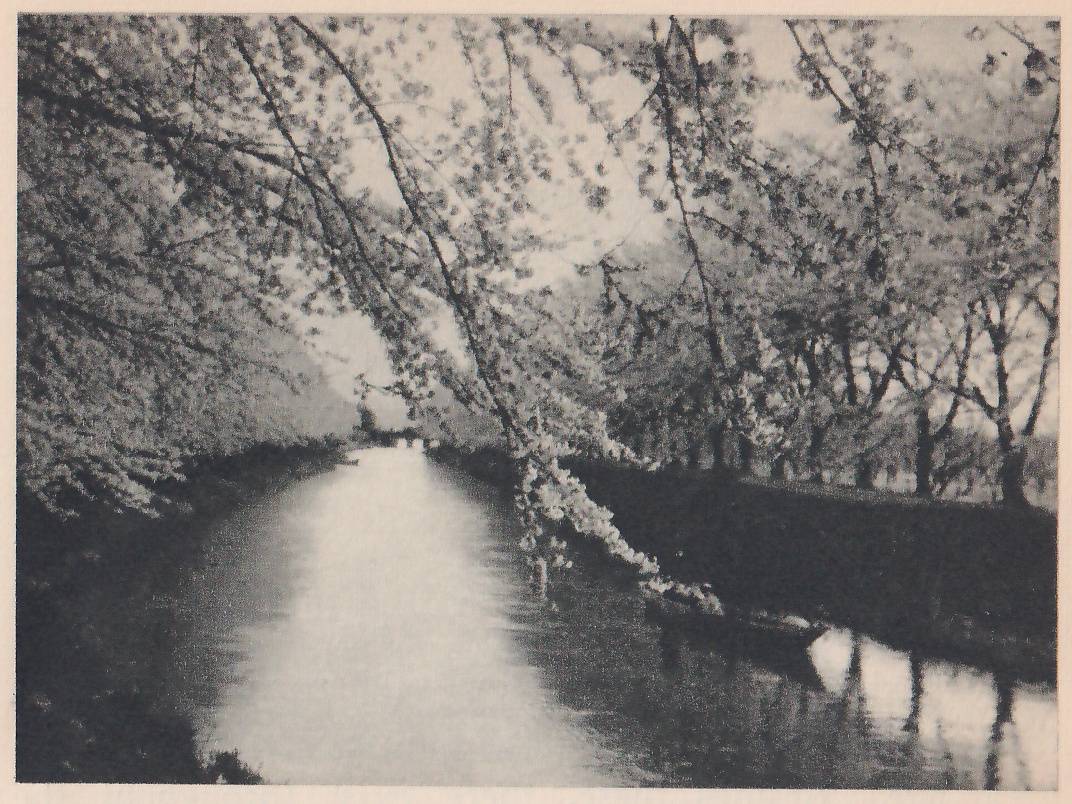
The ideal time to see cherry flowers and fully appreciate their beauty is decidedly the early morning hours—of a fine day, of course. Cherry flowers look most beautiful when viewed from the sunny side, with the morning sun shining behind the viewer, and with the flowers basking in its warm mild rays. Only at such a time and in such environment do the sakura flowers fully manifest their beauty. The following short poem by Moto-ori Norinaga expresses the quintessence of the beauty of the sakura trees:—
Shikishima no Yamato gokoro wo
Hito towaba
Asahi ni niou
Yamazakura bana
Isles of blest Japan!
Should your Yamato spirit
Strangers seek to scan,
Say—scenting morn’s sunlit air
Blows the cherry wild and fair!
—Nitobe’s Soul of Japan
The cherry flowers under a moonlit sky, cherry flowers in breezy weather, or cherry flowers in rain, which are very frequently adopted as the subject of
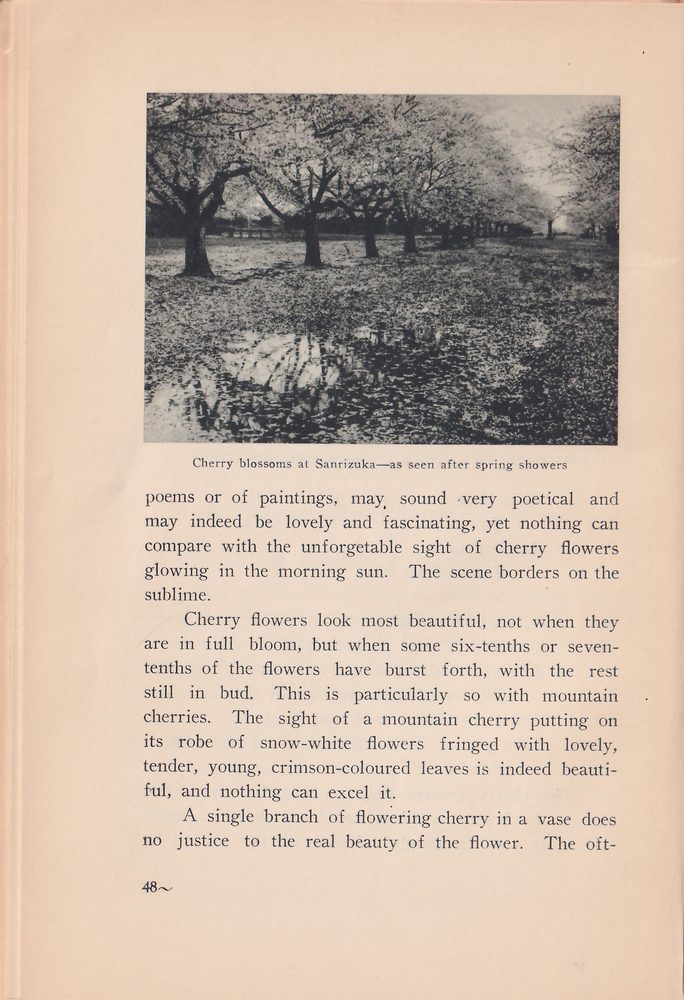
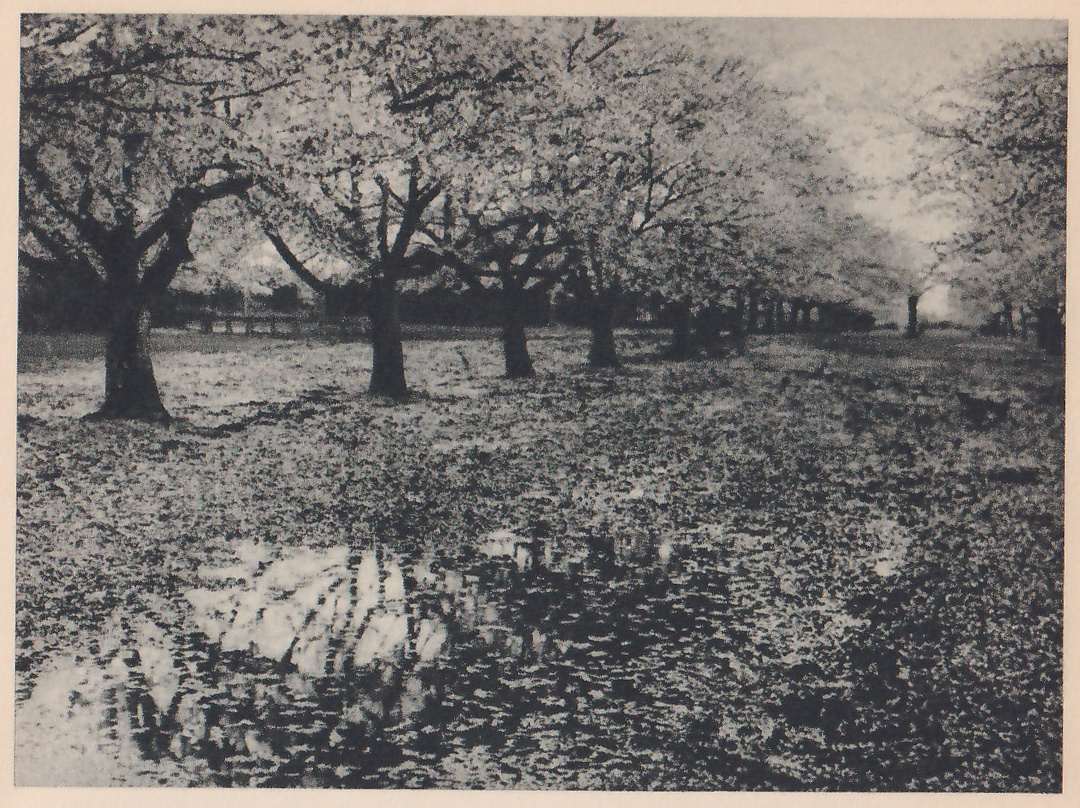
poems or of paintings, may sound very poetical and may indeed be lovely and fascinating, yet nothing can compare with the unforgettablePrinted: unforgetable sight of cherry flowers glowing in the morning sun. The scene borders on the sublime.
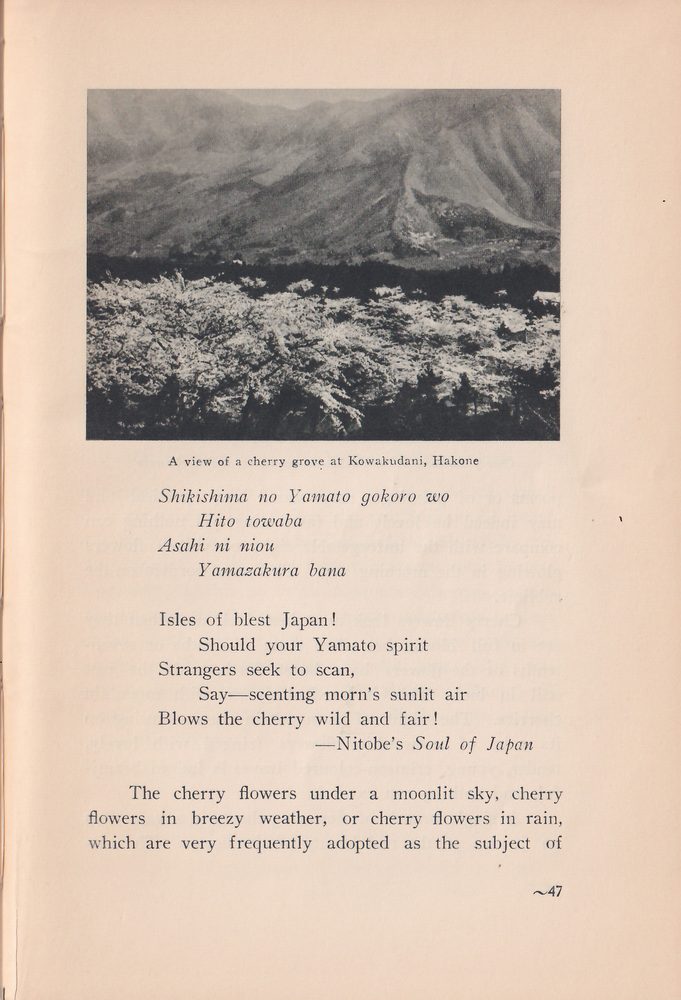
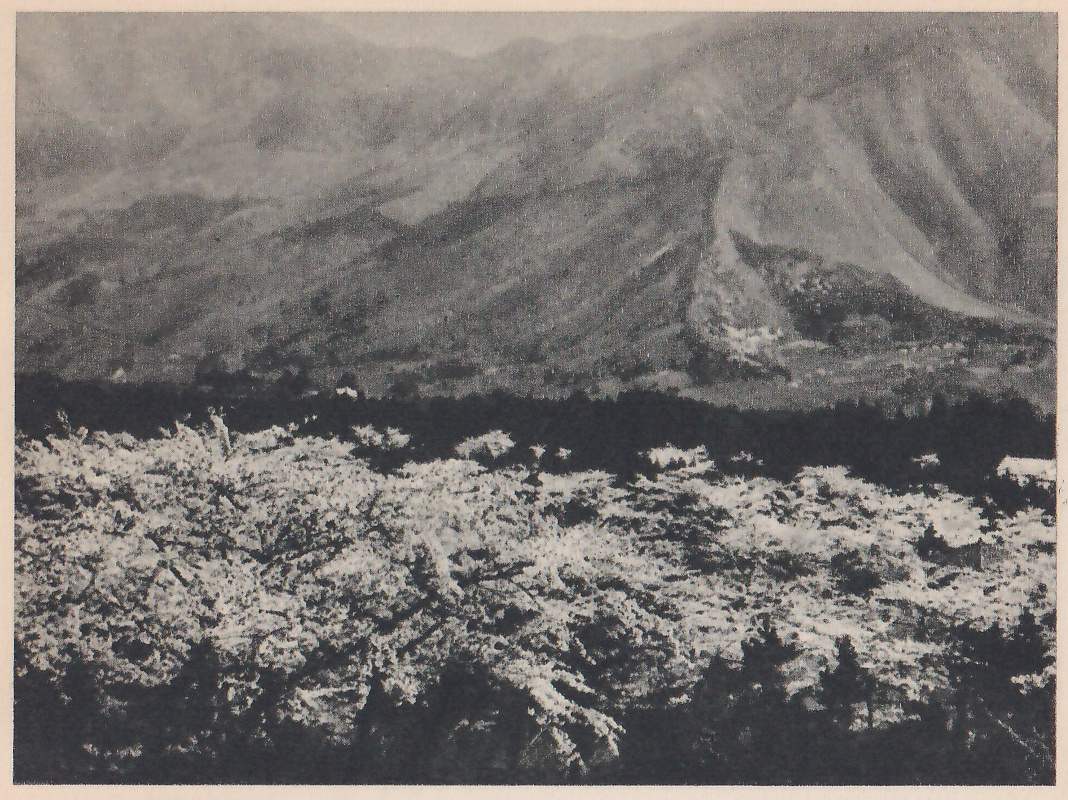
Cherry flowers look most beautiful, not when they are in full bloom, but when some six-tenths or seven-tenths of the flowers have burst forth, with the rest still in bud. This is particularly so with mountain cherries. The sight of a mountain cherry putting on its robe of snow-white flowers fringed with lovely, tender, young, crimson-coloured leaves is indeed beautiful, and nothing can excel it.
A single branch of flowering cherry in a vase does no justice to the real beauty of the flower. The oft-
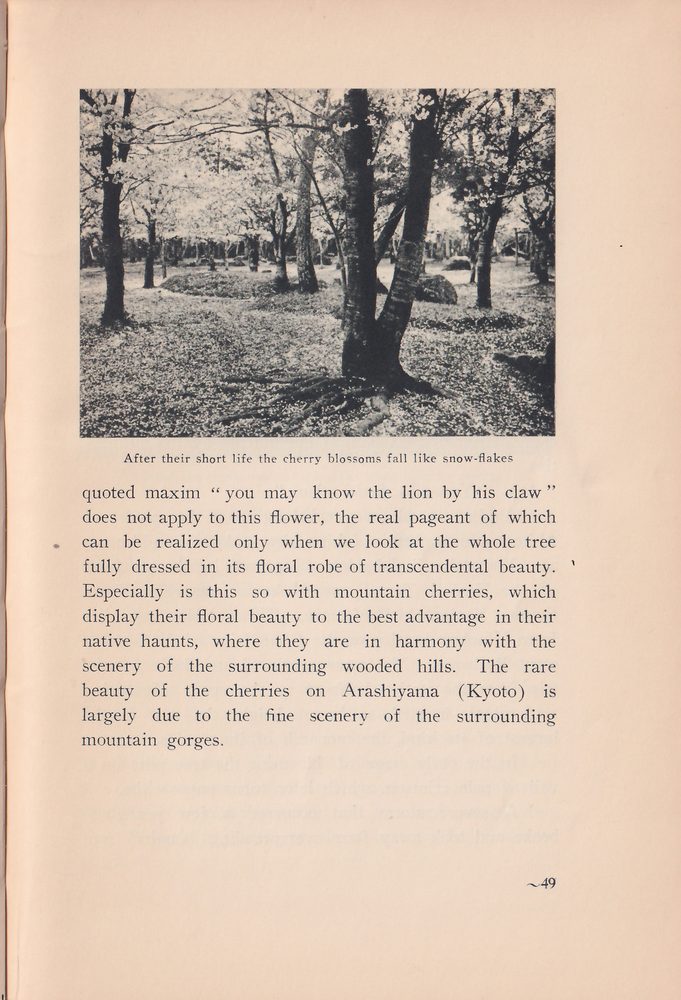
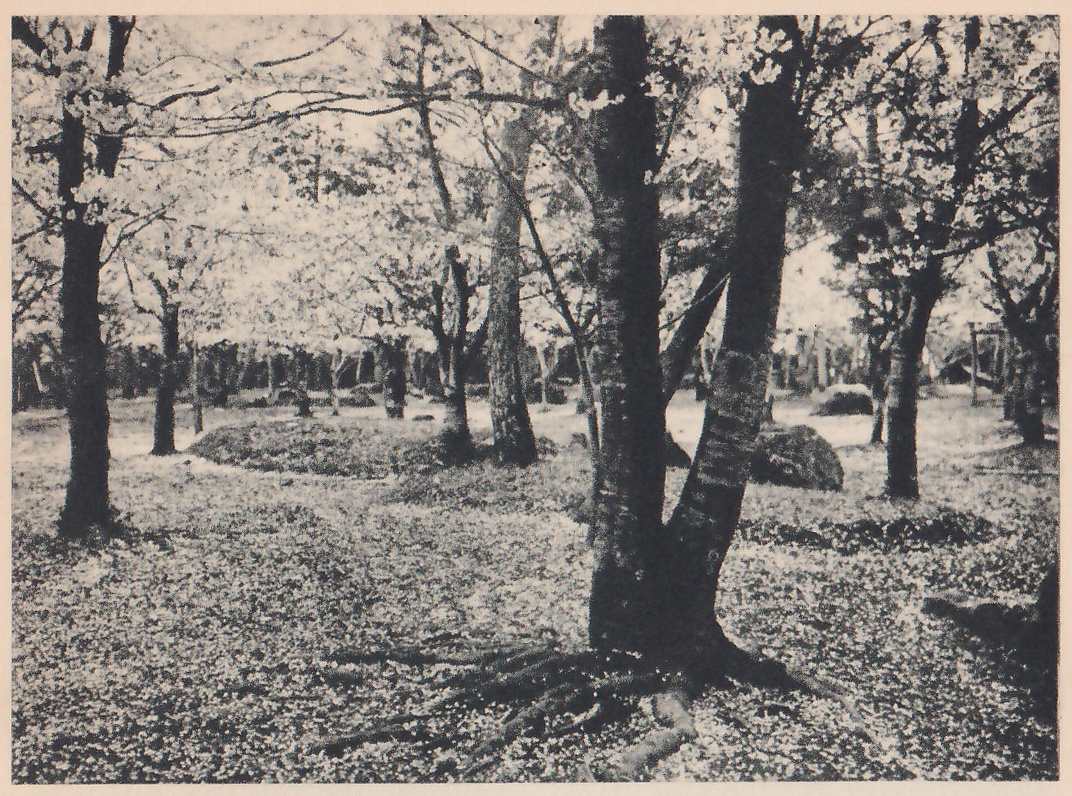
quoted maxim “you may know the lion by his claw” does not apply to this flower, the real pageant of which can be realized only when we look at the whole tree fully dressed in its floral robe of transcendental beauty. Especially is this so with mountain cherries, which display their floral beauty to the best advantage in their native haunts, where they are in harmony with the scenery of the surrounding wooded hills. The rare beauty of the cherries on Arashiyama (Kyoto) is largely due to the fine scenery of the surrounding mountain gorges.