
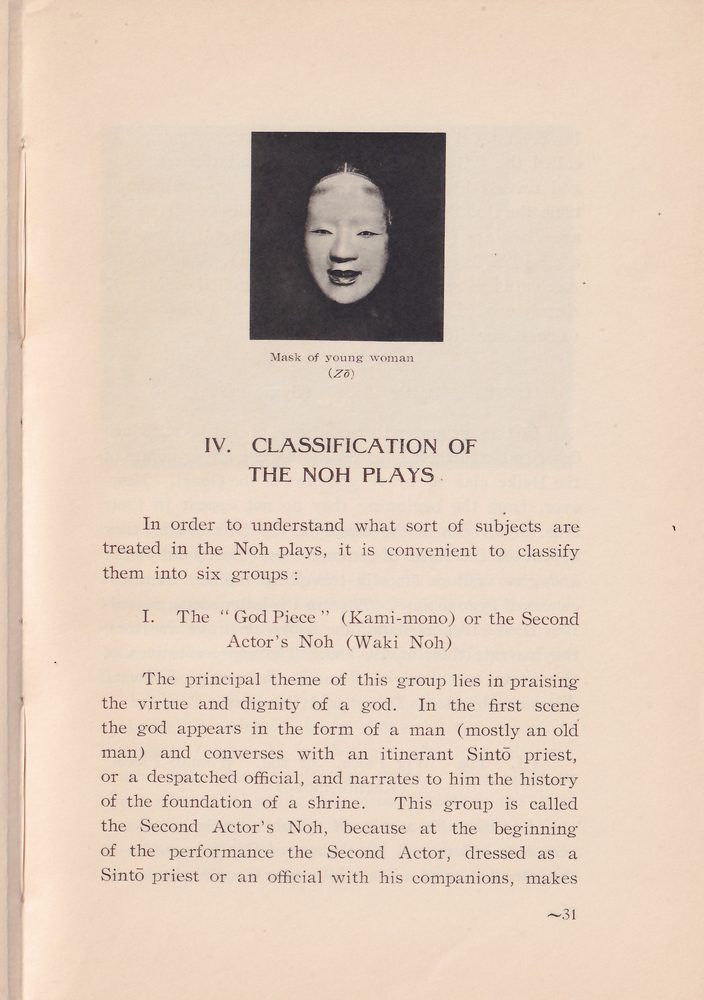
IV. CLASSIFICATION OF THE NOH PLAYS
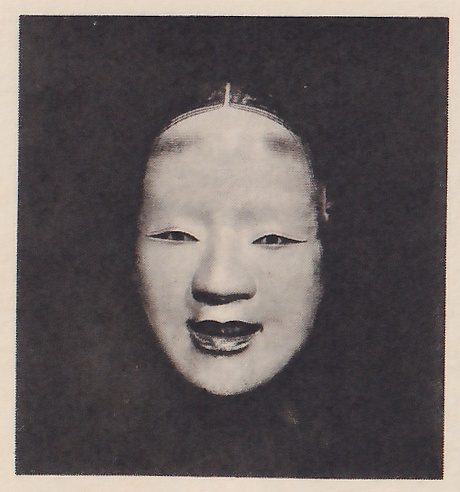
(Zō)
In order to understand what sort of subjects are treated in the Noh plays, it is convenient to classify them into six groups:
I. The “God Piece” (Kami-mono) or the Second Actor’s Noh (Waki Noh)
The principal theme of this group lies in praising the virtue and dignity of a god. In the first scene the god appears in the form of a man (mostly an old man) and converses with an itinerant Sintō priest, or a despatched official, and narrates to him the history of the foundation of a shrine. This group is called the Second Actor’s Noh, because at the beginning of the performance the Second Actor, dressed as a Sintō priest or an official with his companions, makes
his ceremonial appearance on the stage. Again, it is called the “God Piece” because in the latter scene the god reveals his true form to the visitors and shows them the God Dance. The chief examples of this group are Takasago (The Pine-tree of Takasago), Yumi-Yawata (The Bow and the God of Yawata), Oimatu (The Ancient Pine-tree), Kamo (The Thunder-God of Kamo), Arasi-yama (The God of Mt. Arasi), and Hōzyō-gawa (The River Hōzyō).
II. The “Battle Piece” (Syura-mono)
In this group pathetic scenes of battle-fields are described, and their chief characters are either nobles of the Heike clan or brave warriors of the Genzi. However, from the beginning they do not appear in their true form. As is the usage in the Noh plays, they appear in the form of common men (mostly old men), and give visitors (mostly travelling monks) reminiscences of bygone days. Then in the latter scene, revealing themselves as handsome nobles or brave warriors, they narrate their tragic end. The representatives of this group are Tamura, Yasima, Tunemasa, Tadanori, Kiyotune, Mitimori, Tomoe, and Sanemori.
III. The “Wig Piece,” or the “Woman Piece” (Kazura-mono)
A kazura is a wig in which a male actor impersonate a female. Most plays of this group aim at the introduction of a beautiful young woman who dances
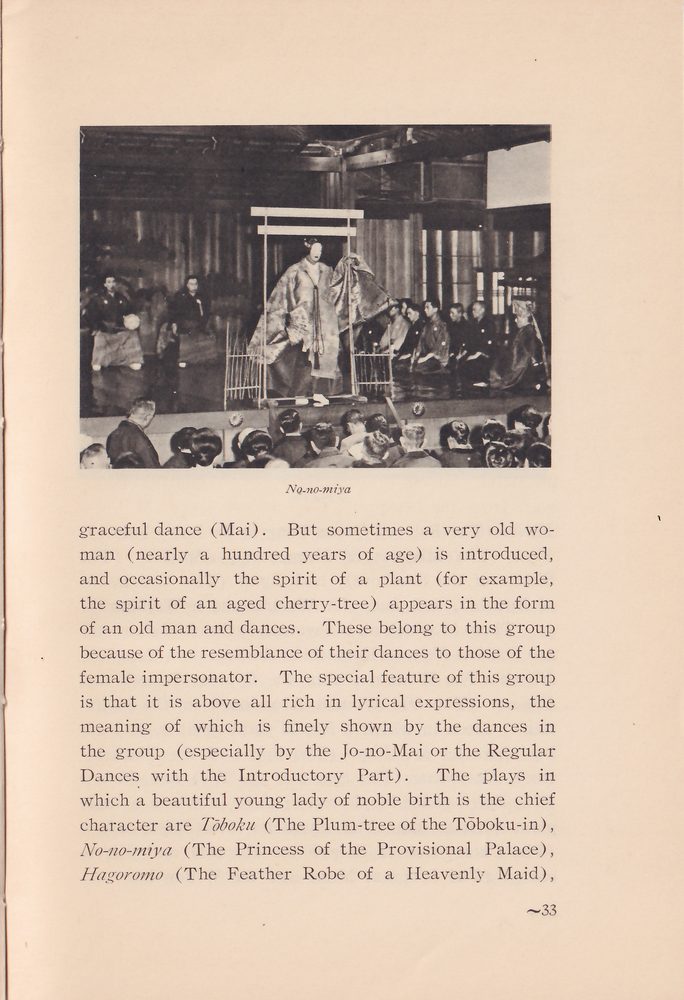
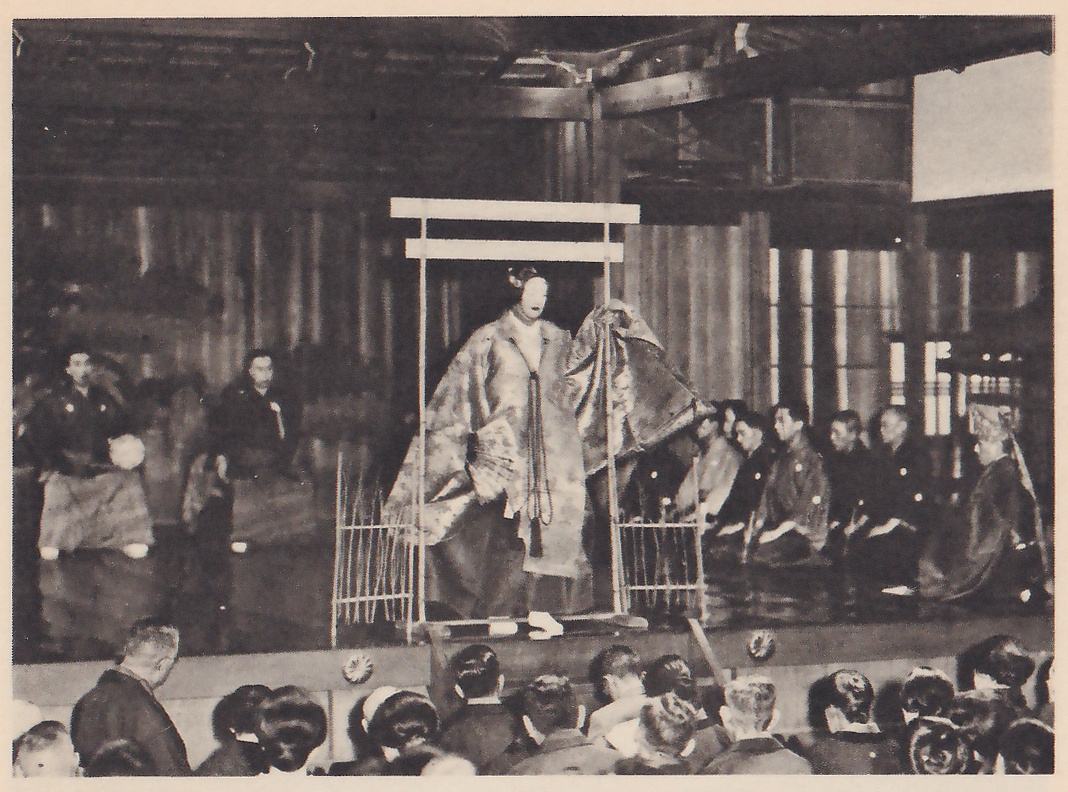
graceful dance (Mai). But sometimes a very old woman (nearly a hundred years of age) is introduced, and occasionally the spirit of a plant (for example, the spirit of an aged cherry-tree) appears in the form of an old man and dances. These belong to this group because of the resemblance of their dances to those of the female impersonator. The special feature of this group is that it is above all rich in lyrical expressions, the meaning of which is finely shown by the dances in the group (especially by the Jo-no-Mai or the Regular Dances with the Introductory Part). The plays in which a beautiful young lady of noble birth is the chief character are Tōboku (The Plum-tree of the Tōboku-in), No-no-miya (The Princess of the Provisional Palace), Hagoromo (The Feather Robe of a Heavenly Maid),
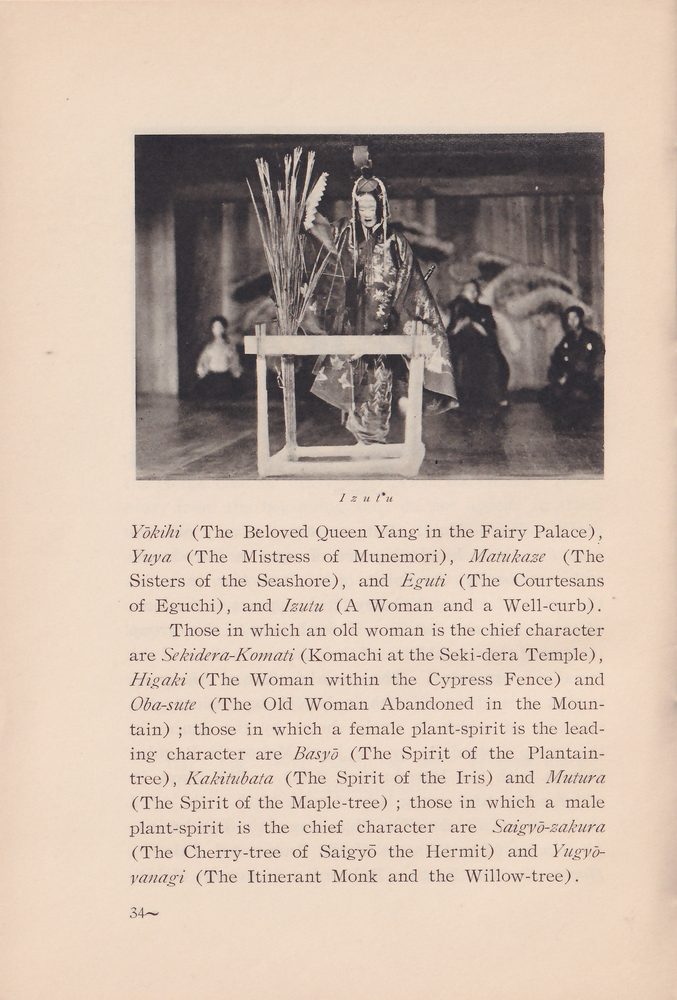
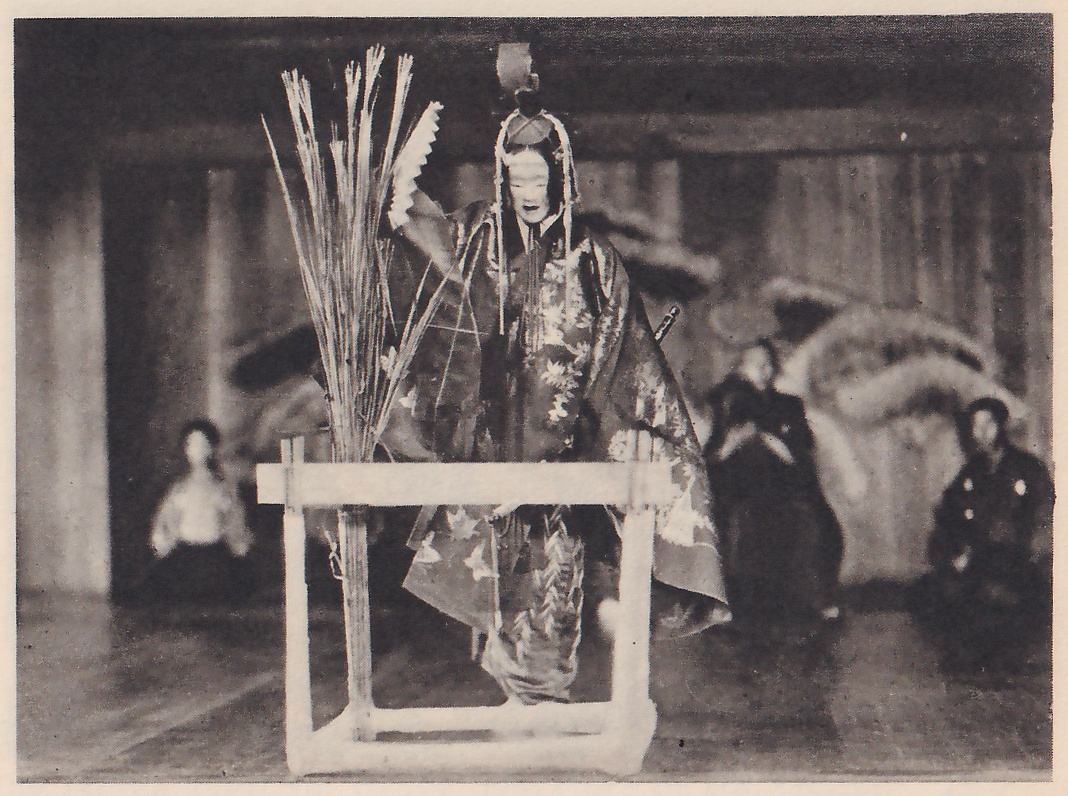
Yōkihi (The Beloved Queen Yang in the Fairy Palace), Yuya (The Mistress of Munemori), Matukaze (The Sisters of the Seashore), and Eguti (The Courtesans of Eguchi), and Izutu (A Woman and a Well-curb).
Those in which an old woman is the chief character are Sekidera-Komati (Komachi at the Seki-dera Temple), Higaki (The Woman within the Cypress Fence) and Oba-sute (The Old Woman Abandoned in the Mountain); those in which a female plant-spirit is the leading character are Basyō (The Spirit of the Plantain-tree), Kakitubata (The Spirit of the Iris) and Mutura (The Spirit of the Maple-tree); those in which a male plant-spirit is the chief character are Saigyō-zakura (The Cherry-tree of Saigyō the Hermit) and Yugyō-yanagi (The Itinerant Monk and the Willow-tree).
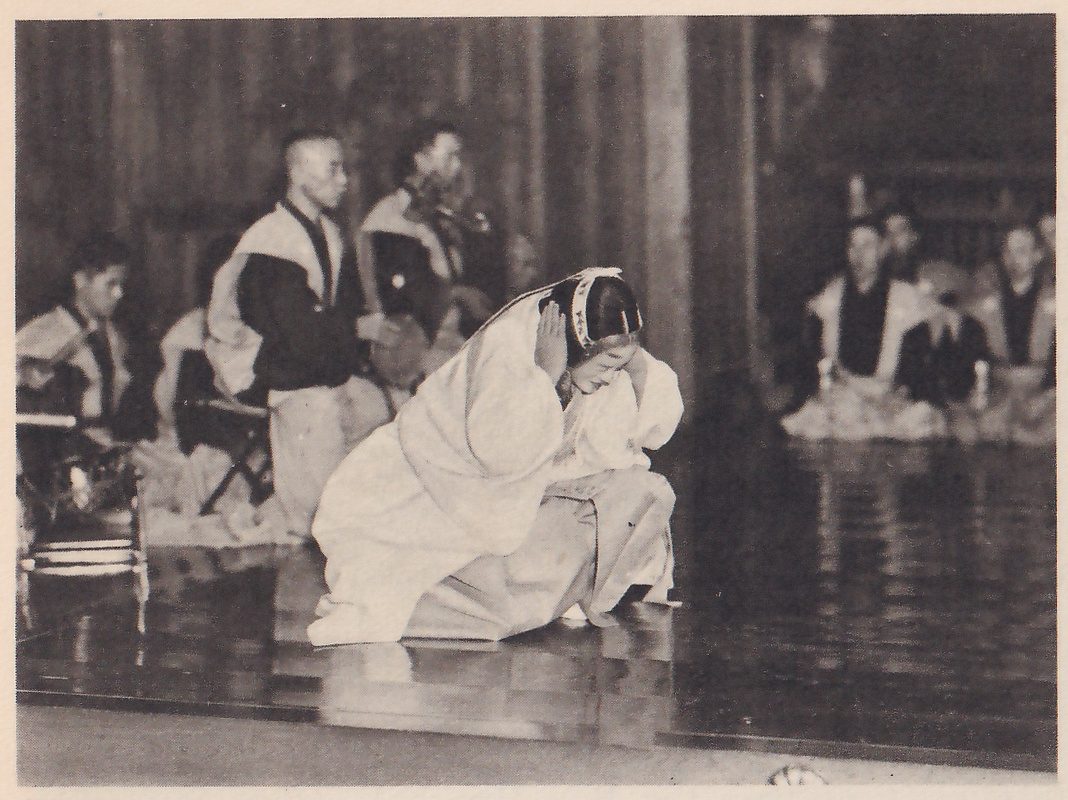
IV. The “Lunatic Piece” (Kurui-mono) and the “Revenge Piece” (Onryō-mono)
In the “Lunatic Pieces” a madman is sometimes represented, but in most cases a mad woman, such as the mother who goes mad through losing her child, as in Sakura-gawa (The Mother on the River Sakura), Mii-dera (The Mother at the Court of the Temple Mii), Hyakuman (The Mother Hyakuman at Saga) and Sumida-gawa (The Mad Mother on the River Sumida); the woman who loses her senses through yearning for her lover, in Hana-gatami (The Flower Basket, a Keepsake of Love), Kamo-monogurui (A Mad Woman at Kamo), Huzi-daiko (Court Musician Huzi’s Drum) and Ume-ga-e (The Musician’s Wife). In the plays
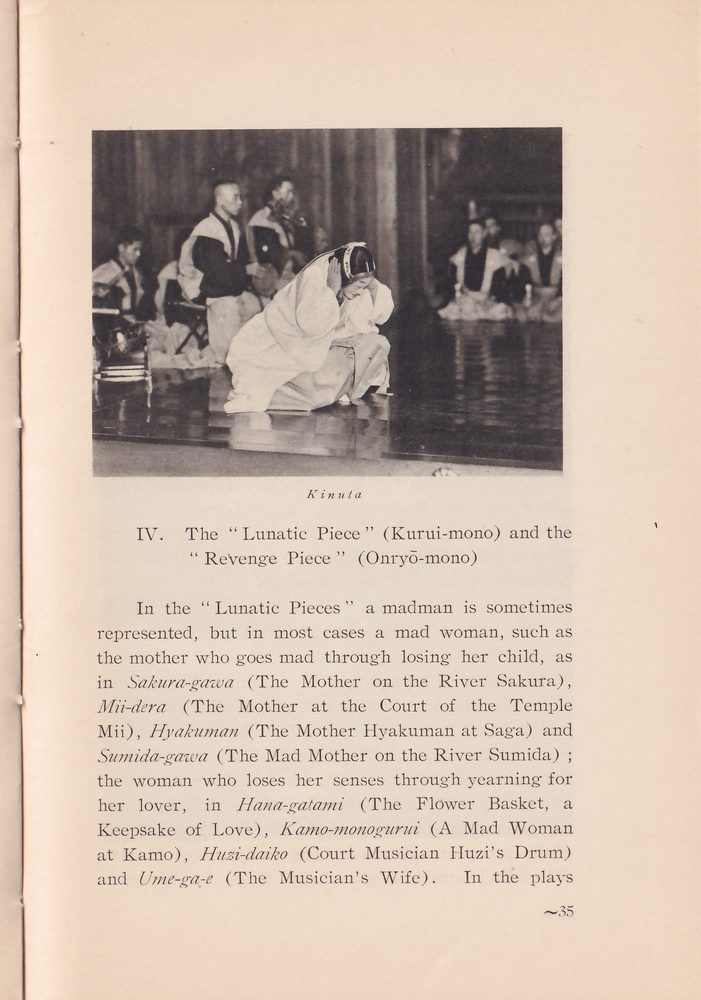
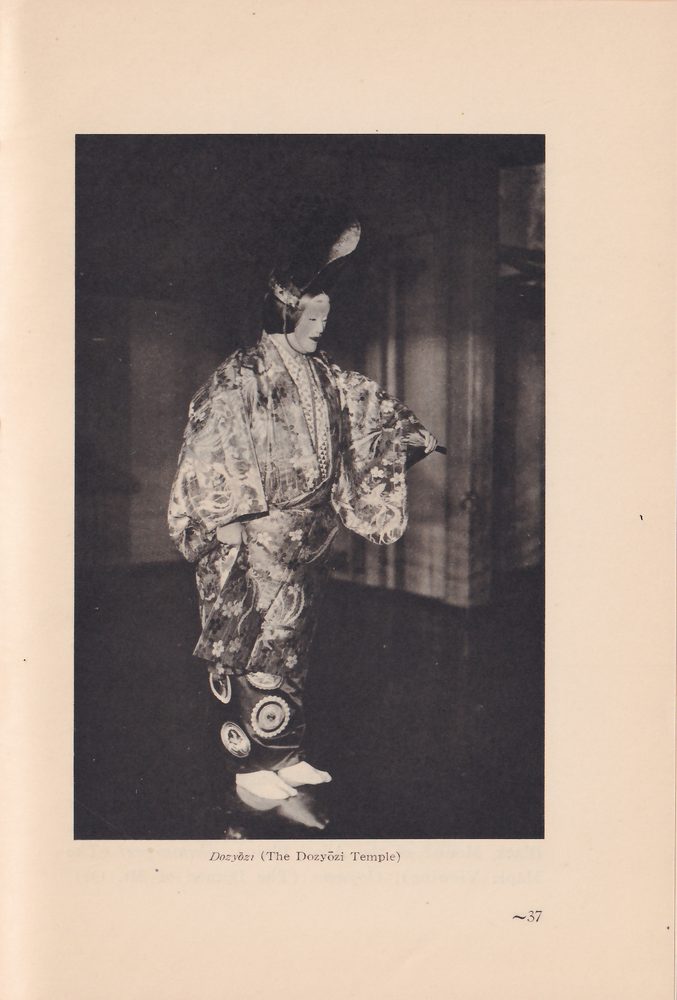
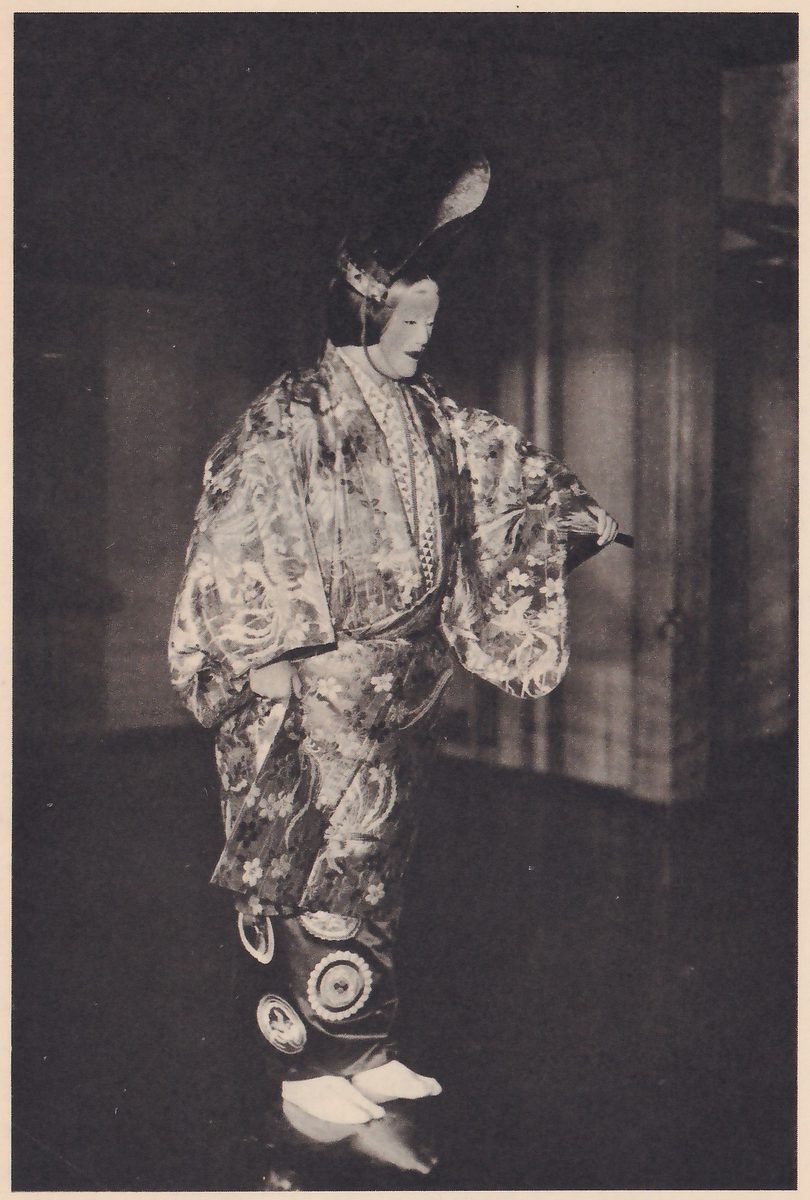
which chiefly express strong revengeful emotions there are some of which the subject is a woman entertaining a hostile feeling towards man for his infidelity, as in Dōzyō-zi (The Dōzyōzi Temple) and Kinuta (Beating the Fulling-block). Some of these plays are based on the theme of a man having an enmity to woman because of unfaithfulness, as in Aya-no-tuzumi (The Rush Drum) and Koi-no-omoni (The Burden of Love). Others have as their main theme that of the curse of jealousy, as in Aoi-no-ue (Lady Aoi Possessed) and Kanawa (The Metal Headring of Curse); some in which the leading personages are the ghosts of men and women which are unable to escape from the agony of passion, as in Ominamesi (The Lovers Drowned Themselves), Nisikigi (Piling up the Box Boughs), Huna-basi (The Lover on the Boat-bridge), Kayoi-Komati (Nightly Visits to Belle Komati) and Motome-zuka (The Tomb Discovered). Many others which treat of various evil passions are included in this group.
V. The “Earthly Piece” (Genzai-mono)
In most Noh plays ghosts of the dead are given a prominent part, but in this group of plays living persons take the leading rôle. Therefore this name is given to the group. Dealing with living persons they are realistically treated. The characteristic feature of this group is that it is comparatively dramatic, and the other groups are either epic or lyrical. Examples of this group are Hati-no-ki (The Pot-plants), Morihisa (Morihisa Saved), Kogō (Lady Kogō Found Out),
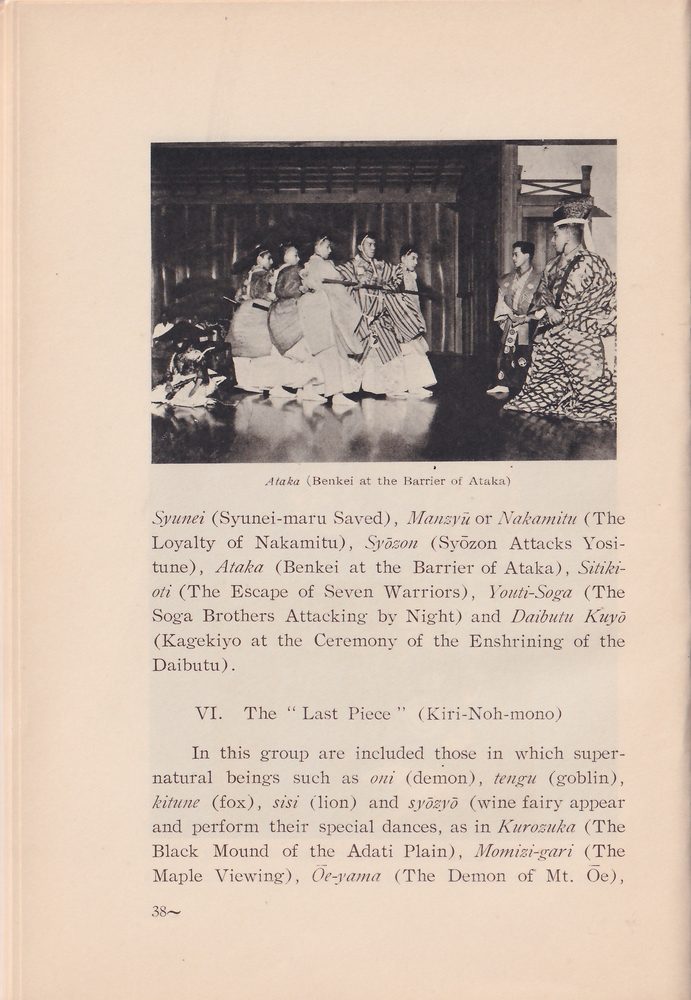
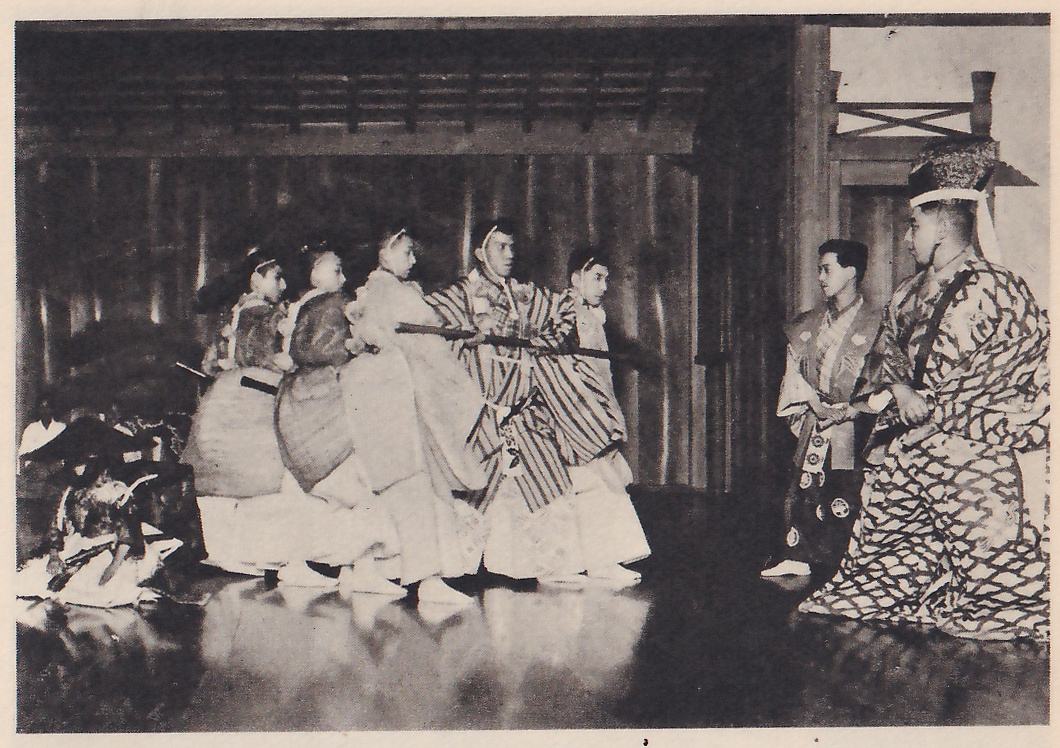
Syunei (Syunei-maru Saved), Manzyū or Nakamitu (The Loyalty of Nakamitu), Syōzon (Syōzon Attacks Yositune), Ataka (Benkei at the Barrier of Ataka), Sitiki-oti (The Escape of Seven Warriors), Youti-Soga (The Soga Brothers Attacking by Night) and Daibutu Kuyō (Kagekiyo at the Ceremony of the Enshrining of the Daibutu).
VI. The “Last Piece” (Kiri-Noh-mono)
In this group are included those in which supernatural beings such as oni (demon), tengu (goblin), kitune (fox), sisi (lion) and syōzyō (wine fairy appear and perform their special dances, as in Kurozuka (The Black Mound of the Adati Plain), Momizi-gari (The Maple Viewing), Ōe-yama (The Demon of Mt. Ōe),
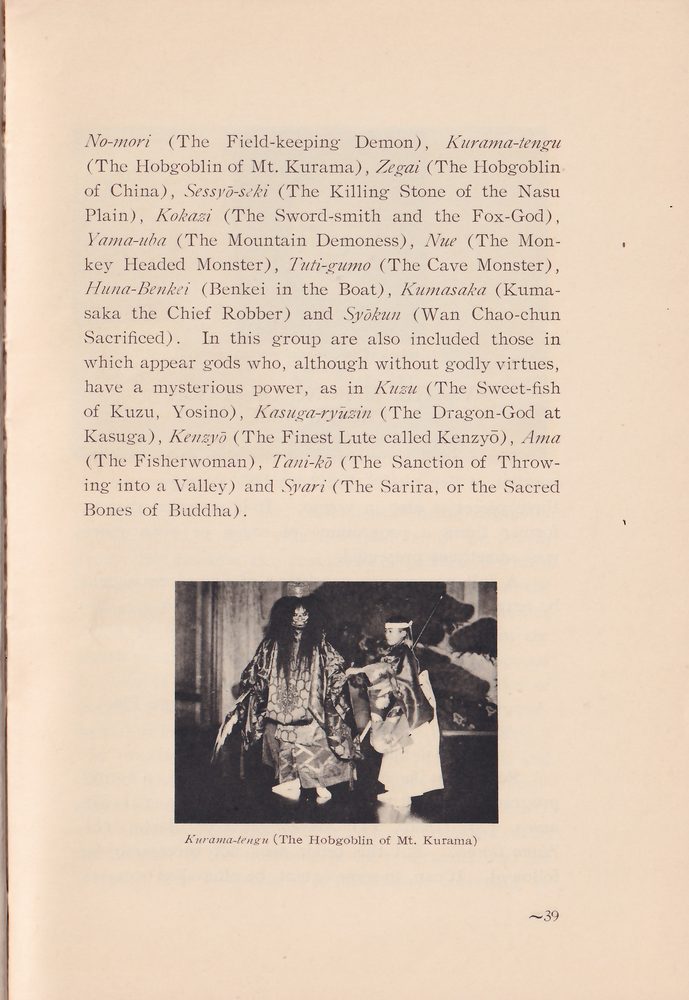
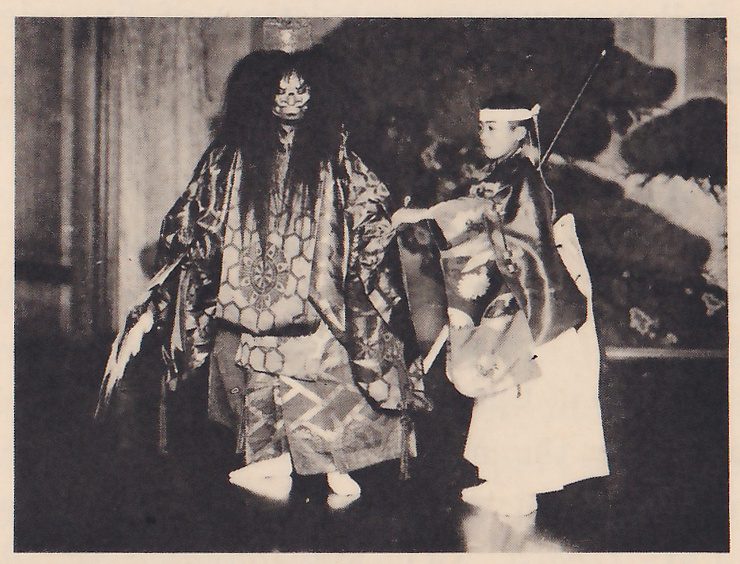
No-mori (The Field-keeping Demon), Kurama-tengu (The Hobgoblin of Mt. Kurama), Zegai (The Hobgoblin of China), Sessyō-seki (The Killing Stone of the Nasu Plain), Kokazi (The Sword-smith and the Fox-God), Yama-uba (The Mountain Demoness), Nue (The Monkey Headed Monster), Tuti-gumo (The Cave Monster), Huna-Benkei (Benkei in the Boat), Kumasaka (Kumasaka the Chief Robber) and Syōkun (Wan Chao-chun Sacrificed). In this group are also included those in which appear gods who, although without godly virtues, have a mysterious power, as in Kuzu (The Sweet-fish of Kuzu, Yosino), Kasuga-ryūzin (The Dragon-God at Kasuga), Kenzyō (The Finest Lute called Kenzyō), Ama (The Fisherwoman), Tani-kō (The Sanction of Throwing into a Valley) and Syari (The Sarira, or the Sacred Bones of Buddha).