
Lesson 15
米 kome · Rice
1. The character
kome 米 is also read bei and means rice. This lesson gives us a chance to revisit the opposing hidaribarai and migibarai strokes. There is a very nice contrast between symmetry and asymmetry that makes this a very interesting character. It also gives us an excellent chance to contrast the harai and hane strokes.
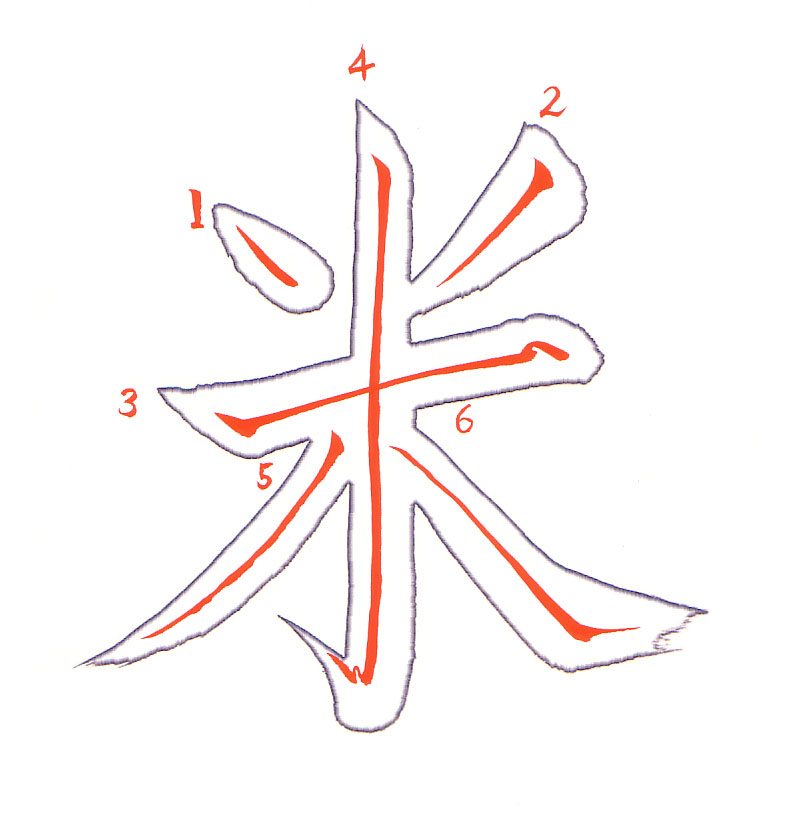
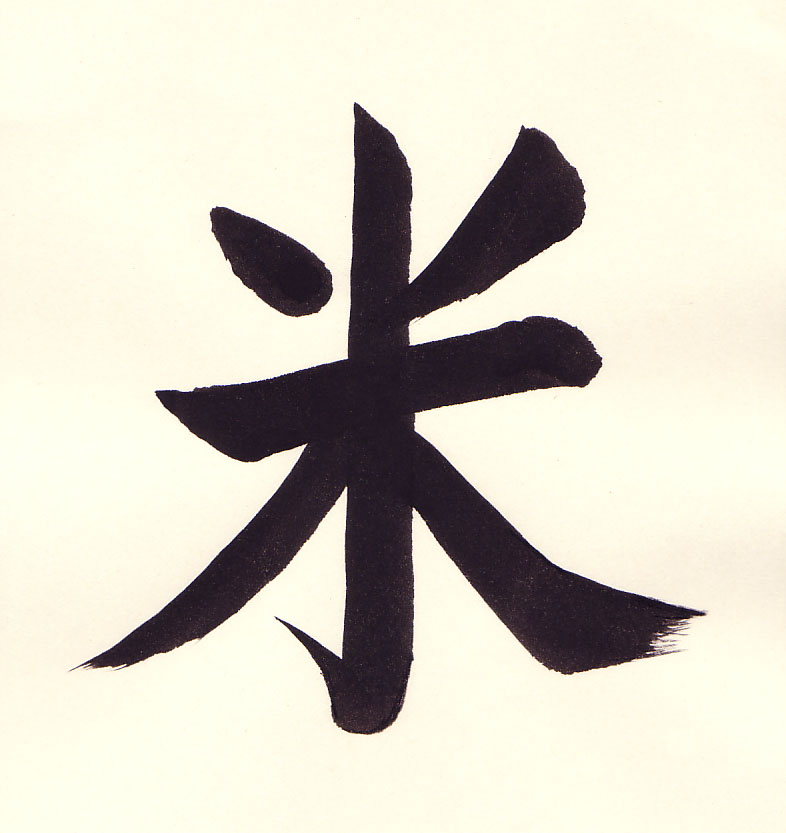
- 0:09 For the ten stroke, apply the brush to the paper at a 45 degree angle.
- 0:10 Start with the brush tip and then gently press down drawing the brush at the same 45 degree angle.
- 0:11 At the bottom of the stroke, hold the brush briefly.
- 0:12 And lift the brush up and off the paper.
- 0:15 For the hidarihane, apply the brush to the paper at a 45 degree angle.
- 0:15 Press down gently on the brush and come back up a little.
- 0:16 Then reposition the brush so the thick part of the brush is facing down and to the left. Tilt the brush so the tip of the brush is to the left and down from the end of the brush.
- 0:16 Then in a quick motion bring the brush to the left and down as you bring the brush off the paper.
- 0:16 The hidarihane stroke is a large quick motion.
- 0:20 For the yokoga, apply the brush to the paper at a 45 degree angle.
- 0:21 Press down gently on the brush and release the pressure. Rotate the brush counterclockwise so the thick part of the brush is facing to the right and slightly upward. The brush is tilted so that the tip of the brush is to the right of the end of the brush.
- 0:21 Push the brush to the right using the whole arm and even pressure.
- 0:22 At the end of the line, raise the brush a bit and then again gently press down on the brush at a slight angle.
- 0:26 For the tategahane, apply the brush to the paper at a 45 degree angle. This stroke is going to be in the middle of the character.
- 0:27 Press down gently on the brush and come back up a little. The brush is then rotated clockwise so the thick part of the curve of the brush is facing downward. The brush is also tilted so the tip of the brush is well below (towards the bottom of the page) the end of the brush.
- 0:29 Push the brush straight down using your arm to draw the line.
- 0:31 At the bottom of the stroke rotate the brush so the thick part of the brush is facing down and to the left. Draw a slight 45 degree angle line.
- 0:32 Rotate the brush again clockwise so the thick part of the brush is facing to the left and upwards.
- 0:33 Finish the line with a hane stroke to the upper left.
- 0:36 Start the hidaribarai within the corner. Apply the brush to the paper at a 45 degree angle. Press down gently on the brush and come back up.
- 0:36 Then rotate the brush so the thick end of the brush is in the direction of the stroke.
- 0:37 Then using consistent pressure and using the entire arm to draw the line, bring the brush to the left and down in a nice smooth arc.
- 0:38 As you approach the bottom of the stroke gradually bring the brush off the paper giving a nice taper to the line.
- 0:40 The migibarai starts in the middle of the tatega, but below the yokoga. Apply the brush to the paper at a 45 degree angle but instead of stopping or hesitating as in other strokes, bring the brush to the right and down.
- 0:41 As you approach the bottom of the stroke gradually press down on the brush.
- 0:42 At the bottom of the stroke pause briefly.
- 0:43 Reposition the brush so the thick part of the brush is facing to the right.
- 0:44 Then pull the brush slowly to the right while lifting it off the paper giving a nice triangular taper to the stroke.
2. How students did
A student’s 米
The student’s video, without corrections
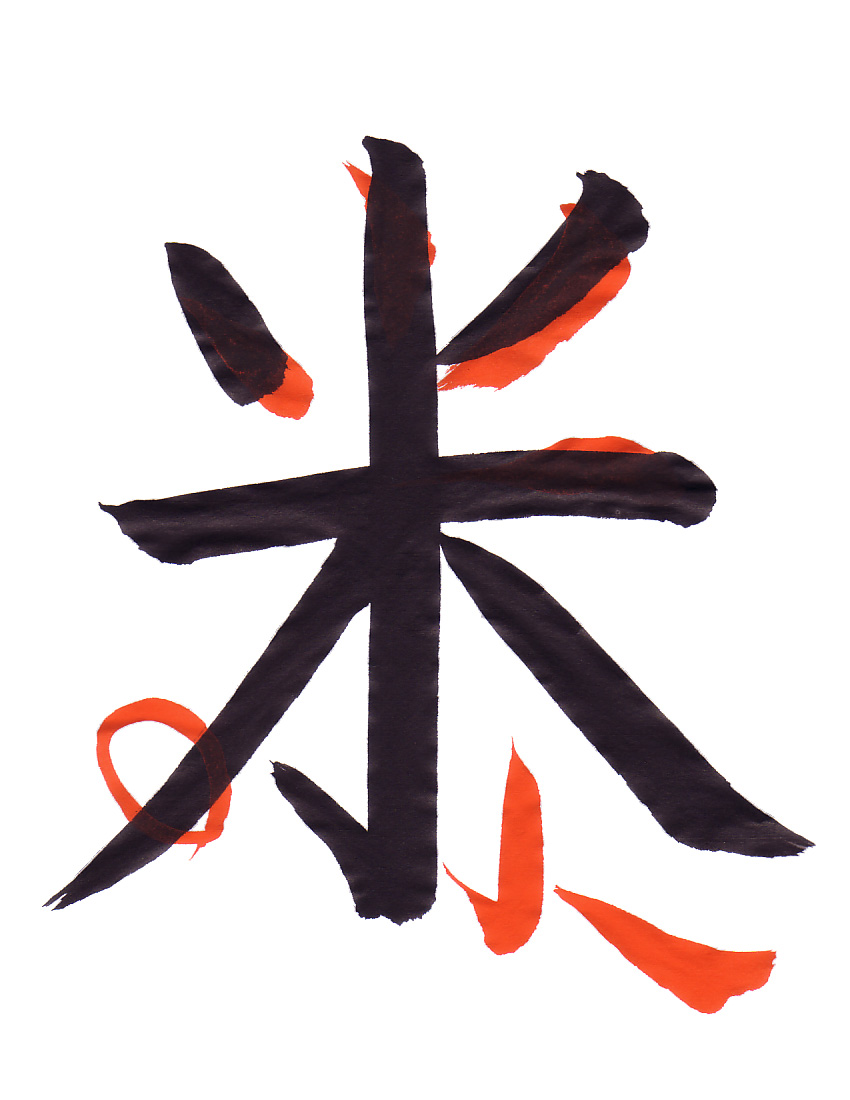
- 0:07 The ten stroke is fine, it is just located too high. Apply the brush to the paper at a 45 degree angle.
- 0:07 Start with the brush tip and then gently press down drawing the brush at the same 45 degree angle.
- 0:08 At the bottom of the stroke, pause the brush briefly.
- 0:08 And lift the brush up and off the paper.
- 0:10 The hidarihane is also too high and too far to the right. Apply the brush to the paper at a 45 degree angle.
- 0:10 Press down gently on the brush and come back up a little.
- 0:11 Then reposition the brush so the thick part of the brush is facing down and to the left. Tilt the brush so the tip of the brush is to the left and down from the end of the brush.
- 0:11 Then in a quick motion bring the brush to the left and down as you bring the brush up and off the paper.
- 0:11 Again this is a large stroke.
- 0:18 The yokoga extends out too far to the right.
- 0:22 The tategahane should be both shorter and have a nicer look.
- 0:30 For the tategahane, push the brush straight down the page using your arm to draw the line.
- 0:31 At the bottom of the stroke rotate the brush so the thick part of the brush is facing down and to the left.
- 0:32 Draw a slight 45 degree angle line.
- 0:33 Rotate the brush again clockwise so the thick part of the brush is facing to the left and upwards. Finish the line with a hane stroke to the upper left.
- 0:36 The hidaribarai stroke is fine.
- 0:40 The migibarai does not have a nice form. Apply the brush to the paper at a 45 degree angle but instead of stopping or hesitating as in other strokes, bring the brush to the right and down.
- 0:41 As you approach the bottom of the stroke gradually press down on the brush.
- 0:42 At the bottom of the stroke pause briefly. Reposition the brush so the thick part of the brush is facing to the right.
- 0:43 Then pull the brush slowly to the right while lifting it off the paper giving a nice triangular taper to the stroke.
Another student’s 米
The student’s video, without corrections
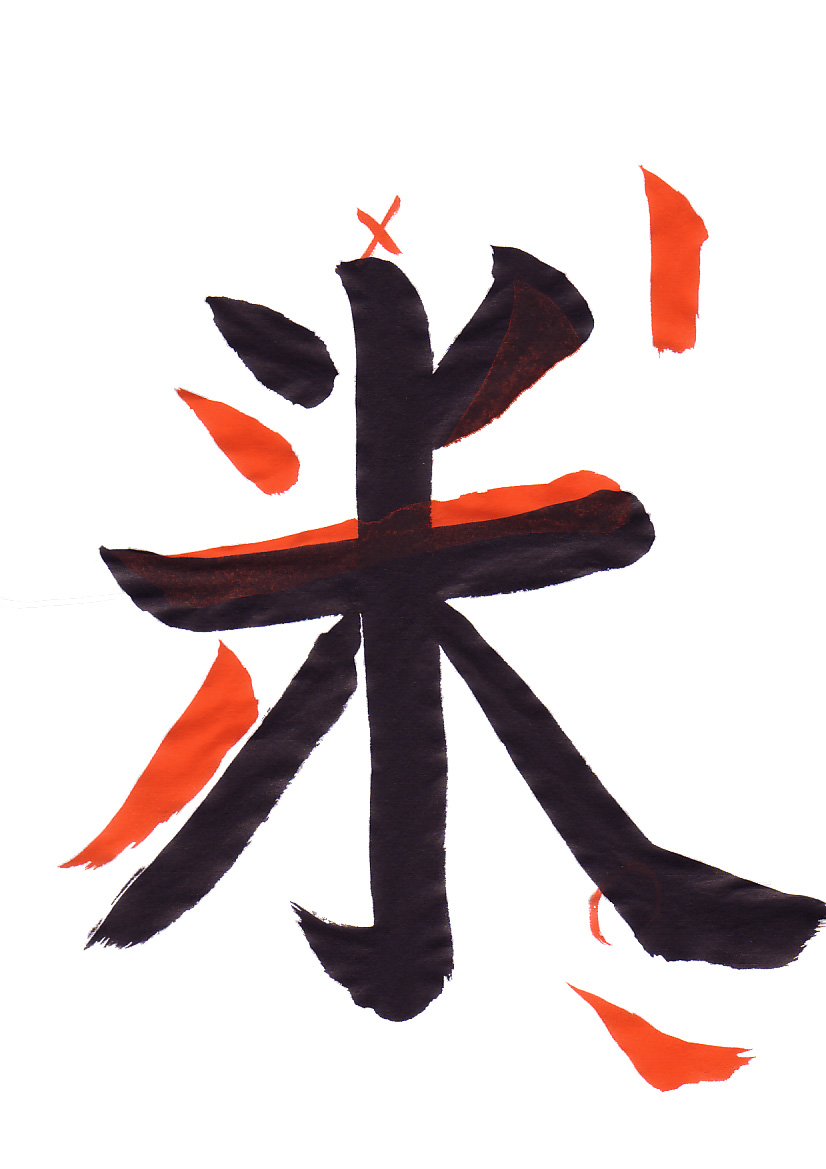
- 0:01 The ten is too high and too far to the right. Apply the brush to the paper at a 45 degree angle.
- 0:01 Start with the brush tip and then gently press down.
- 0:03 Draw the brush slightly at the same 45 degree angle.
- 0:03 At the bottom of the stroke lift the brush up and off the paper.
- 0:07 The hidarihane should be towards the corner. Apply the brush to the paper at a 45 degree angle.
- 0:08 Then reposition the brush so the thick part of the brush is facing down and to the left. Tilt the brush so the tip of the brush is to the left and down from the end of the brush.
- 0:08 Then in a quick motion bring the brush to the left and down as you bring the brush up and off the paper.
- 0:11 The yokoga is concave. Rather the line should be straight and angled slightly upward.
- 0:13 Push the brush to the right using the whole arm and even pressure.
- 0:15 At the end of the line, raise the brush a bit and then again gently press down on the brush at a slight angle.
- 0:18 The start of the tategahane is not clean.
- 0:21 Apply the brush to the paper at a 45 degree angle.
- 0:21 Press down gently on the brush and come back up a little.
- 0:22 The brush is then rotated clockwise so the thick part of the curve of the brush is facing downward.
- 0:23 The brush is also tilted so the tip of the brush is well below (towards the bottom of the page) the end of the brush. Then push the brush straight down using your arm to draw the line.
- 0:28 The hidaribarai does not have a nice shape. Apply the brush to the paper at a 45 degree angle.
- 0:29 Press down gently on the brush and come back up. Then rotate the brush so the thick end of the curve is in the direction of the stroke.
- 0:30 Then using consistent pressure and using the entire arm to draw the line, bring the brush to the left and down in a nice smooth arc.
- 0:31 As you approach the bottom of the stroke gradually bring the brush off the paper giving a nice taper to the line.
- 0:31 This is a large stroke motion.
- 0:37 The migibarai has a good start.
- 0:38 At the bottom of the stroke pause briefly.
- 0:39 Reposition the brush so the thick part of the brush is facing to the right.
- 0:41 Then pull the brush slowly to the right while lifting it off the paper giving a nice triangular taper to the stroke.
Vocabulary
| Romaji | Kana | Kanji | English | Audio |
|---|---|---|---|---|
| hane | はね | 撥ね | Flick Stroke | audio |
| harai | はらい | 払い | Pullout Stroke | audio |
| hidaribarai | ひだりばらい | 左払い | Left Pullout Stroke | audio |
| hidarihane | ひだりはね | 左撥ね | Left Flick Stroke | audio |
| kome | こめ | 米 | Rice | audio |
| migibarai | みぎばらい | 右払い | Right Pullout Stroke | audio |
| migihane | みぎはね | 右撥ね | Right Flick Stroke | audio |