


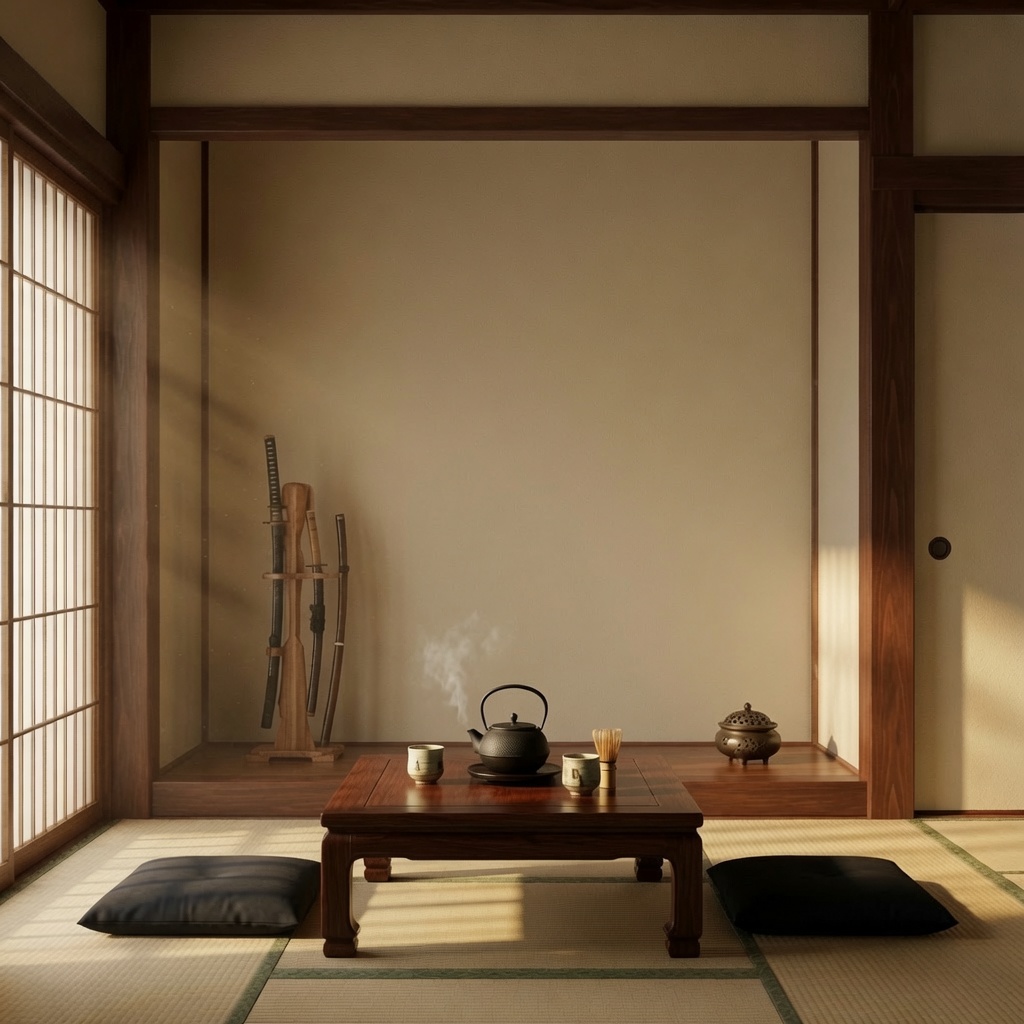

Block · kaisho 楷書 · VB5J
Block or kaisho (楷書) styles are the most common and recognizable styles. Block styles are easily read and are noted for their angular form and their vertical and horizontal lines.
一騎当千
ikki tōsen
One Horseman, a Match for a Thousand
One horseman a match for a thousand: a Japanese phrase in praise of a warrior strong enough to stand alone against a host.
Hand-brushed by Master Eri Takase
Master Japanese Calligrapher Eri Takase brushes your scroll by hand when you order it. Each scroll bears her red seal, 英利, and her signature.
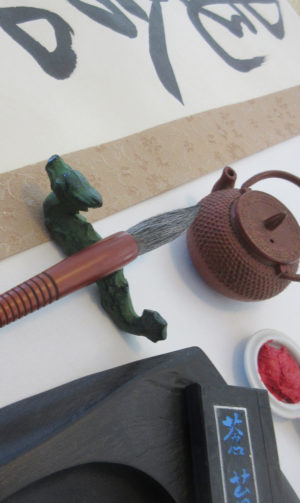
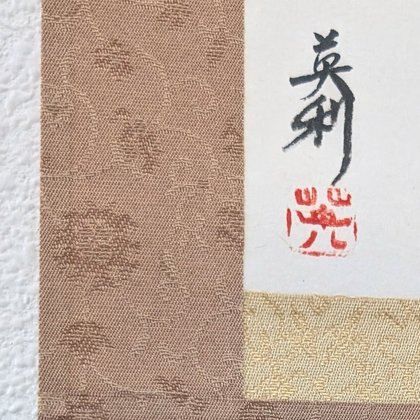
Eri Takase was born and raised in Osaka, Japan, and holds the rank of Shihan, the highest rank in Japanese calligraphy, from the Bokuteki-kai and the Bunka-shodo.
12 1/4" × 43" Japanese Scroll
The scrolls are 12 1/4" W × 43" H (31 × 109 cm), with woven damask borders and layered Japanese paper (washi), designed to last generations. The scrolls themselves are made by a scroll maker in Gifu, Japan, and we have worked with them for over two decades.


Ships in 1-3 days from Washington State
Your scroll is brushed when you order it and completed within 1 to 3 business days.
Your scroll ships from Master Takase's studio in Washington State. Shipping is calculated at checkout. We ship worldwide.
Includes detailed explanation, gift-ready
Your scroll arrives boxed, with a printed insert describing the words in detail.
Sending it as a gift? Add your message at checkout and we will include it with the insert.
30-day money-back guarantee
Every order is covered by our 30-day money-back guarantee. If your scroll arrives damaged, or we made an error, we replace it or refund you in full, including shipping.
Explanation
一騎 is one horseman and 当千 a match for a thousand. The characters do not say what the thousand are. The 精選版 日本国語大辞典 Seisenban Nihon kokugo daijiten also gives, by extension, the sense of having more skill or experience than most.
In the Nirvana Sutra, the layman Cunda says a king's strongman is called 一人当千, ichinin tōsen, one man a match for a thousand, though his strength need not equal a thousand: his many skills let him overcome a thousand.
In two Chinese histories, the 北史 Beishi and the 北齊書 Bei Qi shu, 一人当千 praises Tang Yong 唐邕, an official who ran the Northern Qi army's business. After a review where he had directed the dispositions of all the armies, the emperor took his hand and said it of him.
The 将門記 Shōmonki tells of Taira no Masakado's rising. In the copy the history reads, its night raiders are of the kind called a match for a thousand, some eighty riders.
In the 太平記 Taiheiki, Prince 護良, read Morinaga or Moriyoshi, who bore the title 大塔宮, flees through Kumano. In one text of the 太平記 his men are thirty-two, each a warrior a match for a thousand, against five hundred riders; in another, against seven hundred.
For a time the two forms went on together. Oze Hoan's 信長記 Shinchōki of 1622 and the 平家物語 Heike monogatari printed in 1623 still write 一人当千. The dictionary デジタル大辞泉 Dejitaru daijisen says they were used side by side in the Muromachi period, and 一騎当千 is the one that remained.
Hepburn's Japanese and English dictionary of 1867 gives 当千 as a match for a thousand, a phrase English already had. In his fourth edition, of 1888, the entry under ikki puts the horseman in the English: a horseman who will face a thousand.
Japanese, from the older 一人当千. 一人當千, one man a match for a thousand, is in the Chinese translations of the sutras, the Chinese histories and the 将門記 (in a copy of 1099); 一騎當千, with the horseman, is in the sources read a Japanese form, written in the 太平記 (in the 1603 print and the 西源院本) and entered as a word in a dictionary of 1597.
Learn More About These Words
We want you to be as happy with the meaning as you are with Master Takase's art. To learn more, visit Philology of 一騎当千.


