


Eri's Choice · VD5J
Eri's Choice is a design that does not keep strictly to one style; it is Master Takase's own artistic choice.
守破離
shu ha ri
Keep, Break, Leave
Keep, break, leave: the stages of training in an art.
Hand-brushed by Master Eri Takase
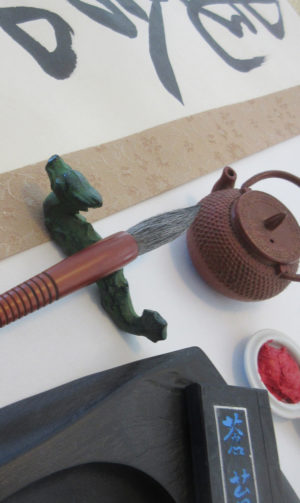
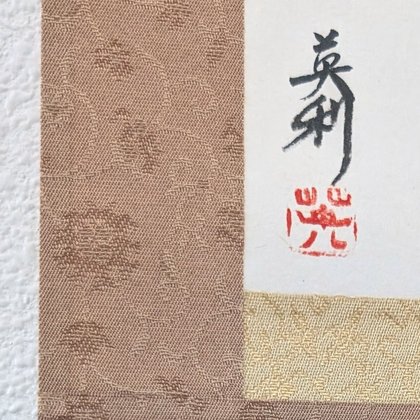
Master Japanese Calligrapher Eri Takase brushes your scroll by hand when you order it. Each scroll bears her red seal, 英利, and her signature.
Eri Takase was born and raised in Osaka, Japan, and holds the rank of Shihan, the highest rank in Japanese calligraphy, from the Bokuteki-kai and the Bunka-shodo.
12 1/4" × 43" Japanese Scroll
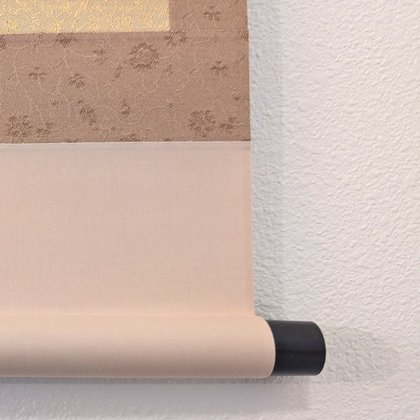
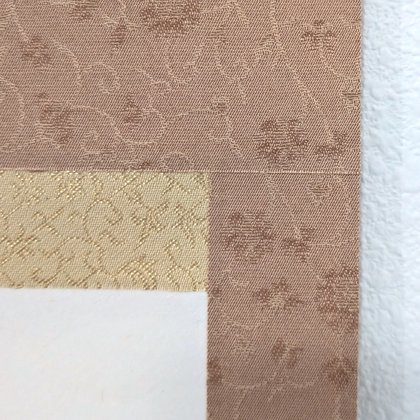
The scrolls are 12 1/4" W × 43" H (31 × 109 cm), with woven damask borders and layered Japanese paper (washi), designed to last generations. The scrolls themselves are made by a scroll maker in Gifu, Japan, and we have worked with them for over two decades.
Ships in 1-3 days from Washington State
Your scroll is brushed when you order it and completed within 1 to 3 business days.
Your scroll ships from Master Takase's studio in Washington State. Shipping is calculated at checkout. We ship worldwide.
Includes detailed explanation, gift-ready
Your scroll arrives boxed, with a printed insert describing the words in detail.
Sending it as a gift? Add your message at checkout and we will include it with the insert.
30-day money-back guarantee
Every order is covered by our 30-day money-back guarantee. If your scroll arrives damaged, or we made an error, we replace it or refund you in full, including shipping.
Explanation
守破離 (shu ha ri): keep, break, leave, the stages of training in an art.
守破離 names the stages of training in kendō, the tea ceremony and other arts. In 守, keep, you keep faithfully to the teaching and forms of your teacher and school and make them your own. In 破, break, you weigh what other teachers and schools teach, take in what is good, and develop your mind and skill. In 離, leave, you leave a single school and create something new of your own. Whether it is for a beginner or for a teacher who has come through all three is yours.
A tea text printed in 1905 pairs the three stages with the unskilled, the skilled and the master, each not in the ordinary sense. In that text one breaks while keeping. The master, having exhausted the matter, leaves and keeps. A manual of the martial arts printed in 1895 sets out the three stages and then says one is to return to the origin.
A verse printed in 1903, closing the hundred poems of tea under Rikyū's name, reads: The rule and the manner: keep them to the end, and though you break them, though you leave them, do not forget the root. In English the word is written shuhari or shu-ha-ri. A karate manual of 1985 rendered the three stages Obedience, divergence, transcendence. In the 1905 tea text the third stage, 離, leaves and still keeps.
On the known record the word is first written in articles that the tea master Kawakami Fuhaku added, probably in Edo between 1750 and 1773, to a record of his teacher Joshinsai's sayings, and those articles say it was borrowed from military science; no text of military science is known to carry it.
Learn More About These Words
We want you to be as happy with the meaning as you are with Master Takase's art. To learn more, visit Philology of 守破離.


