



Font Design · VD5J
Font Designs are Master Takase's unique designs. Often she will use her own style or a combination of fonts and, without a classification limit, create exactly the look she wants.
礼に始まり礼に終わる
rei ni hajimari rei ni owaru
Begins and Ends with Courtesy
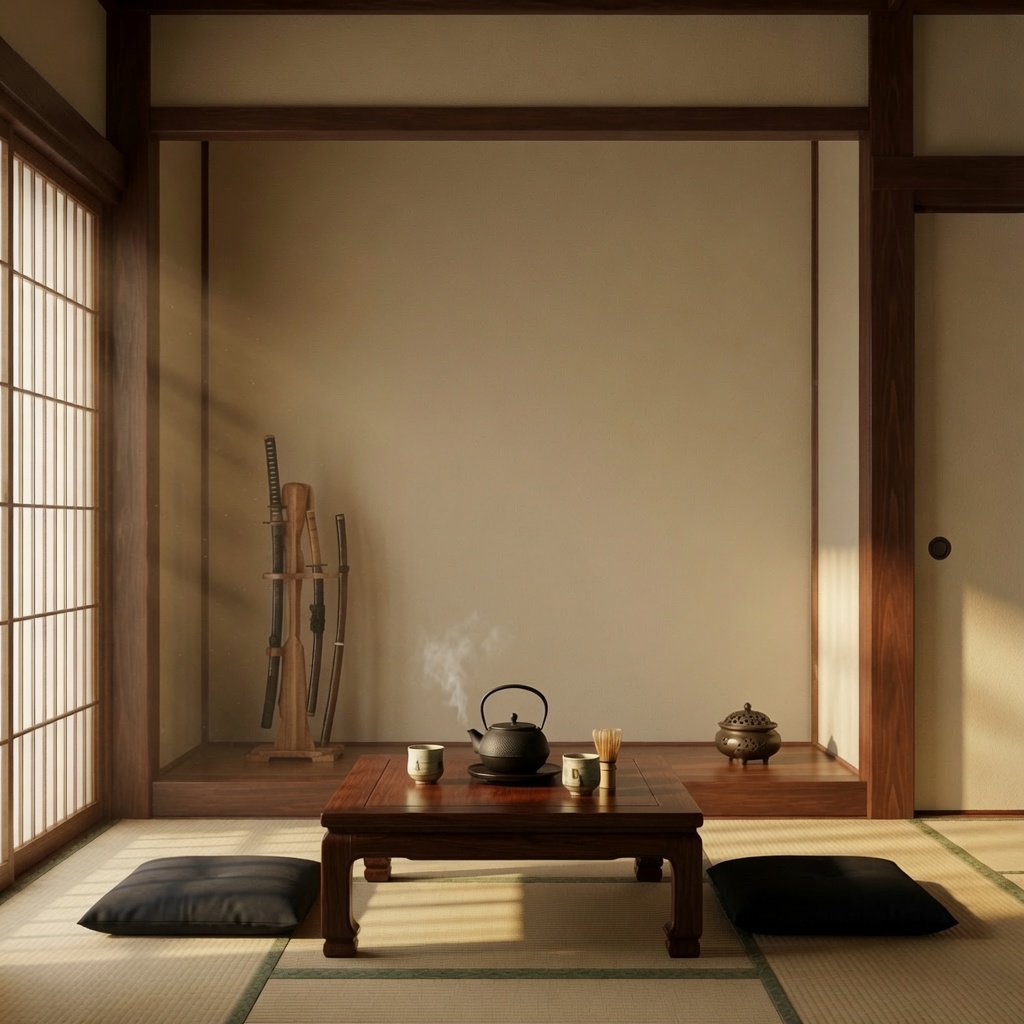
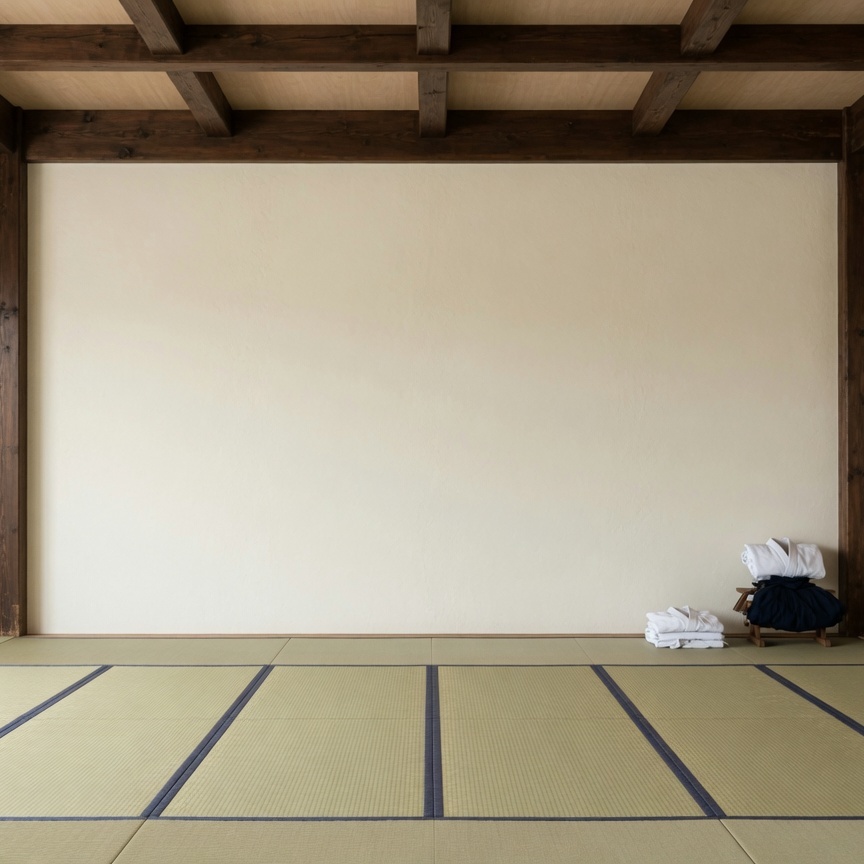
The saying the Japanese martial arts share: practice begins with courtesy and ends with courtesy, in the bow and in what the bow stands for.
Master Takase creates this beautiful scroll when your order is placed. Personally preparing the ink and brushing your art that proudly bears her signature and seal. This is an original work of art.
Description
礼に始まり礼に終わる (rei ni hajimari rei ni owaru): the saying the Japanese martial arts share, that practice begins and ends with courtesy, the bow and what it stands for.
In the dictionaries, 礼 means the forms of courtesy that keep people's dealings smooth, and also the bow made to show respect. The encyclopedias give the saying under jūdō, which values those forms: the standing bow and the seated bow.
Kendō manuals of 1911 to 1914 make the saying a rule of practice. In a manual of 1912, the sentence on the bows before and after practice goes straight on to the mind. If the mind is not right, it says, the courtesy is not right. Writers of 1914 and 1916 said the saying means courtesy kept during practice as well as at its start and end.
By the 1930s the saying belonged to jūdō and karate as well as kendō, and tea books said it of tea in 1915 and 1927. Funakoshi Gichin's twenty precepts of karate open with it, and he gave it as a saying of karate, not as his own words.
In English the saying was in print by 1967, of jūdō, as begins and ends with courtesy. Books on aikido have given etiquette and respect.
The words appear to turn an older Japanese proverb on drink, which Bakin gave in 1828 as beginning in courtesy and ending in disorder; the turned form was said of banquets in print from 1884 (the National Diet Library's full text), and the earliest martial use in Nakatani Yasushi's study of 2022 is a kendō article by Naitō Takaharu of 1907.
We want you to be as happy with the meaning as you are with Master Takase's art. To learn more, visit Philology of 礼に始まり礼に終わる.
Delivery
Your scroll is brushed when you order it and completed within 1 to 3 business days. It ships by USPS Priority Mail from Master Takase's studio in Washington State, boxed and ready to hang, with a printed page giving the art's English, romaji and Japanese.
Sending it as a gift? Add your message at checkout and we will include it.
Shipping is calculated at checkout from your address; within the United States it is $13 to $23. We ship worldwide, and any import charges for your country are shown at checkout before you pay.
Every order is covered by our 30-day money-back guarantee. If your scroll arrives damaged, or we made an error, we replace it or refund you in full, including shipping. Refund policy
About Our Scrolls
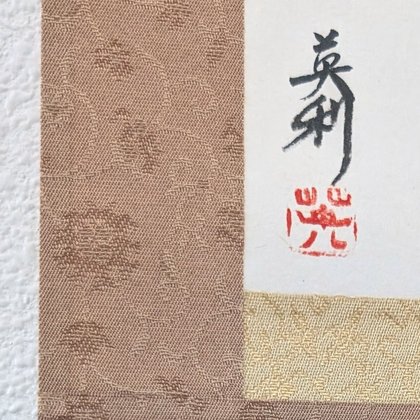
Master Japanese Calligrapher Eri Takase brushes your scroll by hand when you order it. Each scroll bears her red seal, 英利, and her signature.
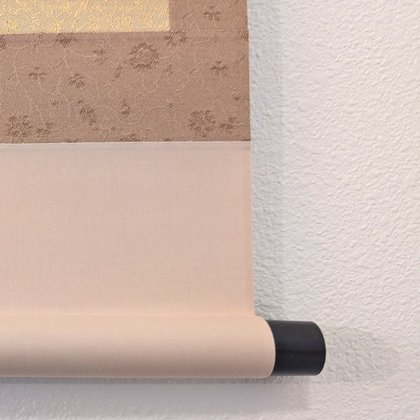
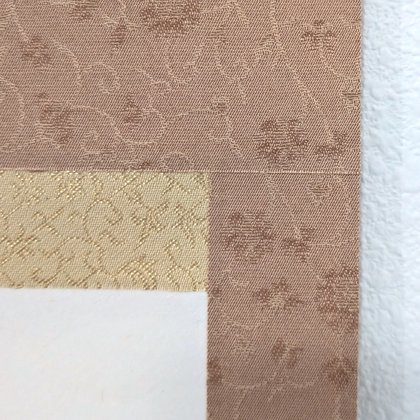
The scrolls are 12 1/4" W × 43" H (31 × 109 cm) with woven damask borders and Japanese paper that are layered so the scroll hangs straight and will not warp over time. The scrolls themselves are made by a scroll maker in Gifu, Japan, and we have worked with them for over two decades.
Eri Takase was born and raised in Osaka, Japan, and holds the rank of Shihan, the highest rank in Japanese calligraphy, from the Bokuteki-kai and the Bunka-shodo. About Master Takase


