


Jiun · 自運 · VD5B
Jiun (自運) is the calligrapher's word for writing from one's own invention. As a Shihan, Master Takase has a hand of her own, and these designs are that hand: she draws freely on the classic scripts to create exactly the look she wants.
夜の蘭
香にかくれてや
花白し
yoru no ran
ka ni kakurete ya
hana shiroshi
buson 蕪村
An evening orchid,
Hidden in its scent,
The flower's whiteness
The orchid at night, hidden in its scent; the flower is white.
Master Takase creates this beautiful scroll when your order is placed, personally preparing the ink and brushing your art, which proudly bears her signature and seal. This is an original work of art.
Description
An evening orchid,
Hidden in its scent,
The flower's whiteness
|
yoru no ran ka ni kakurete ya hana shiroshi |
夜の蘭 香にかくれてや 花白し |
| buson | 蕪村 |
夜の蘭香にかくれてや花白し (yoru no ran ka ni kakurete ya hana shiroshi): the orchid at night, hidden in its scent; the flower is white.
Yosa Buson's verse is about which sense wins at night. In the dark the orchid's leaves and stem cannot be seen, and its scent grows stronger. The plant seems to hide inside what it gives off. What is left to the eye is the flower, white. Some readers find the phrasing cleverer than the feeling, and others hear the feeling in the noticing.
In the Japanese, 夜の蘭 is the orchid at night, and 蘭 is an autumn season word. 香にかくれてや is hidden in its scent, with や a cry of wonder at the hiding. 花白し is a plain statement, the flower is white. 香 is read ka here, as the meter needs. One of the hands writes 夜 and 白し in kana, as よる and しろし.
The English follows R. H. Blyth's, from his Haiku of 1952.
Whenever I read this poem I recall an experience we had when we unknowingly purchased such an orchid. We marveled at the beautiful white flowers which stay in bloom for months. After several days though there was this strong fragrance in the evening that took over the room! After much discussion (and much sniffing) we found the source to be the orchid. Since then we talked little of the white flowers, but often of the fragrance.
Calligraphy Notes:
1) I have used a mix of hiragana and kanji to vary the look of the designs. As an example all designs use 夜 (yoru) in kanji except one, which uses the hiragana よる and also writes 白し as しろし. The meaning remains the same.
Translation Notes:
夜の蘭
香にかくれてや
花白し1) 夜 (yoru) meaning "night; evening".
2) 蘭 (ran) meaning "orchid".
3) 香 (ka) meaning "aroma; fragrance; scent; smell".
4) かくれて (kakurete) from the verb 隠れる (kakureru) meaning "to hide; to be hidden; to conceal oneself; to disappear".
5) 花 (hana) meaning "flower; blossom; bloom; petal".
6) 白し (shiroshi) from 白い (shiroi) meaning "white".
The verse is Buson's, first printed in 1784 in the 蕪村句集, the book of his verse that his pupil Kitō published for the first anniversary of his death.
We want you to be as happy with the meaning as you are with Master Takase's art. To learn more, visit Philology of 夜の蘭香にかくれてや花白し.
Delivery
Your scroll is brushed when you order it and completed within 1 to 3 business days. It ships by USPS Priority Mail from Master Takase's studio in Washington State, boxed and ready to hang, with a printed page giving the art's English, romaji and Japanese.
Sending it as a gift? Add your message at checkout and we will include it.
Shipping is calculated at checkout from your address; within the United States it is $13 to $23. We ship worldwide, and any import charges for your country are shown at checkout before you pay.
Every order is covered by our 30-day money-back guarantee. If your scroll arrives damaged, or we made an error, we replace it or refund you in full, including shipping. Refund policy
About Our Scrolls
Master Japanese Calligrapher Eri Takase brushes your scroll by hand when you order it. Each scroll bears her red seal, 英利, and her signature.
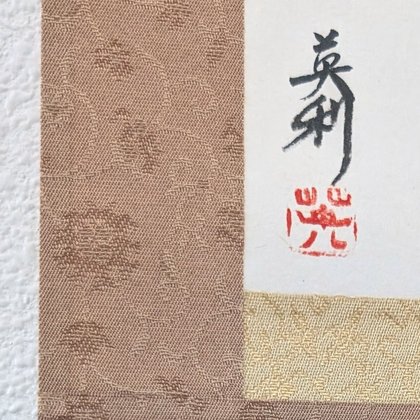
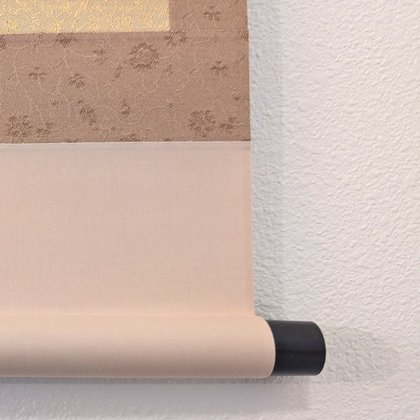
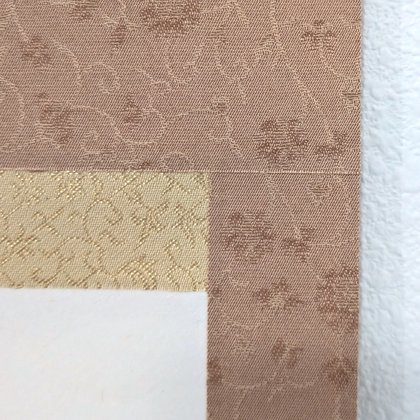
The scrolls are 12 1/4" W × 43" H (31 × 109 cm), with woven damask borders and layered Japanese paper, designed to last generations. The scrolls themselves are made by a scroll maker in Gifu, Japan, and we have worked with them for over two decades.
Eri Takase was born and raised in Osaka, Japan, and holds the rank of Shihan, the highest rank in Japanese calligraphy, from the Bokuteki-kai and the Bunka-shodo. About Master Takase
Related products

Buson - From far and near, Hearing the sounds of waterfalls, Young leavesをちこちに滝の音聞く若葉哉ochikochi ni taki no oto kiku wakaba kana

Buson - In loneliness, there is joy too, An autumn eveさびしさのうれしくも有秋の暮sabishisa no ureshiku mo ari aki no kure

Buson - A flash of lightning, The sound of dew, Dripping down the bamboos稲妻にこぼるる音や竹の露inazuma ni koboruru oto ya take no tsuyu
