


Font Design · VD5B
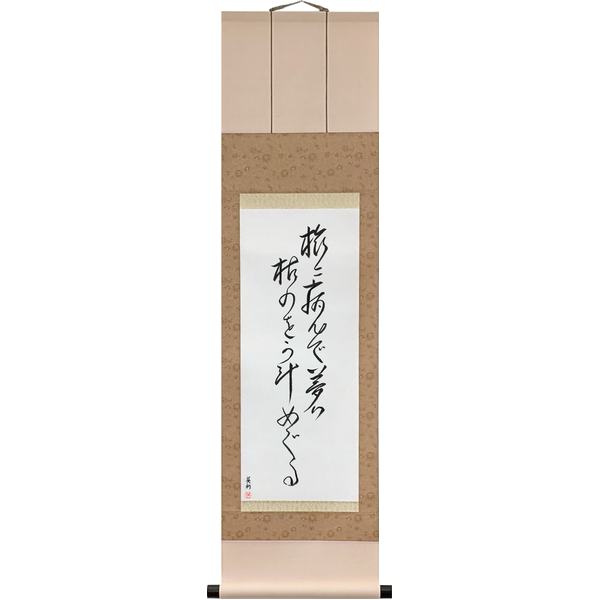
Font Designs are Master Takase's unique designs. Often she will use her own style or a combination of fonts and, without a classification limit, create exactly the look she wants.
旅に病んで
夢は枯野を
かけ廻る
tabi ni yande
yume wa kareno wo
kake meguru
bashō 芭蕉
Taken ill on my travels,
My dreams roam over
the withered moors
Ill on the road, and my dreams run round the withered fields.
Master Takase creates this beautiful scroll when your order is placed. Personally preparing the ink and brushing your art that proudly bears her signature and seal. This is an original work of art.
Description
Taken ill on my travels,
My dreams roam over
the withered moors [1]
|
tabi ni yande yume wa kareno wo kake meguru |
旅に病んで 夢は枯野を かけ廻る |
| bashō | 芭蕉 |
旅に病んで夢は枯野をかけ廻る (tabi ni yande yume wa kareno wo kake meguru): ill on the road, and my dreams run round the withered fields.
Bashō's verse comes from a night of illness on a journey. A sick man cannot move, but his dreams can, and they range over the winter fields he spent his life walking. It was the last new verse he made, and it is often called his death poem. Read plainly, it tells only of that night, and its greatness is that it does not know it is the last.
In the Japanese, the small word は sets the dreams apart from the sick man lying still. 枯野, the withered fields, is the season word for winter. The Design style writes 枯野 as 枯の and spells the verb in kana, かけめぐる; the words are the same.
References:
[1] After Asatarō Miyamori, An Anthology of Haiku Ancient and Modern (Maruzen, 1932), p. 218.
Bashō composed it at Osaka in the night of the eighth day of the tenth month of Genroku 7 (1694), four days before his death, as his disciples Takarai Kikaku and Kagami Shikō recorded within a year, Shikō adding that his attendant Donshū wrote it down.
We want you to be as happy with the meaning as you are with Master Takase's art. To learn more, visit Philology of 旅に病んで夢は枯野をかけ廻る.
Delivery
Your scroll is brushed when you order it and completed within 1 to 3 business days. It ships by USPS Priority Mail from Master Takase's studio in Washington State, boxed and ready to hang, with a printed page giving the art's English, romaji and Japanese.
Sending it as a gift? Tell us when you order and we will include your message.
Shipping is calculated at checkout from your address; within the United States it is $13 to $22. We ship worldwide, and any import charges for your country are shown at checkout before you pay.
Every order is covered by our 30-day money-back guarantee. If your scroll arrives damaged, or we made an error, we replace it or refund you in full, including shipping. Refund policy
About Our Scrolls
Master Japanese Calligrapher Eri Takase brushes your scroll by hand when you order it. Each scroll bears her red seal, 英利, and her signature.
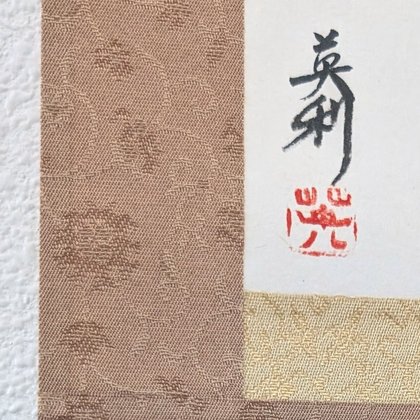
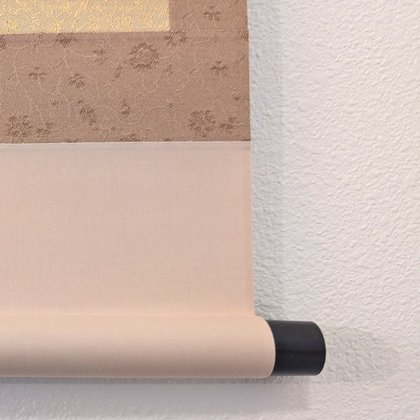
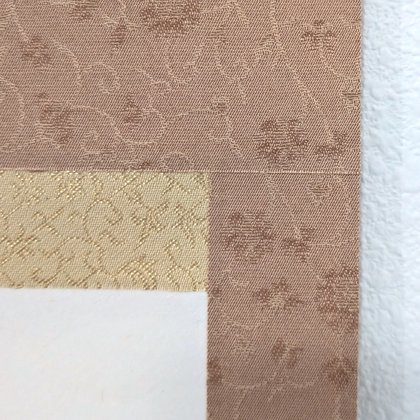
The scrolls are 12 1/4" W × 43" H (31 × 109 cm) with real silk borders and Japanese paper that are layered so the scroll hangs straight and will not warp over time. The scrolls themselves are made by Sankō (株式会社三幸) in Gifu prefecture, which has been making high quality scrolls since 1947, and we have worked with Sankō for over two decades.
Eri Takase was born and raised in Osaka, Japan, and holds the rank of Shihan, the highest rank in Japanese calligraphy, from the Bokuteki-kai and the Bunka-shodo. About Master Takase
Related products
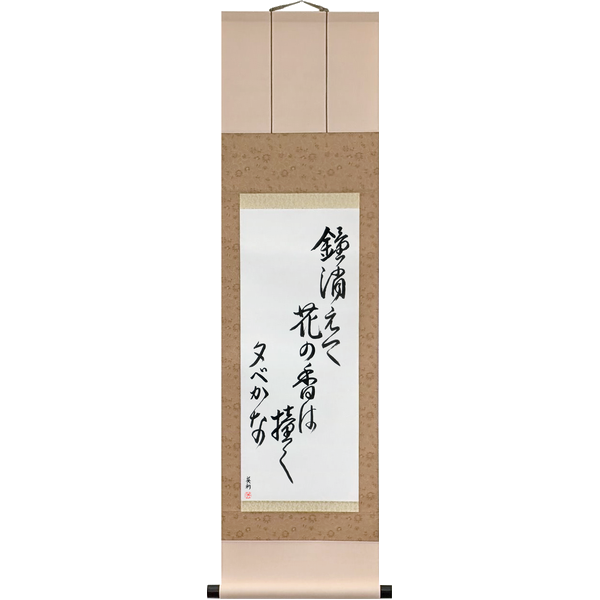
Bashō - As the temple bell fades, The ringing lingers in the blossom scent, Evening (kane kiete hana no ka wa tsuku yuube kana)
Haiku by Bashō on a traditional Japanese Scroll by Master Eri Takase.
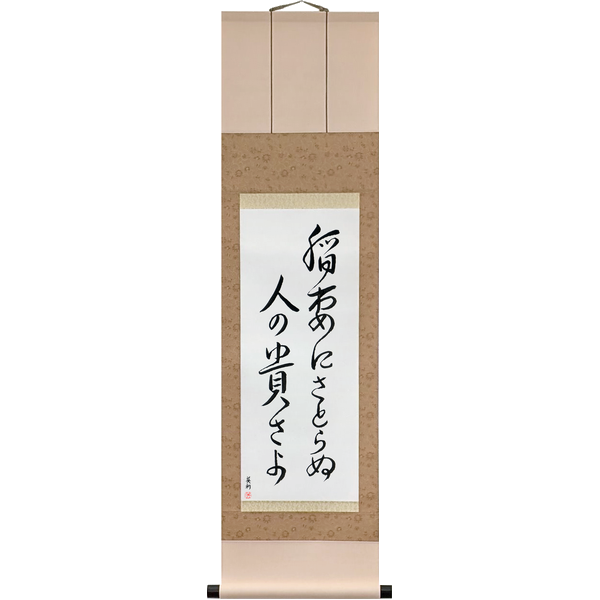
Bashō - How admirable, to see lightning, and not think life is fleeting (inazuma ni satoranu hito no tattosa yo)
Haiku by Bashō on a traditional Japanese Scroll by Master Eri Takase.
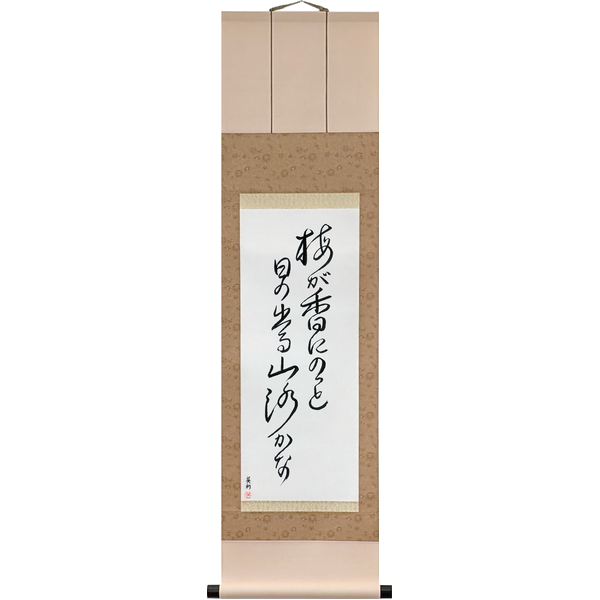
Bashō - In the plum blossom scent, the sun pops out, a mountain path (mume ga ka ni notto hi no deru yamaji kana)
Haiku by Bashō on a traditional Japanese Scroll by Master Eri Takase.
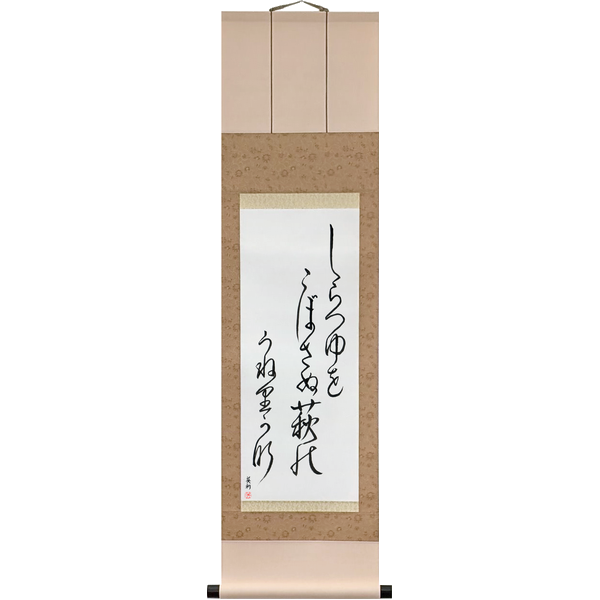
Bashō - Not spilling the glistening dew, the bush clover, undulating (shiratsuyu wo kobosanu hagi no uneri kana)
Haiku by Bashō on a traditional Japanese Scroll by Master Eri Takase.