



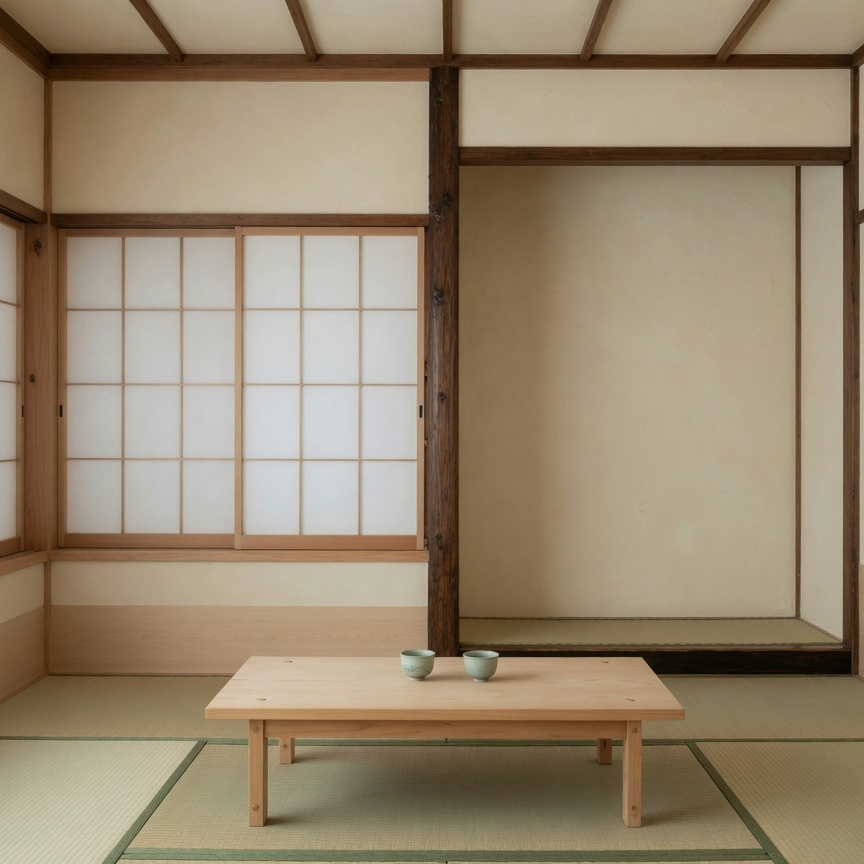

Jiun · 自運 · VD4B
Jiun (自運) is the calligrapher's word for writing from one's own invention. As a Shihan, Master Takase has a hand of her own, and these designs are that hand: she draws freely on the classic scripts to create exactly the look she wants.
稲妻に
さとらぬ人の
貴さよ
inazuma ni
satoranu hito no
tattosa yo
bashō 芭蕉
How admirable,
to see lightning,
and not think life is fleeting
How admirable, the person the lightning does not enlighten.
Master Takase creates this beautiful scroll when your order is placed, personally preparing the ink and brushing your art, which proudly bears her signature and seal. This is an original work of art.
Description
How admirable,
to see lightning,
and not think life is fleeting [1]
|
inazuma ni satoranu hito no tattosa yo |
稲妻に さとらぬ人の 貴さよ |
| bashō | 芭蕉 |
稲妻にさとらぬ人の貴さよ (inazuma ni satoranu hito no tattosa yo): how admirable, the person the lightning does not enlighten.
Matsuo Bashō's verse admires the person who sees lightning and does not take the flash for enlightenment. Lightning is one of Buddhism's oldest pictures of how things pass. Bashō set the verse under a Zen teacher's warning against half-raw Zen. Its readers since 1783 agree that the admirable person does not take the flash for awakening, and differ on who that person is. One reads someone awakened who does not claim it, another someone who takes no notice of such Zen at all. Asatarō Miyamori hears a rebuke to a superficial sense of life's vanity, R. H. Blyth a plain statement that life is life and lightning is lightning, and Hiroaki Sato a great wariness of enlightenment. Which you hear is yours.
The last word, 貴さよ, has two readings, tattosa yo and tōtosa yo. Bashō's letter, as it was transcribed, spells it tattosa, and the three complete English editions romanize it so; Miyamori, Blyth and others give tōtosa, and Sato and Sam Hamill totosa.
References:
[1] Translation by Robert Hass, The Essential Haiku (Ecco, 1994), p. 24.
Bashō sent the verse in a letter to his disciple Kyokusui dated the sixth day of the ninth month of Genroku 3 (1690), written at Gichū-ji on Lake Biwa, under a Zen teacher's warning he sets down there; the letter is known from Ebara Taizō's transcription of 1947, and the verse was first printed in 1692, in 己が光.
We want you to be as happy with the meaning as you are with Master Takase's art. To learn more, visit Philology of 稲妻にさとらぬ人の貴さよ.
Delivery
Your scroll is brushed when you order it and completed within 1 to 3 business days. It ships by USPS Priority Mail from Master Takase's studio in Washington State, boxed and ready to hang, with a printed page giving the art's English, romaji and Japanese.
Sending it as a gift? Add your message at checkout and we will include it.
Shipping is calculated at checkout from your address; within the United States it is $13 to $23. We ship worldwide, and any import charges for your country are shown at checkout before you pay.
Every order is covered by our 30-day money-back guarantee. If your scroll arrives damaged, or we made an error, we replace it or refund you in full, including shipping. Refund policy
About Our Scrolls
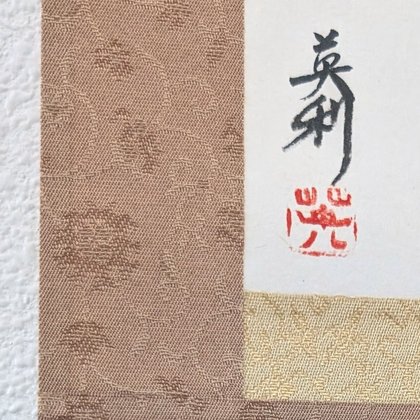
Master Japanese Calligrapher Eri Takase brushes your scroll by hand when you order it. Each scroll bears her red seal, 英利, and her signature.
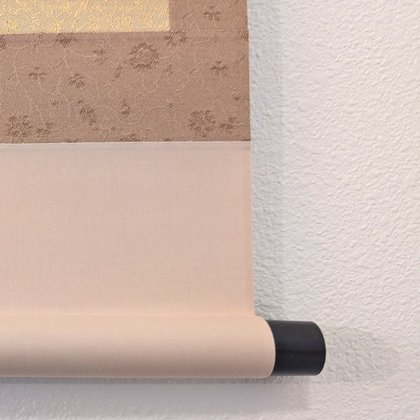
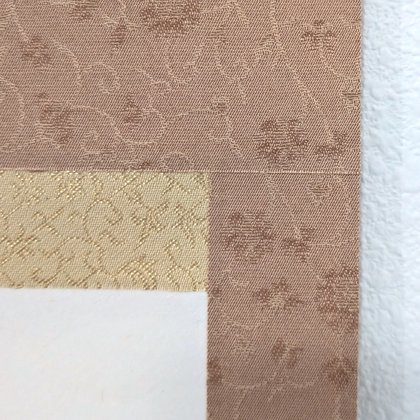
The scrolls are 12 1/4" W × 43" H (31 × 109 cm), with woven damask borders and layered Japanese paper, designed to last generations. The scrolls themselves are made by a scroll maker in Gifu, Japan, and we have worked with them for over two decades.
Eri Takase was born and raised in Osaka, Japan, and holds the rank of Shihan, the highest rank in Japanese calligraphy, from the Bokuteki-kai and the Bunka-shodo. About Master Takase
Related products

Bashō - Summer grass, all the warriors are, but the remains of dreams夏草や兵どもが夢の跡natsukusa ya tsuwamono domo ga yume no ato

Bashō - The old pond, a frog jumps in, the sound of water古池や蛙飛込水の音furu ike ya kawazu tobikomu mizu no oto

Bashō - A rough sea: lying toward Sado, the Milky Way荒海や佐渡によこたふ天河araumi ya sado ni yokotau amanogawa
