



Jiun · 自運 · VD4B
Jiun (自運) is the calligrapher's word for writing from one's own invention. As a Shihan, Master Takase has a hand of her own, and these designs are that hand: she draws freely on the classic scripts to create exactly the look she wants.
梅が香に
のっと日の出る
山路かな
mume ga ka ni
notto hi no deru
yamaji kana
bashō 芭蕉
In the plum blossom scent,
the sun pops out,
a mountain path
In the scent of plum, all at once the sun comes up; a mountain path.
Master Takase creates this beautiful scroll when your order is placed, personally preparing the ink and brushing your art, which proudly bears her signature and seal. This is an original work of art.
Description
In the plum blossom scent,
the sun pops out,
a mountain path [1]
|
mume ga ka ni notto hi no deru yamaji kana |
梅が香に のっと日の出る 山路かな |
| bashō | 芭蕉 |
梅が香にのっと日の出る山路かな (mume ga ka ni notto hi no deru yamaji kana): in the scent of plum, all at once the sun comes up; a mountain path.
Matsuo Bashō's verse is a walk at dawn in the cold of early spring. The scent of plum is in the air, and then the sun is suddenly there. It does not rise because of the scent but where the scent is, and the path under the walker's feet comes last. A disciple read the morning sun as winter's last cold, and Bashō said that was very good. Readers have called the verse light and plain, and some say the poet smelled the sun.
In the Japanese, のっと, notto, is suddenly, with a lurch, a common spoken word with a round, warm sound. 梅が香, the scent of plum, is the season word for early spring, and かな closes the verse in wonder.
Plum blossoms are the harbinger of spring. In this poem, I can imagine that Bashō is walking head down along a cold, misty mountain path. He smells the fragrance of the plum blossom and looks up and, suddenly, there is the sun. After a long winter, the fragrance of the plum blossoms contains all the promises of spring.
Calligraphy Notes:
1) The kanji 梅 is today read ume. In Bashō's time, the reading was mume which we use here. This does not change the calligraphy, only how the poem is read.
2) This poem predates the modern introduction of the "small tsu" in hiragana. At the time the poem was written, the word and the context determined the pronunciation so today we write のっと (read notto) but the original poem wrote のつと (also read notto but written as notsuto). In these designs I have opted to use the modern form.
Taken together then, the modern reading of Bashō's haiku is ume ga ka ni notto hi no deru yamaji kana.
References:
[1] After Haruo Shirane, Early Modern Japanese Literature (Columbia University Press, 2002), p. 201.
The verse is the hokku of a two-poet sequence Bashō composed with his disciple 野坡 in Edo in the early spring of 1694, published that summer in 炭俵 with 素龍's dated preface.
We want you to be as happy with the meaning as you are with Master Takase's art. To learn more, visit Philology of 梅が香にのっと日の出る山路かな.
Delivery
Your scroll is brushed when you order it and completed within 1 to 3 business days. It ships by USPS Priority Mail from Master Takase's studio in Washington State, boxed and ready to hang, with a printed page giving the art's English, romaji and Japanese.
Sending it as a gift? Add your message at checkout and we will include it.
Shipping is calculated at checkout from your address; within the United States it is $13 to $23. We ship worldwide, and any import charges for your country are shown at checkout before you pay.
Every order is covered by our 30-day money-back guarantee. If your scroll arrives damaged, or we made an error, we replace it or refund you in full, including shipping. Refund policy
About Our Scrolls
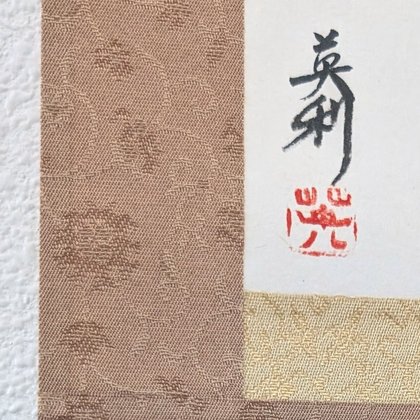
Master Japanese Calligrapher Eri Takase brushes your scroll by hand when you order it. Each scroll bears her red seal, 英利, and her signature.
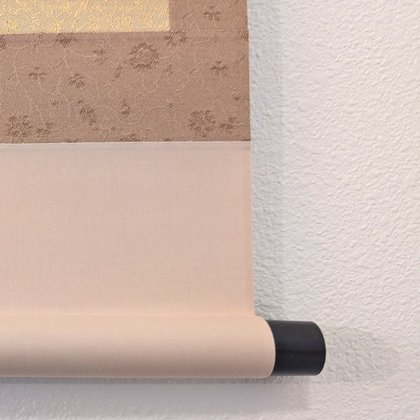
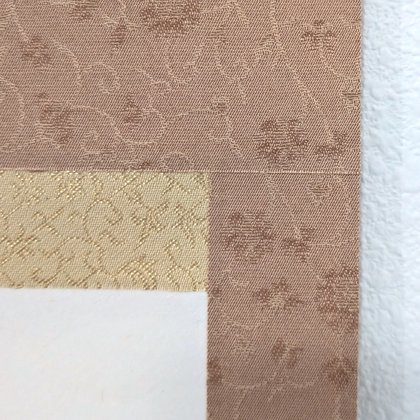
The scrolls are 12 1/4" W × 43" H (31 × 109 cm), with woven damask borders and layered Japanese paper, designed to last generations. The scrolls themselves are made by a scroll maker in Gifu, Japan, and we have worked with them for over two decades.
Eri Takase was born and raised in Osaka, Japan, and holds the rank of Shihan, the highest rank in Japanese calligraphy, from the Bokuteki-kai and the Bunka-shodo. About Master Takase
Related products

Bashō - How admirable, to see lightning, and not think life is fleeting稲妻にさとらぬ人の貴さよinazuma ni satoranu hito no tattosa yo

Bashō - Summer grass, all the warriors are, but the remains of dreams夏草や兵どもが夢の跡natsukusa ya tsuwamono domo ga yume no ato

Bashō - The old pond, a frog jumps in, the sound of water古池や蛙飛込水の音furu ike ya kawazu tobikomu mizu no oto
