
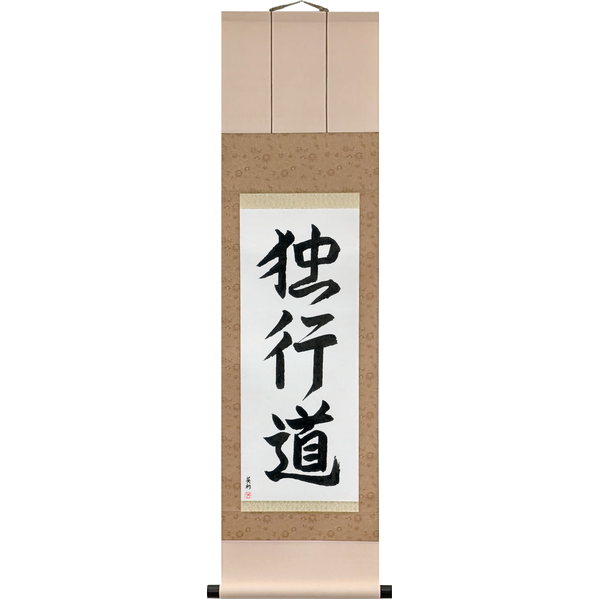
独行道 dokkōdō The Path of Aloneness
This is a philological study of 独行道 (dokkōdō), the heading Miyamoto Musashi 宮本武蔵 set over twenty-one short articles a week before he died. It reads the sheet at Kumamoto, the two names and two recensions the text has carried since the eighteenth century, the doubt its own custodian holds about the date, and how the title came into English as The Way of Walking Alone, The Path Walked Alone and The Path of Aloneness.
Abstract
独行道 (dokkōdō) is the heading on a narrow sheet of paper in the Kumamoto Prefectural Museum of Art on which Miyamoto Musashi 宮本武蔵 (1584–1645) set down twenty-one articles, each a statement of what he does not do, with a colophon dating it to the twelfth day of the fifth month of 1645, a week before his death. The word 独行 is older than the sheet: it is going alone in the 詩経 and in every Japanese dictionary from the Muromachi 節用集 on, and the title parses as the way one walks alone or the way of one's solitary conduct. The prefecture that designated the sheet a cultural property judges the twenty-one articles to be Musashi's own hand and the date, signature and seal a later addition; the school's chronicle of 1776 and the printed tradition from 1909 carry nineteen articles, a copyist's recension that drops the sheet's fourth and twentieth. In English the title has been The Way of Walking Alone, in print since 2002 or 2003, The Way to Be Followed Alone, The Path Walked Alone and The Path of Aloneness; the last, the most widely repeated, entered the record in an anonymous Wikipedia revision of 2007 and has no translator behind it.
Overview
The sense. A title, not a dictionary word. The general dictionaries head 独行 and not 独行道 [1]. For 独行 (dokkō) the 精選版 日本国語大辞典 gives three senses in order of age: ① ひとりで道を行くこと。連れなしにひとり旅行すること, to go along a road alone; to travel alone without company, with the 文明本節用集 of the mid-Muromachi period and the 詩経 as its citations; ② 独力で行なうこと。自分の信ずる所にしたがって他に頼らず事をなすこと, to do by one's own strength; to act on one's own conviction without relying on others, first instanced in the four-character 独立独行 of 1878; ③ ひとりで取り扱い、事を行なうこと, to handle and carry out a matter alone, from 1874. The デジタル大辞泉 gives the first two, 自分ひとりだけで行くこと and 自分の力だけで物事をすること, and the 字通 cites Han Yu 韓愈 on 特立獨行, the scholar who stands apart and walks alone [1]. The word is Chinese, in Japanese from the Muromachi period at the latest, and every dictionary gives going alone before self-reliance. Set over Musashi's twenty-one articles, the title has been parsed three ways by its Japanese readers. Inoue Tetsujirō 井上哲次郎 in 1915 read it as 独行 plus 道, 自分獨りで行く道、何物にも賴らずに、自分が獨りで實行して行く道である, the way one goes alone, relying on nothing, the way one carries out alone [2]; Teruo Machida, who transcribed the sheet, reads it the same way, The way that I go alone [3]. The prefecture's designation text of 2003 parses it character by character, 題の「獨行道」は「独りの行いの道」、即ち、ただ一人で行い来たった自らの生き方の規範, the title is the way of solitary conduct, that is, the rule of the life he had lived by himself alone [4]. The Japanese Wikipedia blends the two, その名の通り“独り(行)あゆんできた道”, as the name says, the road walked alone [5]. The three agree on what the sheet is, a rule of one man's own conduct set down in the first person, and differ only on whether 行 is walking or doing. The tradition's own names for the sheet say the same: the eighteenth-century chronicles call it 自誓の書, the writing of a vow to himself; the biographers of 1909 call it 自戒の文 and 自戒書, a text of self-admonition, and 辭世, a parting word; and a book of 2002 calls it his 遺書, his testament [6].
The words. 独, in every witness before 1946 written 獨, is alone, single, by oneself: Hepburn's dictionary of 1867 glosses it Alone; by one's self; single; solitary (only used in compounds) [7], and Brinkley's of 1896 Being alone, friendless [8]. 行 is to go, to walk or to do, to conduct, and Machida keeps both readings open, walk, stride or do, conduct [3]. 道 is the way; in the sheet's own text it is read みち four times, in 世々の道, いつれの道, 道におゐてハ and 兵法の道. The reading of the whole is dokkōdō. The museum's catalogue record gives ドッコウドウ [9]; a book of 1917 prints the rubi どくかうだう over 獨行道, the same reading in historical spelling with the doubled consonant unmarked [10], and so do Shaku Sōen 釈宗演's posthumous lectures of 1931 [11] and a popular encyclopedia of 1939 [12]; the Japanese Wikipedia gives どっこうどう [5]. Wilson's glossary offers Dokko-do or Dokko no michi, the native reading of 道 that no other witness gives [13]. The design writes the modern form 独行道 and the sheet and every witness before 1946 write 獨行道; they are one word.
The text in English. The Meiji bilingual dictionaries have the word and not the title: Hepburn's three editions of 1867, 1872 and 1886 and Brinkley's of 1896 all enter 獨行 as to travel alone, go alone, and none heads 獨行道 [7][8][14][15]. The title itself came into English in the present century. The Way of Walking Alone is the earliest known rendering in a book: William Scott Wilson's translation of the 五輪書 (Kodansha International, 2002, after a bilingual edition of 2001) is described by its publisher as carrying the text under that title [16][17], and two books of 2003 print the phrase, Fumon Tanaka's Samurai Fighting Arts [18] and Jinichi Tokeshi's Kendo, which reads the title Dokgyōdō [19]; Colin Hyakutake-Watkin's page of the same year leaves it untranslated [20]. Then The Way to Be Followed Alone, with the gloss the way where one walks alone, in Sherab Chödzin Kohn's translation of Kenji Tokitsu in 2004 [21]; The Way of Walking Alone, or alternatively The Way of Independence, in Wilson's biography of the same year [13]; The way that I go alone in Machida's translation of 2006 and 2012 [3]; Kohn's title again in Alexander Bennett's history of kendo in 2015 [22], and The Path Walked Alone in his complete Musashi of 2018 [23]. The Path of Aloneness, the phrase most often repeated on the web, first appears in the English Wikipedia's revision of 11 October 2007, entered from an anonymous address and credited to no translator [24]. The articles themselves are quoted below with the author's own literal rendering, and the lineage of the title is set out in order under the historical record.
The historical record
1645 (正保2), the sheet, Kumamoto Prefectural Museum of Art, 日-書040. Ink on paper, 16.8 by 97.3 centimeters, mounted as a hanging scroll, and dated by the museum's own record 正保2年(1645) [9]. The heading 獨行道 stands at the right edge; twenty-one articles follow, each opened with 一 in the form the prefecture calls 一ツ書き, each written in one line with its overflow set into the lower half of a second, and the sheet has been trimmed at the top [4]. The 二天 seal in red sits between the last three lines, and the colophon reads 正保弐年 五月十二日 新免武藏 玄信(花押) 「二天」(朱文額印) 寺尾孫之丞殿, the addressee Terao Magonojō 寺尾孫之丞, the disciple who also received the 五輪書 [25][3]. The museum's own photograph of the sheet, a small file served from its collection database, shows the heading, the twenty-one columns each opened with 一, the seal, the colophon and the addressee's column at the lower left; at its size it settles the count and the order of the articles and nothing finer [26]. The transcription at Wikisource gives the twenty-one with the sheet's 尓 for に and its own kana; its variant forms of す and わ are given here in the modern shapes, unvoiced as the transcription renders them [25]:
一 世々の道をそむく事なし
一 身尓たのしみをたくます
一 よろず尓依怙の心なし
一 身をあさく思世をふかく思ふ
一 一生の間よくしん思はす
一 我事尓おゐて後悔をせす
一 善惡尓他をねたむ心なし
一 いつれの道尓もわかれをかなします
一 自他共尓うらミをかこつ心なし
一 れんほの道思ひよるこヽろなし
一 物毎尓すきこのむ事なし
一 私宅尓おゐてのそむ心なし
一 身ひとつ尓美食をこのます
一 末々代物なる古き道具所持せす
一 わか身尓いたり物いミする事なし
一 兵具ハ各別よの道具たしなます
一 道尓おゐてハ死をいとはす思う
一 老身尓財寳所領もちゆる心なし
一 佛神は貴し佛神をたのます
一 身を捨ても名利はすてす
一 常尓兵法の道をはなれす
In the author's literal rendering, keeping the first person the Japanese leaves unspoken and the negative form almost all of them take:
I do not turn against the way of the world as the generations have walked it.
I do not contrive pleasures for myself.
In all things I have no heart of partiality.
I think of myself shallowly and of the world deeply.
In all my life I harbor no greed.
In my own doings I have no regret.
In good or ill I have no heart that envies another.
On whatever road, I do not grieve at a parting.
Toward myself or another I have no heart that nurses a grievance.
I have no heart that turns toward the way of love.
In each thing I have no likes and preferences.
For a house of my own I have no wish.
For my own body I do not crave fine food.
I do not keep old things that would become heirlooms.
For my own sake I observe no taboos.
Weapons apart, I do not cultivate a taste for other implements.
On the way, I do not think to shun death.
In old age I have no heart to put wealth or estates to use.
Buddhas and gods are to be honored; on buddhas and gods I do not lean.
Though I throw away my body, I do not throw away name and honor.
I never leave the way of strategy.
Every article is a statement of what its writer does or does not do; Machida notes that all twenty-one omit the pronoun I and are formulated almost exclusively as negative sentences, a rhetoric of personal resolve [3].
1667 (寛文7), a nineteen-article version in the Terao line, reported. Imamura Yoshio 今村嘉雄's collection of martial-arts texts of 1982 records, beside the sheet, a version dated the fifth day of the second month of 寛文7, given by 寺尾勝延 to 山本源介: 武蔵のそれを骨子としたもので十九ヶ条。文章も簡潔になっている, built on Musashi's own, in nineteen articles, its wording made more concise. The giver, the recipient and the day are those of the colophon on the Hosokawa-line copy of the 五輪書, as Shitō's paper of 1967, below, records it. The collection is not on hand and the sentence is known here through Ōishi's paper of 2006, which quotes it [27]. If the version stands as Imamura describes it, the nineteen-article recension is older than the 武公伝 by nearly ninety years and belongs to the school's own transmission, not to a chronicler's copying.
1727 (享保12), the earliest biography, silent. The manuscript that the National Institute of Japanese Literature serves as images under the title 二天記, from the Suga collection of Ibaraki University, is by its own colophon and closing note the 筆記 of Tachibana Minehira 立花峯均 (丹治峯均), the fifth-generation head of the school, dated 享保十二年 and written, he says, from what he heard as a young man in the evening talks of his teachers 柴任美矩 and 吉田實連 [28]. It is the oldest account of Musashi's life. Its death passage has the 五巻之書, the five scrolls, dated 同年同月十二日, the twelfth of the same month of the same year, and handed to Terao 寺尾信正 under seal from the sickbed, the priest's refusal to perform the rite for a man already awakened, the posthumous name 二天道楽居士 and the grave called 武蔵塚, and no vow-sheet: nothing of a 自誓書, nothing called 獨行道 [28]. The sheet's first appearance in the written tradition is therefore the 武公伝, twenty-eight years later, and the one witness before it does not know it.
1755 (宝暦5), 『武公伝』, by Toyoda Seigō 豊田正剛 and Toyoda Seishū 豊田正脩, the chronicle of Musashi kept by the family of 二天一流 instructors at 八代. The book is quoted here at second hand, from the prefecture's designation text and the Japanese Wikipedia article, and calls the sheet by another name. In its account of the last days: 正保二年五月十二日、五輪書ヲ寺尾孫之丞勝信ニ相伝ナリ、同日ニ自誓ノ書ヲ筆ス, on the twelfth day of the fifth month of 正保2 the 五輪書 was transmitted to Terao Magonojō Katsunobu, and the same day he brushed the writing of his vow to himself; in its inventory of relics: 岩上鵜、幷自誓書軸、正保二年五月十二日トアリ、是皆豊田家ニ伝ワル, the cormorant on a rock, and the hanging scroll of the vow to himself, bearing the date of the twelfth day of the fifth month of 正保2; all these are handed down in the Toyoda house; and, elsewhere, 武公自誓ノ書ノ中ニ佛神ハ尊シ、佛神ヲ憑マズト在リ, in the writing of his vow the master says buddhas and gods are to be honored, on buddhas and gods I do not lean [29][4]. The name here is 自誓書, and the date and the addressee are those of the colophon.
1776, 『二天記』, by Toyoda Kagehide 豊田景英, in a manuscript at Tokyo University of the Arts and in the typeset of 1910. The manuscript, fifty-nine images in the 脩本文庫, read whole for this page, says what it is in its own front matter: a kanbun preface signed 宇貞 and dated 安永丙申仲冬, the eleventh month of 1776; 正脩's 凡例 in three articles, dated 宝暦五乙亥年二月, the second month of 1755, and signed 橋八水正脩著; and beneath it a note, 此書武公傳ト有シヲ二天記ト改テ宇野惟貞ニ席乞テ全書トスル物也 豊田景英校, this book, which bore the title 武公傳, was retitled 二天記, a preface was asked of 宇野惟貞, and it was made a whole book; collated by 豊田景英 [30]. The grandson's chronicle is thus the father's and grandfather's book under a new title, which is why Shitō can give the nineteen with the 武公伝's compiler and date [31]. The copy itself is undated and ends, after the 小倉碑文, with a copyist's drawing of the master's seals [30]. Its account of the last days reads 同五月十二日 … 寺尾勝信村上正剛ニ五倫ノ巻同信行ニ三十九ケ条ノ書ヲ相傳有其外夫々ニ送物有 … 夫々ノ物事片附極候而自誓ノ心ニテ書ケル, on the twelfth of the fifth month … he transmitted the five scrolls to 寺尾勝信 and 村上正剛 and the thirty-nine articles to 信行, and there were keepsakes for each … having settled all his affairs, he wrote in the spirit of a vow to himself; then the heading 獨行道 and nineteen articles, from 一 世々ノ道ヲ背ク事ナカレ to 一 常ニ兵法ノ道ヲハナレス; then 正保二年五月十二日 親免武藏 玄信判, the copyist writing 親 under the date where he writes 新免 everywhere else in the book; then 同五月十九日千葉城ノ宅ニテ病卒ス歳六十二, on the nineteenth of the same month he died of illness at his house at 千葉城, aged sixty-two [30]. The typeset of 1910 prints the same passage in kana: 寺尾勝信に五輪の卷、同信行に三拾五ヶ條の書を相傳也 … 物事かたつけ極められて、自誓の心にて書せらる, then 獨行道, nineteen articles from 一世々の道をそむく事なし to 一常に兵法の道をはなれず, 正保二年五月十二日 新免武藏 玄信判, and 一同五月十九日、千葉城の宅にて病卒す、歲六十二 [32]. The two witnesses differ in five places worth setting down. The book given to 信行 is 三十九ケ条 in the manuscript and 三拾五ヶ條 in the print; the manuscript is not slipping, since a few leaves earlier it calls the book presented to 忠利 in 1641 the 兵法ノ書三十五ヶ條ノ覚書 [30]. The fourteenth article is 一 古道具ヲ所持セス in the manuscript, with nothing before 古道具, and 一末々什物となる古き道具所持せず in the print, so 什物 is one copy's reading and not the chronicle's [30][32]. The eighteenth is 老身ニ財寳所領用心ナシ in the manuscript, with the sheet's 所領, and 老身に財寳所持もちゆる心なし in the print [30][32]. The fifteenth is 我身ニ到テ物忘ル事ナシ in the manuscript, 亡 over 心 where the sheet and the print have 物いみ, the copyist's form of 忌 or his slip [30][32]. And the print's editors were collating copies: beside 手に相し者 they print 一本カキツケ, one copy reads かきつけ [32]. In both witnesses the nineteen lack the sheet's fourth article, 身をあさく思世をふかく思ふ, and its twentieth, 身を捨ても名利はすてず, and the rest stand in the sheet's order with a copyist's normalizations, the manuscript's in katakana with kanji (身ニ樂ヲタクマス, 何ノ道ニモ別レヲオシマス, 物事ニ数ヲ寄好事ナシ), the print's in hiragana (におひて for おゐて, 樂み for たのしみ, 何れの道にも別を for いつれの道尓もわかれを, 物事にすき好む事なし for 物毎尓すきこのむ事なし), none of which is a reading [30][32]. Earlier in the same chronicle the sheet is already the school's proof-text: on the young Musashi turning away from the shrine at 一乗寺下り松, the manuscript reads 武藏自誓ノ書ノ中ニ佛神ハ尊シ佛神ヲ不頼ト有猶巻ノ末ニ出セリ and the print 武藏自誓の書の中に、佛神は尊し佛神を不賴とあり、猶奥に出す, in Musashi's writing of his vow it says buddhas and gods are to be honored, on buddhas and gods I do not lean; it is given at the end of the volume [30][32]. So by 1776 the text had two names in one book, 自誓ノ書 in the prose and 獨行道 over the copy, and the copy had nineteen articles. The chronicle's page was reprinted with its nineteen in a history reader of 1916 and a teachers' guide of 1939 [33][34].
1867 to 1896, the bilingual dictionaries. Hepburn's first edition enters †DOKKŌ,-szru, ドクカウ, 獨行, (hitori yuku). To travel alone [7]; the second and third read DOKKŌ ドクカウ 獨行 (hitori yuku) — suru, to travel alone, go alone [14][15]; Brinkley's unabridged dictionary of 1896 reads Dokkō, どっかう, 獨行, v.i. To go along alone; to travel alone [8]. The word is a verb of motion in all four, and the compound with 道 is in none.
1891 and 1900, 『大日本人名辞書』. The standard biographical dictionary's entry on Musashi in these editions has no word of the sheet and ends 正保二年五月十九日熊本城下に病死す年六十四, died of illness below Kumamoto castle on the nineteenth day of the fifth month of 正保2, aged sixty-four [35]. Before 1909 the title 獨行道 does not appear in the National Diet Library's digitized books in connection with Musashi at all, nor does the sheet under its other names 自誓書 and 自戒書; the hits between 1870 and 1903 are commentaries on Han Yu's 特立獨行, where the string 獨行道 runs across a phrase boundary and is no witness, and oaths of other men [36].
1909, 宮本武蔵遺蹟顕彰会編『宮本武蔵』, the memorial society's biography. The book that made the text public. Its plates carry a photograph of the mounted sheet captioned 武藏自筆獨行道(野田氏藏), the 獨行道 in Musashi's own hand, in the Noda collection; its general introduction says この人嘗て獨行道と稱し、自戒の文十九條を自署して云く, this man once wrote out in his own hand nineteen articles of self-admonition which he called 獨行道, and prints nineteen in modern wording and a changed order; its narrative of the last days says かくて自戒書卽ち獨行道を書す、これ辭世の心なりきといふ, and so he wrote the text of self-admonition, that is the 獨行道; this, it is said, was in the spirit of a parting word, and 又獨行道の自筆は今熊本野田三郞八氏に傳へ, the autograph 獨行道 is now handed down to Noda Saburōhachi 野田三郎八 of Kumamoto; its comparison of Musashi's hands includes 野田氏の獨行道; and its appendix lists 掛物獨行道自筆 … 野田三郞八氏藏 among the objects shown at the society's exhibition in Kumamoto in 1907 [37]. The sheet stayed with that family for another generation: the Fifth Higher School's history of 1939 lists 獨行道 among the Higo relics shown to the Crown Prince, the later Shōwa emperor, on his visit to the school on 31 March 1920, as the property of Noda Tatsusaburō 野田辰三郎 of 飽託郡, beside a Bodhidharma painting of the same owner [38]. Two years after the society's book, Mutō Itsuo 武藤厳男 wrote Musashi's life in classical Chinese for a Higo biographical collection: 自號二天道樂居士、作文自述其所守、曰獨行道、語簡而旨約、大抵在恬澹不凝滯於物, he called himself the lay recluse Niten Dōraku and wrote a text setting out what he held to, called 獨行道, terse in its words and compact in its purport, its gist being serenity and freedom from attachment to things [39]. The same book gives the death on the nineteenth, 時に六十二歲、或は六十四歲とも云ふ, aged sixty-two, or by another account sixty-four [37]. In the same year the biographical dictionary's entry was rewritten to carry the new name, 病勢益々漸み終に辭世として自戒書即ち獨行道 [40], and an anthology of bushidō anecdotes calls it 武藏自誓の銘文獨行道 [41]. Machida, from the school's side, says that until the beginning of the twentieth century the sheet was in the possession of a single family, its existence and content was not widely known, and that the 1909 book, long regarded as the standard work, is the source of the nineteen and of the reordering [3].
1915, Inoue Tetsujirō, 『人格と修養』. The philosopher closes a chapter on Musashi with the text, and his is the earliest gloss of the title on record: 獨行道と言ふのは、自分獨りで行く道、何物にも賴らずに、自分が獨りで實行して行く道である、それは箇條書にして十九條に成つて居るが、なか〳〵武藏獨特の所があつて、面白い, what is called 獨行道 is the way one goes alone, the way one carries out alone relying on nothing; it is set out in nineteen articles, and there is much in it peculiar to Musashi, and it is interesting; and he glosses the first, 古來からの人間の履んだ道に反くやうなことをしない, not to act against the way men have trodden since of old [2]. Nunami Keion 沼波瓊音 in the same year calls it 彼の自戒 and counts 十九條 [42].
1917, Fukurai Tomokichi 福来友吉, 『心霊の現象』. The psychical researcher prints the reading: 宮本武藏先生の獨行道第十九に「神佛を尊び神佛を賴まず。」とあるは、正に此の心の絕頂を示したものである, that the nineteenth article of Master Miyamoto Musashi's 獨行道 says honor the gods and buddhas and do not lean on them shows precisely the summit of this mind, with the rubi どくかうだう over the title; earlier he calls it 獨行道と稱する自戒十九箇條, the nineteen articles of self-admonition he called 獨行道 [10]. The reading is the museum's, and it is the earliest printed rubi on record. Shaku Sōen, the Rinzai abbot who had died in 1919, is printed in 1931 reading three articles, 道に當りて死を厭はず, 神佛を尊ぶ、然れど、神佛を賴まず and 心常に、兵法の道を離れず, as 眞に之れ獨立獨行の禪旨に契合するもの, truly in accord with the Zen spirit of standing and walking alone, and Musashi as one who 禪より入つて劍の奥義に到達悟入した, entered by Zen and attained the inmost meaning of the sword [11].
1918, 済々黌編『多士読本』, a Kumamoto school reader. 武藏は自ら之を獨行道と云へり, Musashi himself called this 獨行道, and then the articles in the sheet's own order and count, the fourth, 身をあさく思ひ世をふかく思ふ, in its place [43]. The reader is the earliest printing of the twenty-one on record, at Kumamoto, where the sheet was.
1924, Ōkawa Shūmei 大川周明, 『日本精神研究』, the fifth number, 劒の人宮本武藏. The nationalist thinker reads the text as the record of the twenty years' training after the sixty duels: 其間の蹬蹌の跡は、彼れの座右銘なる『獨行道』に最も鮮明に現はれて居る。獨行道は、げに其名の示す如く、殆ど續く者なかるべき孤行獨歩の嶮路にして、總じて十有九個條より成る, the traces of that struggle show most clearly in his motto, the 獨行道; the 獨行道 is, as its name says, a steep path walked alone that almost no one could follow, and consists in all of nineteen articles, and at the essay's close, 吾等は武藏の『獨行道』が決して偏狹なる主我の確立に非ず … 獨自の進路を打開せるものなることを明瞭に知らねばならぬ, we must see clearly that Musashi's 獨行道 is no establishing of a narrow ego but the opening of a path of his own [44]. His sentence had a life of its own: a railway bureau's manual for its staff in 1941 copies it whole, この武藏の刻苦せる修行の跡は、その座右銘である『獨行道』に最も鮮明に現はれてゐる, and prints the nineteen [45]; the Ministry of Education's teachers' ethics textbook of the same year writes かの宮本武藏が自戒の獨行道は、文字通りに、殆ど後から續く者なかるべき孤行獨步の險路であつた, and counts 座右銘獨行道十九箇條 [46]; and the Ministry's civics reader for working youth of 1943 prints the text under the heading 自戒の書 獨行道(宮本武藏), in the 1909 book's order, with the autograph reproduced in an appendix [47].
1926, Shimada 島田正蔵, 『体育原論』, a theory of physical education. A kendo teacher's book prints the text whole under its own heading, numbered 一 to 廿一 in the sheet's order, the fourth, 身をあさく思ひ世をふかく思ふ, and the twentieth, 身を捨てても名利は捨てず, in their places, and closes it with 正保二年五月十二日 and 以上廿一ヶ條は新免武藏の信念である。之卽ち唯一なる自我の本領である。生命である, these twenty-one articles are Shinmen Musashi's creed; they are the one true ground of his self; they are his life; the introduction calls it 獨行道二十一ヶ條 and says it was given 武藏臨終の前一週日五月十二日、高弟寺尾孫之亟に, a week before his death, on the twelfth of the fifth month, to his senior disciple Terao Magonojō, and sets each article beside a sentence of the Analects [48]. It is the second printing of the twenty-one on record, and the first to number them.
1916 to 1944, the nineteen of the printed tradition. Yano 矢野滄浪 in 1926 prints the nineteen in the chronicle's order as his example of 自由, freedom, 日本一の劍客宮本武藏は、ひとり劍道の達人のみにあらず、畫に彫刻等に通じ、古今獨步の哲人也き, the first swordsman of Japan was not only a master of the sword but versed in painting and carving, a philosopher who walked alone in all ages [49]. Motoyama Tekishū 本山荻舟 in 1924: またかねて自戒とする十九ヶ條の『獨行道』をしたゝめて、辭世代りの形見とした。それは五月十二日であつたが、越えて十九日に至り, he also wrote out the nineteen articles of the 獨行道 he had long kept as his self-admonition and left it as a keepsake in place of a parting verse; that was the twelfth of the fifth month, and on the nineteenth … [50]. Uchida Ryōhei 内田良平 in 1925: 甞て獨行道と稱し、次の如き自戒の文十九條を署したが, he once signed the following nineteen articles of self-admonition under the name 獨行道 [51]. The county history of 八代 in 1927 prints the nineteen in the chronicle's order [52]. The 葉隠抄 of 1934 sets it beside the Hagakure, 有名な宮本武藏の「獨行道」十九箇條と比べるもよい, and finds in it 宛も殺人劒の切先から立ちのぼるやうな、その肅殺の氣, the killing chill that rises as if from the point of a sword, quoting 獨行道第十八の宣言 「神佛を尊み、神佛を賴まず。」, the article on the gods numbered eighteenth [53]. The biographical compendium of 1936 calls it 十九箇條から成る自戒の文 and 坐右の銘 [54]; Inoue's chapter was reprinted in an anthology of 1937 [55]; and Kikuchi Kan 菊池寛, the novelist, choosing his favorite texts in 1944 for a wartime call for maxims of the ancients, wrote 自分は古人の格言中では、宮本武藏の獨行道は、傑出してゐると思ふ, among the maxims of the ancients I think Miyamoto Musashi's 獨行道 stands out, and printed it numbered with 萬づ依怙の心なし second, the 1909 book's order [56]. In the same year Dazai Osamu 太宰治 put the text into fiction: in 花吹雪, the story in which the eccentric Kōson-sensei 黃村先生 lectures the narrator that a man without martial training is worthless, the lecture runs 武蔵の「獨行道」を讀んだか。劍の名人は、そのまま人生の達人だ, have you read Musashi's 獨行道? A master of the sword is a master of life as it stands, and recites the nineteen in the 1909 book's order; the narrator, after a failed evening of kendo and a quarrel with his wife, invites the reader to 劍聖の書遺した「獨行道」と一條づつ引較べて讀んでみて下さい, set this beside the 獨行道 the sword-saint left and read it article by article [57]. Between 1909 and 1944 the printed count on record is nineteen in every book but three: the Kumamoto reader of 1918, Shimada's of 1926 and Sawaki's of 1936.
1936, Sawaki Kōdō 沢木興道, 『武道と禅』. The Sōtō master is the one voice in the printed tradition to say which count is the text: 宮本武藏は「獨行道」の二十一ケ條-普通十九ヶ條といつて居ります。獨行道は熊本に傳つて居るのです。これは其儘寫したのですから、二十一ヶ條の方が本物です, Miyamoto Musashi's 獨行道 has twenty-one articles; it is usually said to have nineteen; the 獨行道 is handed down at Kumamoto, and this is copied from it as it stands, so the twenty-one is the genuine one; and he preaches the sixth, 我事において後悔をせず [58].
1935 to 1944, the novel and the anthologies. Yoshikawa Eiji 吉川英治's newspaper novel 『宮本武蔵』 began in 1935 and made the man a national possession; its films and television versions have not stopped since [59]. In his essays on Musashi he called the text 彼の自戒の壁書文, his wall-text of self-admonition, printed fourteen articles in an order of his own, and elsewhere wrote that its worth lay in its being 自己の短所を自己へ向かって、反省の鏡とするために書いた座右の銘, a motto written to turn his own shortcomings toward himself as a mirror for reflection [31][59]. Kikuchi Kan 菊池寛, choosing his favorite passages of old prose in 1944 while the 文学報国会 was collecting maxims for the war, judged 宮本武藏の獨行道は、傑出してゐる, Musashi's 獨行道 stands out among the maxims of the ancients, and printed nineteen, numbered, in the 1909 wording [56]. The wartime anthology 『国民座右銘』 carried the text among the nation's mottoes, and Kamei Katsuichirō 亀井勝一郎, one of its compilers, returned to it in 1948 as a text he had helped set before the nation and had turned from [59].
1967, Shitō Seiya 紫藤誠也, 「宮本武蔵の『独行道』」, the one study of the sheet as a text. A paper in the journal of the Kyushu University Japanese-language society, read before it in May of that year, is the only philological treatment the text has had. Shitō describes the sheet from the original, then in the possession of 鈴木猛 of Kumamoto: the title in one column; twenty-one articles, each written in two lines aligned at the foot; then, smaller and after a space, 正保貳年, 五月十二日新免武蔵, 玄信 with the cipher, the 二天 seal over it, and 寺尾孫之丞殿 as the addressee; and 日付け以下は、右の題名、本文とくらべてやや墨色ちがい、字体も小さくなっているが別筆ではない。これは、題名、本文と日付け・署名・当て名との執筆が別日であることを示すものだろう, the date and what follows differ a little in ink from the title and the text and are smaller, but are not another hand; this probably shows that the title and text and the date, signature and address were written on different days [31]. He gives the Hosokawa-line 五輪書 as handed 寛文七年(一六六七)二月五日 by 寺尾夢世勝延, Terao Magonojō under the name he took in later life, to 山本源介, the giver, the recipient and the day of the nineteen-article version reported under 1667 [31]. He sets out how the nineteen came about, the 二天記 dropping the fourth and twentieth articles and the 1909 biography following it while printing a photograph of the twenty-one on its own frontispiece, and reads the twenty-one as a 起承転結, an opening of four articles, a development of twelve, a turn of four and a close of one, on which the two dropped articles are exactly the closes of the opening and of the turn, 恐らくこの条句の真意を理解できなかったためだろう, probably because the compiler could not grasp what they meant [31]. On the title he lists five readings, ドクカウダウ, ドクギャウダウ, ヒトリユクミチ, ヒトリオコナフミチ and ドクカウノミチ, finds in the Hosokawa text of the 五輪書 that Musashi read 独 as hitori and 行 as yuku and never as doku or gyō, and concludes 武蔵は何と読んだかわからない。1の「ドクカウダウ」でよいだろう, what Musashi read it as cannot be known; the first, dokkōdō, will do [31]. He reads 我事 as waga koto against the ware koto of Kikuchi and Yoshikawa, finds one character of the fourteenth article illegible on the sheet, and, setting the 二天記's letter of the thirteenth of the fourth month beside letters of the eleventh month of 1644 in the Matsui archive that already describe a long illness, allows that the writing may belong to 晩年のある時期, some time in his last years, rather than to the last week [31].
2003, the prefecture's designation as a 県指定重要文化財. The sheet's own custodian sets out the provenance, the authentication and the doubt. The provenance: from the Toyoda house, as the 武公伝 records, その後所有者を転々とし、鈴木猛氏の遺志で県立美術館に寄贈された, thereafter it passed from owner to owner and was given to the prefectural museum by the bequest of Suzuki 鈴木猛. The authentication, by the hand: the characters 事, 思, 共 and 貴 are 酷似, closely alike, in the sheet and in the two letters scholars accept as autograph; the whole shares 各字が左に傾斜すること and 筆の穂先を軽々と回転させて書き、文字が丸みを帯びること, each character leaning to the left and a light turning of the brush tip that rounds the characters; and, 更に決定的と思われることは本書の書体の独自性で, more decisive still is the singularity of the hand, which has no like among the Edo hands surveyed; 以上から本書は写しである可能性は低く、武蔵自筆と考えられるものである, the sheet is unlikely to be a copy and is to be taken as Musashi's own hand. Then the doubt: 題名および21箇条の本文と奥書部分は墨色が異なる。奥書の書体も、前述の宮本武蔵書状にある署名あるいは花押と比較したとき、相違する部分が大きい。更に「二天」の額印が押されるが、位置が不自然であり、これも後印と思われる。年月日以下を後の書き入れと考えたほうが自然であろう, the ink of the title and the twenty-one articles differs from that of the colophon; the hand of the colophon, set against the signature and cipher on the Musashi letters, differs in large part; further, the 二天 seal is impressed in an unnatural position and seems to have been added later; it is more natural to take everything from the date on as a later insertion [4]. The custodian's judgment, then, is that the twenty-one articles are Musashi's and the date, signature, cipher, seal and addressee are a later hand. Machida, who transcribed the original, sees the same four lines differ in size and thickness but holds them obviously both in the same handwriting, added shortly before it was handed over [3]. The two readings of the same ink are set here side by side; the 1645 date every account gives rests on the colophon as the two Toyoda chronicles read it, and on nothing else.
2003 and 2006, two university bulletins. Tateno Masahiro 立野正裕's essay on the text as a chapter in the spiritual history of the way takes the twenty-one as the text and the nineteen as the chronicle's, and reads the modern Japanese readers, Yoshikawa, Kamei, Dazai, against the text [59]. Ōishi Junko 大石純子's study of the word 私宅 in the twelfth article reads it as the house one lives in, sets beside it Musashi's statement of 1640 on entering Hosokawa service, 妻子迚も之れ無く、老体に相成候得ば、居宅家財等の事思ひもよらず候, having no wife or child, and being now an old man, I have no thought of a house or household goods, and notes that he never once held a fixed residence as a retainer [27]. Her notes carry the report of the 1667 version given above and the modern consensus, 今村, 渡辺 and 紫藤 differing only on whether the writing was the last week or the last years, that the text belongs to the end of his life [27].
2006 and 2012, Teruo Machida, the transcription and translation from the original. The bulletin paper of a Nippon Sport Science University scholar who trained under the son of the seventeenth successor of the school's Noda line, in which, he writes, the text has always been held in high regard … as basic text for the practice of the school. He describes the object, transcribes the twenty-one from the original, translates each word by word, glosses the title character by character, and names the 1909 book as the source of the nineteen: The 4th and 20th verse of the original document were omitted in this book, as they were in the biography "Niten-ki" which was written ca. 130 years after Musashi's death [3].
The Japanese editions since 1974. Ōmori Sōgen 大森曹玄, a Zen master, Miyamoto Musashi Hitsu: Dokkōdō, Kōdansha, 1974, named in Bennett's bibliography [23]; and, as the National Diet Library catalogues them, 『宮本武蔵独行道』 by Ikegami 池上喜崇, 1984; 『独行道◎二天一流勢法』 by Imai Masayuki 今井正之, 1987, the school's own; 『宮本武蔵剣と人:遺書『独行道』に秘められたその実像』 by Watanabe 渡辺誠, 2002; a manga of 2017; and translations into Spanish (2008), Romanian (2021) and Greek (2022) [6]. None of these has been read for this page.
What is not a source. The 詩経's 獨行踽踽,豈無他人, walking alone, alone, is there no one else? [60], and Han Yu's 特立獨行 [1] are the ancestry of the word 独行, not of the sheet; nothing on the sheet echoes either. The 五輪書, given to the same disciple on the same day, is a companion, not a source: the 二天記 names the two together and the sheet's last article, 常に兵法の道をはなれず, points at it, but no article of the 独行道 is drawn from it. The bronze plaque of the text beside Musashi's grave at Kumamoto, which Wilson records, is a modern monument [13]. And the twenty-one-precept list that circulates in English under this title, beginning Accept everything just the way it is, is not a translation of the sheet at all but a rewriting of Tokitsu's, pasted into Wikipedia in 2007 without his name [24].
The word in English
2002, William Scott Wilson, The Book of Five Rings, Kodansha International. Not seen for this page. The National Diet Library catalogues Wilson's translation of the 五輪書 in a bilingual edition of 2001 with Matsumoto Michihiro 松本道弘 and in an English edition of 2002 [17], and Shambhala's description of its 2012 reissue says the translation includes Musashi's rarely published "The Way of Walking Alone" [16]. If the description holds for the 2002 printing, this is the earliest known rendering of the title in an English book, and walking alone is Wilson's phrase from 2002.
2003, Fumon Tanaka, Samurai Fighting Arts: The Spirit and the Practice, Kodansha International. In the chapter on Musashi's school: Just a week before his death, Musashi wrote Dokkodo ("The Way of Walking Alone") in which he records the twenty-one articles of his personal philosophy of life; and in the glossary, Dokkodo "The Way of Walking Alone": the twenty-one articles of his personal philosophy of life, written by Miyamoto Musashi [18]. The count is the sheet's.
2003, Jinichi Tokeshi, Kendo: Elements, Rules, and Philosophy, University of Hawaiʻi Press. Among Musashi's best writings is Dokgyodo (The Way of Walking Alone), written on May 12, in the second year of Shōhō; Dokgyodo amounts to a "motto" of his life; and the author takes the title to mean Twenty-one Articles of Self-discipline, with the glossary's Path one takes alone [19]. The romanization Dokgyōdō reads 行 as gyō; every Japanese witness that gives the reading, the museum's record and the rubi of 1917, reads kō.
2003, Colin Hyakutake-Watkin, hyoho.com. The earliest known English page devoted to the text leaves the title untranslated as DOKKODO, gives the twenty-one in romaji with a rendering of each, and notes the two recensions: In the historical document Niten-Ki there are nineteen phrases, the missing two being Mi o asaku omoi, yo wo fukau omou and Mi o sutetemo myori wa sutezu [20]. The page's first capture is of October 2003, and its title has not changed since.
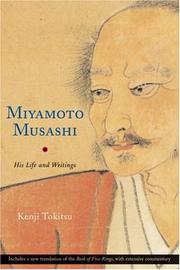
2004, Kenji Tokitsu, Miyamoto Musashi: His Life and Writings, translated by Sherab Chödzin Kohn. The chapter heading is "The Way to Be Followed Alone" (Dokkodo); the book is a translation of the French edition of 2000, and the same page glosses Dokkodo (the way where one walks alone). Tokitsu states the recension plainly: We presently have two versions of the Dokkodo. One has nineteen articles and the other twenty-one. Articles 4 and 20 are absent from the shorter version; he prints the twenty-one, comments on each with Imai Masayuki's readings, and warns that a literal translation does not permit us to get at its meaning. His chronology has During his final days, he wrote the twenty-one articles of the Dokkodo. He died on the nineteenth of the fifth month [21].
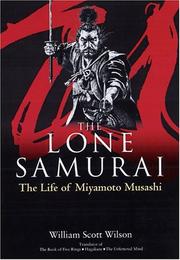
2004, William Scott Wilson, The Lone Samurai. Musashi gave this the title of "The Way of Walking Alone," which could alternatively be translated as "The Way of Independence." The twenty-one maxims …, and the list follows. His note records that the text has been criticized by various writers as being no more than shallow articles of common sense scribbled down by a dying man, answers with an anecdote, reads it as the final notes on Musashi's intense life, and describes a large bronze plaque containing "The Way of Walking Alone" to the left of the grave; his glossary gives "Way of Walking Alone, The" (Dokko-do or Dokko no michi) [13]. Walking alone is the phrase of Wilson's 2002 translation as its publisher describes it, of the two books of 2003 above, and of Tokitsu's gloss in this same year, and it is the phrase the Japanese dictionaries' first sense supports.
2006, the English Wikipedia's first day. The article opens The Dokkodo ("The Way to Be Followed Alone") … either 19 or 21 precepts; precepts 4 and 20 are omitted from the former version: Kohn's title and Tokitsu's recension sentence, two years after the book [61].
2007, the English Wikipedia's revision of 11 October. An edit from an anonymous address is the first text on record to carry "The Path of Aloneness", and the same edit pasted in a twenty-one-precept list adapted from Tokitsu's, 1 Accept everything just the way it is, 7 Never be jealous, 12 Be indifferent to where you live, 14 Do not hold on to possessions you no longer need, without his name [24]. No book gives the phrase before this, and the Internet Archive's full-text index dates every book that carries it to 2015 or later [62]. From this revision the quotation sites and the list descend.
2010, a MobileReference e-book of A Book of Five Rings. Its biographical introduction, which is the English Wikipedia's article on Musashi, gives the Dokkodo ("The Way of Walking Alone", or "The Way of Self-Reliance"), 21 precepts on self-discipline, and elsewhere Dokkodo (The Path of Self-Reliance) [63]. Self-reliance is the Japanese dictionaries' second sense, 独立独行, carried over to a title that turns on the first.
2012, Teruo Machida, "The last words of Miyamoto Musashi." Dokkôdô (The way that I go alone), with the title parsed 獨 doku · 行 kô · 道 dô and the first person supplied that the Japanese omits [3]. The one English rendering made from the original sheet.
2015, Alexander Bennett, Kendo: Culture of the Sword, University of California Press. Among the documents credited to Musashi, Dokkōdō ('The way to be followed alone', 1645) [22]: Kohn's title of 2004, which Bennett set aside three years later.
2018, Alexander Bennett, The Complete Musashi. The chapter THE PATH WALKED ALONE · DOKKŌDŌ · 独行道: written by Musashi on the twelfth day of the fifth month, Shōho 2 (1645) … From the middle of the Edo period, this short document was treasured by adherents of Niten Ichi-ryū and became known as the Jiseisho (pledge) … I chose to translate the content as Musashi's self-reflective statements rather than as a formula for others to follow [23]. The first-person choice is Machida's too, and it is what the Japanese reads.
Today. JMdict gives 独行 as going alone; travelling alone; solitary journey and has no entry for the title [64]. The English Wikipedia now opens with three, The Path of Aloneness, The Way to Go Forth Alone, or The Way of Walking Alone, and cites Hyakutake-Watkin's page [65]. The house title, The Path of Aloneness, is the Wikipedia phrase of 2007; no translator's name stands behind it, and it is the one rendering on record that makes a state of what the Japanese makes an act. Word for word the title reads the way of going alone: 独行 is a verb of motion or of conduct, one person's, and 道 is the way. What a rendering must keep is the act, which walking alone (Wilson, Tanaka, Tokeshi; Tokitsu's gloss), walked alone (Bennett) and the way that I go alone (Machida) keep, and the first person the sheet leaves unspoken, which Bennett and Machida restore.
A reading
The word 独行 is old and plain, going alone, and the title parses either as the way one walks alone or the way of solitary conduct; the custodian who holds the sheet leans to the second and the dictionaries to the first, and Shitō, allowing five readings, settles on dokkōdō because Musashi's own usage decides nothing [31]; and the difference is small, because both name a rule of one man's own conduct, written in the first person about what he does not do. What the sheet is, the tradition has named three ways, a vow to himself, a self-admonition, a parting word, and all three are true of a text dated a week before its writer's death and handed to the disciple who received the 五輪書 the same day, though the one scholar who has read the sheet as a text takes its lighter-inked colophon for a later day's addition and its composition for the work of the last years rather than the last week [31]. On the text: the sheet is Musashi's by its custodian's judgment of the hand, and its twenty-one articles are the text; the nineteen of the printed tradition are a copyist's recension carried by the 二天記 and made general by the 1909 book, and a reader who meets nineteen has met the copy, not the sheet. On the date: the twelfth day of the fifth month of 1645 is what the colophon says and what the two Toyoda chronicles say, and the prefecture's own doubt about the colophon's hand belongs beside it, since the date is the one fact every account leads with and the ink under it is not, by the custodian's judgment, the ink of the articles. Machida, who has held the sheet, reads the same lines as one hand; the question is open, and it is a question about the colophon, not about the text. On the English: The Path of Aloneness is not wrong, since 独 is alone and 道 is a path, but it is the least grounded of the renderings on record, an anonymous phrase of 2007 that no translator chose, and it turns an act into a condition. Walking alone is what the Japanese reads, and the translators who read the Japanese have said so since 2002 in five or six ways. The reading is dokkōdō, on the museum's record and a rubi of 1917, and there is nothing in the text to ask a native reader.
Notes
Two witnesses put the writing of the sheet on the sixteenth day of the fifth month, against the twelfth of the colophon and of every other witness: Shimokawa Ushio 下川潮's history of kendo of 1925, 十六日自戒書卽ち獨行道を書し辭世の心とし [66], and 『皇国剣道史』 of 1944, 同月十六日自戒書(獨行道)を書して辭世の辭に代へ, in the same words [67]; the later follows the earlier, and neither gives a ground.
The Wikisource transcription's header gives the sheet's width as 98.8 centimeters; the museum's record and the prefecture's designation text give 97.3 [25][9].
Musashi's age at death is sixty-two in the 二天記 and in the modern biographical dictionaries, and sixty-four in the 大日本人名辞書 of 1900; the 1909 biography gives both [32][68][35][37].
The 葉隠抄 numbers the article on the gods eighteenth, and Fukurai numbers it nineteenth: both count the nineteen of the printed tradition, and the 葉隠抄's count has dropped one article more [53][10]. On the sheet it is the nineteenth of twenty-one.
Kihira Tadayoshi 紀平正美, setting the text beside Bashō's rules of the road, Dōgen and the painter Sesson 雪村 in a logic primer of 1942, guessed from Sesson's dates that 武藏の獨行道も、これより推すときは恐らく四十歲前後の作爲と思はれる, Musashi's 獨行道 too was probably composed at about forty [69]; no witness supports the guess, and the colophon, the chronicles and every other reader put it in the last week of his life.
Wilson's alternative romanization Dokko no michi, with 道 read in its native reading, is his glossary's and no other witness's [13]; Tokeshi's Dokgyōdō, with 行 read gyō, is likewise his alone [19].
One character of the fourteenth article, 末々代物なる古き道具所持せず as this page prints it after the Wikisource transcription and Machida, is disputed on the sheet. Shitō marks it illegible, □, reading 末々代□なる and noting that the 二天記 has 什物と, that the 1909 biography deleted the phrase, and that a photographic edition of 1966 read 末二代物 with 二 as the repeat mark [31]; Ōishi prints 末代代物 with the reading しろもの [27]. The museum's photograph does not settle it at its size [26]. The manuscript of the 二天記 at Tokyo University of the Arts has neither word: its fourteenth article is 一 古道具ヲ所持セス, the old-tools clause alone, so the 什物 that Shitō reports for the 二天記 is the reading of the copy the 1910 print followed, not of the chronicle as a whole [30][32].
The first word of the sixth article, 我事, is read waga koto by Shitō on the sheet's own usage, against the ware koto of Kikuchi and Yoshikawa [31]. Tateno's remark that Kikuchi gives eighteen articles does not describe Kikuchi's book of 1944, which numbers nineteen [59][56].
Sources not seen
『武公伝』, by 豊田正剛 and 豊田正脩, 1755, the earlier of the two Toyoda chronicles, known here only through the sentences the prefecture's designation text and the Japanese Wikipedia article quote from it; a typeset is included in 『宮本武蔵名品集成』, 講談社, 1977, in print only, which the prefecture's text names among its references. It would settle the chronicle's own wording for 自誓ノ書 and 自誓書軸 and whether its copy already carried the heading 獨行道.
The other holdings of the 二天記 that the union catalogue lists, none with images: 内閣文庫; 東京国立博物館, a copy dated 宝暦5 (1755); 九州大学, dated 享和元 (1801), copied by 沢正準; 金沢市稽堂文庫, dated 宝暦5 and bound with the 三十五条; 茶図成篋文庫, dated 文化15 (1818); and the 武徳会's copy of the Noda family's own text. The Tokyo University of the Arts manuscript, opened whole for this page, carries the nineteen [30]; a copy dated 1755 would show whether the 武公伝 stage of the same book already did, which is the question the 1755 paragraph leaves open.
今村嘉雄 and others, editors, 『日本武道大系』第二巻, 同朋舎, 1982, page 93, which records the 1667 version in the Terao line; in print only, and known here through Ōishi's quotation. It would give that version's wording and its witness.
The modern Japanese articles that the union catalogue of research lists and no repository serves: 田中宏, 「宮本武蔵『五輪書』について(補遺1)『独行道』との関連を中心に」, 近世初期文芸, 2006; 長野秀樹, 「「花吹雪」と宮本武蔵「独行道」」, 太宰治研究, 和泉書院, 2013; 寺林峻 in 大法輪, 2003; and 今井正之信勝's three-part 独行道講話 in 禅, 2004; and Kosuke Nakamori's Spanish translation, Dokkōdō: el camino de la marcha solitaria, Shinden, 2008, the earliest rendering in that language on record. The Nagano paper would settle how Dazai read the sheet in 花吹雪.
Kenji Tokitsu, Miyamoto Musashi, maître de sabre japonais du XVIIe siècle, Éditions Désiris, Méolans-Revel, 2000, the French edition from which Kohn's translation was made; in print only. It would settle the French wording of the chapter title from which The Way to Be Followed Alone descends.
William Scott Wilson, translator, The Book of Five Rings, Kodansha International, Tokyo, 2002, and the bilingual 対訳・五輪書, Kodansha International, 2001, with 松本道弘; in print, and neither at any lending library known to the author. They would settle whether The Way of Walking Alone stands in the 2002 book, or already in the 2001 bilingual edition, which would make it the earliest English rendering of the title by a year or two.
大森曹玄, Miyamoto Musashi Hitsu: Dokkōdō, 講談社, 1974, as Bennett's bibliography cites it; 渡辺一郎校注『五輪書』, 岩波文庫, 1985; 今井正之『独行道◎二天一流勢法』, 1987; 渡辺誠『宮本武蔵剣と人:遺書『独行道』に秘められたその実像』, 新人物往来社, 2002; 魚住孝至『宮本武蔵 日本人の道』, ぺりかん社, 2003, as Machida cites it; and 福田正秀『宮本武蔵研究論文集』, 歴研, 2003; the National Diet Library holds them and serves them to readers in Japan only. They would settle the modern Japanese scholarship on the colophon and on the two recensions, which this page has only from the prefecture's text and from Machida.
A reader with access to any of these is invited to write to Takase Studios at Tim@Takase.com.
References
- 「独行」, 精選版 日本国語大辞典 · デジタル大辞泉 · 普及版 字通, at kotobank. https://kotobank.jp/word/独行
- 井上哲次郎『人格と修養』廣文堂, Tokyo, 1915, pp. 268–271. National Diet Library pid 980642, scans 152 and 153. https://dl.ndl.go.jp/pid/980642/1/152
- Teruo Machida, "The last words of Miyamoto Musashi: An attempt to translate his Dokkôdô," 日本体育大学紀要 (Bulletin of Nippon Sport Science University) 41 (2), 2012, pp. 199–211, the English version of the paper published in German in vol. 36 (1), 2006, pp. 105–120. https://nittaidai.repo.nii.ac.jp/records/1222
- 熊本県教育委員会, 「獨行道(どっこうどう)」, the designation text for the 県指定重要文化財(書跡)of 2003, with its photograph of the mounted sheet, at the Internet Archive's capture of the prefecture's site. https://web.archive.org/web/20081218202853/http://www.pref.kumamoto.jp/education/hinokuni/isan/siteijoukyou/2003.9.12/dokoudou.html
- 「独行道」, Japanese Wikipedia. https://ja.wikipedia.org/wiki/独行道
- 国立国会図書館サーチ, the records under the title 独行道. https://ndlsearch.ndl.go.jp/api/opensearch?title=独行道
- J. C. Hepburn, A Japanese and English Dictionary; with an English and Japanese Index, American Presbyterian Mission Press, Shanghai, 1867, p. 54. Internet Archive ajapaneseandeng00hepbgoog. https://archive.org/details/ajapaneseandeng00hepbgoog
- F. Brinkley and others, An Unabridged Japanese-English Dictionary, Sanseidō, Tokyo, 1896, p. 179. Internet Archive cu31924082117288. https://archive.org/details/cu31924082117288
- 熊本県立美術館 収蔵品データベース, 「独行道」, 宮本武蔵, 紙本墨書, 正保2年(1645), 16.8 × 97.3 cm, 資料番号 日-書040, the catalogue record. https://jmapps.ne.jp/kumabi/det.html?data_id=377
- 福来友吉『心霊の現象』, 1917, pp. 235 and 328. National Diet Library pid 955230, scans 130 and 181. https://dl.ndl.go.jp/pid/955230/1/181
- 釈宗演『達磨の足跡:以心伝心教外別伝』, 1931, p. 154. National Diet Library pid 1175460, scan 88. https://dl.ndl.go.jp/pid/1175460/1/88
- 国民常識普及会編『最新常識百科事典』, 1939. National Diet Library pid 1262562, scan 353. https://dl.ndl.go.jp/pid/1262562/1/353
- William Scott Wilson, The Lone Samurai: The Life of Miyamoto Musashi, Kodansha International, Tokyo, 2004, pp. 41, 177–178, 265–266 and 281.
- J. C. Hepburn, A Japanese-English and English-Japanese Dictionary, 2nd ed., American Presbyterian Mission Press, Shanghai, 1872, p. 66. National Diet Library pid 993689. https://dl.ndl.go.jp/pid/993689
- J. C. Hepburn, A Japanese-English and English-Japanese Dictionary, 3rd ed., Maruya, Tokyo, 1886, p. 77; the printing of 1888 at Internet Archive japaneseenglishe00hepbuoft. https://archive.org/details/japaneseenglishe00hepbuoft
- Yamamoto Tsunetomo, Hagakure: The Book of the Samurai, translated by William Scott Wilson, Shambhala, Boston, 2012, the publisher's description of Wilson's The Book of Five Rings in the back matter.
- 国立国会図書館サーチ, the records of William Scott Wilson's translations of the 五輪書: 対訳・五輪書, Kodansha International, 2001; The Book of Five Rings, Kodansha International, 2002; Shambhala, 2012. https://ndlsearch.ndl.go.jp/api/opensearch?title=book%20of%20five%20rings&creator=Wilson
- Fumon Tanaka, Samurai Fighting Arts: The Spirit and the Practice, Kodansha International, Tokyo, 2003, pp. 62–64 and the glossary, pp. 220–221.
- Jinichi Tokeshi, Kendo: Elements, Rules, and Philosophy, University of Hawaiʻi Press, Honolulu, 2003, pp. 236–237 and the glossary. Internet Archive isbn_9780824825980, a lending copy. https://archive.org/details/isbn_9780824825980
- Colin Hyakutake-Watkin, "Dokkodo," hyoho.com, and the page's first capture at the Internet Archive, of October 2003. http://www.hyoho.com/Hyoho6.html · https://web.archive.org/web/20031006032614/http://www.hyoho.com/Hyoho6.html
- Kenji Tokitsu, Miyamoto Musashi: His Life and Writings, translated by Sherab Chödzin Kohn, Shambhala, Boston, 2004, pp. xl and 216–226.
- Alexander Bennett, Kendo: Culture of the Sword, University of California Press, Oakland, 2015, p. 64.
- Alexander Bennett, The Complete Musashi: The Book of Five Rings and Other Works, Tuttle, Tokyo, 2018, the chapter "The Path Walked Alone" and the bibliography.
- "Dokkodo," Wikipedia, the revision of 11 October 2007. https://en.wikipedia.org/w/index.php?oldid=163761457
- 「獨行道」, the transcription of the sheet with its line breaks, at Wikisource. https://ja.wikisource.org/wiki/獨行道
- 熊本県立美術館 収蔵品データベース, 独行道, 資料番号 日-書040, the photograph. https://jmapps.ne.jp/kumabi/det.html?data_id=377
- 大石純子「「独行道」にみられる「私宅」に関する一考察」, 八洲学園大学紀要 2, 2006, pp. 25–30. https://yashima.repo.nii.ac.jp/records/20
- 立花峯均『兵法大祖武州玄信公伝来』(丹治峯均筆記), 1727, manuscript catalogued as 『二天記』, 茨城大学図書館 菅文庫 7-2-284; the death passage at leaves 23 and 24, the colophon at leaf 25. https://kokusho.nijl.ac.jp/biblio/100263922/manifest
- 豊田正剛・豊田正脩『武公伝』, 1755, not consulted directly; quoted in the prefecture's designation text (reference 4) and in the Japanese Wikipedia article 「独行道」. https://ja.wikipedia.org/wiki/独行道
- 豊田景英 校『二天記』, the 武公傳 retitled, with 豊田正脩's 凡例 dated 宝暦5 (1755) and 宇野惟貞's preface dated 安永5 (1776); manuscript, the copy undated, 東京藝術大学附属図書館 脩本文庫 R289-1, fifty-nine canvases; the preface at canvases 5–7, the 凡例 and 景英's note at 7–9, the 一乗寺 passage at 43, the death passage and the nineteen articles at 47–49, the 小倉碑文 at 52–56. https://kokusho.nijl.ac.jp/biblio/100288740/manifest
- 紫藤誠也「宮本武蔵の『独行道』」, 語文研究 24, 九州大学国語国文学会, 1967, pp. 21–41. https://doi.org/10.15017/12239
- 豊田景英『二天記』, 1776, in 武藤厳男・宇野東風・古城貞吉編『肥後文献叢書』第二巻, 隆文館, 1910, pp. 190–192. National Diet Library pid 766733, scans 101 and 102. https://dl.ndl.go.jp/pid/766733/1/102
- 矢野滄浪『日本読史論』時事評論社, Tokyo, 1916. National Diet Library pid 952972, scans 93, 105 and 106. https://dl.ndl.go.jp/pid/952972/1/106
- 岩波書店編輯部編『国語:学習指導の研究』岩波書店, Tokyo, 1939. National Diet Library pid 1458887, scans 76 and 87. https://dl.ndl.go.jp/pid/1458887/1/87
- 『大日本人名辞書』, the edition of 1900, the entry 宮本武藏. National Diet Library pid 779854, scan 1024. https://dl.ndl.go.jp/pid/779854/1/1024
- 国立国会図書館 次世代デジタルライブラリー, full-text search over the library's digitized public-domain books, on 独行道, with every hit before 1950 read by its title and year. https://lab.ndl.go.jp/dl/
- 宮本武蔵遺蹟顕彰会編『宮本武蔵』金港堂書籍, Tokyo, 1909: the photograph of the sheet at scan 12; the text at scans 27, 39, 77 and 84; the exhibition list at scan 143. National Diet Library pid 992019. https://dl.ndl.go.jp/pid/992019/1/12
- 第五高等学校開校五十年記念会編『五高五十年史』, Kumamoto, 1939, pp. 297–300. National Diet Library pid 1462179, scans 168 to 170; the visit and its date at scans 168 and 169, the list at scan 170. https://dl.ndl.go.jp/pid/1462179/1/170
- 武藤厳男編『肥後先哲偉蹟』, 1911, the life of 宮本武藏. National Diet Library pid 778595, scan 181. https://dl.ndl.go.jp/pid/778595/1/181
- 『大日本人名辞書』, the edition of 1909, the entry 宮本武藏. National Diet Library pid 779857. https://dl.ndl.go.jp/pid/779857
- 池辺義象編『武士道美譚』, 1909. National Diet Library pid 758925. https://dl.ndl.go.jp/pid/758925
- 沼波瓊音『乳のぬくみ』, 1915. National Diet Library pid 904872. https://dl.ndl.go.jp/pid/904872
- 済々黌編『多士読本』下巻, Kumamoto, 1918. National Diet Library pid 926723, scan 70. https://dl.ndl.go.jp/pid/926723/1/70
- 大川周明『日本精神研究』第五, 劒の人宮本武藏, 社会教育研究所, Tokyo, 1924. National Diet Library pid 978804, scans 6 and 15. https://dl.ndl.go.jp/pid/978804/1/6
- 東京鉄道局総務部編『国鉄奉公運動と勤務の理念』, 1941, pp. 76–77. National Diet Library pid 1068443, scan 57. https://dl.ndl.go.jp/pid/1068443/1/57
- 文部省編『師範修身書』巻四, 教学図書, 1941, pp. 36 and 44. National Diet Library pid 1277077, scans 41 and 45. https://dl.ndl.go.jp/pid/1277077/1/45
- 文部省編『青年修身公民書』, 1943. National Diet Library pid 1461104, scan 80. https://dl.ndl.go.jp/pid/1461104/1/80
- 島田正蔵『体育原論』大同館書店, Tokyo, 1926, pp. 112–115. National Diet Library pid 939697, scans 49, 50 and 51. https://dl.ndl.go.jp/pid/939697/1/50
- 矢野滄浪『国家一小言』時事評論社, Tokyo, 1926. National Diet Library pid 913391, scan 91. https://dl.ndl.go.jp/pid/913391/1/91
- 本山荻舟『宮本武蔵』, 1924, p. 83. National Diet Library pid 982054, scan 47. https://dl.ndl.go.jp/pid/982054/1/47
- 内田良平『武道極意』, 1925. National Diet Library pid 1018822. https://dl.ndl.go.jp/pid/1018822
- 『八代郡誌』, 1927. National Diet Library pid 1195134. https://dl.ndl.go.jp/pid/1195134
- 『葉隠抄』, 1934, and its printing of 1937. National Diet Library pids 1104773 and 1120657. https://dl.ndl.go.jp/pid/1104773
- 雄山閣編『類聚伝記大日本史』, 1936. National Diet Library pid 1879850, scans 36 and 42. https://dl.ndl.go.jp/pid/1879850/1/36
- 井上哲次郎著・三枝博音編『人生読本:春夏秋冬』第一書房, Tokyo, 1937. National Diet Library pid 1220799, scans 17 and 18. https://dl.ndl.go.jp/pid/1220799/1/17
- 菊池寛『わが愛読文章』非凡閣, Tokyo, 1944, pp. 134–136. National Diet Library pid 1884417, scans 80 and 81. https://dl.ndl.go.jp/pid/1884417/1/80
- 太宰治『佳日』帝国図書, Tokyo, 1944, 花吹雪, pp. 167 and 172. National Diet Library pid 1133160, scans 87 and 90. https://dl.ndl.go.jp/pid/1133160/1/87
- 沢木興道述『武道と禅』, 1936, p. 19. National Diet Library pid 1096784, scan 6. https://dl.ndl.go.jp/pid/1096784/1/6
- 立野正裕「宮本武蔵と独行道 — 道の精神史 その1」, 文芸研究 91, 明治大学文芸研究会, 2003, pp. 129–160. https://meiji.repo.nii.ac.jp/records/5145
- 『詩經』唐風「杕杜」, at Wikisource. https://zh.wikisource.org/wiki/詩經/杕杜_(唐風)
- "Dokkodo," Wikipedia, the article's first revision, of 16 April 2006. https://en.wikipedia.org/w/index.php?oldid=48667347
- Internet Archive, full-text search over its digitized books, on "Dokkodo," "Way of Walking Alone," "Path of Aloneness" and "Way to Go Forth Alone," with each hit dated by its catalogue record. https://archive.org/
- Miyamoto Musashi, A Book of Five Rings, MobileReference, 2010, e-book, the biographical introduction.
- JMdict, 「独行」, at Weblio 英和・和英辞典. https://ejje.weblio.jp/content/独行
- "Dokkōdō," Wikipedia, the current article. https://en.wikipedia.org/wiki/Dokkōdō
- 下川潮『剣道の発達』, 1925. National Diet Library pid 1017872, scan 186. https://dl.ndl.go.jp/pid/1017872/1/186
- 小沢愛次郎『皇国剣道史』, 1944, p. 193. National Diet Library pid 1125968, scan 104. https://dl.ndl.go.jp/pid/1125968/1/104
- 「宮本武蔵」, 日本人名大辞典+Plus · 山川 日本史小辞典, at kotobank. https://kotobank.jp/word/宮本武蔵
- 紀平正美『なるほどの論理学』国民精神文化研究所, 1942, pp. 65–66. National Diet Library pid 1914006, scans 36, 37 and 38. https://dl.ndl.go.jp/pid/1914006/1/38
Books Cited
Books this article cites that can be ordered today.