

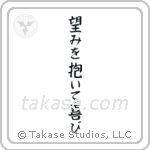
望みを抱いて喜び · 信仰と希望と愛 · 主は我が力 · 愛は全てを完全に結ぶ帯である · 始めに神は天と地を創造された nozomi o idaite yorokobi · shinkō to kibō to ai · shu wa waga chikara · ai wa subete o kanzen ni musubu obi de aru · hajime ni kami wa ten to chi o sōzō sareta Be Joyful in Hope · Faith, Hope and Love · The Lord Is My Strength · Love Binds Them All Together · In the Beginning God Created the Heavens and the Earth
Five Bible verses sold as scrolls, and which Japanese Bible each one quotes: three are the 1955 colloquial translation's own words, one is the 新改訳's, a translation first published in 1970, and one matches no printed Bible character for character. The Meiji and Taishō Bibles are read beside each verse, for how it sounded in Japanese before 1955.
Abstract
Five texts carry a real Japanese Bible's words, and not all the same Bible. Three, 68, 69 and 390, are the 1955 口語訳's own words: 68 as the Bible prints them, 69 and 390 with a kanji supplied where the Bible prints kana. One, 67, is eight characters two Bibles share, the 新改訳 printing them exactly. One, 947, matches no printed Japanese Bible character for character: it is the 口語訳's sentence written as a Japanese Christian recites it from memory, a form already in print in 1924.
Overview
The sense. One: five verses of the Bible, each a different Japanese Bible's hand. 68, 69 and 390 are the 1955 口語訳's own words, 68 as printed and 69 and 390 with a kanji supplied where the Bible prints kana; 67 is eight characters two Bibles share, the 新改訳 printing them exactly and the 口語訳 differing by one kanji; 947 matches no printed Japanese Bible character for character, but is the sentence a Japanese reader recites from memory, in print since 1924.
The words. 信仰 is old in Japanese, first cited from the 今昔物語集 of about 1120, to believe in and revere gods or buddhas; the Christian use is the same word [1]. 希望 is a Meiji word in its modern reading: the dictionary's first example of きぼう is a newspaper of 1872, and its 語誌 notes an older reading, けもう, from the 往生要集 of 984 [2]. 愛 carries a Christian sense in the dictionary, for God to cherish all humankind without limit, first cited from 植村正久's Browning of 1890 [3]. 主 in the Christian sense, the Father God or Christ, is dated by the dictionary to the Old Testament of 1888 itself, 「主ヱホバよ」 in Genesis [4]. 力 is cited from the 古事記 of 712 [5]; 天地 is cited from 756 [6]; 帯, a sash, from the 日本書紀 of 720 [7]; 創造, in the sense of God making the universe, is first cited from 箕作麟祥's 泰西勧善訓蒙 of 1873, and in its general sense from 中村正直's 西国立志編 of 1870–71 [8]. 抱く, to hold a thought or feeling in the heart, is cited from about 850 and, closer to the modern hand, from 漱石's 吾輩は猫である of 1905; the 新改訳 writes the verb in kanji, the 口語訳 in kana [9]. 完全 is cited from the 玉塵抄 of 1563 [10]; 望み carries no dated entry on its dictionary page [11].
The text in English. The English is the reader's own, since none of the five follows a Japanese translation of an English Bible. Romans 12:12: the King James and the American Standard read rejoicing in hope; the New International reads be joyful in hope, and the house's title follows it; the English Standard and the New Revised Standard read rejoice in hope [12]. 1 Corinthians 13:13: the King James reads faith, hope, charity twice; the American Standard, the New International, the English Standard and the New Revised Standard all read faith, hope, love, and the house's title, Faith, Hope and Love, follows them [13]. Psalm 118:14: the King James reads the LORD is my strength and song; the American Standard, Jehovah is my strength and song; the New International, my strength and my defense; the English Standard, my strength and my song; the New Revised Standard, my strength and my might; the house's title, The Lord Is My Strength, follows the King James's word where the New International has defense [14]. Colossians 3:14: the King James and the American Standard read the bond of perfectness; the New International reads binds them all together in perfect unity, and the house's title, Love Binds Them All Together, follows it; the English Standard and the New Revised Standard read binds everything together in perfect harmony [15]. Genesis 1:1: the King James reads the heaven and the earth; the American Standard, the New International, the English Standard and the New Revised Standard all read the heavens and the earth, and the house's title follows them [16].
The historical record
1852 and 1919. The Chinese Bibles beside the Japanese. Two Chinese translations stand beside the Japanese wording, read here for what they share with it, not as its source. The Delegates' Version of 1852 reads 耶和華是我的力量、是我的詩歌 for the Psalm [17], 信也、望也、仁也 for the three virtues of 1 Corinthians [18], 盡善之維繫 for the sash of Colossians [19], and 上帝創造天地 for the opening of Genesis [20]. The Union Version of 1919 reads the Psalm the same way, 耶和華是我的力量、是我的詩歌 [21]; the three virtues as 有信、有望、有愛 [22]; the sash as 聯絡全德的 [23]; and Genesis as 神創造天地 [24].
1880 and 1881. The Meiji New Testament. The Meiji committee finished its New Testament in 1880; its first complete printing, the 1881 新約全書, reads 望(のぞみ)て喜(よろこ)び患難(なやみ)に耐(た)へ祈祷(いのり)を恒(つね)にし for Romans 12:12, それ信仰(しんかう)と望(のぞみ)と愛(あい)と此(この)三(みつ)の者(もの)ハ常(つね)に在(あ)るなり此(この)うち尤(もつと)も大(おほい)なる者ハ愛なり for 1 Corinthians 13:13, and 此の諸の事の外に愛を加へよ愛ハ衆徳(すべてのとく)の帶(おび)なり for Colossians 3:14 [25]. 三浦徹's annotated 新約全書略註 of 1904 prints the same three verses in plain readings, 望みて喜び患難に耐へ祈禱を恒にせよ, それ信仰と望と愛と此の三の者は常に在るなり此のうち尤も大なる者は愛なり, and 此の諸の事の外に愛を加へよ愛は衆德の帶なり [26]. In every case the Meiji Bible has 望 alone for hope where 67 has 望みを抱いて, 信仰と望と愛 for the three virtues where 68 has 信仰と希望と愛, and 衆徳の帯 for the sash where 390 has 全てを完全に結ぶ帯.
1887 and 1907. The Meiji Old Testament. The Meiji committee's Old Testament of 1887 reads Genesis 1:1 元始(はじめ)に神(かみ)天地(てんち)を創造(つくり)たまへり and Psalm 118:14 ヱホバはわが力(ちから)わが歌(うた)にしてわが救(すくひ)となりたまへり, in the 1907 旧新約全書 printing [27] and again in the 1937 引照附 printing [28]. Where 947 has 神は … 創造された, the Meiji Bible has 神天地を創造たまへり; where 69 has 主, the Meiji Bible transliterates the divine name, ヱホバ.
1888. The Orthodox 正教の鑑. The Orthodox church's own book of 1888 counts the three virtues in a discussion of 信と望と愛と … 三の者の中に愛を大なりと [29]. Where 68 has 信仰と希望と愛, three words printed in that order by 1917, the Orthodox book already had the same three words twenty-nine years earlier, in the shorter Meiji spelling.
1891. Drummond's 世界最大のもの. The Japanese translation of Henry Drummond's essay was in print by 1891, quoting 1 Corinthians as 「信仰と希望と愛と此三のもの、常に在るなり」と云ひ … 「此のうち最も大なるものは愛なり」 [30]. 68's three words in that order, 信仰と希望と愛, were already in Japanese print twenty-six years before the 1917 revision wrote them.
1899. The Anglican Psalter. 日本聖公会's own Psalter, translated by 中川藤四郎 and others, reads Psalm 118 for its twenty-fourth morning: 十四 主(しゆ)ハわが力(ちから)わが歌(うた)なり又(また)わが救(すくひ)となり給(たま)へり [31]. 主 for the divine name, where the Meiji Old Testament transliterated it ヱホバ, is the Anglican tradition's word, fifty-six years before the 口語訳 made it the whole Bible's own.
1910. The Catholic ラゲ訳. Émile Raguet's Catholic translation of 1910 reads Romans 12:12 希望(きぼう)によりて歡(よろこ)び、患難(くわんなん)に忍耐(にんたい)し、絕(た)えず祈祷(きたう)に從事(じうじ)し [32], 1 Corinthians 13:13 今(いま)存(そん)するものは信(しん)、望(ばう)、愛(あい)此(この)三(みつ)なれども、就中(なかんづく)最(もつとも)大(おほ)いなるものは愛(あい)なり [33], and Colossians 3:14 尙(なほ)此(この)一切(いつさい)の事(こと)に加(くは)へて愛(あい)を有(いう)せよ、愛(あい)は完(くわん)德(とく)の結(むすび)なればなり [34]. Its Romans already reads 希望 with the modern spelling of hope, seven years before the Protestant revision.
1917 and 1919. The 大正改訳. The Protestant revision of the New Testament, finished 5 October 1917, reads 1 Corinthians 13:13 げに信仰(しんかう)と希望(のぞみ)と愛(あい)と此の三つの者は限りなく存らん、而して其のうち最も大なるは愛なり in the 1919 新約聖書 改訳 printing [35]. The 1927 printing carries the same verse with the same ruby, and beside it Romans 12:12 望(のぞ)みて喜(よろこ)び、患難(なやみ)にたへ、祈(いのり)を恒(つね)にし and Colossians 3:14 凡て此等のものの上に愛を加へよ、愛は徳(とく)を全(まつた)うする帶(おび)なり [36]. The revisers wrote 希望 where the Meiji Bible had 望, and read it with the old sound: the ruby on both printings is のぞみ, not きぼう. 68's three words, 信仰と希望と愛, are the revision's characters exactly.
1922. The Anglican hymnal. 古今聖歌集, the Anglican church's revised hymnal, sets Psalm 118 as the epigraph to hymn 462, in the same five characters as 69: 主は我が力わが歌にして我が救となり給へり 詩百十八〇十四 [37]. The same collection's hymn 320 quotes Colossians, 愛は德を全うする帶なり, in the 1917 revision's wording [37]. 69's own five characters, 主は我が力, stood in print thirty-three years before the colloquial Bible of 1955.
1922, 1924 and 1931. The sentence without the Bible. Before the colloquial Bible existed, Japanese writers already wrote Genesis 1:1 in 947's own grammar, 神は … 創造された. Giovanni Papini's autobiography, translated by 新居格 in 1924, has 「始めに神は天と地を作つた。」 [38]. The National Diet Library's next-generation full-text search surfaces the same grammar twice more, each from its snippet only: a 1922 translation of Strindberg's A Dream Play, 世の始めに神は天と地とを虛無から創られたのだ [39], and a 1931 Old Testament primer, 始めに神は天と地とを創造し給うた [40]. 947's grammar was already Japanese usage thirty-one years before any Bible had it.
1955. The colloquial 口語訳. The Japan Bible Society's colloquial translation, the New Testament in 1954 and the whole Bible in 1955, reads all five verses at its own verse-search endpoint: 望みをいだいて喜び、患難に耐え、常に祈りなさい (Romans 12:12); このように、いつまでも存続するものは、信仰と希望と愛と、この三つである。このうちで最も大いなるものは、愛である (1 Corinthians 13:13); 主はわが力、わが歌であって、/わが救となられた (Psalm 118:14); これらいっさいのものの上に、愛を加えなさい。愛は、すべてを完全に結ぶ帯である (Colossians 3:14); はじめに神は天と地とを創造された (Genesis 1:1) [41]. The Japan Bible Society's own list of the wordings it revised in 1975, 1984 and 2002 does not touch any of these five verses [42]. Three of the five are this Bible's words: 68 as it prints them, 69 and 390 with a kanji supplied where it prints kana; 947 is this Bible's sentence with 始 for はじめ and one と dropped.
1970, 2003 and 2017. The 新改訳. 新改訳 first appeared in 1970; its third edition (2003 text) and its 2017 revision both print Romans 12:12 as 望みを抱いて喜び — the 2003 text continues 患難に耐え、絶えず祈りに励みなさい [43] and the 2017 text 苦難に耐え、ひたすら祈りなさい [44] — 67's own eight characters, 望みを抱いて喜び, in a Japanese Bible for the first time. The other four differ from 68, 69, 390 and 947: 1 Corinthians reads いつまでも残るものは信仰と希望と愛です (2003) or いつまでも残るのは信仰と希望と愛、これら三つです (2017); the Psalm reads 私の力 for 69's 我が力; Colossians reads 結びの帯として完全 for 390's すべてを完全に結ぶ帯; Genesis reads 神が for 947's 神は.
1987. The 新共同訳. 新共同訳, published September 1987, reads Romans 12:12 希望をもって喜び、苦難を耐え忍び、たゆまず祈りなさい; 1 Corinthians 13:13 それゆえ、信仰と、希望と、愛、この三つは、いつまでも残る。その中で最も大いなるものは、愛である; Psalm 118:14 主はわたしの砦、わたしの歌。主はわたしの救いとなってくださった — 砦, a fortress, for 69's 力, strength; Colossians 3:14 これらすべてに加えて、愛を身に着けなさい。愛は、すべてを完成させるきずなです — a bond, きずな, not 390's 帯, a sash; and Genesis 1:1 初めに、神は天地を創造された [45].
2018. The 聖書協会共同訳. 聖書協会共同訳, published December 2018, reads Romans 12:12 希望をもって喜び、苦難に耐え、たゆまず祈り; 1 Corinthians 13:13 the same as 1987; the Psalm 主こそ私の力、私の歌 — 私の力 for 69's 我が力; Colossians 愛はすべてを完全に結ぶ帯です — 390's own words, ending です for である; and Genesis 初めに神は天と地を創造された — 947's sentence with 初 for 始, and every other character the same [46]. Of the eight Bibles read here, this is the one character away from 947.
Today. The five texts sold as scrolls are not one Bible's sentences: 68, 69 and 390 are the 口語訳's, 68 as printed and 69 and 390 with a kanji where the Bible prints kana; 67 is the 新改訳's eight characters, which the 口語訳 also carries but for one kanji; 947 matches no printed Bible character for character, closest of all to the 聖書協会共同訳 of 2018, one character away. The house titles, Be Joyful in Hope, Faith, Hope and Love, The Lord Is My Strength, Love Binds Them All Together and In the Beginning God Created the Heavens and the Earth, follow the New International Version for four of the five and the King James's strength for the fifth, where the New International reads defense.
A reading
Five texts that carry a real Japanese Bible's words, and each a different one. Three, 68, 69 and 390, are the 1955 口語訳's, 68 as printed and 69 and 390 with a kanji where the Bible has kana. One, 67, is eight characters two Bibles share: the 新改訳 prints them exactly, and the 口語訳 has the same words with one kanji in kana instead. One, 947, is the 口語訳's sentence written the way a Japanese Christian writes it from memory — 始 for はじめ, and the second と dropped — a form in print since 1924 and one character short of the 2018 聖書協会共同訳.
The older Japanese Bibles are what these verses sounded like for the first seventy years of Japanese Protestantism: the Meiji Bible's 信仰と望と愛, ヱホバはわが力, 衆徳の帯, and 元始に神天地を創造たまへり. The Anglican 主 of 1899 is where 69's 主 begins: the Meiji Old Testament kept the transliterated name, ヱホバ, and it was the Anglican Psalter and hymnal, not the standard Protestant Bible, that first gave the Psalm's Lord the word 主, thirty-three years before the 口語訳 made it the whole Bible's.
On the publishers' terms: by the Japan Bible Society's own statement the 口語訳's protection period has ended, and none of the five verses carries one of its protected revised wordings; 信仰と希望と愛, 望みを抱いて喜び and 主は我が力 are fragments the Bibles still in copyright share with the 口語訳 or with the whole tradition, short of any publisher's definition of a quotation. 947 is the one full sentence among the five, and it is the 口語訳's.
Sources not seen
The 1917 first printing of the 大正改訳, the New Testament's original revision; the National Diet Library's earliest digitized printing is 1919, two years later, and no earlier printing is described here. A copy of 1917 would confirm the revision's wording had already reached its final form by 1919, or show what changed in the two years between.
The Catholic フランシスコ会訳 and バルバロ訳, two twentieth-century Catholic translations still in copyright, with no public verse-search endpoint. Their text of these five verses would show whether the Catholic church's modern Bible differs from ラゲ訳's 1910 wording or from the Protestant Bibles it postdates.
A reader with access to any of these is invited to write to Takase Studios at Tim@Takase.com.
References
- 「信仰」, 精選版日本国語大辞典・デジタル大辞泉, at kotobank. https://kotobank.jp/word/信仰
- 「希望」, 精選版日本国語大辞典・デジタル大辞泉, at kotobank. https://kotobank.jp/word/希望
- 「愛」, 精選版日本国語大辞典・デジタル大辞泉, at kotobank. https://kotobank.jp/word/愛
- 「主」, 精選版日本国語大辞典・デジタル大辞泉, at kotobank. https://kotobank.jp/word/主
- 「力」, 精選版日本国語大辞典・デジタル大辞泉, at kotobank. https://kotobank.jp/word/力
- 「天地」, 精選版日本国語大辞典・デジタル大辞泉, at kotobank. https://kotobank.jp/word/天地
- 「帯」, 精選版日本国語大辞典・デジタル大辞泉, at kotobank. https://kotobank.jp/word/帯
- 「創造」, 精選版日本国語大辞典・デジタル大辞泉, at kotobank. https://kotobank.jp/word/創造
- 「抱く」, 精選版日本国語大辞典・デジタル大辞泉, at kotobank. https://kotobank.jp/word/抱く
- 「完全」, 精選版日本国語大辞典・デジタル大辞泉, at kotobank. https://kotobank.jp/word/完全
- 「望み」, デジタル大辞泉, at kotobank. https://kotobank.jp/word/望み
- Romans 12:12, Greek text and English versions (KJV, ASV, NIV, ESV, NRSV), at biblehub.com. https://biblehub.com/text/romans/12-12.htm
- 1 Corinthians 13:13, Greek text and English versions, at biblehub.com. https://biblehub.com/text/1_corinthians/13-13.htm
- Psalm 118:14, Hebrew text and English versions, at biblehub.com. https://biblehub.com/text/psalms/118-14.htm
- Colossians 3:14, Greek text and English versions, at biblehub.com. https://biblehub.com/text/colossians/3-14.htm
- Genesis 1:1, Hebrew text and English versions, at biblehub.com. https://biblehub.com/text/genesis/1-1.htm
- 詩篇, 聖經 (委辦譯本或稱代表譯本), 1852, at zh.wikisource. https://zh.wikisource.org/wiki/聖經_(委辦譯本或稱代表譯本)/詩篇
- 哥林多前書, 聖經 (委辦譯本或稱代表譯本), 1852, at zh.wikisource. https://zh.wikisource.org/wiki/聖經_(委辦譯本或稱代表譯本)/哥林多前書
- 哥羅西書, 聖經 (委辦譯本或稱代表譯本), 1852, at zh.wikisource. https://zh.wikisource.org/wiki/聖經_(委辦譯本或稱代表譯本)/哥羅西書
- 創世記, 聖經 (委辦譯本或稱代表譯本), 1852, at zh.wikisource. https://zh.wikisource.org/wiki/聖經_(委辦譯本或稱代表譯本)/創世記
- 詩篇, 聖經 (和合本), 1919, at zh.wikisource. https://zh.wikisource.org/wiki/聖經_(和合本)/詩篇
- 哥林多前書, 聖經 (和合本), 1919, at zh.wikisource. https://zh.wikisource.org/wiki/聖經_(和合本)/哥林多前書
- 歌羅西書, 聖經 (和合本), 1919, at zh.wikisource. https://zh.wikisource.org/wiki/聖經_(和合本)/歌羅西書
- 創世記, 聖經 (和合本), 1919, at zh.wikisource. https://zh.wikisource.org/wiki/聖經_(和合本)/創世記
- 新約全書, 米国聖書会社, 1881, scan 230 (Romans 12:12) · scan 250 (1 Corinthians 13:13, p. 492) · scan 295 (Colossians 3:14, p. 582). https://dl.ndl.go.jp/pid/992682/1/230 · https://dl.ndl.go.jp/pid/992682/1/250 · https://dl.ndl.go.jp/pid/992682/1/295
- 三浦徹, 新約全書略註, 1904, scan 308 (Romans 12:12) · scan 333 (1 Corinthians 13:13, p. 601) · scan 390 (Colossians 3:14, p. 712). https://dl.ndl.go.jp/pid/825539/1/308 · https://dl.ndl.go.jp/pid/825539/1/333 · https://dl.ndl.go.jp/pid/825539/1/390
- 旧新約全書, 1907, scan 5 (Genesis 1:1) · scan 434 (Psalm 118:14). https://dl.ndl.go.jp/pid/992555/1/5 · https://dl.ndl.go.jp/pid/992555/1/434
- 舊新約聖書 引照附, 1937, scan 7 (Genesis 1:1) · scan 545 (Psalm 118:14, p. 1076). https://dl.ndl.go.jp/pid/1030419/1/7 · https://dl.ndl.go.jp/pid/1030419/1/545
- 正教の鑑, 1888, scan 2 (1 Corinthians 13:13), from the National Diet Library's next-generation full-text search, its snippet only. https://dl.ndl.go.jp/pid/824717/1/2
- 世界最大のもの (Henry Drummond, tr.), 1891, scan 9 (1 Corinthians 13:13). https://dl.ndl.go.jp/pid/824797/1/9
- 詩篇, 中川藤四郎 等訳, 日本聖公会出版社, 1899, scan 178 (Psalm 118:14, the twenty-fourth morning). https://dl.ndl.go.jp/pid/825502/1/178
- ロマ書 (ラゲ訳), 1910, at ja.wikisource (Romans 12:12). https://ja.wikisource.org/wiki/ロマ書_(ラゲ訳)
- コリント前書 (ラゲ訳), 1910, at ja.wikisource (1 Corinthians 13:13). https://ja.wikisource.org/wiki/コリント前書_(ラゲ訳)
- コロサイ書 (ラゲ訳), 1910, at ja.wikisource (Colossians 3:14). https://ja.wikisource.org/wiki/コロサイ書_(ラゲ訳)
- 新約聖書 改訳, 大英国北英国聖書会社, 1919, scan 182 (1 Corinthians 13:13, p. 356). https://dl.ndl.go.jp/pid/988334/1/182
- 我らの主なる救主イエス・キリストの新約聖書, 1927, scan 214 (Romans 12:12) · scan 232 (1 Corinthians 13:13, p. 459) · scan 269 (Colossians 3:14). https://dl.ndl.go.jp/pid/1053815/1/214 · https://dl.ndl.go.jp/pid/1053815/1/232 · https://dl.ndl.go.jp/pid/1053815/1/269
- 古今聖歌集 譜附, 古今聖歌集改訂委員, 1922, scan 283 (hymn 462, Psalm 118:14); hymn 320 (Colossians 3:14), p. 361, from the National Diet Library's next-generation full-text search, its snippet only. https://dl.ndl.go.jp/pid/941747/1/283
- パピーニ自叙伝 終りし人 (Giovanni Papini, tr. 新居格), アテネ書院, 1924, scan 23 (Genesis 1:1). https://dl.ndl.go.jp/pid/983321/1/23
- 夢幻劇 (August Strindberg, tr.), 1922, from the National Diet Library's next-generation full-text search on 始めに神は天と地 (Genesis 1:1), its snippet only. https://dl.ndl.go.jp/pid/962333
- 旧約史要, 1931, from the National Diet Library's next-generation full-text search on 始めに神は天と地 (Genesis 1:1), its snippet only. https://dl.ndl.go.jp/pid/1055724
- 口語訳, 日本聖書協会, at the publisher's verse search (Romans 12:12; 1 Corinthians 13:13; Psalm 118:14; Colossians 3:14; Genesis 1:1). https://www.bible.or.jp/read/vers_search.html
- 聖書語句訂正一覧(口語訳聖書), 日本聖書協会, the 1975 · 1984 · 2002 revisions. https://www.bible.or.jp/read/si_word_correction/jc_word_correction.html
- 新改訳 第三版, 新日本聖書刊行会, 2003 text, at the publisher's verse search (Romans 12:12; 1 Corinthians 13:13; Psalm 118:14; Colossians 3:14; Genesis 1:1). https://www.seisho.or.jp/biblesearch/
- 新改訳2017, 新日本聖書刊行会, 2017 text, at the publisher's verse search (Romans 12:12; 1 Corinthians 13:13; Psalm 118:14; Colossians 3:14; Genesis 1:1). https://www.seisho.or.jp/biblesearch/
- 新共同訳, 日本聖書協会, 1987, at the publisher's verse search (Romans 12:12; 1 Corinthians 13:13; Psalm 118:14; Colossians 3:14; Genesis 1:1). https://www.bible.or.jp/read/vers_search.html
- 聖書協会共同訳, 日本聖書協会, 2018, at the publisher's verse search (Romans 12:12; 1 Corinthians 13:13; Psalm 118:14; Colossians 3:14; Genesis 1:1). https://www.bible.or.jp/read/vers_search.html