
蛇の道は蛇 · ja no michi wa hebi · The snake knows the snake's path
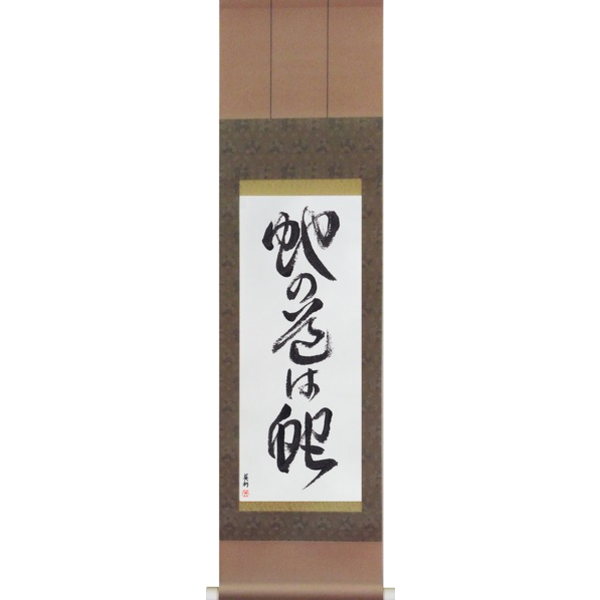
Sold as Snakes Follow the Way of Serpents · Read ja no michi wa hebi, and never hebi no michi · Oldest witness a Pure Land monk's sermon, about 1300 · Sense those of one kind know one another's ways; the expert knows his trade, and the insider knows the hidden one.
In brief
Look this proverb up in English and you get set a thief to catch a thief. That is one face of it. 蛇の道は蛇 was already a saying when a Pure Land monk quoted it in a sermon around 1300, and for most of the seven centuries since it has meant something wider: the smith knows the hammer, a master knows a master, those of one kind know one another's ways. The thief arrived with the English. Below, our philologist follows the line from that sermon through a Muromachi tale of crows and herons, the first proverb collections of the 1600s, Chikamatsu's stage, the kabuki thieves and the dictionaries, to the 1965 book that gave our design its title, Snakes Follow the Way of Serpents. 蛇の道は蛇 is available as a downloadable design and as an original hand-brushed scroll by Master Japanese Calligrapher Eri Takase. The explanation on both pages is drawn from what you will read here.
The sense, across seven centuries
Two faces, and one word for both. The Japanese dictionaries say 同類, one of the same kind, and pass no judgment. From the Kamakura monk to the Noh master to the 1910 dictionary, the proverb is about expertise: the practitioner knows practice, the smith knows the hammer, the master knows a master. From Banzan's Christians to the 1860 kabuki to Uchitō's informers, it is about the insider's knowledge of a hidden world. The device that carries both is the pun: the great serpent and the small snake are the same character, so the small knows the great by being of its kind. The Japanese word for it is 同類, one of a kind, and thieves are one kind among the others: a 1901 dictionary hears gamblers and pickpockets, a 1923 detective story has a police assistant enlist an insider with the line, and a modern Japanese proverb dictionary prints Set a thief to catch a thief as its English equivalent. What arrives with the English is the narrowing: the thief made the only kind.
The words
Five characters, one of them twice. 蛇 is read two ways: ja, the Sino-Japanese reading, the great serpent; and hebi, the native word, the ordinary snake. The proverb sets the two readings of one character against each other: the great serpent's path, the small snake knows it. 道 michi is the path through the grass, and from there the trade, the line of knowledge. The old form carries the verb, 蛇の道は蛇が知る, the snake knows; the five-character form drops it and leaves the knower standing. Both are old. The 1656 collection Sewazukushi writes じや over the first 蛇 by hand; the 1910 dictionary spells the device out, 大蛇の通りたる道筋は、小蛇よく之を察知す; the modern Daijisen warns that the first 蛇 is never read へび.
A history, from the earliest witness
About 1300. A sermon. The oldest place the line survives is the Ichigon hōdan 一言芳談, a collection of short sayings by Pure Land practitioners of the late Kamakura period. Among the words of the monk Keibutsubō 敬仏房:
後世の學問は、後世者にあひてすべき也。非後世者の學生は、人を損ずるがをそろしき也。蛇の道をば蛇がしるやうに、後世の事をば後世者がしるなり。 Study for the next life should be done with one who seeks the next life. A scholar who does not seek it is dangerous to others. As the snake knows the snake's path, so one who seeks the next life knows the affairs of the next life. — 標註一言芳談抄 卷三, in 大日本仏教全書 62 (1922), p. 400 [1]
He is not coining an image. He says just as, 蛇の道をば蛇がしるやうに, a comparison to something his hearers already know. The proverb is older than the book. His sense is the expert's: only a practitioner can teach practice.
Kenkō names this book in Tsurezuregusa section 98 (about 1330) and quotes five of its sayings, none of them this one. The book's later fame rests on him; the proverb's circulation does not. [21]
Late fifteenth century. A tale. In the Aro kassen monogatari 鴉鷺合戦物語, the Muromachi tale of the war of the crows and the herons, sometimes attributed to Ichijō Kaneyoshi, a crow of no birth asks to be heard:
下司のたとへにも、蛇の道はちひさけれども、くちなはが知るとて、面々は若し御存知候はずとも、人げなき我等知る道や候べき。性は道によりて賢し As the low man's saying has it, the serpent's path is narrow, but the snake knows it. You gentlemen may not know it, but we of no account have a path we know. Each nature is wise in its own way. — 校註日本文学大系 (1926) [2]
Two things are settled here. The line is called 下司のたとへ, the low man's proverb: its register is the street, not the monastery. And it stands beside 性は道によりて賢し, wisdom lies in one's own line, which is the sense a Muromachi reader heard in it.
1638 and 1656. The first collections. The proverb is in both of the first Japanese proverb collections. Shigeyori's Kefukigusa 毛吹草 (preface 1638, printed 1645), book two, 世話付古語, has じやのみちはへびがしる; this is the Nihon kokugo daijiten's first citation. [3] Kaikyo's Sewazukushi 世話尽 (1656), book two, has 蛇の道はへびがしる with the furigana じや written over the first character. [4]
1686. A Confucian on hidden Christians. Kumazawa Banzan, in Daigaku wakumon 大学或問, arguing that the suppression of Christianity needs no apparatus, since in China it could not spread without one:
蛇の道はへびが知るといへる諺のごとく、吉利支丹ならでは吉利支丹は知らず As the proverb has it, the snake knows the snake's path: none but a Christian knows a Christian. — 1894 typeset [5]
The hidden are known only by their own kind. This is the insider's face of the proverb, and it is not about crime.
1689. The annotator. The annotated edition of the Ichigon hōdan glosses the line 世話にいふ事也, a thing said in common speech, and sets beside it a verse of the Daichidoron 大智度論: 智人能知智、如蛇知蛇足, the wise know the wise, as a snake knows a snake's feet. That pairing has followed the proverb through every dictionary since. It is a pairing, not a source. [1]
1722. A swordsmith. Chikamatsu, Tōsen banashi ima Kokusenya 唐船噺今国性爺: 劔鍛冶の我なれば、蛇の道は蛇、疾くに聞及ぶ, being a swordsmith, the snake knows the snake's path: I heard of it long ago. A craftsman's ear for his own trade, and the five-character stage form in print. [11]
The eighteenth-century stage and the popular novel. The jester knows love affairs (竹田出雲: ハテ蛇の道は蛇、色事はたいこがしります). The smith knows the hammer (文耕堂). A brothel-keeper hires a retired courtesan to run the house (教訓私儘育, mid-century). A poetry house is expected to know poetry (優源平歌嚢, 1751: 蛇の道はへびがしる哥道の御家に有ながら). Each is a trade knowing its own. [12][12]
Two sermons and a treatise. Kantsū 関通 (1696–1770), preaching on how to help one's ancestors, first tells of serving in disguise in the enemy's camp to learn where a captured lord is held, then: 先祖をすくはんには、先づ蛇の道はへびがしる。精靈の居所は、佛が知り給ふ, to save your ancestors, first: the snake knows the snake's path; where the spirits dwell, the Buddha knows. Keibutsubō's face, four centuries on, in the same school. [8] An undated Noh treatise, the Gakuō hiketsu shō 楽謳秘闕抄, turns the proverb on the judge rather than the judged: 世俗の諺に蛇の道は蛇か知と云、名人を名人ならで難知事也, as the common proverb says, only a master can know a master. [6]
The early nineteenth century. The underworld reading in writing. Ōta Zensai's Rigen shūran 俚言集覧 writes the second snake 反鼻, the viper, and cites Sewazukushi, the Daichidoron and the Ichigon hōdan. [15] Oyamada Tomokiyo's Matsunoya hikki 松屋筆記 finds the Chan line 是精識精、是賊識賊, a spirit knows a spirit, a thief knows a thief, in the Hekiganroku 碧巌録, at the twenty-second case, Xuefeng's turtle-nosed snake. [16] In the popular fiction and the kabuki of these decades the proverb belongs to thieves and their catchers: Ikku 1804, Kyōzan 1816, Bakin 1815, and Sannin Kichisa 1860 (蛇の道は蛇こそ知れ). [NDL classical facet, OCR] Motoori Uchitō 本居内遠, head of the Motoori school, in an essay on the low occupations, explains why the police recruit their informers from among offenders:
俗諺にも蛇の道はへびがしるなどいふ如く、わざするものはさることの筋をよく知る故に As the vulgar proverb says, the snake knows the snake's path: those who do the deed know its lines well. — 賤者考, in 本居内遠全集 12 (1938), p. 178 [9]
1890–1933. The dictionaries. 俗諺辞林 (1901) hears gamblers and pickpockets. 俚諺辞典 (1906): 其道の者は其道の事を能く看破す. Fujii Otoo's 諺語大辞典 (1910), the first full scholarly dictionary of Japanese proverbs, files the proverb under 専門, expertise, beside 餅は餅屋 and 藝は道によりて賢し, and prints its sources and its European parallels: One devil knows another (Italian), Set a thief to catch a thief, Set a fox to catch a fox (Danish). [18] 大日本国語辞典 (1916): 其の道の者は、よく其の道の事を推知する. 俚諺大辞典 (1933) repeats Fujii.
Today. 精選版 日本国語大辞典: 同類の者は互いにその社会、またその方面のことに通じている, first citation Kefukigusa 1638. 大辞泉: 同類のすることは、その方面の者にはすぐわかる, with the note that the first 蛇 is not read へび. ことわざを知る辞典 (2018) illustrates it with gossip, a man who knows the bars knowing who is seeing whom, and gives 餅は餅屋 as its kin. [27] Kurosawa Kiyoshi's 1998 film takes the first half as its title, 蛇の道, read hebi no michi.
What is not a source
Since 1689 the dictionaries have set Buddhist and Chinese lines beside the proverb: the Daichidoron verse; the Hekiganroku's thief who knows a thief; the Shuihuzhuan's 惺惺惜惺惺、好漢識好漢; the Lunheng's fishermen who know where the fish hide. Each is a parallel found by a scholar after the fact. The proverb is a folk saying, attested as one from the fourteenth century, and no dictionary claims otherwise.
The proverb in English
The English equations are Meiji, and every American book below repeats one of them. The 1904 新撰英和熟語集 glosses Set a thief to catch a thief with the proverb in brackets. Inoue Jūkichi's dictionaries of 1909 and 1911 give the same. The 1911 英和俗語熟語故事大辞典 sets it under One devil knows another. Saitō Hidesaburō (1918) prefers Like knows like. Hepburn (1872) has nothing.
1965. Daniel Crump Buchanan, Japanese Proverbs and Sayings. University of Oklahoma Press, Norman. Page 235, in the chapter Suspicion. The earliest English book to carry the proverb, and the source of the house title.
Ja no michi wa hebi: "Snakes follow the way of serpents." Both "ja" and "hebi" may be translated "snake" or "serpent," for the same Chinese ideograph is used. However, "ja" has also the meaning of a large serpent or snake. The significance of the above proverb is that people of the same occupation know each other, especially if it is a dishonest one. English parallel: One devil knows another.
His note on the two readings is right, and it is the only sentence in any of these books that touches the Japanese. His parallel is the Italian proverb Fujii printed in 1910. He cites no source for this or any proverb, and the book prints no Japanese anywhere; his own sources, named in his introduction, are two Japan Travel Bureau booklets of 1940 and 1955 and a 1940 collection of 1,259 maxims. Library of Congress 65-24192, from the copyright page of the 1965 printing on our shelf; the paperback reprint is linked as ASIN 0806110821, an identifier our copy does not carry and this history reports rather than confirms. [read by eye at the page]
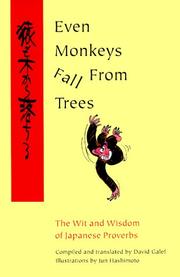
1987. David Galef, Even Monkeys Fall from Trees: The Wit and Wisdom of Japanese Proverbs. Charles E. Tuttle, Rutland and Tokyo; illustrated by Jun Hashimoto. Number 8, page 30. The couplet and its equivalent:
Ja no michi wa hebi. Snakes follow the way of serpents. [Set a thief to catch a thief.]
The rendering is Buchanan's, word for word, twenty-two years on, and the equivalent is Inoue's of 1909. The 1987 book prints a note under each proverb. Our copy, the Tuttle EPUB, carries only the couplet and Jun Hashimoto's plate for it, a snake smoking beneath a Reward poster, so the artist drew the thief reading; the note is read from the 2012 reissue, which republishes the 1987 text:
Obviously about imitation, this proverb has a sinister aspect because snakes are often viewed as sly or evil. In short, this proverb is also about corruption. A gentler form of this observation about mimicry is "Monkey see, monkey do."
That is an error. No Japanese dictionary from 1901 to 2018 reads the line as imitation; every one reads it as knowledge of one's own kind. By his own preface the equivalents were a newspaper game, chosen for the sound of folklore. The 2015 Tuttle edition is ISBN 978-0-8048-3226-7, ASIN 0804832269. [couplet and plate read in the 1987 EPUB; the note as text in the 2012 reissue, s29]
1996. Jon P. Zona, Even Withered Trees Give Prosperity to the Mountain: And Other Proverbs of Japan. Simon & Schuster, New York. Page 108. One line, Snakes follow the ways of snakes, with no Japanese, no equivalent and no source; the introduction names none. A witness to circulation only: it shows the rendering had become the English form of the proverb by the 1990s. ISBN 0-684-82401-9. [read at the page s24]
2004. Edward E. Trimnell, Tigers, Devils, and Fools: A Guide to Japanese Proverbs. Beechmont Crest Publishing. Page 64. His literal is The path of a snake is a serpent, and his explanation is the modern insider's face:
The same types of people tend to share the same kinds of thoughts … conduct that seems perfectly reasonable to members of the group can seem baffling to non-members.
He gives kanji and kana for every entry, which the other books do not, and cites nothing; his romanization of the headword is in the notes. ISBN 0-9748330-2-9, ASIN 0974833029, https://www.amazon.com/dp/0974833029. [read at the page s24]
2012. David Galef, Japanese Proverbs: Wit and Wisdom: 200 Classic Japanese Sayings. Tuttle. Number 8. The two hundred-proverb books of 1987 and 2000 reissued in one volume, the Japanese headword, the romaji, the couplet and the note now all as text. The note quoted above is read here; see the notes on what our 1987 copy does and does not show. ISBN 978-1-4629-1020-5 (ebook). [read as text s29]
Today. JMdict gives the wolf knows what the ill beast thinks, it takes one to know one, it takes a thief to catch a thief; the house page's own preference, it takes a thief to know a thief, sits with the last. The house title, Snakes Follow the Way of Serpents, is Buchanan's, and it does the one thing a rendering of this line must do: it keeps two English words for one animal.
A reading
The proverb is about kind, not crime. Set a thief to catch a thief is what it means when the kind is thieves; 餅は餅屋, for rice cakes, the rice-cake shop, is what it means when the kind is bakers. A scroll that says only the first has sold the reader half the proverb.
Notes
Asides whose reader is a philologist. Each is carried by the account.
- Trimnell's headword. The 2004 handbook prints the proverb as JAKU NO MICHI WA HEBI, with the kana じゃくのみちはへび. 蛇 has no reading jaku; its readings are ja and hebi, and the proverb turns on the two. The entry's explanation is sound; its romanization is not, and a reader who learns the line from it will say it wrong.
- The Uchitō volume's catalogue title. The NDL catalogue titles pid 1117468 本居宣長全集. It is volume 12 of 本居内遠全集, Uchitō's, not Norinaga's; the essay 賤者考 is his.
- Galef's note, 1987 and 2012. Our 1987 copy, the Tuttle EPUB, carries only the couplet and Jun Hashimoto's plate for number 8. The note is read as text in the 2012 reissue, which republishes the 1987 and 2000 books. Whether the 2012 note is the 1987 note unchanged is not verified in our copy. An earlier draft of this history said unchanged at the 2012 entry while saying not verified at the 1987 one; the 2012 sentence was the error and is superseded.
How this was read
By eye at the page: the 1656 leaf; the 1922 typeset of the 1689 Ichigon hōdan; the 1926 typeset of the crow's tale; Fujii 1910 and 1929; the Rigen shūran; Uchitō's essay; Buchanan and Galef. By OCR of a typeset or a manuscript: Banzan, Chikamatsu, the stage plays, the two sermons, the Noh treatise, the Matsunoya hikki, the Meiji dictionaries, the bilingual shelf. Not opened: Kefukigusa at its own leaf; the 1689 print of the Ichigon hōdan; the Edo prints of the crow's tale; the Noh treatise at the leaf; 『故事俗信ことわざ大辞典』 and 『岩波ことわざ辞典』, the two modern Japanese dictionaries that date proverbs, neither on the desk. The full apparatus, with every address, is in the account.
References
- 一言芳談, a saying of 敬仏房 (巻三 in the 1689 標註 edition) (Kamakura, late 13th–early 14th c. (日国: 鎌倉後期)) — 大日本仏教全書 1922 pid 952742 scan 205, by eye ↩
- 鴉鷺合戦物語 (御伽草子; attributed to 一条兼良) (Muromachi, after 応仁 (大辞泉)) — 日本文学大系 1926 pid 1018100 scan 427, by eye ↩
- 毛吹草 巻二 世話付古語 (松江重頼) (1638 序, 1645 刊) — the 日国's 初出; 藤井 1929 pid 1452761 scan 142, by eye ↩
- 世話尽 巻二 曳言之話 (皆虚) (1656) — pid 2554768 koma 30, by eye; 俚言集覧's source ↩
- 大学或問 (熊沢蕃山) (1686–87) — 1894 typeset pid 799457 scan 35, OCR ↩
- 楽謳秘闕抄 (村上美雅; a Noh treatise, manuscript) (Edo, undated (the NDL record carries no date)) — pid 2539625, the lab's OCR, s29; not opened at the leaf ↩
- 麗斎叢書 22 (manuscript miscellany, on the 目明し) (Edo, undated) — pid 2537967, the lab's OCR, s29; not opened at the leaf
- 関通 (雲介子), a sermon in his collected works (18th c. (関通 1696–1770, recall); 1937 typeset) — 雲介子関通全集 第4巻 pid 1230141 koma 135, OCR, s29 ↩
- 本居内遠, 賤者考 (before 1855 (内遠's death, recall); 1938 typeset) — 本居内遠全集 第12 pid 1117468 koma 95 = printed p. 178, by eye s29 (the running head ○賤者考; the volume's 例言 names 内遠 as author) — ⚠ the NDL catalogue titles the volume 本居宣長全集, and it is not Norinaga ↩
- 的門, 西要鈔辨釋 卷四, quoting 一言芳談 (19th c. (recall); 1921 typeset) — 的門上人全集 第4輯 pid 953013 koma 96, OCR, s29
- 唐船噺今国性爺 (近松) (1722 (recall)) — 1896 typeset pid 1883014 scan 95, OCR; the 1916 dictionary's citation ↩
- 優源平歌嚢 · 教訓私儘育 (八文字屋) (1751 · mid-18th c.) — pids 2534229 koma 10, 2554857 koma 8, OCR ↩
- 竹田出雲 and 文耕堂 plays (18th c.) — 竹田出雲浄瑠璃集 1898 pid 1882729 scan 521 · 文耕堂浄瑠璃集 1900 pid 1882691 scan 334, OCR
- 化物太平記 (一九) · 魁曽我筆之命毛 · 道雪柳腰帯 (京山) · 皿皿郷談 (馬琴) · 三人吉三廓初買 (1804 · 1813 · 1816 · 1815 · 1860) — 化物太平記 pid 8929731 · 魁曽我筆之命毛 pid 9893168 koma 20 · 道雪柳腰帯 pids 9893075, 10301782 · 皿皿郷談 in the 1896 typeset pid 879500 scan 41 · 三人吉三廓初買 pid 9893725; the lab's classical facet, OCR
- 俚言集覧 (太田全斎) (early 19th c.; 1900 typeset) — pid 991570 scan 182, by eye ↩
- 松屋筆記 (小山田与清) 卷78, 83 (1818–45) — 1908 typeset pid 898741 scans 131, 181, OCR ↩
- The Meiji proverb dictionaries 1890–1906 (1890–1906) — 和漢泰西俚諺集 1890 pid 758478 scan 97 · 金諺一万集 1891 pid 755160 scan 161 · 国民の品位 1891 pid 755479 scan 93 · 皇国俚諺叢 1901 pid 767884 scans 278, 314 · 俗諺辞林 1901 pid 863228 scan 198 · 俚諺辞典 1906 pid 900343 scan 138 · 俚諺類集 1906 pid 903906 scan 39, OCR
- 諺語大辞典 (藤井) (1910) — pid 862766 scan 275, by eye ↩
- 大日本国語辞典 · 俚諺大辞典 (1916 · 1933) — 大日本国語辞典 第2巻 pid 954646 scans 496, 171 · 俚諺大辞典 pid 1453041 scan 243, OCR
- 半七捕物帳「鷹のゆくへ」(岡本綺堂) (1923) — 日国 usage example, kotobank 524366, read s30 (the omission was caught by Grok 4.6 in Tim's session 2026-09-04, from the same kotobank entry this account had already opened; confirmed own-hand at the page)
- 徒然草 第九十八段 (兼好), naming the 一言芳談 and quoting five of its sayings, not this one (c. 1330) — 校註日本文學大系 text at https://ja.wikisource.org/wiki/徒然草_(校註日本文學大系) § 98, read s29, the address resolved and the section re-read s47 ↩
- 新撰英和熟語集 (イーストレーキ・越山) (1904) — pid 870143 scan 85, OCR
- 井上十吉, 和英辞典 · 新訳和英辞典 (1909 · 1911) — 1909 pid 1869465 scan 302 · 1911 pid 870153 scan 303, OCR
- 英和俗語熟語故事大辞典 (1911) — pid 902975 scans 813, 818, 843, OCR
- 斎藤秀三郎, 熟語本位英和中辞典 (1918) — pid 1681530 scans 367, 600, OCR
- Hepburn, 和英語林集成 2nd ed. (1872) — pid 993689, OCR sweep, nothing
- 精選版 日本国語大辞典 · 大辞泉 · ことわざを知る辞典 (2018) (2006 · current · 2018) — https://kotobank.jp/word/蛇の道は蛇-524366, all three entries whole, s18 ↩
- JMdict (Weblio 英和 · gokanji) · Wikipedia 蛇の道 (current) — https://ejje.weblio.jp/content/蛇の道は蛇 · https://new.gokanji.com/word/蛇の道は蛇 · https://ja.wikipedia.org/wiki/蛇の道
- Daniel Crump Buchanan, *Japanese Proverbs and Sayings*, University of Oklahoma Press, Norman, p. 235, ch. Suspicion (1965) — LCCN 65-24192 (copyright page of the shelf copy); the paperback reprint's ISBN-10 0-8061-1082-1 is the ASIN the history links, 0806110821 — REPORTED, carried since s30 with its source unrecorded, checksum valid, not verifiable from this box s47 (amazon.com/dp answers curl 200 without product markup); by eye at the page (shelf PDF)
- David Galef, *Even Monkeys Fall from Trees*, Charles E. Tuttle, no. 8, p. 30, plate by Jun Hashimoto (1987; the shelf copy is the 2015 Tuttle epub) — ISBN-10 0-8048-3226-9 · ISBN-13 978-0-8048-3226-7 · ebook 978-1-4629-0318-4 (the epub's own front matter, s47) · ASIN 0804832269 = the ISBN-10; by eye at the entry and the plate
- Jon P. Zona, *Even Withered Trees Give Prosperity to the Mountain*, Simon & Schuster, New York, p. 108 (1996) — ISBN 0-684-82401-9 · LCCN 96-25789 (copyright page of the shelf PDF, s47) · ASIN 0684824019 = the ISBN-10; by eye at the page
- Edward E. Trimnell, *Tigers, Devils, and Fools*, Beechmont Crest, p. 64 (2004) — ISBN 0-9748330-2-9 (copyright page, s47) · ASIN 0974833029 · https://www.amazon.com/dp/0974833029; by eye at the page
- David Galef, *Japanese Proverbs: Wit and Wisdom*, Tuttle, no. 8 (2012) — ISBN 978-1-4629-1020-5 (ebook; the epub's front matter, s47); no print ISBN or ASIN collected; read as text
- The catalogue and both live pages (2026) — cultural_works.csv:365
Books Cited
The books this article cites. Buying one supports its author.