
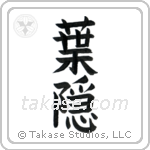
葉隠 hagakure Shadow of Leaves
葉隠 (hagakure), hidden among the leaves, is an old poetic word and the title of a samurai book no copy read here explains.
Abstract
葉隠, hagakure, is an old word for being hidden among leaves, or the shade of leaves, in a Japanese imperial anthology of the 1120s, and the title of Hagakure 葉隠, the sayings of the Saga retainer Yamamoto Tsunetomo 山本常朝 taken down by Tashiro Tsuramoto 田代陣基 from 1710 and finished, by the date some copies carry, in 1716. The book went from copy to copy under several titles, 葉隠, 葉隠聞書, 葉隠集, 葉がくれ and others, until Nakamura Ikuichi's edition of 1906, and no copy read here says why it was so named. The earliest known comment on the title is a question passed on: a note in one line of copies says that what was meant by the name should be asked of someone who knows. Every explanation since, a poem by Saigyō 西行, the verses of the first meeting, a persimmon, service done unseen, was put forward in print from 1916 on, and each is a later reading of a title its own copies leave unexplained.
Overview
The sense. A noun, standard and literary. The 日本国語大辞典 gives two senses: 木の葉や草木のかげになって見えなくなること。また、葉かげ, being hidden from sight in the shade of leaves or plants; also, the shade of leaves, and, second, the short title of 葉隠聞書, the book [1]. The デジタル大辞泉 enters 葉隠れ as 草木の葉のかげになること, being in the shade of the leaves of plants, and the book separately [1][2]. The English hiding in the leaves, which is how JMdict glosses 葉隠れ [3], or hidden by leaves, covers the first sense's main gloss; the English shade or shadow of leaves covers its second gloss, 葉かげ, the word Japanese uses for the shade of leaves on its own [1]. Neither English phrase carries the book; in Japanese the encyclopedias enter the bare word under the book's title, and the 日本国語大辞典 gives the plain sense first and the book second [1].
The words. 葉 ha is leaf; 隠 here is the verb kakureru, to be hidden, intransitive, so that the word names something that cannot be seen because leaves stand in front of it, not an act of hiding something away [1][2]. The copies of the book write the title in several forms: in the national catalogue of premodern books, 葉隠, 葉隠聞書 (the notes of Hagakure), 葉隠集, 葉がくれ, はがくれ and 葉隠抜書, and one copy of 1824 writes it phonetically in kanji, 葉賀具禮 [4].
The text in English. The earliest known English rendering of the title, in a commemorative book of 1917, in the Internet Archive full text searched here, is Hagakureshu (Flowers behind Young Leaves), which renders an image, flowers behind leaves, rather than the word [5]. William Scott Wilson in 1979 gives a word that could mean either "hidden by the leaves" or "hidden leaves" [6]; Alexander Bennett in 2014 gives Hagakure-kikigaki (literally "Dictations given hidden by leaves") [7]. JMdict today glosses the word 葉隠れ hiding in the leaves, and enters the title 葉隠 separately as a work [3].
The historical record
1124–1125. The Kin'yōshū 金葉集, an imperial anthology, in its second recension, an anonymous poem. The 日本国語大辞典's first example of the word [1]:
葉がくれにつはると見えしほどもなくこはうみ梅になりにけるかな
No sooner did they seem to bud among the leaves than they have ripened into plums. The word is the plain one: fruit, hidden from sight among leaves.
The twelfth century. Saigyō, the Sankashū 山家集, a poem on the topic 寄殘花戀, love, by way of the blossoms left behind, read in Sasaki Nobutsuna's 佐佐木信綱 edition of 1903. In a run of poems on love set against a natural image [8]:
葉がくれに散どゞまれる花のみぞ忍びし人に逢ふ心地する
Only the blossom that has stayed on, hidden among the leaves, after the rest have fallen gives me the feeling of meeting the one I loved in secret. The word is the poem's first: a late flower, out of sight among leaves, likened to a secret love. Nakamura in 1916 and Kurihara in 1933, below, name this poem first among the sources proposed for the book's title, and Bennett judges it the most plausible [7].
1710 to 1716. Hagakure, the sayings of Yamamoto Tsunetomo taken down by Tashiro Tsuramoto, in eleven books; no autograph. The national catalogue of premodern books dates the work 享保元 (1716), lists its copies, and gives its authors as 山本常朝 述 and 田代陣基 記, spoken by and recorded by [4]. The 世界大百科事典 gives the first two books as Tsunetomo's talk and the rest as records of the domain's lords and samurai, and the 日本大百科全書 says Tashiro added such records to the talk [1]. A copy in the 小城鍋島文庫 (Ogi Nabeshima collection), outer title 葉がくれ, inner title 葉隱聞書, opens with a leaf that holds, on one side, an order that the eleven books be burned and, on the other, the date of the first meeting, 寶永七年三月五日 初而参會, the fifth day of the third month of Hōei 7 (1710), the first meeting, then two unsigned verses about flowers, 浮世から何里あらうか山桜 and 白雲や只今花に尋合, and then the talk itself [9]. A copy in the 佐賀県立図書館 (Saga Prefectural Library), 葉隠集 on its first inner leaf, signs the two verses 古丸 and 期 [10], the 号 that later editors give to Tsunetomo and to Tsuramoto [11][12]. The same copy ends the last book with the date 享保元丙申九月十日 大尾, the end, tenth day of the ninth month of Kyōhō 1 (1716), and its colophon reads 文化元年甲子十二月書終之 / 小山信就所持之, copying finished in the twelfth month of Bunka 1 (1804, a month that falls early in 1805 by the Western calendar), and the name of its owner, 小山信就, whom the library's note makes a senior officer of the domain [10]. It is the earliest dated copy cited here.
An undated copy of the line the 佐賀県立図書館 catalogues as 孝白本系, with a note signed by Onda Ikkin 恩田一均. A five-volume copy, which ends 蒲 孝白 謄写之, copied by 孝白, whom Bennett names Kamohara Kōhaku and places five years Tashiro's junior [7], carries after the text a three-line note signed 神巖山人 恩田一均. Its first line opens 此書士たる者讀ずんばあるべからざる事に候, this is a book that no samurai should leave unread, and its third line says that what the name meant should be asked of someone who knows [13]; one character after 葉隠 and the line's closing words are not read here:
葉隠…と名付し事いかなる心か知る人に尋…
What was meant by giving it the name 葉隠 … of someone who knows, ask … Onda, a Saga writer of his day by Kurihara's account [14], does not know why the book bears its name, and passes the question on. This is the earliest known comment on the title. Kurihara Arano 栗原荒野, who quotes the note in other words, takes the copy that carries it to have been made after Tashiro's death in 1748, and says that even Tashiro's contemporaries did not know the meaning [14]; the copy read here carries no date.
1906. Hagakure 葉隠, edited by Nakamura Ikuichi 中村郁一, the edition Bennett gives as the first time the book was published in print [7], with a preface by Nitobe Inazō 新渡戸稲造. Nitobe's preface is signed 臺灣南部旅行中 新渡戸稲造, 明治三十九年二月十八日, written while travelling in southern Taiwan, 18 February 1906 [15]. The editor's own preface opens on the image of the 山家集 poem without naming it [15]:
あゝ、葉隱に散り殘れる花、固より晴の場に出だすべきものにあらざらめど、さりとて、又、終ひに、葉隱にして朽果てさせんも惜しからずや。
Ah, a flower left on among the leaves when the rest have fallen: not, to be sure, a thing to bring out into the open; and yet would it not be a pity to let it wither away there, hidden among the leaves, to the end? He takes the title as a figure for the book itself, a thing kept out of sight.
1916. Hagakure: Nabeshima rongo 葉隠 鍋島論語, edited by Nakamura, its introduction. The earliest printed account of the title found here, under the heading 葉隱の書名について, on the title 葉隠 [11]:
本書を葉隱と命名したるは、蓋、山家集にある はがくれに、散りとどまれる、花のみぞ、忍ひし人にあふ心地する。此の和歌の意を採りて、はがくれと命名せしか、ただしは葉隱卷頭の句吟、憂世から、何里あらうか山櫻 古丸(山本常朝)/白雲や、只今花にたづねあひ 期醉(田代陳基) の意を採りて命名せしか、其の孰れを採りたりとするも、其の意に於ては即ち一に歸すと云はざるべからず
Whether the book was named 葉隠 after the sense of the poem in the 山家集 … or after the sense of the verses at the head of the book … whichever was taken, it must be said that in meaning they come to one. Nakamura offers two sources and declines to choose between them, because both are about flowers found or left behind.
1933. Kurihara Arano, Hagakure no shinzui 葉隠の神髄, a pamphlet, read only in the National Diet Library's full-text index, whose windows are given here in paraphrase. Under the heading 葉隱の名義, the meaning of the title, Kurihara sets out three explanations that others give, the 山家集 poem, the verses of the first meeting, and a persimmon called はがくし that grew near the hermitage, its fruit hidden by its leaves, and rejects all three for a reading of his own: talk heard in the leaves' shade, a book of hidden virtue, and a book its own head orders burned, and he finds it fitting that a copy is titled 葉隠聞書 [12]. In the National Diet Library's full-text index this is the earliest known printing of the persimmon as the title's source, and the books of 1935 to 1944 that name it all come after it. The persimmon itself is real: an agricultural report of 1912 lists a ハガクシ柿 among the kinds grown in Kyushu, as the index gives the page [16].
1934. Hagakure shō 葉隠抄, selections with an afterword by Tsunoda Kanji 角田貫次. In the afterword 蛇足 Tsunoda writes [17]:
葉隱と名付けた心ひとつにもゆかしさは流石にこもる。葉隱研究家によつてはむしろ否定されてゐるその淵源——
and quotes the 山家集 poem, then: を私は信じ度い, the source which some scholars of 葉隠 rather deny — I want to believe it [17]. By 1934 the poem was a disputed source, and Tsunoda holds to it. The same afterword is reprinted in a selection of 1937, with ゐる spelled 居る [17]. His selection also prints the passage Furukawa Tetsushi raised against the poem, as Bennett reports [7], in which Tsunetomo calls 兼好 Kenkō and 西行 Saigyō cowards: 徒然草選集抄などを樂み候兼好西行などは腰ぬけスクタレ者, Kenkō and Saigyō, who took their pleasure in the Tsurezuregusa and the Senjūshō, were spineless cowards [17].
1940. Kurihara Arano, Kōchū Hagakure 校註葉隠, the annotated edition, its introduction. Under 名義 Kurihara writes that 葉隠 is the outer title of the copies, that inside the books they are headed 聞書第一, 聞書第二 and so on [14]:
書中各卷共、多くは單に聞書第一、聞書第二……と記され、葉隱の文字はない。田代陣基の命名であらうが、はしがき樣のものもないから、その由來は判らない。
Within the book, the volumes are for the most part headed simply the first notes, the second notes …, and the characters 葉隠 do not appear. The name is probably Tashiro's, but as there is nothing like a preface, its origin is not known. He quotes Onda's note, in other words than the copy read here, as 「はがくれと名付け候事いかなる心か知れる人に尋ぬべし。」, gives his own reading again, the talk under the trees and the service done unseen, quoting the book's 主君へは蔭の奉公が眞なり, for one's lord, service in the shade is the true service, with Tsunetomo's order that the notes be burned, 「後では火に燒いて仕舞へ。」, and dismisses the rest [14]:
これ等は興味的聯想としての想像若くは附會の說たるに過ぎないと思ふ。
I think these are no more than fancies drawn from pleasing associations, or forced explanations. The poem, the verses and the persimmon are, for Kurihara, readers' associations, and the meaning is the book's own mind.
Today. The encyclopedias. The 世界大百科事典, in an article by Sagara Tōru 相良亨, writes 書名は,主君への陰の奉公の強調を示すという説が強い, the view is strongly held that the title shows the book's stress on service to one's lord done in the shade, and calls the story of a ban on the book doubtful; the 日本大百科全書 writes that it was treated in the domain as a forbidden book [1]. The view the 世界大百科事典 calls strongly held is the reading Kurihara gave in 1940 [14].
What is not a source. The 山家集 poem is a pairing, evoked beside the title in 1906 and named from 1916 on, and no copy cited here names it; the verses of the first meeting stand at the head of the book itself, but no copy says the title comes from them; the persimmon is reported in 1933 by a writer who rejects it [12]. Tsunetomo's words against Saigyō [17] do not settle the question either way: they show what he thought of the poet, not what Tashiro had in mind when he named the notes.
The word in English
1917. Nishizawa Iwata, Japan in the Taisho Era, p. 690. In the entry on the Nabeshima family: the Nabeshima family and the clansmen observed another doctrine, called the Hagakureshu (Flowers behind Young Leaves) [5]. The earliest known English rendering of the title in the Internet Archive full text searched here; it gives the 葉隠集 form of the copies, and renders an image, flowers behind leaves, rather than the word.
1979. William Scott Wilson, Hagakure: The Book of the Samurai, Kodansha, read in the new edition of 2002, p. 15. given the title of Hagakure, a word that could mean either "hidden by the leaves" or "hidden leaves" [6]. The first reading is the dictionary's; the second, hidden leaves, takes 隠 as a modifier of the leaves, which the dictionaries do not give. Wilson names no theory of the title.
2014. Alexander Bennett, Hagakure: The Secret Wisdom of the Samurai, Tuttle, pp. 11, 24–25. Hagakure-kikigaki (literally "Dictations given hidden by leaves"); four theories, the poem, the secluded place, service from the shadows, and that the fifth lord of Saga, Muneshige, conferred the title himself; he reports that Furukawa Tetsushi discounted the poem because of the passage against Saigyō, and still judges the poem the most conceivable derivation, for its secret love [7]. Bennett omits the verses of the first meeting and the persimmon, and gives no source for the story of Muneshige, which the Japanese witnesses read here do not carry. He calls the 1906 edition the first time the book was published in print and became known outside Saga [7].
Today. JMdict glosses 葉隠れ hiding in the leaves [3]. The design is sold as Shadow of Leaves. Word for word 葉隠 is hidden among the leaves; shadow of leaves renders 葉かげ, the second gloss of the 日本国語大辞典's first sense [1], and the shade in which, on Kurihara's reading, the notes were taken down [14]. A rendering that keeps both the hiding and the leaves keeps what the Japanese word holds.
A reading
The title has no settled origin, and the earliest known comment on it says so: a reader of one line of copies, who thought every samurai should read the book, wrote that what the name meant should be asked of someone who knows. Every explanation since was written by an editor, and each fits the editor's book: Nakamura in 1906, presenting a hidden text to the nation, read the poem's late flower as the book itself; Kurihara, a Saga scholar annotating the whole text in 1940, read the book's own teaching of service unseen into its name. My reading is that the word was chosen for what it plainly says, a thing out of sight behind leaves, and that the plain sense covers what the copies themselves show: notes taken down in a hermitage, opened by two verses about flowers met among the hills, and headed by an order that they be burned. The 山家集 poem was available to anyone in Saga who knew poetry, and its secret love sits close to what the book calls shinobu-koi; but nothing in the copies points to it, and the case for it rests on resemblance. I read 葉隠 as Tashiro's own name for private notes meant to stay hidden, and the poem and the service unseen as two true associations a reader may bring to it, not as its source.
Notes
The 1906 edition prints the recorder's name as 陳基, and the 日本大百科全書 reads it のぶもと [15][1]; Kurihara in 1933 calls 陳基 an error for 陣基 [12], and the national catalogue reads 陣基 Tsuramoto [4].
The characters 葉隠 stand in a haikai poet's studio name, 葉隠堂只木, compiler of the Hamazuto shū はまつと集 of 1705, five years before the talks began; the national catalogue reads the name Yōindō, not hagakure [18].
Sources not seen
葉隠, five printed volumes, catalogued as 刊, 明治4年6月 (1871), published by 山本傳左衛門, in the 武雄鍋島家資料 of the 武雄市歴史資料館 (Takeo City History Museum), national catalogue of premodern books bid 2889103, https://kokusho.nijl.ac.jp/biblio/2889103. Known from its catalogue record only, and not imaged. If it is a printing of the text, it precedes the edition of 1906 that is called the first printing.
A reader with access to any of these is invited to write to Takase Studios at Tim@Takase.com.
References
- 「葉隠」, 精選版日本国語大辞典, デジタル大辞泉, 改訂新版 世界大百科事典 (相良亨), 日本大百科全書 (渡邉一郎), at kotobank. https://kotobank.jp/word/%E8%91%89%E9%9A%A0-113466
- 「葉隠れ」, デジタル大辞泉, at kotobank. https://kotobank.jp/word/%E8%91%89%E9%9A%A0%E3%82%8C-599771
- JMdict (EDRDG), 「葉隠れ」 and 「葉隠」, at gokanji. https://new.gokanji.com/word/葉隠れ
- 「葉隠」, 国書データベース (National Institute of Japanese Literature), work 410468, with its list of copies. https://kokusho.nijl.ac.jp/work/410468
- Iwata Nishizawa, Japan in the Taisho Era: In Commemoration of the Enthronement, Tokyo, 1917, p. 690, at the Internet Archive. https://archive.org/details/japanintaishoera00nishrich/page/690
- Yamamoto Tsunetomo, Hagakure: The Book of the Samurai, translated by William Scott Wilson, Kodansha International, 1979; new hard-cover edition 2002, p. 15.
- Yamamoto Tsunetomo, Hagakure: The Secret Wisdom of the Samurai, translated by Alexander Bennett, Tuttle, 2014, pp. 11, 14, 24–25.
- 西行 著, 佐佐木信綱 校, 山家集, 覆刻堂, 1903, p. 148, scan 78. https://dl.ndl.go.jp/pid/873399/1/78
- 葉がくれ (内題 葉隱聞書), 写, 佐賀大学附属図書館 小城鍋島文庫, 国書データベース bid 300103014, frame 5. https://doi.org/10.20730/300103014
- 葉隠(小山本), 写, 佐賀県立図書館 図063//7, vol. 1, PDF p. 4; vol. 5, PDF pp. 88–89, at the 佐賀県立図書館データベース. https://www.sagalibdb.jp/hagakure/pdf/7/pdf01 · https://www.sagalibdb.jp/hagakure/pdf/7/pdf05
- 中村郁一 編, 葉隠 鍋島論語, 1916, 解題 pp. 1–3, scans 19–20. https://dl.ndl.go.jp/pid/954016/1/19
- 栗原荒野, 葉隠の神髄, 佐賀, 1933, scans 3–4 (open in Japan only). https://dl.ndl.go.jp/pid/1098962/1/4
- 葉隠(陣内本), 写, 孝白本系, 佐賀県立図書館, vol. 5, PDF p. 95, at the 佐賀県立図書館データベース. https://www.sagalibdb.jp/hagakure/pdf/12/pdf05
- 栗原荒野 校註, 校註葉隠, 内外書房, 1940, 解説 pp. 2–4, at the 佐賀県立図書館データベース. https://www.sagalibdb.jp/hagakure/kochu/pdf/5
- 山本常朝 述, 田代陳基 記, 中村郁一 編, 葉隠, 丁酉社, 1906, scan 7. https://dl.ndl.go.jp/pid/758897/1/7
- 農商務省農事試驗場 編, 農事試驗場特別報告 28, 1912, scan 21 (the index's text; open in Japan only). https://dl.ndl.go.jp/pid/1552136/1/21
- 山本常朝 述, 田代陣基 編, 角田貫次 私抄, 葉隠抄, 国維会東京青年部, 1934, p. 87, scan 50, and the afterword 蛇足, p. 111, scan 62; the same afterword in 山形県学務部同行会 編, 葉隠抄, 1937, scan 45. https://dl.ndl.go.jp/pid/1104773/1/50 · https://dl.ndl.go.jp/pid/1104773/1/62 · https://dl.ndl.go.jp/pid/1120657/1/45
- 「はまつと集」, 国書データベース, work 1614922. https://kokusho.nijl.ac.jp/work/1614922