
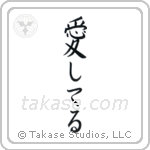
愛してる aishiteru I Love You
愛してる (aishiteru), the spoken form of 愛している, I love you, carries two famous stories, about Futabatei Shimei 二葉亭四迷 and Natsume Sōseki 夏目漱石. This study follows the word from 1888, and the stories to their earliest known tellings: the Diet Library's index (1956, 1978), a published ledger (1977).
Abstract
愛してる is 愛している, to be loving, with the い of いる dropped, as Japanese drops it in speech; it carries the verb the dictionaries give for the English love, and leaves the I and the you out of the words. The earliest witness of the contracted form in the National Diet Library's full-text index stands in an 1888 novel, a man asking another whether a young lady loves him, and through 1906 every witness read at its page is a voice in dialogue, one of them an old earl in an 1897 translation where Burnett's English says I am fond of him. The claim that I love you cannot be put into Japanese is Kuriyagawa Hakuson's 厨川白村, in 1922; the stories that Futabatei Shimei 二葉亭四迷 rendered it as 死んでもいいわ and Natsume Sōseki 夏目漱石 as a remark about the moon are first told in print, in 1956 and 1978 at the earliest known in the Diet Library's index, and a published ledger of the tellings reports a Sōseki telling of 1977; Toki tells the Futabatei story from memory and names the wrong story, no telling names a source for the Sōseki classroom, and the line in Futabatei's translation renders a Russian word that means Yours. The phrase is ordinary Japanese with a short written history, and the legends grew around it after the war.
Overview
The sense. The デジタル大辞泉 enters 愛してる as a phrase, 「愛している」の音変化, the sound change of 愛している [1], and the 日本国語大辞典 enters the ending てる as ている, 話しことばに用いられる, used in speech, with its first example about 1742 [2]. 愛する, the verb under it, has among the 大辞泉's senses かわいがり、いつくしむ, to cherish, and, second, (性愛の対象として)特定の相手を慕う。恋する, to long for a particular person, as the object of love; to be in love, and the 日本国語大辞典's 語誌 says that the verb was taken up in mid-Meiji as the translation of the English love and the German lieben, and that, joined to the Western idea of love, it came to mean affection between equals, where before it had run from the higher to the lower, the strong to the weak [3]. JMdict, as gokanji serves it, gives 愛する the one gloss to love [4]. So 愛してる says love as a continuing state, loving, which English says with the plain present I love; the person who loves and the person loved are not in the words, and a speaker adds them when they are wanted.
The words. 愛 ai is not a native Japanese word but a Chinese one, as Satake Akihiro 佐竹昭広 writes in the 世界大百科事典: in Buddhist use it was a craving, one of the passions, and the Kirishitan missionaries at the end of the Muromachi period avoided it for the Christian love and wrote 大切 and 御大切 instead; only from the first years of Meiji did 愛 carry the Christian sense [5]. The 日本国語大辞典 gives, for its sense as love between a man and a woman, 恋愛。ラブ, Mori Ōgai's Maihime 舞姫 of 1890 as its first example [5]. 愛する is the verb on it, ai suru; して is its continuative; てる is ている in speech [2]. The design writes 愛 in kanji and the rest in kana.
The text in English. The nineteenth-century English–Japanese dictionaries, and one of 1904, give love many verbs and put 愛する among them. Hepburn's of 1867 gives, under Love, v., Aiszru first of nine (kawaigaru, chōai szru, horeru, rembo szru and the rest), and a separate verb for love of God or parents, wiyamau [6]; his fourth edition of 1888 keeps the order, Ai suru first [7]. Satow and Ishibashi's dictionary of the spoken language, in its third edition of 1904, puts kawaigaru first and ai s second [8]. None of the three gives a sentence for I love you. JMdict today, as gokanji serves it, gives to love for 愛する and returns no entry for 愛してる [4].
The historical record
1888. Shūbotan 秋暮嘆, a courtroom novel by Okano Seki 岡野碩. The earliest witness of the contracted form in the National Diet Library's full-text index, in dialogue: one man, 高木, asks another, 瀬良田, about a young lady [9]:
時に輝子孃は全く君を愛してるか
By the way, does Miss Teruko really love you? 瀬良田 answers in the written form, よしや僕を愛せざるにもせよ, even if she does not love me. The question is spoken, the answer formal: the two registers stand side by side on one page.
1891. Shashinkyō 写真鏡, a novel by Kikutei Shujin 麹亭主人. A student's talk, with the English word written over the Japanese: 何んでも愛してる貴女があるからだといふよ, they say it is because he has some lady he loves, where the ruby reads 愛 as らぶ and 貴女 as れでい, rabu shiteru redī [10]. The same sentence is in the index's text of the novel's serial printing in the magazine 都の花 of February 1890 [10].
1893. Jūmankabu 十万株, a detective novel translated by Shiranui 不知火. A lover's line, 私が貴女を愛してるか, whether I love you, with the full form 愛して居 following it in the same speech [11]. Here the speaker says both I and you.
1895. Tama mayou tsuki no yaiba 魂迷月中刃, a play by Iwano Hōmei 岩野泡鳴 under a pen name. 浪子 to her elder sister: たとへ、わたしャ桂さん愛して居ても、それはね、あなたを愛してるのとちッともちがやァしませんわ、兄弟のやうにしてェるのですから, even if I do love Katsura, it is no different from loving you, for we are like brother and sister [12]. The play was printed in the magazine 女学雑誌 in 1894 [12].
1897. Shōkōshi 小公子, Wakamatsu Shizuko's 若松賤子 translation of Burnett's Little Lord Fauntleroy. The old Earl, pacing the room, to the boy's mother [13]:
さうだ。あれはおれを好きな樣だし、おれもあれを愛してるのだ。
Burnett's English is "Yes, he is fond of me," he said, "and I am fond of him" [14]. The earliest of the index's witnesses whose English original has been read, it renders I am fond of him, and he is fond of me is 好きな樣だ. It is a grandfather's affection, not a lover's.
1902. Hamako 浜子, a novel by Kusamura Hokusei 草村北星. A young man to his mother, of a friend: 自分の愛してる妻がこんな不仕だらを致しましたなら, if the wife one loves had behaved so badly [15]. The form stands before a noun, one's beloved wife.
1906. Ie to onna 家と女, a novel by Iwaya Sazanami 巌谷小波. A woman to another, about Kaoru: 眞に薰さんを愛してるなら、結婚の何のと云ふ事は、まづ別の問題として, if you truly love Kaoru, then leaving marriage and all that aside as a separate question [16]. In the witnesses read from 1888 to 1906, 愛してる is always a voice in dialogue: a man's question, a student's slang with an English ruby, a lover, a sister, a grandfather, a son, a woman of another's love for Kaoru.
1922. Kuriyagawa Hakuson, Kindai no ren'aikan 近代の恋愛観, the claim that it cannot be said. In a book on modern love [17]:
日本語には英語の『ラブ』に相當する言葉が全く無い。『戀』とか『愛』とか云ふ字では感じがひどくちがう。"I love you" や "Je t'aime" に至つては、何としても之を日本語に譯す事が出來ない。
Japanese has no word at all for the English love. The characters 戀 and 愛 feel very different. As for I love you and Je t'aime, there is no way whatever to put them into Japanese. He offers two renderings and rejects them, 『わたしあなたを愛してよ』 and a teasing one, and closes: 言葉が無いのは、それによつて現はさるべき思想が無いからだ, there is no word because there is no thought for it to express [17]. In the same book Kuriyagawa says that his study of love as it appears in poetry was supervised by Natsume Sōseki, newly back from his years abroad, and that they disagreed about it, arguing late into the night [17]. Nothing on that page (p. 96) concerns I love you.
1925 to 1935. The English phrase as a loanword, and a grammar. Three glossaries of new words enter アイ・ラヴ・ユー, I love you, two of them as a phrase in use among young men and women, and each renders it with 私はあなたを愛します, the full polite form with both pronouns, the 1930 one adding 終生, all my life, in its section of love words: 1925, 1930 and 1935 [18][19][20]. The glossaries define the phrase; they do not show what lovers said. An English grammar of 1933 by Shimizu Okimasa 清水起正 renders an English sentence with the contracted form: nevertheless we love him best of all, 然し僕等は誰よりも彼を愛してる [21].
1935. Kasama Akio 笠間杲雄, the moon. In Sabaku no kuni 沙漠の国, in the library's index text: asked how Japanese declare their love, he answers that 「いゝ月ですね」と言つても、「海が靜かね」といつても、時としては「アイ・ラブ・ユウ」の飜譯になるのだ, whether we say "a nice moon, isn't it" or "the sea is calm," at times it is a translation of "I love you" [22]. This is the earliest telling, in the index windows read, of a remark about the moon standing for I love you, and it names no writer.
1956. The Futabatei legend, first told. Toki Zenmaro 土岐善麿, in an essay his collection Kotoba zuihitsu ことば随筆 (1957) dates December 1956, in the library's index text: 「アイ・ラブ・ユウ」を日本語に直訳すれば、「われ、なんじを愛す」であろうが、二葉亭四迷はそれを「死んでもいいわ」と表現したことがある。ツルゲーネフの「あいびき」の中にあるのを読んで、その訳しぶりのすばらしさにおどろいた記憶がある, put literally into Japanese, "I love you" would be "I love thee"; but Futabatei Shimei once expressed it as "I could die." I remember reading it in Turgenev's "The Rendezvous" and being astonished at the brilliance of the rendering [23]. This is the earliest known telling in the index. Toki tells it from memory and names the wrong story. The line is in Futabatei Shimei's translation of Turgenev's Asya, Katakoi 片恋 (1896), where Asya's head rests against the narrator's chest [24]:
「死んでも可いわ…」とアーシヤは云つたが、聞取れるか聞取れぬ程の小聲であつた。
"I could die…," Asya said, in a voice so low it could scarcely be heard. In Turgenev's Russian she says «Ваша…», Yours…, and nobody in the scene says I love you; the narrator says afterward what was missing, я не сказал ей, что я люблю ее, I did not tell her that I love her [25]. Takami Jun 高見順 carried Toki's sentences into his column in the weekly 週刊新潮 in August 1957, and placed the line in 片恋 in November [26]; in 1958 Teruoka Yasutaka 暉峻康隆 wrote that the rendering 訳したことは有名である, is famous [27]; Kindaichi Haruhiko 金田一春彦 in 1962 still named Toki as his source [28]. By the 1970s the story is a set piece in books on style and translation, each telling citing the one before or none [29].
1958. Itō Sei 伊藤整, the falsehood. In an essay of 1958 on the falsehood of 愛 in modern Japan [30], as Satake quotes it in the 世界大百科事典, Itō wrote that 〈心的習慣としての他者への愛の働きかけのない日本で、それが愛という言葉で表現されるとき、そこには、殆んど間違いなしに虚偽が生まれる〉, in a Japan with no habit of mind of reaching out in love to another, when it is put in the word 愛, a falsehood is born almost without fail [5].
1955 to 1972. The moon, before the Sōseki legend. In the library's index text, a stage dialogue of 1955 in the magazine 『りべらる』 has a man say to a woman 月が、月がきれいですねえ [31]; a magazine of 1969, 『ジュニア文芸』, says that 愛の告白っていうのは、「月がきれいですねえ」とか「あなたはぼくの太陽なのです」ばかりではない, a declaration of love is not only "the moon is lovely, isn't it" or "you are my sun" [32]; a fiction magazine of 1972 calls "月がきれいですねえ!" the love of the age of The Golden Demon [33]. None of them names Sōseki. The shy declaration by way of the moon was a stock figure before his name was attached to it.
1977 to 1987. The Sōseki legend, first told. Toyota Aritsune 豊田有恒, in a book of 1979 that collects his columns, in the library's index text: 夏目漱石が、英語の授業のとき、学生たちに、Iloveyou.を訳させた話は有名です, the story of Natsume Sōseki having his students translate "I love you" in an English class is famous; the students offered 「我、汝を愛す」 and the like, and Sōseki said that 「日本人は、そんな、いけ図々しいことは口にしない。これは、月がとっても青いなあ―と訳すものだ」, "A Japanese does not say such a brazen thing. You translate it 'how blue the moon is'" [34]. The column is reported to have first run in the magazine 『奇想天外』 in November 1977 [35]. In 1978 Tsuka Kōhei つかこうへい, in conversation with Odashima Yūshi 小田島雄志, told it with a different rendering rejected: 生徒たちがそれは「愛してます」って訳すると言ったら、夏目漱石が教壇からばかやろうとどなりつけて、「月がとっても青いから」って訳すのだと言った, when the students said they would translate it "I love you," Sōseki shouted "you fool!" from the platform and said to translate it "because the moon is so blue" [36]. Yoshihara Sachiko 吉原幸子 wrote on love letters in 『言語生活』 in April 1987, pages 48 to 53 [37], and her essay is reported as the first telling to join Sōseki, I love you and 月がきれいですね, the form the story has today [35]. Sōseki's own notes are reported to contain, beside a passage of George Meredith's novel Vittoria, the remark 此 I love you ハ 日本ニナキ formula ナリ, this "I love you" is a formula that does not exist in Japan [35]. The line in Vittoria is a woman's to a woman friend: 'I love you, Signora Laura' [38]. The earliest known telling of the classroom story in the Diet Library's index is Tsuka's of 1978 [36]; the oldest the ledger reports is Toyota's column of 1977 [35]. None of the tellings names a source for the classroom.
What is not a source. Neither legend is a source for 愛してる. The 片恋 line renders «Ваша» [24][25], and the classroom story has no known telling in the index older than 1978 [36], nor in the ledger older than Toyota's column of 1977 [35]. Kuriyagawa's study under Sōseki and Kuriyagawa's claim about I love you are two facts in one book, not one [17].
The word in English
The English I love you is in the design's title, and the 1925 to 1935 glossaries show the English phrase itself in Japanese use as アイ・ラヴ・ユー [18][19][20]. Wakamatsu's 愛してる renders Burnett's fond of [13][14]. Today. JMdict gives 愛する as to love [4]; the house title is I Love You Aishiteru. Word for word 愛してる says loving, a continuing state, and English renders it with the plain present and the two pronouns it leaves out; the title and the gloss here say the same.
A reading
愛してる is not a formula that Japanese lacked and then borrowed; it is the ordinary spoken form of a verb that took on the Western love in Meiji and was in the mouths of novel characters in the same years, lovers and sisters and an old earl alike. What Japanese has not had, by the testimony of Kuriyagawa in 1922 and of the stories told after the war, is the habit of saying it as a set declaration, and the stories about Futabatei and Sōseki are that testimony made into anecdote: a translator who turned it into I could die, a teacher who turned it into the moon. Both stories improve on their sources. Asya says Yours, and the moon was a lover's figure before anyone put it in Sōseki's mouth. The phrase on the design is the plain one. It means what it says, and it says it without the pronouns, as Japanese often does.
Notes
The Diet Library's catalogue reads 豊田有恒 as トヨダ, Toyoda; the reading given here, Toyota, is the one the author is known by, とよた, and the catalogue's is not followed.
Sources not seen
徳永直彰「「月が綺麗ですね」のウソ ―漱石伝説の謎について―」『表現学』12 (大正大学表現学部, February 2026), pp. 1–4, CiNii Research crid 1050308444419726592, full text at the 大正大学 repository, https://tais.repo.nii.ac.jp/records/2000755, which has been closed for maintenance since 28 October 2026. A study of the 漱石 legend; it may carry a telling older than Toyota's or settle the reported 1977 and 1987 first printings.
『奇想天外』 (奇想天外社), November 1977, pp. 4–5, held by the National Diet Library and served there only. The column Toyota Aritsune collected in 1979, reported to be its first printing; it would date the classroom story's first telling.
『言語生活』 (筑摩書房), April 1987, pp. 48–53, 吉原幸子「うまい恋文といい恋文」, held by the National Diet Library and served there only. Reported as the first telling to give Sōseki's rendering as 月がきれいですね; it would settle the wording and the claim.
A reader with access to any of these is invited to write to Takase Studios at Tim@Takase.com.
References
- 「愛してる」, デジタル大辞泉, at kotobank. https://kotobank.jp/word/%E6%84%9B%E3%81%97%E3%81%A6%E3%82%8B-421348
- 「てる」, 精選版日本国語大辞典, at kotobank. https://kotobank.jp/word/%E3%81%A6%E3%82%8B-577178
- 「愛する」, 精選版日本国語大辞典 and デジタル大辞泉, at kotobank. https://kotobank.jp/word/%E6%84%9B%E3%81%99%E3%82%8B-421431
- JMdict (EDRDG), 「愛する」, at gokanji. https://new.gokanji.com/word/愛する
- 「愛」, 精選版日本国語大辞典, and 改訂新版 世界大百科事典, 「愛」, 日本語における〈愛〉 (佐竹昭広), at kotobank. https://kotobank.jp/word/%E6%84%9B-23564
- J. C. Hepburn, A Japanese and English Dictionary; with an English and Japanese Index, American Presbyterian Mission Press, 1867, index p. 61, at the Internet Archive. https://archive.org/details/japaneseenglishd00hepb/page/n638
- J. C. Hepburn, A Japanese-English and English-Japanese Dictionary, fourth edition, Maruya, 1888, p. 871, at the Internet Archive. https://archive.org/details/japaneseenglishe00hepbuoft/page/n912
- Ernest Mason Satow and Ishibashi Masakata, An English-Japanese Dictionary of the Spoken Language, third edition, revised by E. M. Hobart-Hampden and Harold G. Parlett, Kelly & Walsh, 1904, p. 507, at the Internet Archive. https://archive.org/details/englishjapanesed00satouoft/page/n522
- 岡野碩, 秋暮嘆 裁判小説, 春陽堂, 1888, p. 203, scan 109. https://dl.ndl.go.jp/pid/886687/1/109
- 麹亭主人, 写真鏡, 金港堂, 1891, p. 75, scan 44; the serial in 都の花 7 (32), 1890 (the index's text; open at the Diet Library only). https://dl.ndl.go.jp/pid/886648/1/44 · https://dl.ndl.go.jp/pid/2329002
- 不知火 訳, 十万株 探偵小説, 筒井民治郎, 1893, p. 210, scan 110. https://dl.ndl.go.jp/pid/896936/1/110
- 阿波寺鳴門左衛門 (岩野泡鳴), 魂迷月中刃 悲劇 一名・桂吾良, 女学雑誌社, 1895, p. 2, scan 4; first printed in 女学雑誌 394, 1894 (the index's text; open in Japan only). https://dl.ndl.go.jp/pid/877302/1/4 · https://dl.ndl.go.jp/pid/1749444
- バルネット, 小公子 (若松賤子 訳), 博文館, 1897, p. 307, scan 167. https://dl.ndl.go.jp/pid/1168374/1/167
- Frances Hodgson Burnett, Little Lord Fauntleroy, chapter XII, Project Gutenberg eBook 479. https://www.gutenberg.org/ebooks/479
- 草村北星, 浜子, 金港堂, 1902, p. 109, scan 63. https://dl.ndl.go.jp/pid/887850/1/63
- 巌谷小波, 家と女, 隆文館, 1906, p. 298, scan 154. https://dl.ndl.go.jp/pid/798889/1/154
- 厨川白村, 近代の恋愛観, 改造社, 1922 (colophon 大正十一年十一月二十日發行, scan 190), pp. 10–11, scan 11; p. 96, scan 54. https://dl.ndl.go.jp/pid/977872/1/11 · https://dl.ndl.go.jp/pid/977872/1/54
- 英文大阪毎日學習號編輯局 編, 英語から生れた現代語の辭典, 大阪出版社, 1925, scan 170. https://dl.ndl.go.jp/pid/1900269/1/170
- 長岡規矩雄, 新時代の尖端語辞典, 文武書院, 1930, scan 83. https://dl.ndl.go.jp/pid/1111290/1/83
- 英文大阪毎日学習号編輯局 編, 万国新語大辞典, 大阪出版社, 1935, scan 986. https://dl.ndl.go.jp/pid/1235515/1/986
- 清水起正, 真に学び易く覚え易き最新英文法, 二三子堂書店, 1933, p. 353, scan 180. https://dl.ndl.go.jp/pid/1108736/1/180
- 笠間杲雄, 沙漠の国, 岩波書店, 1935, scans 163–164 (the index's text; open in Japan only). https://dl.ndl.go.jp/pid/1155407
- 土岐善麿, ことば随筆, 宝文館, 1957, scan 108 (the index's text; open at the Diet Library only). https://dl.ndl.go.jp/pid/2484010
- ツルゲーネフ, 片恋 (二葉亭四迷 訳), 春陽堂, 1896, p. 103, scan 56. https://dl.ndl.go.jp/pid/896766/1/56
- Иван Тургенев, «Ася», глава XVI, at Russian Wikisource. https://ru.wikisource.org/wiki/Ася_(Тургенев)
- 高見順, 「エロスの招宴」, 週刊新潮 2 (34), 26 August 1957, and 2 (45), 11 November 1957, scan 20 of each (the index's text; open at the Diet Library only). https://dl.ndl.go.jp/pid/3376952 · https://dl.ndl.go.jp/pid/3376963
- 暉峻康隆, 好色, 有紀書房, 1958, scan 60 (the index's text; open at the Diet Library only). https://dl.ndl.go.jp/pid/1344710
- 金田一春彦, 日本語の生理と心理, 至文堂, 1962, scan 146 (the index's text; open at the Diet Library only). https://dl.ndl.go.jp/pid/2496632
- NDL Digital Collections, full text, 死んでもいいわ 二葉亭, 1959–1980, oldest first. https://dl.ndl.go.jp/search/searchResult?keyword=死んでもいいわ%20二葉亭&fulltext=true&fromYear_facet=1959&toYear_facet=1980&sortKey=ISSUED_ASC
- 伊藤整, 「近代日本における「愛」の虚偽」, 思想 409, 岩波書店, 1958, at CiNii Research. https://cir.nii.ac.jp/crid/1523951029485641216
- りべらる, 白羊書房, 1955-03, scan 26 (the index's text; open in Japan only). https://dl.ndl.go.jp/pid/1727370
- ジュニア文芸, 小学館, 1969-03, scan 172 (the index's text; open at the Diet Library only). https://dl.ndl.go.jp/pid/1761026
- 小説宝石, 光文社, 1972-11, scan 100 (the index's text; open at the Diet Library only). https://dl.ndl.go.jp/pid/7964523
- 豊田有恒, あなたもSF作家になれるわけではない, 徳間書店, 1979, scan 72 (the index's text; open at the Diet Library only). https://dl.ndl.go.jp/pid/12461307
- にぐるた, 「「月が綺麗ですね・死んでもいいわ」検証」, on the author's own site, revised to December 2022 (the 1977 and 1987 first printings and 漱石's note on Vittoria, reported from 村岡勇 編『漱石資料―文学論ノート』, 岩波書店, 1976, p. 312). https://niguruta.web.fc2.com/kensyo_kirei.html
- 小田島雄志, 珈琲店のシェイクスピア, 晶文社, 1978, scan 118 (the index's text; open at the Diet Library only). https://dl.ndl.go.jp/pid/12582572
- 国立国会図書館逐次刊行物部 編, 雑誌記事索引, 紀伊国屋書店, 1994, scan 133 (the entry for 吉原幸子, 言語生活, 1987-04, pp. 48–53; open at the Diet Library only). https://dl.ndl.go.jp/pid/13602996
- George Meredith, Vittoria, chapter XII, Project Gutenberg eBook 4443. https://www.gutenberg.org/ebooks/4443